
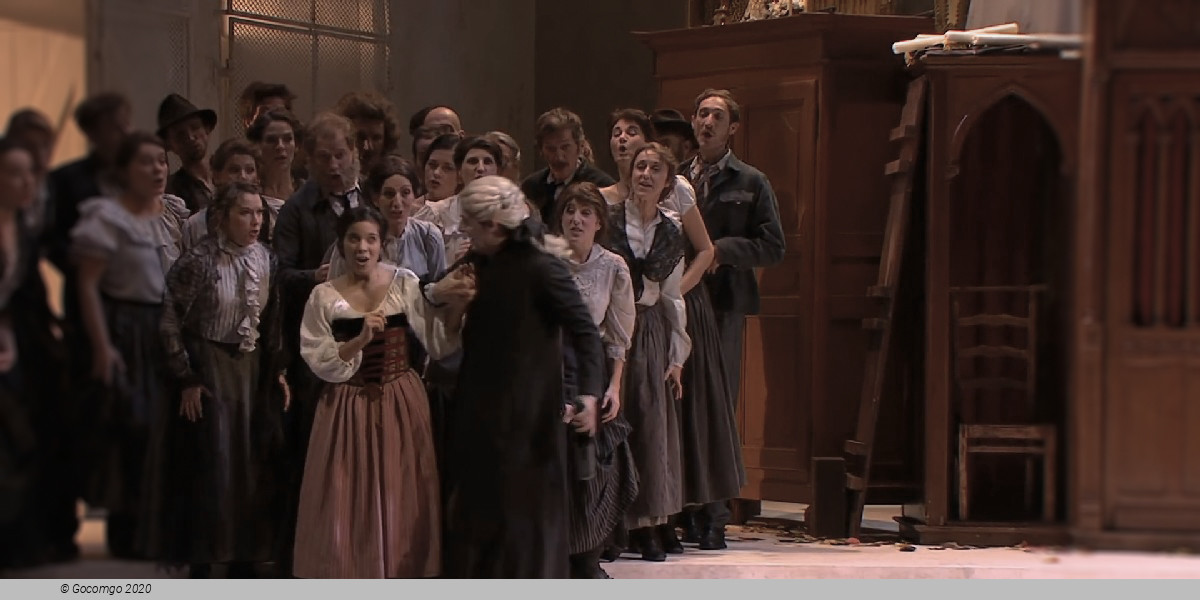
Teatro Nacional de Sao Carlos 5 June 2020 - Le comte Ory | GoComGo.com

Le comte Ory

Teatro Nacional de Sao Carlos, Lisbon, Portugal
All photos (7)
Select date and time
8 PM
Request for Tickets
Important Info
Type: Opera
City: Lisbon, Portugal
Starts at: 20:00
Duration:

E-tickets: Print at home or at the box office of the event if so specified. You will find more information in your booking confirmation email.

You can only select the category, and not the exact seats.
If you order 2 or 3 tickets: your seats will be next to each other.
If you order 4 or more tickets: your seats will be next to each other, or, if this is not possible, we will provide a combination of groups of seats (at least in pairs, for example 2+2 or 2+3).

Overview

"JEUNE FILETTE DANS MA RETRAITE VIENDRA CE SOIR" (Act I)

A French Crusader seducer who cross-dresses to make conquests! It's not delirious, it's the story of Le comte Ory, Rossini's penultimate opera, premiered in 1828, a very entertaining work that proposes a hilarious medieval version of the figure of “Don Juan”.
In the title role, which requires true vocal stunts, we will have the debut in São Carlos of tenor Xabier Anduaga who at the age of 24 has recorded Rossinian triumphs in important lyrical stages. Beside him will be Sofia Fomina, soprano who debuted in 2012 with great success in Covent Garden. James Bonas, who has tuned his comic streak after previous readings of French opera (L'enfant et les sortilèges, L'Étoile), returns with a staging served by set design and costumes by Luís F. Carvalho (Robert Carsen collaborator) who signed the recent Elektra. The title will mark, after years of absence, the return to São Carlos of popular conductor Giuliano Carella.

History
Premiere of this production: 20 August 1828, Salle Le Peletier, Paris

Le comte Ory is a comic opera written by Gioachino Rossini in 1828. Some of the music originates from his opera Il viaggio a Reims written three years earlier for the coronation of Charles X. The French libretto was by Eugène Scribe and Charles-Gaspard Delestre-Poirson adapted from a comedy they had first written in 1817. The work is ostensibly a comic opera in that the story is humorous, even farcical. However, it was devised for the Opéra rather than for the Théâtre de l'Opéra-Comique and there are structural inconsistencies with the contemporary opéra comique genre: whereas the latter consists of relatively short lyrical numbers and spoken dialogue, Le Comte Ory consists of "highly developed, even massive musical forms linked by accompanied recitative. Although the opera contains some of Rossini's most colorful orchestral writing, the quaint, brief overture is oddly restrained and unassuming, ending with a whisper of pizzicato strings.

Synopsis

Time: Circa 1200, during the Crusades
Place: Touraine

Act 1

The countryside before the castle of Formoutiers

The lords and men of Formoutiers have been away on a crusade. Count Ory, who is in love with the countess Adèle, takes advantage of the situation. Hoping to win her hand, he disguises himself as a hermit aided by Raimbaud, his friend. Raimbaud announces that a wise hermit will visit the village to offer advice on matters of the heart. The castle is filled with women waiting for their husbands to return from the crusades. Ory's page Isolier is in love with the countess. Isolier confides his love to the "hermit" (Count Ory in disguise) and explains his plan to sneak into the castle disguised as a female pilgrim.

The countess consults the hermit about a cure for her melancholia. He proposes that she fall in love, which she promptly does, with Isolier. The "hermit" warns her not to trust the page. Everyone is shocked when the Tutor reveals Ory's identity. The countess receives a letter announcing her brother's return.

Act 2

A large room in the castle

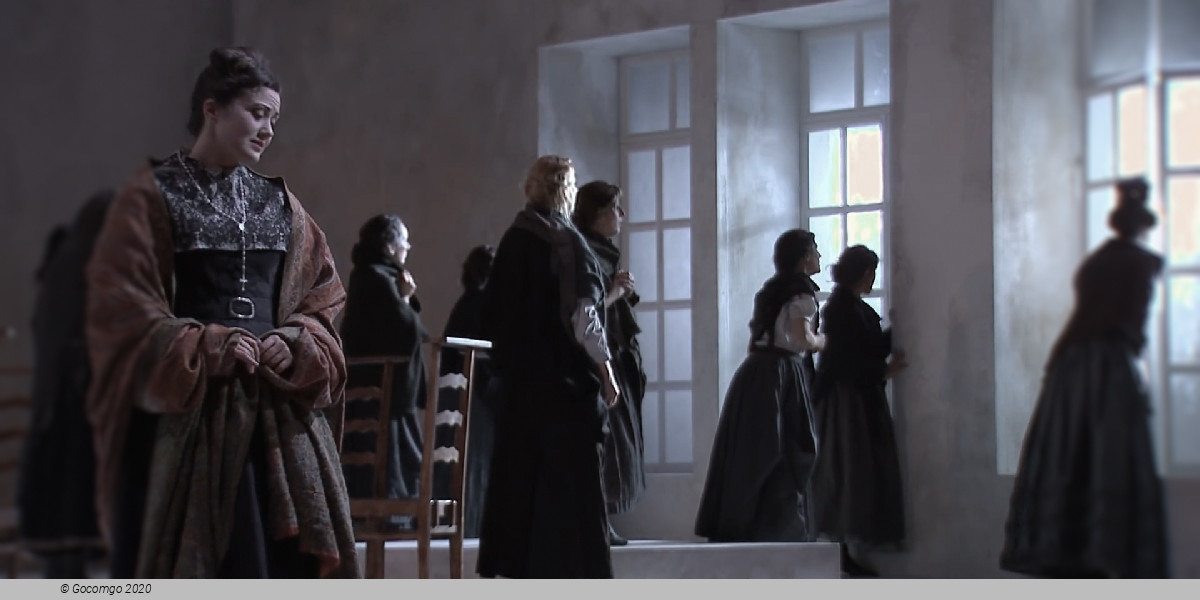
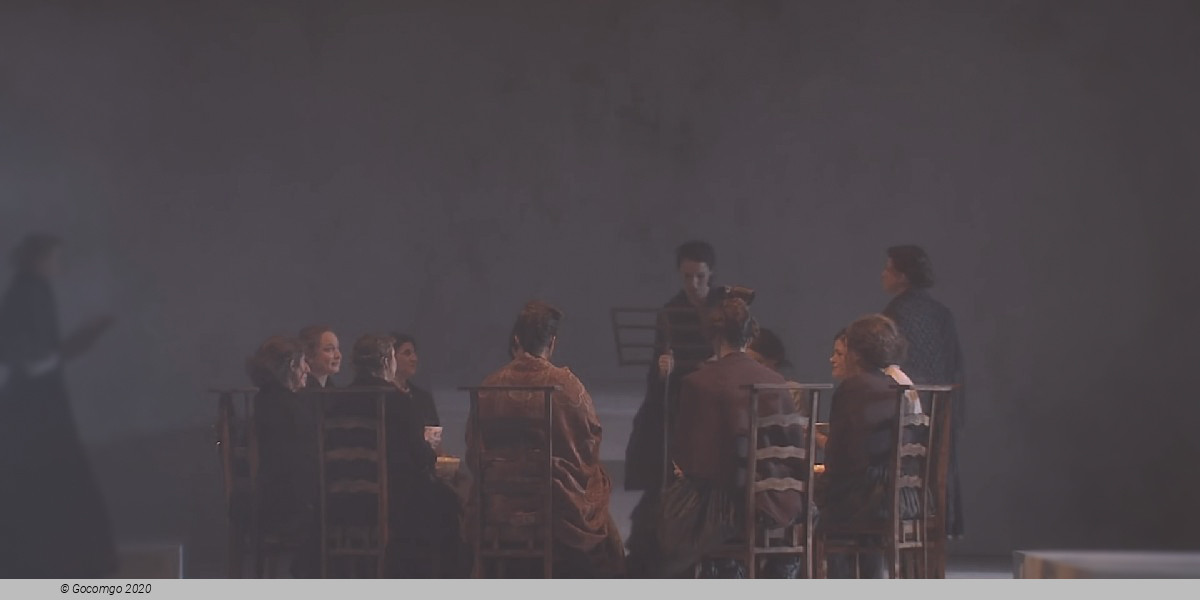
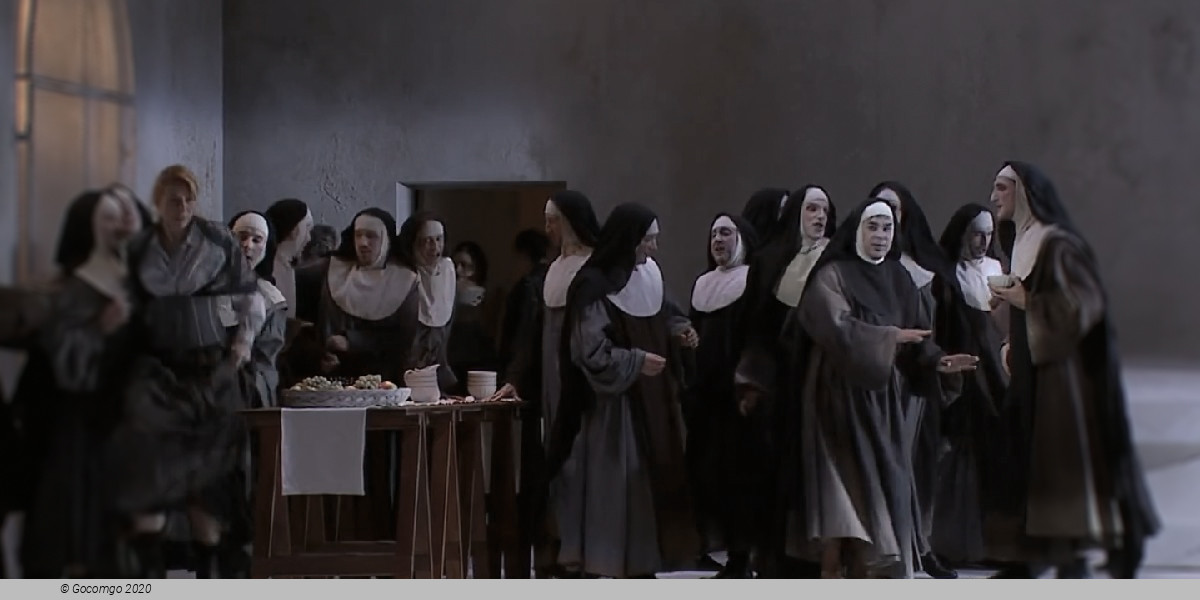
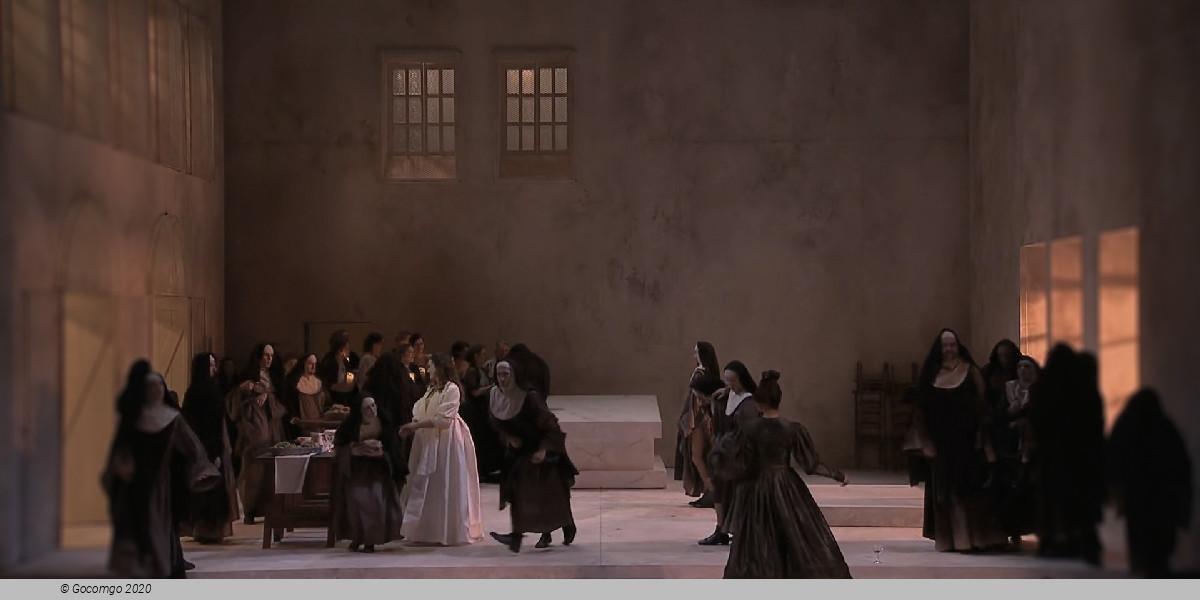
The countess and her attendants admit a group of female pilgrims awaiting their husbands' return from the crusade. This time the pilgrims are actually Ory and his men in disguise. Ory's new disguise is as "Sister Colette." Missing something to drink with dinner, Raimbaud breaks into the castle wine cellar and returns with enough for everyone. They toast the countess's absent brother. Isolier recognizes Ory and reveals his identity to Adèle. Isolier also tells the waiting women that their husbands will be back by midnight.

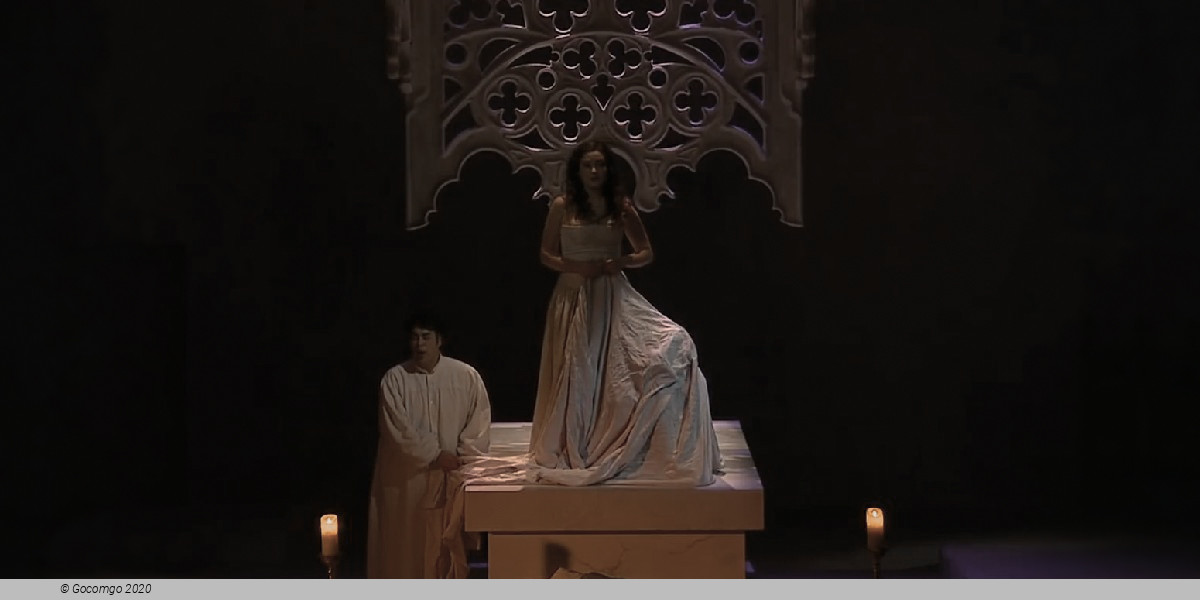
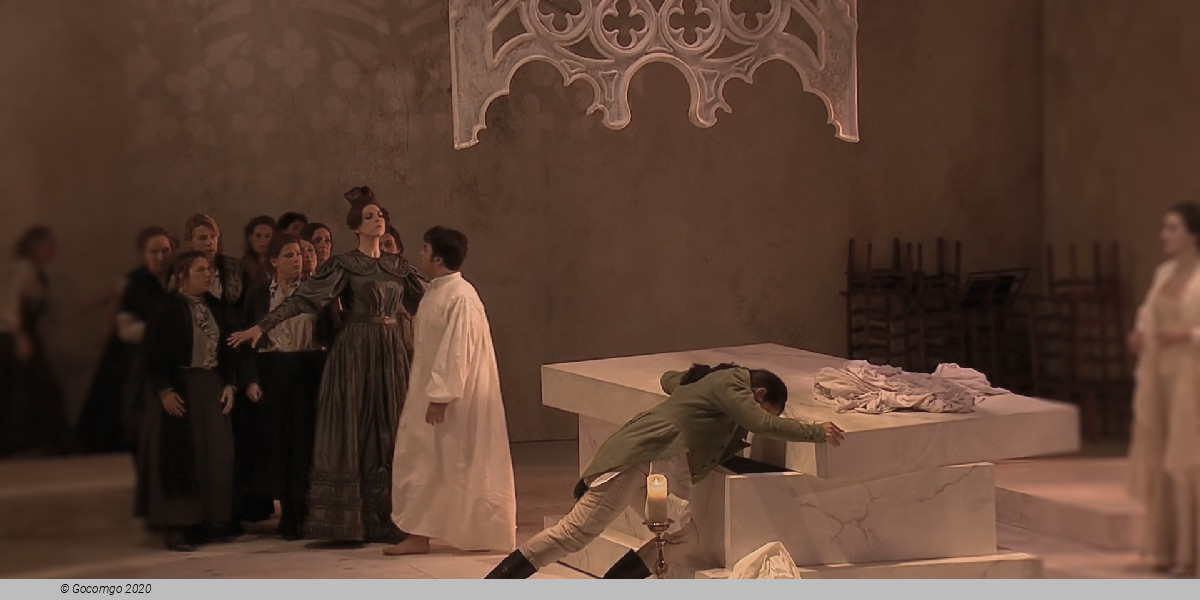
After everyone is in bed, Ory enters countess Adèle's room. He woos her, not realizing in the dark that it is Isolier's hand he is holding. The men return from the crusade. Isolier reveals himself and helps Count Ory escape from the castle.

Venue Info

Teatro Nacional de Sao Carlos - Lisbon
Location   R. Serpa Pinto 9

The Teatro Nacional de São Carlos is an opera house in Lisbon, Portugal. It was opened on July 30, 1793 by Queen Maria I as a replacement for the Tejo Opera House, which was destroyed in the 1755 Lisbon earthquake. The theatre is located in the historical center of Lisbon, in the Chiado district.

In 1792, a group of Lisbon businessmen decided to finance the construction of a new Opera House in the city. The theatre was built in only six months following a design by Portuguese architect José da Costa e Silva, with neoclassical and rococo elements. The general project is clearly inspired by great Italian theatres like the San Carlo of Naples (interior) and La Scala in Milan (interior and façade). In the early 19th century, when the Portuguese Royal Court had to flee to the Portuguese colony of Brazil to escape the invading Napoleonic troops, a theatre modelled on the São Carlos was built in Rio de Janeiro.

The theatre was erected in honor of Princess Charlotte of Spain who had been married in 1785 at the age of 10 to the future King, Prince John and resided with him from 1790 once she was of childbearing age: Carlos (Portuguese form of Charles) is the masculine form of Charlotte. A Latin commemorative inscription dedicates the theatre to the princess.

The first opera presented here, in 1793, was La Ballerina Amante, by Domenico Cimarosa. The most famous Portuguese composer of the time, Marcos Portugal, became musical director of the São Carlos in 1800 after returning from Italy, and many of his operas were staged here.

Between 1828 and 1834, the São Carlos was closed during the Portuguese Civil War, fought between kings Miguel I and Pedro IV. In 1850, the lighting of the interior was changed to gas illumination, the latest technology available. Shortly afterwards, the Portuguese state bought the theatre from private investors. After a few failed attempts, electrical illumination was installed in 1887. From 1935 to 1940, the theatre was closed for repairs.

In 1974, a resident opera company was established. In 1993, the Orquestra Sinfónica Portuguesa was created as the Teatro's affiliate orchestra, with Álvaro Cassuto as the orchestra's first principal conductor. Subsequent principal conductors of the Orquestra Sinfónica Portuguesa have included José Ramón Encinar (1999–2001), Zoltán Peskó (2001–2004) and Julia Jones (2008–2011). Since January 2014, the orchestra's principal conductor is Joana Carneiro.

The theatre building was classified as Property of Public Interest in 1928 and has been reclassified as a National Monument since 1996.

Longitudinal and composite building with articulated parts has a sober facade. The frontispiece is divided into 3 parts: 2 floors on mezzanine and a third floor on the central body. This central body is torn by a portico (entrance hall), and has a loggia at the ground level composed of 3 frontal arches and a lateral, in perfect round. The loggia is crowned by a perfect terrace of balustrade in stonework. Here, the windows are framed by parastase, that supports a highlighted cornice. They also have a crown composed of panels with inscription and two high reliefs. At the level of the third floor, this same central body presents a clock surrounded by garlands and two windows, all of which is surmounted by two pinnacles and the Portuguese coats-of-arms.

At the level of the first floor, the two side bodies have two straight-polished doors crowned by low windows. Although with the same two windows, at the second floor level they feature balustrade in stonework, protruding cornice and a small window in the mezzanine area.

The main room (performance hall) is elliptic, has five tiers of boxes and seats 1148 people. The luxurious royal box was lavishly decorated by the Italian Giovanni Appianni. The ceiling was painted by Manuel da Costa and the stage by Cirilo Wolkmar Machado.

Important Info
Type: Opera
City: Lisbon, Portugal
Starts at: 20:00
Duration:
Top of page