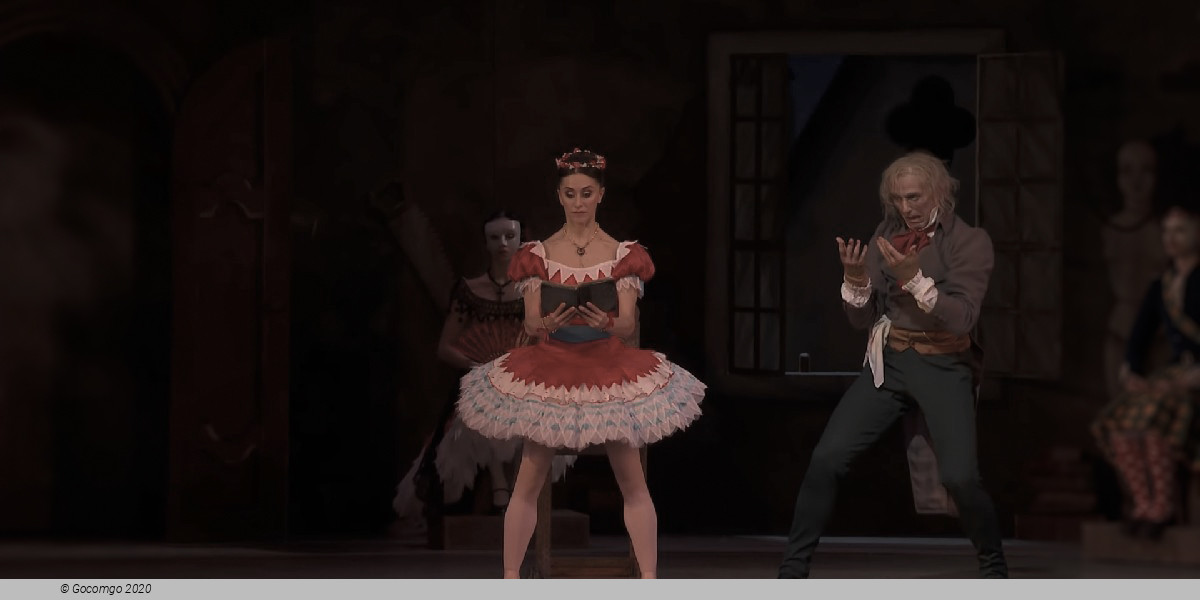
Novosibirsk Opera and Ballet Theatre 2 May 2021 - Coppélia | GoComGo.com

Coppélia

Novosibirsk Opera and Ballet Theatre, Grand Stage, Novosibirsk, Russia
All photos (7)
Select date and time
6 PM
Request for Tickets
Important Info
Type: Ballet
City: Novosibirsk, Russia
Starts at: 18:00
Acts: 3
Intervals: 2
Duration: 2h 20min

E-tickets: Print at home or at the box office of the event if so specified. You will find more information in your booking confirmation email.

You can only select the category, and not the exact seats.
If you order 2 or 3 tickets: your seats will be next to each other.
If you order 4 or more tickets: your seats will be next to each other, or, if this is not possible, we will provide a combination of groups of seats (at least in pairs, for example 2+2 or 2+3).

Overview

Leo Délibes’ “Coppélia” hasn’t lost any of its relevance through the last 150 years. Creators of the libretto ballet masters Charles-Louis-Étienne Nuitter and Arthur Saint-Léon used E. T. A. Hoffmann’s “Der Sandmann” novel as a basis for the plot; it tells of a young man, who fell in love with a mechanical doll, created by an ingenious master Coppélius.

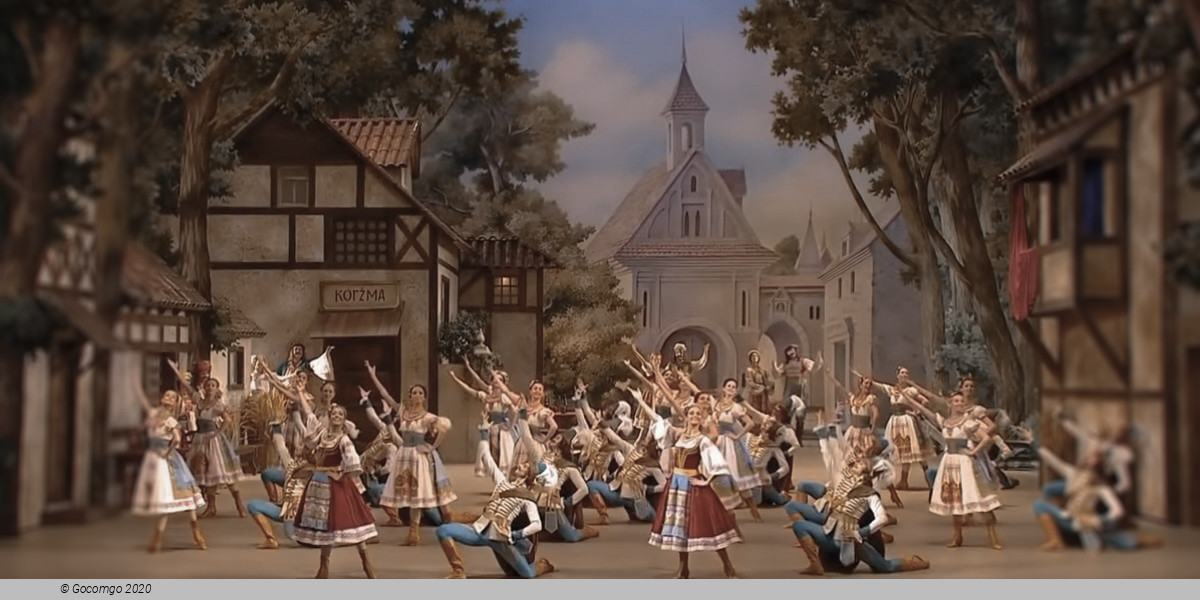
The production team for this performance is represented by the same people, who provided the Novosibirsk audience with the magical “Cinderella” ballet: ballet master-producer Mikhail Messerer, designers Viacheslav Okunev and Gleb Filshtinsky. This time around the production team came up with an exquisite comedy about quarrel and reconciliation between two in love; the main character, mischievous Swanhilda finds a witty way to teach her cheating bridegroom a lesson…

As it was with “Cinderella” ballet well-loved by the Novosibirsk audience, the new “Coppélia” is featured with multimedia scenery along with traditional one; the performance also includes using of video projection and expressive lighting. “Coppélia” contains Leo Délibes’ beautiful music, brilliant dance items, amusing love story, kind humour and funny playful moments, which will positively be loved by the youngest NOVAT audience.

Choreographer Mikhail Messerer told that in his new work he used classical “Coppélia” renditions with patterns of performances by Arthur Saint-Léon, Marius Petipa, Alexandre Gorsky: “Classical ballet literature contains only a few comedy ballets, and “Coppélia” is one of the most important. Nowadays the world is thirsty for classical ballets containing intricate finger technique of the female part and masterful male dance, which is exactly the case of this cheerful, merry ballet. “Coppélia” is not only the perfect example of pure classical choreography but also a family performance. This kind of ballet performances sounds relevant and up to date; they need to be on much for the audience’s delight”.

It was choreographed by Arthur Saint-Leon, the choreographer who had relinquished his post as head of the Petersburg Ballet to Marius Petipa. Saint-Leon was also a virtuoso dancer, an expert on dance folklore, composer, and violinist. It was his interest in folk dance that was responsible for the appearance in the music score of such a rich ’selection’ of dance melodies based on folklore. Coppelia is considered to be one of the first ballets to contain Slav motifs.

History
Premiere of this production: 25 May 1870, Théâtre Impérial l Opéra, Paris

Coppélia is a comic ballet originally choreographed by Arthur Saint-Léon to the music of Léo Delibes, with libretto by Charles-Louis-Étienne Nuitter. Nuitter's libretto and mise-en-scène was based upon two stories by E. T. A. Hoffmann: Der Sandmann (The Sandman) and Die Puppe (The Doll).

Synopsis

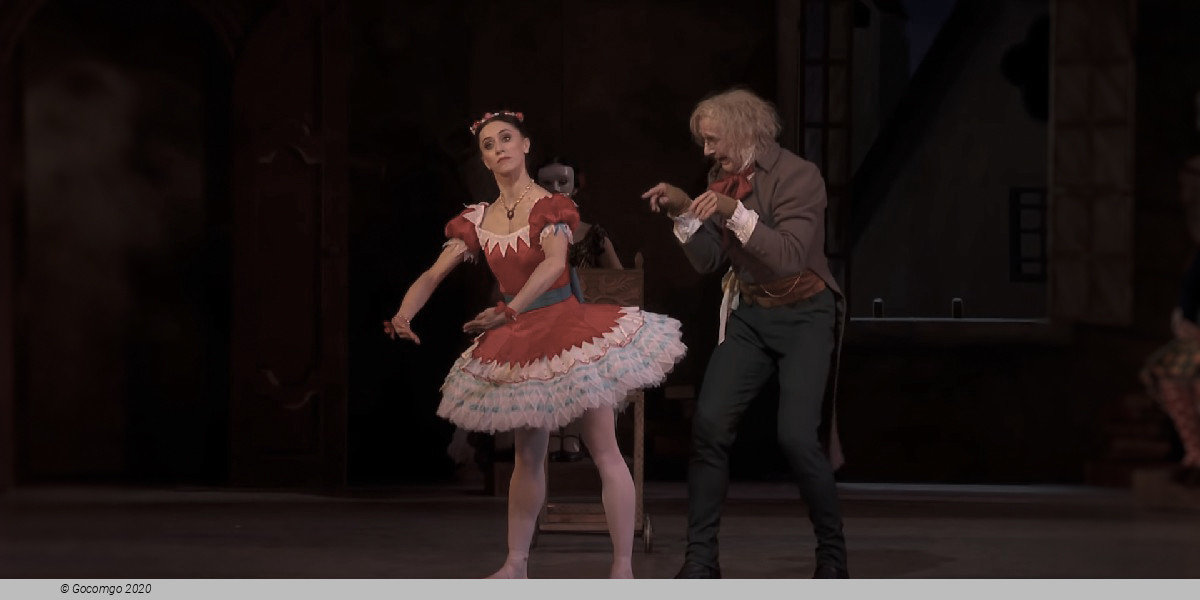
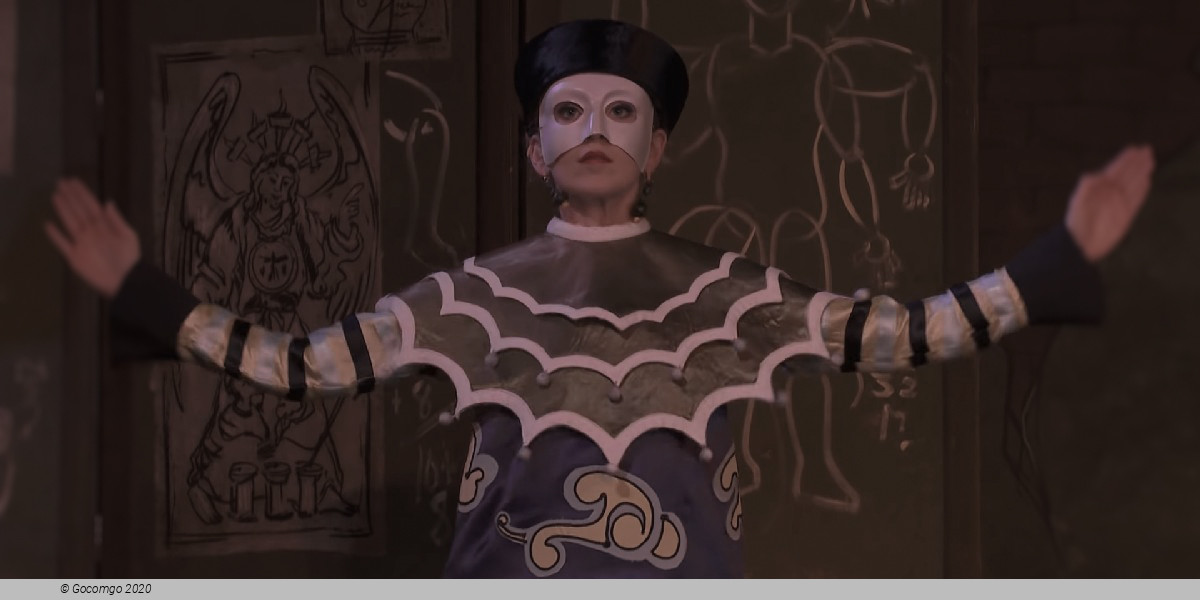
Dr. Coppélius is a doctor who has made a life-size dancing doll. It is so lifelike that Franz, a village youth, becomes infatuated with it and sets aside his heart's true desire, Swanhilda. She shows him his folly by dressing as the doll, pretending to make it come to life and ultimately saving him from an untimely end at the hands of the inventor.

Act I
The story begins during a town festival to celebrate the arrival of a new bell. The town crier announces that, when it arrives, anyone who becomes married will be awarded a special gift of money. Swanilda and Franz plan to marry during the festival. However, Swanilda becomes unhappy with Franz because he seems to be paying more attention to a girl named Coppélia, who sits motionless on the balcony of a nearby house. The house belongs to a mysterious and faintly diabolical inventor, Doctor Coppélius. Although Coppélia spends all of her time sitting motionless and reading, Franz is mesmerized by her beauty and is determined to attract her attention. Still upset with Franz, Swanilda shakes an ear of wheat to her head: if it rattles, then she will know that Franz loves her. Upon doing this, however, she hears nothing. When she shakes it by Franz's head, he also hears nothing; but then he tells her that it rattles. However, she does not believe him and runs away heartbroken.

Later on, Dr. Coppelius leaves his house and is heckled by a group of boys. After shooing them away, he continues on without realizing that he has dropped his keys in the melée. Swanilda finds the keys, which gives her the idea of learning more about Coppélia. She and her friends decide to enter Dr. Coppelius' house. Meanwhile, Franz develops his own plan to meet Coppélia, climbing a ladder to her balcony.

Act II
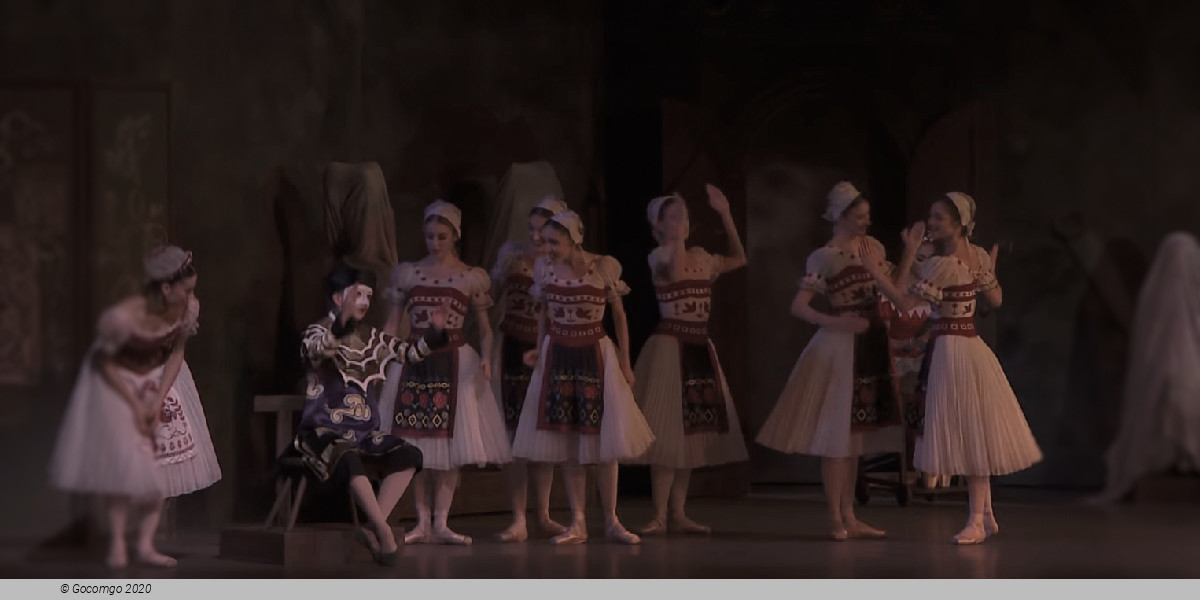
Swanilda and her friends find themselves in a large room filled with people. However, the occupants aren't moving. The girls discover that, rather than people, these are life-size mechanical dolls. They quickly wind them up and watch them move. Swanilda also finds Coppélia behind a curtain and discovers that she, too, is a doll.

Dr. Coppelius returns home to find the girls. He becomes angry with them, not only for trespassing but for also disturbing his workroom. He kicks them out and begins cleaning up the mess. However, upon noticing Franz at the window, Coppélius invites him in. The inventor wants to bring Coppélia to life but, to do that, he needs a human sacrifice. With a magic spell, he will take Franz's spirit and transfer it to Coppélia. After Dr. Coppelius proffers him some wine laced with sleeping powder, Franz begins to fall asleep. The inventor then readies his magic spell.

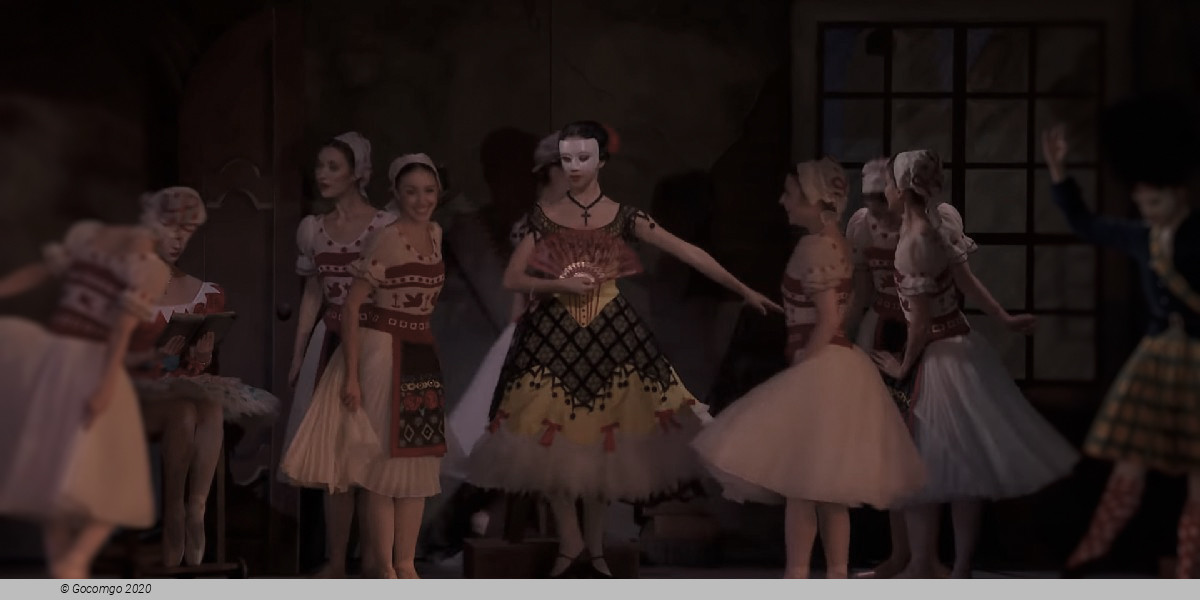
However, Dr. Coppelius did not expel all the girls: Swanilda is still there, hidden behind a curtain. She dresses up in Coppélia's clothes and pretends that the doll has come to life. She wakes Franz and then winds up all the mechanical dolls to aid their escape. Dr. Coppelius becomes confused and then saddened when he finds a lifeless Coppélia behind the curtain.

(Note: In some Russian versions of the ballet, after getting caught, Swanhilda confesses to Dr. Coppelius about what she and her friends did and her situation with Franz. Coppelius decides to forgive Swanhilda and teach her how to act like a doll coming to life to fool Franz, thus ending Act 2 on a happier note.)

Act III
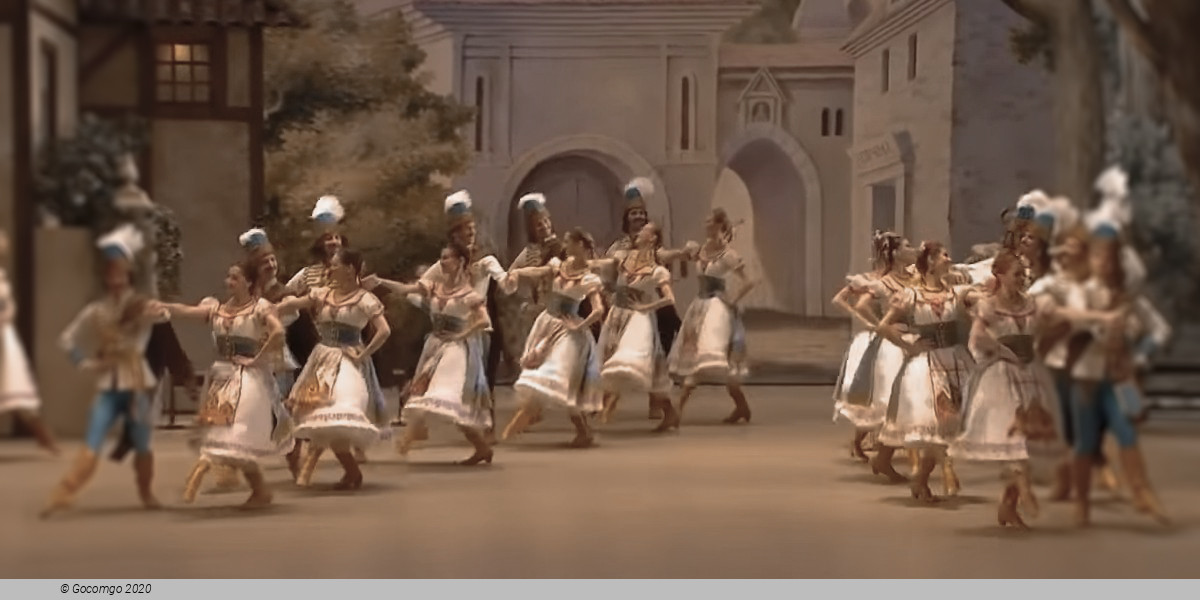
Swanilda and Franz are about to make their wedding vows when the angry Dr. Coppelius appears, claiming damages. Dismayed at having caused such an upset, Swanilda offers Dr. Coppelius her dowry in return for his forgiveness. However, Franz tells Swanilda to keep her dowry and offers to pay Dr. Coppelius instead. At that point, the mayor intervenes and gives Dr. Coppelius a bag of money, which placates him. Swanilda and Franz are married and the entire town celebrates by dancing.


Venue Info

Novosibirsk Opera and Ballet Theatre - Novosibirsk
Location   36 Krasny Prospect

The Novosibirsk Opera and Ballet Theatre (the official title is the Novosibirsk State Academic Opera and Ballet Theatre is one of the most important theatres in Novosibirsk and Siberia. It is located at the center of Novosibirsk at Lenin square.

The building was completed in February 1944, and the first performance was held on 12 May 1945. As of 2012, it is the largest theatre in Russia, larger than the Bolshoi Theatre (literally "Big theatre") in Moscow. After its renovation in 2005 with computerized stage equipment, at the time it became the most technically advanced in Russia. The total area of the building is 11,837 m2 (127,410 sq ft), the volume is 294,340 m3 (10,395,000 cu ft). The theatre is often called the "Siberian Coliseum" because of its size and beauty. The auditorium seats more than 1,790 spectators. Its upper gallery is decorated with copies of antique Greek statues.

Music directors

Current music director is Dmitri Jurowski. Previous directors were Teodor Currentzis (2004 to 2010) and Ainars Rubikis.

The building

The principal construction of the theatre building is the big dome, which is 60 metres (200 ft) wide and 35 metres (115 ft) high. The dome is a unique construction that supports itself without girders or columns. The ratio of its thickness (an average of 8 cm (3.1 in)) to its radius is less than that of a chicken's egg.

In front of the dome there is a large foyer, while behind it there is a 30-metre (98 ft) deep stage with bars rising up to 30 metres (98 ft) above.

The theater also served as the fifth pit stop in the fourteenth season of The Amazing Race.

Important Info
Type: Ballet
City: Novosibirsk, Russia
Starts at: 18:00
Acts: 3
Intervals: 2
Duration: 2h 20min
Top of page