
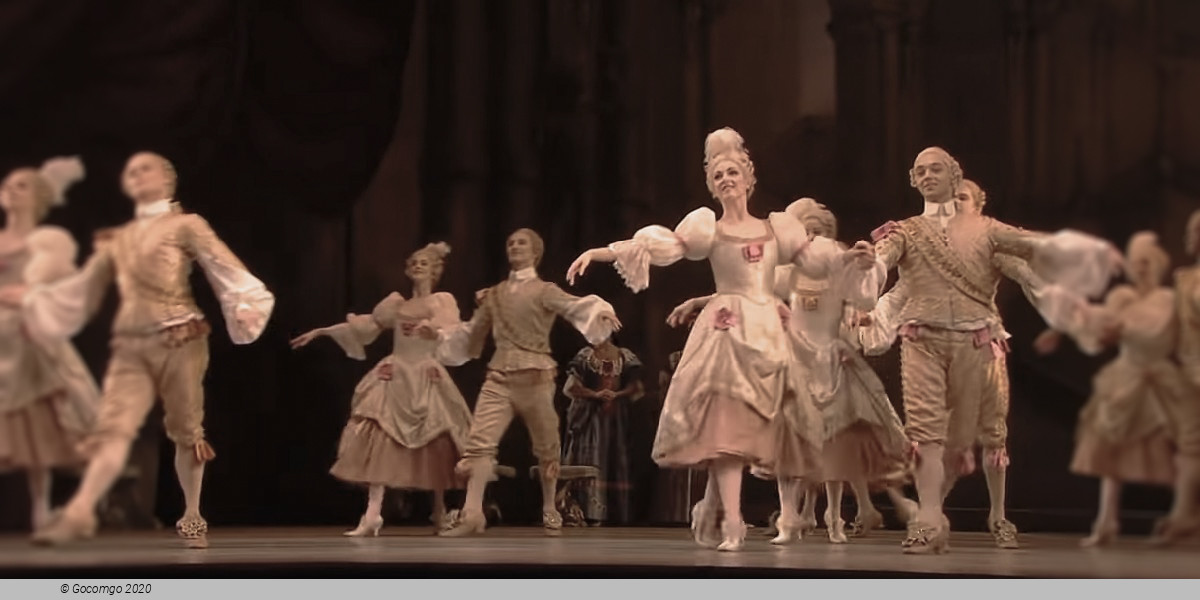
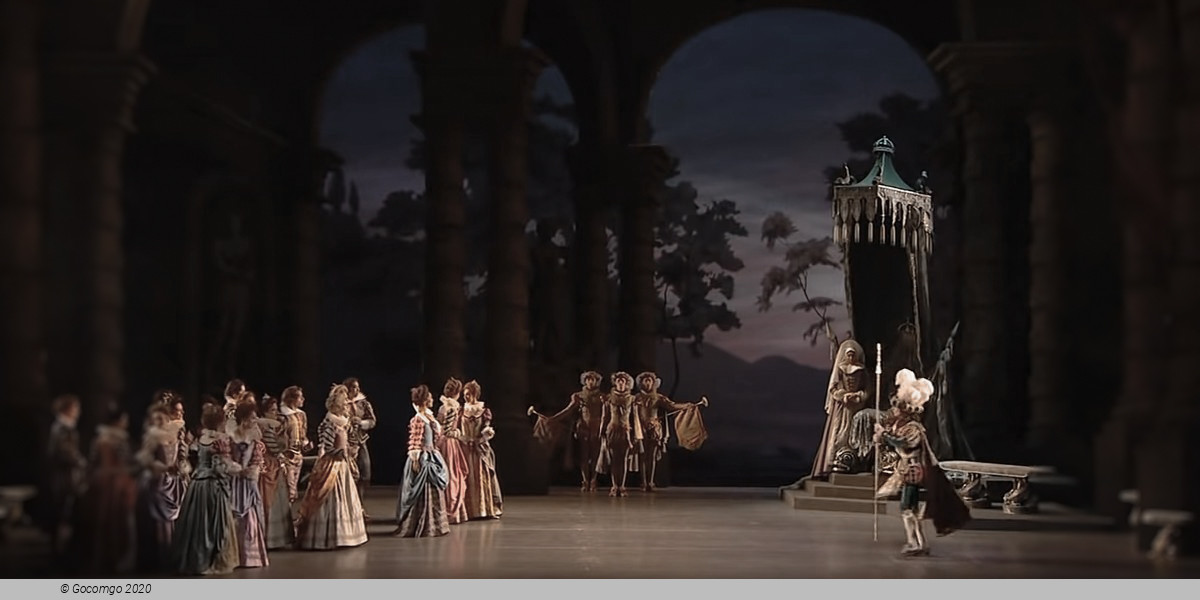
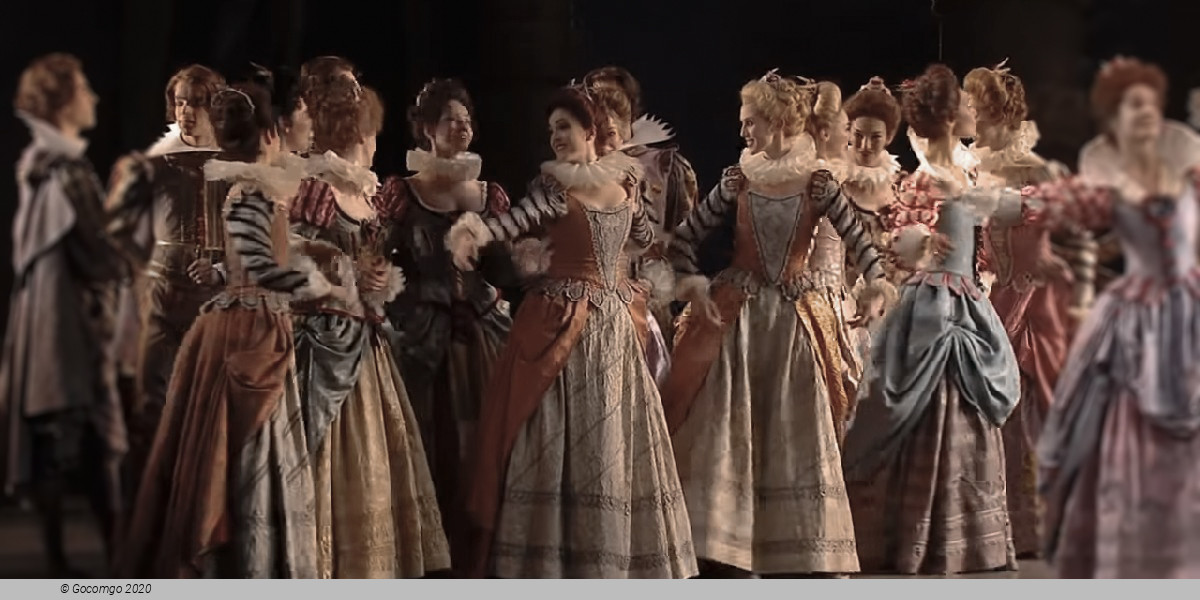
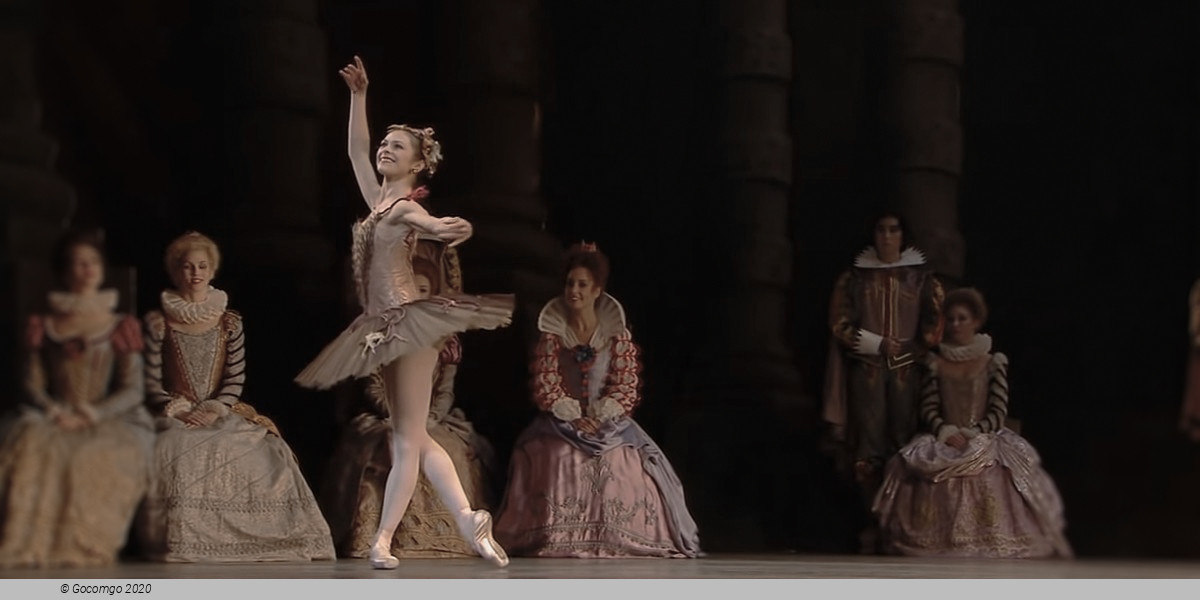
Belarus National Bolshoi Opera and Ballet Theater 23 May 2021 - The Sleeping Beauty | GoComGo.com

The Sleeping Beauty

Belarus National Bolshoi Opera and Ballet Theater, Minsk, Belarus
All photos (9)
Select date and time
6 PM
Request for Tickets
Important Info
Type: Ballet
City: Minsk, Belarus
Starts at: 18:00
Acts: 2
Intervals: 1
Duration: 2h 30min

E-tickets: Print at home or at the box office of the event if so specified. You will find more information in your booking confirmation email.

You can only select the category, and not the exact seats.
If you order 2 or 3 tickets: your seats will be next to each other.
If you order 4 or more tickets: your seats will be next to each other, or, if this is not possible, we will provide a combination of groups of seats (at least in pairs, for example 2+2 or 2+3).

Overview

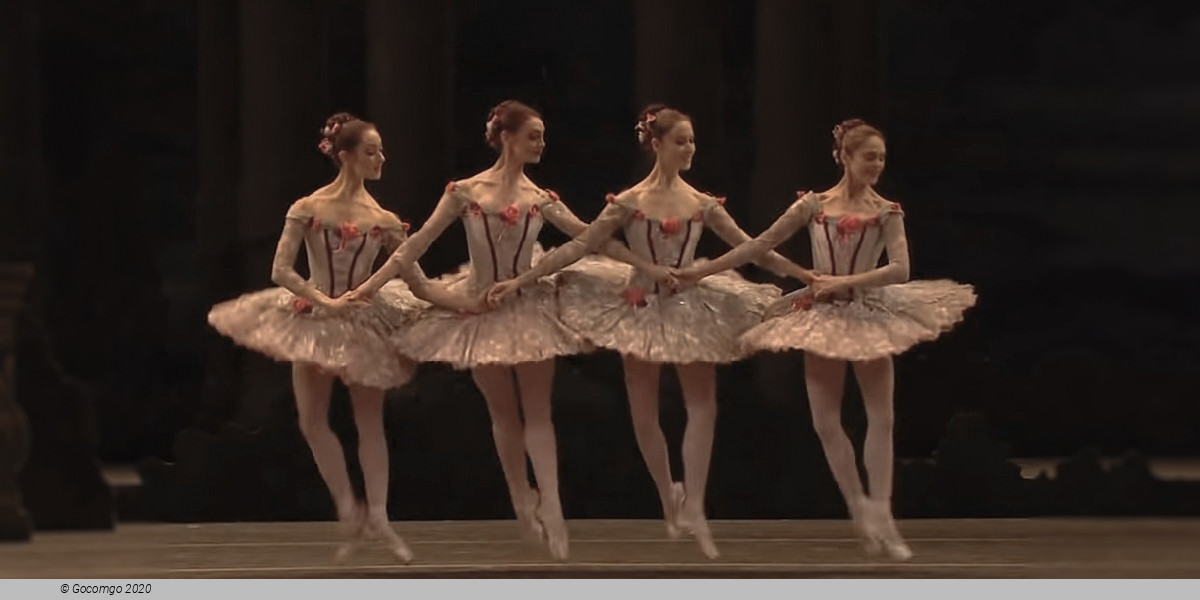
The ballet premiered with triumph in 1890 at the St. Petersburg Mariinsky Theater. The performance was conducted by Riccardo Drigo and directed by Marius Petipa. In responses to the new ballet, it was noted that The Sleeping Beauty is “the largest phenomenon in the musical and theatrical field”. G. Laroche wrote in his review that the production of "The Sleeping Beauty" is one of the pearls of "the theatre, and the music is" one of the pearls of Tchaikovsky.

Tchaikovsky enthusiastically worked on new work. The plot of the fairy tale, written almost two hundred years ago by the French writer Charles Perrault, seemed to the composer poetic and grateful for the music. In this fantastic world of images, Tchaikovsky was attracted primarily by the opportunity to embody in music the eternal problem of real life: the struggle between Good and Evil, the triumph of the bright ideals of Beauty, Joy, Love, the victory of "visible" life over the darkness of the subconscious.

Sleeping Beauty was destined for a long and happy stage life. Not a single major theatre in the world can do without this ballet. The new production of the ballet on the Belarusian stage (the premiere took place on June 6, 2001) became the theatre's fourth appeal to this work (the first production of The Sleeping Beauty on the stage of the BSSR State Academic Bolshoi Theater was staged in 1954). The new production is in many respects a restoration of the original choreography of M. Petipa, therefore the artistic director of the Belarusian ballet, People's Artist of the BSSR, People's Artist of the USSR Valentin Elizariev formulated his task as a stage director rather as a restoration, not an author's (V. in the kingdom of Fairy Carabosse, while preserving all the choreographic pearls of Marius Petipa). Of course, for more than a hundred years of its life on the stages of theatres all over the world, "Sleeping Beauty" is pretty "clogged" with elements brought into it by performers and choreographers of several generations. Taking as a basis the St. Petersburg production under the direction of Konstantin Sergeev, V. Elizariev restored step by step the choreographic text of this in all respects great ballet, which, in addition to the full composition of the ballet troupe, employs more than thirty students of the Belarusian Choreographic College. One of the director's tasks was to introduce young people who had recently come to the theatre into the performance. In the new "Sleeping Beauty" they have been entrusted with many responsible parties.

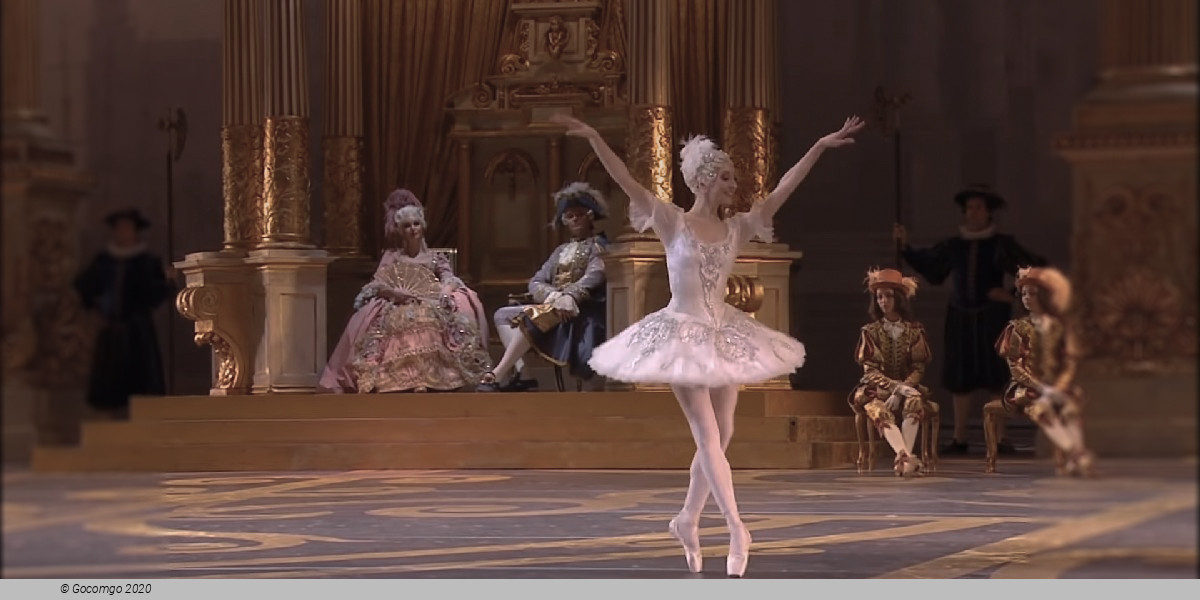
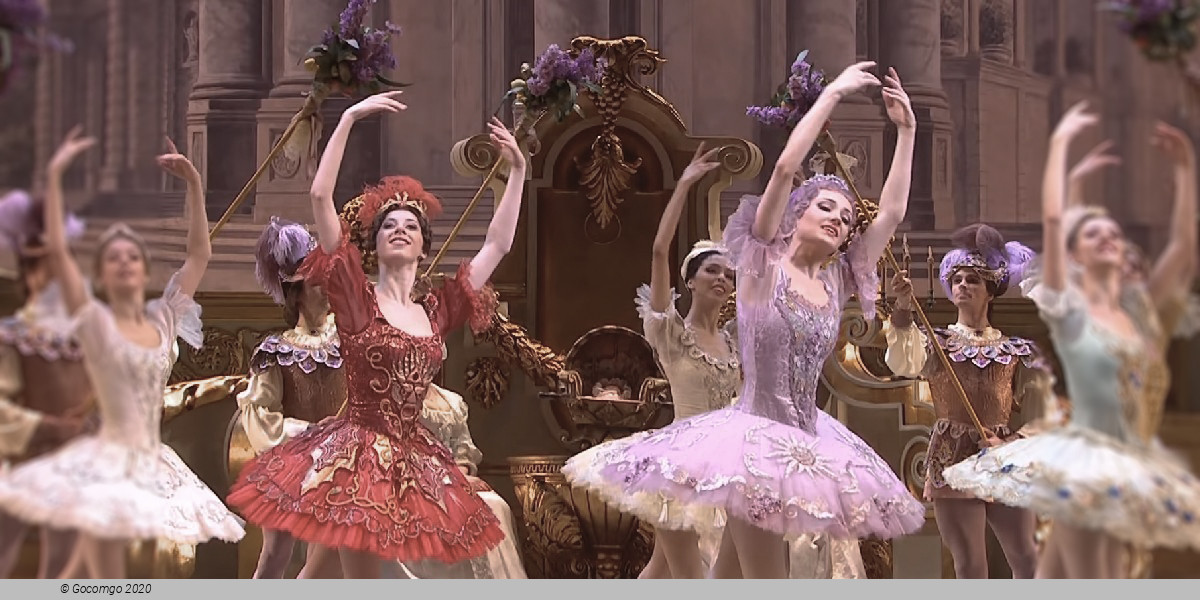
The design of the performance entirely corresponds to the genre of an enchanting performance that requires special splendour in the scenery and costumes (set design by Vyacheslav Okunev). One of the "tricks" of the new production is the use of "double panorama" in the travel scene of Prince Désiré and the Lilac Fairy, which creates an unusual stereoscopic effect. In addition, the new production also features one fragment of Tchaikovsky's score, which has never been performed on the stage of the Belarusian theatre (conductor Nikolai Kolyadko).

History
Premiere of this production: 03 January 1890, Mariinsky Theatre in St. Petersburg

The Sleeping Beauty is a ballet in a prologue and three acts, first performed in 1890. The music was composed by Pyotr Ilyich Tchaikovsky (his opus 66). The score was completed in 1889, and is the second of his three ballets. The original scenario was conceived by Ivan Vsevolozhsky, and is based on Charles Perrault's La Belle au bois dormant. The choreographer of the original production was Marius Petipa.

Synopsis

Prologue

The Palace of the fairy-tale king Florestan. The King celebrates the birth of his daughter Aurora.
The Courtiers surround the cradle of the newborn baby. Kind fairies have brought her their gifts and blessings. The Master of Ceremonies Calabut runs into the Palace (the wicked fairy Caraboss is approaching the Palace. She was not invited to the party, but she decided to come)
The King and the Queen are trying to propitiate the spiteful old woman. She foretells Aurora that at the age of sixteen she will hurt her finger and die.
The King and the Queen are in despair. Fairy Lilac comforts them: she takes Aurora under her protection and drives Caraboss and her companions out of the palace. The King issues a strict order, prohibiting to use of needles safety pins and knitting needles in the whole kingdom.

ACT 1

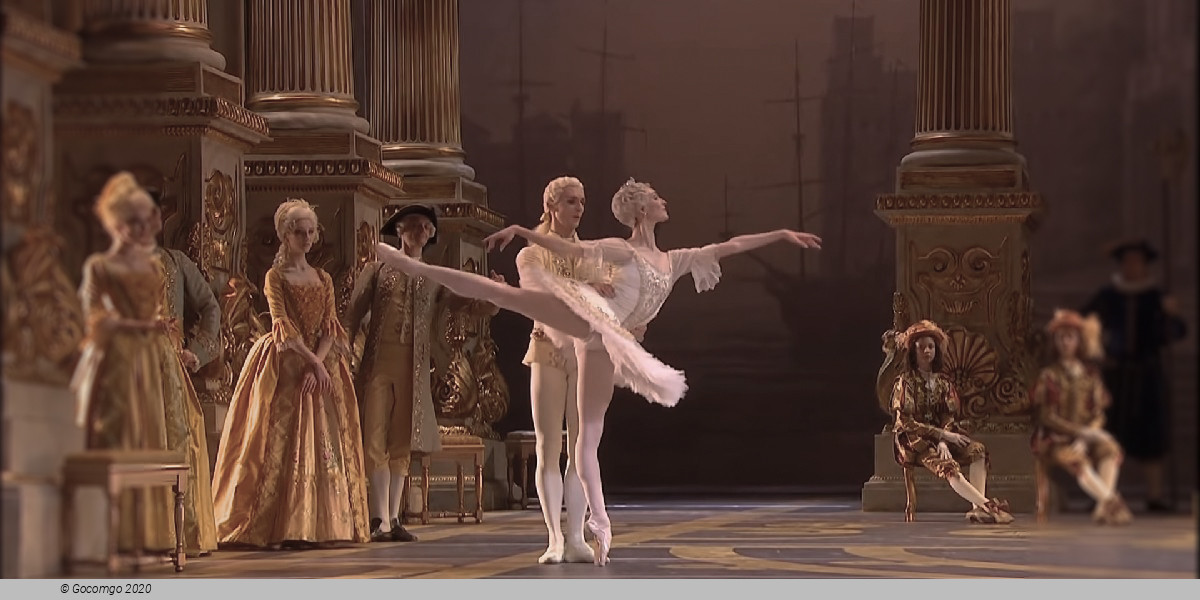
A splendid ball takes place in the Royal Palace: Aurora turns sixteen. From all over the kingdom bridegrooms come to compete for the hand of the beautiful princess.
When the party is in full swing there comes an old woman. She brings Aurora a luxurious bouquet of flowers. Admiring the flowers, Aurora is happily dancing around with them. Suddenly she stops, she has pricked her finger: a knitting needle is hidden in the bouquet. Aurora falls unconscious.
The old woman throws off her cloak: everybody recognizes the wicked fairy Caraboss.
Fairy Lilac appears. At the sweep of her magic truncheon, all the kingdom falls asleep. Thick bushes of lilac grow up all over.

ACT 2

1 Scene
One hundred years have passed. Prince Desiree goes hunting in the woods. Fairy Lilacs calls a vision of beautiful Aurora. The Prince recognizes in her the one he has seen in his daydreams.

2 Scene
The Palace of King Florestan is in deep sleep. Awake are only Caraboss and her faithful servants.
Unexpectedly appears fairy Lilac.
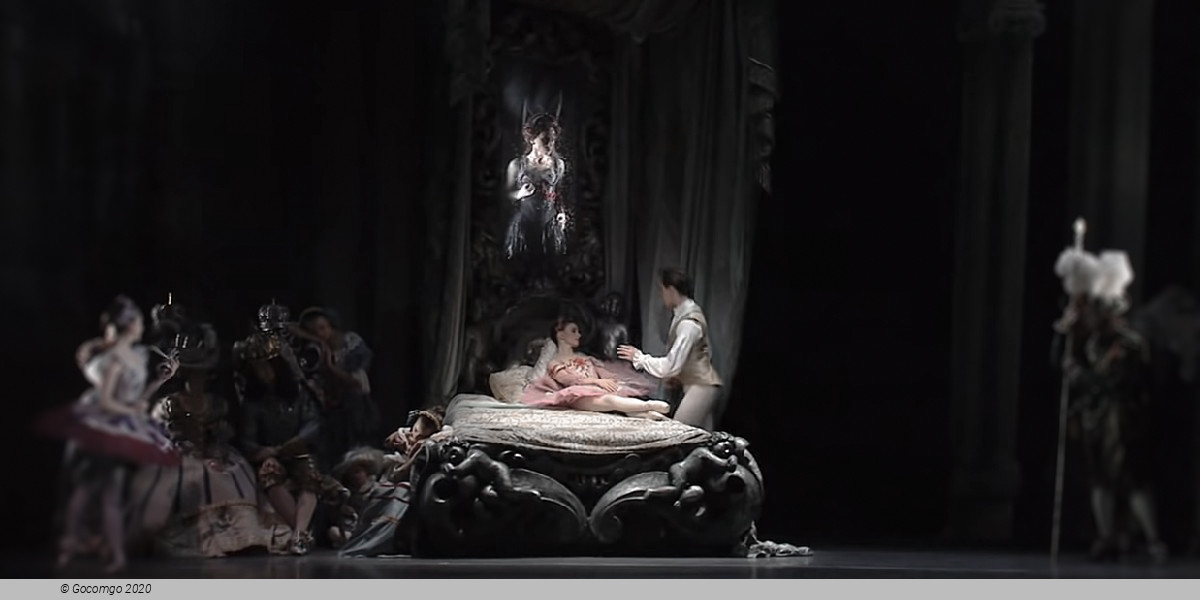
Prince Desiree gets into the palace. Bending over the sleeping beauty he kisses her tenderly. From this kiss, Aurora awakes. Everything around awakes too. The King and the Queen are glad to embrace their beloved daughter. Desiree asks for the hand of beautiful Aurora and receives consent.

Time: Baroque
Place: Europe

Prologue (The Christening)

King Florestan XXIV and his Queen have welcomed their first child, Princess Aurora, and declare a grand christening ceremony to honor her. Six fairies are invited to the ceremony to bestow gifts on the child. Each fairy brings a gift of a virtue or positive trait, such as beauty, courage, sweetness, musical talent, and mischief. The most powerful fairy, the Lilac Fairy, arrives with her entourage, but before she can bestow her gift, the evil fairy Carabosse arrives with her minions. Carabosse furiously asks the King and Queen why she had not received an invitation to the christening. The blame falls on Catalabutte, the Master of Ceremonies who was in charge of the guest list. Carabosse gleefully tears his wig off and beats him with her staff, before placing a curse upon the baby princess as revenge: Aurora will indeed grow up to be a beautiful, healthy, delightful young lady, but on her sixteenth birthday she will prick her finger on a Spindle and die. The King and Queen are horrified and beg Carabosse for mercy, but she shows none. However, the Lilac Fairy intervenes. Though she does not have enough power to completely undo the curse, she alters it, allowing the spindle to cause a peaceful 100-year sleep for the princess, rather than death. At the end of those 100 years, she will be woken by the kiss of a handsome prince. Relieved that Aurora's life will ultimately be spared, the court is set at ease.

Act I (The Spell)

It is the day of Princess Aurora's sixteenth birthday. Celebrations are underway, though the King is still unsettled by Carabosse's omen. The master of ceremonies discovers several peasant ladies frolicking about with knitting needles and alerts the King, who initially sentences the women to a harsh punishment. The Queen gently persuades him to spare the innocent citizens, and he agrees. An elaborate waltz is performed and Princess Aurora arrives. She is introduced to four suitors by her doting parents. Aurora and the suitors perform the famous Rose Adagio. Presently, a cloaked stranger appears and offers a gift to the princess: a spindle. Having never seen one before, Aurora curiously examines the strange object as her parents desperately try to intervene. As predicted, she pricks her finger. While initially appearing to recover quickly, she falls into a swoon and collapses. The cloaked stranger reveals herself to be Carabosse, who believes that her curse still stands and that the princess is dead. Once again, the Lilac Fairy quells the hubbub and reminds the King and Queen that Aurora is merely asleep. The princess is carried off to bed, and the Lilac Fairy casts a spell of slumber over the entire kingdom, which will only be broken when Aurora awakens. A thick layer of thorny plants grows over the palace, hiding it from view.

Act II (The Vision)

One hundred years later, Prince Désiré is attending a hunting party. Though his companions are lighthearted, the prince is unhappy and eventually asks to be left alone. On his own in the forest, he is met by the Lilac Fairy, who has chosen him to awaken Aurora. She shows him a vision of the beautiful princess, and the prince is immediately smitten. The Lilac Fairy explains the situation, and Désiré begs to be taken to the princess. The Lilac Fairy takes him to the hidden castle. Carabosse makes one last attempt to cement her vengeful curse, but the Lilac Fairy and the prince manage to defeat her together at last. Once inside the castle, Désiré awakens Aurora with a kiss. The rest of the court wakes as well, and the King and Queen heartily approve when the prince proposes marriage and the princess accepts.

Act III (The Wedding)

The royal wedding is underway. Guests include the Jewel Fairies: Diamond, Gold, Silver and Sapphire, and of course the Lilac Fairy. Fairytale characters are in attendance, including Puss in Boots and The White Cat, Princess Florine and the Bluebird, and others. Aurora and Désiré perform a grand Pas de Deux, and the entire ensemble dances. The prince and princess are married, with the Lilac Fairy blessing the union.

Structure

Titles of all of the numbers listed here come from Marius Petipa's original scenario, as well as the original libretto and programs of the first production of 1890. Major changes which were made to the score for Petipa's original production are mentioned, and help explain why the score is often heard in different versions in theatres today.

All libretti and programs of works performed on the stages of the Imperial Theatres were titled in French, which was the official language of the Emperor's Court, as well as the language in which balletic terminology is derived.

Prologue — Le baptême de la Princesse Aurore

Venue Info

Belarus National Bolshoi Opera and Ballet Theater - Minsk
Location   Paryžskaj Kamuny Square, 1

The National Academic Grand Opera and Ballet Theatre of the Republic of Belarus is located in a park in the Trinity Hill district of Minsk. Local people call it the "Opierny Teatr" (Belarusian) or the "Opera and Ballet Theatre." While the theatre opened on 15 May 1933, in the beginning, it did not have its own performance venue. Until 1938, the troupe performed at the Belarusian Drama Theatre building.

The first permanent theatre was founded in Belarus in 1933 based on the Belarusian Opera and ballet school; the founder of the studio was a famous Russian Opera singer Anton Bonachich (Belarusian: Anton Bonatschitsch). Shortly after, Bonachich died in 1933.

The current theatre's building was opened in 1939. It was designed by the Belarusian architect from Leningrad, Iosif Langbard, whose original design was only partially implemented; some design details were omitted for financial reasons. The theatre has reliefs done by Zair Azgur.

Bizet's Carmen opened the theatre on 25 May 1933 with the title role being sung by Larisa Aleksandrovskaya. Several professional soloists and dancers were added to the troupe in the first few years at this location. Swan Lake, performed by K. Muller, was the first show on the stage of the new theatre. By 1940, Grand was added to the theatre's name to indicate its expansion. The performances by the theatre company during the "Decade of Belarusian Art" in Moscow in June 1940 was a great success which included the first Belarusian ballet, The Nightingale composed by Mikhail Kroshner, as well as other national operas such as "In the Dense Forest of Palesse", "The Flower of Fortune", and the second version of "Mikhas Podgorny". Performances continued during the war in Nizhny Novgorod, then known as Gorky until the liberation of Minsk in 1944; after that performances took place in Kovrov.

Enrichment of post World War 2 repertoire and expansion

During this time the repertoire was greatly enriched. The most famous operas staged in this theatre include Boris Godunov by Modest Mussorgsky, Otello and Don Carlo by Giuseppe Verdi, Jacques Offenbach's The Tales of HoffmannSadko and The Golden Cockerel by Nikolai Rimsky-Korsakov, and Lohengrin by Richard Wagner. Socialist realist operas by Belarusian composers such as Yuri Semenyako, Yevgeny Glebov (Your Spring, 1963) and Heinrich Wagner were included.

Among the most notable composers has been Kulikovich Shcheglov, who like some of the writers went into exile after the war. Others include Yevgeny Glebov, composer of the opera Your Spring (1963) and the ballet Alpine Ballad (1967), ..." In 1967, the theatre was awarded the title of Academic for its status in the progression of the performing arts.

In 1996 the State Theater was divided into two independent theatres: the National Academic Grand Ballet Theatre of the Republic of Belarus and the National Academic Opera Theatre of Belarus, but in 2008 they once again combined to become the present name, National Academic Grand Opera and Ballet Theatre of the Republic of Belarus.

The building was renovated and it reopened in 2009. Many sculptures were added around the theatre, its stage was slightly moved and audience space expanded. The most up-to-date lighting and motion equipment were added while adhering to the original design. The ballet company is considered one of the foremost companies in the world.

The theatre today

Works by Belarus composers in the company's repertoire today include Dmitry Smolsky's The Grey Legend (Russian "Седая легенда" 1978).

The troupe tours internationally. Fans from Spain, Russia, Germany, Poland, Switzerland, Israel, Portugal, and China are well acquainted with the repertoire of the Belarusian theatre. National Opera and Ballet of Belarus performs annually at the German festival "Classic Open Air."

Important Info
Type: Ballet
City: Minsk, Belarus
Starts at: 18:00
Acts: 2
Intervals: 1
Duration: 2h 30min
Top of page