Tickets are sold separately for each performance. They are valid only for the performance starting at the listed time.
Single Act Tickets (2nd Level seats)
A kabuki program is usually made up of several different plays and dances, but at the Kabukiza Theatre, 'Single Act Seats' are available so that you can watch just one of the acts.
Reservation available from the day before the performance date at 12:00 PM for every act.
You can choose to watch particular scenes at a short time. It is an ideal way to enjoy kabuki for both novices and experts, as well as tourists who want to save some of their time for sightseeing.You can choose to watch particular scenes at a short time. It is an ideal way to enjoy kabuki for both novices and experts, as well as tourists who want to save some of their time for sightseeing.
Programme:
The Matinee begins with the lively dance 'The Folding Fan', a dance adapted from the kyōgen comedy of the same name. It depicts humorously Tarōkaja’s misadventures after he misunderstands an errand entrusted to him by his master. This is followed by 'Mitsuhide's Rebellion', a powerful historical drama by Tsuruya Nanboku. The play depicts Takechi Mitsuhide's inner struggle after suffering an unjust humiliation at the hands of his lord, Oda Harunaga, and his eventual decision to rebel at Honnōji Temple. The Matinee ends with 'Lord Tsunatoyo at his Ohama Estate' from 'The Loyal 47 Rōnin of the Genroku Era'. Its highlight is the tense psychological duel between Tokugawa Tsunatoyo, the future shogun, and Tominomori Suke'emon, one of the Akō rōnin seeking vengeance for his lord's death.
The Evening Show begins with 'Shaving the Beard with a Sickle', one of the 'Eighteen Favorite Kabuki Plays'. This bold and dynamic act features the seemingly invincible Akushichibyōe Kagekiyo, who remains unharmed even after a sickle is drawn across his neck. This is followed by 'The Fight between Firefighters and Sumō Wrestlers'. A clash of pride between Edo's stylish firefighters and a group of sumō wrestlers erupts into a spectacular brawl, culminating in an exhilarating fight scene. The Evening Show ends with the splendid dance masterpiece, 'The Mirror Lion'. Audiences will be captivated by the striking transformation from the graceful palace maid Yayoi to the dynamic spirit of the lion.
Matinee (11:00 AM)
The Folding Fan
A feudal lord asks his servant Tarōkaja to purchase a suehiro (folding fan) as a gift for an important guest. Although given a detailed description, Tarōkaja has no idea what a suehiro is. In the capital, he asks passers-by if they have one for sale, only to be tricked by a rogue who sells him an umbrella instead. Before sending him on his way, the rogue teaches him a song and advises him to sing it if his master becomes angry. When Tarōkaja proudly presents the umbrella, his master immediately realizes the mistake and flies into a rage. Realising he has been deceived, Tarōkaja sings the song he learned from the rogue. To his surprise, the song softens his master's anger, and the two end up singing and dancing together in a joyful finale.
Mitsuhide's Rebellion
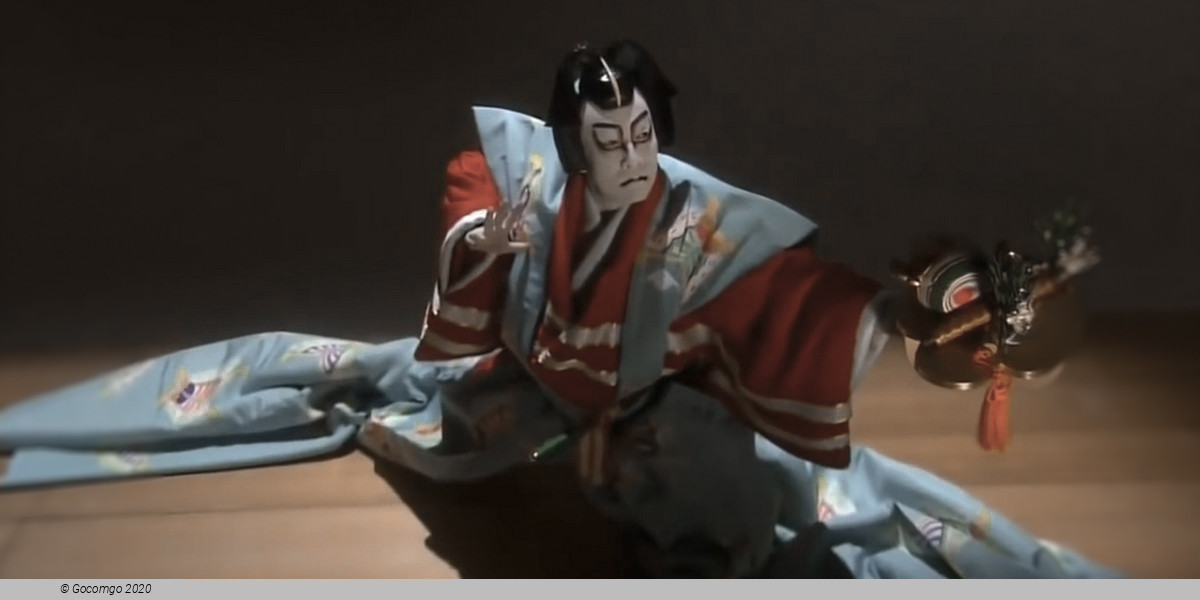
Based on the true historical story of Akechi Mitsuhide who betrayed his lord Oda Nobunaga and ruled Japan for a few short days before being defeated by Toyotomi Hideyoshi. This play focuses on Mitsuhide and his tortured relationship with the arrogant and unreasonable lord Nobunaga. It is one of the few period plays by Tsuruya Nanboku still performed today and brings the same sharp psychological insight and eye for the attractiveness of evil characters that make his ghost plays and plays about commoners so powerful. In this play, Nobunaga is called Harunaga. He orders Mitsuhide to supervise a reception ceremony for an important official. But the curtain around the enclosure has the crest of Mitsuhide's clan, and after beating him unmercifully, Harunaga has Mitsuhide struck on the forehead with an iron battle fan, leaving a big scar. In a later scene, Harunaga forces Mitsuhide to drink saké from a tub used to give water to horses and he humiliates Mitsuhide in other ways. In his heart of hearts, Mitsuhide decides to raise a rebellion against Harunaga.
Lord Tsunatoyo at his Ohama Estate from The Loyal 47 Rōnin of the Genroku Era
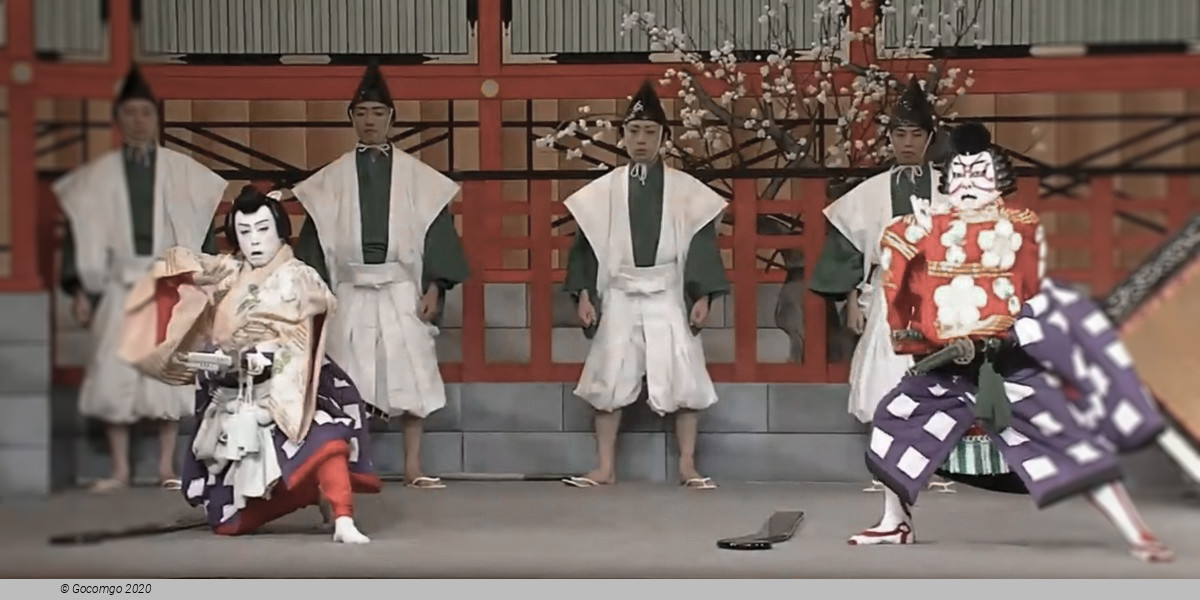
After Lord Asano Takumi no kami attacked and wounded Kira Kōzuke no suke within the shogun's palace in 1701, he was ordered to commit ritual suicide, his domain was confiscated and his retainers all became masterless samurai. A group of these masterless samurai are planning to avenge their lord's death by killing the man they hold responsible, Kira. The play is set in the year after Lord Asano's attack. Lord Tokugawa Tsunatoyo is holding a beachside party. Learning that Kira will attend this party, one of the masterless samurai, Tominomori Suke'emon, asks to observe from a distance. However, he hears from Lord Tsunatoyo that the Asano family will soon be reinstated, which means there will be no more reason for revenge. However, he ambushes Kira and makes his attack. The story focuses on the meanings of revenge.
Evening Show (4:15 PM )
Shaving the Beard with a Sickle from Kagekiyo's rebellion
After the fall of the Heike clan, the Genji warrior Mihonoya Shirō disguises himself as a blacksmith named Shirobē in Yamazaki near Kyoto in order to assassinate the famed Heike warrior Akushichibyōe Kagekiyo. Kagekiyo, disguised as a travelling priest, visits the forge and asks Shirobē to make him a sword. Hoping to render him helpless, Mihonoya plies him with saké, but Kagekiyo calmly drinks cup after cup. Once inside, Kagekiyo reveals his true identity. Mihonoya seizes the opportunity to strike, but even a sickle drawn across Kagekiyo's neck leaves him unharmed, revealing his extraordinary strength. Eventually surrounded and taken into custody, Kagekiyo accepts his fate with unwavering resolve.
The Fight between Firefighters and Sumō Wrestlers
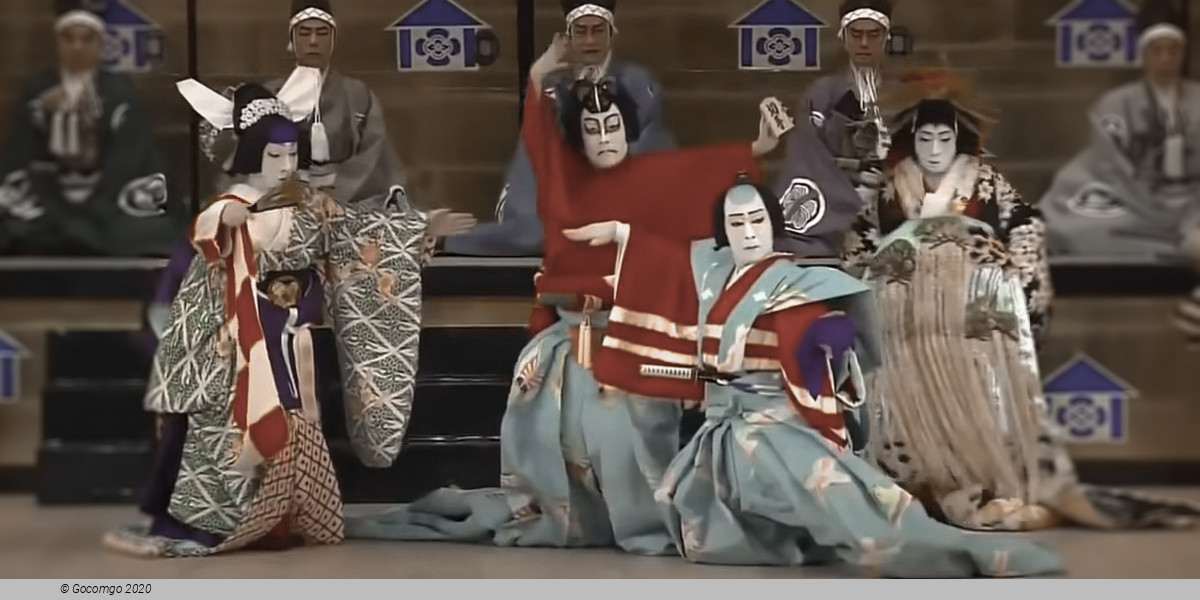
They used to say that fights and fires were the flowers of the city of Edo. This particular play depicts a rivalry between the members of the Megumi firefighting brigade and a group of sumō wrestlers. Ultimately, this is a confrontation between the firefighters, who represent the commoner class, and the samurai patrons of the sumō wrestlers. The fight begins with a minor incident but grows into a situation of such tension that when Tatsugorō, the leader of the firefighting gang, goes to his final fight, he prepares for death and has an emotional parting from his family. The 'tachimawari' (fight scene) between firefighters and sumō wrestlers is very spectacular!
The Mirror Lion
The palace maid Yayoi performs an auspicious lion dance for the shōgun in his opulent palace, but as she does so she gradually finds herself coming under the control of the lion spirit. In the second half of the dance, the lion spirit itself appears and performs its frenzied dance among peonies and fluttering butterflies.




 4 Chome-12-15 Ginza, Chuo City