Grand Theatre of the City of Luxembourg 23 February 2021 - Orphée et Eurydice | GoComGo.com

Orphée et Eurydice

Grand Theatre of the City of Luxembourg, Luxembourg, Luxembourg
All photos (7)
Select date and time
8 PM
Request for Tickets
Important Info
Type: Opera
City: Luxembourg, Luxembourg
Starts at: 20:00
Duration:
Sung in: French
Titles in: French,German

E-tickets: Print at home or at the box office of the event if so specified. You will find more information in your booking confirmation email.

You can only select the category, and not the exact seats.
If you order 2 or 3 tickets: your seats will be next to each other.
If you order 4 or more tickets: your seats will be next to each other, or, if this is not possible, we will provide a combination of groups of seats (at least in pairs, for example 2+2 or 2+3).

Overview

Orphée laments the death of Eurydice. His pain and his desire to return to his beloved are such that Love cedes to his request. He can bring Eurydice back from the underworld, albeit on one condition: he must not look at her, not even once, on their way back.
 

If Monteverdi is the inventor of opera, Gluck (1714-1787) is its reformer: reacting against baroque excess, he asks for more simplicity, naturalness, even austerity. The score is splendid and rich in contrasts.
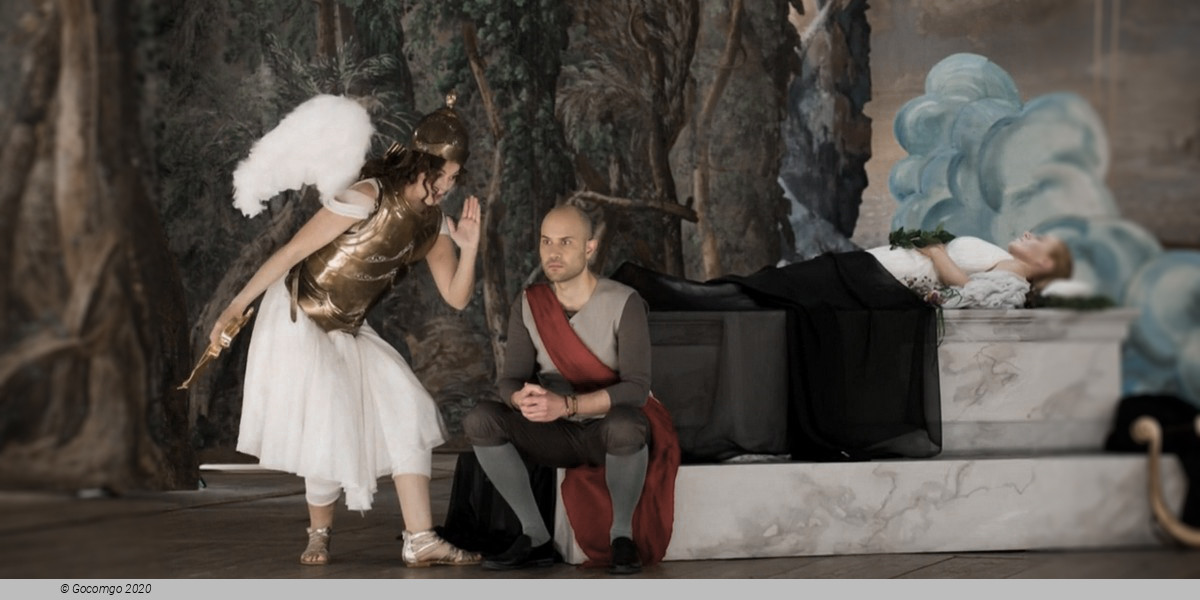
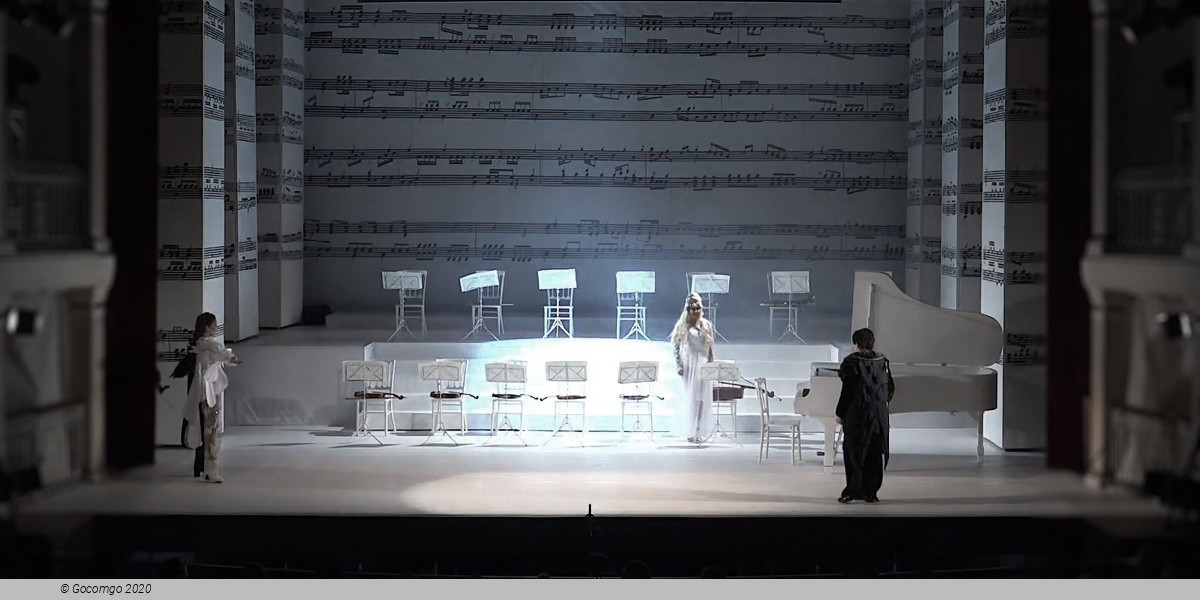
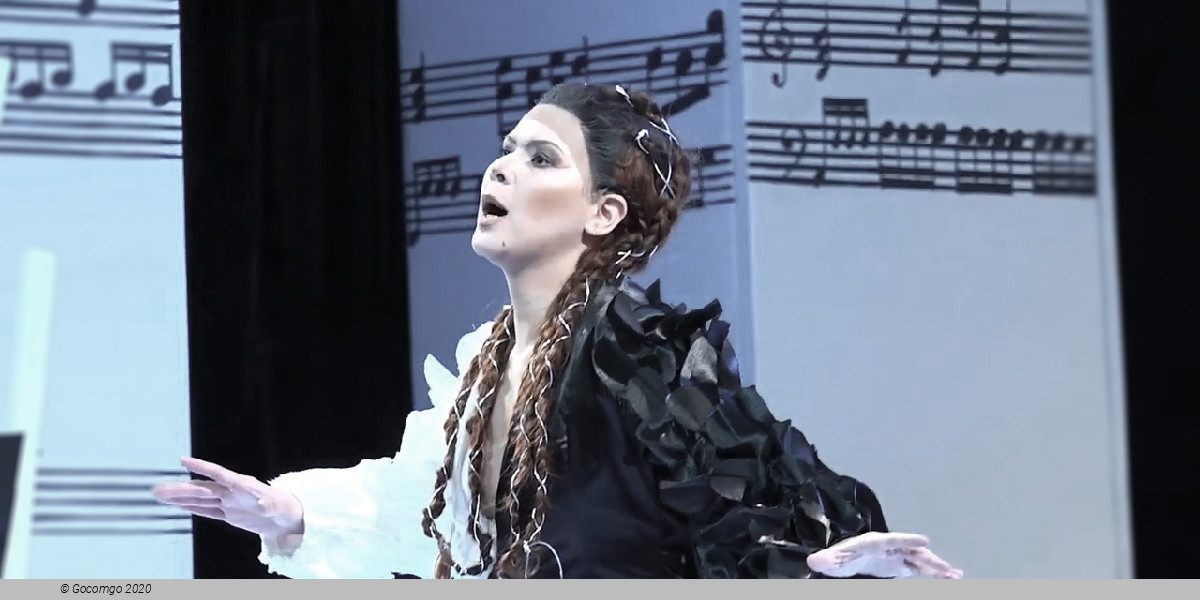
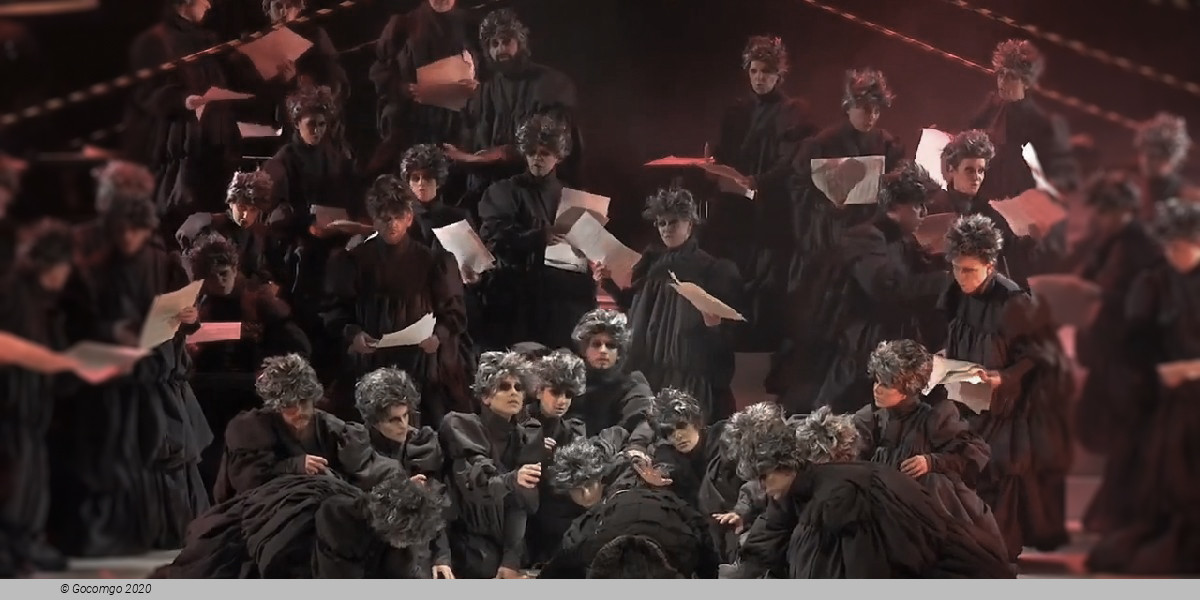
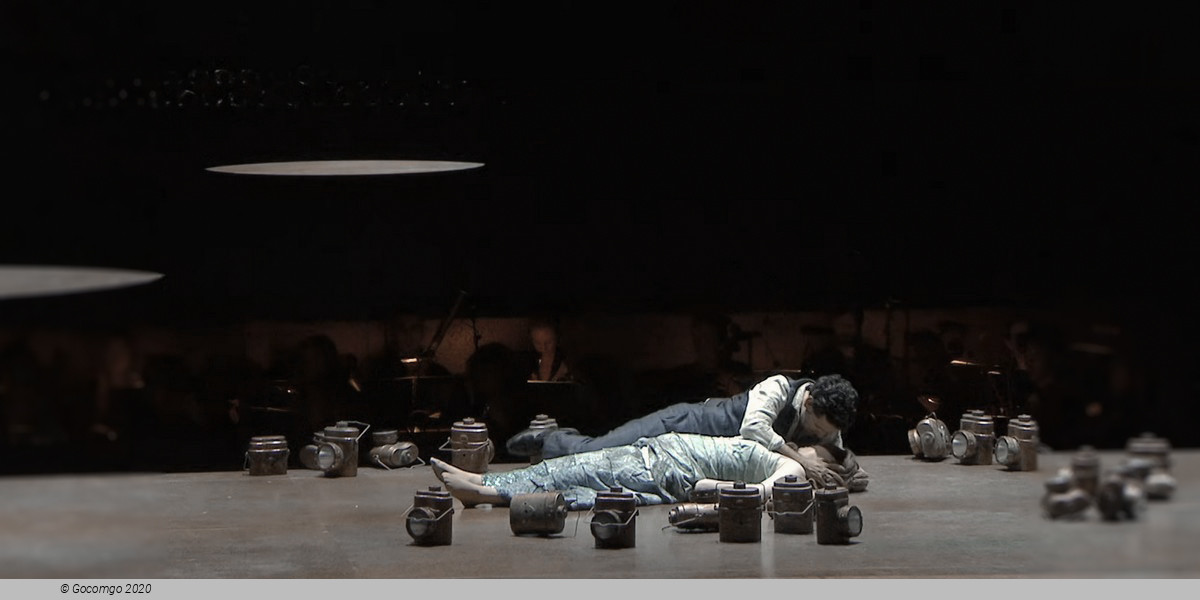
Aurélien Bory stages this fascinating descent into the underworld. As a choreographer, he has distinguished himself by a pluralistic approach to his art; he notably makes use of circus performers, takes an interest in the sciences and translates them onto the stage. Thus, for Orphée et Eurydice , an astonishing technical process allows him to multiply optical games, playing with perceptions and disappearances. Six dancers endow the story with a rhythm and become its masters of ceremony. Above all, Orphée is played by a woman, which opens up an innovative perspective. The love story thus gains an additional meaning: as a story of passion, it fleshes out Aristophanes's theory that man, once singular, was split into two, the search for love being the hope for reunion.
Fluidly handling the various colours, contrasts and atmospheres, Raphaël Pichon and his ensemble Pygmalion, who have made a name for themselves in interpreting works from the eighteenth century, bring out all the musical richness of this opera.

History
Premiere of this production: 05 October 1762, Burgtheater in Vienna

Orfeo ed Euridice is an opera composed by Christoph Willibald Gluck, based on the myth of Orpheus and set to a libretto by Ranieri de' Calzabigi. It belongs to the genre of the azione teatrale, meaning an opera on a mythological subject with choruses and dancing.

Synopsis

The first lines of arias, choruses, etc., are given in Italian (1762 version) and French (1774 version).

Act 1

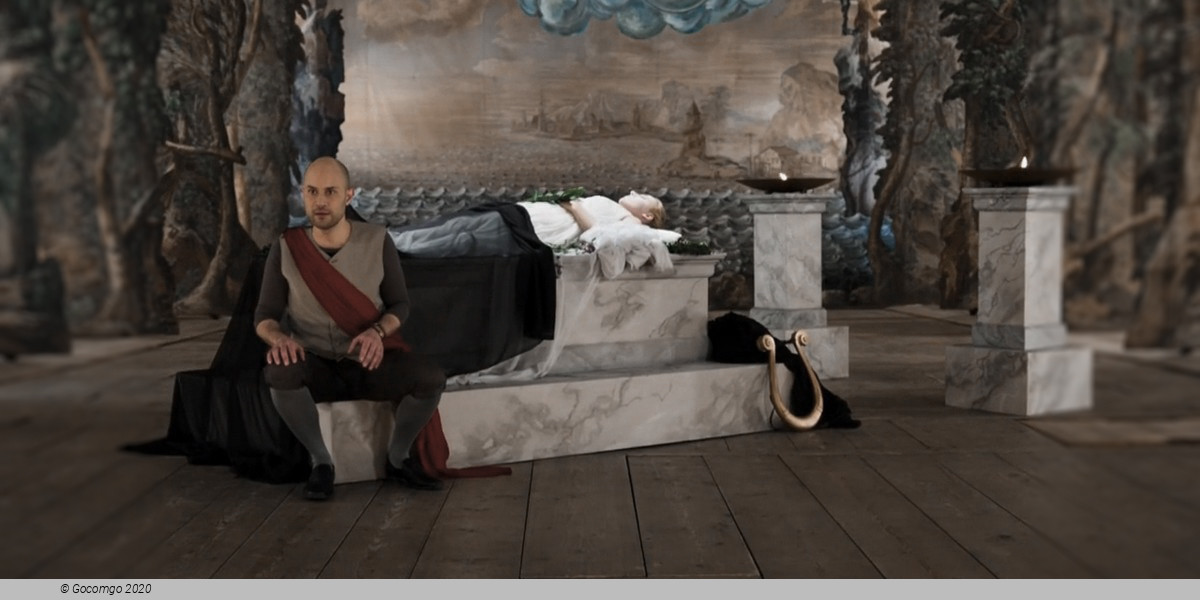
A chorus of nymphs and shepherds join Orfeo around the tomb of his wife Euridice in a solemn chorus of mourning; Orfeo is only able to utter Euridice's name (Chorus and Orfeo: "Ah, se intorno"/"Ah! Dans ce bois"). Orfeo sends the others away and sings of his grief in the aria "Chiamo il mio ben"/"Objet de mon amour", the three verses of which are preceded by expressive recitatives. This technique was extremely radical at the time and indeed proved overly so for those who came after Gluck: Mozart chose to retain the unity of the aria. Amore (Cupid) appears, telling Orfeo that he may go to the Underworld and return with his wife on the condition that he not look at her until they are back on earth (1774 only: aria by Amour, "Si les doux accords"). As encouragement, Amore informs Orfeo that his present suffering shall be short-lived with the aria "Gli sguardi trattieni"/"Soumis au silence". Orfeo resolves to take on the quest. In the 1774 version only he delivers an ariette ("L'espoir renaît dans mon âme") in the older, showier, Italian style, originally composed for an occasional entertainment, Il Parnaso confuso (1765), and subsequently re-used in another one, Le feste d'Apollo (1769).

Act 2

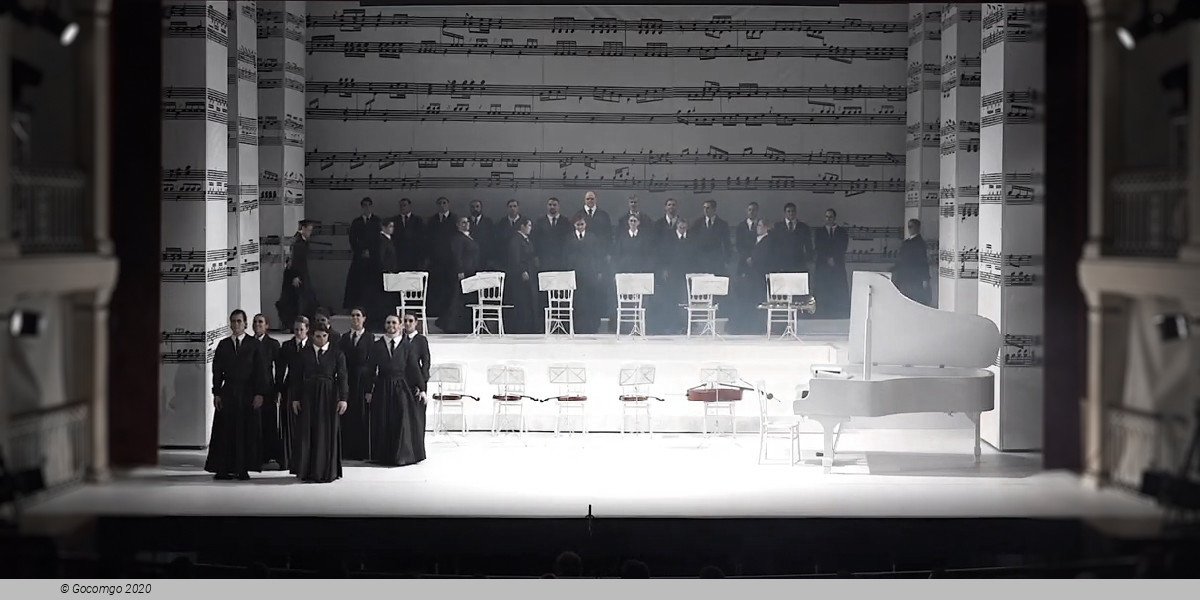
In a rocky landscape, the Furies refuse to admit Orfeo to the Underworld, and sing of Cerberus, its canine guardian ("Chi mai dell’Erebo"/"Quel est l'audacieux"). When Orfeo, accompanied by his lyre (represented in the opera by a harp), begs for pity in the aria "Deh placatevi con me"/"Laissez-vous toucher", he is at first interrupted by cries of "No!"/"Non!" from the Furies, but they are eventually softened by the sweetness of his singing in the arias "Mille pene"/"Ah! La flamme" and "Men tiranne"/"La tendresse", and let him in ("Ah, quale incognito affetto"/"Quels chants doux"). In the 1774 version, the scene ends with the "Dance of the Furies" (No. 28).

The second scene opens in Elysium. The brief ballet of 1762 became the four-movement "Dance of the Blessed Spirits" (with a prominent part for solo flute) in 1774. This is followed (1774 only) by a solo which celebrates happiness in eternal bliss ("Cet asile"), sung by either an unnamed Spirit or Euridice, and repeated by the chorus. Orfeo arrives and marvels at the purity of the air in an arioso ("Che puro ciel"/"Quel nouveau ciel"). But he finds no solace in the beauty of the surroundings, for Euridice is not yet with him. He implores the spirits to bring her to him, which they do (Chorus: "Torna, o bella"/"Près du tendre objet").

Act 3

On the way out of Hades, Euridice is delighted to be returning to earth, but Orfeo, remembering the condition related by Amore in act 1, lets go of her hand and refusing to look at her, does not explain anything to her. She does not understand his action and reproaches him, but he must suffer in silence (Duet: "Vieni, appaga il tuo consorte"/"Viens, suis un époux"). Euridice takes this to be a sign that he no longer loves her, and refuses to continue, concluding that death would be preferable. She sings of her grief at Orfeo's supposed infidelity in the aria "Che fiero momento"/"Fortune ennemie" (in 1774, there is a brief duet before the reprise). Unable to take any more, Orfeo turns and looks at Euridice; again, she dies. Orfeo sings of his grief in the famous aria "Che farò senza Euridice?"/"J’ai perdu mon Eurydice" ("What shall I do without Euridice?"/"I have lost my Euridice") Orfeo decides he will kill himself to join Euridice in Hades, but Amore returns to stop him (1774 only: Trio: "Tendre Amour"). In reward for Orfeo's continued love, Amore returns Euridice to life, and she and Orfeo are reunited. After a four-movement ballet, all sing in praise of Amore ("Trionfi Amore"). In the 1774 version, the chorus ("L’Amour triomphe") precedes the ballet, to which Gluck had added three extra movements.


Venue Info

Grand Theatre of the City of Luxembourg - Luxembourg
Location   1 Boulevard Robert Schuman

The Grand Théâtre de Luxembourg, inaugurated in 1964 as the Théâtre Municipal de la Ville de Luxembourg is the city's major venue for drama, opera and ballet. It underwent renovation work in 2002–2003 resulting in substantial improvements to the stage technology, acoustics and lighting facilities.

Since 1869, Luxembourg City's main theatre had been the Théâtre des Capucins located near the centre of the old town. In December 1958, after the need for a properly designed theatre building had become a priority, a competition was launched with a view to completing the construction work for the millennium celebrations in 1963. The winner was Alain Bourbonnais (1925–1988), a Parisian architect. Work began in autumn 1959 and the theatre was festively inaugurated on 15 April 1964.

Over the years, it became increasingly difficult to cope with the staging requirements of touring companies. Safety requirements also needed to be upgraded while asbestos had to be removed from the existing fabric. The work was entrusted to Kurt Gerling and Werner Arendt of Gerling + Arendt Planungsgesellschaft mbH of Berlin. Hence, in 2002–2003 the building was equipped with modern facilities and technical features, satisfying European requirements in regard to stage technology and facility management while the distinctive architecture of the original 1960s building remained intact

Important Info
Type: Opera
City: Luxembourg, Luxembourg
Starts at: 20:00
Duration:
Sung in: French
Titles in: French,German
Top of page