
Dutch National Opera tickets 9 June 2027 - Premiere La damnation de Faust | GoComGo.com

Premiere
La damnation de Faust

Dutch National Opera, Main Stage, Amsterdam, Netherlands
All photos (7)
Select date and time
7:30 PM
From
US$ 117

E-tickets: Print at home or at the box office of the event if so specified. You will find more information in your booking confirmation email.

You can only select the category, and not the exact seats.
If you order 2 or 3 tickets: your seats will be next to each other.
If you order 4 or more tickets: your seats will be next to each other, or, if this is not possible, we will provide a combination of groups of seats (at least in pairs, for example 2+2 or 2+3).

Important Info
Type: Opera
City: Amsterdam, Netherlands
Starts at: 19:30
Acts: 4
Sung in: French

E-tickets: Print at home or at the box office of the event if so specified. You will find more information in your booking confirmation email.

You can only select the category, and not the exact seats.
If you order 2 or 3 tickets: your seats will be next to each other.
If you order 4 or more tickets: your seats will be next to each other, or, if this is not possible, we will provide a combination of groups of seats (at least in pairs, for example 2+2 or 2+3).

Cast
Performers
Conductor: Stéphane Denève
Tenor: John Osborn (Faust)
Choir: (part of Nieuw Vocaal Amsterdam) Nieuw Amsterdams Cildrens Chorus
Mezzo-Soprano: Angela Brower (Marguerite)
Choir: Chorus of Dutch National Opera
Bass-Baritone: Kyle Ketelsen (Méphistophélès)
Creators
Composer: Hector Berlioz
Librettist: Almire Gandonnière
Chorus Master: Anais Morandais
Co-production: Ballet Rotterdam Scapino
Librettist: de Nerva Gérard
Chorus Master: Edward Ananian-Cooper
Librettist: Hector Berlioz
Librettist: Johann Wolfgang von Goethe
Stage Director: Nanine Linning
Choreography: Nanine Linning
Overview

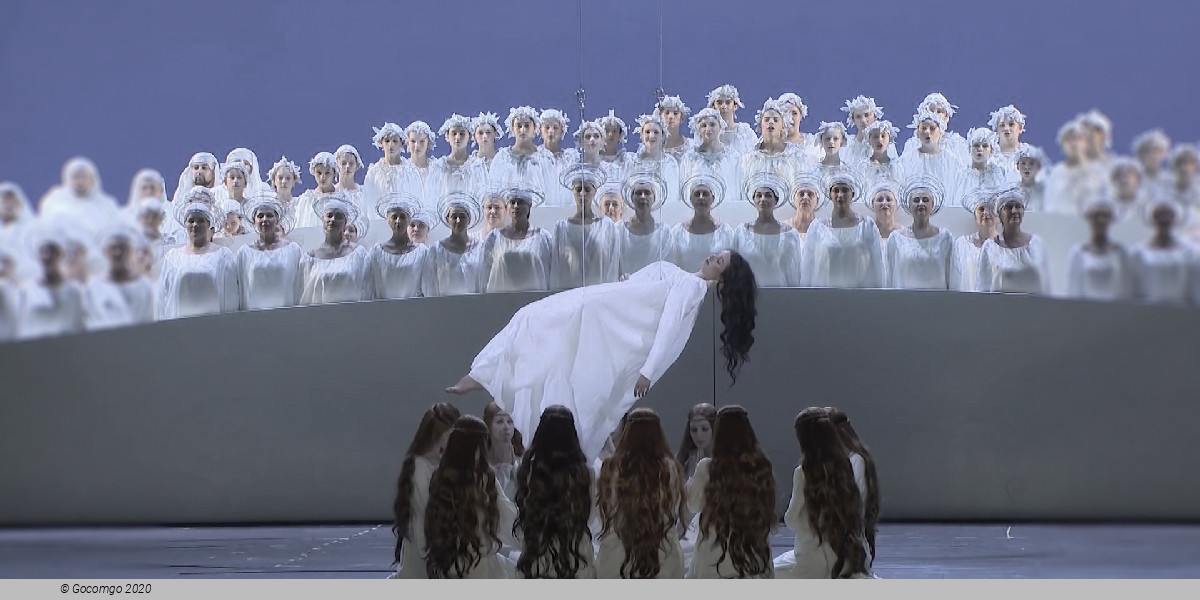
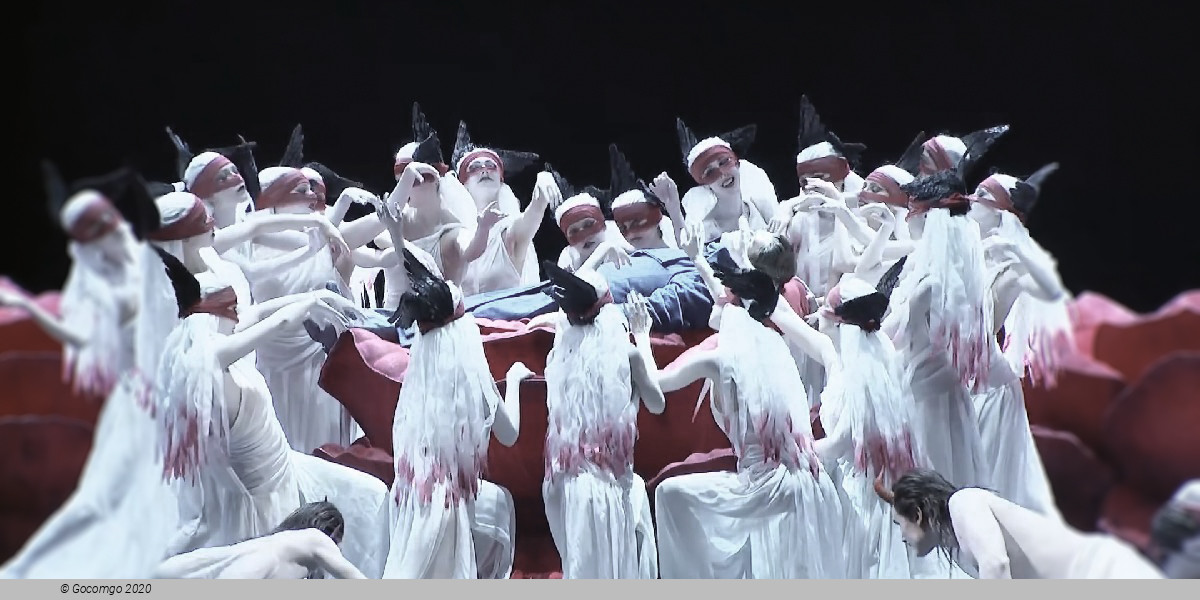
Berlioz’s richly varied score – full of choral scenes, dances and grand orchestral moments – perfectly suits the artistic signature of director and choreographer Nanine Linning. Linning, Artistic Director of Scapino Ballet Rotterdam, brings in her company's dancers to animate the choreography in this new production.

She also collaborates with visual artist Levi van Veluw. This multidisciplinary artist attracted attention in 2024 with his major solo exhibition at the Singer Museum. Together, they invite the audience into Faust’s inner world: associative, obsessive, and constantly in motion.

French composer Hector Berlioz became fascinated with Goethe’s Faust at a young age. He later adapted the masterpiece to create his own ‘légende dramatique’, a grandiose work for the concert hall, with the dramatic, expressive power of an opera.

The work perfectly suits the artistic signature of Nanine Linning, who previously demonstrated her ability to poetically blend music with her production of Samy Moussa’s Antigone (2024).

Stéphane Denève, who cherishes a deep love for the French repertoire, returns after Pelléas et Mélisande (2019) to lead the Royal Concertgebouw Orchestra through Berlioz’s score. The Chorus of Dutch National Opera takes the stage in full formation, accompanied by dancers of Scapino Ballet Rotterdam and a cast of leading soloists. 

The demanding title role is sung by tenor and audience favourite John Osborn. Kyle Ketelsen and Angela Brower return to Amsterdam as Méphistophélès and Marguerite respectively.

History
Premiere of this production: 06 December 1846, Opéra-Comique in Paris

La damnation de Faust (English: The Damnation of Faust) is a work for four solo voices, full seven-part chorus, a large children's chorus and orchestra by the French composer Hector Berlioz. He called it a "légende dramatique" (dramatic legend). It was first performed at the Opéra-Comique in Paris on 6 December 1846.

Synopsis

Part I

The aging scholar Faust contemplates the renewal of nature. Hearing peasants sing and dance, he realizes that their simple happiness is something he will never experience. An army marches past in the distance (Hungarian March). Faust doesn't understand why the soldiers are so enthusiastic about glory and fame.

Part II
Depressed, Faust has returned to his study. Even the search for wisdom can no longer inspire him. Tired of life, he is about to commit suicide when the sound of church bells and an Easter hymn remind him of his youth, when he still had faith in religion. Suddenly Méphistophélès appears, ironically commenting on Faust's apparent conversion. He offers to take him on a journey, promising him the restoration of his youth, knowledge, and the fulfillment of all his wishes. Faust accepts.

Méphistophélès and Faust arrive at Auerbach's tavern in Leipzig, where Brander, a student, sings a song about a rat whose high life in a kitchen is ended by a dose of poison. The other guests offer an ironic "Amen", and Méphistophélès continues with another song about a flea that brings his relatives to infest a whole royal court (Song of the Flea). Disgusted by the vulgarity of it all, Faust demands to be taken somewhere else.

On a meadow by the Elbe, Méphistophélès shows Faust a dream vision of a beautiful woman named Marguerite, causing Faust to fall in love with her. He calls out her name, and Méphistophélès promises to lead Faust to her. Together with a group of students and soldiers, they enter the town where she lives.

Part III

Faust and Méphistophélès hide in Marguerite's room. Faust feels that he will find in her, his ideal of a pure and innocent woman ("Merci, doux crépuscule!"). Marguerite enters and sings a ballad about the King of Thule, who always remained sadly faithful to his lost love ("Autrefois, un roi de Thulé"). Méphistophélès summons spirits to enchant and deceive the girl and sings a sarcastic serenade outside her window, predicting her loss of innocence. When the spirits have vanished, Faust steps forward. Marguerite admits that she has dreamed of him, just as he has dreamed of her, and they declare their love for each other. Just then, Méphistophélès bursts in, warning them that the girl's reputation must be saved: the neighbors have learned that there is a man in Marguerite's room and have called her mother to the scene. After a hasty goodbye, Faust and Méphistophélès escape.

Part IV

Faust has seduced, then abandoned Marguerite, who still awaits his return ("D'amour l'ardente flamme"). She can hear soldiers and students in the distance, which reminds her of the night Faust first came to her house. But this time he is not among them.

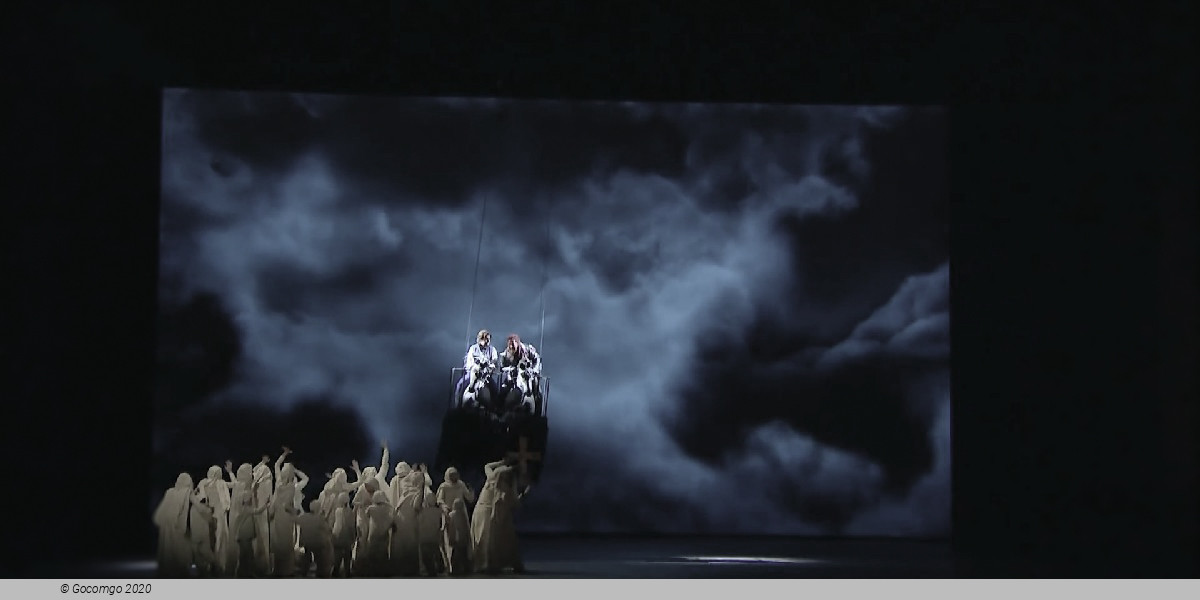
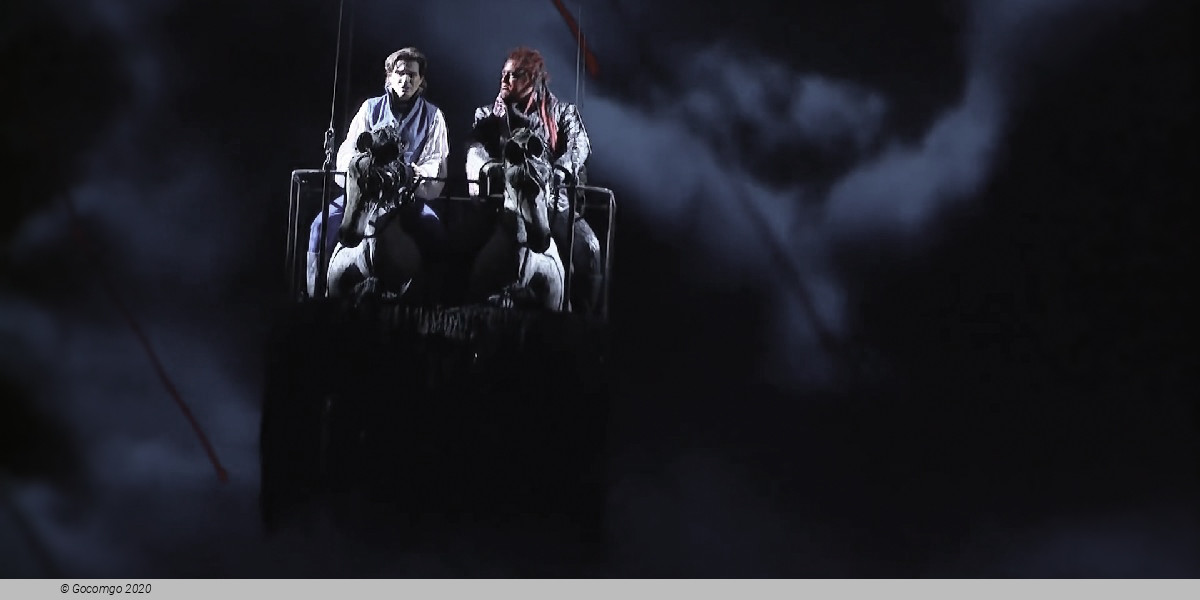
Faust calls upon nature to cure him of his world-weariness ("Nature immense, impénétrable et fière"). Méphistophélès appears and tells him that Marguerite is in prison. While awaiting Faust's return, she has given her mother the sleeping potion Faust had previously provided to calm her mother during their nights of love, and used it so often that she has killed the old woman, and now is to be hanged the next day. Faust panics, but Méphistophélès claims he can save her—if Faust relinquishes his soul to him. Unable to think of anything but saving Marguerite, Faust agrees. The two ride off on a pair of black horses.

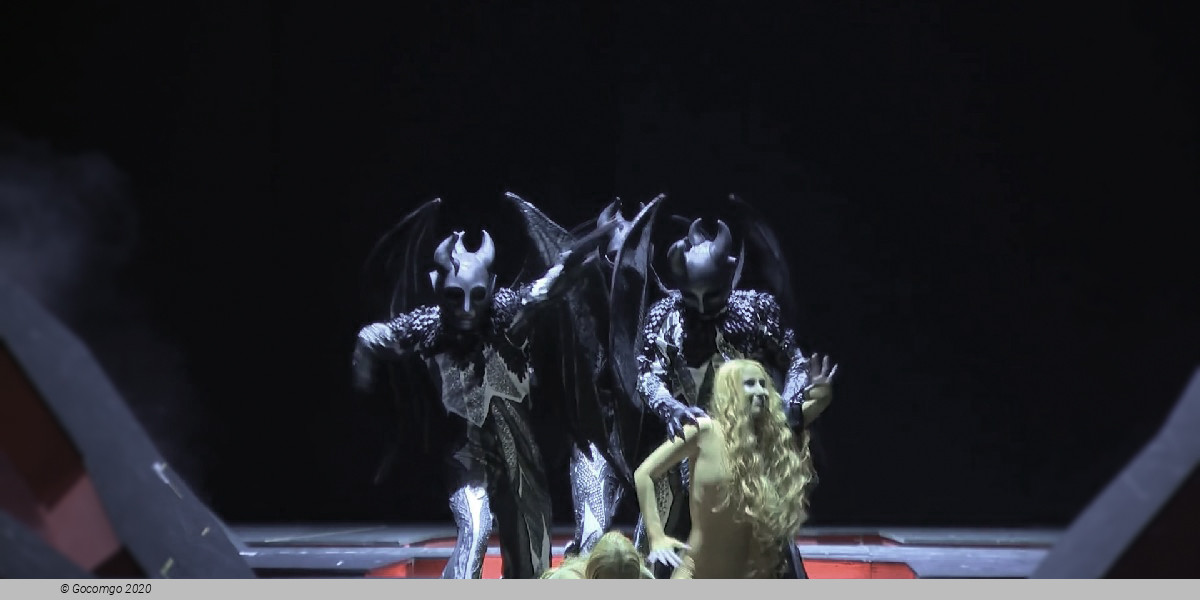
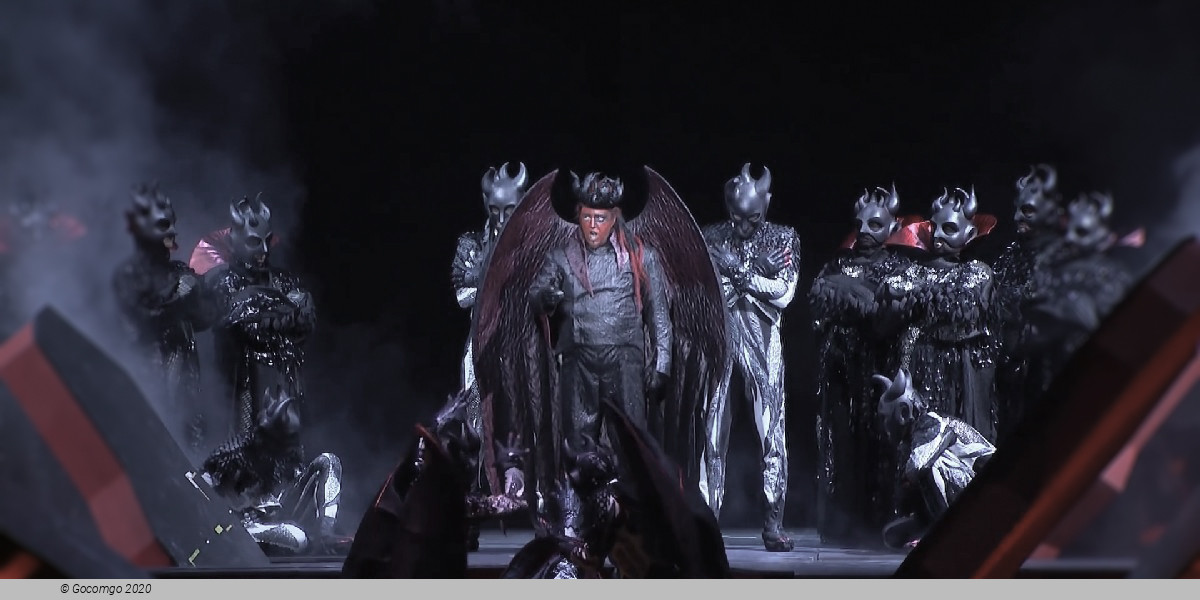
Thinking they are on their way to Marguerite, Faust becomes terrified when he sees demonic apparitions. The landscape becomes more and more horrible and grotesque, and Faust finally realizes that Méphistophélès has taken him directly into hell. Demons and damned spirits greet Méphistophélès in a mysterious infernal language and welcome Faust among them.

Hell has fallen silent after Faust's arrival—the torment he suffers is unspeakable. Marguerite is saved and welcomed into heaven.

Venue Info

Dutch National Opera - Amsterdam
Location   Amstel 3

The Dutch National Opera is the largest theatre production house in the Netherlands. Situated in the heart of Amsterdam, the iconic theatre of Dutch National Opera & Ballet offers a magnificent view of the River Amstel and the famous Magere Brug (Skinny Bridge). The various spaces form an inspiring backdrop for a whole range of special events.

Dutch National Opera & Ballet is a young theatre with a long history. The plans for building a new theatre ran parallel to the plans for a new city hall. The first discussions held by the Amsterdam city council about building a new city hall and opera house go back to 1915. At that time, the plans were specifically for an opera house, since ballet was a relatively unknown art form back then.

Ideas for the site of the new city hall and opera house were continually changing, and the idea that both buildings could form a single complex only emerged much later. Sites considered for the new city hall were initially the Dam, followed by the Frederiksplein, and finally the Waterlooplein.

In 1955, the city council commissioned the firm of architects Berghoef and Vegter to draft a design for a city hall on the Waterlooplein. The draft was approved, but in 1964 the council ended the association with the architects, as the final design was nothing like the original plans they had been shown. In 1967, a competition was held for a new design, with the Viennese architect Wilhelm Holzbauer emerging as the winner. Amsterdam's financial problems, however, meant that the plans for the new city hall were put on hold for several years.

DNO has its own choir of sixty singers and technical staff of 260. DNO historically has not had its own resident orchestra, and so various orchestras of the Netherlands, including the Netherlands Philharmonic Orchestra (NPO), the Netherlands Chamber Orchestra (NKO), the Royal Concertgebouw Orchestra, the Rotterdam Philharmonic Orchestra, the Radio Filharmonisch Orkest and the Asko/Schönberg ensemble have provided the orchestral forces for DNO productions.

DNO produces on average eleven productions per year. While most performances are in the Dutch National Opera & Ballet building, the company has also performed in the Stadsschouwburg, at the Carré Theatre, and on the Westergasfabriek industrial site in Amsterdam. For many years, the June production has been organized as part of the Holland Festival and includes the participation of the Royal Concertgebouw Orchestra. DNO has lent its productions to foreign companies, such as the Metropolitan Opera, the Brooklyn Academy of Music, the Lincoln Center Festival in New York, as well as the Adelaide Festival in Australia.

Since 1988, the French-Lebanese theatre director Pierre Audi has been the artistic director of DNO. Audi is scheduled to conclude his DNO tenure in 2018. In April 2017, DNO announced the appointment of Sophie de Lint as the company's next artistic director, effective 1 September 2018.

Hartmut Haenchen was chief conductor from 1986 to 1999, in parallel with holding the title of chief conductor of the NPO. He subsequently held the title of principal guest conductor with DNO. Subsequent chief conductors have been Edo de Waart (1999-2004) and Ingo Metzmacher (2005-2008). In March 2009, DNO announced the appointment of Marc Albrecht as the orchestra's next chief conductor, with the 2011-2012 season, for an initial contract of four years. This return to a single chief conductor at both DNO and the NPO/NKO allows for the NPO to become the principal opera orchestra for DNO. Albrecht is scheduled to stand down as chief conductor of DNO at the end of the 2019-2020 season.

Important Info
Type: Opera
City: Amsterdam, Netherlands
Starts at: 19:30
Acts: 4
Sung in: French
Top of page