
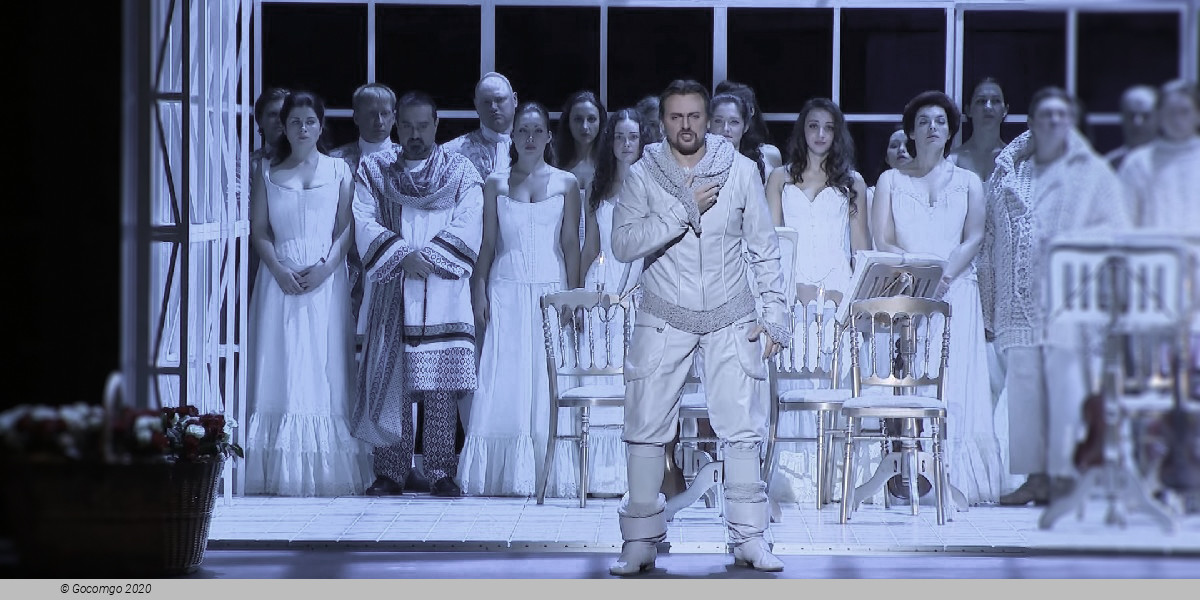
Dutch National Opera tickets 16 April 2027 - Iolanta | GoComGo.com

Iolanta

Dutch National Opera, Main Stage, Amsterdam, Netherlands
All photos (7)
Select date and time
8 PM
From
US$ 108

E-tickets: Print at home or at the box office of the event if so specified. You will find more information in your booking confirmation email.

You can only select the category, and not the exact seats.
If you order 2 or 3 tickets: your seats will be next to each other.
If you order 4 or more tickets: your seats will be next to each other, or, if this is not possible, we will provide a combination of groups of seats (at least in pairs, for example 2+2 or 2+3).

Important Info
Type: Opera
City: Amsterdam, Netherlands
Starts at: 20:00
Acts: 1
Duration: 1h 45min
Sung in: Russian

E-tickets: Print at home or at the box office of the event if so specified. You will find more information in your booking confirmation email.

You can only select the category, and not the exact seats.
If you order 2 or 3 tickets: your seats will be next to each other.
If you order 4 or more tickets: your seats will be next to each other, or, if this is not possible, we will provide a combination of groups of seats (at least in pairs, for example 2+2 or 2+3).

Cast
Performers
Conductor: Kwamé Ryan
Bass: Ain Anger (René, King of Provence)
Baritone: Audun Iversen (Robert)
Choir: Chorus of Dutch National Opera
Tenor: Dumitru Mîțu (Vaudémont)
Mezzo-Soprano: Eva Kroon (Marta, Bertrand's wife, Iolanta's nursemaid)
Soprano: Eva Rae Martinez (Brigitta, Iolanta's friend)
Bass: Jasurbek Khaydarov (Bertrand, doorkeeper of the castle)
Soprano: Kristina Mkhitaryan (Iolanta)
Baritone: Thomas Lehman (Ibn-Hakia, a Moorish physician)
Creators
Composer: Pyotr Tchaikovsky
Choreographer: Otto Pichler
Director: Evgeny Titov
Choir conductor: Irina Sisoyeva
Librettist: Modest Ilyich Tchaikovsky
Co-production: Staatsoper Wiener
Overview

What can you miss if you don’t know what you’re missing? In his final opera, Pyotr Ilyich Tchaikovsky created an intimate swan song about knowledge, truth and the healing power of love.

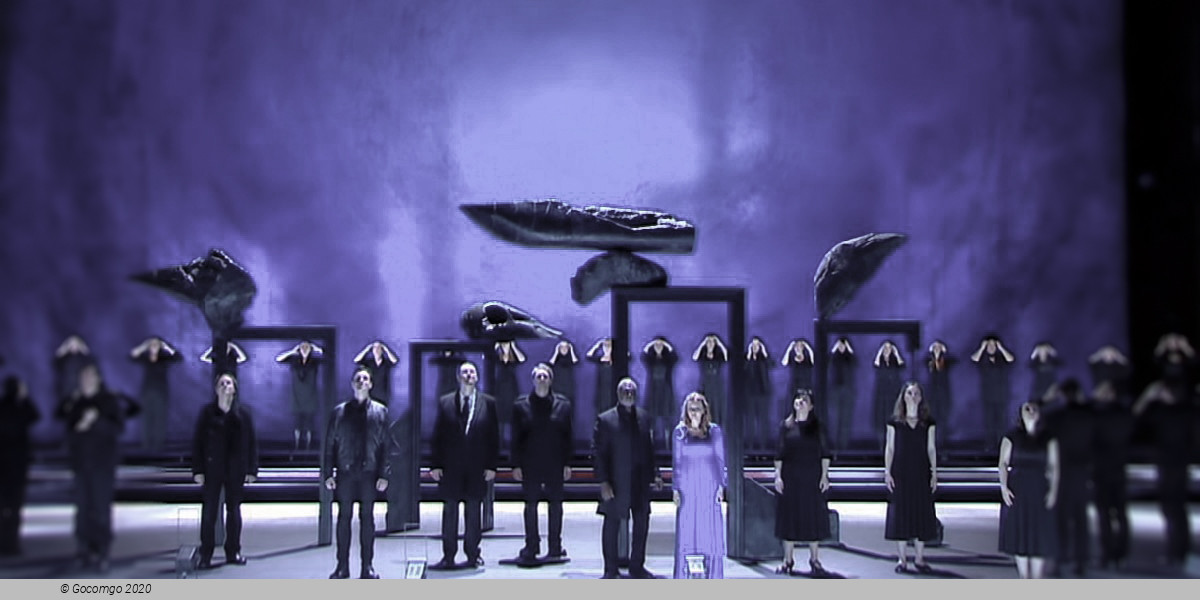
Theatre and opera director Evgeny Titov is renowned for his beautifully detailed and emotionally charged productions. In an opera that is so emphatically about light, he searches for shadow. “Which is better,” he wondered, “sweet lies or the bitter truth?”

Grammy-winning conductor Kwamé Ryan previously made a strong impression in Amsterdam with the productions Blue (2022) and Die ersten Menschen (2025). In Iolanta, he leads the Rotterdam Philharmonic Orchestra through Tchaikovsky’s score. This music is close to Ryan’s heart: with his own orchestra, the Charlotte Symphony, he is working on a cycle of all Tchaikovsky’s symphonies.

Soprano Kristina Mkhitaryan is enthralling audiences worldwide with her lyrical, expressive timbre and emotional eloquence. After her moving interpretations of Liù (Turandot) and the title role in Maria Stuarda, she returns to Dutch National Opera to make her role debut as Iolanta.

Her beloved, Vaudémont, is portrayed by tenor Dumitru Mîțu, who recently impressed audiences at Dutch National Opera in Boris Godunov. Ain Anger, one of today’s leading basses, takes on the role of Iolanta’s overprotective father.

History
Premiere of this production: 18 December 1892, Mariinsky Theatre, Saint Petersburg

Iolanta is a lyric opera in one act by Pyotr Tchaikovsky. It was the last opera he composed. The libretto was written by the composer's brother Modest Tchaikovsky, and is based on the Danish play Kong Renés Datter (King René's Daughter) by Henrik Hertz, a romanticised account of the life of Yolande de Bar. In the original Danish play, the spelling of the princess's name was "Iolanthe", later adopted for the otherwise unrelated Gilbert and Sullivan operetta of that name. The play was translated by Fyodor Miller and adapted by Vladimir Zotov. The opera received its premiere on 18 December 1892 in Saint Petersburg.

Synopsis


Time: 15th century

Place: Mountains of southern France

Scene 1
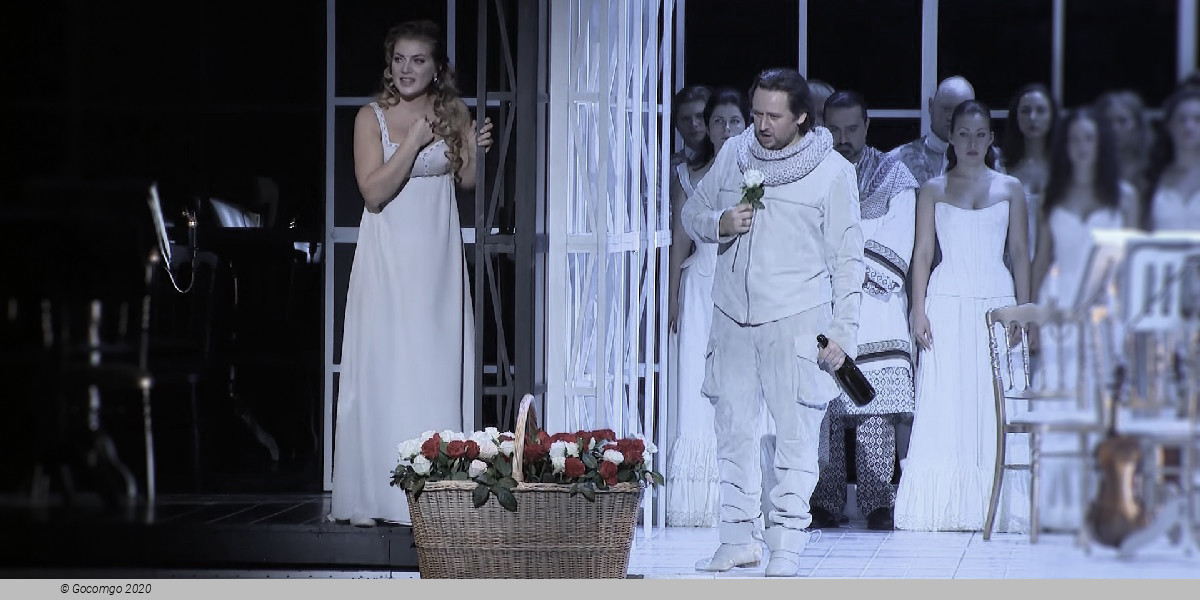
Princess Iolanta has been blind from birth. No one has ever told her (nor does she know) that she is a princess. She lives in a beautiful enclosed garden on the king's estate, secluded from the world, in the care of Bertrand and Martha. Her attendants bring flowers and sing to her. She declares her sadness, and her vague sense that she is missing something important that other people can experience. Her father, King René insists that she not discover she is blind, or that her betrothed, Duke Robert, find out about this.

Scene 2
After announcing the king's arrival, Alméric is warned by Bertrand not to speak of light with Iolanta or to reveal that Iolanta's father is the king. The king arrives with Ibn-Hakia, a famed Moorish physician who states that Iolanta can be cured, but the physical cure will only work if she is psychologically prepared by being made aware of her own blindness. Ibn-Hakia sings the monologue "Two worlds", explaining the interdependence of the mind and the body within the divinely ordained universe, which merges spirit and matter. The king refuses the treatment, fearing for Iolanta's happiness if the cure should fail after she has learned what she is missing.

Scene 3
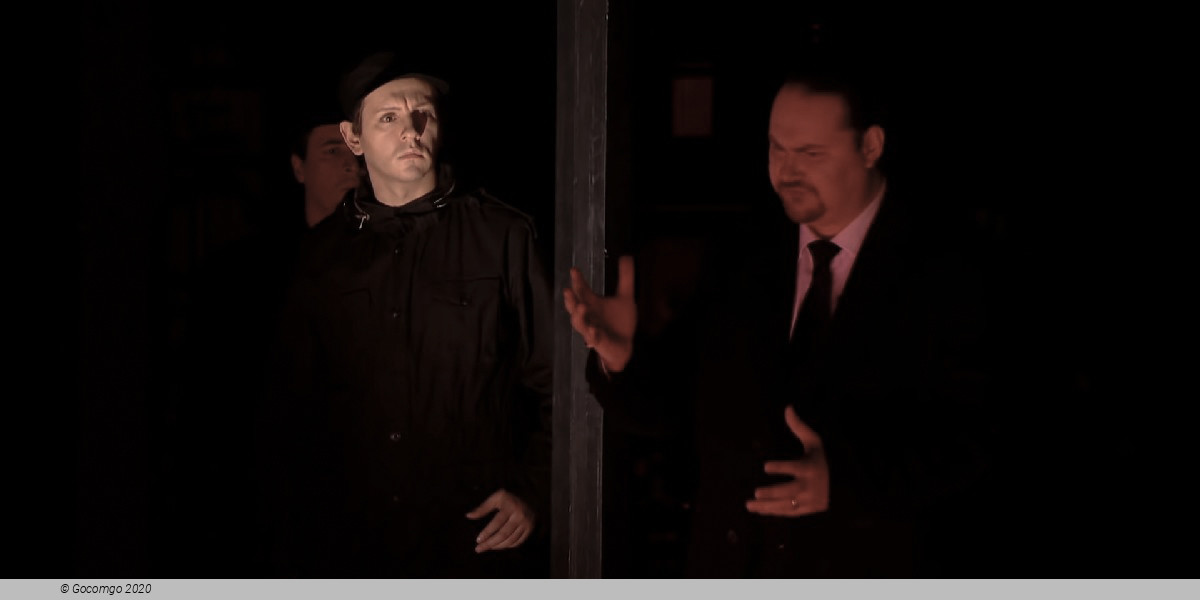
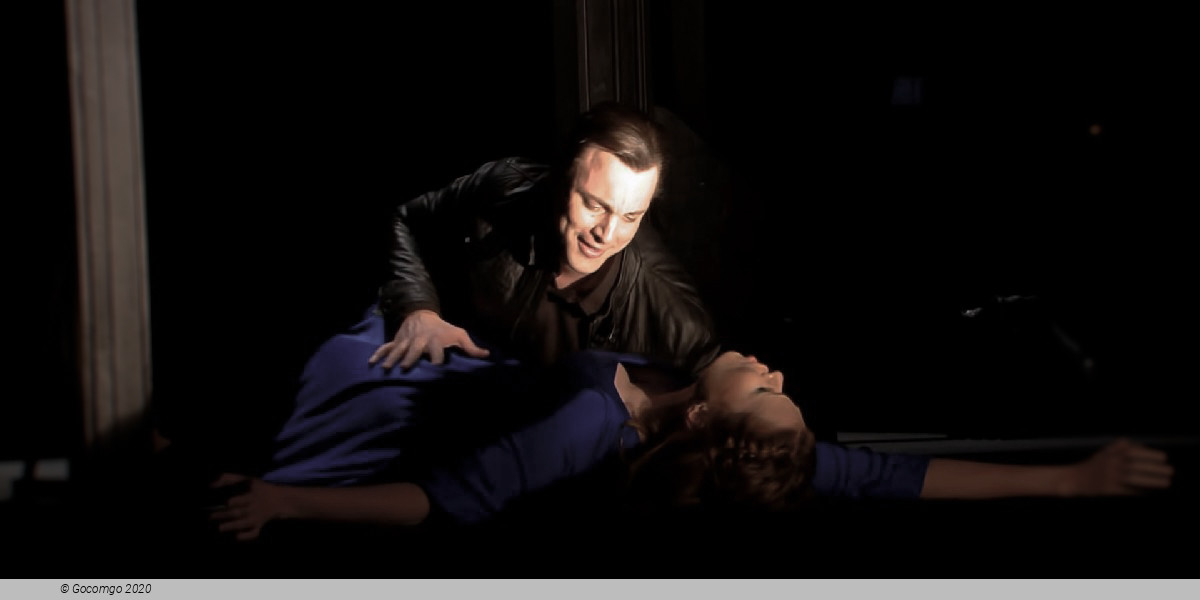
Robert arrives at the court with his friend Count Vaudémont. Robert tells Vaudémont that he wishes to avoid the marriage as he has fallen in love with Countess Matilde. He sings of his love in his aria "Who can compare with my Mathilde" (Кто может сравниться с Матильдой моей). Vaudémont finds the entrance to Iolanta's secret garden, ignoring the sign which threatens death to anyone who enters. He sees the sleeping Iolanta, without realising who she is and instantly falls in love. Robert, astounded by his friend's behavior, is convinced she is a sorceress who has bewitched Vaudémont. He tells him to leave, but Vaudémont is too entranced. Robert departs to bring troops to rescue him. Iolanta awakes and Vaudémont, who asks her to give him a red rose as a keepsake, realizes she is blind when she twice offers him a white one. She has no concept of light, vision or blindness. They fall in love, after he explains light and color to her.

Scene 4
The couple are discovered by the king. Vaudémont pledges his love, whether Iolanta is blind or not. Ibn-Hakia tells the king that as Iolanta is now aware of her blindness, the treatment might be a success. Iolanta who has no will to see, is unsure therefore whether she should agree to treatment or not. Ibn-Hakia points out that the lack of will proves that, without inner desire, change cannot take place.

After Vaudémont admits seeing the warning sign at the garden entrance, the furious king threatens to execute him for revealing the truth to Iolanta. He tells Iolanta Vaudémont will die if the physician fails to restore her sight, in the hope that this will restore her will. Iolanta is horrified, and agrees to the treatment. After Ibn-Hakia leaves with Iolanta, the king explains to Vaudémont that he was feigning in order to motivate Iolanta. Robert returns with his troops. He admits to the king he has fallen in love with another, but is still willing to go ahead with the agreed marriage. The king cancels the wedding contract, and gives Iolanta to Vaudémont. Ibn-Hakia and Iolanta return. The treatment has worked and Iolanta can see. At first uncertain of her new gift, she eventually sings of the magical new world now visible to her. The court rejoices.

Venue Info

Dutch National Opera - Amsterdam
Location   Amstel 3

The Dutch National Opera is the largest theatre production house in the Netherlands. Situated in the heart of Amsterdam, the iconic theatre of Dutch National Opera & Ballet offers a magnificent view of the River Amstel and the famous Magere Brug (Skinny Bridge). The various spaces form an inspiring backdrop for a whole range of special events.

Dutch National Opera & Ballet is a young theatre with a long history. The plans for building a new theatre ran parallel to the plans for a new city hall. The first discussions held by the Amsterdam city council about building a new city hall and opera house go back to 1915. At that time, the plans were specifically for an opera house, since ballet was a relatively unknown art form back then.

Ideas for the site of the new city hall and opera house were continually changing, and the idea that both buildings could form a single complex only emerged much later. Sites considered for the new city hall were initially the Dam, followed by the Frederiksplein, and finally the Waterlooplein.

In 1955, the city council commissioned the firm of architects Berghoef and Vegter to draft a design for a city hall on the Waterlooplein. The draft was approved, but in 1964 the council ended the association with the architects, as the final design was nothing like the original plans they had been shown. In 1967, a competition was held for a new design, with the Viennese architect Wilhelm Holzbauer emerging as the winner. Amsterdam's financial problems, however, meant that the plans for the new city hall were put on hold for several years.

DNO has its own choir of sixty singers and technical staff of 260. DNO historically has not had its own resident orchestra, and so various orchestras of the Netherlands, including the Netherlands Philharmonic Orchestra (NPO), the Netherlands Chamber Orchestra (NKO), the Royal Concertgebouw Orchestra, the Rotterdam Philharmonic Orchestra, the Radio Filharmonisch Orkest and the Asko/Schönberg ensemble have provided the orchestral forces for DNO productions.

DNO produces on average eleven productions per year. While most performances are in the Dutch National Opera & Ballet building, the company has also performed in the Stadsschouwburg, at the Carré Theatre, and on the Westergasfabriek industrial site in Amsterdam. For many years, the June production has been organized as part of the Holland Festival and includes the participation of the Royal Concertgebouw Orchestra. DNO has lent its productions to foreign companies, such as the Metropolitan Opera, the Brooklyn Academy of Music, the Lincoln Center Festival in New York, as well as the Adelaide Festival in Australia.

Since 1988, the French-Lebanese theatre director Pierre Audi has been the artistic director of DNO. Audi is scheduled to conclude his DNO tenure in 2018. In April 2017, DNO announced the appointment of Sophie de Lint as the company's next artistic director, effective 1 September 2018.

Hartmut Haenchen was chief conductor from 1986 to 1999, in parallel with holding the title of chief conductor of the NPO. He subsequently held the title of principal guest conductor with DNO. Subsequent chief conductors have been Edo de Waart (1999-2004) and Ingo Metzmacher (2005-2008). In March 2009, DNO announced the appointment of Marc Albrecht as the orchestra's next chief conductor, with the 2011-2012 season, for an initial contract of four years. This return to a single chief conductor at both DNO and the NPO/NKO allows for the NPO to become the principal opera orchestra for DNO. Albrecht is scheduled to stand down as chief conductor of DNO at the end of the 2019-2020 season.

Important Info
Type: Opera
City: Amsterdam, Netherlands
Starts at: 20:00
Acts: 1
Duration: 1h 45min
Sung in: Russian
Top of page