
Vienna State Opera 14 October 2022 - L`Orfeo | GoComGo.com

L`Orfeo

Vienna State Opera, Vienna, Austria
All photos (9)
Select date and time
7 PM

E-tickets: Print at home or at the box office of the event if so specified. You will find more information in your booking confirmation email.

You can only select the category, and not the exact seats.
If you order 2 or 3 tickets: your seats will be next to each other.
If you order 4 or more tickets: your seats will be next to each other, or, if this is not possible, we will provide a combination of groups of seats (at least in pairs, for example 2+2 or 2+3).

Important Info
Type: Opera
City: Vienna, Austria
Starts at: 19:00
Acts: 5
Intervals: 1
Duration: 2h 30min

E-tickets: Print at home or at the box office of the event if so specified. You will find more information in your booking confirmation email.

You can only select the category, and not the exact seats.
If you order 2 or 3 tickets: your seats will be next to each other.
If you order 4 or more tickets: your seats will be next to each other, or, if this is not possible, we will provide a combination of groups of seats (at least in pairs, for example 2+2 or 2+3).

Overview

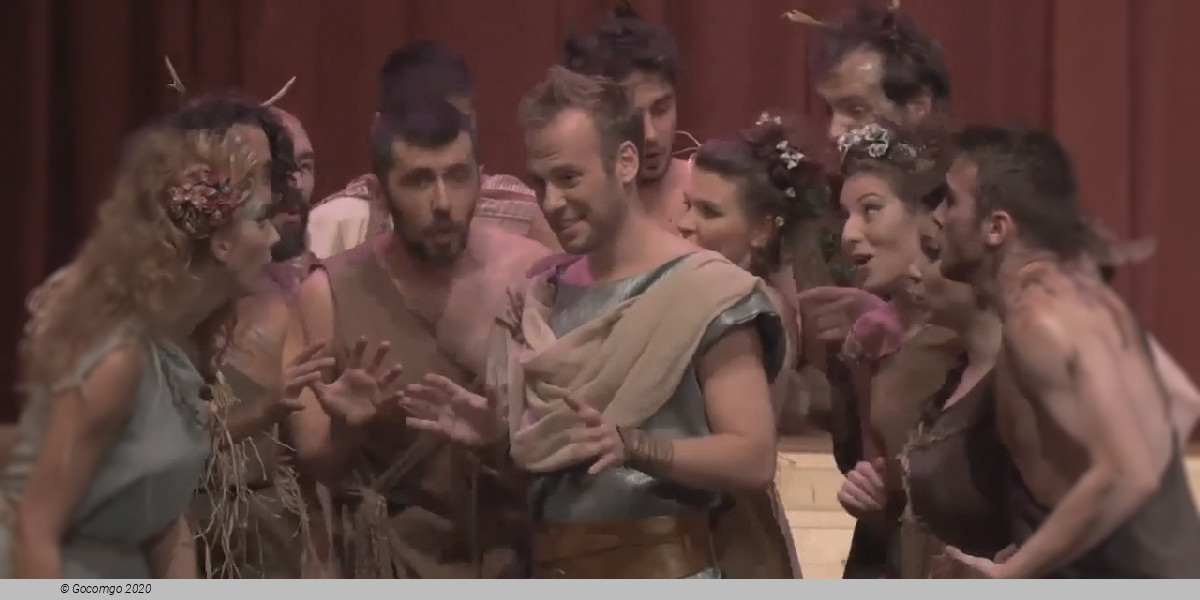
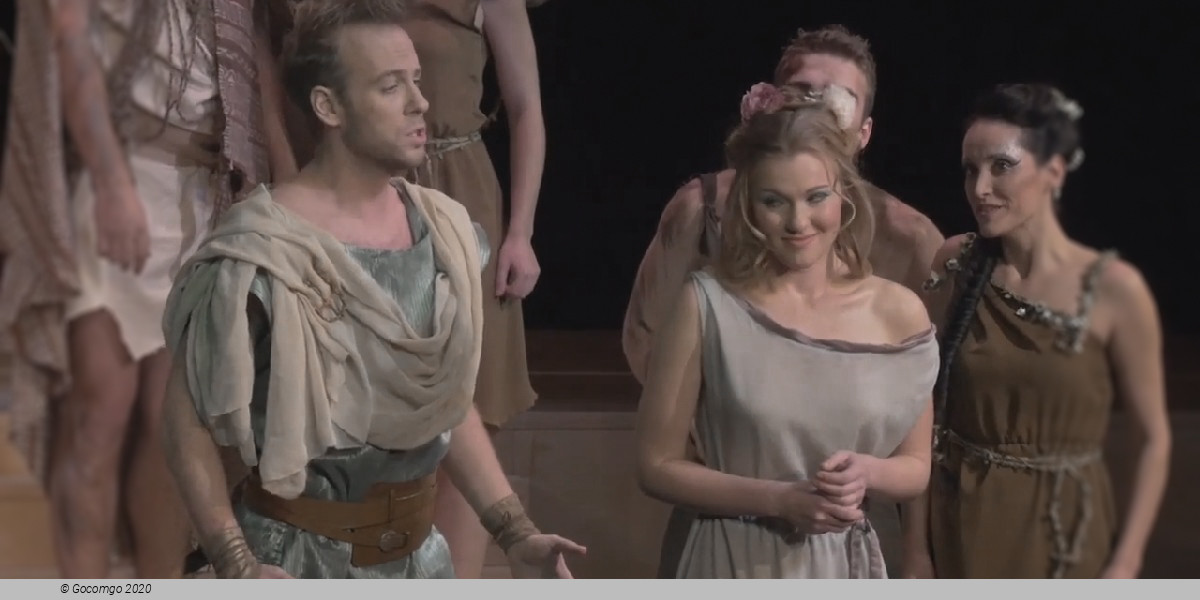
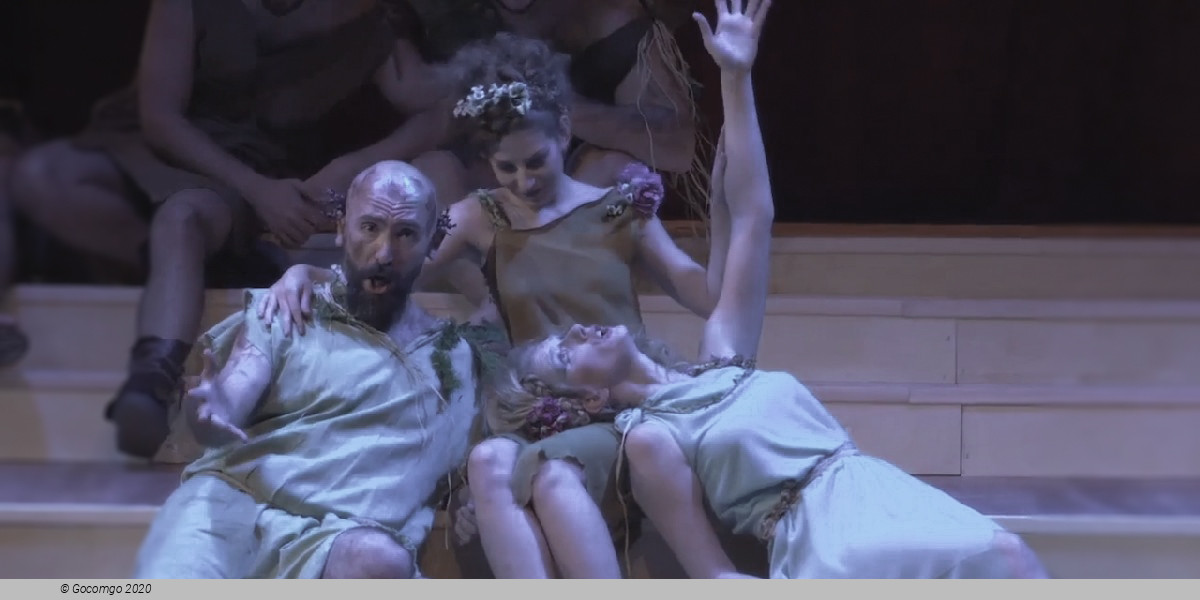
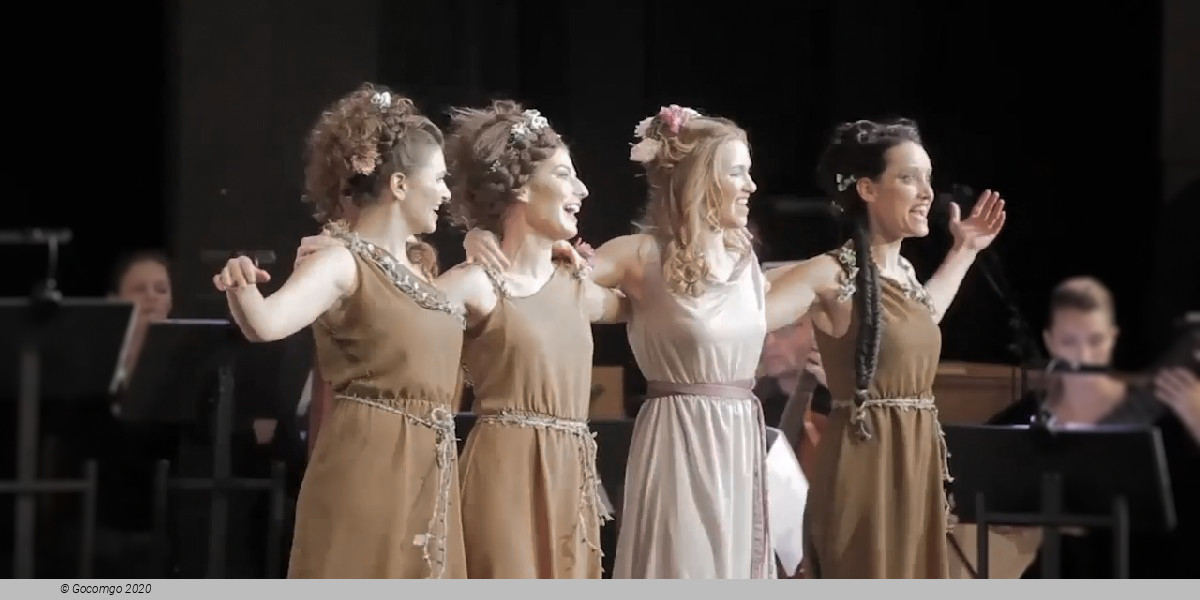
Director Tom Morris invites us all as visitors to a wedding party that he has imagined as the framework for his staging as a contemporary equivalent to the courtly festival.

What makes Claudio Monteverdi’s Favola d’Orfeo (Legend of Orpheus), premiered at the northern Italian court in Mantua in 1607, the very first opera? Naturally there were a few forerunners. However, for the first time the music in this work itself not only symbolically takes up the words as an allegory in the prologue but the entire scenic events are musically interwoven congenially. The Orpheus settings from the ancient and renaissance eras portrayed the mythical singer, who knew how to charm all nature and even softened the underworld, as rather more a virtuoso master of eloquence than an interpreter of music. It was only Monteverdi that by inviting a celebration of the achievements of a new "representative style" (stile rappresentativo) unleashed new musical driving forces. Polyphonic, lively dance-like, or solemnly measured choirs and a richly cast instrumental apparatus frame Monteverdi's tonal depiction of words and affect, that touches us to this day with undiminished freshness and depth of expression.

After jubilant, heavenly wedding preparations are abruptly interrupted by the news of the death of the bride Eurydice, who died from a snakebite, we traverse with the orphaned Orpheus the abysses of mourning and despair, and accompany him on his way into the underworld. After he "has let go of every hope", he starts a song of mourning that pulls all the heartstrings of internalized pain and highly virtuoso alienation. Paradoxically, this heartfelt centerpiece of the opera leads us however not to power, but to the impotence of the song before our eyes: Charon, the ferryman, remains deaf to this imploring supplication and refuses to cross into the realm of the dead. Only the fact that he falls asleep enables Orpheus to sneak there unheroically. And it's not Orpheus’ singing immediately either, but only the intercession of the wife of Pluto, the god of the dead, that convinces him to consent to the return of Eurydice. This may only happen on the condition that causes Orpheus to lose her a second time. The triumph and misery of art have therefore been part of the opera genre ever since the beginning, inscribed as: "Try again. Fail again. Fail better." (Beckett)

History
Premiere of this production: 24 February 1607, Carnival season Mantua

L'Orfeo is a late Renaissance/early Baroque favola in musica, or opera, by Claudio Monteverdi, with a libretto by Alessandro Striggio. It is based on the Greek legend of Orpheus, and tells the story of his descent to Hades and his fruitless attempt to bring his dead bride Eurydice back to the living world. It was written in 1607 for a court performance during the annual Carnival at Mantua. While Jacopo Peri's Dafne is generally recognised as the first work in the opera genre, and the earliest surviving opera is Peri's Euridice, L'Orfeo is the earliest that is still regularly performed.

Synopsis

The action takes place in two contrasting locations: the fields of Thrace (acts 1, 2 and 5) and the Underworld (acts 3 and 4). An instrumental toccata (English: "tucket", meaning a flourish on trumpets) precedes the entrance of La musica, representing the "spirit of music", who sings a prologue of five stanzas of verse. After a gracious welcome to the audience she announces that she can, through sweet sounds, "calm every troubled heart." She sings a further paean to the power of music, before introducing the drama's main protagonist, Orfeo, who "held the wild beasts spellbound with his song".

Act 1

After La musica's final request for silence, the curtain rises on act 1 to reveal a pastoral scene. Orfeo and Euridice enter together with a chorus of nymphs and shepherds, who act in the manner of a Greek chorus, commenting on the action both as a group and as individuals. A shepherd announces that this is the couple's wedding day; the chorus responds, first in a stately invocation ("Come, Hymen, O come") and then in a joyful dance ("Leave the mountains, leave the fountains"). Orfeo and Euridice sing of their love for each other before leaving with most of the group for the wedding ceremony in the temple. Those left on stage sing a brief chorus, commenting on how Orfeo used to be one "for whom sighs were food and weeping was drink" before love brought him to a state of sublime happiness.

Act 2

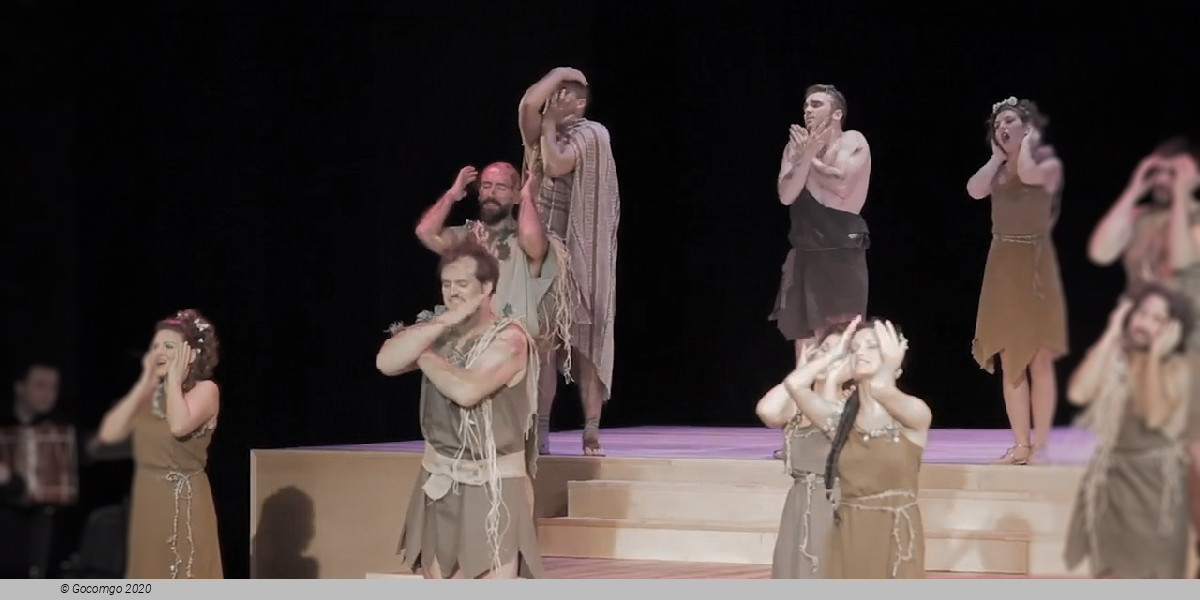
Orfeo returns with the main chorus, and sings with them of the beauties of nature. Orfeo then muses on his former unhappiness, but proclaims: "After grief one is more content, after pain one is happier". The mood of contentment is abruptly ended when La messaggera enters, bringing the news that, while gathering flowers, Euridice has received a fatal snakebite. The chorus expresses its anguish: "Ah, bitter happening, ah, impious and cruel fate!", while the Messaggera castigates herself as the bearing of bad tidings ("For ever I will flee, and in a lonely cavern lead a life in keeping with my sorrow"). Orfeo, after venting his grief and incredulity ("Thou art dead, my life, and I am breathing?"), declares his intention to descend into the Underworld and persuade its ruler to allow Euridice to return to life. Otherwise, he says, "I shall remain with thee in the company of death". He departs, and the chorus resumes its lament.

Act 3

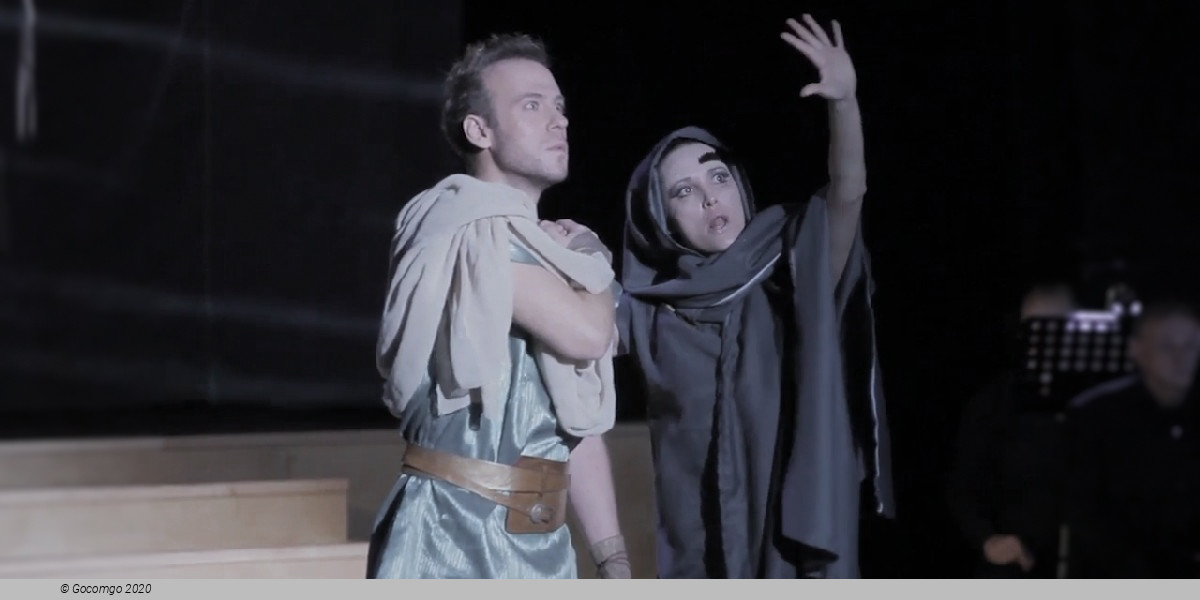
Orfeo is guided by Speranza to the gates of Hades. Having pointed out the words inscribed on the gate ("Abandon hope, all ye who enter here"), Speranza leaves. Orfeo is now confronted with the ferryman Caronte, who addresses Orfeo harshly and refuses to take him across the river Styx. Orfeo attempts to persuade Caronte by singing a flattering song to him ("Mighty spirit and powerful divinity"), but the ferryman is unmoved. However, when Orfeo takes up his lyre and plays, Caronte is soothed into sleep. Seizing his chance, Orfeo steals the ferryman's boat and crosses the river, entering the Underworld while a chorus of spirits reflects that nature cannot defend herself against man: "He has tamed the sea with fragile wood, and disdained the rage of the winds."

Act 4

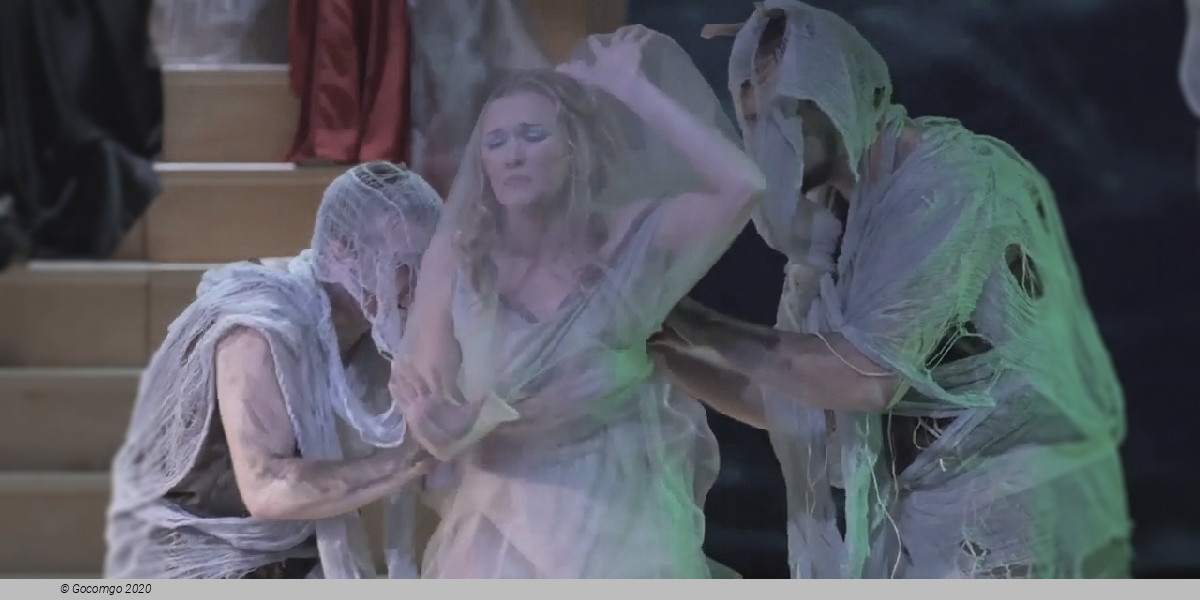
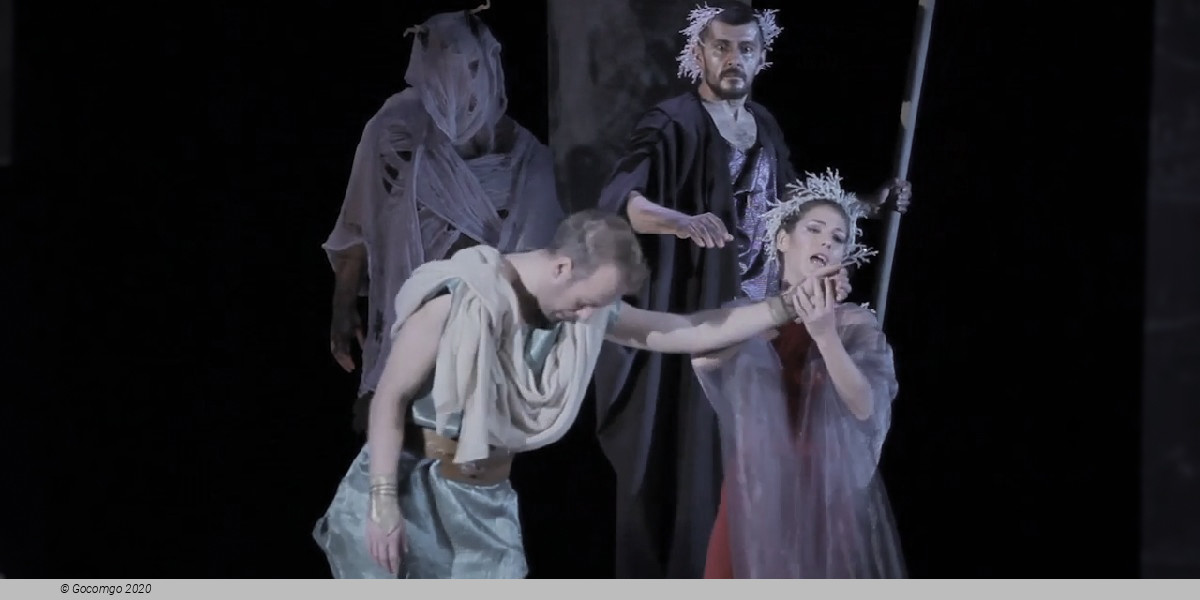
In the Underworld, Proserpina, Queen of Hades, who has been deeply affected by Orfeo's singing, petitions King Plutone, her husband, for Euridice's release. Moved by her pleas, Plutone agrees on the condition that, as he leads Euridice towards the world, Orfeo must not look back. If he does, "a single glance will condemn him to eternal loss". Orfeo enters, leading Euridice and singing confidently that on that day he will rest on his wife's white bosom. But as he sings a note of doubt creeps in: "Who will assure me that she is following?". Perhaps, he thinks, Plutone, driven by envy, has imposed the condition through spite? Suddenly distracted by an off-stage commotion, Orfeo looks round; immediately, the image of Euridice begins to fade. She sings, despairingly: "Losest thou me through too much love?" and disappears. Orfeo attempts to follow her but is drawn away by an unseen force. The chorus of spirits sings that Orfeo, having overcome Hades, was in turn overcome by his passions.

Act 5

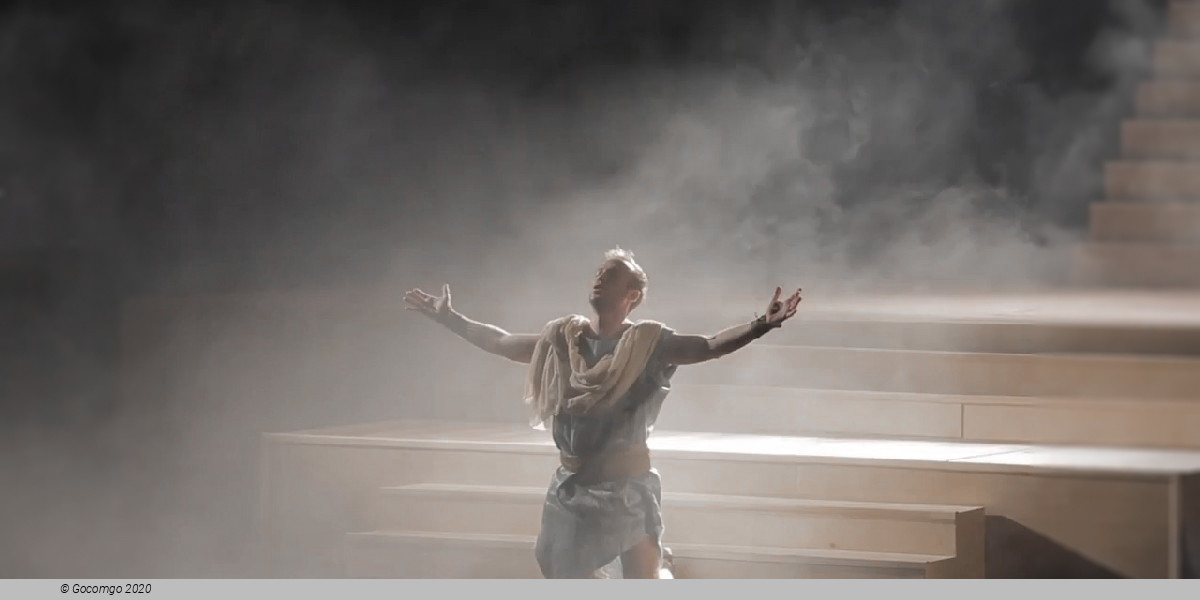
Back in the fields of Thrace, Orfeo has a long soliloquy in which he laments his loss, praises Euridice's beauty and resolves that his heart will never again be pierced by Cupid's arrow. An off-stage echo repeats his final phrases. Suddenly, in a cloud, Apollo descends from the heavens and chastises him: "Why dost thou give thyself up as prey to rage and grief?" He invites Orfeo to leave the world and join him in the heavens, where he will recognise Euridice's likeness in the stars. Orfeo replies that it would be unworthy not to follow the counsel of such a wise father, and together they ascend. A shepherds' chorus concludes that "he who sows in suffering shall reap the fruit of every grace", before the opera ends with a vigorous moresca.

Original libretto ending

In Striggio's 1607 libretto, Orfeo's act 5 soliloquy is interrupted, not by Apollo's appearance but by a chorus of maenads or Bacchantes—wild, drunken women—who sing of the "divine fury" of their master, the god Bacchus. The cause of their wrath is Orfeo and his renunciation of women; he will not escape their heavenly anger, and the longer he evades them the more severe his fate will be. Orfeo leaves the scene and his destiny is left uncertain, as the Bacchantes devote themselves for the rest of the opera to wild singing and dancing in praise of Bacchus. The early music authority Claude Palisca believes that the two endings are not incompatible; Orfeo might evade the fury of the Bacchantes and be rescued by Apollo. However, this alternative ending in any case nearer to original classic myth, where the Bacchantes also appear, but it is made explicit that they torture him to his death, followed by reunion as a shade with Euridice but no apotheosis nor any interaction with Apollo.

Venue Info

Vienna State Opera - Vienna
Location   Opernring 2

The Vienna State Opera is one of the leading opera houses in the world. Its past is steeped in tradition. Its present is alive with richly varied performances and events. Each season, the schedule features 350 performances of more than 60 different operas and ballets. The members of the Vienna Philharmonic are recruited from the Vienna State Opera's orchestra. The building is also the home of the Vienna State Ballet, and it hosts the annual Vienna Opera Ball during the carnival season.

The 1,709-seat Renaissance Revival venue was the first major building on the Vienna Ring Road. It was built from 1861 to 1869 following plans by August Sicard von Sicardsburg and Eduard van der Nüll, and designs by Josef Hlávka. The opera house was inaugurated as the "Vienna Court Opera" (Wiener Hofoper) in the presence of Emperor Franz Joseph I and Empress Elisabeth of Austria. It became known by its current name after the establishment of the First Austrian Republic in 1921. The Vienna State Opera is the successor of the Vienna Court Opera, the original construction site chosen and paid for by Emperor Franz Joseph in 1861.

The opera house was the first major building on the Vienna Ringstrasse commissioned by the Viennese "city expansion fund". Work commenced on the house in 1861 and was completed in 1869, following plans drawn up by architects August Sicard von Sicardsburg and Eduard van der Nüll. It was built in the Neo-Renaissance style by the renowned Czech architect and contractor Josef Hlávka.

Gustav Mahler was one of the many conductors who have worked in Vienna. During his tenure (1897–1907), Mahler cultivated a new generation of singers, such as Anna Bahr-Mildenburg and Selma Kurz, and recruited a stage designer who replaced the lavish historical stage decors with sparse stage scenery corresponding to modernistic, Jugendstil tastes. Mahler also introduced the practice of dimming the lighting in the theatre during performances, which was initially not appreciated by the audience. However, Mahler's reforms were maintained by his successors.

Herbert von Karajan introduced the practice of performing operas exclusively in their original language instead of being translated into German. He also strengthened the ensemble and regular principal singers and introduced the policy of predominantly engaging guest singers. He began a collaboration with La Scala in Milan, in which both productions and orchestrations were shared. This created an opening for the prominent members of the Viennese ensemble to appear in Milan, especially to perform works by Wolfgang Amadeus Mozart and Richard Strauss.

Ballet companies merge

At the beginning of the 2005–2006 season, the ballet companies of the Staatsoper and the Vienna Volksoper were merged under the direction of Gyula Harangozó.

From the 2010–2011 season a new company was formed called Wiener Staatsballet, Vienna State Ballet, under the direction of former Paris Opera Ballet principal dancer Manuel Legris. Legris eliminated Harangozós's policy of presenting nothing but traditional narrative ballets with guest artists in the leading roles, concentrated on establishing a strong in-house ensemble and restored evenings of mixed bill programs, featuring works of George Balanchine, Jerome Robbins, Jiří Kylián, William Forsythe, and many contemporary choreographers, as well as a reduced schedule of the classic ballets.

Opera ball

For many decades, the opera house has been the venue of the Vienna Opera Ball. It is an internationally renowned event, which takes place annually on the last Thursday in Fasching. Those in attendance often include visitors from around the world, especially prominent names in business and politics. The opera ball receives media coverage from a range of outlets.

Important Info
Type: Opera
City: Vienna, Austria
Starts at: 19:00
Acts: 5
Intervals: 1
Duration: 2h 30min
Top of page