Place: Switzerland
Time: Indeterminate
Act 1
Scene 1: A village, a mill in the background
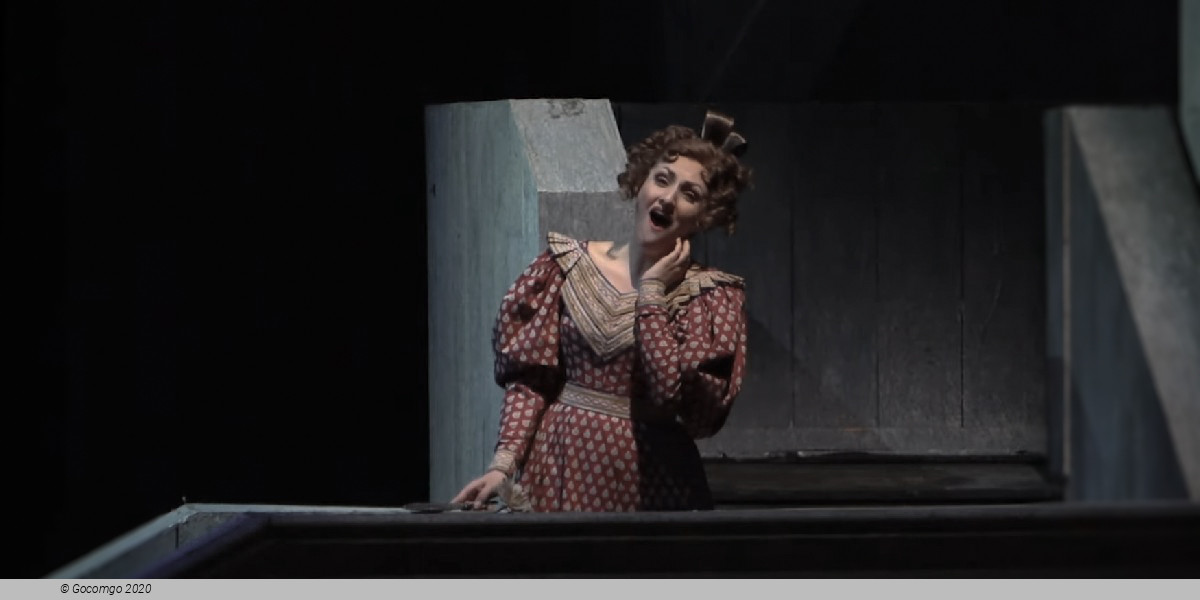
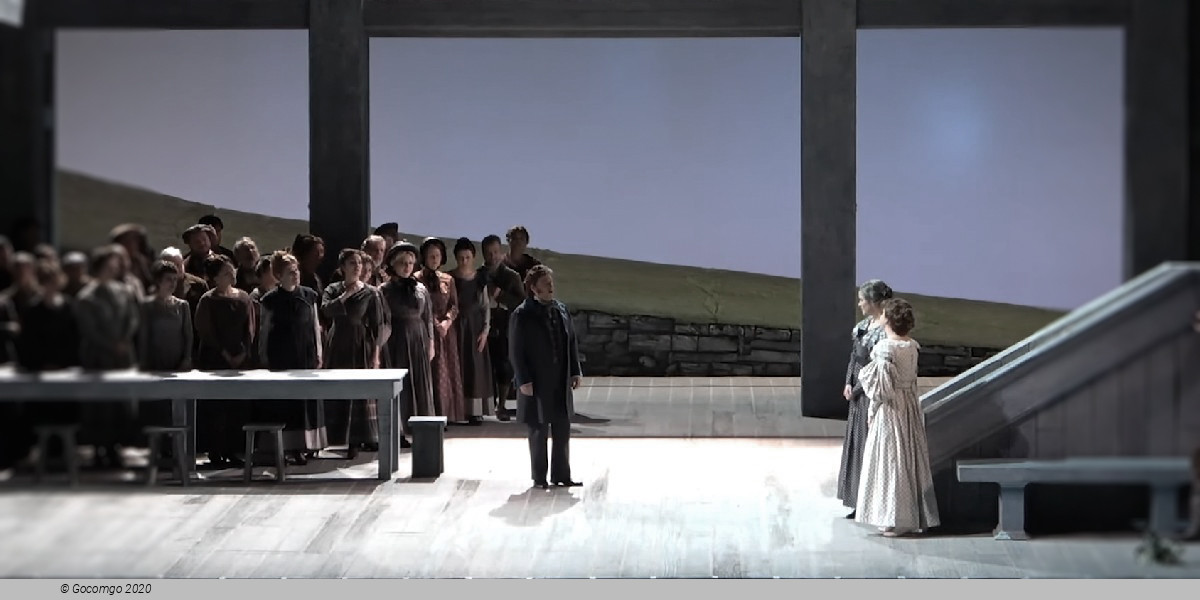
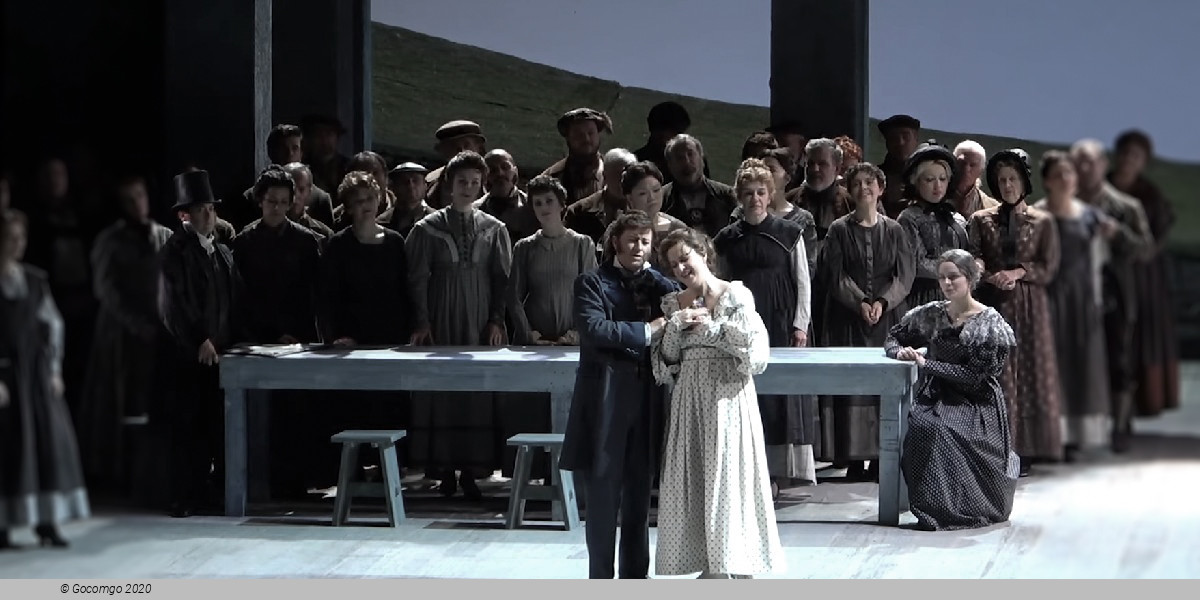
As the betrothal procession of Amina and Elvino approaches, the villagers all proclaiming joy for Amina, Lisa, the proprietress of the inn, comes outside expressing her misery: Tutto è gioia, tutto è festa...Sol per me non non v'ha contento / "All is joy and merriment... I alone am miserable". She is consumed with jealousy for she had once been betrothed to Elvino and had been abandoned by him in favour of Amina. The lovelorn Alessio arrives, but she rejects his advances. All assembled proclaim the beauty of Amina: In Elvezia non v'ha rosa / fresca e cara al par d'Amina / "In Switzerland there is no flower sweeter, dearer than Amina". Then Amina comes out of the mill with her foster-mother, Teresa. She is the owner of the mill and had adopted Amina many years before. Amina thanks her, also expressing her thanks to her assembled friends for their kind wishes. (Aria: Come per me sereno / oggi rinacque il di! / "How brightly this day dawned for me".) Additionally, she thanks Alessio, who tells her that he has composed the wedding song and organised the celebrations; she wishes him well in his courtship of Lisa, but Lisa cynically rejects the idea of love. Elvino arrives, exclaiming Perdona, o mio diletta / "Forgive me my beloved", and explaining that he had to stop on his way at his mother's grave to ask her blessing on Amina. As they exchange vows, the notary asks what she brings to the partnership: "Only my heart" she answers at which Elvino's exclaims: "Ah the heart is everything!". (Elvino's aria, then Amina, then all express their love and their joy: Prendi: l'anel ti dono / che un dì recava all'ara / "Here, receive this ring that the beloved spirit who smiled upon our love wore at the altar".)
The sound of horses' hooves and a cracking whip is heard. A stranger arrives, asking the way to the castle. Lisa points out that it is getting late and he will not reach it before dark and she offers him lodging at her inn. When he says that he knows it, all are surprised. (Rodolfo's aria: Vi ravviso, o luoghi ameni, / in cui lieti, in cui sereni / "O lovely scenes, again I see you, / where in serenity I spent the calm and happy days of my earliest youth".) The newcomer, who surprises the villagers by his familiarity with the locality, asks about the celebrations and admires Amina, who reminds him of a girl he had loved long ago. (Tu non sai con quei begli occhi / come dolce il cor mi tocchi / "You can't know how those dear eyes gently touch my heart, what adorable beauty".) He admits to having once stayed in the castle, whose lord has been dead for four years. When Teresa explains that his son had vanished some years previously, the stranger assures them that he is alive and will return. As darkness approaches the villagers warn him that it is time to be indoors to avoid the village phantom: A fosco cielo, a notte bruna,/ al fioco raggio d'incerta luna / "When the sky is dark at night, and the moon's rays are weak, at the gloomy thunder's sound a shade appears." Not being superstitious, he assures them that they will soon be free of the apparition. Elvino is jealous of the stranger's admiration of Amina; he is jealous even of the breezes that caress her, but he promises her he will reform. (Duet finale, Elvino and Amina: Son geloso del zefiro errante / che ti scherza col crin e col velo / "I envy the wandering breeze that plays with your hair, your veil..")
Scene 2: A room in the inn
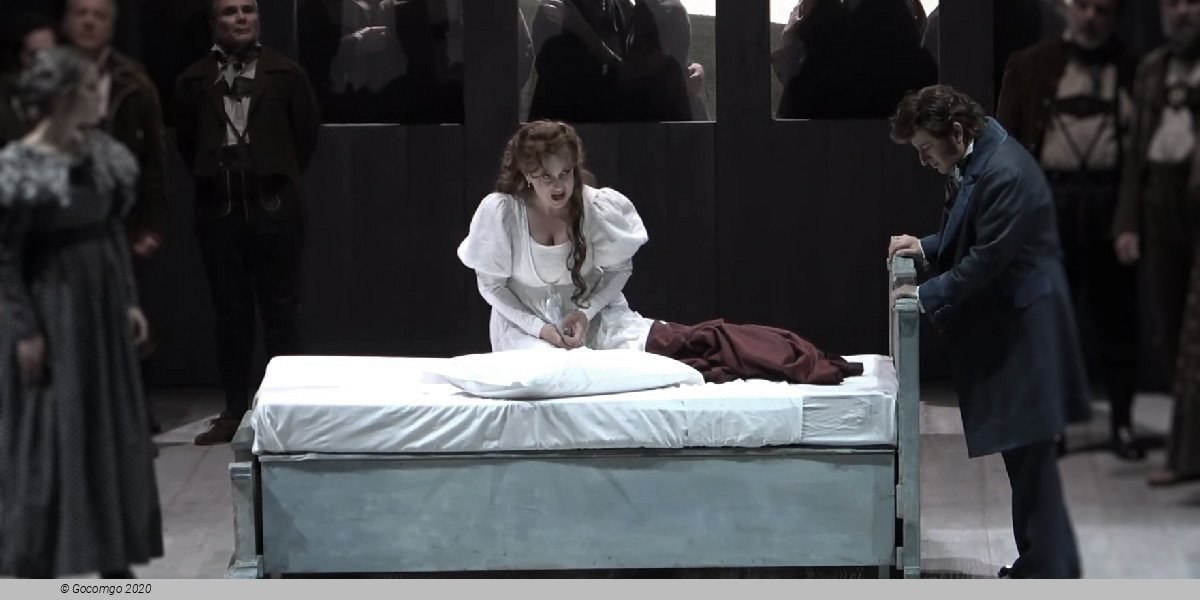
Lisa enters Rodolfo's room to see if all is well. She reveals that his identity is known to all as Rodolfo, the long-lost son of the count. She advises him that the village is preparing a formal welcome; meanwhile she wishes be the first to pay her respects. She is flattered when he begins a flirtation with her, but runs out at the sound of people approaching, dropping her handkerchief which the Count picks up. He sees the approaching phantom who he recognises as Amina. She enters the room, walking in her sleep, all the while calling for Elvino and asking where he is. Realising that her nocturnal wanderings have given rise to the story of the village phantom, Rodolfo is about to take advantage of her helpless state. But then he is struck by her obvious innocence and refrains: (Scene: first Rodolfo: O ciel! che tento / "God! What am I doing?"; then, separately, Amina: Oh! come lieto è il popolo / "How happy all the people are, accompanying us to the church"; then together.) As Amina continues her sleepwalk, Rodolfo hears the sound of people approaching and, with no other way out, he climbs out of the window.
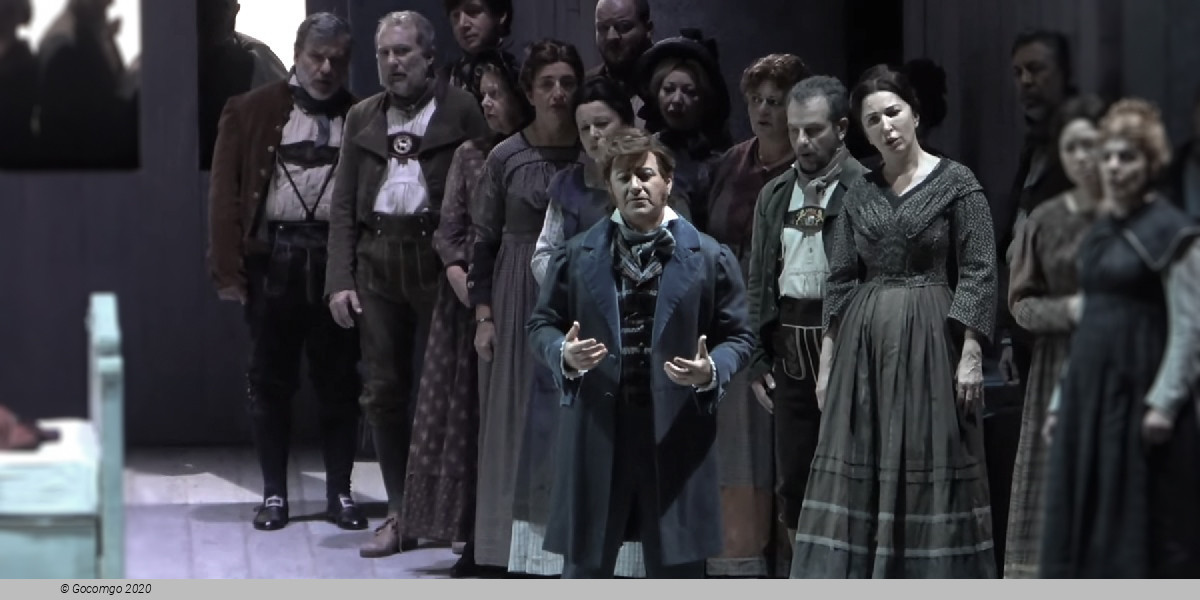
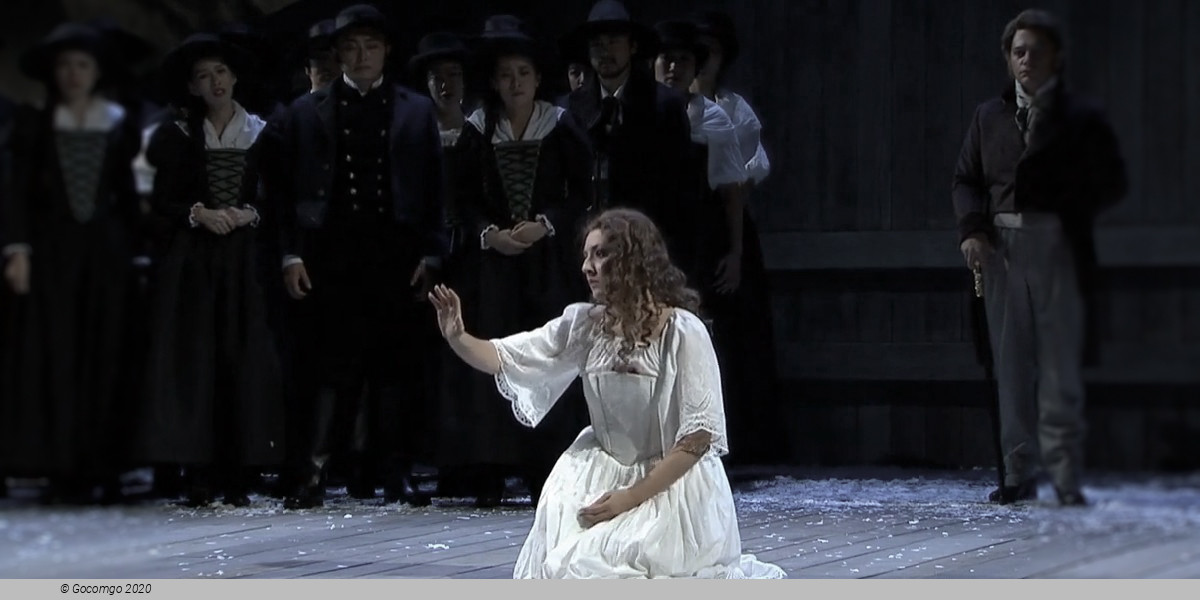
Amina continues to sleep on the sofa as the villagers arrive at the inn. Lisa enters and points to Amina, who wakes up at the noise. Elvino, believing her faithless, rejects her in fury. Only Teresa believes in her innocence: Ensemble finale, first Amina D'un pensiero e d'un accento / "In my thought or in my words never , never have I sinned"; then Elvino: Voglia il cielo che il duol ch'io sento / "Heaven keep you from feeling ever the pain that I feel now!"; then the people and Teresa, the former proclaiming her treachery, Teresa pleading for her to be allowed to explain. Elvino then exclaims that there will be no wedding, and each expresses his or her emotional reaction to this discovery.
Act 2
Scene 1: A wood
On their way to ask the count to attest to Amina's innocence, the villagers rest in the woods and consider how they will express their support to him: (Chorus: Qui la selva è più folta ed ombrosa / "Here the wood is thick and dark"). Amina and Teresa arrive and are on a similar mission, but Amina is despondent, although Teresa encourages her daughter to continue. They then see Elvino coming in the wood looking downcast and sad. He continues to reject Amina, even when the townspeople come in with the news that the count says that she is innocent. Elvino is not convinced and takes back the ring, though he is unable to tear her image from his heart: (Aria, then chorus: Ah! Perché non posso odiarti, infedel, com'io vorrei! / "Why cannot I despise you, faithless, as I should?")
Scene 2: The village, as in act 1
Lisa, Alessio, Elvino and the villagers are in the square. Elvino declares that he will renew his vows and proceed to marry Lisa. She is delighted. As they are about to go to the church, Rodolfo enters and tries to explain that Amina is innocent because she did not come to his room awake – she is a somnambulist, a sleepwalker: (Duet, first Elvino Signor Conte, agli occhi miei / negar fede non poss'io / "I cannot deny, my lord, what my eyes have seen"; then Rodolfo V'han certuni che dormendo / "Certain people when they sleep go about as if awake".) Elvino refuses to believe him and calls upon Lisa to leave, but at that moment Teresa begs the villagers to be quiet, because Amina has at last fallen into an exhausted sleep.
Learning of the impending marriage, Teresa confronts Lisa, who says that she has never been found alone in a man's room. Teresa produces the handkerchief Lisa had dropped. The Count is unwilling to say what he thinks of this, but continues to insist on Amina's virtue. Elvino demands proof and Rodolfo, seeing the sleeping Amina walking across the high, dangerously unstable mill bridge, warns that to wake her would be fatal. All watch as she relives her betrothal and her grief at Elvino's rejection, taking the withered flowers in her hand. (Aria: Amina Ah! non credea mirarti / sì presto estinto, o fiore / "I had not thought I would see you, dear flowers, perished so soon".) Then as she reaches the other side safely, the distraught Elvino calls to her and she is taken into his arms. Rodolfo hands him the ring which he places on her finger, at which time she awakens and is amazed by what has happened. All rejoice. In an aria finale, Amina expresses her joy: Ah! non giunge uman pensiero / al contento ond'io son piena / "Human thought cannot conceive of the happiness that fills me".




 Opernring 2