
Vienna State Opera 11 September 2022 - La Juive | GoComGo.com

La Juive

Vienna State Opera, Main Stage, Vienna, Austria
All photos (7)
Select date and time
6:30 PM

E-tickets: Print at home or at the box office of the event if so specified. You will find more information in your booking confirmation email.

You can only select the category, and not the exact seats.
If you order 2 or 3 tickets: your seats will be next to each other.
If you order 4 or more tickets: your seats will be next to each other, or, if this is not possible, we will provide a combination of groups of seats (at least in pairs, for example 2+2 or 2+3).

Important Info
Type: Opera
City: Vienna, Austria
Starts at: 18:30
Acts: 5
Intervals: 2

E-tickets: Print at home or at the box office of the event if so specified. You will find more information in your booking confirmation email.

You can only select the category, and not the exact seats.
If you order 2 or 3 tickets: your seats will be next to each other.
If you order 4 or more tickets: your seats will be next to each other, or, if this is not possible, we will provide a combination of groups of seats (at least in pairs, for example 2+2 or 2+3).

Overview

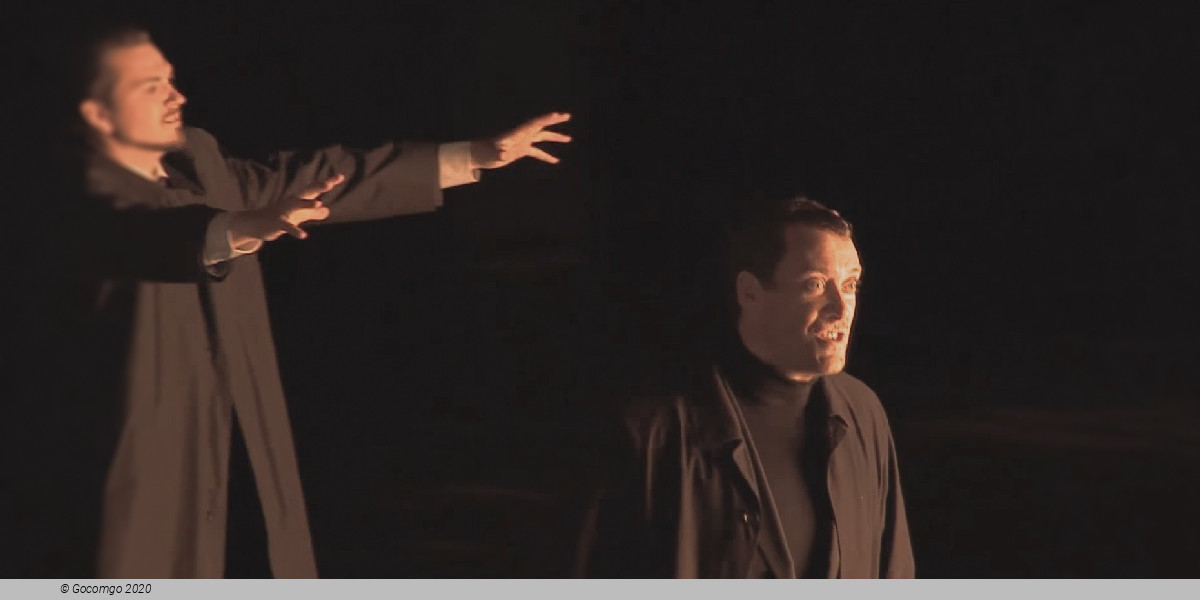
Reintroduction. Production by Günter Krämer

History
Premiere of this production: 23 February 1835, Opéra National de Paris

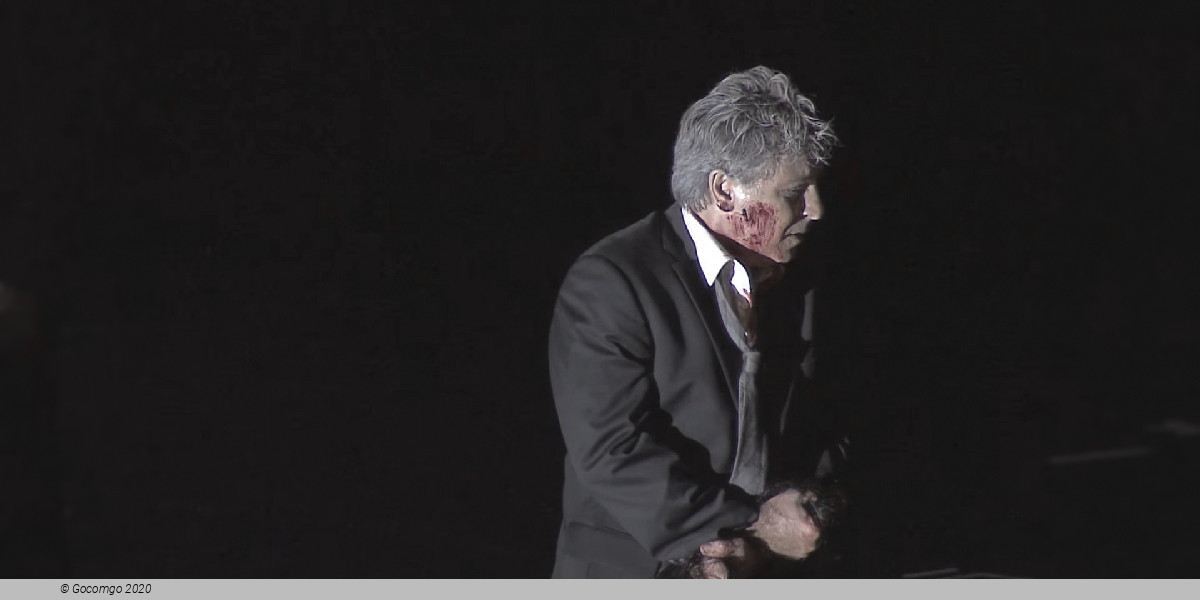
La Juive (The Jewess) is a grand opera in five acts by Fromental Halévy to an original French libretto by Eugène Scribe; it was first performed at the Opéra, Paris, on 23 February 1835.

Synopsis

Place: Constance
Time: 1414

Events before the opera begins
The following is a summary of events which took place before the first act of the opera, some of which are only revealed in the course of the action.

When he was young, the Jew Eléazar had lived in Italy near Rome and witnessed the condemnation and executions of his sons as heretics by Count Brogni. Eléazar himself was banished and forced to flee to Switzerland.

During his journey, Eléazar found a baby near death, abandoned inside a burnt-out house which turned out to be the home of the Count. Bandits had set fire to the house, attempting to kill the entire family of Brogni but unaware that the Count himself was in Rome at the time.

Eléazar took the child, a girl, and raised her as his own daughter, naming her Rachel. Brogni discovered the ruins of his house and the bodies of his family upon his return. He subsequently became a priest and later a cardinal.

At the beginning of the opera, in 1414 Rachel (now a young woman) is living with her adopted father in the city of Constance. The forces of the Holy Roman Emperor Sigismund have defeated the Hussites, in battles where Prince Leopold has distinguished himself. The Council of Constance, convened by Antipope John XXIII, has been arranged to resolve Church matters. John XXIII is represented there by Cardinal Gian Francesco Brogni, who was a historical personage. His part in the story of the opera is, however, entirely fictional.

Act 1
A square in the city of Constance in 1414

Eléazar is a goldsmith. The crowd condemns him for working during a day dedicated to Church festivities. He is saved from a lynching by the arrival of Brogni, who in the process recognises Eléazar as his old adversary.

Prince Léopold arrives in disguise as a young Jewish artist Samuel. Rachel is in love with Samuel and knows nothing of his true identity. Local laws reflect prejudice against the Jews: if a Jew and a Christian have sexual relations, the Christian is excommunicated and the Jew is killed. Léopold is thus taking a great risk in this affair, especially as he is already married to the Princess Eudoxie. The crowd returns to attack Eléazar, but 'Samuel' secretly instructs his troops to calm things down. The act closes with a grand triumphal procession.

Act 2
Inside the house of Éléazar

Rachel has invited 'Samuel' for the Passover celebration in Eléazar's house. He is present while Eléazar and the other Jews sing their Passover prayers. Rachel becomes anxious when she notices that 'Samuel' refuses to eat the piece of unleavened bread that she has given him. He reveals to her that he is a Christian, without telling her his true identity. Rachel is horrified and reminds him of the terrible consequences of such a relationship.

Princess Eudoxie enters to order from Eléazar a valuable jewel as a present for her husband, at which point Samuel (Prince Léopold) hides.

After Eudoxie leaves, Léopold promises to take Rachel away with him. She tries to resist, worrying about abandoning her father, but as she is about to succumb to his advances, they are confronted by Eléazar, who curses Léopold before the latter runs off.

Act 3
Magnificent gardens

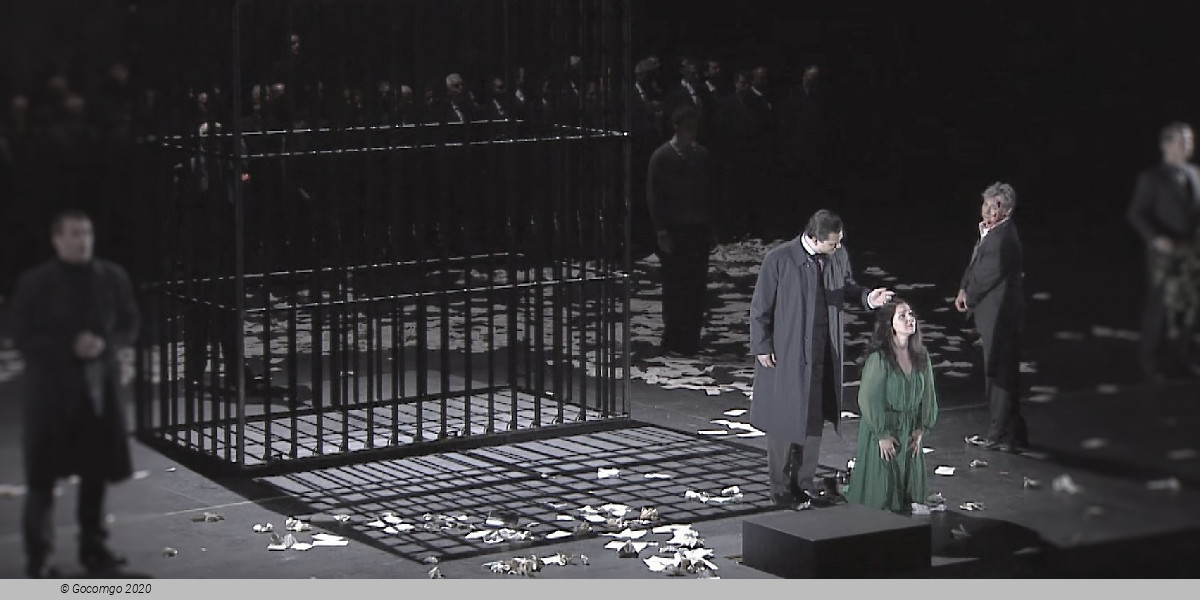
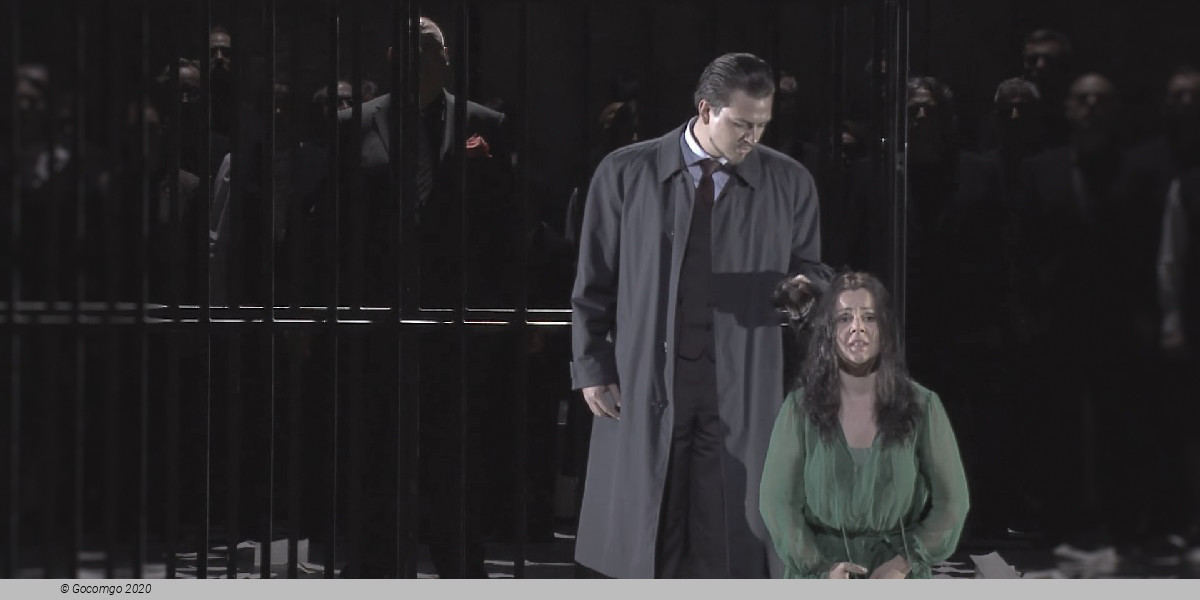
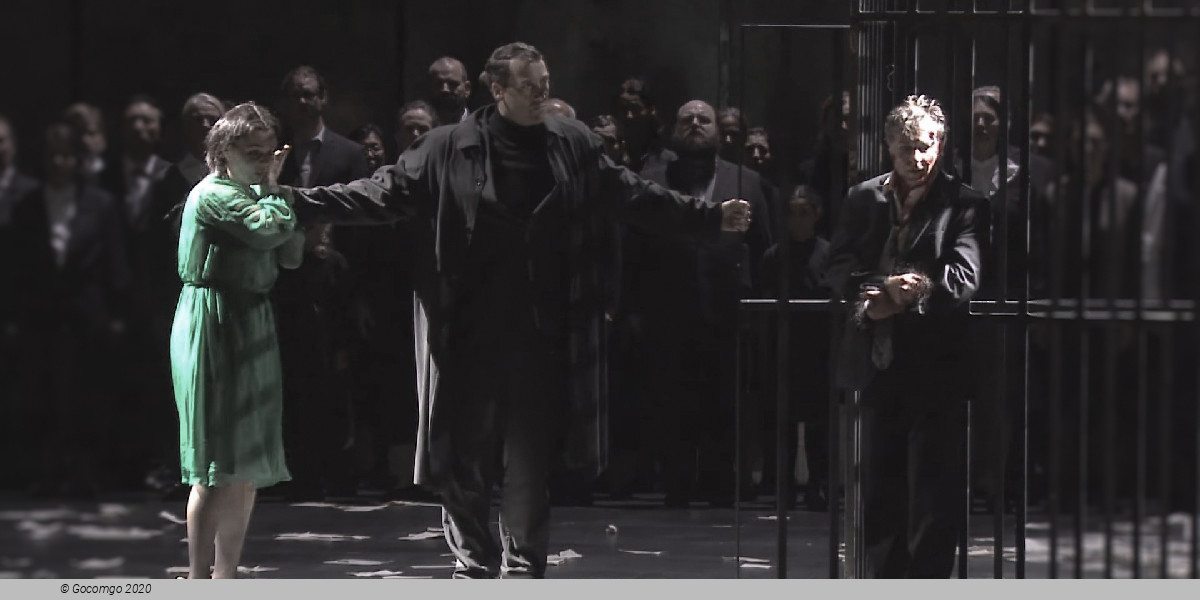
Rachel, who has followed 'Samuel' to the Palace, offers her services as a lady's maid to Princess Eudoxie. Eléazar arrives at the palace to deliver the jewel. He and Rachel recognise Léopold as 'Samuel'. Rachel declares before the assembly that Léopold seduced her and she, Eléazar and Léopold are arrested and placed in prison, on the instructions of Cardinal Brogni.

Act 4
A Gothic interior

Princess Eudoxie asks to see Rachel in prison, and persuades her to withdraw her allegations. Rachel agrees; Cardinal Brogni agrees to commute Léopold's sentence, and to spare Rachel and Eléazar if they convert. Eléazar at first answers that he would rather die, but then makes plans to avenge himself. He reminds the Cardinal of the fire in his house near Rome many years before and tells the Cardinal that his infant daughter did not die. He says that she was saved by a Jew and that only he knows who he is. If he dies, his secret will die with him. Cardinal Brogni begs him to tell him where his daughter is, but in vain. Eléazar sings of the vengeance that he will have in dying, but he suddenly remembers that he will be responsible for the death of Rachel. The only way to save her is to admit that the Cardinal is her father and that she is not Jewish but Christian. The act ends with the opera's most famous aria, Eléazar's 'Rachel, quand du Seigneur'. He does not want to sacrifice Rachel to his hatred of Christians, and renounces his revenge. However, when he hears the cries from a pogrom in the streets, he decides that God wants him to bear witness in death with his daughter to the God of Israel.

Act 5
A large tent supported by Gothic columns

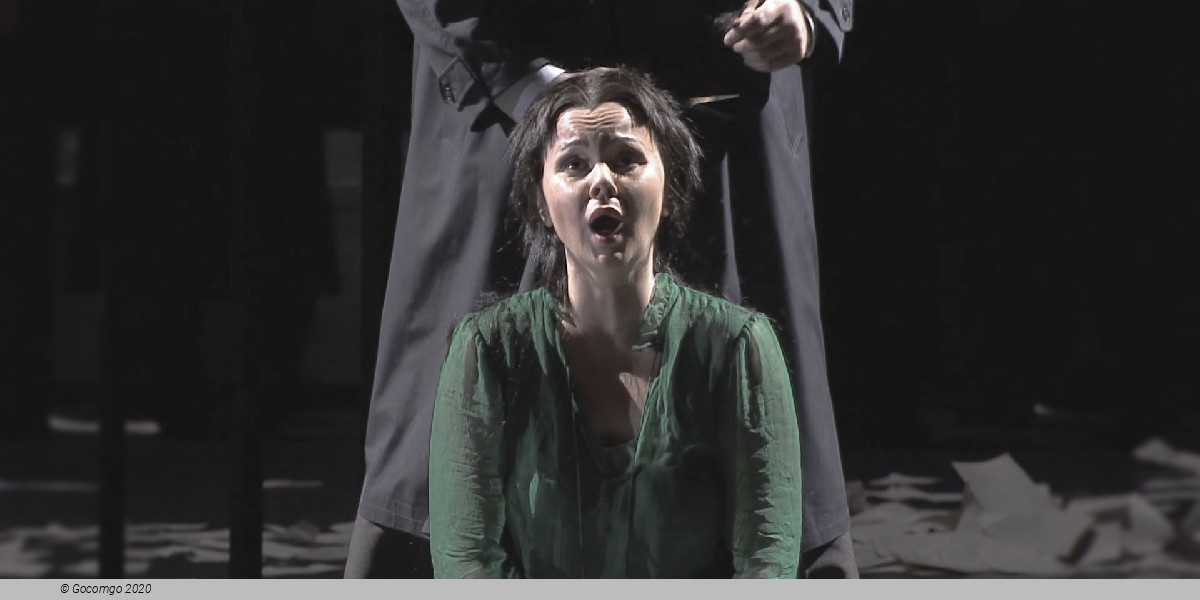
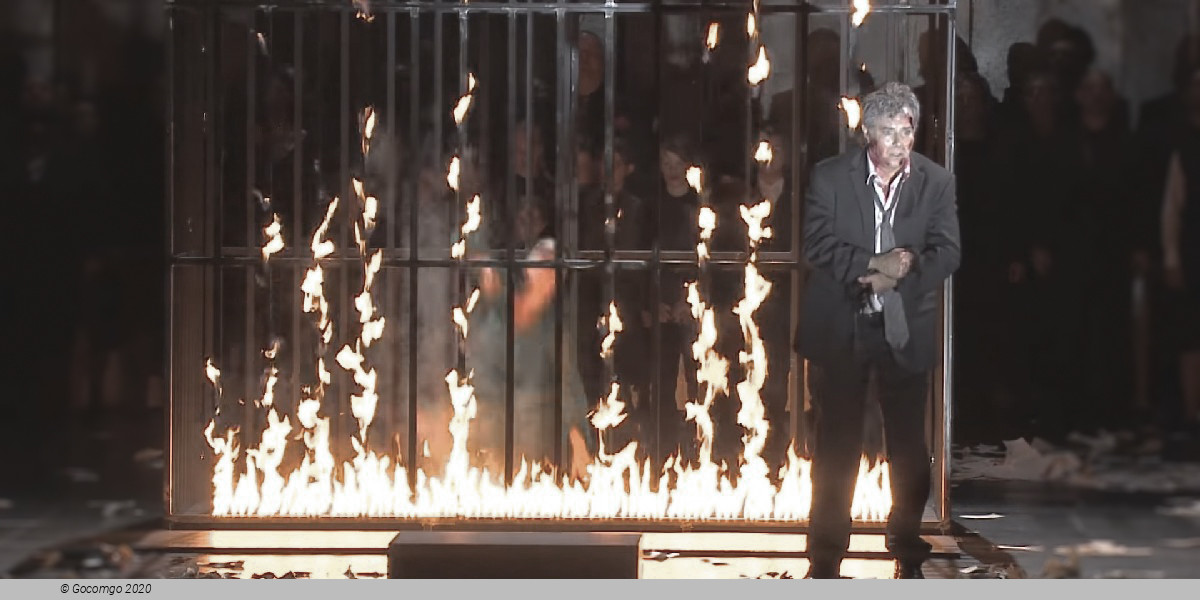
Eléazar and Rachel are brought to the gallows where they will be thrown into a cauldron of boiling water. Rachel is terrified. Eléazar explains that she can be saved if she converts to Christianity. She refuses and climbs to the gallows before him. As the people are singing various prayers, Cardinal Brogni asks Eléazar if his own daughter is still alive. Eléazar says that she is and when Cardinal Brogni asks where she can be found, Eléazar points to the cauldron, saying "There she is!" He then climbs to his own death while the Cardinal falls on his knees. The opera ends with a chorus of monks, soldiers and the people singing "It is done and we are avenged on the Jews!"

Venue Info

Vienna State Opera - Vienna
Location   Opernring 2

The Vienna State Opera is one of the leading opera houses in the world. Its past is steeped in tradition. Its present is alive with richly varied performances and events. Each season, the schedule features 350 performances of more than 60 different operas and ballets. The members of the Vienna Philharmonic are recruited from the Vienna State Opera's orchestra. The building is also the home of the Vienna State Ballet, and it hosts the annual Vienna Opera Ball during the carnival season.

The 1,709-seat Renaissance Revival venue was the first major building on the Vienna Ring Road. It was built from 1861 to 1869 following plans by August Sicard von Sicardsburg and Eduard van der Nüll, and designs by Josef Hlávka. The opera house was inaugurated as the "Vienna Court Opera" (Wiener Hofoper) in the presence of Emperor Franz Joseph I and Empress Elisabeth of Austria. It became known by its current name after the establishment of the First Austrian Republic in 1921. The Vienna State Opera is the successor of the Vienna Court Opera, the original construction site chosen and paid for by Emperor Franz Joseph in 1861.

The opera house was the first major building on the Vienna Ringstrasse commissioned by the Viennese "city expansion fund". Work commenced on the house in 1861 and was completed in 1869, following plans drawn up by architects August Sicard von Sicardsburg and Eduard van der Nüll. It was built in the Neo-Renaissance style by the renowned Czech architect and contractor Josef Hlávka.

Gustav Mahler was one of the many conductors who have worked in Vienna. During his tenure (1897–1907), Mahler cultivated a new generation of singers, such as Anna Bahr-Mildenburg and Selma Kurz, and recruited a stage designer who replaced the lavish historical stage decors with sparse stage scenery corresponding to modernistic, Jugendstil tastes. Mahler also introduced the practice of dimming the lighting in the theatre during performances, which was initially not appreciated by the audience. However, Mahler's reforms were maintained by his successors.

Herbert von Karajan introduced the practice of performing operas exclusively in their original language instead of being translated into German. He also strengthened the ensemble and regular principal singers and introduced the policy of predominantly engaging guest singers. He began a collaboration with La Scala in Milan, in which both productions and orchestrations were shared. This created an opening for the prominent members of the Viennese ensemble to appear in Milan, especially to perform works by Wolfgang Amadeus Mozart and Richard Strauss.

Ballet companies merge

At the beginning of the 2005–2006 season, the ballet companies of the Staatsoper and the Vienna Volksoper were merged under the direction of Gyula Harangozó.

From the 2010–2011 season a new company was formed called Wiener Staatsballet, Vienna State Ballet, under the direction of former Paris Opera Ballet principal dancer Manuel Legris. Legris eliminated Harangozós's policy of presenting nothing but traditional narrative ballets with guest artists in the leading roles, concentrated on establishing a strong in-house ensemble and restored evenings of mixed bill programs, featuring works of George Balanchine, Jerome Robbins, Jiří Kylián, William Forsythe, and many contemporary choreographers, as well as a reduced schedule of the classic ballets.

Opera ball

For many decades, the opera house has been the venue of the Vienna Opera Ball. It is an internationally renowned event, which takes place annually on the last Thursday in Fasching. Those in attendance often include visitors from around the world, especially prominent names in business and politics. The opera ball receives media coverage from a range of outlets.

Important Info
Type: Opera
City: Vienna, Austria
Starts at: 18:30
Acts: 5
Intervals: 2
Top of page