
Vienna State Opera 15 October 2022 - Jenufa | GoComGo.com

Jenufa

Vienna State Opera, Main Stage, Vienna, Austria
All photos (9)
Select date and time
7 PM

E-tickets: Print at home or at the box office of the event if so specified. You will find more information in your booking confirmation email.

You can only select the category, and not the exact seats.
If you order 2 or 3 tickets: your seats will be next to each other.
If you order 4 or more tickets: your seats will be next to each other, or, if this is not possible, we will provide a combination of groups of seats (at least in pairs, for example 2+2 or 2+3).

Important Info
Type: Opera
City: Vienna, Austria
Starts at: 19:00
Intervals: 2

E-tickets: Print at home or at the box office of the event if so specified. You will find more information in your booking confirmation email.

You can only select the category, and not the exact seats.
If you order 2 or 3 tickets: your seats will be next to each other.
If you order 4 or more tickets: your seats will be next to each other, or, if this is not possible, we will provide a combination of groups of seats (at least in pairs, for example 2+2 or 2+3).

Overview

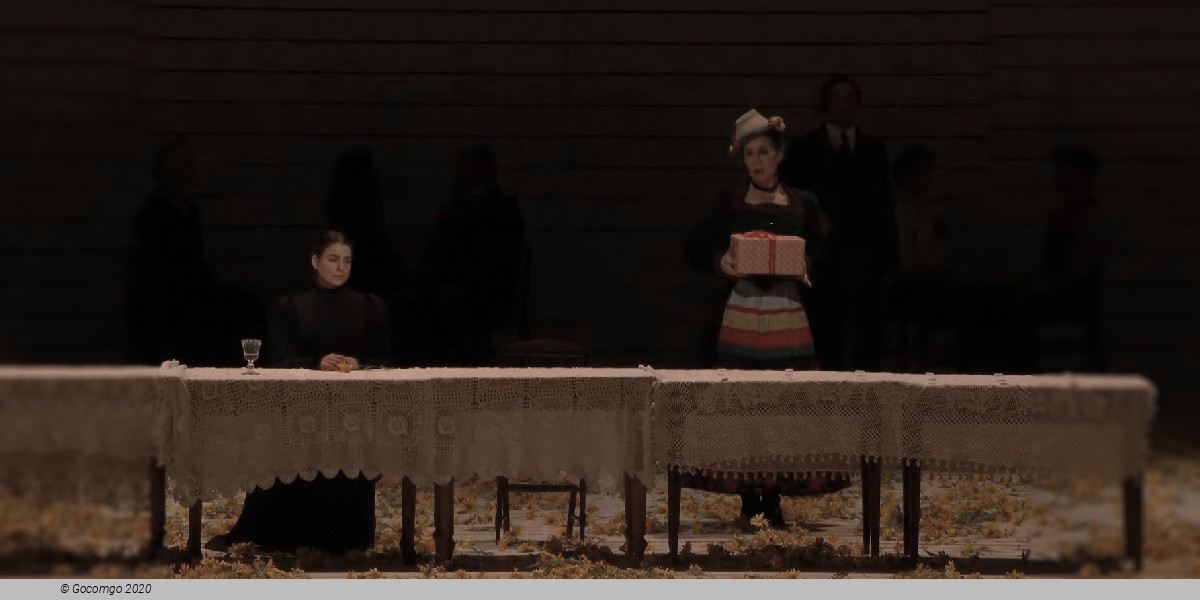
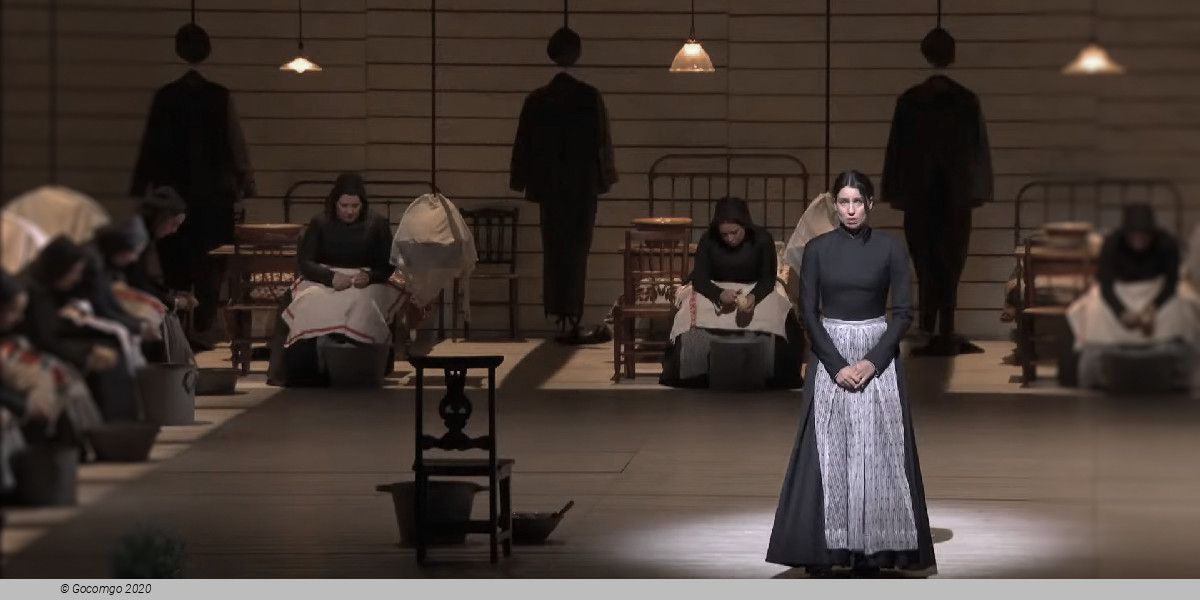
The old Burya lives in her mill together with her grandson Števa and his cousin Jenůfa. Jenůfa  is expecting Števa’s child, but has so far managed to keep it a secret. Števa’s stepbrother, the farmhand Laca, also loves Jenůfa. In a fit of jealous rage, Laca slashes Jenůfa’s face, ruining the beauty that enabled her to win Števa. Jenůfa has given birth to her child in secret at the house of her stepmother Kostelnicka. Števa ignores Kostelnicka’s pleas to acknowledge the child as his son. Laca is now her only hope: he has long since asked forgiveness for his misdeed, and would be prepared in take Jenůfa. However, he is appalled in learn that she has had a child by Števa. Kostelnicka tells him that the child is dead, and sends him away to prepare everything from the wedding. Whilst Jenůfa is asleep, Kostelnicka takes the baby and drowns him in the icy stream. She then convinces her stepdaughter that the child has died whilst Jenůfa was ill with a fever. The body of a baby is discovered on the day of Jenůfa and Laca’s wedding, to which Števa and his fiancée Karolka are also invited. Plagued by qualms of conscience, Kostelnicka confesses her crime. Jenůfa gives Laca his freedom, but he stands by her, confessing his love for her.

History
Premiere of this production: 21 January 1904, National Theatre, Brno

Jenůfa ("Her Stepdaughter" in Czech) is an opera in three acts by Leoš Janáček to a Czech libretto by the composer, based on the play Její pastorkyňa by Gabriela Preissová. It was first performed at the National Theatre, Brno on 21 January 1904. Composed between 1896 and 1902, it is among the first operas written in prose.

Synopsis

Place:  A Moravian village
Time: the nineteenth century

The plot depends on a tangled set of village relationships. Before the opera begins, the mill-owner Grandmother Buryja's two sons have both married twice, fathered children, and died. Their wives have also died, except for the Kostelnička (widow of the churchwarden), the younger son's second wife and Jenůfa's stepmother. Custom dictates that only Števa, the elder son's child by his first marriage, will inherit the mill, leaving his half-brother Laca and cousin Jenůfa to earn their livings.

Act 1

Jenůfa, Laca, and Grandmother Buryja wait for Števa to return home. Jenůfa, in love with Števa and secretly pregnant with his child, worries that he may have been drafted into the army. Laca, in love with Jenůfa, expresses bitterness against his half-brother's favored position at home. As he complains he plays with a knife and, finding it blunt, gives it to the mill foreman to be sharpened.

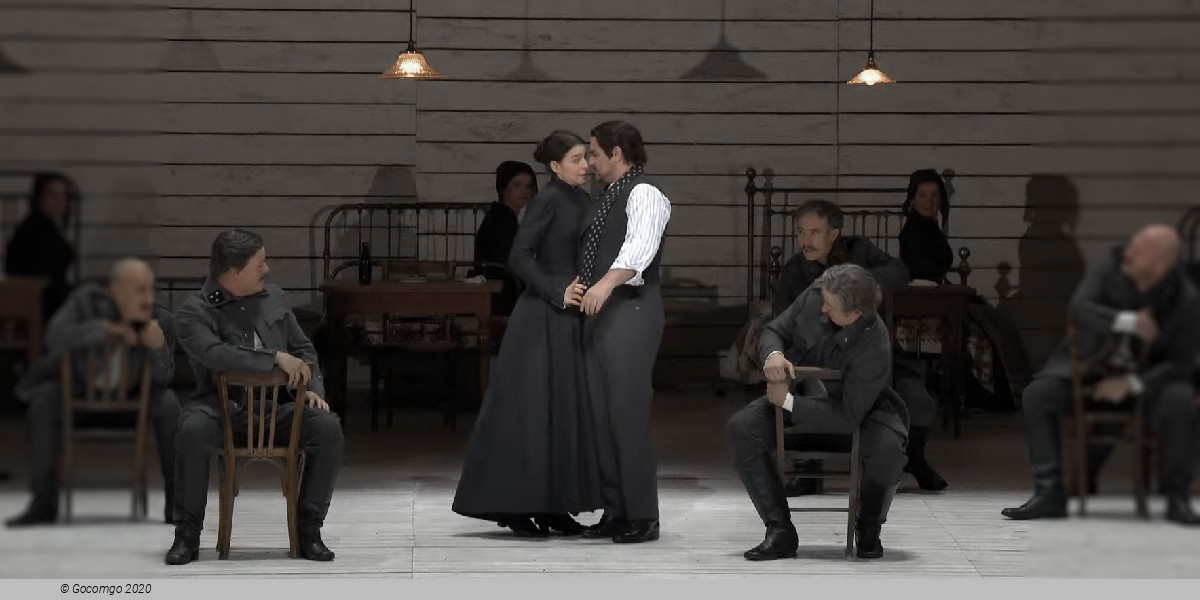
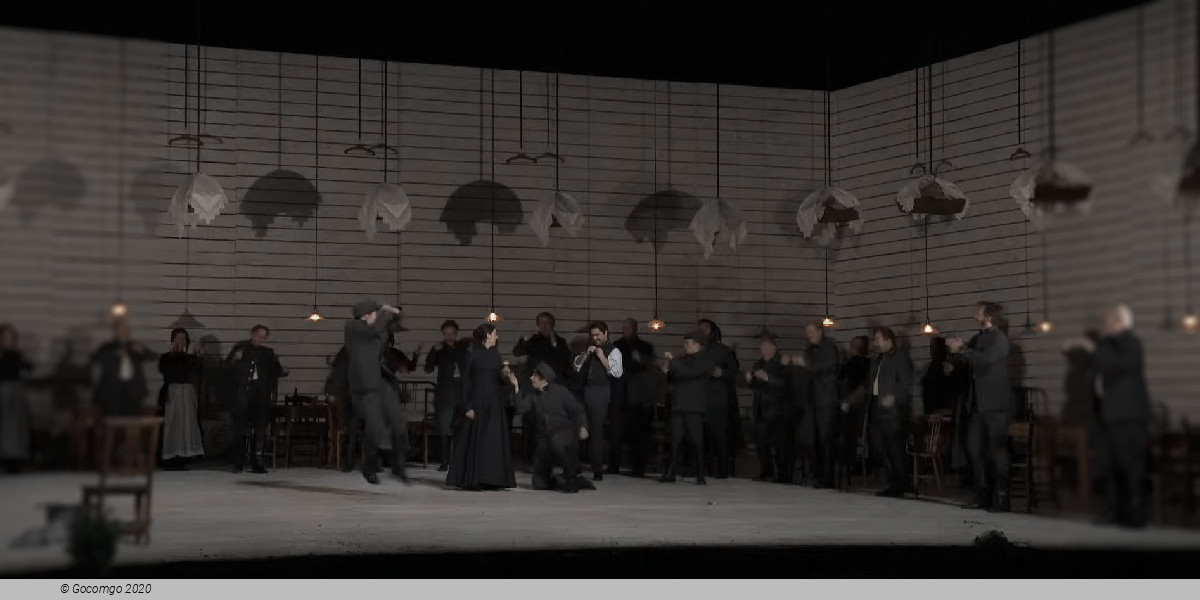
The foreman informs the family that Števa has not been drafted, to Jenůfa's relief and Laca's increased frustration. The others leave, and Jenůfa waits to greet Števa. He appears with a group of soldiers, drunk and boasting of his prowess with the girls. He calls for music and drags the miserable Jenůfa into dancing with him.

Then Kostelnička steps into this rowdy scene, silences the musicians and, shocked by Števa's behavior, forbids him to marry Jenůfa until he can stay sober for one full year. The soldiers and the family leave Števa and Jenůfa alone, and she begs him to love her, but he, unaware of her pregnancy, gives her casual answers and leaves.

Laca returns, as bitter as ever. He attempts to goad Jenůfa into criticizing Števa, but she takes her lover's side despite everything. Laca rages that Števa would never even look at her if it weren't for her rosy cheeks, then slashes her across the cheek with his knife.

Act 2

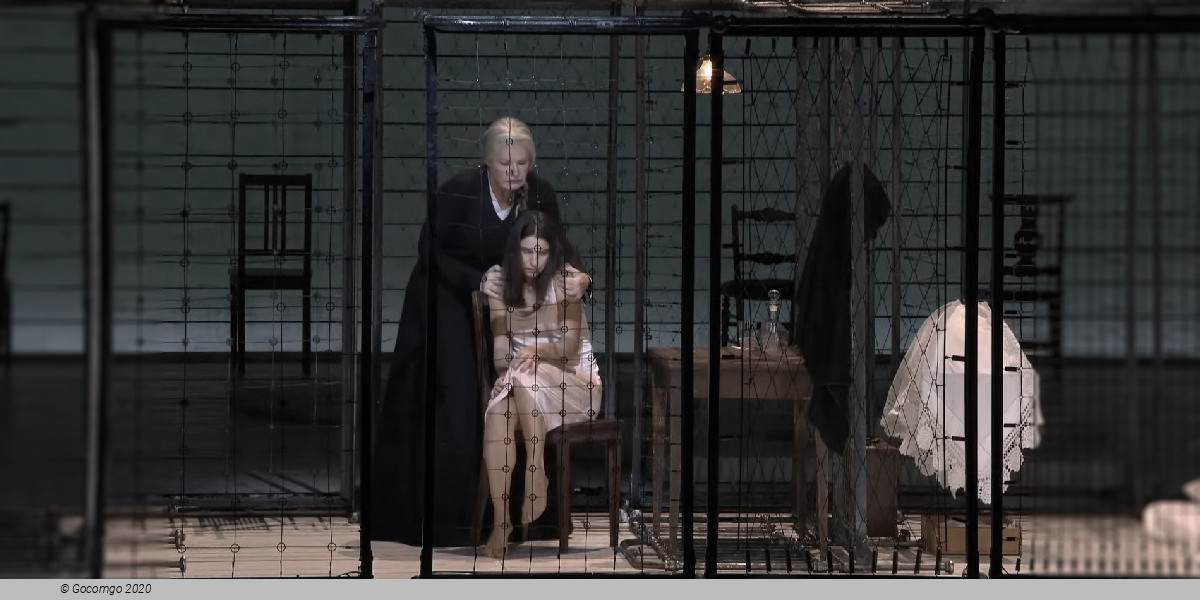
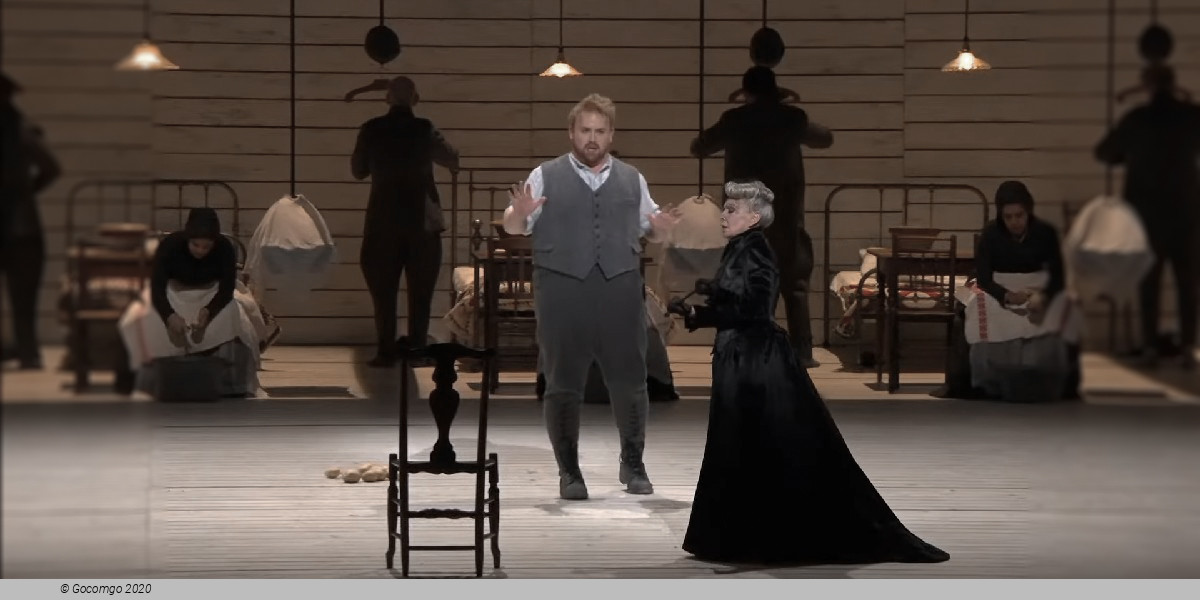
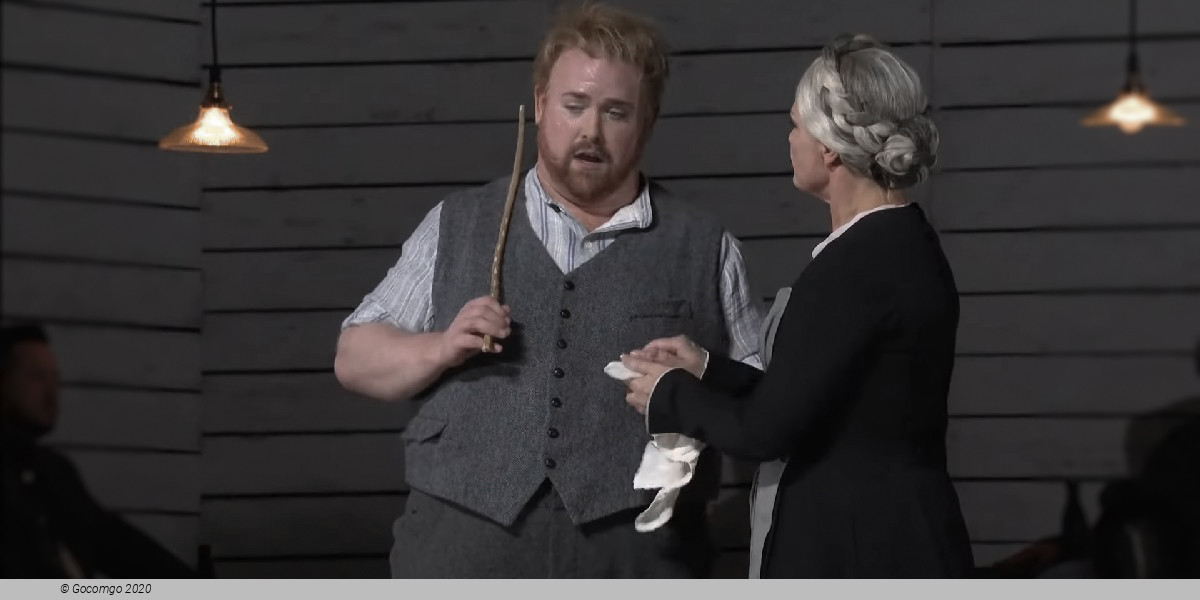
Months later, it is winter. The baby has been born, but Števa has not yet come to visit his child. Jenůfa's face is still disfigured, but she is happy in her love for the baby. While Jenůfa sleeps, the Kostelnička summons Števa and demands that he take responsibility. He answers that while he will provide money in secret, no one must know the baby is his. His love for Jenůfa died when Laca spoiled her beauty, and he is now engaged to marry Karolka, the mayor's pretty daughter.

Števa leaves, and Laca enters. He still doesn't know the truth about the baby, and when the Kostelnička tells him, his first reaction is disgust at the thought of taking Števa's child under his wing. Fearful that Jenůfa will be left with no one to marry, Kostelnička hastily lies that the baby is dead. Laca leaves, and the Kostelnička is faced with the necessity of making the lie true. She wraps the baby in a shawl and leaves the house.

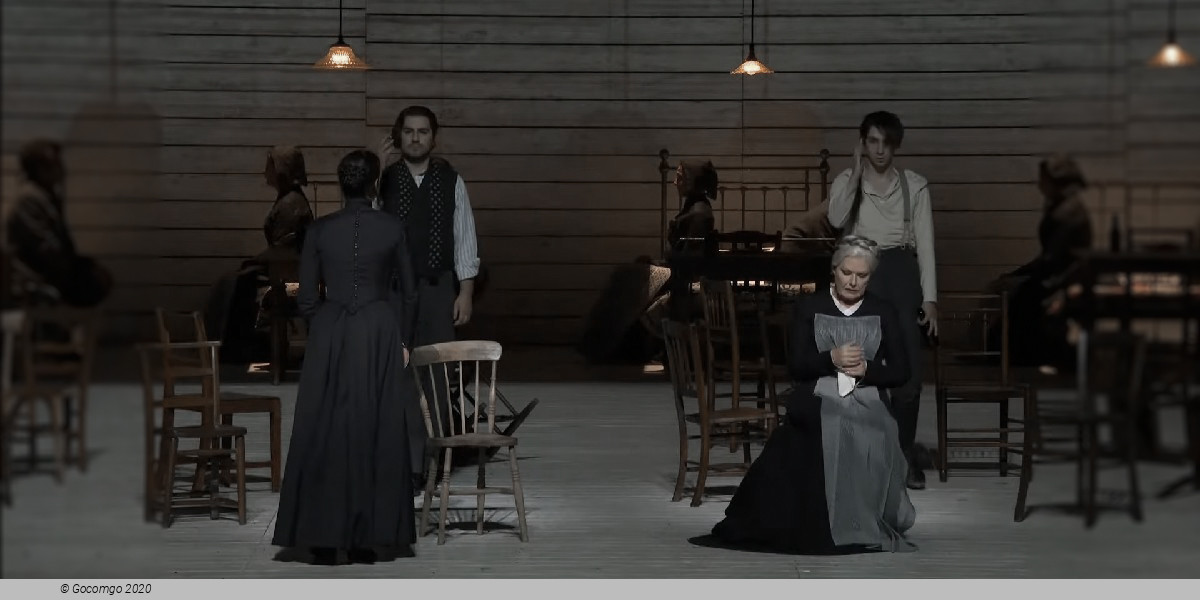
Jenůfa wakes up and says a prayer for her child's future, but the Kostelnička, returning, tells her that the baby died while she slept. Laca appears and comforts Jenůfa gently, asking that they spend the rest of their lives together. Seeing the tenderness of the couple, the Kostelnička tries to convince herself that she has acted for the best.

Act 3

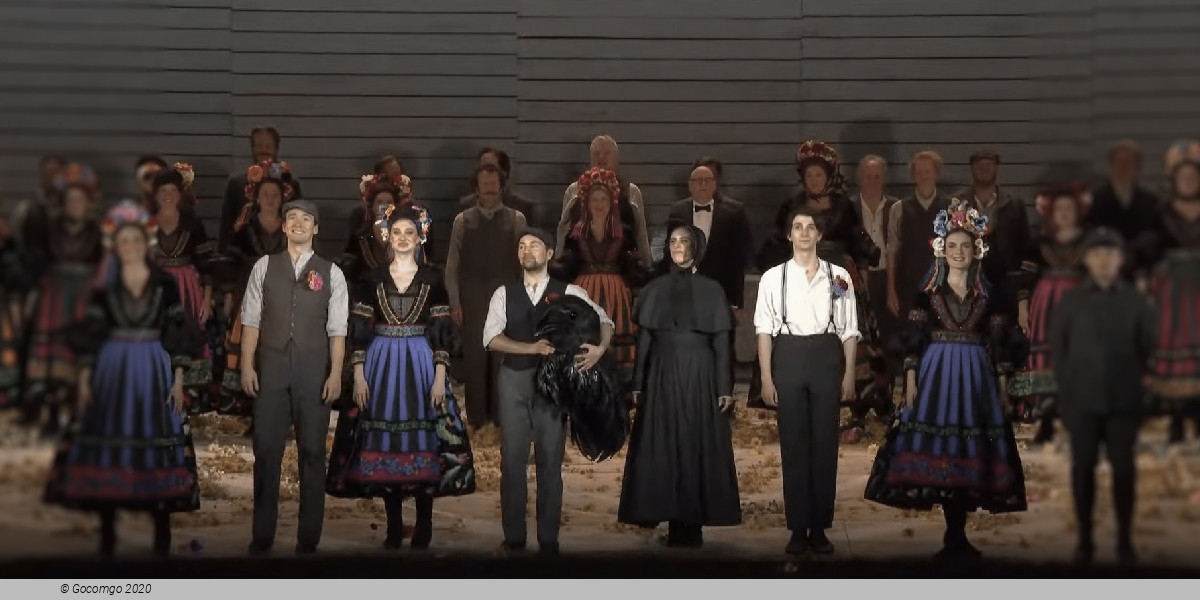
It is now spring, and Laca and Jenůfa's wedding day. All seems right again, except that the Kostelnička is a nervous wreck. Števa and Karolka visit, and a chorus of village girls sings a wedding song. Just then, screams are heard. The body of the baby has been discovered in the mill-stream under the melting ice. Jenůfa immediately says that the baby is hers, and in her grief appears guilty of the murder. The village is ready to exact immediate justice against Jenůfa, but the Kostelnička calms them and says that the crime is hers. Hearing the whole story, Jenůfa forgives her stepmother. The crowd takes the Kostelnička off to jail. Jenůfa and Laca are left alone. Jenůfa asks Laca to leave her, as she cannot expect him to marry her now. He replies that he will not leave her, and that he wishes to spend the rest of his life with her.

Venue Info

Vienna State Opera - Vienna
Location   Opernring 2

The Vienna State Opera is one of the leading opera houses in the world. Its past is steeped in tradition. Its present is alive with richly varied performances and events. Each season, the schedule features 350 performances of more than 60 different operas and ballets. The members of the Vienna Philharmonic are recruited from the Vienna State Opera's orchestra. The building is also the home of the Vienna State Ballet, and it hosts the annual Vienna Opera Ball during the carnival season.

The 1,709-seat Renaissance Revival venue was the first major building on the Vienna Ring Road. It was built from 1861 to 1869 following plans by August Sicard von Sicardsburg and Eduard van der Nüll, and designs by Josef Hlávka. The opera house was inaugurated as the "Vienna Court Opera" (Wiener Hofoper) in the presence of Emperor Franz Joseph I and Empress Elisabeth of Austria. It became known by its current name after the establishment of the First Austrian Republic in 1921. The Vienna State Opera is the successor of the Vienna Court Opera, the original construction site chosen and paid for by Emperor Franz Joseph in 1861.

The opera house was the first major building on the Vienna Ringstrasse commissioned by the Viennese "city expansion fund". Work commenced on the house in 1861 and was completed in 1869, following plans drawn up by architects August Sicard von Sicardsburg and Eduard van der Nüll. It was built in the Neo-Renaissance style by the renowned Czech architect and contractor Josef Hlávka.

Gustav Mahler was one of the many conductors who have worked in Vienna. During his tenure (1897–1907), Mahler cultivated a new generation of singers, such as Anna Bahr-Mildenburg and Selma Kurz, and recruited a stage designer who replaced the lavish historical stage decors with sparse stage scenery corresponding to modernistic, Jugendstil tastes. Mahler also introduced the practice of dimming the lighting in the theatre during performances, which was initially not appreciated by the audience. However, Mahler's reforms were maintained by his successors.

Herbert von Karajan introduced the practice of performing operas exclusively in their original language instead of being translated into German. He also strengthened the ensemble and regular principal singers and introduced the policy of predominantly engaging guest singers. He began a collaboration with La Scala in Milan, in which both productions and orchestrations were shared. This created an opening for the prominent members of the Viennese ensemble to appear in Milan, especially to perform works by Wolfgang Amadeus Mozart and Richard Strauss.

Ballet companies merge

At the beginning of the 2005–2006 season, the ballet companies of the Staatsoper and the Vienna Volksoper were merged under the direction of Gyula Harangozó.

From the 2010–2011 season a new company was formed called Wiener Staatsballet, Vienna State Ballet, under the direction of former Paris Opera Ballet principal dancer Manuel Legris. Legris eliminated Harangozós's policy of presenting nothing but traditional narrative ballets with guest artists in the leading roles, concentrated on establishing a strong in-house ensemble and restored evenings of mixed bill programs, featuring works of George Balanchine, Jerome Robbins, Jiří Kylián, William Forsythe, and many contemporary choreographers, as well as a reduced schedule of the classic ballets.

Opera ball

For many decades, the opera house has been the venue of the Vienna Opera Ball. It is an internationally renowned event, which takes place annually on the last Thursday in Fasching. Those in attendance often include visitors from around the world, especially prominent names in business and politics. The opera ball receives media coverage from a range of outlets.

Important Info
Type: Opera
City: Vienna, Austria
Starts at: 19:00
Intervals: 2
Top of page