Act 1
Waltons’s Castle
Lord Walton has promised the hand of his daughter to one of his officers, Sir Richard Forth. However, Sir Richard has found out that Elvira is in love with another: Lord Arthur Talbot. Distraught, he relates his woes to his friend, Sir Benno Robertson. Benno tries to comfort Sir Richard and take his mind off his troubles. Elvira learns from her Uncle, George, that he has been able to persuade her father to allow her to follow her heart; her nuptials with Arthur can take place that very day. The assembled crowd celebrates the arrival of Lord Arthur and cheers the young couple.
Lord Walton declares that he cannot attend the wedding because he must accompany a mysterious state prisoner from the Fortress to parliament. This woman prisoner is suspected of being a spy for the Stuarts. He declares that no one shall leave the fortress without a pass. He gives a pass to Arthur. Elvira withdraws a dress for the wedding, and the others follow her. The prisoner and Arthur are left alone. Arthur recognizes the prisoner as Henrietta, widow of the executed Charles I.
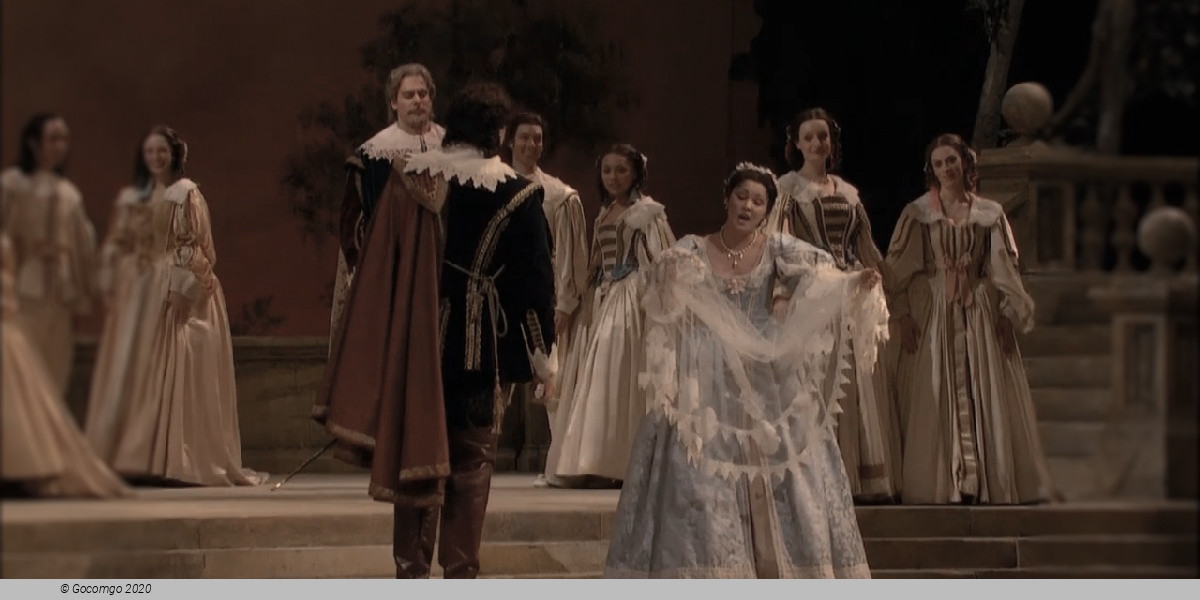
Since she faces the same fate as her husband, Arthur, a secret adherent of the Stuarts, is prepared to do all he can to save her from death. When Elvira returns, she asks Henrietta to put on the bridal veil so that she can see how it looks. Henrietta obliges. Elvira has to go back to her room. Left alone once more with the unfortunate woman, Arthur persuades Henrietta to escape – under the protection of the bridal veil to conceal her identity.
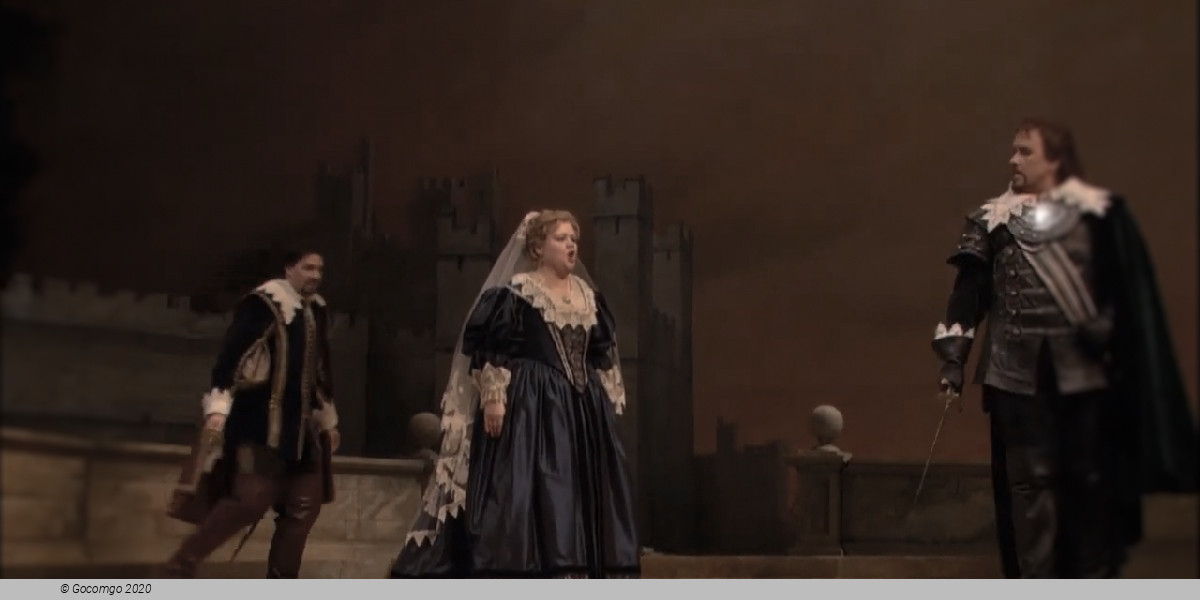
As they depart, they meet Sir Richard, who is determined not to let Arthur have his beloved Elvira without a fight. He challenges Arthur to a duel. Henrietta throws herself between the two men, the veil becomes disarranged, and Sir Richard realizes he has misjudged the situation. He decides to allow the couple to escape, delighted that it was not Elvira under the veil. The wedding party returns to the room and is outraged at the flight of Arthur and the prisoner. Elvira is completely stunned by the faithfulness she wrongly supposes Arthur to be guilty of and loses her reason.
ACT 2
Walton’s Castle
The occupants of the fortress bemoan Elvira’s lot. Sir Richard reports that parliament has condemned Arthur to die. Elvira’s behavior in front of Sir George and Sir Richard leaves no doubt of her wretched mental state. Sir George believes that a welcome surprise could restore her sanity. He implores Sir Richard to save Arthur. At length, Sir Richard agrees: only if Arthur is in league with the enemy shall he die.
ACT 3
In a forest
Arthur’s love for Elvira drives him to leave his exile to see her. The strains of a romance issue from the house, sung by Elvira, and Arthur joins in.
When Elvira enters, Arthur explains the reasons for his flight and begs her forgiveness. At times, Elvira seems to be in possession of all her senses. But as Arthur’s pursuers approach, she loses her reason again. She takes the Puritans’ drums for wedding music and believes Arthur will leave her again.
The puritans enter bearing torches and threaten to kiss Arthur. The shock of seeing her lover in danger of his life restores Elvira to her senses. The situation seems hopeless, Elvira and Arthur wish each other farewell forever.
A herald arrives with the news of the defeat of the Stuarts and a pardon for all the prisoners. Elvira falls into the arms of Arthur; in this moment, Richard flings himself at the couple and stabs Arthur.
Place: England during the English Civil War
Time: 1640s
Act 1
Scene 1: A fortress near Plymouth, commanded by Lord Gualtiero Valton
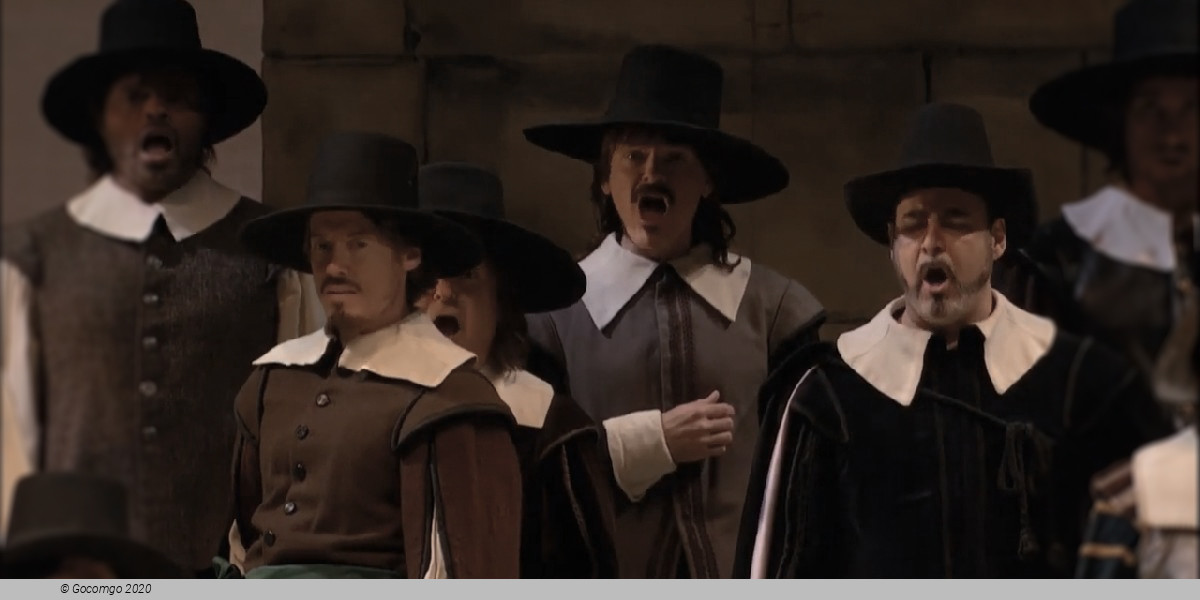
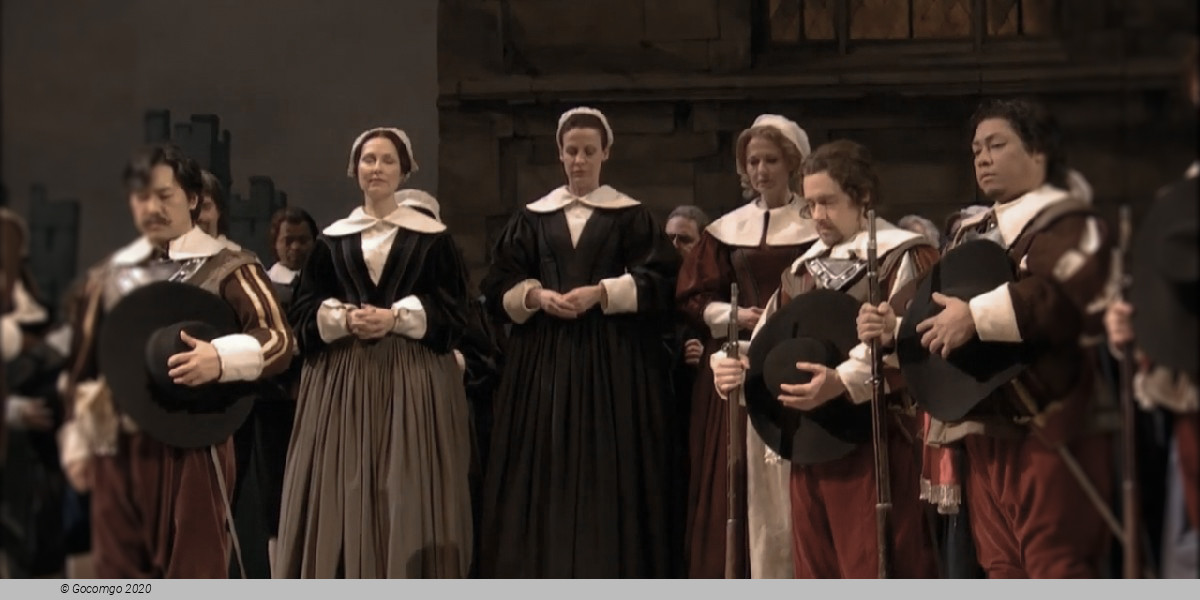
At daybreak, the Puritan soldiers gather in anticipation of victory over the Royalists. Prayers are heard from within, and then shouts of joy as the ladies and gentlemen of the castle come out announcing news of Elvira's wedding. Left alone, Riccardo shares with Bruno his plight: Riccardo had been promised Elvira's hand in marriage by her father Lord Valton but, returning to Plymouth the previous evening, he has found that she is in love with Arturo (a Royalist), and will marry him instead. He confides in Bruno. (Aria: Ah! Per sempre ...Bel sogno beato / "Ah! Forever have I lost you, flower of love, oh my hope; ah! life from now on will be full of sorrow".) As he pours out his sorrows to Bruno, Riccardo is called upon by his soldiers to lead them but he declares "I am aflame, but the flame is love, not glory".
Scene 2: Elvira's apartments
Elvira welcomes Giorgio, her uncle, with fatherly love, but when he tells her that she will soon be married, she is horror-struck. (Aria, then extended duet: Sai com'arde in petto mio / bella fiamma onnipossente / "You know that my breast burns with overwhelming passion".) She continues, stating a determination never to be married. But when Giorgio tells her that her cavalier, Arturo, will be coming, he reveals that it was he who persuaded her father, Lord Valton, to grant Elvira's wish. She is overjoyed. Then the sound of trumpets is heard announcing Arturo's arrival; he is welcomed by all.
Scene 3: The Hall of Arms
Arturo and his squires come into the hall and are joined by Elvira, Valton, Giorgio and the ladies and gentlemen of the castle. After a general welcome from all assembled, Arturo expresses his new-found happiness. (Aria, Arturo; then Giorgio and Walton; then all assembled: A te, o cara / amore talora / "In you beloved, love led me in secrecy and tears, now it guides me to your side".)
Valton tells everyone that he will not be able to attend the wedding ceremony and he provides Arturo with a safe conduct pass. A mysterious lady appears, and Valton tells her that he will be escorting her to London to appear before Parliament. Arturo is curious. Giorgio tells him that she is suspected of being a Royalist spy. As Elvira leaves to prepare herself for the wedding and the others depart in various directions, Arturo hangs back and finds the mysterious lady alone. He discovers that she is Enrichetta (Henrietta Maria), widow of the executed King Charles I. Insisting that she not be concerned about Elvira, Arturo vows to save her: (Aria, Riccardo; then Enrichetta; then together: Non parlar di lei che adoro, / di valor non mi spogliar / "Do not speak of her whom I adore; do not take away my courage. You shall be saved, oh unhappy woman.")
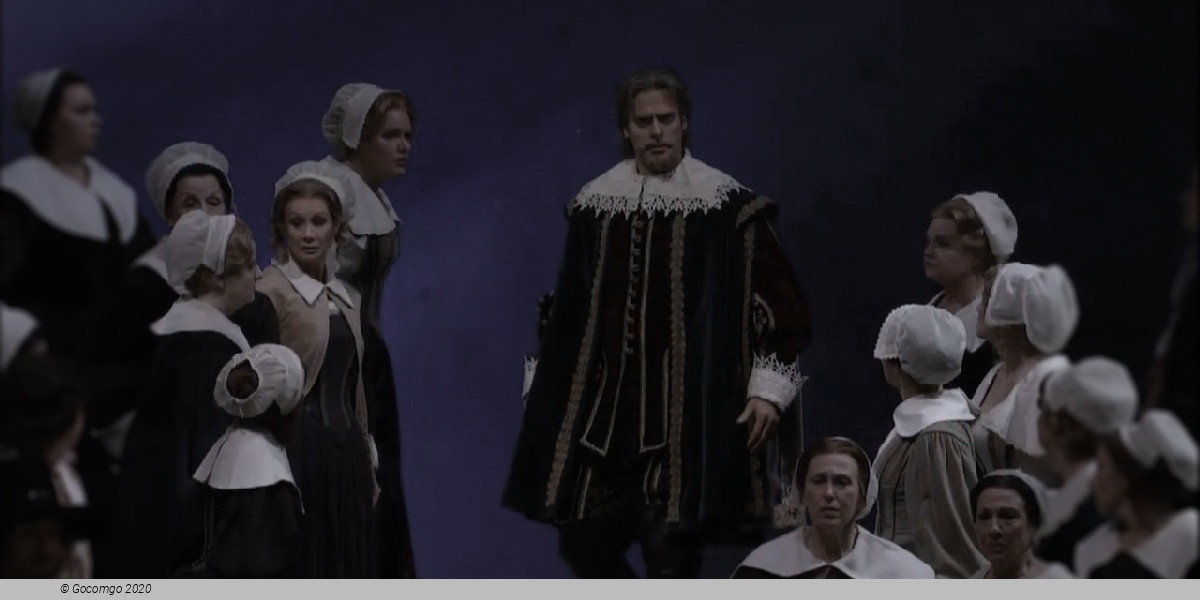
Observed by Arturo and Enrichetta, Elvira appears singing a joyful polonaise (Son vergin vezzosa / "I am a pretty maiden dressed for her wedding"), but she engages the Queen in conversation asking for help with the ringlets of her hair. To allow that to happen, she removes her wedding veil and places it over Enrichetta's head. Both Arturo and Enrichetta realise that this may allow them to escape, and as they proceed, they are challenged by Riccardo who believes the woman to be Elvira. He almost provokes a fight with Arturo until he discovers that she is not Elvira; then, he is content to allow them to pass, swearing not to reveal any information.
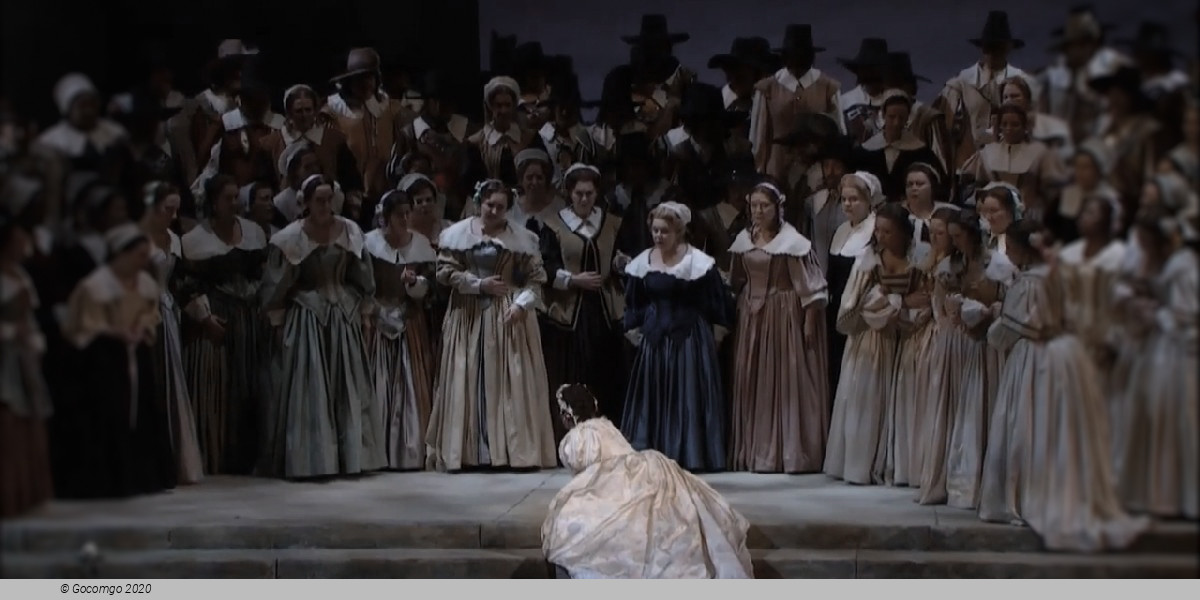
When the wedding party enters, they ask for Arturo, then learn, largely from Riccardo, that he has fled with Enrichetta. Pursuit is organised. Becoming increasingly distraught, Elvira believes that she sees Arturo: (Aria; then ensemble: Oh, vieni al tempio, fedele Arturo / "Ah! come, ah! come! Oh! come to the church, faithful Arturo".) It is increasingly clear that she has gone mad.
Act 2
A room in the fortress
As the ladies and gentlemen of the castle are mournful for Elvira's totally downcast state of mind, Giorgio describes her madness: (Aria: Cinta di fiori / "Garlanded with flowers and with her lovely hair disheveled, sometimes the beloved maiden wanders about...") and he describes her flights into madness and her pleas for Arturo to return. Riccardo brings the news that Arturo is now a fugitive who has been condemned to death by Parliament for allowing Enrichetta to escape. Giorgio states that the only hope for Elvira will be a sudden joyous experience. Elvira is heard outside, still deranged but longing for Arturo: "Either give me back hope, let me die" she cries. As she enters, she expresses all her longing: Elvira, aria: Qui la voce ... Vien, diletto / "Here his sweet voice called me...and then vanished. Here he swore to be true, here he swore it, and then, cruel man, he fled!".
Entering, she confronts her uncle and Riccardo, whom she fails to recognise, even in her moments of lucidity. She addresses him as if he were Arturo: (Elvira, cabaletta: Vien, diletto, è in ciel la luna / "Come, beloved, the moon is in the sky, Everything is silent, until the dawn breaks in the sky"). The two men encourage Elvira to return to her room.
For Elvira's sake, Giorgio encourages Riccardo to help save his rival, advising that he will forever be pursued by their phantoms. Riccardo rejects the request: (Giorgio, then Riccardo, then duet: Il rival salvar tu déi, / il rival salvar tu puoi / "You must save your rival, you can save your rival"), but gradually Riccardo comes around to accept that idea. However, he states that if in the following day's battle, Arturo appears, he will perish at his hand. The two men now have an agreement: (Finale: Giorgio, then Riccardo, then together: Suoni la tromba / "Let the battle-cry be: country, victory, victory and honour. Let the trumpets sound, and I shall fight strongly, fearlessly."
Act 3
A wooded area near the fortress, three months later
Arturo is still on the run. He is exhausted and has returned seeking Elvira. Suddenly he hears the sounds of singing coming through the woods: (Elvira, aria: A una fonte afflitto e solo / s'assideva un trovator / "A troubadour sat sad and lonely by a fountain"). He calls out, but gets no response and, recalling how the couple used to sing together in the woods, he also sings the troubadour melody until the sound of drumbeats and the shouting of soldiers silences him. He covers himself and hides as a group of soldiers passes, then emerges and decides to continue singing to the same melody: (Arturo, aria: Corre a valle, corre a monte / l'esiliato pellegrin / "Through the valleys, over the mountains, hastens the exiled pilgrim")
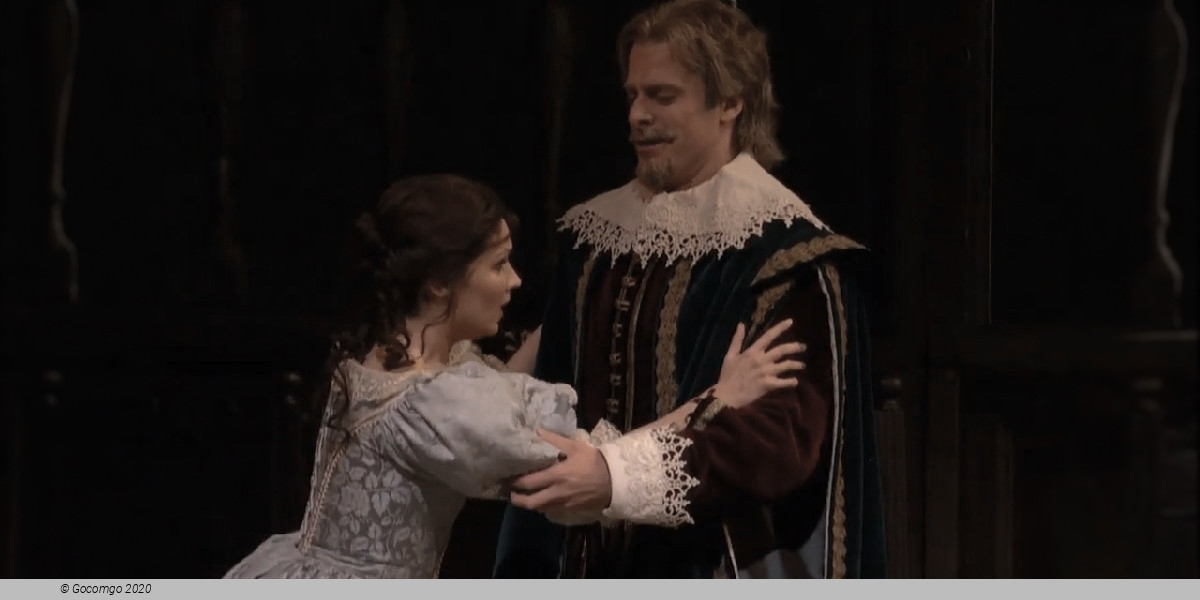
Unseen, Elvira emerges from the trees and stops to listen. She is saddened when the singing stops, and she sorrowfully wonders where Arturo is. Suddenly, he is standing before her and they are reunited in a spirited duet in which they declare that they will always be together after the long months of being apart. Still a little confused, Elvira believes that Arturo has married the woman whom he escorted from the fortress; he assures Elvira that he has always loved her, that the lady who was in great danger was the queen: (Arturo; then Elvira; then together). Having determined that they love each other and that they will always remain together, they enter into an ecstatic duet. (Arturo: Vieni fra queste braccia / "Come, come to my arms"; Elvira: Caro, caro, non ho parole / "Dearest, dearest, I cannot find the words to express my happiness"; then together).
At the sound of drums being heard, Elvira appears to be returning to a state of madness, fearing that they will again be parted. Then soldiers' voices are heard close by and Riccardo, Giorgio, and the ladies and gentlemen of the fortress enter announcing Arturo's death sentence. With that, she finally comes to her senses.
An ensemble, beginning with Arturo (Credeasi, misera / "Unhappy girl, she believed that I had betrayed her") extends to all assembled, each expressing his or her anguish, with even Riccardo being moved by the plight of the lovers. For this extended piece, Bellini wrote a high F-natural above C5 for Arturo's ... crudeli, crudeli! / Ella è tremante, / ella è spirante; / anime perfide, / sorde a pietà! / "cruel men, cruel men! She is trembling, she is fainting, perfidious souls, deaf to pity!"
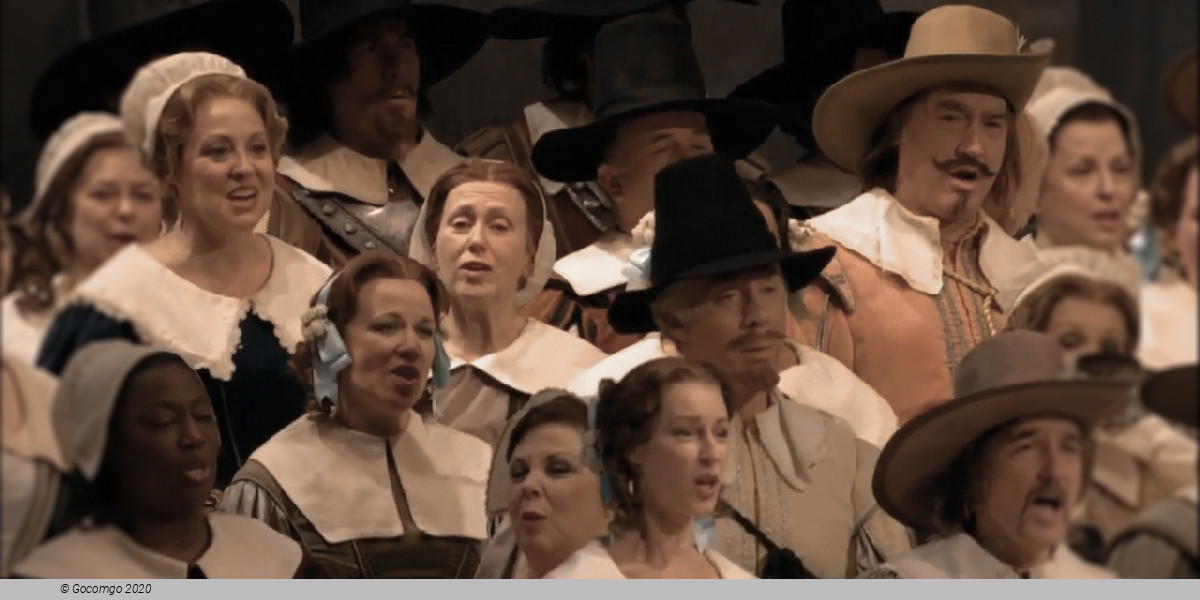
The soldiers continue to demand Arturo's execution, but the sounds of a herald arriving are heard. He brings letters which are opened by Riccardo and Giorgio. They announce that although the Royalists have been defeated, Oliver Cromwell has pardoned all prisoners. The ensemble expresses its general and its personal joy.




 Opernring 2