Vienna State Opera 13 November 2023 - Evening of modern ballets: "Tabula rasa", "Goldberg Variations" | GoComGo.com

Evening of modern ballets: "Tabula rasa", "Goldberg Variations"

Vienna State Opera, Main Stage, Vienna, Austria
All photos (3)
Select date and time
7:30 PM

E-tickets: Print at home or at the box office of the event if so specified. You will find more information in your booking confirmation email.

You can only select the category, and not the exact seats.
If you order 2 or 3 tickets: your seats will be next to each other.
If you order 4 or more tickets: your seats will be next to each other, or, if this is not possible, we will provide a combination of groups of seats (at least in pairs, for example 2+2 or 2+3).

Important Info
Type: Modern Ballet
City: Vienna, Austria
Starts at: 19:30
Intervals: 1
Duration: 2h 30min

E-tickets: Print at home or at the box office of the event if so specified. You will find more information in your booking confirmation email.

You can only select the category, and not the exact seats.
If you order 2 or 3 tickets: your seats will be next to each other.
If you order 4 or more tickets: your seats will be next to each other, or, if this is not possible, we will provide a combination of groups of seats (at least in pairs, for example 2+2 or 2+3).

Overview

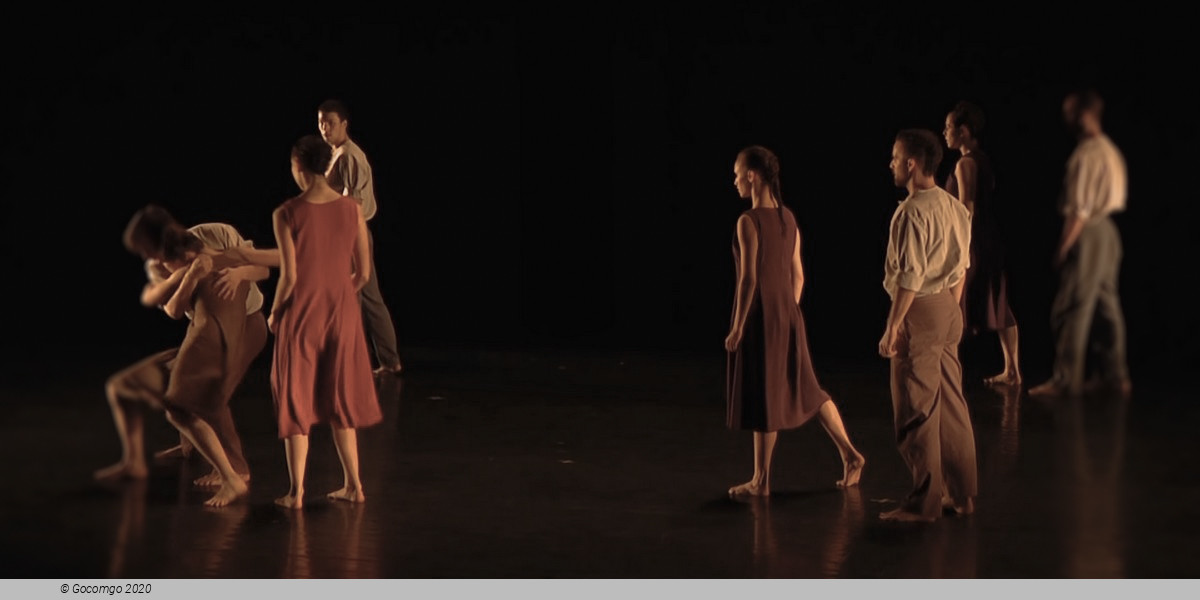
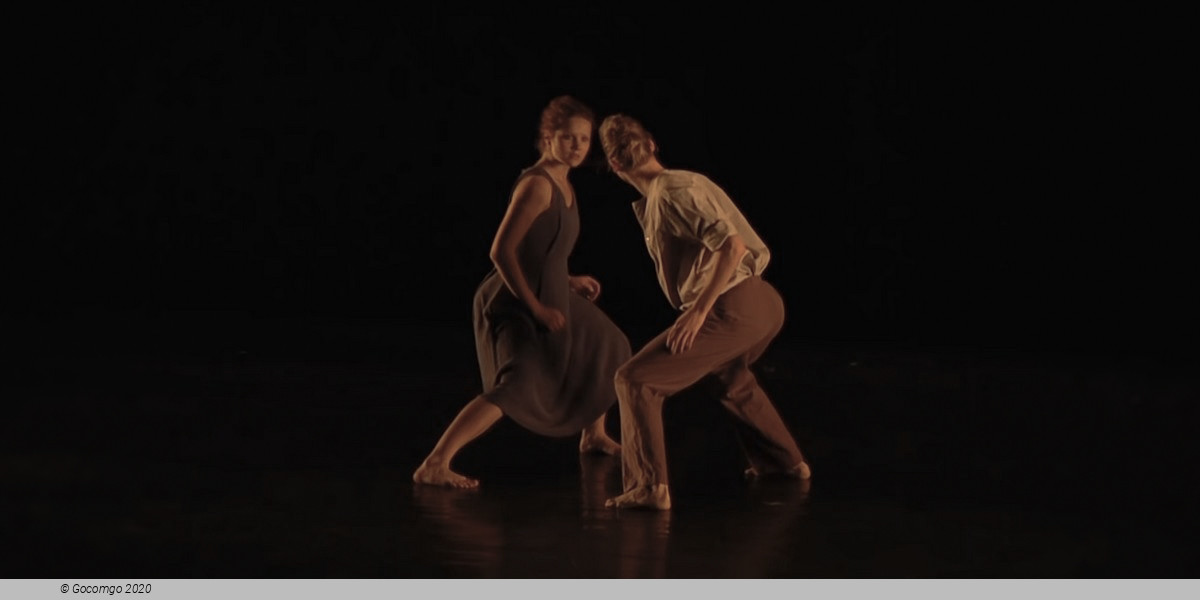
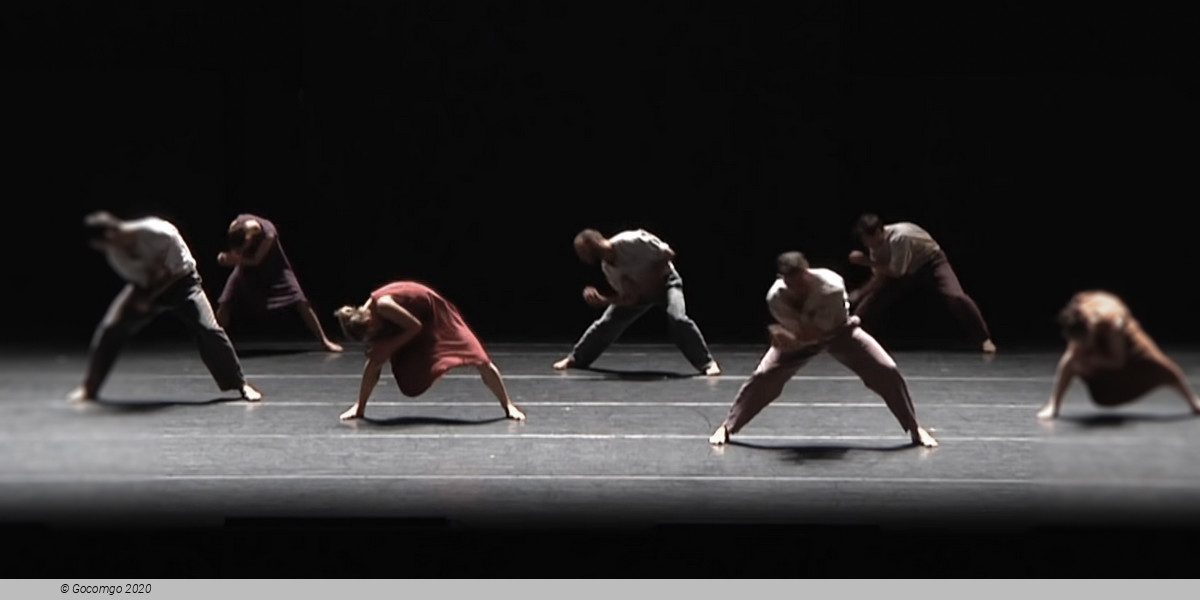
In 1742, Johann Sebastian Bach gave his Goldberg Variations the simple title Piano exercise consisting of one aria with various variations – and it is a fascinating compendium of variations, canons and fugues. In 1993, the Swiss choreographer Heinz Spoerli accepted the challenge of meeting Bach’s Opus summum for the piano with dance – and created one of his major works: a dance drama built out of music-making with the body about human beings, their joys and fears, loneliness and desires, allegiances and quarrels, youth and age. Goldberg-Variationen presents an 80-minute panorama of life which is juxtaposed here with a ballet choreographed by Ohad Naharin – also performed by the Vienna State Ballet for the first time – Tabula Rasa, to the eponymous piece by the composer Arvo Pärt. The Israeli’s works are declarations of love to the body in movement full of freedom, strength, eroticism and wildness, but also of purity, tenderness and vulnerability. The term "tabula rasa" comes from an ancient philosophical idea and describes human beings as a "blank page". Ohad Naharin takes one of these and writes on it his explorations of the self and the body in the form of touching, kinetic-meditative experiences.

Ohad Naharin is one of the most fascinating figures in contemporary dance: an artist who loves extremes. Born in the Israeli kibbutz Mizra in 1952, he left his homeland at the age of 24 when he was invited to go to New York by modern dance icon Martha Graham. He danced in Maurice Béjart’s Ballet du XXe Siècle, and from 1990 to 2018 ran the Batsheva Dance Company, based in Tel Aviv, developing an entire technique of movement for them, Gaga, a method of "training the senses to be receptive", created out of the need to be able to communicate with dancers on a deeper level.

With Tabula Rasa, the Vienna State Ballet will show one of the choreographer’s early works, commissioned in 1986 by Patricia Wilde for Pittsburgh Ballet. Ohad Naharin had discovered the legendary ECM recording of Arvo Pärt’s Double Concerto for Violin, String Orchestra and Prepared Piano in a record shop: "one of the most amazing pieces of music" he had "ever heard". Tabula rasa, composed in 1977 for Gidon Kremer, was indeed one of the works that sensationally heralded Pärt’s return from a deep creative and spiritual crisis after several years of silence: music that seemed to bear no relation to time, that was born from the power of silence and an intense study of the Notre Dame school, classical vocal polyphony and Gregorian chant. Like Pärt’s music, Naharin’s choreography is also a work of the most acute concentration and of reduction to the essentials.

As a Ballet Director, Heinz Spoerli made Basler Ballett, the Ballett der Deutschen Oper am Rhein and finally the Zürcher Ballett leading companies in Europe and created a comprehensive œuvre as a choreographer. He choreographed the Goldberg-Variationen in 1993 for his company in Düsseldorf. The Vienna State Ballet will present the work with a new stage and costume design devised especially for Vienna.

In choreographing to Bach’s music, whose 30 variations on an aria reveal a remarkable sense of structure and an architecture that is almost mathematically precise, Heinz Spoerli let himself be inspired by hearing rather than studying the music, by emotional response rather than academic analysis. Composed in 1742 as a "piano exercise" and named after Bach’s pupil Johann Gottlieb Goldberg, the composition offered Spoerli ideal scope to develop his "extended neoclassicism": a virtuosic language of dance characterised by subtlety and clarity which did not feel the need to pursue abstraction but was also capable of telling the audience things without an explicit narrative. Horst Koegler described the Goldberg-Variationen as one of the works from Spoerli’s "Bach ballet cathedral" which describes people and life in a series of poetic, choreographed images and scenes – a meeting, a farewell, anticipation and retrospection, happiness and grief. "For me, the Goldberg Variations are like the life that passes us by" is how Heinz Spoerli described his work: "There are relationships, couples are formed, and separations that lead back to neutrality. As in life, we get to know people, and then we drift apart again. [...] Perhaps I can tell something about this passing each other and togetherness in this piece. It should create a choreographic arc that stretches from the beginning to our end."

Ohad Naharin is one of the most fascinating figures in contemporary dance: an artist who loves extremes. Born in the Israeli kibbutz Mizra in 1952, he left his homeland at the age of 24 when he was invited to go to New York by modern dance icon Martha Graham. He danced in Maurice Béjart’s Ballet du XXe Siècle, and from 1990 to 2018 ran the Batsheva Dance Company, based in Tel Aviv, developing an entire technique of movement for them, Gaga, a method of "training the senses to be receptive", created out of the need to be able to communicate with dancers on a deeper level.

With Tabula Rasathe Vienna State Ballet will show one of the choreographer’s early works, commissioned in 1986 by Patricia Wilde for Pittsburgh Ballet. Ohad Naharin had discovered the legendary ECM recording of Arvo Pärt’s Double Concerto for Violin, String Orchestra and Prepared Piano in a record shop: "one of the most amazing pieces of music" he had "ever heard". Tabula rasa, composed in 1977 for Gidon Kremer, was indeed one of the works that sensationally heralded Pärt’s return from a deep creative and spiritual crisis after several years of silence: music that seemed to bear no relation to time, that was born from the power of silence and an intense study of the Notre Dame school, classical vocal polyphony and Gregorian chant. Like Pärt’s music, Naharin’s choreography is also a work of the most acute concentration and of reduction to the essentials.

As a Ballet Director, Heinz Spoerli made Basler Ballett, the Ballett der Deutschen Oper am Rhein and finally the Zürcher Ballett leading companies in Europe and created a comprehensive œuvre as a choreographer. He choreographed the Goldberg-Variationen in 1993 for his company in Düsseldorf. The Vienna State Ballet will present the work with a new stage and costume design devised especially for Vienna.

In choreographing to Bach’s music, whose 30 variations on an aria reveal a remarkable sense of structure and an architecture that is almost mathematically precise, Heinz Spoerli let himself be inspired by hearing rather than studying the music, by emotional response rather than academic analysis. Composed in 1742 as a "piano exercise" and named after Bach’s pupil Johann Gottlieb Goldberg, the composition offered Spoerli ideal scope to develop his "extended neoclassicism": a virtuosic language of dance characterised by subtlety and clarity which did not feel the need to pursue abstraction but was also capable of telling the audience things without an explicit narrative. Horst Koegler described the Goldberg-Variationen as one of the works from Spoerli’s "Bach ballet cathedral" which describes people and life in a series of poetic, choreographed images and scenes – a meeting, a farewell, anticipation and retrospection, happiness and grief. "For me, the Goldberg Variations are like the life that passes us by" is how Heinz Spoerli described his work: "There are relationships, couples are formed, and separations that lead back to neutrality. As in life, we get to know people, and then we drift apart again. [...] Perhaps I can tell something about this passing each other and togetherness in this piece. It should create a choreographic arc that stretches from the beginning to our end."

Venue Info

Vienna State Opera - Vienna
Location   Opernring 2

The Vienna State Opera is one of the leading opera houses in the world. Its past is steeped in tradition. Its present is alive with richly varied performances and events. Each season, the schedule features 350 performances of more than 60 different operas and ballets. The members of the Vienna Philharmonic are recruited from the Vienna State Opera's orchestra. The building is also the home of the Vienna State Ballet, and it hosts the annual Vienna Opera Ball during the carnival season.

The 1,709-seat Renaissance Revival venue was the first major building on the Vienna Ring Road. It was built from 1861 to 1869 following plans by August Sicard von Sicardsburg and Eduard van der Nüll, and designs by Josef Hlávka. The opera house was inaugurated as the "Vienna Court Opera" (Wiener Hofoper) in the presence of Emperor Franz Joseph I and Empress Elisabeth of Austria. It became known by its current name after the establishment of the First Austrian Republic in 1921. The Vienna State Opera is the successor of the Vienna Court Opera, the original construction site chosen and paid for by Emperor Franz Joseph in 1861.

The opera house was the first major building on the Vienna Ringstrasse commissioned by the Viennese "city expansion fund". Work commenced on the house in 1861 and was completed in 1869, following plans drawn up by architects August Sicard von Sicardsburg and Eduard van der Nüll. It was built in the Neo-Renaissance style by the renowned Czech architect and contractor Josef Hlávka.

Gustav Mahler was one of the many conductors who have worked in Vienna. During his tenure (1897–1907), Mahler cultivated a new generation of singers, such as Anna Bahr-Mildenburg and Selma Kurz, and recruited a stage designer who replaced the lavish historical stage decors with sparse stage scenery corresponding to modernistic, Jugendstil tastes. Mahler also introduced the practice of dimming the lighting in the theatre during performances, which was initially not appreciated by the audience. However, Mahler's reforms were maintained by his successors.

Herbert von Karajan introduced the practice of performing operas exclusively in their original language instead of being translated into German. He also strengthened the ensemble and regular principal singers and introduced the policy of predominantly engaging guest singers. He began a collaboration with La Scala in Milan, in which both productions and orchestrations were shared. This created an opening for the prominent members of the Viennese ensemble to appear in Milan, especially to perform works by Wolfgang Amadeus Mozart and Richard Strauss.

Ballet companies merge

At the beginning of the 2005–2006 season, the ballet companies of the Staatsoper and the Vienna Volksoper were merged under the direction of Gyula Harangozó.

From the 2010–2011 season a new company was formed called Wiener Staatsballet, Vienna State Ballet, under the direction of former Paris Opera Ballet principal dancer Manuel Legris. Legris eliminated Harangozós's policy of presenting nothing but traditional narrative ballets with guest artists in the leading roles, concentrated on establishing a strong in-house ensemble and restored evenings of mixed bill programs, featuring works of George Balanchine, Jerome Robbins, Jiří Kylián, William Forsythe, and many contemporary choreographers, as well as a reduced schedule of the classic ballets.

Opera ball

For many decades, the opera house has been the venue of the Vienna Opera Ball. It is an internationally renowned event, which takes place annually on the last Thursday in Fasching. Those in attendance often include visitors from around the world, especially prominent names in business and politics. The opera ball receives media coverage from a range of outlets.

Important Info
Type: Modern Ballet
City: Vienna, Austria
Starts at: 19:30
Intervals: 1
Duration: 2h 30min
Top of page