
Vienna State Opera 25 February 2024 - Don Quixote | GoComGo.com

Don Quixote

Vienna State Opera, Main Stage, Vienna, Austria
All photos (8)
Select date and time
6:30 PM

E-tickets: Print at home or at the box office of the event if so specified. You will find more information in your booking confirmation email.

You can only select the category, and not the exact seats.
If you order 2 or 3 tickets: your seats will be next to each other.
If you order 4 or more tickets: your seats will be next to each other, or, if this is not possible, we will provide a combination of groups of seats (at least in pairs, for example 2+2 or 2+3).

Important Info
Type: Ballet
City: Vienna, Austria
Starts at: 18:30
Acts: 3
Intervals: 2

E-tickets: Print at home or at the box office of the event if so specified. You will find more information in your booking confirmation email.

You can only select the category, and not the exact seats.
If you order 2 or 3 tickets: your seats will be next to each other.
If you order 4 or more tickets: your seats will be next to each other, or, if this is not possible, we will provide a combination of groups of seats (at least in pairs, for example 2+2 or 2+3).

Overview

Miguel de Cervantes’s famous epic about the tragic knight who sets off into the world with his servant Sancho Panza to fight the wrongs of society and mistook a windmill for a dangerous enemy or dreams of being swept off to a magic garden in the kingdom of the Dryads, was turned into a ballet by Marius Petipa in 1869 at the Bolshoi Theatre in Moscow.

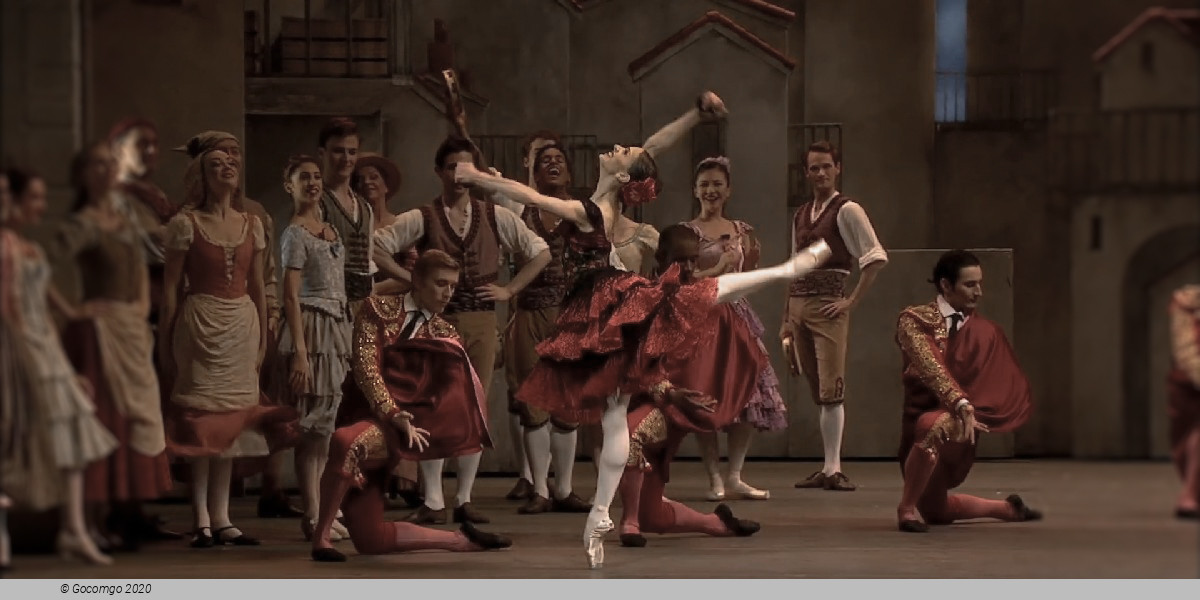
In 1966, Rudolf Nureyev chose to focus on the turbulent love story of Kitri and Basil – whom Don Quixote helps to unite despite her father’s resistance – in his Don Quixote in Vienna, creating an opulent story ballet with highly demanding dances, precise characterisation and colourful scenes full of Spanish flavour that succeeded in bringing together what were then two competing worlds of ballet: Soviet virtuosity was combined a story that was told in a coherent, dramaturgical form.

The ballet remained in the Vienna repertoire for almost 20 years, from its world premiere until 1985, with Nureyev himself regularly taking to role of Basil. In 2011, Manuel Legris, who had danced several roles in the production in Paris, brought it back to where it had been created in a scrupulously worked reconstruction. Now Nureyev’s comedy ballet, which is a calling card for any company with the extreme technical demands it makes of the dancers, can once again be seen with the Vienna State Ballet from 2023.

In 1959, at the age of 21, Rudolf Nureyev with Ninel Kourgapkina as his partner gave a brilliant performance of Basil with the Kirov Ballet in Leningrad. Once he had chosen to remain in the West in 1961, this became one of his cult roles, highlighting yet another facet of the dancer/actor: his mischievous spirit and his gift for comedy. Rudolf Nureyev danced the final pas de deux with Sonia Arova as early as 1962 in New York. He then restaged the entire work, devising a new choreography after Marius Petipa and Alexandre Gorski for the Vienna Opera in 1966, and asking John Lanchbery to work on several arrangements of Minkus’ music so as to give it a livelier character.

He revived it in 1970 with the Australian Ballet (with Lucette Aldous), and the following year with the Marseille Opera Ballet which was directed at this time by Rosella Hightower (Maïna Gielgud played the role of Kitri).

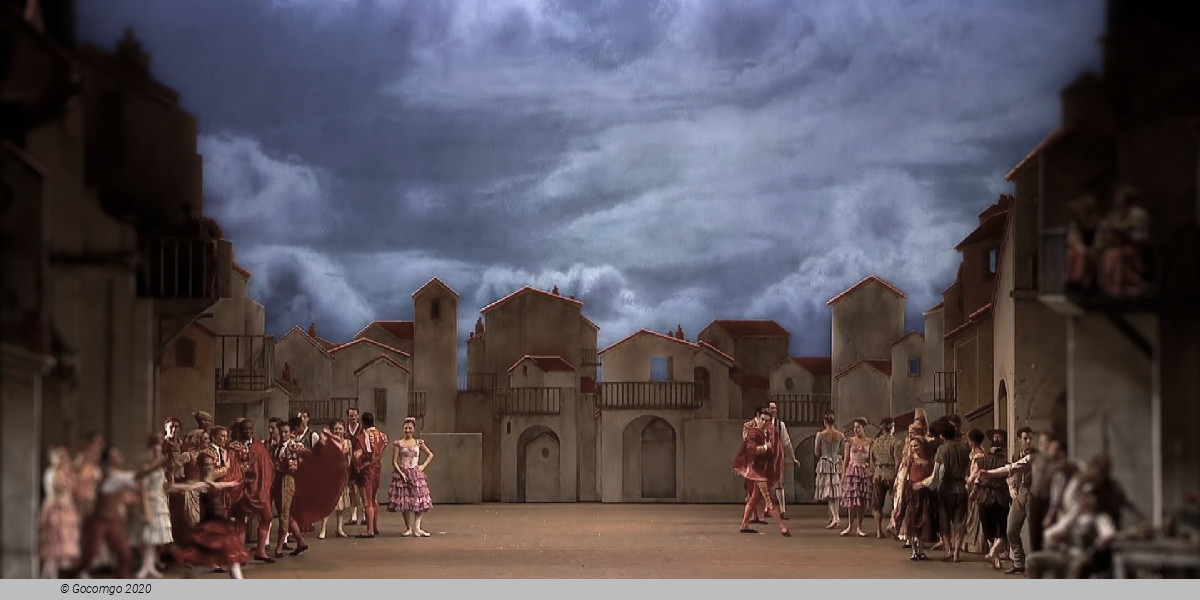
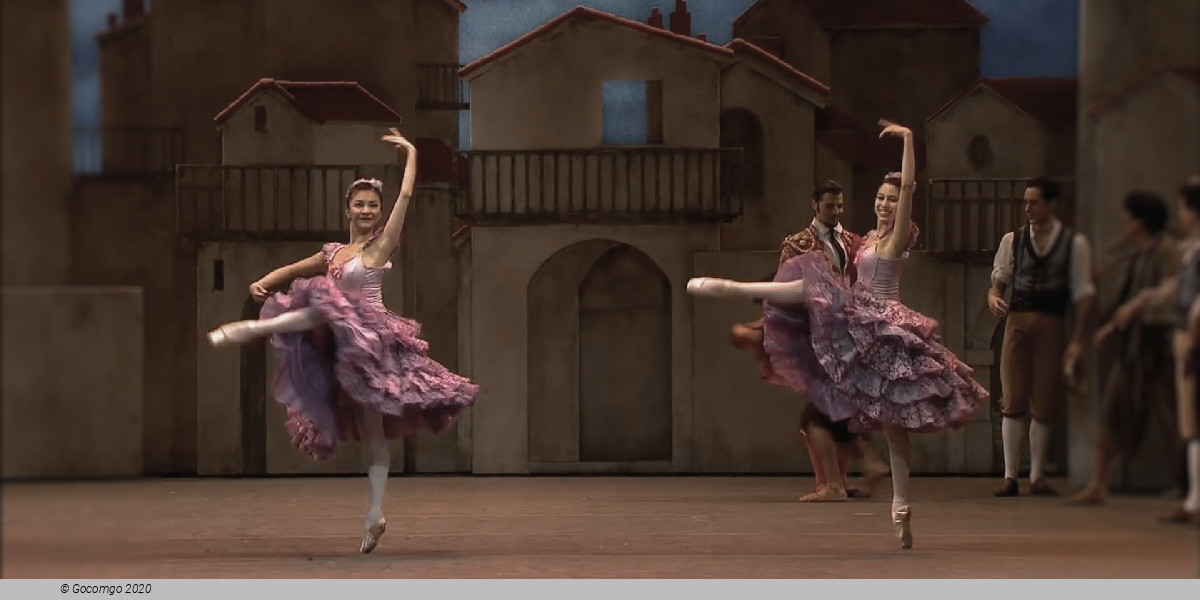
“This version shows the way in which Nureyev managed the great movements on stage even more clearly: the Spanish numbers swirl around the enormous village square and form an ingenious diversity of configuration intended to demonstrate the steps characteristic of Spain.
Although the purely classical sequence of the “vision” of Dulcinea and the Dryads was performed in its entirety – exactly as it was handed down by Kirov tradition – Nureyev preceded it with a scene involving a gypsy camp as a pretext for developing an amorous meeting between Kitri and Basil: moonlit pas de deux under the sails of a giant windmill.
Rudolf Nureyev also shortened the ballet to three acts with prologue: the gypsies, the windmills, the puppet theatre all becoming one scene, followed by the appearance of the Dryads.
Nureyev considerably expanded the comedy aspect. In his version, he introduced the spirit of “Commedia dell’Arte”, where Don Quixote would be Pantaloon, Kitri would be Columbine, and Basil, Harlequin, a brilliant, fast moving, leaping master of ceremonies, who runs from one end of the ballet to the other”. (Alexander Bland)

This Don Quixote performed by the Australian Ballet, was filmed in 1972 by Rudolf Nureyev himself; this was the first time he was on the other side of the camera. Rudolf Nureyev was already dancing Don Quixote with the Kirov ballet in Leningrad at the age of twenty. Marius Petipa’s libretto and choreography had been traditionally handed down, but had also been subjected to modifications due to successive revisions, the most important of which was that of Alexandre Gorski in 1900. Basing himself on this version, Rudolf Nureyev was to create a cheerful, lively Don Quixote, full of pace. He used humour and momentum for a series of colourful scenes concerning the thwarted love life of Kitri, the innkeeper’s daughter, and Basil, the barber, combined with the epic “Knight of the sad face”.

This Don Quixote also staged with the Australian Ballet (and filmed in 1972 by Nureyev himself) made its entry into the Paris Opera repertoire in March 1981 at the invitation of Rosella Hightower, then Dance Director.

The ballet has since been revived during the 1983-84 season, in July 1985 in the Nîmes arenas, in July 1986 at the Opera, in June 1989 at the Grand Palais, in 1990 as well as in May/June 1998 and in December 1998/January 1999 at the Palais Garnier. A new production was staged at the Bastille Opera in April/May 2002 and May/June 2004.

RUDOLF NUREYEV’S CHOREOGRAPHY

Nureyev revived the Kirov version (Gorski’s production after Petipa) and danced it in 1959 and 1960, bringing modifications of his own invention to it as with all his other choreographies after Petipa.

Nureyev restored the importance of the prologue: an initial view into the fantasy world of Don Quixote who makes a knight’s helmet out of a barber’s bowl, and believes he sees the white, luminous Dulcinea, the lady of his dreams, suddenly appear in his lowly, gloomy abode.

As always with Nureyev, the room, the house, the palace, is a private world; a place of torment for the soul, of dreams and nightmares that help the hero or the heroine to overcome the conventions of their subconscious.

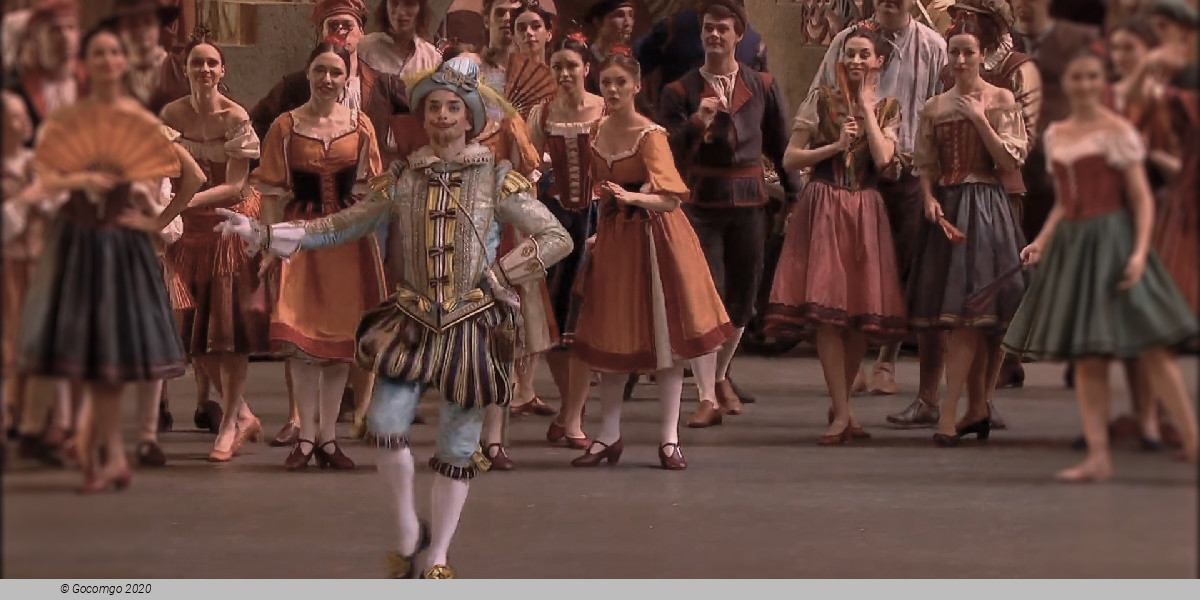
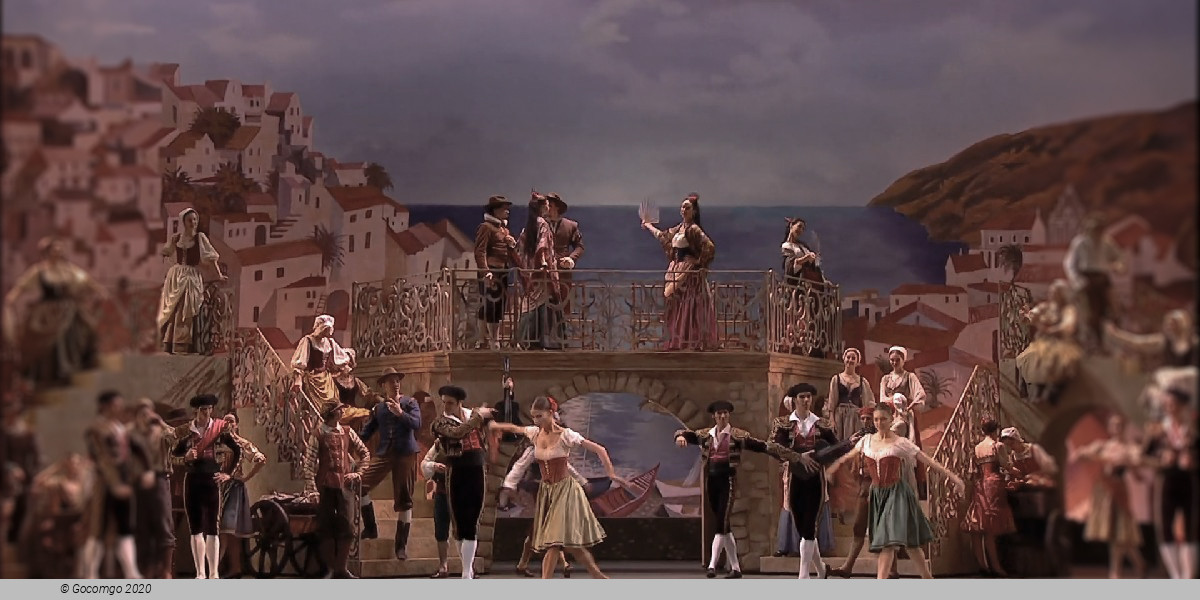
In contrast with this, “life on the outside continues” (a phrase which was often repeated by Rudolf Nureyev with a melancholy nothing short of Chekhov): noisy and cheerful, the square in Barcelona – following the example of that in Verona for Romeo and Juliet – is the stage for an array of simultaneous actions and colourful events.

Sancho Pança, no longer a valet but a chubby, thieving, bawdy monk as they once were, is the main attraction here. He represents the old world perpetuated by Don Quixote; this idealist from another age, ill at ease in his armour, who invites Kitri to dance an old-fashioned minuet in Act 1. An old world that is going to be swept away by the youthfulness of Kitri and Basil

In his own style, Nureyev choreographed a pas de deux for Kitri and Basil in Act II, when the two lovers have run away to escape from Lorenzo who wants to marry his daughter to the ludicrous Gamache.

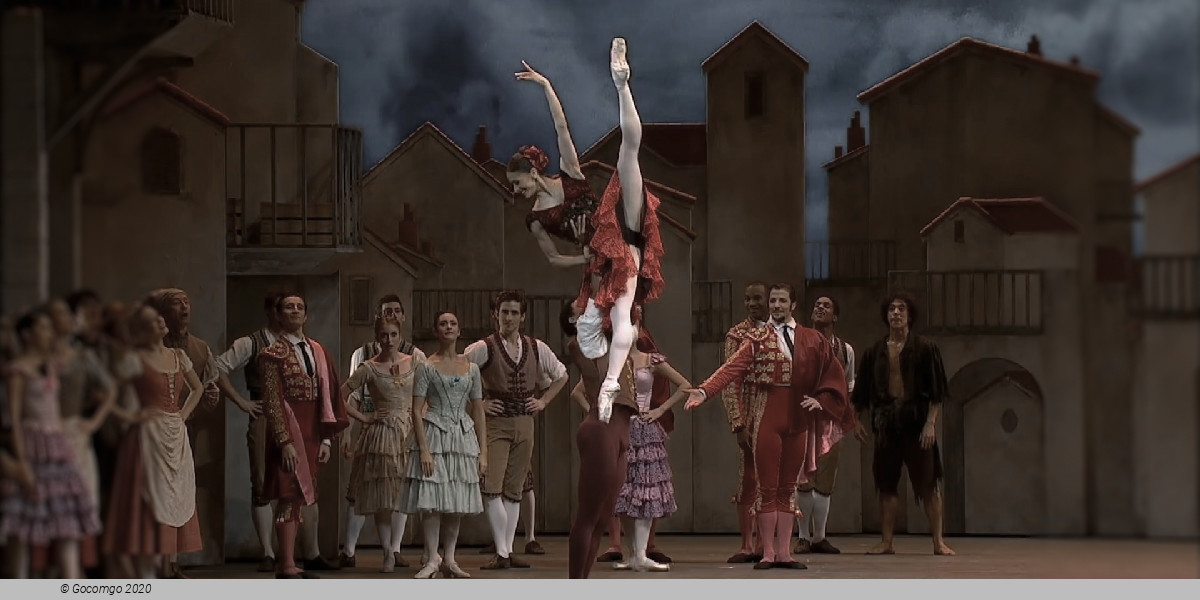
Rudolf Nureyev’s love of the theatre did not restrict itself to genres, consequently, the choreography contained music-hall effects such as these opening and closing umbrellas which, in the eyes of Don Quixote, seemed to be no less than frightening monsters, or such as this “floating” vision of Kitri/Dulcinea where the female dancer is lifted in the dark by a male dancer clad all in black, thus giving the illusion of a weightless being.

Nureyev also gave his Don Quixote to the Zurich Opera Ballet (1979) and the National Ballet of Norway (1980). In 1981, at the invitation of Rosella Hightower – then Dance Director for the Paris Opera – the production made its entry into the repertoire of the Opera Ballet, where only the famous pas de deux in the third act was danced. Nureyev’s Don Quixote was subsequently to be included in the repertoire of the Central Ballet Troupe in Peking, the Matsuyama Ballet Company in Tokyo (in 1985), the Scala Ballet in Milan (in 1987) and the Swedish Royal Ballet (in 1994) Cast of the creation at the Palais Garnier The “first” Don Quixote with the Paris Opera Ballet was performed on the 6th March 1981 at the Palais Garnier with Noëlla Pontois (Kitri), Cyril Atanassoff (Basil) Elisabeth Platel (Queen of the Dryads), Georges Piletta (Gamache), Jean-Yves Lormeau (Espada), and Sylvie Clavier (Street dancer); Rudolf Nureyev danced with Noëlla Pontois in the second performance.

History
Premiere of this production: 26 December 1869, Ballet of the Imperial Bolshoi Theatre of Moscow, Russia

Don Quixote is a ballet in four acts and eight scenes, based on episodes taken from the famous novel Don Quixote de la Mancha by Miguel de Cervantes. It was originally choreographed by Marius Petipa to the music of Ludwig Minkus and first presented by the Ballet of the Imperial Bolshoi Theatre of Moscow, Russia on 26 December [O.S. 14 December] 1869. Petipa and Minkus revised the ballet into a far more expanded and elaborated edition in five acts and eleven scenes for the Imperial Ballet, first presented on 21 November 1871 at the Imperial Bolshoi Kamenny Theatre of St. Petersburg.

Synopsis

Don Quixote's Study

Bachelor Sanson Carrasco is seen covering a bookcase with wallpaper, while Antonina is putting some rusty old armour and a helmet made of pasteboard into a cupboard. Don Quixote de la Mancha enters, reading a book. He goes to the bookcase and, not finding it, believes it has been stolen by evil magicians. Then he settles into an armchair and continues reading. He delights in stories of brave knights, fabulous giants and other fantastical creatures, but most of all Don Quixote dreams of his beloved Dulcinea, a woman that he believes to be so lovely and noble that she must be divinity. Gradually he nods and falls asleep to dream of their romantic adventures. Darkness falls.

Suddenly his servant, Sancho Panza, climbs hurriedly through the window. In pursuit are several angry women from the market from whom he has stolen bread and a chicken. Awakened by the commotion, Don Quixote sends the women away. Don Quixote tells Sancho that he is determined to seek adventures as a knight-errant, all the while searching for his beloved Dulcinea. He shows him the pasteboard helmet, which, with one sweep from his sword, becomes a shapeless mass on the floor. Antonina suggests that he should use a shaving basin instead, which would make a splendid helmet. Don Quixote enthusiastically agrees and, placing it on his head, orders Sancho to bring him his armour, sword and spear, and to make ready his horse, Rocinante.

Act I

A market-place in Barcelona

Kitri, an inn-keeper's daughter, steals out of her house to meet her beloved, the barber Basilio. Her father, Lorenzo, sees the lovers and sends Basilio away, bringing Kitri to tears. Now comes the rich nobleman Gamache, who, likewise in love with Kitri, goes to Lorenzo and asks for his daughter's hand. The innkeeper accepts with delight but Kitri, appalled at the thought of wedding the foppish nobleman, runs away.

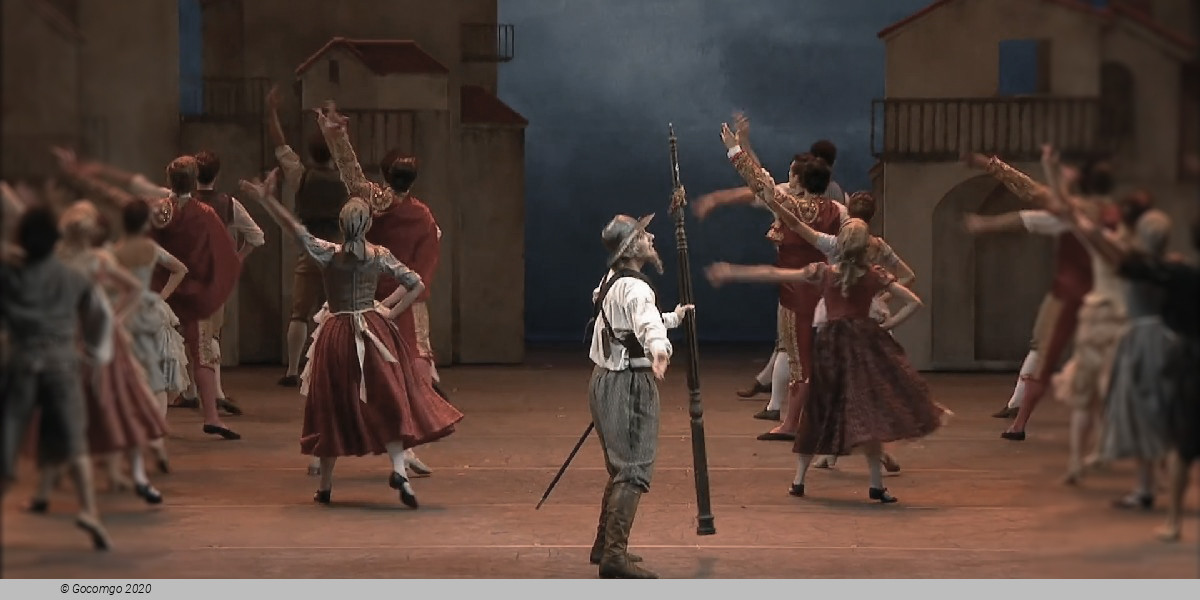
Dancing begins in the square and some toreadors try to kidnap the girls they fancy, but their relatives and lovers hasten to their aid. At this moment Don Quixote arrives mounted on Rocinante, followed by Sancho, who is riding a donkey. At his master's command Sancho sounds his rusted horn, causing the townspeople to cover their ears. Lorenzo runs out of his inn, and Don Quixote, taking him for the lord of a famous castle, dismounts Rocinante and, falling to his knees, begs to be allowed to serve him. Charmed, Lorenzo invites the knight to sit on his balcony. Sancho remains in the square where he is surrounded by girls who induce him to take part in a game of blind man's bluff. Then some boys bring in a blanket on which they place Sancho and proceed to toss him into the air. Don Quixote hurries to his assistance and sets him free.

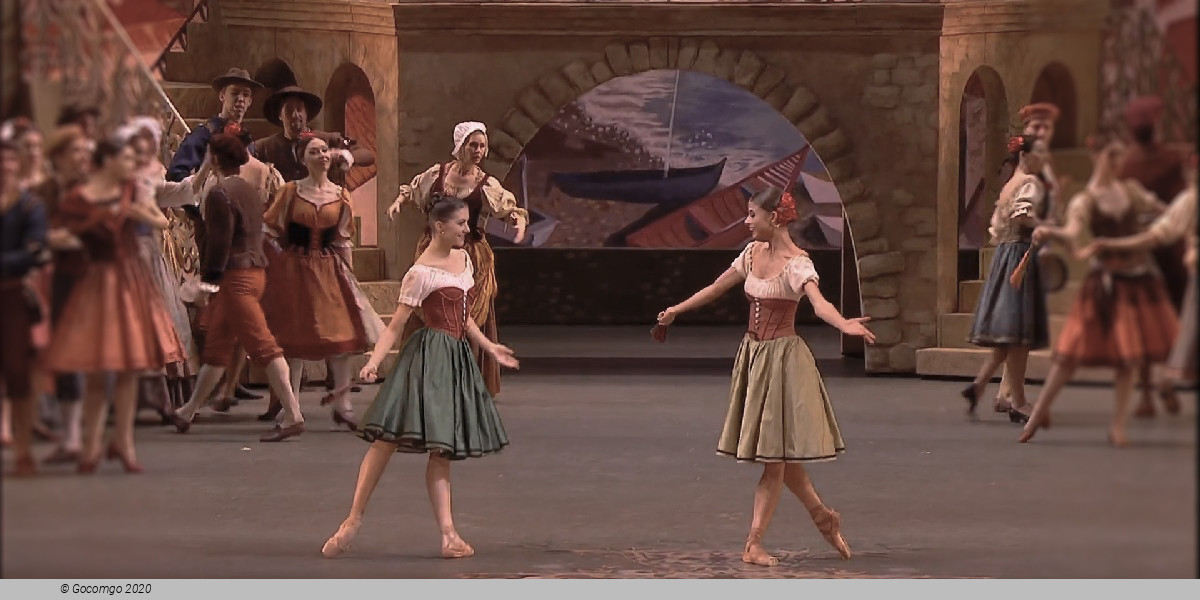
Peasants gather in the square and dancing resumes. Kitri returns and, noticing her, Don Quixote acclaims her as his Dulcinea, whom evil magicians have reduced to human form. Becoming jealous of her affection for Basilio, Don Quixote attempts to woo her by partnering her in a minuet. Lorenzo berates Kitri for carrying on with Basilio. Kitri and Basilio then run away, and Lorenzo and Gamache follow them. Don Quixote orders Sancho to bring Rocinante, so that he may also set out in pursuit.

Act II

Scene 1 – A camp of gypsies among the windmills outside the village

Kitri, disguised as a boy is seen walking with Harlequin from a troupe of travelling actors. They guess she is a girl and ask her to stay with them.

Scene 2 - The Puppet Theatre

A clown is seen walking with Graziosa, the gypsy chief's daughter. A gypsy tells the chief of the approach of Don Quixote. The chief plans a trick for his benefit and, putting on a mantle crown, sits down as though he were a king on a throne. Don Quixote is deceived and kneels to the chief in homage. The chief bids that he sit beside him and orders a festival to be given in his honor. This begins with Gypsy dances and is followed by a performance of the marionette theatre. Don Quixote is delighted with the entertainment but, mistaking the heroine for his Dulcinea and the marionettes for soldiers attacking her, he rises to assault them. The gypsies are terrified. At this moment the clown and Graziosa run away.

Scene 3 - The Windmills

Flushed with victory, the knight kneels and renders thanks to heaven. Seeing the moon, he takes it for his Dulcinea and tries to get to her. As he approaches the windmills he can see the moon no longer and thinks that evil magicians have hidden his beloved mistress. So, spear in hand, he tilts at the wings of the windmill, which he mistakes for a giant. Alas, the knight is caught by one of the wings and flung into the air. He falls unconscious at Sancho's feet.

Scene 4 – A forest

Through the trees appears Sancho leading Rocinante, upon which sits the wounded Don Quixote. The servant lifts his master down and places him on the grass, so that he may rest. Then, tying up the horse, he goes to sleep. Don Quixote also tries to sleep, but is troubled by fantastic dreams.

Scene 5 – The enchanted Garden of Dulcinea

Fairies appear surrounded by gnomes and Don Quixote finds himself dressed in shining armor. Then comes a succession of fearsome monsters, the last being a gigantic spider, who spins a web. The knight attacks the spider, which he slashes in half with his sword. At that same moment the spider's web vanishes to reveal a beautiful garden, filled with dryads and beautiful women, presided over by the Queen of the Dryads and Amor. Among them is Dulcinea and Don Quixote kneels before his beloved. At this moment everything vanishes.

Act III

The Square

Back at the square, Kitri and Basilio join those who are dancing. At the height of the merriment, Lorenzo and Gamache arrive, followed by Don Quixote and Sancho. Seeing his daughter, Lorenzo decides to give his blessing to her union with the nobleman Gamache. Basilio becomes annoyed and, reproaching Kitri for her unfaithfulness, draws a sword and stabs himself. As he lies dying he begs Lorenzo to unite him with Kitri, but Lorenzo and Gamache refuse. Don Quixote approaches Gamache and challenges him to a duel for having refused a dying man's wish. Gamache declines to fight and the merrymakers drive him out of the inn. Taking pity, Lorenzo agrees to unite Basilio and Kitri. At this moment, Basilio pulls out the sword and tells everyone it was a joke.

Act IV

The Tavern

A magnificent feast is held in honour of Don Quixote. Suddenly the Knight of the Silver Moon challenges him to a duel, which results in the latter being vanquished. The victorious knight proves to be none other than Bachelor Sanson Carrasco, who forces Don Quixote to vow that he will not unsheathe his sword for a whole year. The sorrowful knight, true to his vow, takes up his warlike gear and, followed by Sancho, sets out for home.

Venue Info

Vienna State Opera - Vienna
Location   Opernring 2

The Vienna State Opera is one of the leading opera houses in the world. Its past is steeped in tradition. Its present is alive with richly varied performances and events. Each season, the schedule features 350 performances of more than 60 different operas and ballets. The members of the Vienna Philharmonic are recruited from the Vienna State Opera's orchestra. The building is also the home of the Vienna State Ballet, and it hosts the annual Vienna Opera Ball during the carnival season.

The 1,709-seat Renaissance Revival venue was the first major building on the Vienna Ring Road. It was built from 1861 to 1869 following plans by August Sicard von Sicardsburg and Eduard van der Nüll, and designs by Josef Hlávka. The opera house was inaugurated as the "Vienna Court Opera" (Wiener Hofoper) in the presence of Emperor Franz Joseph I and Empress Elisabeth of Austria. It became known by its current name after the establishment of the First Austrian Republic in 1921. The Vienna State Opera is the successor of the Vienna Court Opera, the original construction site chosen and paid for by Emperor Franz Joseph in 1861.

The opera house was the first major building on the Vienna Ringstrasse commissioned by the Viennese "city expansion fund". Work commenced on the house in 1861 and was completed in 1869, following plans drawn up by architects August Sicard von Sicardsburg and Eduard van der Nüll. It was built in the Neo-Renaissance style by the renowned Czech architect and contractor Josef Hlávka.

Gustav Mahler was one of the many conductors who have worked in Vienna. During his tenure (1897–1907), Mahler cultivated a new generation of singers, such as Anna Bahr-Mildenburg and Selma Kurz, and recruited a stage designer who replaced the lavish historical stage decors with sparse stage scenery corresponding to modernistic, Jugendstil tastes. Mahler also introduced the practice of dimming the lighting in the theatre during performances, which was initially not appreciated by the audience. However, Mahler's reforms were maintained by his successors.

Herbert von Karajan introduced the practice of performing operas exclusively in their original language instead of being translated into German. He also strengthened the ensemble and regular principal singers and introduced the policy of predominantly engaging guest singers. He began a collaboration with La Scala in Milan, in which both productions and orchestrations were shared. This created an opening for the prominent members of the Viennese ensemble to appear in Milan, especially to perform works by Wolfgang Amadeus Mozart and Richard Strauss.

Ballet companies merge

At the beginning of the 2005–2006 season, the ballet companies of the Staatsoper and the Vienna Volksoper were merged under the direction of Gyula Harangozó.

From the 2010–2011 season a new company was formed called Wiener Staatsballet, Vienna State Ballet, under the direction of former Paris Opera Ballet principal dancer Manuel Legris. Legris eliminated Harangozós's policy of presenting nothing but traditional narrative ballets with guest artists in the leading roles, concentrated on establishing a strong in-house ensemble and restored evenings of mixed bill programs, featuring works of George Balanchine, Jerome Robbins, Jiří Kylián, William Forsythe, and many contemporary choreographers, as well as a reduced schedule of the classic ballets.

Opera ball

For many decades, the opera house has been the venue of the Vienna Opera Ball. It is an internationally renowned event, which takes place annually on the last Thursday in Fasching. Those in attendance often include visitors from around the world, especially prominent names in business and politics. The opera ball receives media coverage from a range of outlets.

Important Info
Type: Ballet
City: Vienna, Austria
Starts at: 18:30
Acts: 3
Intervals: 2
Top of page