
Vienna State Opera 23 June 2022 - Capriccio | GoComGo.com

Capriccio

Vienna State Opera, Main Stage, Vienna, Austria
All photos (6)
Select date and time
7 PM

E-tickets: Print at home or at the box office of the event if so specified. You will find more information in your booking confirmation email.

You can only select the category, and not the exact seats.
If you order 2 or 3 tickets: your seats will be next to each other.
If you order 4 or more tickets: your seats will be next to each other, or, if this is not possible, we will provide a combination of groups of seats (at least in pairs, for example 2+2 or 2+3).

Important Info
Type: Opera
City: Vienna, Austria
Starts at: 19:00

E-tickets: Print at home or at the box office of the event if so specified. You will find more information in your booking confirmation email.

You can only select the category, and not the exact seats.
If you order 2 or 3 tickets: your seats will be next to each other.
If you order 4 or more tickets: your seats will be next to each other, or, if this is not possible, we will provide a combination of groups of seats (at least in pairs, for example 2+2 or 2+3).

Overview

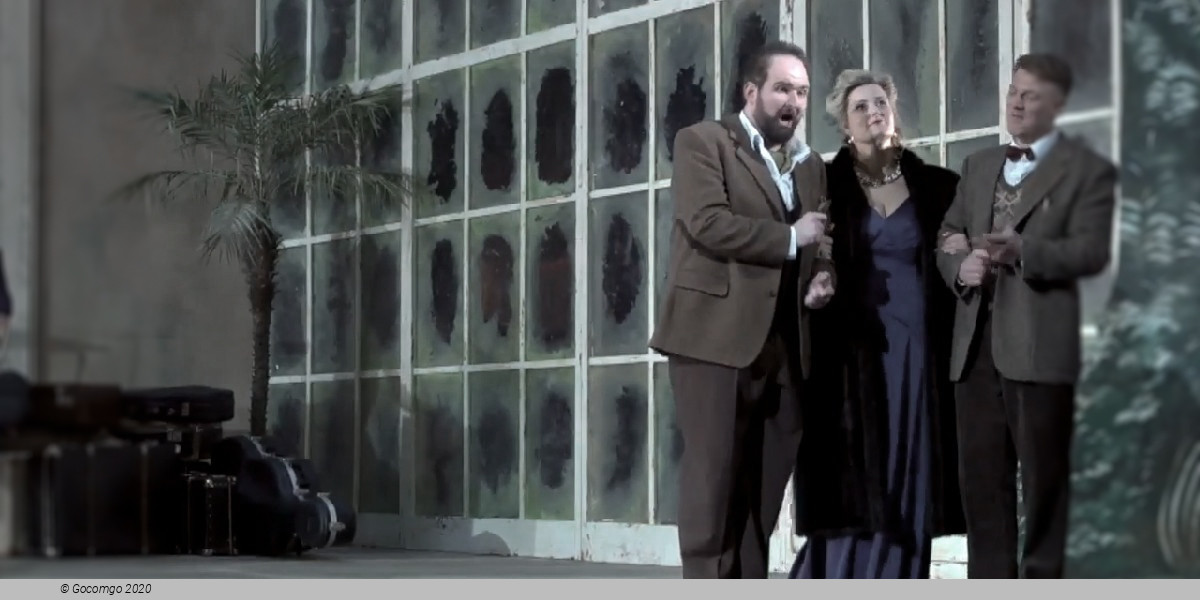
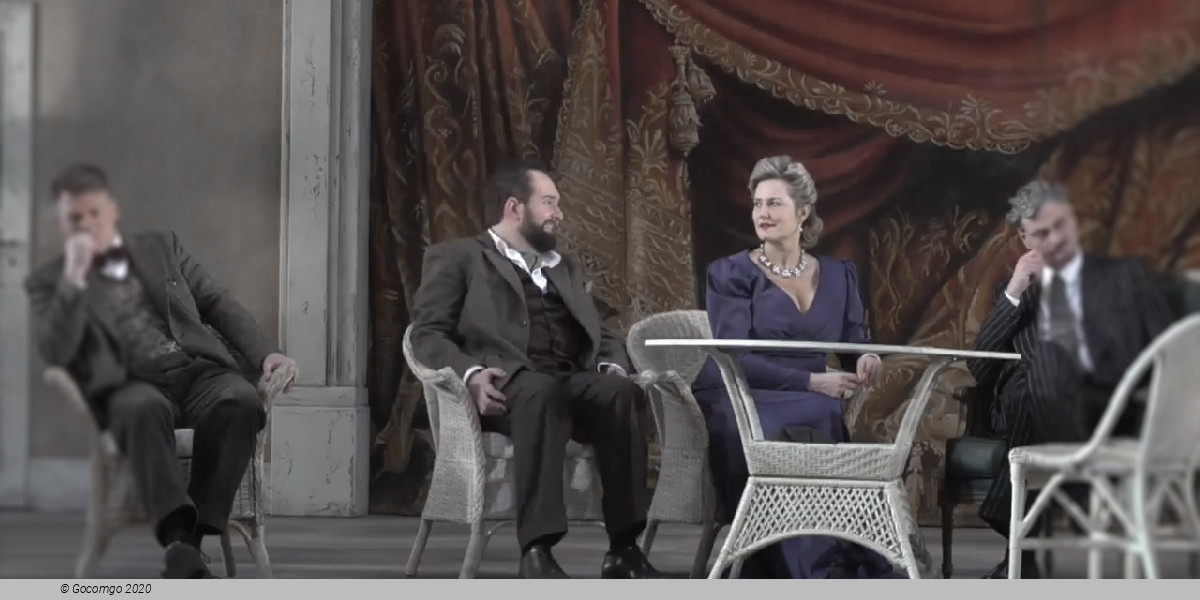
The opera Capriccio is about an opera being written. The plot outlines a day in the salon of the young widowed artlover Countess Madeleine, around whom the events unfold. Like a muse, Madeleine inspires the artists around her. First and foremost, the poet Olivier and the composer Flamand, both of whom are in love with her and hope to conquer the heart of the beautiful countess with their artistic creations. However, she cannot decide between the two of them. Another rivalry exists between Flamand and Olivier, namely the question of the importance of words and music: do the words or the music take precedence – prima la musica dopo le parole, or is it the other way around: prima le parole dopo la musica? The two of them await a decision on this matter from the Countess, who however realizes that only the union of words and music can achieve artistic perfection: “One lives in the other and seeks the other.” The practically minded theatre director La Roche takes a very different position. For him, all that matters is drama with audience appeal and memorable music. Accordingly, he wants to rehearse a grand homage performance to celebrate the Countess’s birthday. Instead of the outdated festival, the Countess expresses the wish for a new opera. The Count, her brother, proposes “somewhat mischievously”, that they use the events of the “current” day they have just experienced, including the heated discussions on the importance of words and music, as the plot for the opera.

The idea meets with general approval and the company disperses. Left alone, the Countess tells the steward that Olivier will call on her the following morning in the library to find out from her what the ending to the planned new opera is to be, in other words what her final decision is on the superiority of words or music. And therefore also her choice: Olivier or Flamand. Since Olivier will appear in the library at the same hour as Flamand, with whom the Countess has also made an appointment in the same place, there will however be no decision. The ending of the opera remains unresolved. Looking for an answer, Madeleine turns to her mirror: “Is there an ending that is not trivial?”

History
Premiere of this production: 28 October 1942, Nationaltheater München

Capriccio is the final opera by German composer Richard Strauss, subtitled "A Conversation Piece for Music". The opera received its premiere performance at the Nationaltheater München on 28 October 1942. Clemens Krauss and Strauss wrote the German libretto. However, the genesis of the libretto came from Stefan Zweig in the 1930s, and Joseph Gregor further developed the idea several years later. Strauss then took on the libretto, but finally recruited Krauss as his collaborator on the opera. Most of the final libretto is by Krauss.

Synopsis

Place: A château near Paris
Time: About 1775

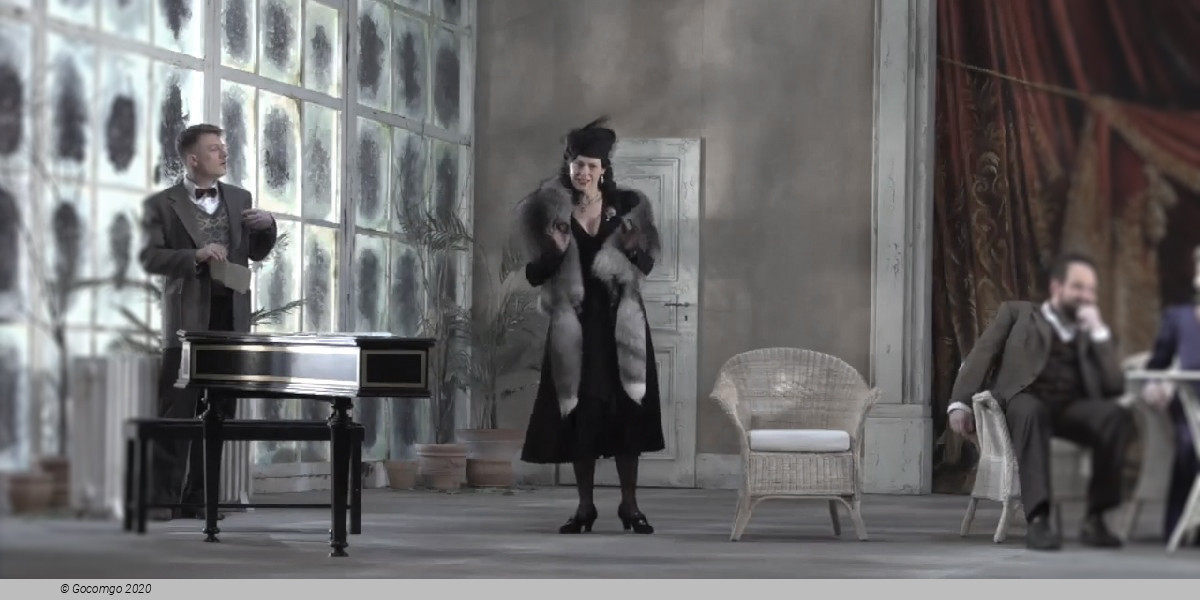
At the Countess Madeleine's château, a rehearsal of Flamand's newly composed sextet is in progress. (This sextet is in reality a very fine composition for string sextet and is played in concert form as a piece of chamber music, independent of the opera.) Olivier and Flamand debate the relative powers of words and music. They engage in a rather furious argument which is semi-spoken rather than sung in definable arias. The theatre director La Roche wakes from a nap, and reminds them both that impresarios and actors are necessary to bring their work to life. Olivier has written a new play for the Countess's birthday the next day, which will be directed by La Roche, with the Count and the famous actress Clairon performing. La Roche, Olivier and Flamand proceed to a rehearsal.

The Count, the Countess's brother, teases his sister about her two suitors, Flamand and Olivier, and tells her that her love of music is due in part to the attentions that Flamand pays her. In turn, she tells her brother that his love of words is in keeping with his attraction to the actress Clairon. The Countess admits that she cannot decide which of her suitors she prefers. Clairon arrives, and she and the Count read a scene from Olivier's play, which culminates in a love sonnet. They leave to join La Roche at the rehearsal.

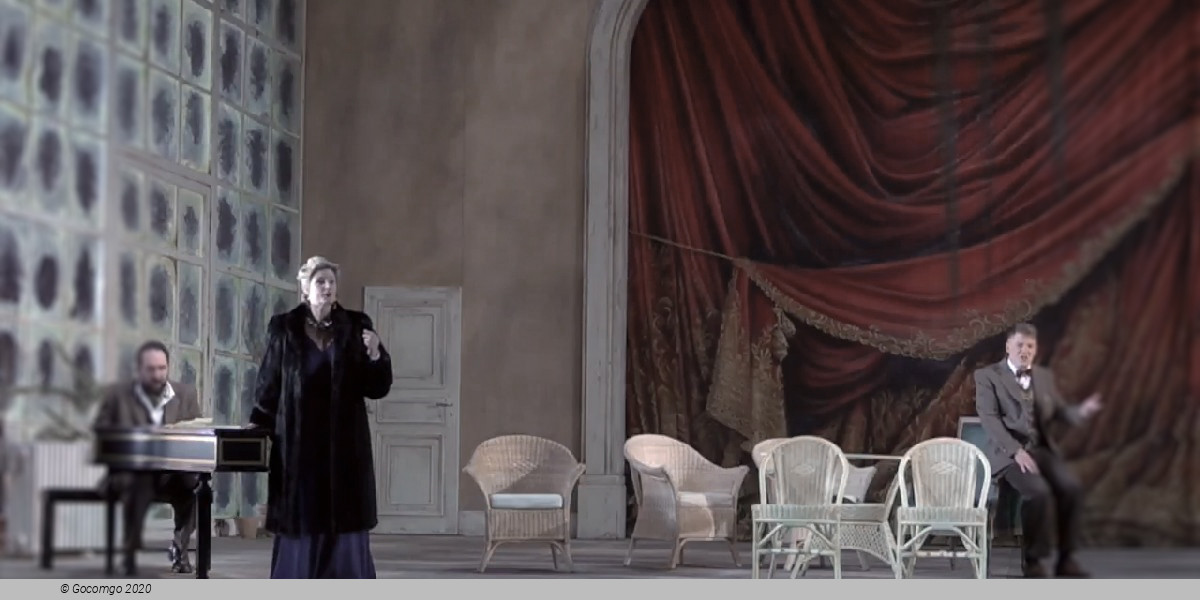
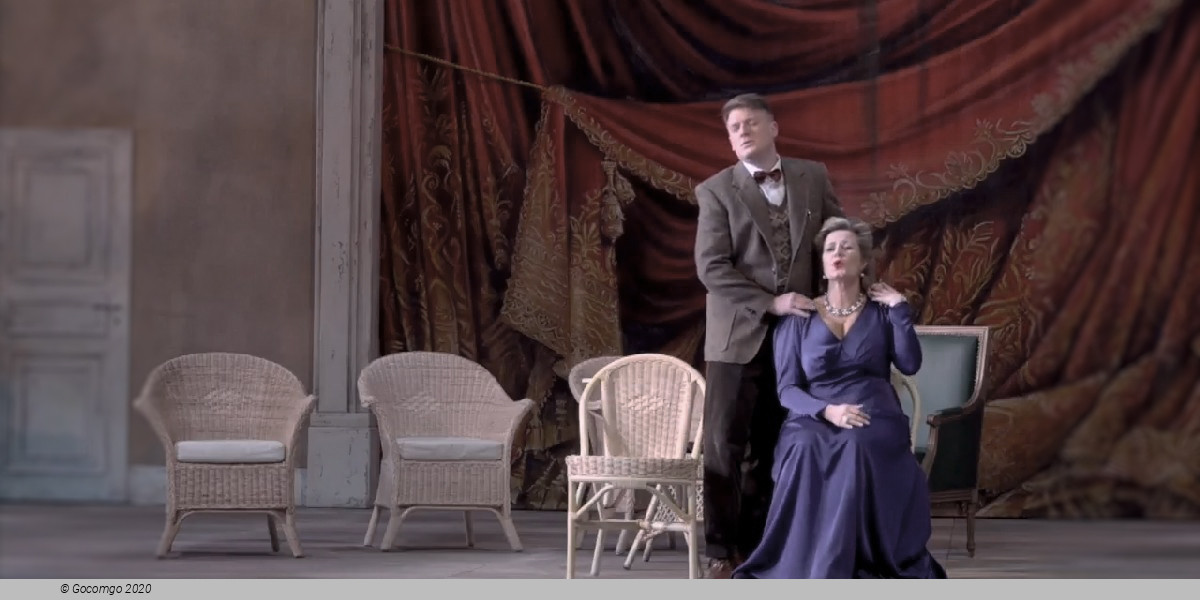
Olivier tells the Countess that he means the sonnet for her. Flamand then sets the sonnet to music, while Olivier declares his love for the Countess. Flamand sings them his new composition, accompanying himself on the harpsichord. Olivier feels that Flamand has ruined his poem, while the Countess marvels at the magic synthesis of words and music. Olivier is asked to make cuts to his play and leaves for La Roche's rehearsal. Flamand declares his love for the Countess and poses the question – which does she prefer, poetry or music? She asks him to meet her in the library the next morning at 11, when she will give him her decision. She orders chocolate in the drawing-room. [At this point, some directors bring down the curtain and there is an interval.] The actors and La Roche return from their rehearsal and the Count declares that he is bewitched by Clairon. Madeleine tells him of her reluctance to choose between her two suitors, and the brother and sister gently tease each other again. Refreshments are served as dancers and two Italian singers entertain the guests. The Count, Countess, Flamand, Olivier, Clairon and La Roche reflect on the respective merits of dance, music and poetry. The discussion is lively, even aggressive on the part of the men. The Count declares that "opera is an absurd thing".

La Roche describes his planned two-part birthday entertainment for the Countess, the "Birth of Pallas Athene" followed by the "Fall of Carthage". The guests laugh and mock his extravagant ideas, but La Roche, in a monologue of the merits, attacks what he sees as the weakness of these contemporary youngsters, whose creations fail to reach the heart; he defends his faith in the theatre of the past and his own work as a mature director and a preserver of the great traditions of the arts. He challenges Flamand and Olivier to create new masterworks that will reveal real people in all their complexity. The Countess manages to reconcile the three, urging them to make peace, pointing out how their arts are interdependent; she commissions the pair to collaborate on an opera. They search for a plot and it is the Count, "who doesn't care much for music, he prefers military marches" teases his sister, who hits on the bold idea of an opera which depicts the very events of that afternoon, the characters to be real people "like us", just as La Roche wishes – the ending to be decided by the Countess.

The Count and Clairon depart for Paris with the theatre company. In a witty touch, the next scene consists of the servants commenting, as they clean up the room after the guests have all left, on how absurd it would be to portray servants in an opera. "Soon everyone will be an actor," they sing. They deride their employers for 'playing' at the theatre and discuss who the Countess might be in love with. The Major-Domo discovers the prompter, Monsieur Taupe, who has fallen asleep and has been left behind. In a scene of much humour, Monsieur Taupe explains that it is actually he who is the most important person in the theatre – without him, there would be no entertainment. The Major-Domo listens patiently and then arranges for food and his transport home.

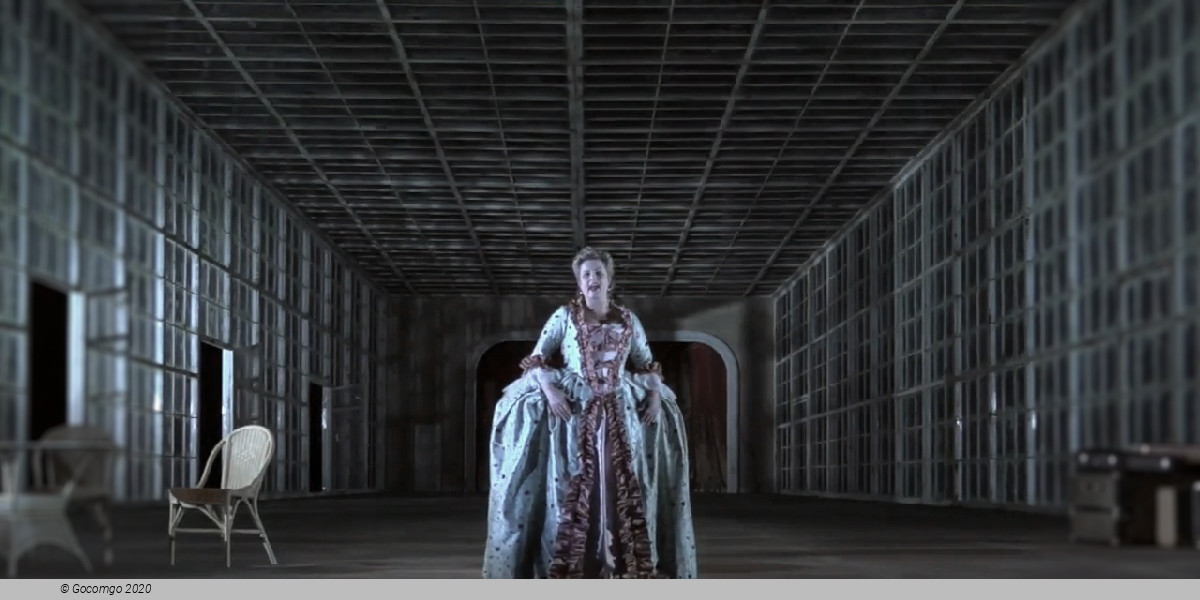
As evening falls, the Countess returns, having dressed for supper, and learns from the Major-Domo that her brother has gone to Paris with Clairon, leaving her to dine alone. The Major-Domo reminds her that both Olivier and Flamand will meet her in the library in the morning to learn the ending of the opera. Alone, and still undecided as to both the ending of the opera and her choice of lover, she sings of the inseparability of words and music. In like manner she tells herself that if she chooses one she will win him but lose the other. She consults her image in the mirror, asking "Is there any ending that isn't trivial?" The Major-Domo announces that "Dinner is served" and the Countess slowly leaves the room.

The opera is a light-hearted treatment of a serious subject: the relative importance of music, poetry, dance and theatre, cleverly set as an opera within an opera.

Venue Info

Vienna State Opera - Vienna
Location   Opernring 2

The Vienna State Opera is one of the leading opera houses in the world. Its past is steeped in tradition. Its present is alive with richly varied performances and events. Each season, the schedule features 350 performances of more than 60 different operas and ballets. The members of the Vienna Philharmonic are recruited from the Vienna State Opera's orchestra. The building is also the home of the Vienna State Ballet, and it hosts the annual Vienna Opera Ball during the carnival season.

The 1,709-seat Renaissance Revival venue was the first major building on the Vienna Ring Road. It was built from 1861 to 1869 following plans by August Sicard von Sicardsburg and Eduard van der Nüll, and designs by Josef Hlávka. The opera house was inaugurated as the "Vienna Court Opera" (Wiener Hofoper) in the presence of Emperor Franz Joseph I and Empress Elisabeth of Austria. It became known by its current name after the establishment of the First Austrian Republic in 1921. The Vienna State Opera is the successor of the Vienna Court Opera, the original construction site chosen and paid for by Emperor Franz Joseph in 1861.

The opera house was the first major building on the Vienna Ringstrasse commissioned by the Viennese "city expansion fund". Work commenced on the house in 1861 and was completed in 1869, following plans drawn up by architects August Sicard von Sicardsburg and Eduard van der Nüll. It was built in the Neo-Renaissance style by the renowned Czech architect and contractor Josef Hlávka.

Gustav Mahler was one of the many conductors who have worked in Vienna. During his tenure (1897–1907), Mahler cultivated a new generation of singers, such as Anna Bahr-Mildenburg and Selma Kurz, and recruited a stage designer who replaced the lavish historical stage decors with sparse stage scenery corresponding to modernistic, Jugendstil tastes. Mahler also introduced the practice of dimming the lighting in the theatre during performances, which was initially not appreciated by the audience. However, Mahler's reforms were maintained by his successors.

Herbert von Karajan introduced the practice of performing operas exclusively in their original language instead of being translated into German. He also strengthened the ensemble and regular principal singers and introduced the policy of predominantly engaging guest singers. He began a collaboration with La Scala in Milan, in which both productions and orchestrations were shared. This created an opening for the prominent members of the Viennese ensemble to appear in Milan, especially to perform works by Wolfgang Amadeus Mozart and Richard Strauss.

Ballet companies merge

At the beginning of the 2005–2006 season, the ballet companies of the Staatsoper and the Vienna Volksoper were merged under the direction of Gyula Harangozó.

From the 2010–2011 season a new company was formed called Wiener Staatsballet, Vienna State Ballet, under the direction of former Paris Opera Ballet principal dancer Manuel Legris. Legris eliminated Harangozós's policy of presenting nothing but traditional narrative ballets with guest artists in the leading roles, concentrated on establishing a strong in-house ensemble and restored evenings of mixed bill programs, featuring works of George Balanchine, Jerome Robbins, Jiří Kylián, William Forsythe, and many contemporary choreographers, as well as a reduced schedule of the classic ballets.

Opera ball

For many decades, the opera house has been the venue of the Vienna Opera Ball. It is an internationally renowned event, which takes place annually on the last Thursday in Fasching. Those in attendance often include visitors from around the world, especially prominent names in business and politics. The opera ball receives media coverage from a range of outlets.

Important Info
Type: Opera
City: Vienna, Austria
Starts at: 19:00
Top of page