
Teatro Massimo tickets 4 November 2027 - Ernani | GoComGo.com

Ernani

Teatro Massimo, Palermo, Italy
All photos (4)
Select date and time
6:30 PM
From
US$ 114

E-tickets: Print at home or at the box office of the event if so specified. You will find more information in your booking confirmation email.

You can only select the category, and not the exact seats.
If you order 2 or 3 tickets: your seats will be next to each other.
If you order 4 or more tickets: your seats will be next to each other, or, if this is not possible, we will provide a combination of groups of seats (at least in pairs, for example 2+2 or 2+3).

Important Info
Type: Opera
City: Palermo, Italy
Starts at: 18:30
Acts: 4

E-tickets: Print at home or at the box office of the event if so specified. You will find more information in your booking confirmation email.

You can only select the category, and not the exact seats.
If you order 2 or 3 tickets: your seats will be next to each other.
If you order 4 or more tickets: your seats will be next to each other, or, if this is not possible, we will provide a combination of groups of seats (at least in pairs, for example 2+2 or 2+3).

Cast
Performers
Soprano: Pretty Yende (Elvira)
Tenor: Riccardo Massi (Ernani)
Conductor: Giacomo Sagripanti
Bass: George Andguladze (Don Ruy Gomez de Silva)
Chorus: Teatro Massimo Chorus
Creators
Composer: Giuseppe Verdi
Librettist: Francesco Maria Piave
Overview

A tale of honour, passion, revenge, and unbreakable vows comes to life in Giuseppe Verdi’s Ernani, presented. One of the composer’s most compelling early masterpieces, Ernani reveals the dramatic force and melodic brilliance that would define Verdi’s extraordinary career, combining intense emotions, powerful characters, and unforgettable musical moments.

Based on Victor Hugo’s celebrated drama, the opera unfolds in a world of political conflict and personal obsession. The rebellious nobleman Ernani, forced into exile after losing his title and fortune, finds himself caught between his love for the noble Elvira and the dangerous demands of those who seek to control their destiny. As rivalries between Ernani, the proud Don Carlo, and the imposing Don Ruy Gomez di Silva escalate, a promise made in the name of honour leads the characters toward a tragic and inevitable conclusion.

Verdi’s score is filled with youthful energy and dramatic vitality, featuring soaring melodies, passionate duets, and powerful ensembles that reveal the inner struggles of each character. From Elvira’s lyrical intensity to Ernani’s heroic expression and the imposing presence of the chorus, every moment reflects the composer’s gift for transforming human emotions into unforgettable music.

Production of the Teatro Massimo

History
Premiere of this production: 09 March 1844, Teatro La Fenice, Venice

Ernani is an operatic dramma lirico in four acts by Giuseppe Verdi to an Italian libretto by Francesco Maria Piave, based on the play Hernani by Victor Hugo.

Synopsis

Time: 1519.
Place: Aragon, Aachen, and Zaragoza.

Act 1
Mountains of Aragon

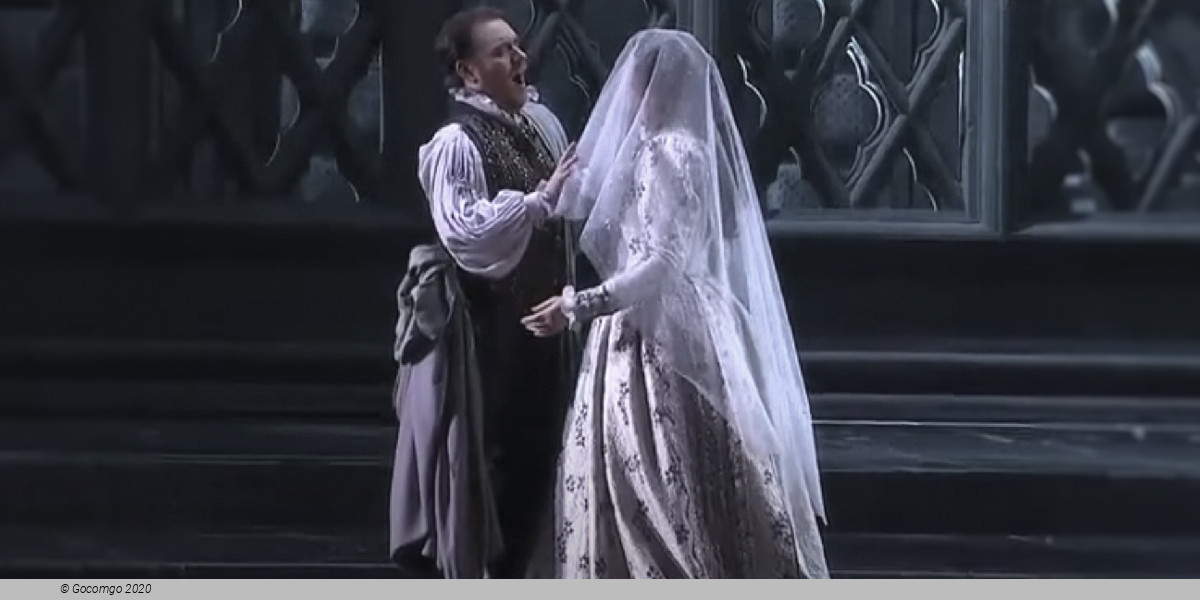
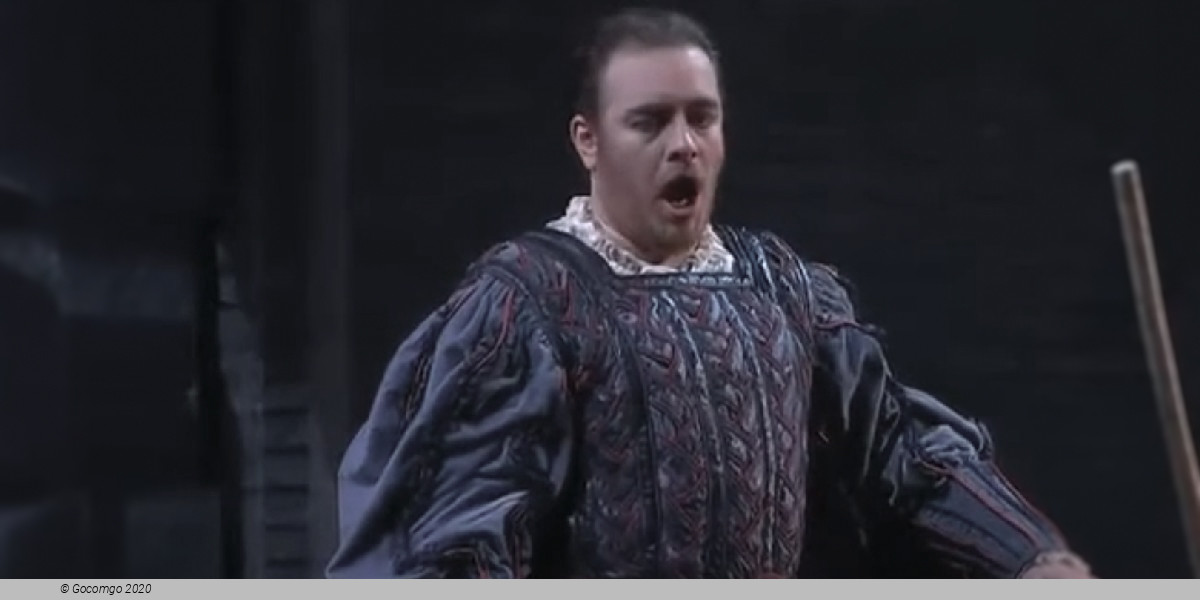
The bandits demand the reason for Ernani's gloom (Chorus: Evviva! Beviam! Beviam! / "To you we drink"; Ernani pensoso! / "Ernani, so gloomy? Why, oh strong one, does care sit on your brow?"). Ernani replies that he loves Elvira (Recitative: "Thanks, dear friends"; Cavatina: Come rugiada al cespite / "As the flower turns to the sun"), who is about to be married against her will to old Gomez de Silva (O tu che l'alma adora). He asks the bandits to abduct her.

In Elvira's chamber

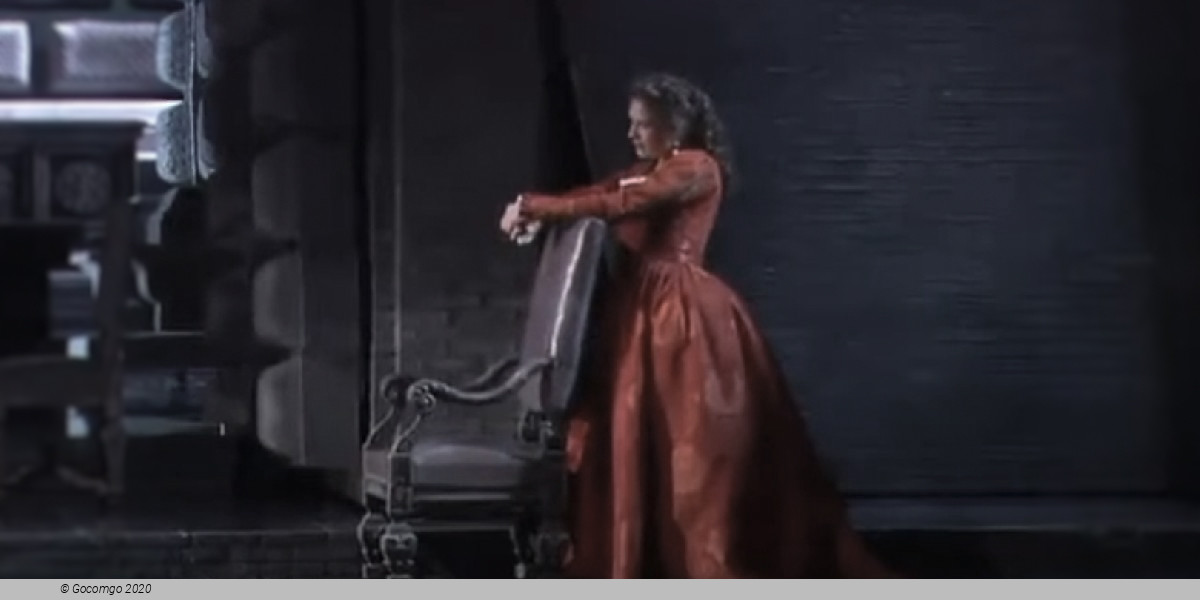
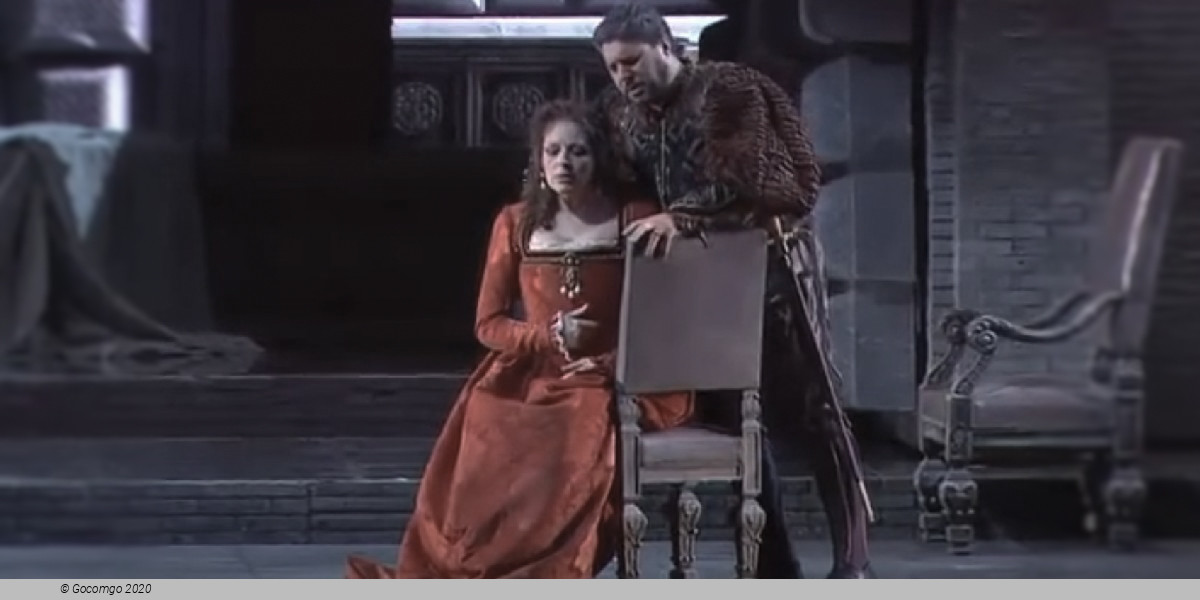
Elvira worries about her upcoming marriage (Scena: "Now sinks the sun and Silva does not return"; Cavatina: Ernani, Ernani involami / "Ernani, Ernani, save me") as servants deliver Silva's wedding presents to her. She reaffirms her love for Ernani (Tutto sprezzo che d'Ernani / "I scorn everything which does not speak to my heart of Ernani"). King Carlos, disguised as a peasant, enters, but Elvira recognizes him and rejects the love that he offers her. As he attempts to use force, she grasps a dagger, but Ernani suddenly arrives and stops Carlos (Trio: "A friend comes quickly to your aid"). Carlos recognizes Ernani as the leader of the bandits. Ernani replies that Carlos robbed him of his lands and forced him into a life of banditry. As he invites Carlos to fight, Silva appears and sees Ernani (Infelice!... e tu credevi... che mai vegg'io! / "Dreadful sight"; Silva's cavatina: "Unhappy man! You thought this lovely...was yours").

Ernani offers to fight them both when Riccardo approaches and recognises the king. Silva is horrified and apologizes to the king, while Ernani whispers to Elvira to prepare to flee.

Act 2

A hall in Silva's palace

Ernani enters disguised as a pilgrim. He asks for shelter, which Silva grants him, and then learns from Silva that he is about to marry Elvira, who believes Ernani to be dead. Ernani reveals his true identity to Elvira and she tells him that she plans to kill herself at the altar (Duet: Ah, morir potessi adesso / "Ah, if I could die now"). Silva walks in at that moment, discovers the pair, but agrees to keep his word to Ernani and protect him from the king, for which Ernani will owe him a perpetual debt. (Trio: No, vendetta più tremenda / "No, I want to keep a greater revenge"). Carlos arrives and wishes to know why the castle is barred. Silva refuses to surrender Ernani (Carlos' aria: Lo vedremo, veglio audace / "We shall see, you bold old man") and Don Carlos's men cannot find Ernani's hiding place. Silva keeps his word, even when the king secures Elvira as a hostage. Silva releases Ernani, and then challenges him to a duel. Ernani refuses to fight, but unites with Silva in his plans to free Elvira from the king. Ernani swears to appear at the summons of Silva, wherever he may be at that time (Odi il voto o grande Iddio / "Oh God, hear the vow"),

[Added for Parma, 26 December 1844: "at Rossini's request, Verdi wrote a grand aria for the tenor Nicola Ivanoff". Ernani gathers his men to him. His aria of vengeance: Sprezzo la vita né più m'alletta / "Life means nothing to me, only hope of vengeance" concludes the act].

Act 3
In the burial vault of Charles the Great at Aachen

Carlos visits the grave of the emperor Charlemagne (Carlo Magno), whose successor, the new Holy Roman Emperor, is being elected by delegates from the relevant countries. Carlos resolves to change his life if he is crowned (Cavatina: Oh, de' verd'anni miei/ "Oh, the dreams and deceits of my youth"). Hiding behind the vault, he overhears a gathering of conspirators including Silva and Ernani. Ernani swears to murder Carlos. The conspiracy is foiled when Carlos's attendants enter and surprise the conspirators. The king commands that all the traitorous noblemen be executed. Ernani steps forward, declaring that thus he must die too; he is not the bandit Ernani, but Don Juan of Aragon, whose lands were taken from him. Elvira, who had been brought to Carlos as his intended empress, begs mercy for her lover, and Carlos, whose mood has changed, forgives them both and places Elvira's hand in that of Ernani.

Act 4
Ernani's Castle

Elvira and Ernani have just been married, when, in consternation, Ernani hears a bugle call. Silva arrives and silently hands Ernani a dagger. Ernani asks for time to "sip from the cup of love" (Ascolta, ascolta un detto ancor/ "Listen, just one word...") but, cursed by Silva as a coward, Ernani keeps his oath and stabs himself in the heart (Trio with Silva: È vano, o donna, il piangere, è vano / "Your weeping is in vain, woman"). He dies in Elvira's arms, telling her to live.

Venue Info

Teatro Massimo - Palermo
Location   Piazza Verdi

The Teatro Massimo Vittorio Emanuele is an opera house and opera company located on the Piazza Verdi in Palermo, Sicily. It was dedicated to King Victor Emanuel II. It is the biggest in Italy, and one of the largest of Europe (the third after the Opéra National de Paris and the K. K. Hof-Opernhaus in Vienna), renowned for its perfect acoustics.

The Teatro Massimo Vittorio Emanuele in Palermo opened its doors to the public on the evening of 16 May 1897, twenty-two years after the solemn public ceremony of the laying of the first stone.

This took place on 12 January 1875, and ended a chequered series of vicissitudes with interminable squabbles lasting over ten years.

The international competition for the project and realisation of the opera house had been announced by Palermo Council in 1864, and its prime mover was the mayor, Antonio Starrabba di Rudini.

For a long time there had been talk of building a big new theatre in Palermo, worthy of the second biggest city in southern Italy after Naples.

Palermo, in the second half of the nineteenth century, was engaged in getting itself a new identity in the light of the new national unity.

Cultural life was influenced by the new Italian State and the positive consequences of the activity of enlightened entrepreneurs like the Florios, who also made generous donations to the building of the opera house and for some years were also its no less enlightened managers.

Intense commercial relations led to the convergence and development in Palermo of interests with a European dimension and brought the city to be continually in touch with different cultural models than its own. This was the start of the Belle Epoque, a time of cultural and economic rebirth for Palermo which would in turn become almost mythical for the future generations and was only to be interrupted by the outbreak of World War I.

The opening night happened on May 16 1897: Giuseppe Verdi's Falstaff was the inaugural opera. The conductor was Leopoldo Mugnone. A ticket in the boxes would then cost 80 liras, one in the gallery just 3. At the time of its first opening, thanks to its surface of 7,730 square metres, the Teatro Massimo was the third in Europe, after the opera houses in Paris and Wien.

From the opening in 1897 to 1935 the opera seasons were put together by private firms, often a different one each year, that would organize the performances.

In 1935 the theatre was officially designated with a Decree from the Italian Ministry of Culture "Ente Teatrale Autonomo", and thus recognized as a public theatre.

In 1974 the theatre was closed for reconstruction works that were supposed to be finished in a relatively short time. It remained closed for 23 years and was reopened with the concert on May 12 1997, conducted by Franco Mannino in the first part and by Claudio Abbado in the second, with the Berliner Philharmoniker.

Important Info
Type: Opera
City: Palermo, Italy
Starts at: 18:30
Acts: 4
Top of page