
Teatro del Maggio Musicale Fiorentino 12 February 2023 - La traviata | GoComGo.com

La traviata

Teatro del Maggio Musicale Fiorentino, Sala Grande, Florence, Italy
All photos (7)
Select date and time
8 PM

E-tickets: Print at home or at the box office of the event if so specified. You will find more information in your booking confirmation email.

You can only select the category, and not the exact seats.
If you order 2 or 3 tickets: your seats will be next to each other.
If you order 4 or more tickets: your seats will be next to each other, or, if this is not possible, we will provide a combination of groups of seats (at least in pairs, for example 2+2 or 2+3).

Important Info
Type: Opera
City: Florence, Italy
Starts at: 20:00

E-tickets: Print at home or at the box office of the event if so specified. You will find more information in your booking confirmation email.

You can only select the category, and not the exact seats.
If you order 2 or 3 tickets: your seats will be next to each other.
If you order 4 or more tickets: your seats will be next to each other, or, if this is not possible, we will provide a combination of groups of seats (at least in pairs, for example 2+2 or 2+3).

Overview

In the winter of 1852 Giuseppe Verdi attended the performance of La dame aux camélias by Alexandre Dumas fils in Paris, the story of a well-known prostitute of the time, of her impossible love and of the reconquest of her dignity through suffering and death.

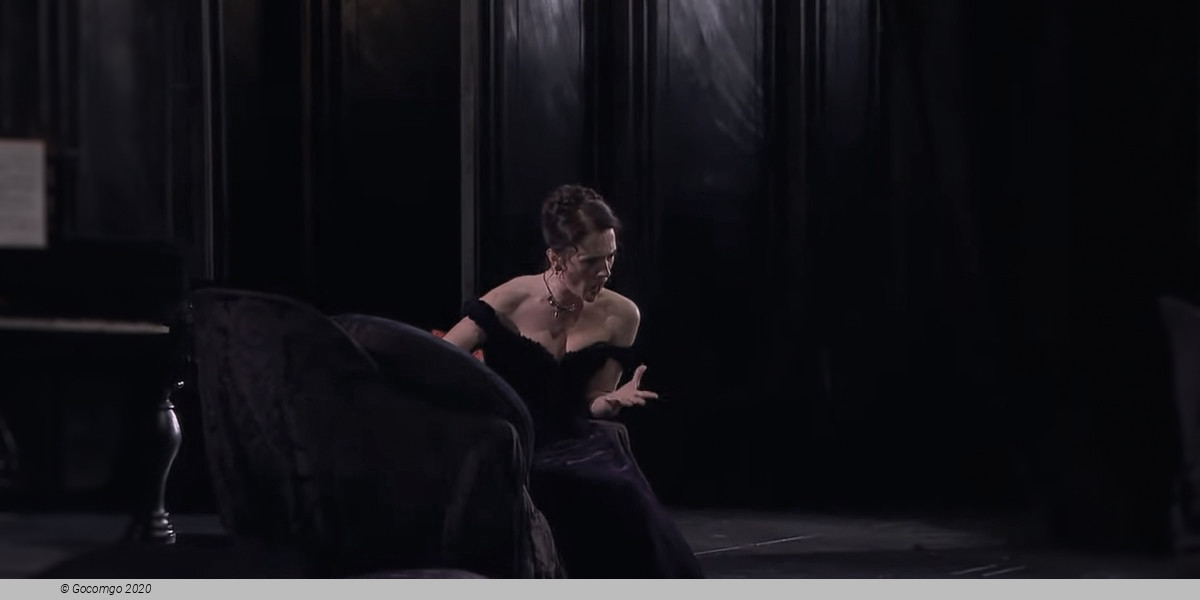
The sensitive topic, taken from a news story, stimulates the creative imagination of the composer who is always looking for new dramaturgical solutions. A few months later, from the partnership with the librettist Francesco Maria Piave, one of the most performed and loved operas of all time was born - La traviata - which debuted at the Teatro La Fenice in Venice on 6 March 1853. The subject was "certainly effective", as defined by Verdi himself in his correspondence, sees the reasons of the heart opposed to those of the right-thinking and hypocritical society: in the setting of a pleasure-loving Paris, animated by waltzes, parties and sequins, the drama of Violetta Valéry takes place, one of the most complexes of Verdi's dramaturgy. Condemned a priori by the same society of which she is the daughter of her for her condition as a lost woman, Violetta is not allowed to experience true love or redeem herself from an unhappy past. She will therefore have to give in to bourgeois conventions and renounce her love for Alfredo, but nevertheless she will be transformed by the composer into a true tragic heroine thanks to the powerful means of music.

Staging by Maggio Musicale Fiorentino

History
Premiere of this production: 06 March 1853, Teatro La Fenice, Venice

La traviata is an opera in three acts by Giuseppe Verdi set to an Italian libretto by Francesco Maria Piave. It is based on La Dame aux camélias (1852), a play adapted from the novel by Alexandre Dumas fils. The opera was originally titled Violetta, after the main character. It was first performed on 6 March 1853 at the La Fenice opera house in Venice.

Synopsis

Set in and around Paris in about 1850.

Act I

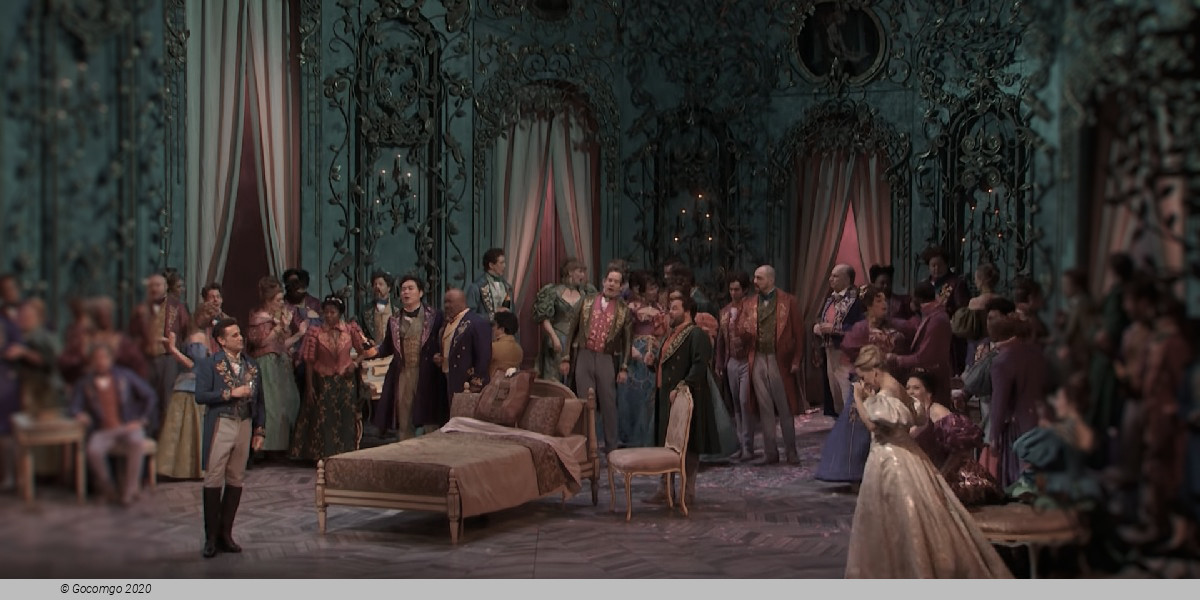
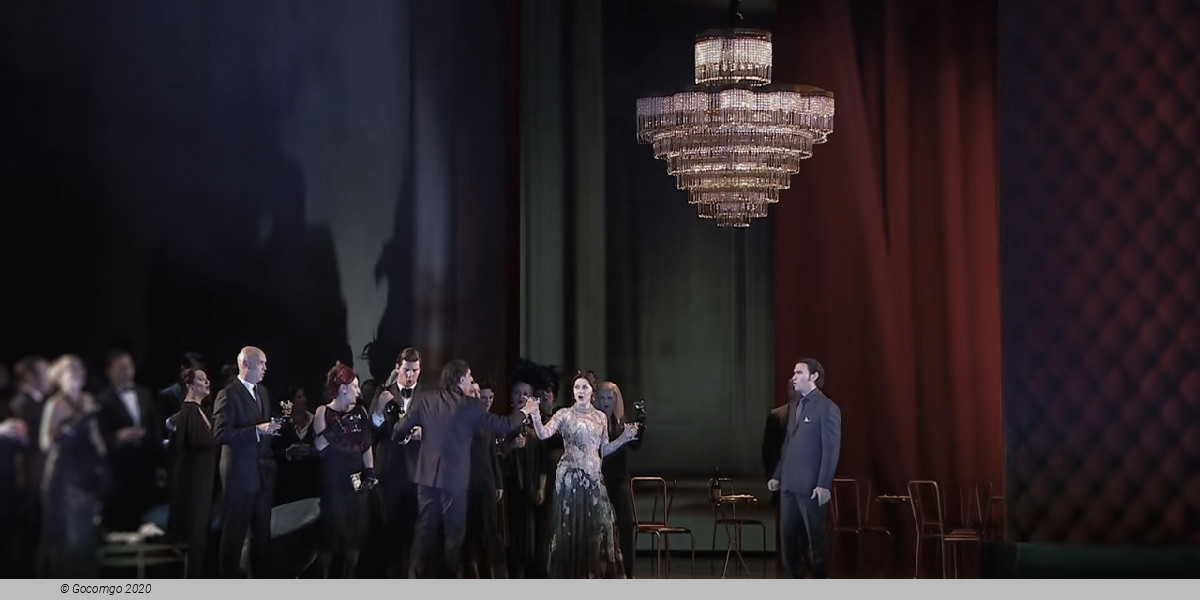
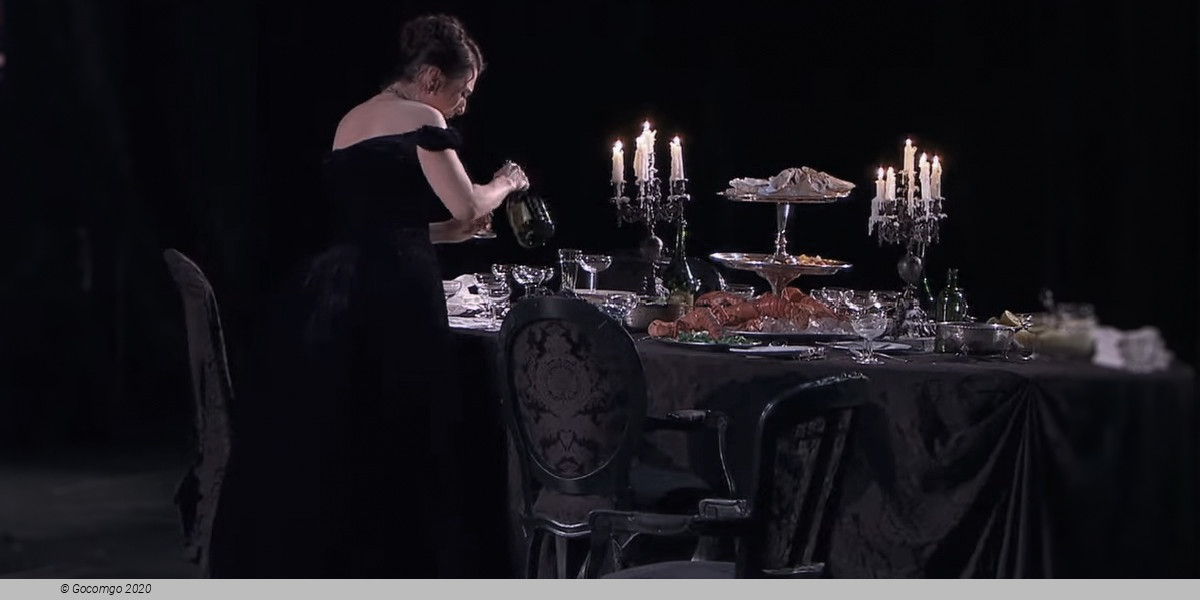
Violetta Valéry, a Parisian courtesan, greets the guests at her salon. Among them are Flora Bervoix, the Marchese D’Obigny, Baron Douphol and Gastone, who introduces Violetta to a new admirer of hers, Alfredo Germont. The young Germont, who has been admiring her from afar, joins her in a drinking song. An orchestra strikes up in an adjacent room, inviting the guests to dance. As the guests make their way to the ballroom, Violetta, who is suffering from consumption, feels faint; she therefore sends the guests on ahead and retires to her boudoir to recover. Alfredo enters and, realising that they are alone, admits his love for her. She replies that love means nothing to her. She
is, however, touched by the young man’s sincerity and promises to meet him the following day.
When the guests have departed, she asks herself whether Alfredo is the man she could love. Despite
the strains of Alfredo’s love song drifting in from outside, she decides she prefers her freedom.

Act II

scene 1
A few months later: Alfredo and Violetta have set up house together in the country, outside Paris. Alfredo says how happy they are, but when Violetta’s maid Annina lets on that Violetta has been selling her belongings to pay for the house, he hastens into town to raise the money himself. Violetta comes in search of him and discovers an invitation from her friend Flora to a soirée that very night. Violetta has no intention of returning to her former life, but she is forced to reconsider
on encountering Alfredo’s father. He is very taken with Violetta and her civilised manners but orders her to renounce Alfredo: his son’s scandalous liaison with Violetta is threatening his daughter’s forthcoming marriage. Violetta considers his demand unreasonable, but before long Germont succeeds in persuading her. Alone and desolate, Violetta sends a reply to Flora accepting her invitation and sits down to write a farewell letter to Alfredo. His return takes her by surprise, and she can barely restrain herself as she passionately reminds him how much she loves him before
rushing out. As the maid brings him Violetta’s farewell letter, Germont returns to console his son and reminds him of life in their family home in Provence. Alfredo spots Flora’s invitation and suspects that Violetta has left him for another man. In a rage, he decides to confront her at the soirée.

scene 2
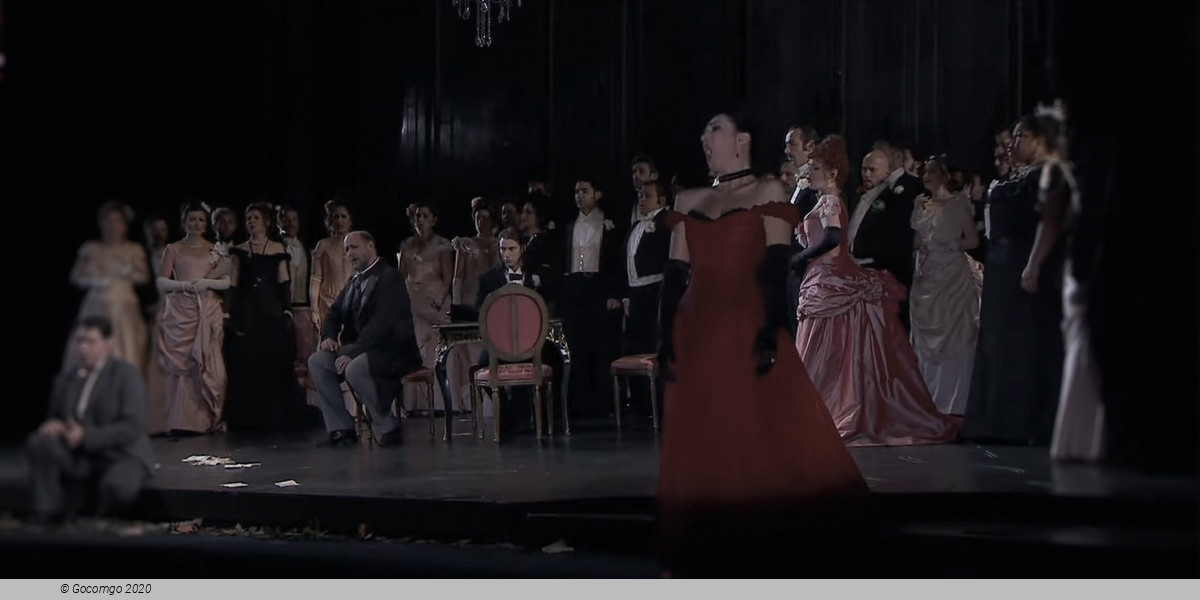
At the soirée, Flora hears from the Marchese that Violetta and Alfredo have parted. Flora asks the guests to make way for a visiting troupe of performing gypsies. They are followed by matadors and a song about Piquillo and his sweetheart. Alfredo rushes in and delivers some bitter comments about love and gambling. Violetta appears on the arm of Baron Douphol, who challenges Alfredo to a game of cards and loses a small fortune to him. As the guests go in to supper, Violetta asks to have a word with Alfredo in private. She is afraid the Baron will be enraged by his loss and urges Alfredo to leave. Alfredo misunderstands her and orders her to admit she loves the Baron. Disappointed by Alfredo’s reaction, Violetta lies and confesses that yes, she does. Alfredo calls the other guests to gather round in order to denounce his former beloved in public and throws the money he has won at her feet. Germont, arriving at that very moment, expresses his disapproval of his son’s behaviour. The guests likewise rebuke Alfredo and Douphol challenges him to a duel.

Act III

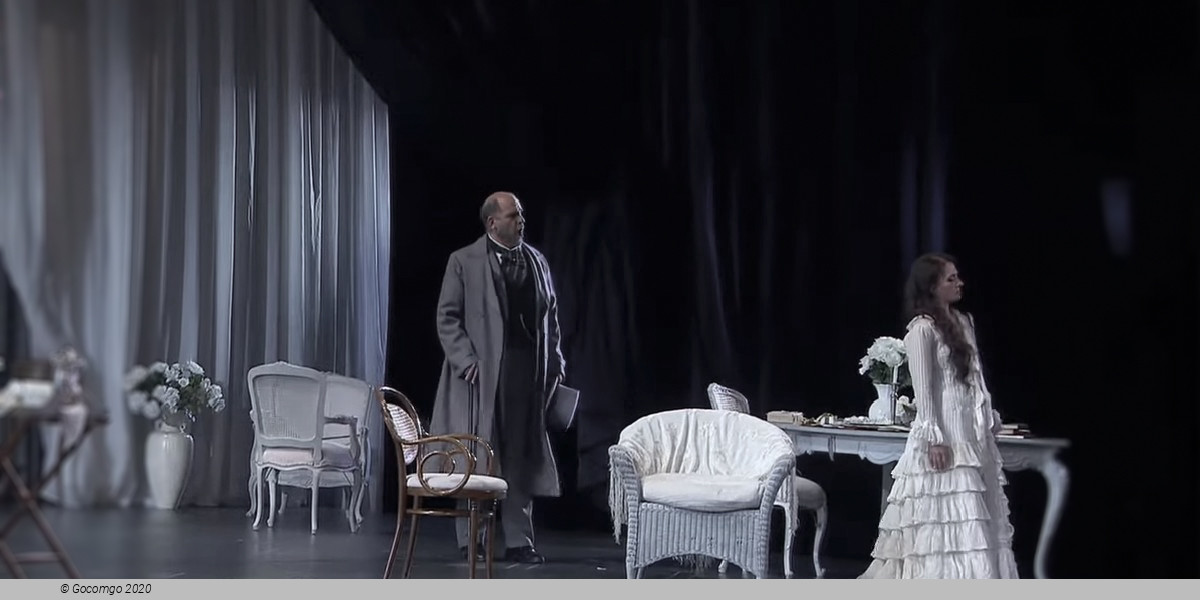
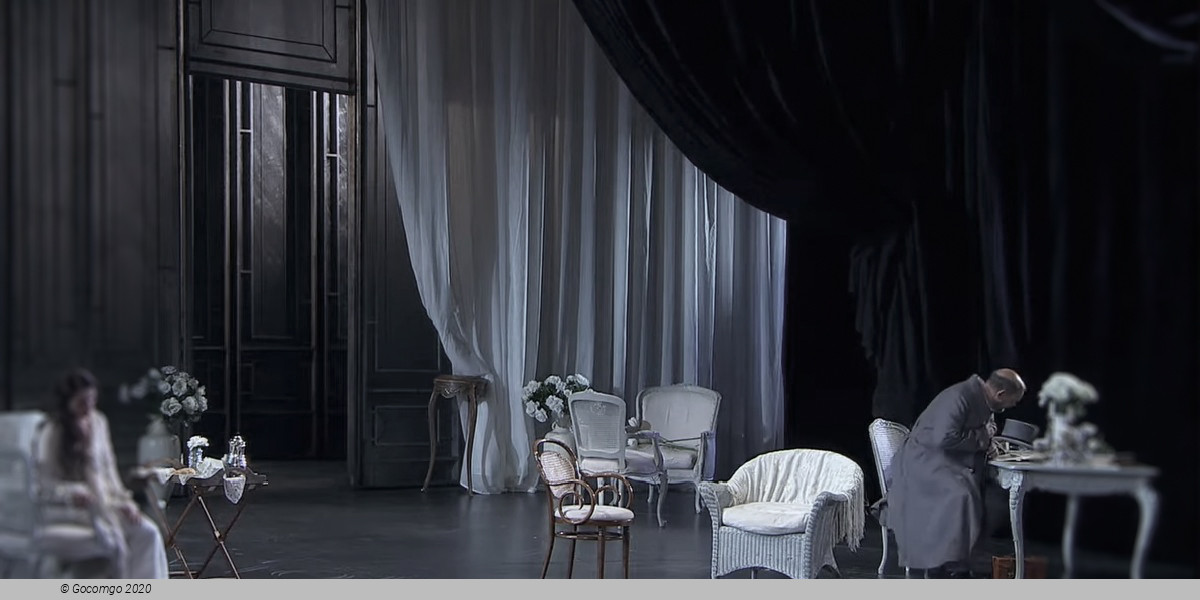
Violetta’s bedroom, six months later. Dr Grenvil tells Annina that her mistress has not long to live –
the consumption has taken its toll. Alone, Violetta rereads a letter from Germont saying that the Baron was only slightly wounded in his duel with Alfredo, that Alfredo has heard the truth and is
coming to beg her pardon. But Violetta realises it is too late. It is carnival time in Paris and, the sounds of the revellers having passed, Annina rushes in to announce Alfredo. The lovers ecstatically plan to leave Paris. Germont enters with the doctor just as Violetta rises from her bed with the last of her strength. Feeling a sudden rush of life, she sways and falls dead at her lover’s feet.

Venue Info

Teatro del Maggio Musicale Fiorentino - Florence
Location   Piazza Vittorio Gui, 1

Teatro del Maggio Musicale Fiorentino is a major opera house in Florence and the main concert venue of the international festival "Maggio Musicale Fiorentino".

The white marble veined with green of the Baptistery of San Giovanni, the brickwork of the dome of Santa Maria del Fiore and finally the dazzling gold of the precious paintings that have made the city of Tuscany one of the world capitals of art: the materials and colors of the Renaissance they meet at the Teatro del Maggio to celebrate the power of music, and the enchantment of melodrama, right in the city where this exceptional form of theater was born. Conceived by the architect Paolo Desideri of the ABDR studio, the “new house” of the Maggio Musicale Fiorentino rises at the meeting point between the monumental center and the Parco delle Cascine, the green lung of the city.

An important connective function also reaffirmed by the vast system of open areas that can be reached through the two areas of the city and the different volumes of the building. Moreover, the proximity to the Stazione Leopolda helps to create a cultural pole of European importance.

Above a sort of wide base, a sloping skirting, there are the large music rooms and the enigmatic volume of the 35 meter high stage tower. Three rooms, which can work simultaneously: the 1800-seat opera theater, distributed between the stalls, boxes and gallery, an outdoor 2000-seat auditorium and finally an auditorium, dedicated to maestro Zubin Mehta, which varies its capacity from 500 to 1000 spectators.

As in a great musical instrument, the walls of the main hall are covered in pear wood to guarantee perfect acoustics. A dense network of thin copper chains also helps to transport the sound without distortion. The stage has a depth doubled compared to the average of Italian and foreign theaters and, thanks to its flexibility, is able to accommodate in its side pockets up to two sets ready to be moved during the intervals. The Cavea is positioned in the theater’s roof to complement and conclude the extensive system of squares, terraces and belvedere.

Its usability is therefore not limited to representations only, but is extended to the entire day to turn its stone steps into real urban salons. Inaugurated on December 21, 2011 with the Ninth Symphony of Ludwig van Beethoven directed by Zubin Mehta, the Teatro del Maggio is the permanent venue of the Orchestra and Chorus of the Maggio Musicale Fiorentino and has already hosted Masters such as Claudio Abbado, Riccardo Muti, Gustavo Dudamel , Daniele Gatti, Fabio Luisi, leading groups such as the Berliner Philharmoniker, the St. Petersburg Philharmonic Orchestra and the National de France Orchestras. Among the many artists who performed there are Alessandra Ferri, Mariella Devia, Sumi Jo, Anja Harteros, Aldo Ciccolini, Uto Ughi, Maurizio Pollini, Krystian Zimerman, Gregory Kunde, Ambrogio Maestri. In 2014 he received the National Award for the best architectural work made in Italy in the last 5 years.

Important Info
Type: Opera
City: Florence, Italy
Starts at: 20:00
Top of page