
Teatro de la Zarzuela 29 November 2019 - Tres sombreros de copa | GoComGo.com

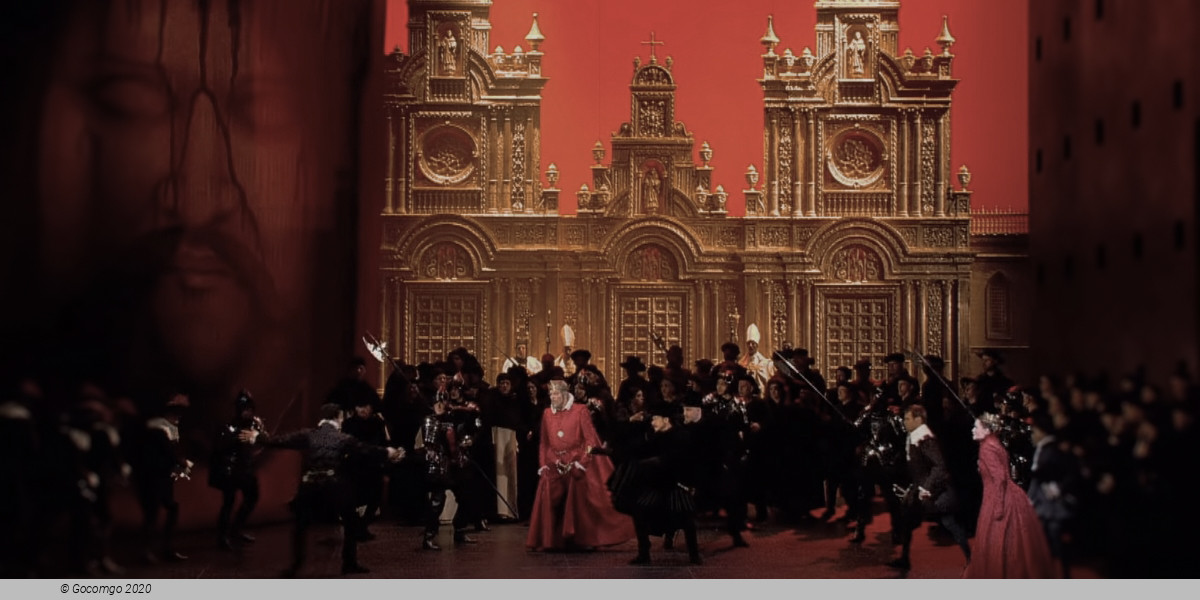
Tres sombreros de copa

Teatro de la Zarzuela, Madrid, Spain
All photos (1)
Select date and time
8 PM
Request for Tickets
Important Info
Type: Opera
City: Madrid, Spain
Starts at: 20:00

E-tickets: Print at home or at the box office of the event if so specified. You will find more information in your booking confirmation email.

You can only select the category, and not the exact seats.
If you order 2 or 3 tickets: your seats will be next to each other.
If you order 4 or more tickets: your seats will be next to each other, or, if this is not possible, we will provide a combination of groups of seats (at least in pairs, for example 2+2 or 2+3).

Overview

Opera based on the homonymous work of Miguel Mihura

New production of the Teatro de la Zarzuela
Mediante acuerdo con la New York Opera Society, Inc., editor

History

Tres sombreros de copa is a comedy by the Spanish writer, journalist and playwright Miguel Mihura. It is his first comedy, written in 1932 but released twenty years later, in 1952. Comedy that is among the most prominent of the Spanish theater of the twentieth century and that was a renewal of the genre, incorporating elements that are later in the theater of the absurd. Mainly because of it, its author has been considered one of the best comediographers of Spanish theater of the twentieth century.

Synopsis

First act:

The door of the room opens and Dionisio and Don Rosario appear, engaging in a crazy conversation in which they talk about the lights that are seen from the room's balcony to Dionisio's future wedding. Don Rosario says goodbye by saying good night to Dionisio, but before leaving Don Rosario, Dionisio calls his girlfriend.

By staying alone, he entertains himself playing with the top hats he has prepared for his wedding, three because none of them suits him. In the middle of the game, Paula enters through the door that would lead to the room she occupies, closing it behind her, preventing Buby from entering. Each one at the side of the door engages in a boyfriend's own discussion. When they stop arguing, Paula begins an interrogation about the life of Dionysus, the presence of the three top hats allows him to go through juggler, understanding Paula that it is a colleague by profession who will act like them in the Music Hall the next day. Finally Buby enters a conversation between the three while the phone does not stop ringing without Dionisio pick it up, putting the most crazy apologies to the requirements of Paula and Buby. Finally, the other girls in the Music Hall interrupt them by inviting them to a party in the next room.

Second act:

It's been two or three hours. Buby and Paula discover the deception to the public, the discussion between them was pretended to try to trick the guest who was in the next room, an attempt that they give up when they think that it is a colleague in a similar situation from them. Everyone is dancing and drinking at the party. Dionisio overwhelmed decides to leave the party, Paula tries to retain him and Buby insists Paula to give up and stay at the party to try to take advantage of the attendees. After a moment Paula and Dionisio find themselves alone, Paula sees in Dionisio the companion not yet maimed by the sleaze of the environment with which to escape; Paula and Dionisio hug and kiss; at that moment, Buby enters the scene hitting Paula on the head, leaving her unconscious lying on the floor. Dionisio picks up Paula from the ground at the same moment the phone rings again. This time he does answer. In the telephone conversation, Margarita, his girlfriend, tells him that his father is heading there.

Third act:

Continuation of the second. Before the arrival of Don Sacramento Dionisio hides Paula, unconscious, behind the bed. Don Sacramento enters the scene crossing out Dionisio, in a crazy, bohemian conversation, warning him that he must be an honorable person to marry his daughter Margarita. When Don Sacramento leaves, Paula leaves his hiding place, already conscious and aware of the life of Dionysus. If at first she would have wanted to leave with him as her partner, now it is he who wants to learn the trade of juggler to leave with her. Don Rosario interrupts them, Paula has been hidden behind a screen, the boyfriend's car is waiting, Dionisio can barely say goodbye to Paula more than by signs.

When they leave the scene Paula leaves the hiding place and goes to the balcony to see how the car moves away with Dionisio on his way to his wedding. "He sees the three top hats and takes them ... And, suddenly, when it seems that he is going to be sentimental, he throws the hats in the air and throws the cheerful shout of the track: Hoop! Smile, say hello and the TELON falls.

Venue Info

Teatro de la Zarzuela - Madrid
Location   Calle de Jovellanos, 4

The Teatro de la Zarzuela is a theatre in Madrid, Spain. The theatre is today mainly devoted to zarzuela (the Spanish traditional musical theatre genre), as well as operetta and recitals.

The theatre was designed by architect Jerónimo de la Gándara and built by José María Sánchez Guallart on the initiative of the Spanish Lyrical Company to provide a space for performances of operettas in the Spanish capital. It was modelled on the La Scala theatre in Milan with its three-level horseshoe form and opened to the public on 10 October 1856, the birthday of Queen Isabella II. The name refers to zarzuela, a theatre form that alternates spoken and sung scenes. Its promoters were established masters of the genre such as Francisco Asenjo Barbieri, Rafael Calleja Gómez, Joaquín Gaztambide, Rafael Hernando, José Inzenga, baritono Francisco de Salas, librettist Luis de Olona and composer Cristóbal Oudrid, under Francisco de las Rivas, an important banker.

In the second half of the nineteenth century, Teatro de la Zarzuela became Madrid's leading opera house, staging many of the great masterworks. On November 9, 1909 the building was virtually destroyed by fire. The rebuild by Cesareo Iradier reduced the amount of wood and metal, and in 1914 Maestro Luna raised the curtain with his orchestra to reopen the theatre. With the Teatro Real opera house closed from 1925 to 1997, Teatro de la Zarzuela remained Madrid's leading venue throughout the period and hosted most major opera events. The theatre's resident ensemble is the Community of Madrid Orchestra.

The ceiling originally featured magnificent works by the painters Francisco Hernández Tomé and Manuel Castellanos, but these were destroyed in renovations and structural changes that were made in 1956. The theatre then was acquired by the Sociedad General de Autores de España, although much of the facade and interior ornamentation was lost. Later it became the property of the state. In 1984 the Ministry of Culture, with Madrid still lacking an opera house, expanded the range of activities beyond zarzuela and opera to encompass flamenco and other dance. The building was given heritage status in 1994, and in 1998 was again remodelled, restoring much of the original structure and form.

Important Info
Type: Opera
City: Madrid, Spain
Starts at: 20:00
Top of page