
Teatro de la Zarzuela 14 December 2019 - El cascanueces | GoComGo.com

El cascanueces

Teatro de la Zarzuela, Madrid, Spain
All photos (1)
Select date and time
8 PM
Request for Tickets
Important Info
Type: Ballet
City: Madrid, Spain
Starts at: 20:00

E-tickets: Print at home or at the box office of the event if so specified. You will find more information in your booking confirmation email.

You can only select the category, and not the exact seats.
If you order 2 or 3 tickets: your seats will be next to each other.
If you order 4 or more tickets: your seats will be next to each other, or, if this is not possible, we will provide a combination of groups of seats (at least in pairs, for example 2+2 or 2+3).

Overview
History
Premiere of this production: 06 December 1892, Imperial Mariinsky Theatre in Saint Petersburg

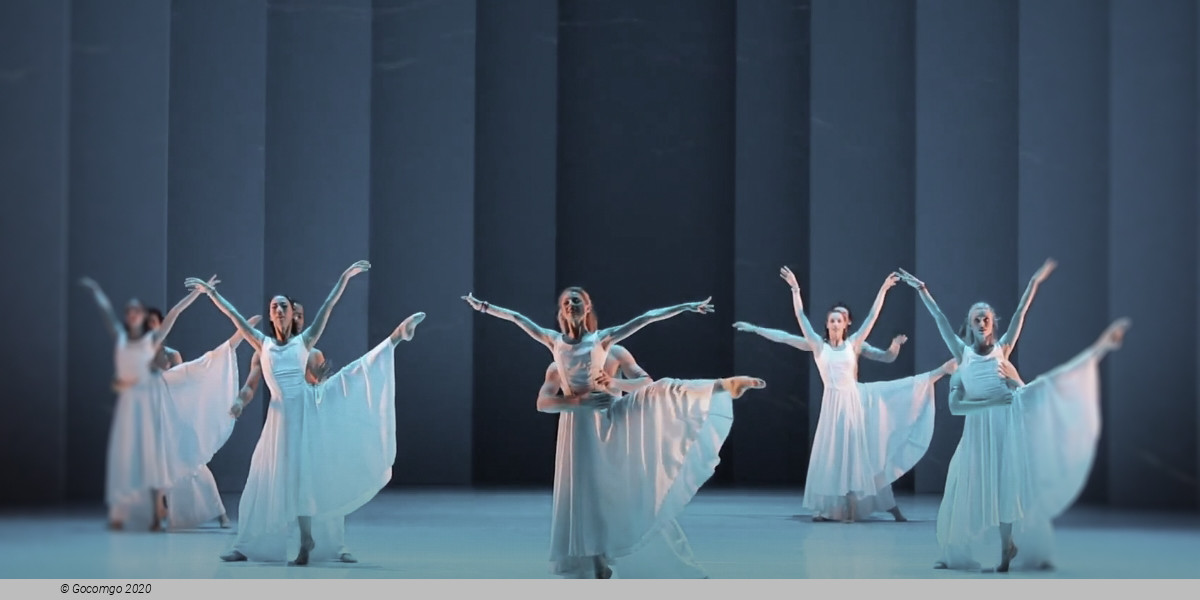
The Nutcracker (Russian: Shchelkunchik, Balet-feyeriya About this soundlisten is a two-act ballet, originally choreographed by Marius Petipa and Lev Ivanov with a score by Pyotr Ilyich Tchaikovsky (Op. 71). The libretto is adapted from E. T. A. Hoffmann's story "The Nutcracker and the Mouse King".

Although the original production was not a success, the 20-minute suite that Tchaikovsky extracted from the ballet was. However, the complete Nutcracker has enjoyed enormous popularity since the late 1960s and is now performed by countless ballet companies, primarily during the Christmas season, especially in North America. Major American ballet companies generate around 40% of their annual ticket revenues from performances of The Nutcracker. The ballet's score has been used in several film adaptations of Hoffmann's story.

Tchaikovsky's score has become one of his most famous compositions. Among other things, the score is noted for its use of the celesta, an instrument that the composer had already employed in his much lesser known symphonic ballad The Voyevoda.

Synopsis

Act I
On Christmas Eve, young Clara attends a festive party at her family’s home, where the mysterious toymaker Drosselmeyer gives her a nutcracker doll. After the guests leave and the house grows quiet, Clara returns to the tree and falls into a magical dream. The room transforms, the Christmas tree grows to enormous size, and toys come alive. A fierce battle erupts between the Nutcracker and the Mouse King, ending with the Nutcracker’s victory. He transforms into a Prince and leads Clara through the snowy forest, where the Snow Queen and her shimmering Snowflakes dance in a swirling winter landscape.

Act II
Clara and the Prince arrive in the radiant Kingdom of Sweets, ruled by the Sugar Plum Fairy. In their honor, dancers from many lands perform enchanting divertissements, each representing sweets or treats from around the world. The celebration culminates in the grand pas de deux of the Sugar Plum Fairy and her Cavalier. As the festivities conclude, Clara’s magical journey fades, and she awakens back at home, unsure whether her adventure was a dream — or something wonderfully real.

Venue Info

Teatro de la Zarzuela - Madrid
Location   Calle de Jovellanos, 4

The Teatro de la Zarzuela is a theatre in Madrid, Spain. The theatre is today mainly devoted to zarzuela (the Spanish traditional musical theatre genre), as well as operetta and recitals.

The theatre was designed by architect Jerónimo de la Gándara and built by José María Sánchez Guallart on the initiative of the Spanish Lyrical Company to provide a space for performances of operettas in the Spanish capital. It was modelled on the La Scala theatre in Milan with its three-level horseshoe form and opened to the public on 10 October 1856, the birthday of Queen Isabella II. The name refers to zarzuela, a theatre form that alternates spoken and sung scenes. Its promoters were established masters of the genre such as Francisco Asenjo Barbieri, Rafael Calleja Gómez, Joaquín Gaztambide, Rafael Hernando, José Inzenga, baritono Francisco de Salas, librettist Luis de Olona and composer Cristóbal Oudrid, under Francisco de las Rivas, an important banker.

In the second half of the nineteenth century, Teatro de la Zarzuela became Madrid's leading opera house, staging many of the great masterworks. On November 9, 1909 the building was virtually destroyed by fire. The rebuild by Cesareo Iradier reduced the amount of wood and metal, and in 1914 Maestro Luna raised the curtain with his orchestra to reopen the theatre. With the Teatro Real opera house closed from 1925 to 1997, Teatro de la Zarzuela remained Madrid's leading venue throughout the period and hosted most major opera events. The theatre's resident ensemble is the Community of Madrid Orchestra.

The ceiling originally featured magnificent works by the painters Francisco Hernández Tomé and Manuel Castellanos, but these were destroyed in renovations and structural changes that were made in 1956. The theatre then was acquired by the Sociedad General de Autores de España, although much of the facade and interior ornamentation was lost. Later it became the property of the state. In 1984 the Ministry of Culture, with Madrid still lacking an opera house, expanded the range of activities beyond zarzuela and opera to encompass flamenco and other dance. The building was given heritage status in 1994, and in 1998 was again remodelled, restoring much of the original structure and form.

Important Info
Type: Ballet
City: Madrid, Spain
Starts at: 20:00
Top of page