
Deutsche Oper Berlin: Les Contes d`Hoffmann Tickets | Event Dates & Schedule | GoComGo.com

Les Contes d`Hoffmann Tickets

Deutsche Oper Berlin, Berlin, Germany
Important Info
Type: Opera
City: Berlin, Germany
Duration: 3h 50min with 2 intervals
Acts: 5
Intervals: 2
Sung in: French
Titles in: German,English

E-tickets: Print at home or at the box office of the event if so specified. You will find more information in your booking confirmation email.

You can only select the category, and not the exact seats.
If you order 2 or 3 tickets: your seats will be next to each other.
If you order 4 or more tickets: your seats will be next to each other, or, if this is not possible, we will provide a combination of groups of seats (at least in pairs, for example 2+2 or 2+3).

Cast
Performers
Choose the date to see the peformers
Overview

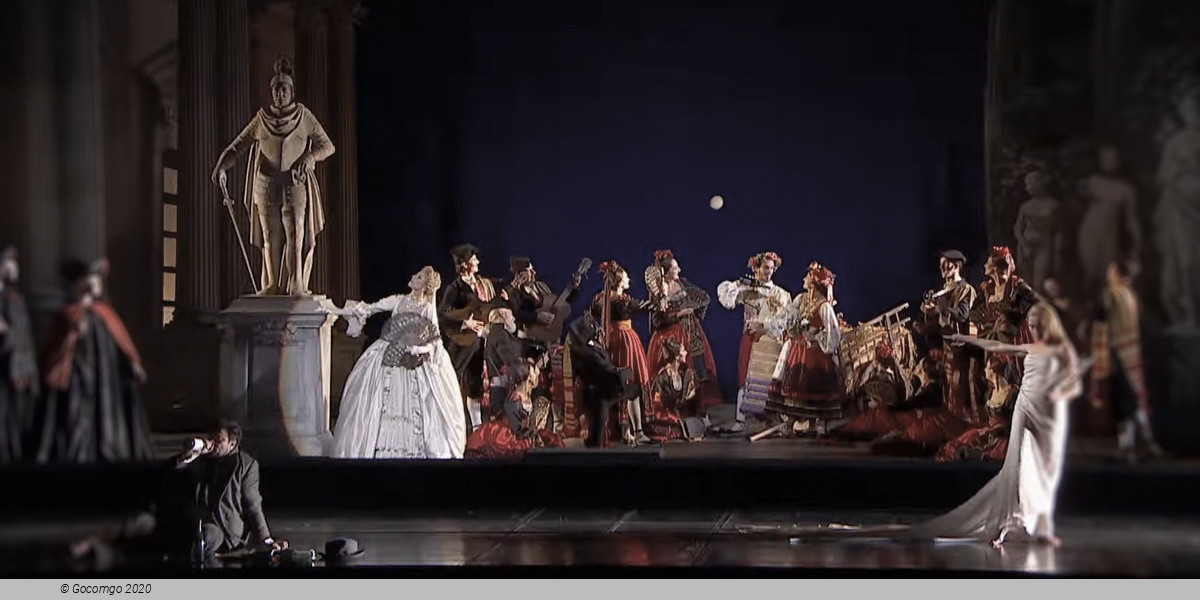
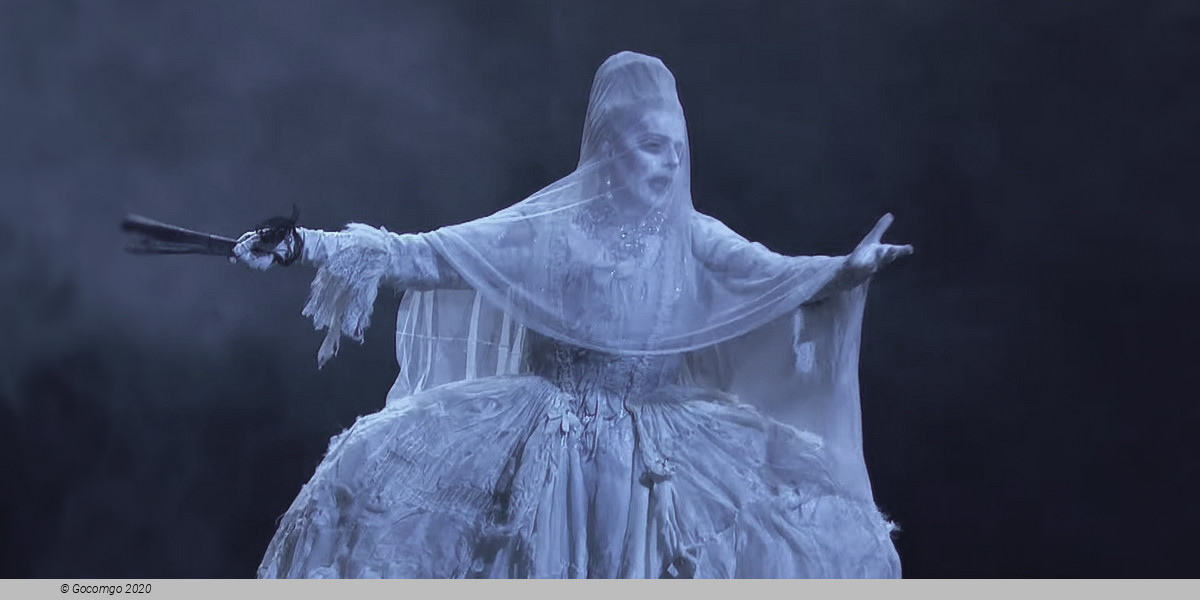
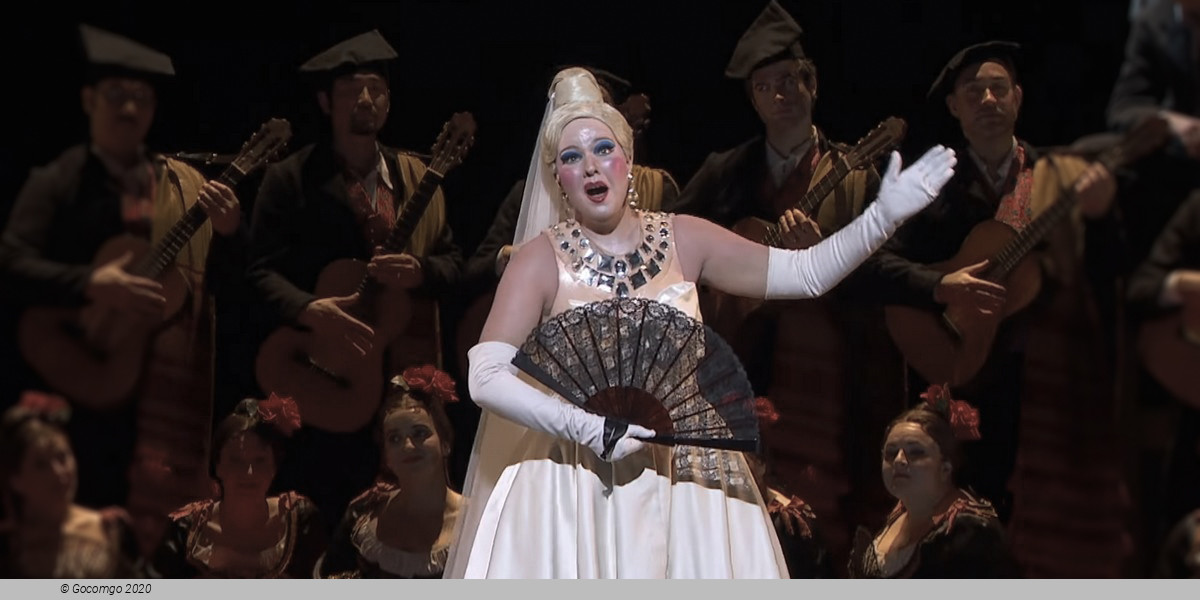
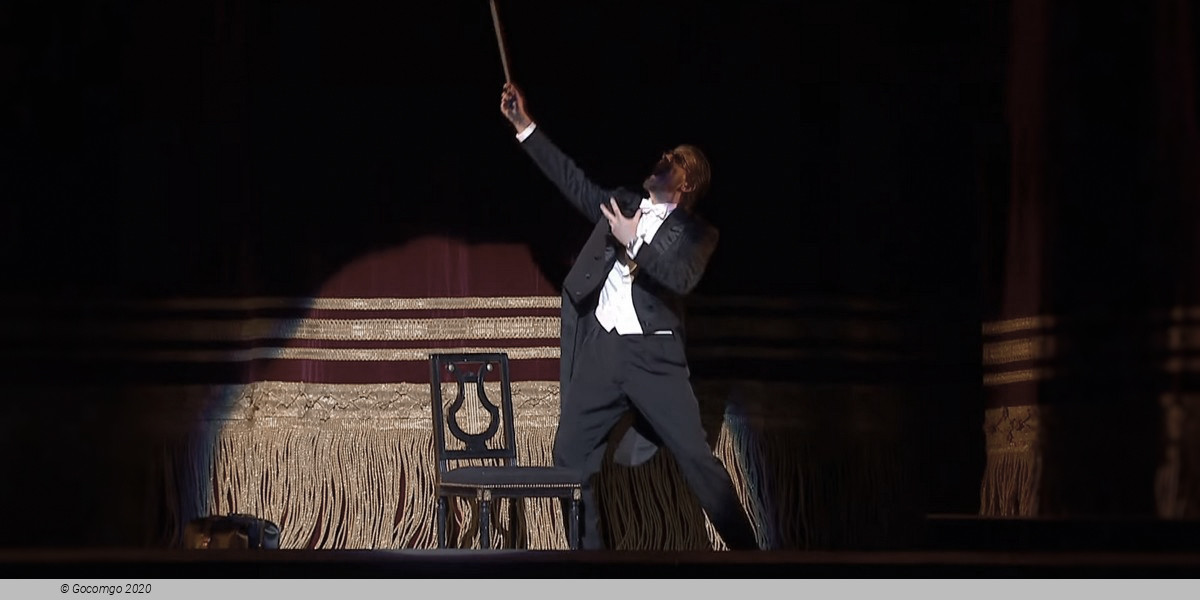
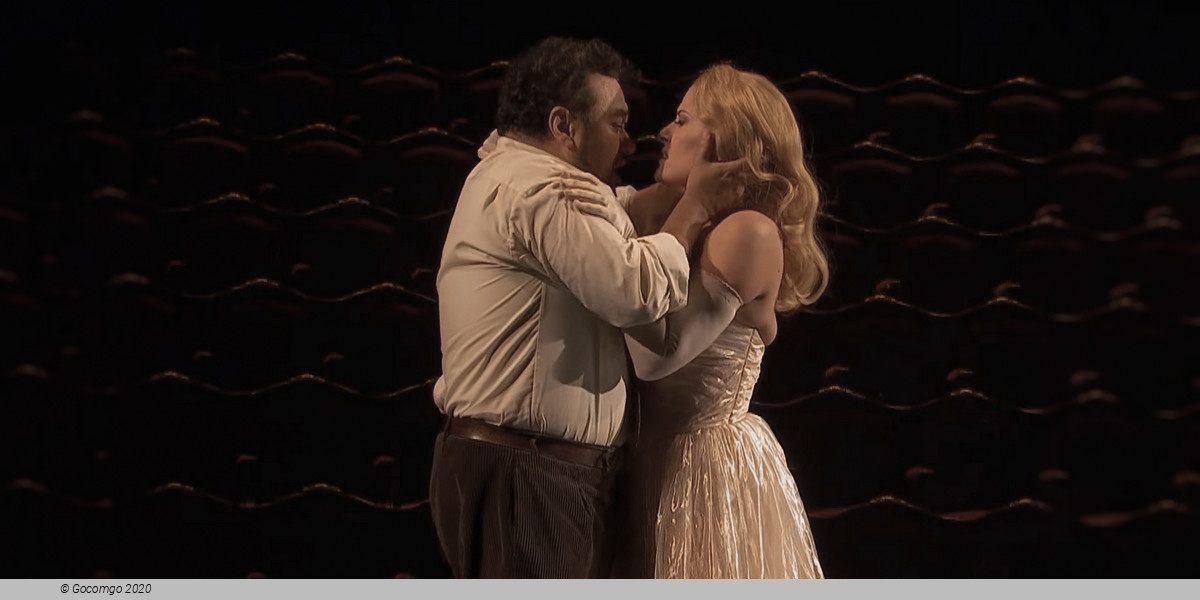
French theatre and opera director and costumer Laurent Pelly brings his internationally hailed production to Berlin. Darky playful and set against fantastical backdrops and stirring chorus formations, this version renders the story of Hoffmann’s descent into madness and intoxication in faithful detail. Enrique Mazzola, already familiar to Deutsche Oper Berlin audiences as a leading interpreter of French repertory, is at the conductor’s stand.

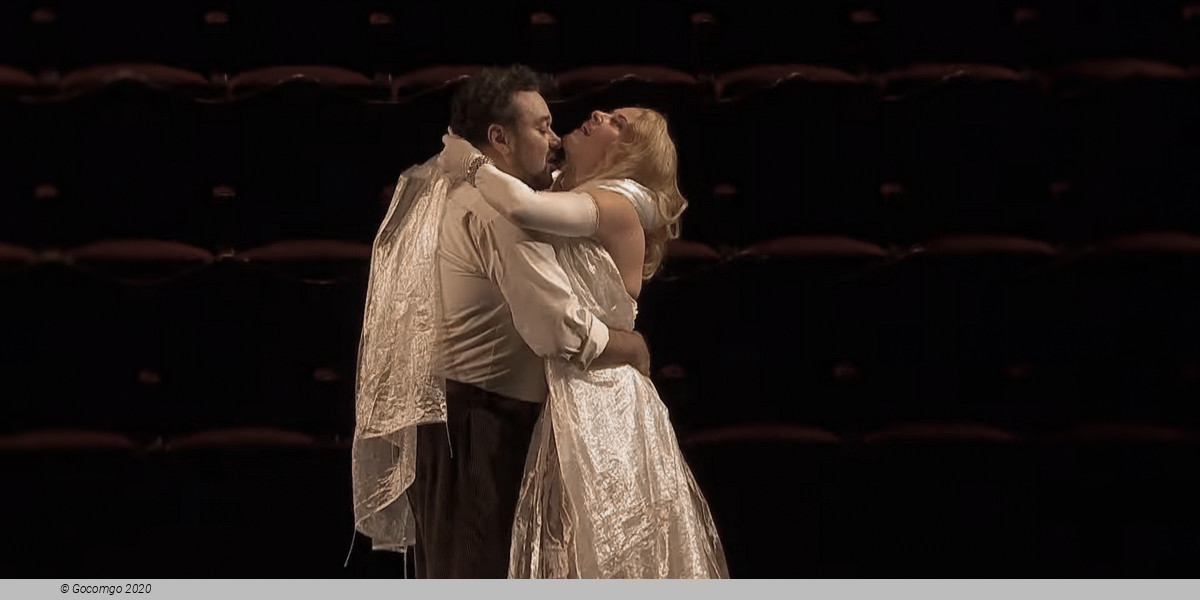
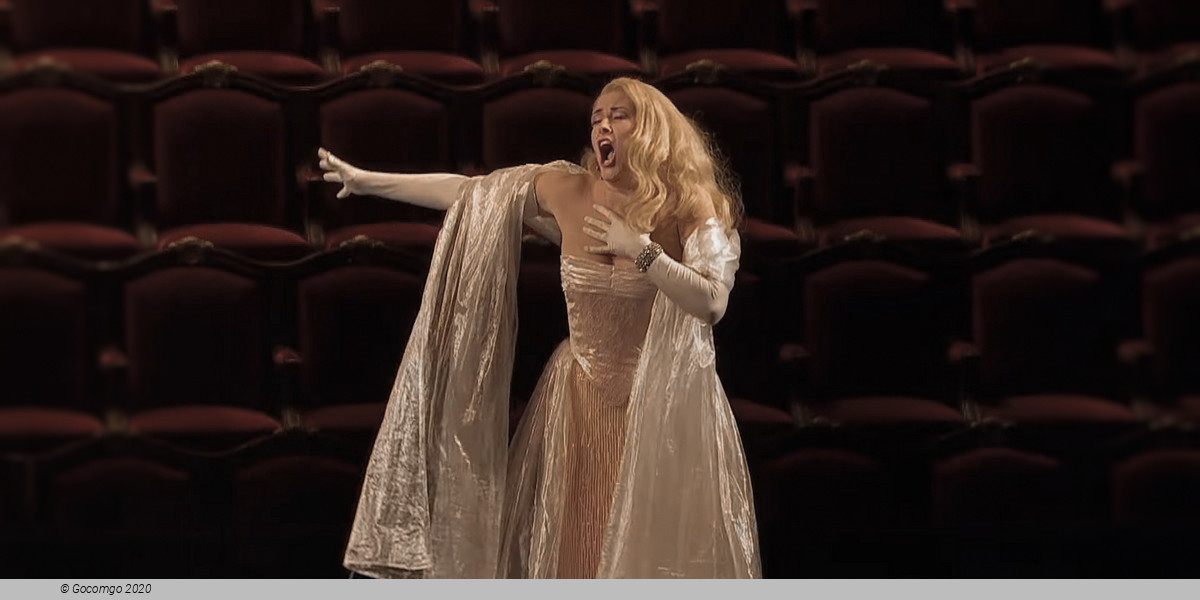
The muse emerges from a barrel – a wine barrel, to be precise, which in Offenbach’s final opera is the story of the poet Hoffmann’s life. In his fateful, inebriated fug he concocts three tales relating his unluckiness in love for three women, an artistic automaton (Olympia), a damsel (Antonia) and a courtesan (Giulietta). Three women – or maybe just one after all? Stella, a star in the operatic firmament, is feted for her onstage performance as Donna Anna while Hoffmann, now a ruin of a man, drowns his woes at Lutter & Wegner. In LES CONTES D’HOFFMANN Jacques Offenbach, the undisputed king of opéra bouffe, took a sober, serious musical approach that bears his unmistakeable signature. E.T.A. Hoffmann’s tales, adeptly woven into a storyline suitable for opera, provide a panopticon of aesthetic concerns and reflect – by turns grotesquely and tragically – the splendour and penury of the art world and its players.
 

History
Premiere of this production: 10 February 1881, Opéra-Comique, Paris

Les Contes d'Hoffmann (The Tales of Hoffmann) is an opéra fantastique by Jacques Offenbach. The French libretto was written by Jules Barbier, based on three short stories by E. T. A. Hoffmann, who is the protagonist of the story. It was Offenbach's final work; he died in October 1880, four months before the premiere.

Synopsis

Prologue

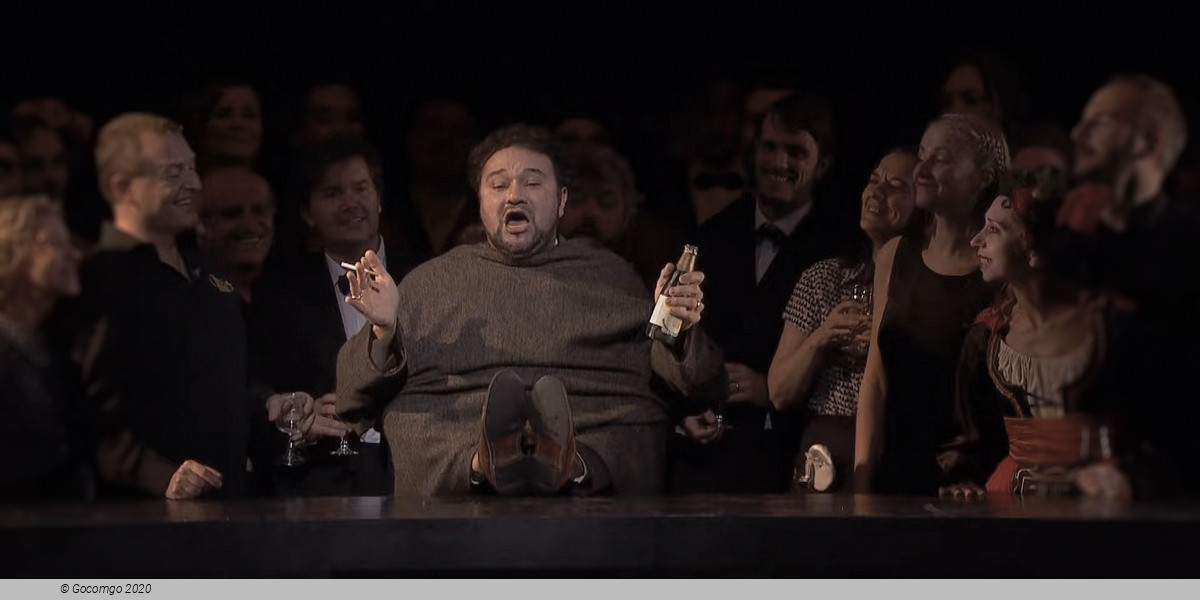
A tavern in Nuremberg: The Muse appears and reveals to the audience her purpose is to draw Hoffmann's attention, and make him abjure all other loves, so he can be devoted to her: poetry. She takes the appearance of Hoffmann's closest friend, Nicklausse. The prima donna Stella, performing Mozart's Don Giovanni, sends a letter to Hoffmann, requesting a meeting in her dressing room after the performance. The letter and the key to the room are intercepted by Councillor Lindorf ("Dans les rôles d'amoureux langoureux" – In the languid lovers' roles), the first of the opera's incarnations of evil, Hoffmann's nemesis. Lindorf intends to replace Hoffmann at the rendezvous. In the tavern, students wait for Hoffmann. He finally arrives, and entertains them with the legend of Kleinzach the dwarf ("Il était une fois à la cour d'Eisenach" – Once upon a time at the court of Eisenach). Lindorf coaxes Hoffmann into telling the audience about his three great loves.

Act 1 (Olympia)

This act is based on a portion of "Der Sandmann" (The Sandman).

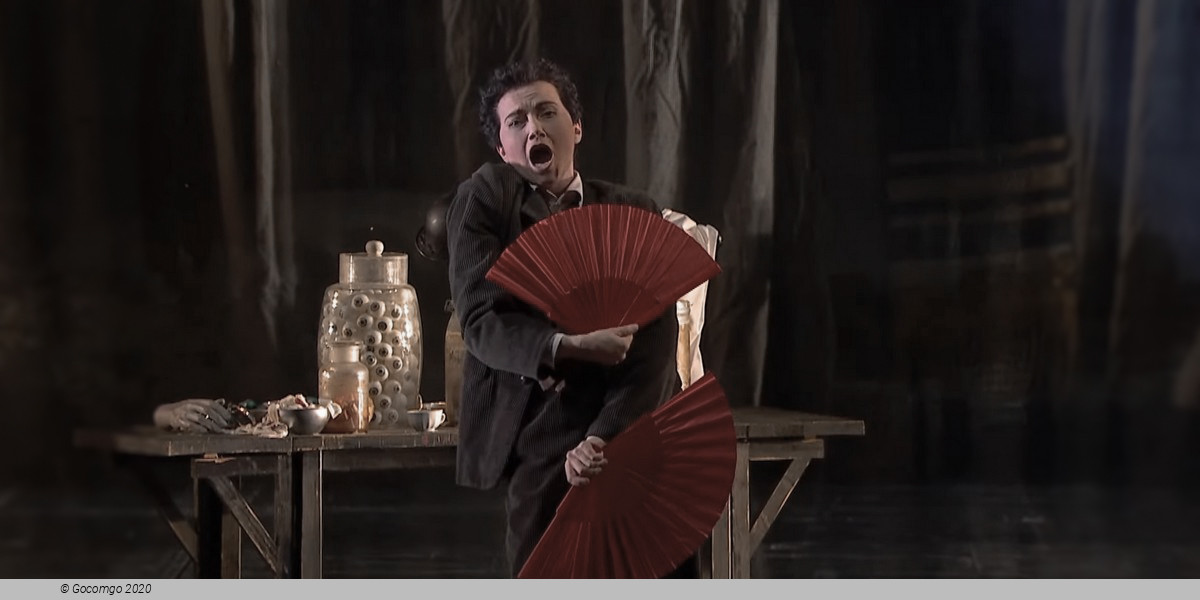
Hoffmann's first love is Olympia, an automaton created by the scientist Spalanzani. Hoffmann falls in love with her, not knowing Olympia is a mechanical doll ("Allons! Courage et confiance...Ah! vivre deux!" – Come on! Courage and confidence ... Ah! to live!). To warn Hoffmann, Nicklausse, possessing the truth about Olympia, sings a story of a mechanical doll with the appearance of a human, but Hoffmann ignores him ("Une poupée aux yeux d'émail" – A doll with enamel eyes). Coppélius, Olympia's co-creator and this act's incarnation of Nemesis, sells Hoffmann magic glasses to make Olympia appear as a real woman ("J'ai des yeux" – I have eyes).

Olympia sings one of the opera's most-famous arias, "Les oiseaux dans la charmille" (The birds in the arbor, nicknamed "The Doll Song"), during which she runs-down and needs to be wound-up before she can continue. Hoffmann is tricked into believing his affections are returned, to the bemusement of Nicklausse, subtly attempting to warn his friend ("Voyez-la sous son éventail" – See her under her fan). While dancing with Olympia, Hoffmann falls on the ground and his glasses break. At the same time, Coppélius appears, tearing Olympia apart to retaliate against Spalanzani after cheating him of his fees. With the crowd ridiculing him, Hoffmann realizes he loved an automaton.

Act 2 (Antonia)

This act is based on "Rath Krespel".

After a long search, Hoffmann finds the house where Crespel and his daughter Antonia are hiding. Hoffmann and Antonia loved each other, but were separated after Crespel decided to hide his daughter from Hoffmann. Antonia inherited her mother's talent for singing, but her father forbids her to sing because of her mysterious illness. Antonia wishes her lover would return to her ("Elle a fui, la tourterelle" – "She fled, the dove"). Her father also forbids her to see Hoffmann, encourages Antonia in her musical career, and therefore, endangers her without knowing it. Crespel tells Frantz, his servant, to stay with his daughter, and after Crespel leaves, Frantz sings a comical song about his talents "Jour et nuit je me mets en quatre" – "Day and night, I quarter my mind."

After Crespel leaves his house, Hoffmann takes advantage of the occasion to sneak in, and the lovers are re-united (love duet: "C'est une chanson d'amour" – "It's a love song"). After Crespel returns, he receives a visit from Dr Miracle, the act's Nemesis, forcing Crespel to let him heal her. Eavesdropping, Hoffmann learns Antonia may die if she sings too much. He returns to her boudoir, and makes her promise to give up her artistic-dreams. Antonia reluctantly accepts her lover's will. After she is alone, Dr Miracle enters Antonia's boudoir to persuade her to sing and follow her mother's path to glory, stating Hoffmann is sacrificing her to his brutishness, and loves her only for her beauty. With mystic powers, he raises a vision of Antonia's dead mother and induces Antonia to sing, causing her death. Crespel arrives just in time to witness his daughter's last breath. Hoffmann enters, and Crespel wants to kill him, thinking he is responsible for his daughter's death. Nicklausse saves his friend from the old man's vengeance.

Act 3 (Giulietta)

This act is loosely-based on Die Abenteuer der Silvester-Nacht (A New Year's Eve Adventure).

Venice. The act opens with the barcarolle "Belle nuit, ô nuit d'amour" – "Beautiful night, oh night of love". Hoffmann falls in love with the courtesan Giulietta, and thinks she returns his affections ("Amis, l'amour tendre et rêveur" – "Friends, tender and dreamy love"). Giulietta is not in love with Hoffmann, but seducing him under the orders of Captain Dapertutto, promising to give her a diamond if she steals Hoffmann's reflection from a mirror ("Scintille, diamant" – "Sparkle, diamond"). The jealous Schlemil (cf. Peter Schlemihl for a literary antecedent), a previous victim of Giulietta and Dapertutto (he gave Giulietta his shadow), challenges the poet to a duel, but is killed. Nicklausse wants to take Hoffmann away from Venice, and goes looking for horses. Meanwhile, Hoffmann meets Giulietta, and cannot resist her ("O Dieu! de quelle ivresse" – "O God! of what intoxication"): he gives her his reflection, only to be abandoned by the courtesan, to Dapertutto's great pleasure. Hoffmann tells Dapertutto his friend Nicklausse will come and save him. Dapertutto prepares a poison to get rid of Nicklausse, but Giulietta drinks it by mistake, dropping dead in the poet's arms.

Epilogue

The tavern in Nuremberg: Hoffmann, drunk, swears he will never love again, and explains Olympia, Antonia, and Giulietta are three facets of the same person, Stella. They represent, respectively, the young girl's, the musician's, and the courtesan's side of the prima donna. After Hoffmann says he doesn't want to love any more, Nicklausse reveals she is the Muse and reclaims Hoffmann: "Be reborn a poet! I love you, Hoffmann! Be mine!" – "Renaîtra un poète! Je t'aime, Hoffmann! Sois à moi!" The magic of poetry reaches Hoffmann as he sings "O Dieu! de quelle ivresse – "O God! of what intoxication" once more, ending with "Muse, whom I love, I am yours!" – "Muse que j'aime, je suis à toi!" At this moment, Stella, tired of waiting for Hoffmann to come to her rendezvous, enters the tavern and finds him drunk. The poet tells her to leave ("Farewell, I will not follow you, phantom, spectre of the past" – "Adieu, je ne vais pas vous suivre, fantôme, spectre du passé"), and Lindorf, waiting in the shadows, comes forth. Nicklausse explains to Stella that Hoffmann does not love her anymore, but Councillor Lindorf is waiting for her. Some students enter the room for more drinking, while Stella and Lindorf leave together.

Venue Info

Deutsche Oper Berlin - Berlin
Location   Bismarckstraße 35

The Deutsche Oper Berlin is an opera company located in the Charlottenburg district of Berlin, Germany. The resident building is the country's second-largest opera house and also home to the Berlin State Ballet. Since 2004 the Deutsche Oper Berlin, like the Staatsoper Unter den Linden (Berlin State Opera), the Komische Oper Berlin, the Berlin State Ballet, and the Bühnenservice Berlin (Stage and Costume Design), has been a member of the Berlin Opera Foundation.

The company's history goes back to the Deutsches Opernhaus built by the then independent city of Charlottenburg—the "richest town of Prussia"—according to plans designed by Heinrich Seeling from 1911. It opened on November 7, 1912 with a performance of Beethoven's Fidelio, conducted by Ignatz Waghalter. In 1925, after the incorporation of Charlottenburg by the 1920 Greater Berlin Act, the name of the resident building was changed to Städtische Oper (Municipal Opera).

With the Nazi seizure of power in 1933, the opera was under control of the Reich Ministry of Public Enlightenment and Propaganda. Minister Joseph Goebbels had the name changed back to Deutsches Opernhaus, competing with the Berlin State Opera in Mitte controlled by his rival, the Prussian minister-president Hermann Göring. In 1935, the building was remodeled by Paul Baumgarten and the seating reduced from 2300 to 2098. Carl Ebert, the pre-World War II general manager, chose to emigrate from Germany rather than endorse the Nazi view of music, and went on to co-found the Glyndebourne opera festival in England. He was replaced by Max von Schillings, who acceded to enact works of "unalloyed German character". Several artists, like the conductor Fritz Stiedry and the singer Alexander Kipnis, followed Ebert into emigration. The opera house was destroyed by a RAF air raid on 23 November 1943. Performances continued at the Admiralspalast in Mitte until 1945. Ebert returned as general manager after the war.

After the war, in what was now West Berlin, the company, again called Städtische Oper, used the nearby Theater des Westens; its opening production was Fidelio, on 4 September 1945. Its home was finally rebuilt in 1961 but to a much-changed, sober design by Fritz Bornemann. The opening production of the newly named Deutsche Oper, on 24 September, was Mozart's Don Giovanni.

Past Generalmusikdirektoren (GMD, general music directors) have included Bruno Walter, Kurt Adler, Ferenc Fricsay, Lorin Maazel, Gerd Albrecht, Jesús López-Cobos, and Christian Thielemann. In October 2005, the Italian conductor Renato Palumbo was appointed GMD as of the 2006/2007 season. In October 2007, the Deutsche Oper announced the appointment of Donald Runnicles as their next Generalmusikdirektor, effective August 2009, for an initial contract of five years. Simultaneously, Palumbo and the Deutsche Oper mutually agreed to terminate his contract, effective November 2007.

On the evening of 2 June 1967, Benno Ohnesorg, a student taking part in the German student movement, was shot in the streets around the opera house. He had been protesting against the visit to Germany by the Shah of Iran, who was attending a performance of Mozart's The Magic Flute.

In 1986 the American Berlin Opera Foundation was founded.

In April 2001, the Italian conductor Giuseppe Sinopoli died at the podium while conducting Verdi's Aida, at age 54.

In September 2006, the Deutsche Oper's Intendantin (general manager) Kirsten Harms drew criticism after she cancelled the production of Mozart's opera Idomeneo by Hans Neuenfels, because of fears that a scene in it featuring the severed heads of Jesus, Buddha and Muhammad would offend Muslims, and that the opera house's security might come under threat if violent protests took place. Critics of the decision include German Ministers and the German Chancellor Angela Merkel. The reaction from Muslims has been mixed — the leader of Germany's Islamic Council welcomed the decision, whilst a leader of Germany's Turkish community, criticising the decision, said:

This is about art, not about politics ... We should not make art dependent on religion — then we are back in the Middle Ages.

At the end of October 2006, the opera house announced that performances of Mozart's opera Idomeneo would then proceed. Kirsten Harms, after announcing in 2009 that she would not renew her contract beyond 2011, was bid farewell in July of that year.

Important Info
Type: Opera
City: Berlin, Germany
Duration: 3h 50min with 2 intervals
Acts: 5
Intervals: 2
Sung in: French
Titles in: German,English

E-tickets: Print at home or at the box office of the event if so specified. You will find more information in your booking confirmation email.

You can only select the category, and not the exact seats.
If you order 2 or 3 tickets: your seats will be next to each other.
If you order 4 or more tickets: your seats will be next to each other, or, if this is not possible, we will provide a combination of groups of seats (at least in pairs, for example 2+2 or 2+3).

Top of page