
Teatro Alla Scala: Il viaggio a Reims Tickets | Event Dates & Schedule | GoComGo.com

Il viaggio a Reims Tickets

Teatro Alla Scala, Milan, Italy
Important Info
Type: Opera
City: Milan, Italy
Duration: 3h

E-tickets: Print at home or at the box office of the event if so specified. You will find more information in your booking confirmation email.

You can only select the category, and not the exact seats.
If you order 2 or 3 tickets: your seats will be next to each other.
If you order 4 or more tickets: your seats will be next to each other, or, if this is not possible, we will provide a combination of groups of seats (at least in pairs, for example 2+2 or 2+3).

Cast
Performers
Choose the date to see the peformers
Overview

Academy Project

Soloists of the Teatro alla Scala Academy for Lyric Opera

History
Premiere of this production: 19 June 1825, The Théâtre Italien, Paris

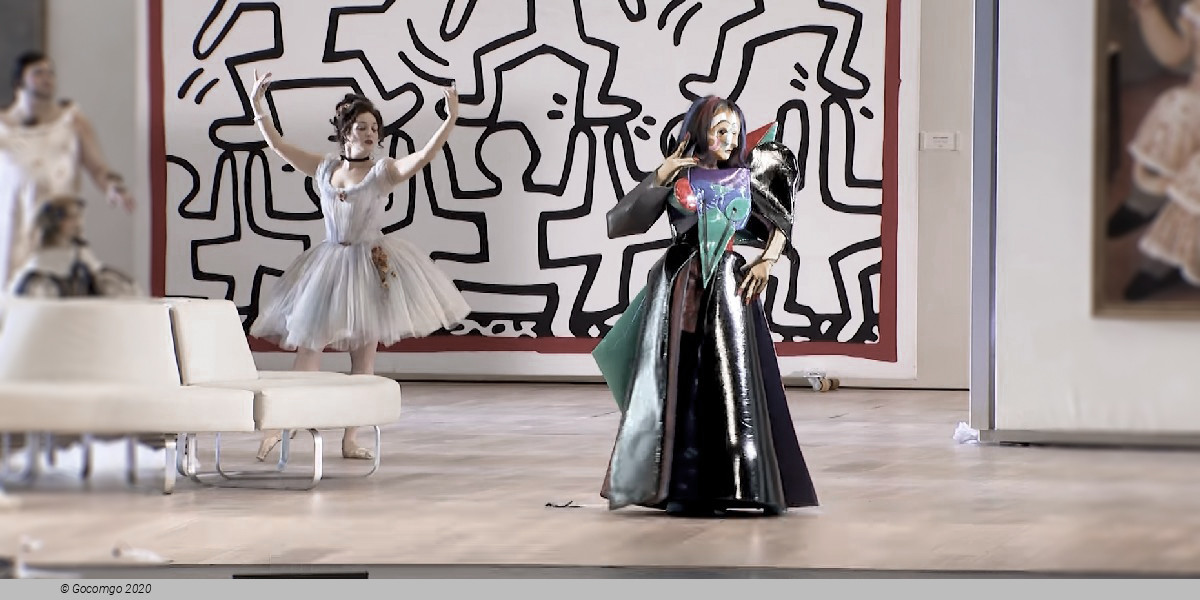
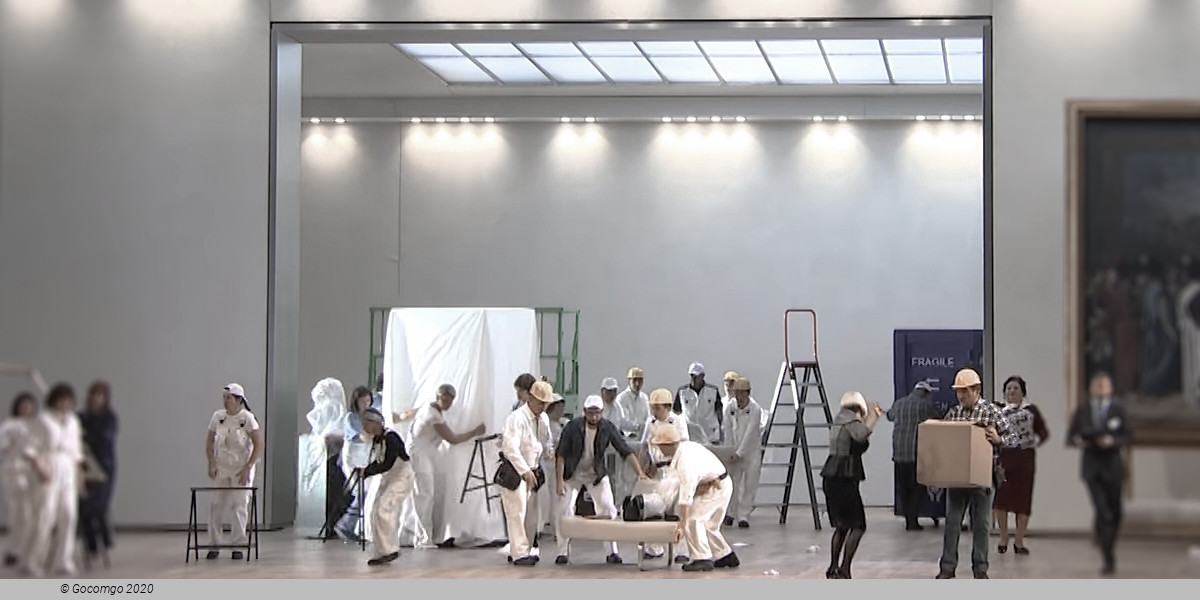
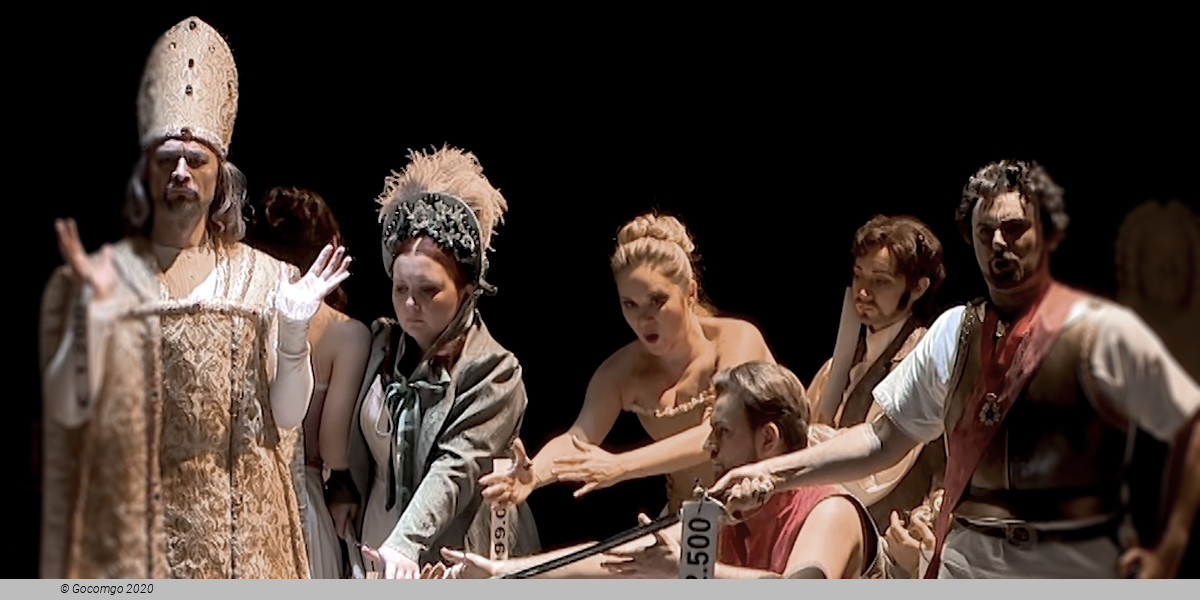
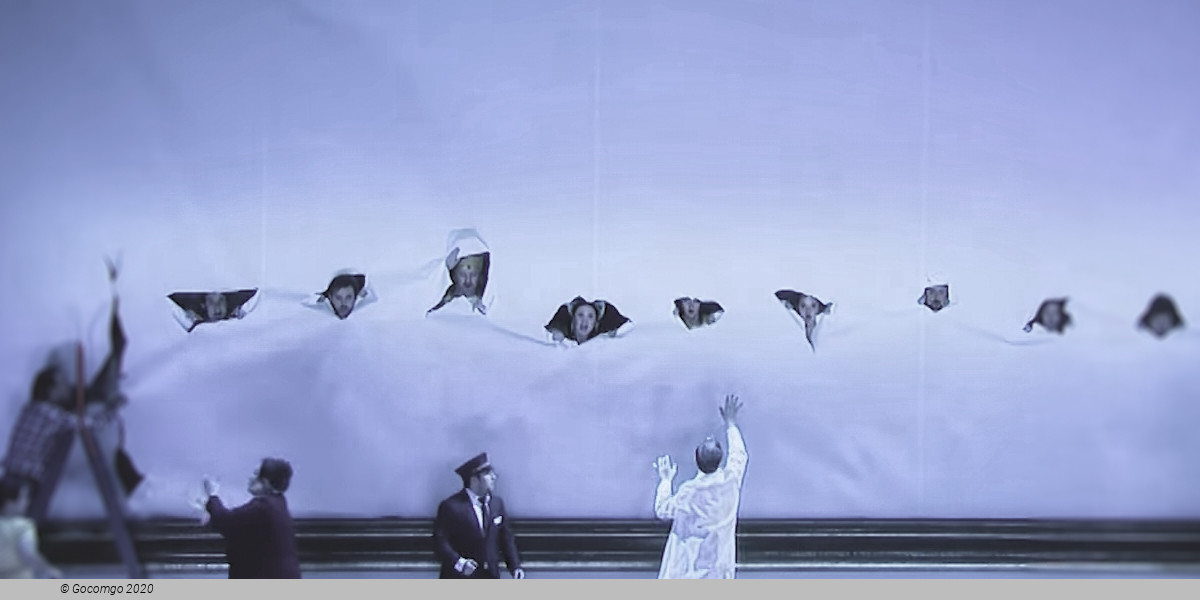
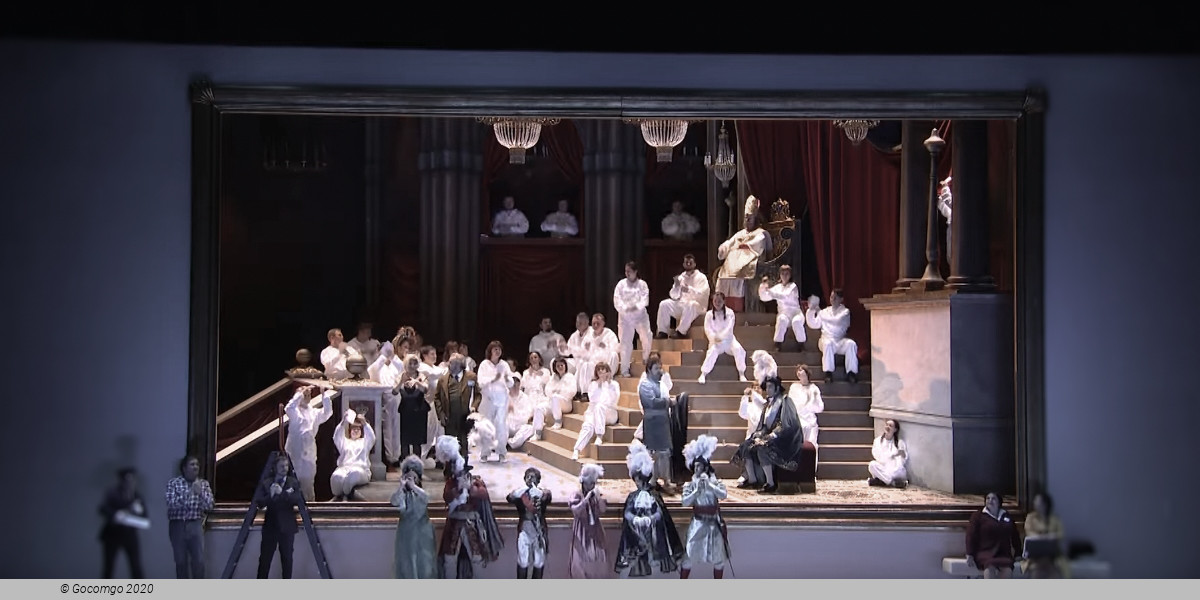
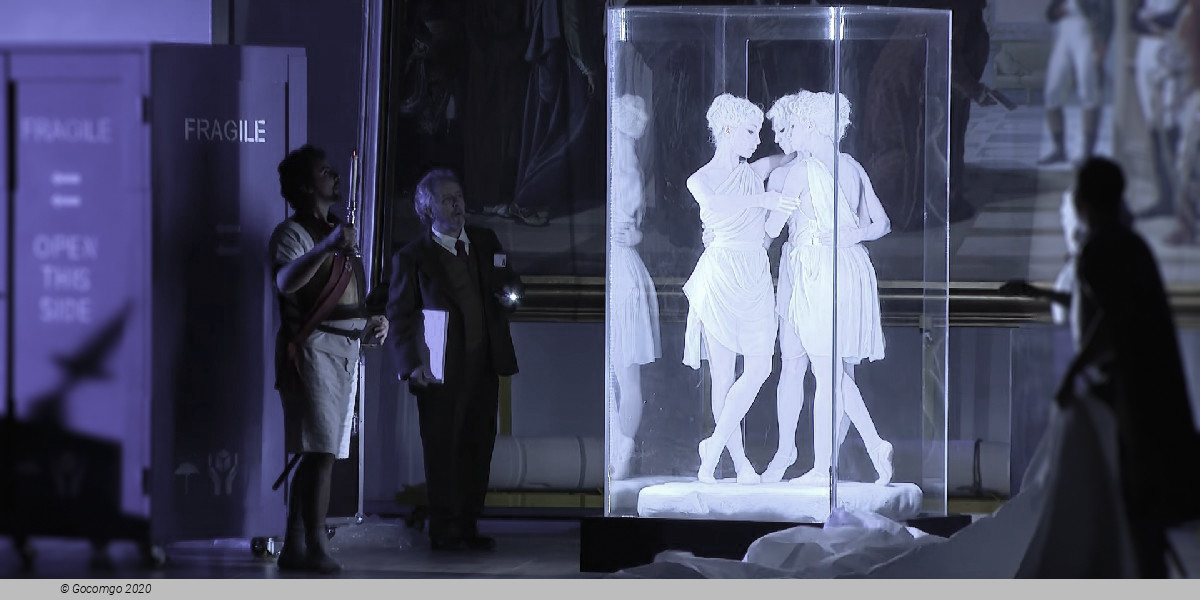
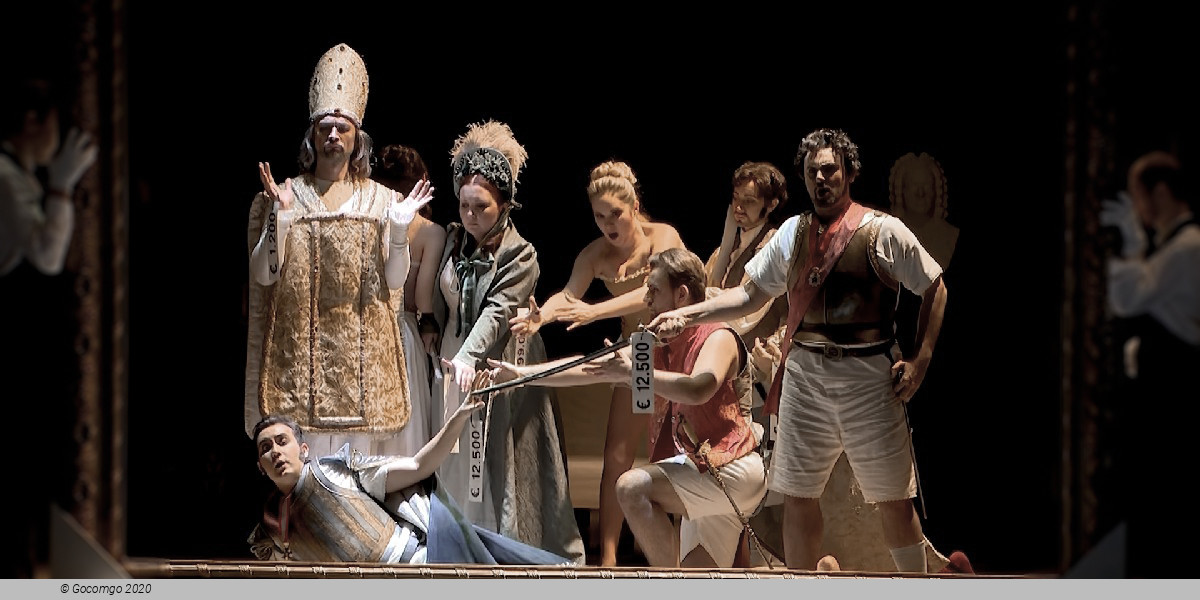
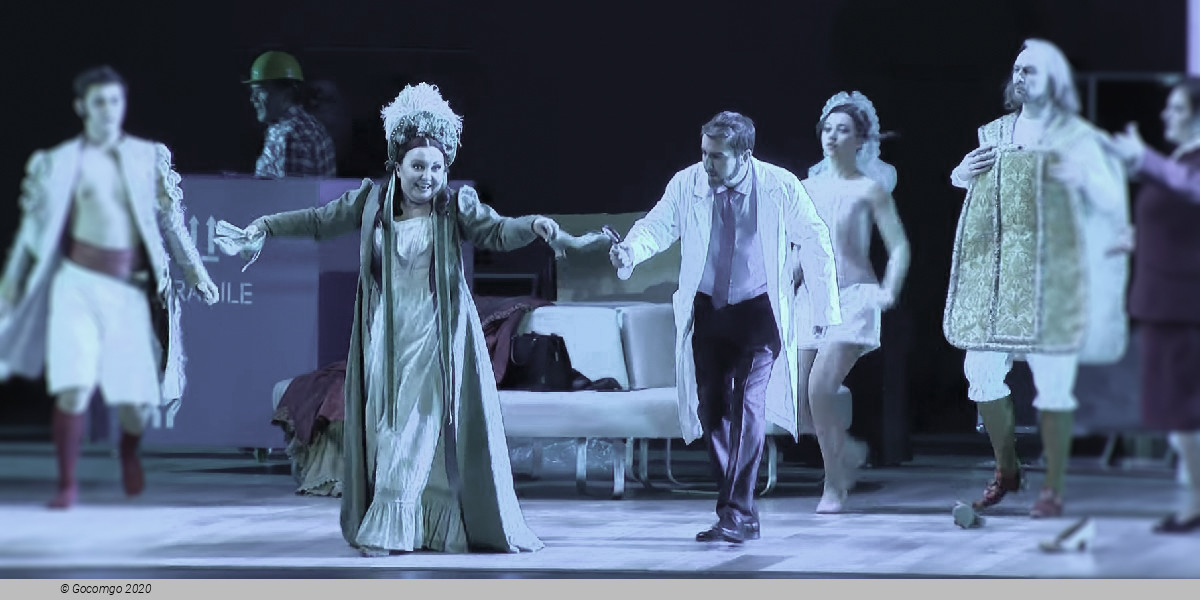
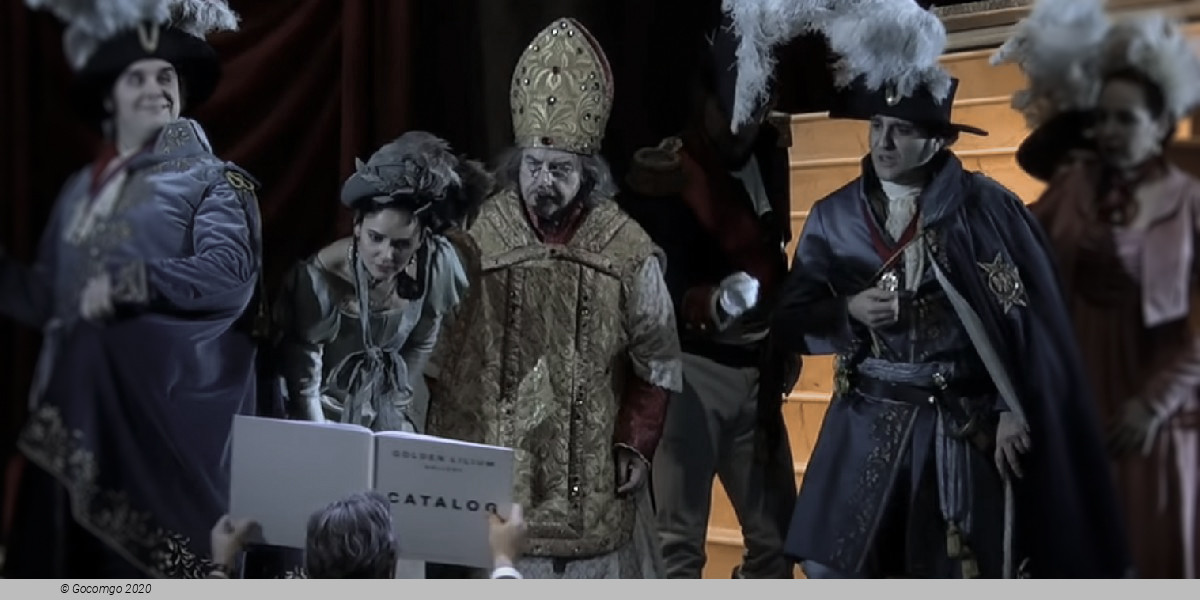
Il viaggio a Reims, ossia L'albergo del giglio d'oro (The Journey to Reims, or The Hotel of the Golden Fleur-de-lis) is an operatic dramma giocoso, originally performed in three acts, by Gioachino Rossini to an Italian libretto by Luigi Balocchi, based in part on Corinne ou l'Italie by Germaine de Staël.

Synopsis

Act 1
Scene 1: Introduction

The housekeeper Maddalena is unhappy with the preparations made by the servants for the arrival of the important people who are travelling to Reims for the coronation of Charles X of France. ("Presto, presto ... su, corraggio") The servants repudiate her assertions. The hotel's doctor, Don Prudenzio, announces that, because of the impending arrivals, the normal business of the spa will be suspended. The spa attendants rejoice and depart. He checks with Antonio that his instructions about the necessary meals for the visitors have been followed.

Madame Cortese, the proprietress of the hotel, appears. She regrets that she will be unable to attend the coronation ("Di vaghi raggi adorno"), but is keen to show off the hotel to the visitors in the hope that they will return some day to take the waters. She particularly requests that everyone should be enthusiastic about each of the travellers' specific interests. Everyone agrees, and she is left alone.

Scene 2: The Countess of Folleville's arrival

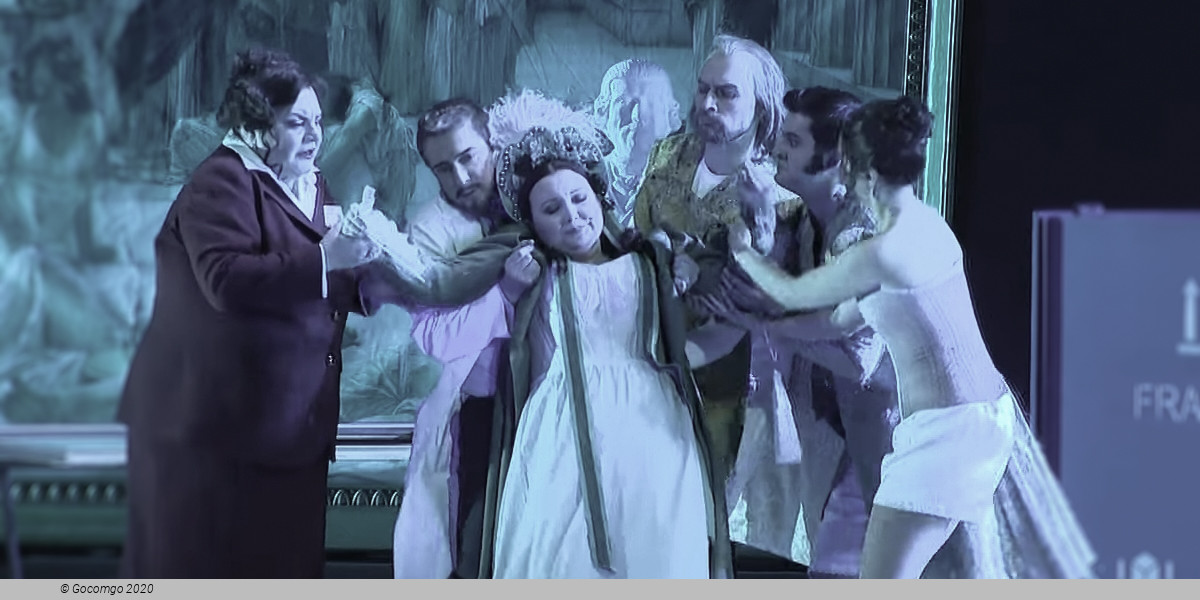
The Countess calls for her maid, Modestina, and Madame Cortese goes to search for her. Modestina appears, and the Countess, worried that her clothes have not yet arrived, asks why there has been no reply to a letter that she had sent. Modestina had entrusted the letter to the Countess's cousin, Don Luigino, who immediately arrives to say that the stagecoach which he had hired to carry the boxes had overturned on the way. The Countess faints and Don Luigino calls for help.

Maddalena, Antonio, Don Prudenzio and the servants arrive, together with Baron Trombonok. Don Prudenzio and the Baron argue about how to resuscitate the Countess, but she recovers sufficiently to lament the loss of her garments. ("Partir, o ciel! desio") However, when Modestina appears with a large box containing a beautiful Paris bonnet, she rejoices that it, at least, has been saved from the accident. ("Che miro! Ah! Quel sorpresa!") Everyone is amused by this sudden turn of events, and all except Antonio and the Baron depart.

Scene 3: Sextet

After agreeing with the Baron the arrangements for party's departure in the evening, Antonio leaves. The Baron cannot help laughing at the Countess's sudden recovery and the insanity of the world in general. He is joined by Don Profondo, Don Alvaro, the Marquise Melibea, Count Libenskof. It is clear that Don Alvaro and the Count are rivals for the Marquise's affections. They are all waiting for the new horses which will be necessary for the continuation of the journey, but Madame Cortese, who now arrives, says that she cannot understand why they have not arrived. Alvaro and Libenskof quarrel, the ladies are alarmed, and the Baron and Don Profondo are amused by the idiocy of lovers. ("Non pavento alcun periglio")

A harp prelude is heard, and the poetess Corinna sings offstage of brotherly love, to everyone's delight. ("Arpa gentil")

Act 2
Scene 1: Lord Sidney's aria

Madame Cortese is still waiting for the return of her servant Gelsomino with news of the horses. Lord Sidney approaches, and she muses on his unwillingness to approach Corinna who, she is sure, reciprocates his love.

Sidney, alone, laments his situation. ("Invan strappar dal core") His mood lifts when girls singing in praise of Corinna enter with flowers, but then he is disturbed by Don Profondo's strange requests for information about the location of antiquities, and departs.

Scene 2: Corinna's duet with the Chevalier Belfiore

Profondo is joined by Corinna and her companion Delia. Corinna asks when the party is to depart, and he and Delia leave Corinna alone while they go to see whether the horses have arrived.

Corinna is joined by the Chevalier, who declares his love. ("Nel suo divin sembiante") She is taken aback and repudiates him. The Chevalier retreats, hoping to try again later, and Corinna returns to her room.

Scene 3: Don Profondo's aria

Don Profondo, who has seen the Chevalier with Corinna, reflects that the Countess will scratch the Chevalier's eyes out if she finds out what he has been doing. He then turns his attention to enumerating the effects of his fellow-travellers (as requested by the Baron), noting that their possessions tend to sum up their each of their nations' characteristics. ("Medaglie incomparabili") He looks forward to the impending departure.

The Countess appears, looking for the Chevalier. She is not pleased when Don Profondo tells her that he has been having a poetry lesson. Don Alvaro and Count Libenskof join them, asking about the horses, and the Baron, too, appears, looking woebegone. What has happened? The rest of the travellers arrive, and the Baron produces the courier Zefirino, who is obliged to report that there are no horses to be had anywhere, not even for ready money. There will be no journey to Reims for the coronation!

Scene 4: Grand concerted ensemble for 14 voices

Everyone is horrified. ("Ah! A tal colpo inaspettato") But Madame Cortese appears with a letter from Paris. Don Profondo reads it out: the King will return from Reims in a few days and there will be great festivities. Anyone who was unable to get to Reims will be consoled by an even finer spectacle. The Countess steps forward to invite the entire company to her home in Paris for the celebrations. A stagecoach will convey them there on the following day, but in the meantime a grand banquet, with invitations to the public, will be held at the Golden Lily, paid for with the money that would have been spent at the coronation. Any money left over will be given to the poor.

Act 3
Scene 1: Duet for the Count and the Marquise

When everyone else has left, the Baron tries to reconcile the jealous Count with the Marquise, who has been seen with Don Alvaro. When he departs, the misunderstanding is resolved and harmony is restored. ("D'alma celeste, oh Dio!")

They depart, and the scene changes to the hotel's garden. Antonio and Maddalena ensure that all is prepared for the banquet. The Baron has engaged a travelling company to provide entertainment with singing and dancing.

Scene 2: Finale

After the opening chorus ("L'allegria è un sommo bene"), the Baron introduces a series of short national songs sung by each of the travellers, some of them set to well-known tunes, and ending with, first, a French anthem (the Marche Henri IV) for the Duchesse de Berry, then a rustic Tyrolean duet for Madame Cortese and Don Profondo, and finally an improvised solo for Corinna on one of a number of mostly French subjects suggested by each traveller and drawn from an urn. The winning subject turns out, appropriately enough, to be "Charles X, King of France". The opera ends with dances and a chorus.

Venue Info

Teatro Alla Scala - Milan
Location   Via Filodrammatici, 2

Teatro Alla Scala is an opera house in Milan. Most of Italy's greatest operatic artists, and many of the finest singers from around the world, have appeared at La Scala. The theatre is regarded as one of the leading opera and ballet theatres globally. It is home to the La Scala Theatre Chorus, La Scala Theatre Ballet, La Scala Theatre Orchestra, and the Filarmonica della Scala orchestra.

The Teatro alla Scala was founded, under the auspices of the Empress Maria Theresa of Austria, to replace the Royal Ducal Theatre, which was destroyed by fire on 26 February 1776 and had until then been the home of opera in Milan. The cost of building the new theatre was borne by the owners of the boxes at the Ducal, in exchange for possession of the land on which stood the church of Santa Maria alla Scala (hence the name) and for renewed ownership of their boxes. Designed by the great neoclassical architect Giuseppe Piermarini, La Scala opened on 3 August 1778 with Antonio Salieri's opera L'Europa riconosciuta, to a libretto by Mattia Verazi.

With the advent of Rossini in 1812 (La pietra del paragone), the Teatro alla Scala was to become the appointed place of Italian opera seria: of its history dating back more than a century and of its subsequent tradition up till the present. The catalogue of Rossini's works performed until 1825 included: Il turco in Italia, La Cenerentola, Il barbiere di Siviglia, La donna del lago, Otello, Tancredi, Semiramide and Mosé. During that period the choreographies of Salvatore Viganò (1769-181) and of Carlo Blasis (1795-1878) also widened the theatre's artistic supremacy to include ballet.

An exceptional new season of serious opera opened between 1822 and 1825, with Chiara e Serafina by Gaetano Donizetti (1797-1848) and Il pirata by Vincenzo Bellini (1801-1835). The later operas of Donizetti performed at La Scala were (until 1850) Anna Bolena, Lucrezia Borgia, Torquato Tasso, La fille du régiment, La favorita, Linda di Chamonix, Don Pasquale, and Poliuto. These were followed (until 1836) by Bellini's I Capuleti e i Montecchi, Norma, La sonnambula, Beatrice di Tenda and I puritani.

In 1839 Oberto Conte di San Bonifacio inaugurated the cycle of operas by Giuseppe Verdi (1813-1901), the composer whose name is linked more than any other to the history of La Scala. After the dismal failure of Un giorno di regno, Nabucco was performed in 1842. It was the first, decisive triumph of Verdi's career. At the same time, the strong patriotic feelings stirred by Nabucco founded the "popularity" of opera seria and identified its image with the Scala.

Arturo Toscanini (1867-1957) became the artistic director and introduced radical reform into the theatre, both in its organisational aspects and in its relations with the public. Toscanini, one of the greatest conductors of all time, took up Verdi's musical inheritance and launched a tradition of interpretation that continued uninterruptedly and was renewed during the twentieth century. It was he who reappraised and regularly performed at the Scala the works of Richard Wagner (hitherto only belatedly and inadequately recognised). He also firmly extended the Scala's orchestral repertoire to include symphonic music.

In 1948 maestro Guido Cantelli (1920-1956) made his debut and established himself as one of the leading postwar conductors. Numerous opera performances productions (the Wagnerian cycle conducted in 1950 by Wilhelm Furtwängler, the Verdi repertoire by Victor De Sabata, etc), concerts (Herbert von Karajan, Dimitri Mitropoulos, Bruno Walter, etc), singers (Maria Callas, Renata Tebaldi, Giuseppe Di Stefano, Mario Del Monaco, etc), ballet performances (Margot Fonteyn, Serge Lifar, Maya Plissetskaya, Rudolf Nureyev), and productions (Luchino Visconti, Giorgio Strehler) belong not only to the history of the Scala, but to that of the history of musical theatre since the war.

In 1965 Claudio Abbado made his début at the Scala and in 1972 was named conductor of the Scala Orchestra. Until 1986 he directed among other works Il barbiere di Siviglia, Cenerentola, L'Italiana in Algeri by Rossini, Simon Boccanegra, Macbeth and Don Carlo by Verdi, the recent Al gran sole carico d'amore by Luigi Nono, and Pelléas et Mélisande by Claude Debussy. He also conducted numerous concerts. The chorus-master was Romano Gandolfi. In 1975 the ballet dancer Oriella Dorella debuted at La Scala. Among other contemporary composers, up till 1986 the Theatre continued to give works by Luciano Berio (La vera storia), Franco Donatoni (Atem) and Karlheinz Stockhausen (Samstag aus Licht).

In 1981 Riccardo Muti debuted at the Scala as an opera conductor (Mozart, Le nozze di Figaro). Giulio Bertola was appointed to direct the Chorus. In 1982 the Orchestra Filarmonica della Scala was established. In 1985 Alessandra Ferri made her debut at the Scala. In 1986 Riccardo Muti was appointed musical director. From 1989 to 1998 he reintroduced the best-loved works (Rigoletto, La traviata, Macbeth, La forza del destino) and numerous other titles by Verdi including Falstaff and Don Carlo.

In 1991 Roberto Gabbiani took over the directorship of the chorus. In 1997 La Scala was converted into a Foundation under private ownership, thus opening a decisive phase of modernisation.

On 7 December 2001 a new production of Otello, conducted by Muti, concluded the Verdi Year and, for the time being, performances at Piermarini’s original building in Piazza Scala. Major restoration and modernisation works of the Theatre began in January 2002.

The 2005-2006 Season, dedicated to the 250th anniversary of Mozart’s birth, was inaugurated by Idomeneo conducted by Daniel Harding. The 2006/07 season saw the return on 7 December of an opera by Verdi, Aida, conducted by Riccardo Chailly, and the launch of the Celebrations for the 50th Anniversary of Arturo Toscanini’s Death. On 7 December 2007 the 2007/08 season opened with Tristan und Isolde conducted by Daniel Barenboim. The opera marked the beginning of a closer collaboration between the Teatro alla Scala and the Israeli-Argentinian Maestro.

Important Info
Type: Opera
City: Milan, Italy
Duration: 3h

E-tickets: Print at home or at the box office of the event if so specified. You will find more information in your booking confirmation email.

You can only select the category, and not the exact seats.
If you order 2 or 3 tickets: your seats will be next to each other.
If you order 4 or more tickets: your seats will be next to each other, or, if this is not possible, we will provide a combination of groups of seats (at least in pairs, for example 2+2 or 2+3).

Top of page