
Teatro Colón tickets 25 August 2026 - Otello | GoComGo.com

Otello

Teatro Colón, Buenos Aires, Argentina
All photos (7)
Select date and time
8 PM
From
US$ 92

E-tickets: Print at home or at the box office of the event if so specified. You will find more information in your booking confirmation email.

You can only select the category, and not the exact seats.
If you order 2 or 3 tickets: your seats will be next to each other.
If you order 4 or more tickets: your seats will be next to each other, or, if this is not possible, we will provide a combination of groups of seats (at least in pairs, for example 2+2 or 2+3).

Important Info
Type: Opera
City: Buenos Aires, Argentina
Starts at: 20:00
Acts: 4
Sung in: Italian

E-tickets: Print at home or at the box office of the event if so specified. You will find more information in your booking confirmation email.

You can only select the category, and not the exact seats.
If you order 2 or 3 tickets: your seats will be next to each other.
If you order 4 or more tickets: your seats will be next to each other, or, if this is not possible, we will provide a combination of groups of seats (at least in pairs, for example 2+2 or 2+3).

Cast
Performers
Conductor: Alejo Pérez
Choir: Coro Estable del Teatro Colón
Orchestra: Orquesta Estable del Teatro Colón
Creators
Composer: Giuseppe Verdi
Librettist: Arrigo Boito
Director: Fabio Sparvoli
Chorus Master: Miguel Martínez
Playwright: William Shakespeare
Overview

A masterpiece reborn with cinematic intensity and operatic grandeur — experience Otello like never before at Teatro Colón.

The stage of the magnificent Teatro Colón ignites with the emotional power of Giuseppe Verdi’s Otello in a bold new production that reinterprets one of the most intense tragedies in the operatic repertoire. Based on Shakespeare’s masterpiece, Verdi’s drama plunges audiences into a storm of jealousy, love, deceit, and destruction — all expressed through a score of extraordinary depth and brilliance.

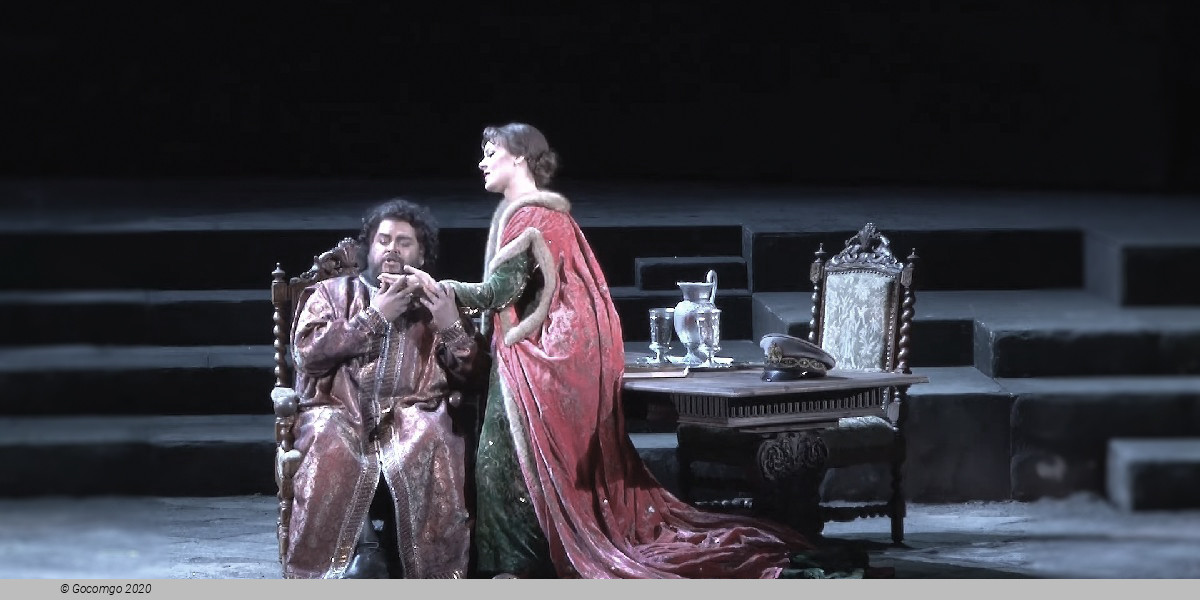
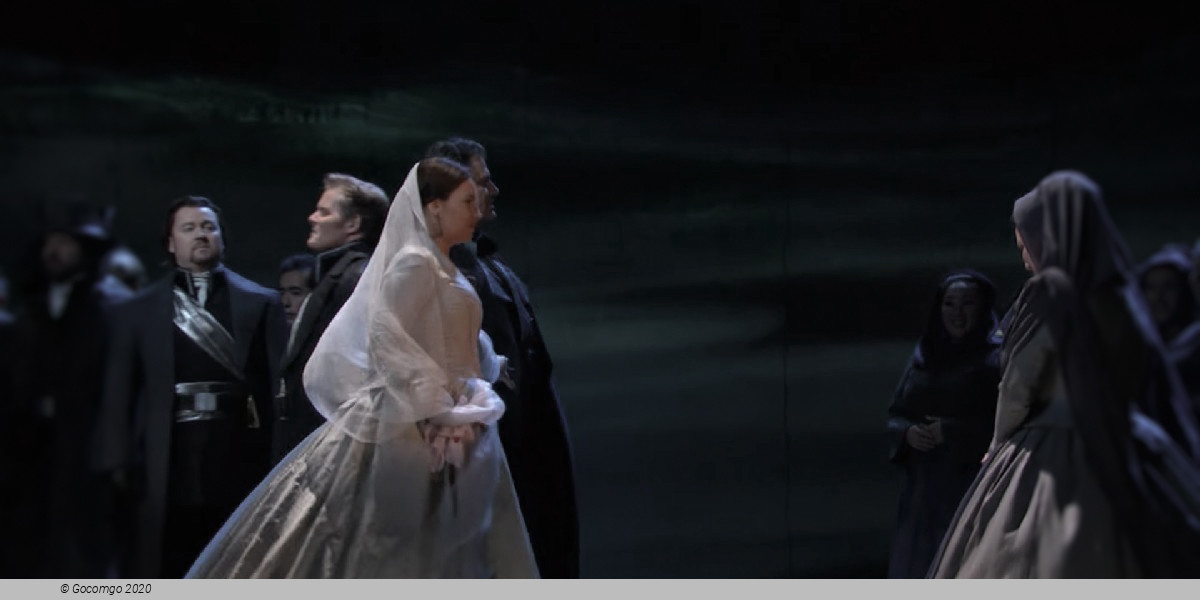
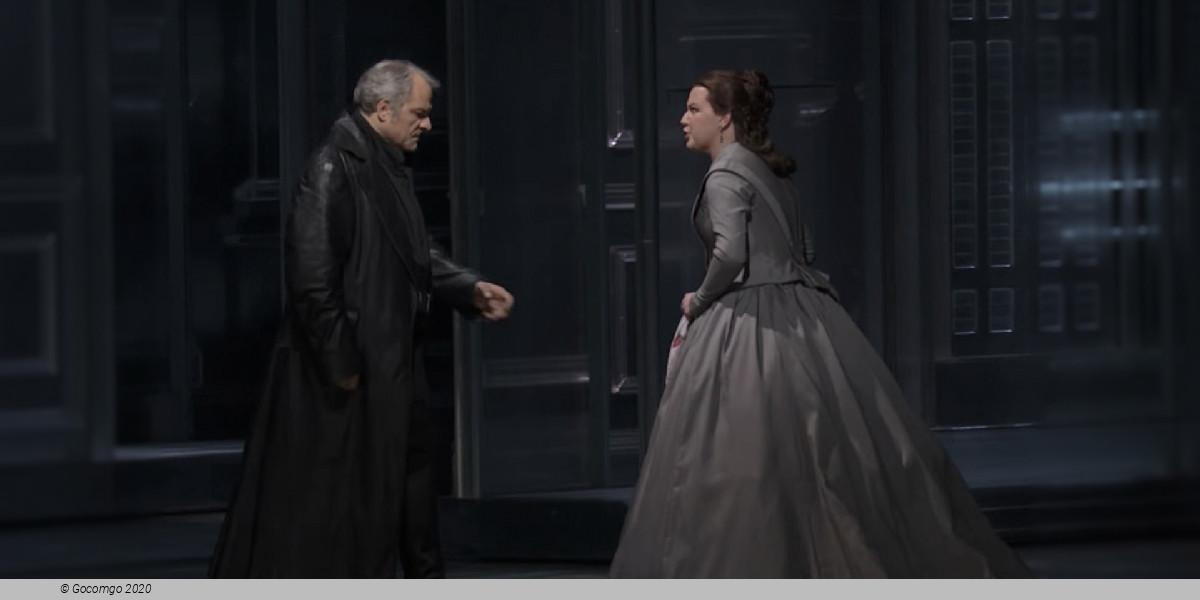
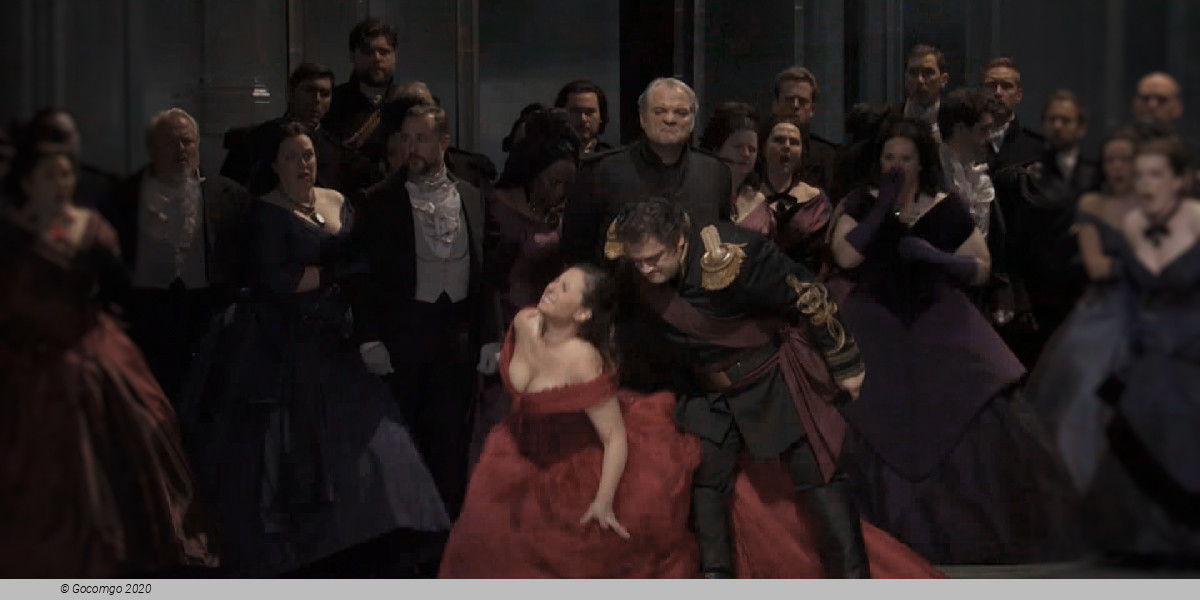
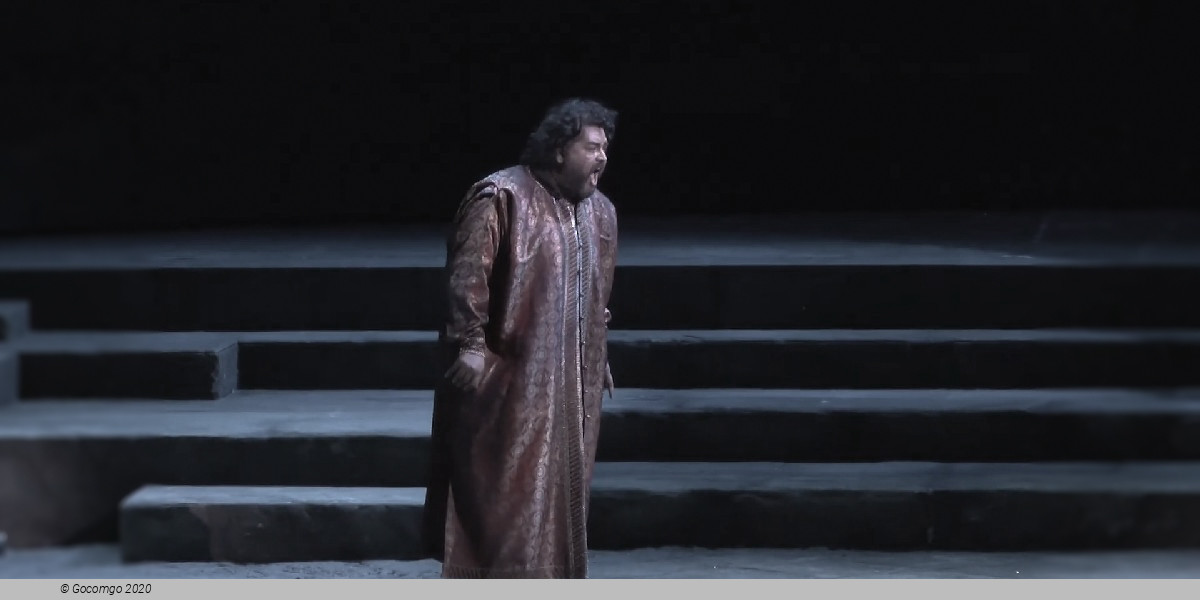
This new staging at Teatro Colón brings Otello into a visually striking world where shadows, silence, and light become part of the storytelling. With a modern dramatic vision, the production magnifies the psychological complexity of each character: Otello’s heroic nobility shaken by doubt, Desdemona’s luminous purity, and Iago’s chilling manipulations. Innovative scenography and evocative costumes enrich the atmosphere, creating a universe where tension builds with every gesture and every glance.

At the core of the evening stands Verdi’s magnificent music — from the electrifying opening storm to Otello’s heart-wrenching final monologue. An exceptional cast of international soloists brings both vocal virtuosity and powerful emotional truth to the roles, while the Colón’s celebrated orchestra and chorus give the score its full dramatic weight.

In this new interpretation, Otello becomes not only a tale of tragic downfall but a gripping exploration of human vulnerability and the destructive force of mistrust.

New production of the Teatro Colón

History
Premiere of this production: 05 February 1887, Teatro alla Scala, Milan

Otello is an opera in four acts by Giuseppe Verdi to an Italian libretto by Arrigo Boito, based on Shakespeare's play Othello. It was Verdi's penultimate opera, and was first performed at the Teatro alla Scala, Milan, on 5 February 1887.

Synopsis

Time: The late 16th century.
Place: A coastal city on the island of Cyprus.

Act 1

A town in Cyprus, outside the castle. An inn with a pergola, in the background the quayside and sea. It is evening. Lightning, thunder, gale force winds.

On a stormy evening, the people of Cyprus anxiously await the arrival of the new governor, Otello, from a naval battle with the Turks (Chorus, Montano, Cassio, Iago, Roderigo: Una vela! / "A sail!"). For a moment it seems as if Otello's ship will founder, to the delight of Otello's treacherous ensign, Iago, but Otello arrives safely and announces that the Turkish fleet has been destroyed, and the Cypriots cheer (Otello, chorus: Esultate! L'orgoglio musulmano sepolto è in mar / "Rejoice! The Muslim’s pride is buried in the sea").

Iago offers to help the young Venetian gentleman Roderigo in his seduction of Otello's wife, Desdemona – Iago envies Otello his success and longs to destroy the Moor (Iago, Roderigo: Roderigo, ebben che pensi? / "Well, Roderigo, what are you thinking?"). Among his grievances, Iago is outraged that Otello has appointed Cassio to be the captain of the navy, a position that Iago hoped to have. The people of Cyprus celebrate the safe return of Otello and his men by lighting a bonfire and drinking (Chorus: Fuoco di gioia!/ "Fire of joy").

Iago proposes a toast to Otello and his wife, while Cassio praises Desdemona (Iago, Cassio, Chorus, Roderigo: Roderigo, beviam! / "Roderigo, let's drink!"). Iago offers Cassio more wine, but Cassio says he has had enough. Iago pressures him and offers a toast to Otello and Desdemona. Cassio gives in. Iago sings a drinking song and continues to pour Cassio wine (Iago, Cassio, Roderigo, chorus: Inaffia l'ugola! / "Wet your throat").

Montano enters and calls for Cassio to begin his watch; he is surprised to find Cassio drunk and barely able to stand upright. Iago lies to Montano, telling him that this is how Cassio spends every evening. Roderigo laughs at Cassio's drunkenness and Cassio attacks him. Montano tells Cassio to calm down, but Cassio draws his sword and threatens to crack open Montano's head. (Montano, Cassio, Iago, Roderigo, chorus: Capitano, v'attende la fazione ai baluardi / "Captain, the guard awaits you on the ramparts".) Cassio and Montano begin to duel, and Iago sends Roderigo to call the alarm. Montano is wounded and the fight is stopped only by the appearance of Otello.

Otello orders Montano and Cassio to lower their swords. He then asks "honest Iago" to explain how the duel began, but Iago says he doesn't know. Otello then turns to Cassio, who is embarrassed and cannot excuse his actions. When Otello discovers that Montano is wounded, he becomes enraged. Desdemona enters, and, upon seeing that his bride's rest has been disturbed, Otello declares that Cassio is no longer Captain. (Otello, Iago, Cassio, Montano: Abbasso le spade / "Down with your swords".) He tells Iago to patrol the town to restore quiet, calls for help for Montano and orders everyone to return to their houses.

The Cypriots leave Otello alone with Desdemona. Together Otello and Desdemona recall why they fell in love. Otello, in an ecstasy of joy, invites death, fearing that he will never know such happiness again. Desdemona prays that their love will remain unchanged. They kiss, overcome with love for each other. (Otello, Desdemona: Già nella notte densa s'estingue ogni clamor /"Now in the dark night all noise is silenced".)

Act 2

A hall on the ground floor of the castle, divided by a glass partition from the garden at the back, with a balcony.

Iago suggests to Cassio that he should ask Desdemona to talk to Otello about his demotion; Desdemona can influence her husband to reinstate him (Iago, Cassio: Non ti crucciar / "Do not fret"). Desdemona and Emilia can be seen walking the garden. Cassio approaches Desdemona. Watching from the room, Iago voices his nihilistic beliefs and hatred of humankind (Credo in un Dio crudel / "I believe in a cruel God").

Otello enters the room; Iago, pretending not to notice him, says that he is deeply troubled. Cassio sees Otello from afar and goes discreetly away. Otello asks what's wrong, but Iago gives only vague answers. Finally, he hints that Cassio and Desdemona are having an affair. Otello begins to get suspicious, but declares that he needs proof before believing that Desdemona has been unfaithful. (Iago, Otello: Ciò m'accora... Che parli? / "That worries me..." "What did you say?") Iago warns Otello against jealousy, but also advises him to be vigilant.

A crowd of children, sailors, and Cypriots sing to Desdemona, praising her beauty and purity (Chorus, Iago, children, Desdemona, Otello: Dove guardi splendono raggi / "Wherever you look, brightness shines..."). They present her with gifts and wish her happiness before leaving.

Desdemona carries Cassio's request for reinstatement to Otello. Otello sourly tells her to ask him another time; as she persists, he grows impatient and says he has a headache. Desdemona offers to wrap his head in a handkerchief Otello once gave her, linen embroidered with strawberries. Otello throws it to the ground and says he doesn't need it (Desdemona, Otello: D'un uom che geme sotto il tuo disdegno la preghiera ti porto / "I bring a petition from one who suffers under your displeasure"). Emilia picks up the handkerchief. Desdemona asks for Otello's forgiveness. Aside, Iago demands that Emilia give him the handkerchief. When she refuses, Iago forcibly takes it from her.

Otello dismisses the others, and declares that he now believes that Desdemona may be deceiving him (Otello: Ora e per sempre addio sante memorie / "Now and forever farewell, holy memories"). Iago returns, and the jealous Otello demands proof of Desdemona's infidelity. Iago says that once, when he and Cassio were sleeping in the same room, he heard Cassio talking to Desdemona in a dream. In the dream, says Iago, Cassio told Desdemona that they must be careful to conceal their love. (Iago: Era la notte, Cassio dormia / "It was night, Cassio was sleeping".) Iago says that dreams don't prove anything, but remarks that he saw Cassio carrying Desdemona's strawberry-embroidered handkerchief just the day before. Otello swears vengeance on Desdemona and Cassio, and Iago joins him in his vow (Otello, Iago: Sì, pel ciel marmoreo giuro / "Yes, by the marble heavens I swear").

Act 3

The great hall of the castle. To the right, a large colonnade leading to a smaller hall, in the back of which is a balcony. Othello and Iago talking in the hall as a herald enters.

A herald brings news of the approach of ambassadors from Venice. Iago explains to Otello that he will lure Cassio here and talk with him while Otello watches, hidden. He leaves to go get Cassio. (Iago: Qui trarrò Cassio / "Here I will bring Cassio".)

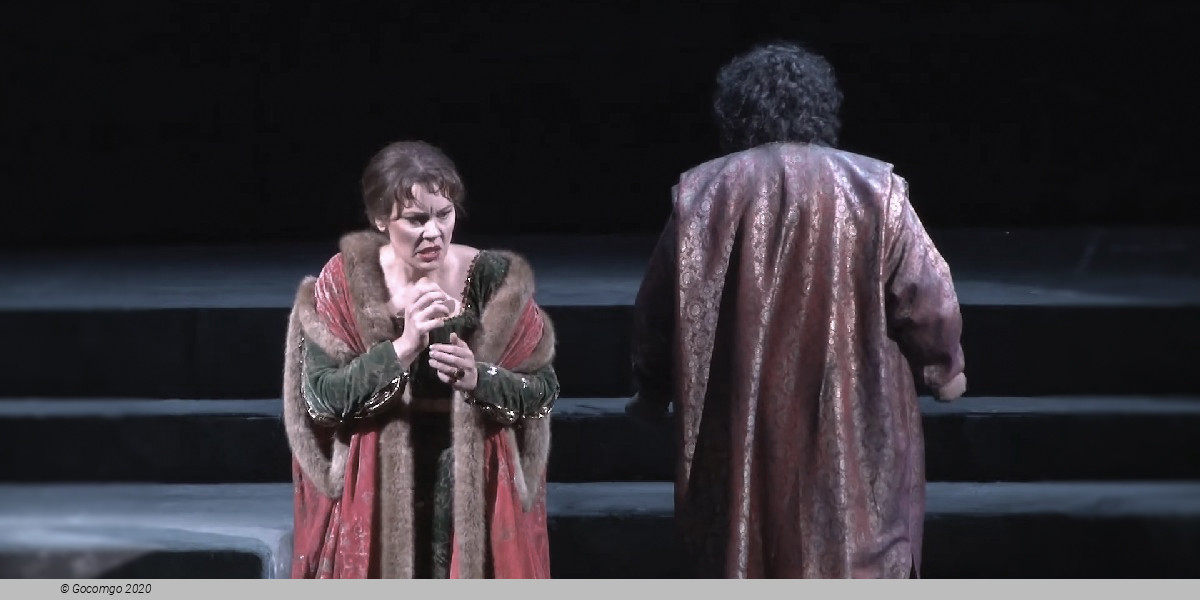
Desdemona enters and reminds Otello of Cassio's request. Otello says that his headache has returned, and asks Desdemona to wrap her handkerchief around his head. When Desdemona produces a different handkerchief, Otello demands the one with strawberries. When she says she does not have it, Otello says that it was a talisman, and troubles will befall her if she loses it. Desdemona says that he is trying to ignore Cassio's plea, and as she asks him about Cassio, he demands the handkerchief ever more insistently. (Desdemona, Otello: Dio ti giocondi, o sposo / "God keep you merry, husband".) Desdemona protests that she is faithful; Otello sends her away (Desdemona, Otello: Esterrefatta fisso lo sguardo tuo tremendo / "Terrified, I face your dreadful look").

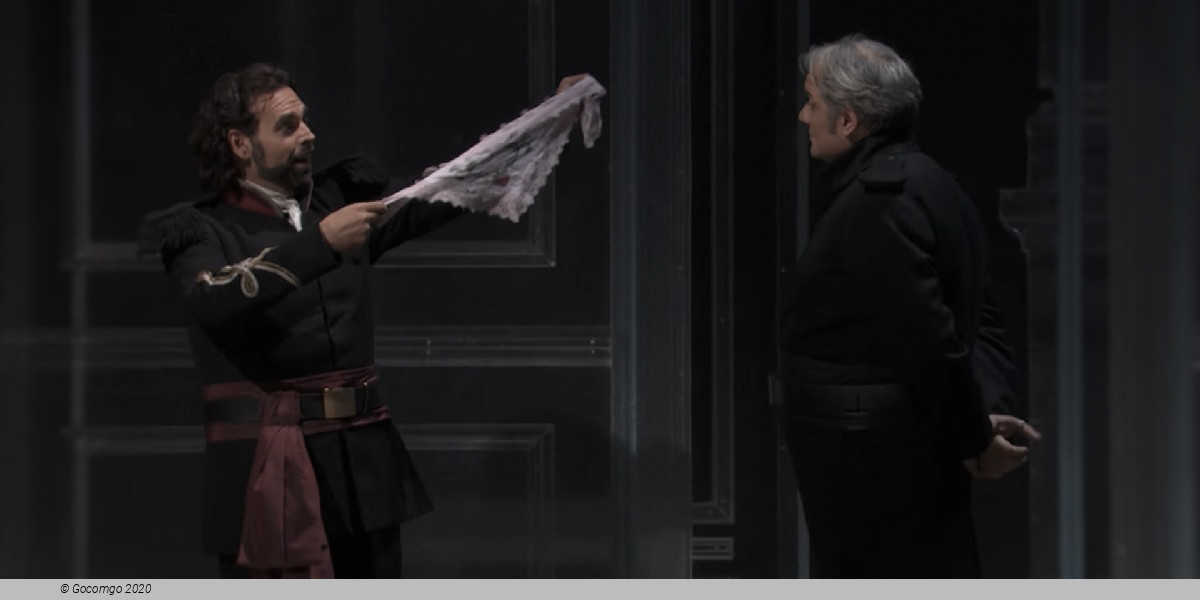
Otello laments his fate (Dio! mi potevi scagliar tutti i mali / "God, you could have thrown every evil at me" ). When Iago calls out "Cassio is here!" Otello hides as Iago and Cassio enter. Cassio says he had hoped to see Desdemona here, for he wanted to know whether she had been successful with Otello (Iago, Cassio, Otello: Vieni; l'aula è deserta / "Come, the hall is deserted"). Iago asks him to tell of his adventures with that woman. Cassio asks which woman, and, softly, so that Otello cannot hear, Iago says "Bianca" (the name of Cassio's actual lover). As Cassio laughs about his romantic adventures, Otello assumes he is speaking of Desdemona. In a conversation only partially heard, Cassio seems to be telling Iago that another woman, a secret admirer, left him a handkerchief as a token. At Iago's urging, Cassio produces it, whereupon Iago seizes it—for it is Desdemona's—and holds it out where he knows Otello can see it. He then returns it to Cassio and teases him, while in his hiding place Otello fumes (Iago, Cassio, Otello: Questa è una ragna dove il tuo cuor casca / "This is a spiderweb in which your heart is caught").

Bugles sound, announcing the arrival of the Venetian ambassador, Lodovico. Iago warns Cassio that he should leave unless he wants to see Otello. Cassio exits, and Otello asks Iago how he should kill his wife. Iago advises Otello to kill Desdemona by suffocating her in her bed, while he will take care of Cassio. Otello promotes Iago to Captain.

Lodovico, Desdemona, Emilia, Roderigo, and other dignitaries enter. When Lodovico notes Cassio's absence, Iago tells him that Cassio is out of favor. Desdemona interrupts, telling Lodovico that she hopes he will soon be restored. Otello calls her a demon and almost strikes her violently but is held back by Lodovico. Otello then calls for Cassio. (Lodovico, Otello, Desdemona, Emilia, Iago, chorus: Il Doge ed il Senato salutano l'eroe trionfatore / "The Doge and the Senate greet the triumphant hero".) Cassio enters and Otello reads (mixing in insults to Desdemona) a letter from the Doge, announcing that he (Otello) has been called back to Venice and Cassio is to succeed him as governor of Cyprus. Enraged, Otello throws Desdemona to the ground. (Otello, Roderigo, Iago, Cassio, Lodovico: Messeri! il Doge mi richiama a Venezia / "Gentlemen! The Doge recalls me to Venice".)

Desdemona, on the ground, laments (A terra! … sì … nel livido fango / "Fallen! yes, in the foul mud..."). The various characters express their feelings: Emilia and Lodovico express their sympathy for Desdemona, Cassio marvels at his sudden change of fortune, and Roderigo laments that Desdemona will soon depart. In separate asides, Iago urges Otello to take his revenge as soon as possible, while he will take care of Cassio. He advises Roderigo that the only way to prevent Desdemona from leaving is for Cassio, the new Duke, to die, and suggests that Roderigo murder Cassio that night. (Emilia, Cassio, Desdemona, Roderigo, Lodovico, Iago, Otello, chorus: Quell'innocente un fremito d'odio non ha nè un gesto / "That innocent one is without feeling or gesture of hatred"). In a fury, Otello orders everyone to leave. Desdemona goes to comfort him, but Lodovico pulls her away as Otello curses her. As the others leave, Otello raves about the handkerchief, then collapses. Iago presses Otello's forehead with his heel, then walks away. Outside the crowd of Cypriots calls out victory and glory for Otello. (Otello, Desdemona, Emilia, Cassio, Roderigo, Lodovico, Iago, chorus: Fuggite! / "Begone".)

Act 4

Desdemona's bedchamber. A bed, a prie-dieu, a table, a mirror, some chairs. A light burns in front of an image of the Madonna which hangs above the prie-dieu. To the right is a door. On the table a light. It is night.

Desdemona is preparing for bed with the assistance of Emilia. She asks Emilia to put out the bridal gown she used on her wedding day, and says that if she dies, she wants to be buried in it. Emilia tells her not to talk about such things. Desdemona recalls how her mother's servant Barbara was abandoned by her lover, and how she used to sing the Willow Song (Desdemona: Piangea cantando nell'erma landa / "Singing, she wept on the lonely hearth"). After Emilia leaves, Desdemona prays (Ave Maria) and then falls asleep.

Silently, Otello enters, with a sword. He kisses his wife three times; she awakens. Otello asks her if she has prayed tonight; she must die, and he does not wish to condemn her soul. She asks God for mercy, both for her and for Otello. Otello accuses her of sin, saying that he must kill her because she loves Cassio. Desdemona denies it and asks that he summon Cassio to testify to her innocence. Otello says that Cassio is already dead. Desdemona, horrified, pleads for mercy, but Otello tells her it's too late and strangles her (Otello, Desdemona: Diceste questa sera le vostre preci / "Have you said your prayers tonight?").

Emilia knocks at the door, (Emilia: Aprite! Aprite! / "Open up!") announcing that Cassio has killed Roderigo. Desdemona softly calls out that she has been unjustly accused, but refuses to blame Otello. She dies. Emilia calls Otello a murderer; he retorts that Iago gave him proof of Desdemona's infidelity. Otello begins to threaten Emilia, who calls for help. Iago, Cassio, and Lodovico enter. Emilia demands that Iago deny Otello's accusation; he refuses. Otello says that the handkerchief Desdemona gave to Cassio is proof enough. Emilia, horrified, explains that Iago stole the handkerchief from her—Cassio confirms that the handkerchief appeared mysteriously in his lodgings. Montano enters and says that Roderigo, with his dying breath, has revealed Iago's plot. Iago, brandishing his sword, runs away.

After he realizes what has happened, Otello grieves over Desdemona's death. Initially he draws his scimitar (Otello: Niun mi tema / "That none fear me") but then relinquishes it. He then stealthily draws a dagger from his robe (Otello: Ho un'arma ancor! / I still have another weapon!) and stabs himself. Others try to stop him, but it is too late. Before he dies, he drags himself next to his wife and kisses her (Otello: Un bacio...un bacio ancora...ah!...un altro bacio... / A kiss.. another kiss...ah...and yet another kiss). He lies dead next to Desdemona.

Venue Info

Teatro Colón - Buenos Aires
Location   Cerrito 628

The Teatro Colón (Spanish: Columbus Theatre) is the main opera house in Buenos Aires, Argentina. It is considered one of the ten best opera houses in the world by National Geographic, and is acoustically considered to be amongst the five best concert venues in the world. The present Colón replaced an original theatre which opened in 1857. Towards the end of the century it became clear that a new theatre was needed and, after a 20-year process, the present theatre opened on 25 May 1908, with Giuseppe Verdi's Aïda.

History

The Colón theater operated in two buildings, the first located in the Plaza de Mayo until 1888 and the second located in front of the Plaza Lavalle, which took 20 years to be built until its inauguration in 1908. This land formerly housed the Park Station, the first railway station of the Argentine Republic as head of the Western Railway of Buenos Aires.

Throughout its history the main figures of opera, classical music and world ballet have performed in the Colón theater, such as Arturo Toscanini, Nijinski, Caruso, Regina Pacini, Anna Pavlova, Maya Plisetskaya, Margot Fonteyn, Mikhail Barishnikov, Antonio Gades, Richard Strauss, Igor Stravinsky, Camille Saint-Saens, Manuel de Falla, Aaron Copland, Herbert von Karajan, Leonard Bernstein, Mstislav Rostropovich, Zubin Mehta, Maria Callas, Renata Tebaldi, Yehudi Menuhin, Pau Casals, Rudolf Nureyev, Maurice Béjart, Plácido Domingo, José Carreras, Luciano Pavarotti, Lily Pons, Marina de Gabaráin, Victoria de los Ángeles, Montserrat Caballé, Kiri Te Kanawa, among others, and Argentine artists such as Adelaida Negri, Héctor Panizza, Alberto Ginastera, Jorge Donn, Norma Fontenla, José Neglia, Olga Ferri, Julio Bocca, Maximiliano Guerra, Paloma Herrera, Daniel Barenboim, Martha Argerich, Astor Piazzolla, Aníbal Troilo and Osvaldo Pugliese. In the last decade other popular artists such as Chris Cornell, Katherine Jenkins, Sarah Brightman, Joss Stone, Branford Marsalis, play here.

Among the main events of its history are the creation of stable bodies in the 1920s and its municipalization in 1931. In 1946, Peronism promoted a policy of openness to popular music and greater democratization of the public, which was reverted after its overthrow in 1955 and again resumed when democracy recovered in 1983.

In 2006 a full restoration work was started that would extend until 2010, when it was reopened on May 24 in commemoration of the Bicentennial of Argentina.

The first Teatro Colón

The first Teatro Colón was designed by Charles Pellegrini, and proved to be a successful venue for over 30 years, with 2,500 seats with the inclusion of a separate gallery reserved only for people who were in mourning. The construction started in 1856 and completed in 1857. This was celebrated with an opening on April 27, 1857, with Verdi's La traviata, just four years after its Italian premiere. The production starred Sofia Vera Lorini as Violetta and Enrico Tamberlik as Alfredo.

This theater was closed on September 13, 1888 to step aside for a new improved building, which was opened twenty years later on Libertad street, overlooking Plaza Lavalle. In that period of time, the 1890 crisis and its effects were the cause for the delay in the completion of this second theater.

Before the construction of the current Teatro Colón, opera performances were given in several theatres, of which the first Teatro Colón and the Teatro Opera were the most important. The principal company that performed at the Teatro Opera moved to the Teatro Colón in 1908. However, major companies also performed at the Teatro Politeama and the Teatro Coliseo which opened in 1907.

The present Teatro Colón

The theatre is bounded by the wide 9 de Julio Avenue (technically Cerrito Street), Libertad Street (the main entrance), Arturo Toscanini Street, and Tucumán Street. It is in the heart of the city on a site once occupied by Ferrocarril Oeste's Plaza Parque station.

The auditorium is horseshoe-shaped, has 2,487 seats (slightly more than the Royal Opera House in Covent Garden, London), standing room for 1,000 and a stage which is 20 m wide, 15 m high and 20 m deep. The low-rise building has 6 floors above ground and 3 below ground, 7 elevators with a facade of applied masonry. It has a large central chandelier with 700 light bulbs. The original architect was the Italian Francesco Tamburini; after his death it was completed by the Belgian architect Julio Dormal. The original auditorium "had eight boxes with metal grilles and a separate entrance, so that those in mourning could still attend performances, but remain dignifiedly sequestered from public view".

The Colon's acoustics are considered to be so good as to place it in the top five performance venues in the world. Luciano Pavarotti held a similar opinion.

Opening and subsequent history

The present theatre, the second with that name, opened on 25 May 1908, after twenty years under construction, and was inaugurated with Aida by the Italian company directed by Luigi Mancinelli and tenor Amedeo Bassi, soprano Lucia Crestani (as Aida). The second presentation was Thomas' Hamlet with the baritone Titta Ruffo During the inaugural season seventeen operas were performed with famous stars such as Ruffo, Feodor Chaliapin in Boito's Mefistofele, Antonio Paoli in Verdi's Otello.

The cornerstone of the present Teatro Colón was laid in 1889 under the direction of architect Francesco Tamburini and his pupil, Vittorio Meano, who designed a theatre in the Italian style on a scale and with amenities which matched those in Europe. However, delays followed due to financial difficulties, arguments regarding the location, the death of Tamburini in 1891, the murder of Meano in 1904 and the death of Angelo Ferrari, an Italian businessman who was financing the new theatre. The building was finally completed in 1908 under the direction of the Belgian architect Julio Dormal who made some changes in the structure and left his mark in the French style of the decoration. The bas-reliefs and busts on the facade are the work of sculptor Luigi Trinchero.

The theatre's opening on 25 May, the Día de la Patria in Argentina, featured a performance of Verdi's Aida and it quickly became a world-famous operatic venue rivaling La Scala and the Metropolitan Opera in attracting most of the world's best opera singers and conductors.

The Teatro was bombed by anarchists in 1910; Georges Clemenceau was present in Argentina during the attack. The bomb landed in the middle of the orchestra. Clemenceau describes the attack as follows: "The horror can not be exaggerated. A senior official told me that he had never seen such puddles of blood. The wounded were carried off as best as possible, and the room was emptied by the cries of fury, and the material damage repaired during the day which followed, not a woman of society missed the representation of the morrow. It is a fine trait of character that particularly honors the female element of the Argentine nation. I am not quite sure that in Paris the hall would have been full in such cases."

Ballet stars performed at the Colón alongside Argentine dancers and classical instrumentalists. This included the prima ballerina, Lida Martinoli. When she retired from dancing, Martinoli began to choreograph. She died in Santa Fe. The tragic 1971 aviation death of two of the best known of these, Norma Fontenla and José Neglia, was commemorated with a monument in neighbouring Lavalle Square.

With excellent acoustics and modern stage areas, the theatre's interior design features a rich scarlet and gold decor. The cupola contains canvas painted in 1966 by the 20th-century artist Raúl Soldi during renovation work.

Refurbishment, 2005 – 2010

In recent years, given the political and economic circumstances of Argentina, the Teatro Colón has suffered considerably, but a period of slow recovery began. The theatre underwent massive phased remodelling of both interior and exterior, initially while the house was still open, but production activities ceased at the end of December 2006 to allow full refurbishment.

Initially, "what had been planned as an 18-month, $25-million renovation with 500 workers, scheduled for a May 2008 reopening with Aida, became a three-year $100-million extravaganza with 1,500 workers including 130 professional architects and engineers." In addition, an exterior open-air stage was planned for an opening in 2011. In all, 60,000 square metres (645,835 sq ft) underwent updating, both inside and out.

Some of the last performances immediately before closure of the theatre's building were Swan Lake on 30 September with the Ballet Estable del Teatro Colón and the Buenos Aires Philharmonic (Orquesta Filarmónica de Buenos Aires). and, on 28 October, the opera Boris Godunov was given featuring Orquesta Estable del Teatro Colón and the house chorus.

The theatre's final performance before its closure for refurbishment works in 2005 was a concert on 1 November starring folklore singer Mercedes Sosa in performance with the Argentine National Symphony Orchestra, conducted by Pedro Ignacio Calderón.

While it was originally planned to reopen in time for the centenary on 25 May 2008, delays prevented this, and the house was finally reopened with a gala concert and 3D animations on 24 May 2010, the eve of its own 102nd birthday and the Argentina Bicentennial. Tchaikovsky's Swan Lake and Act 2 of Puccini's La bohème were performed. A private concert to test the acoustics attended by employees, architects, and others involved in the renovation occurred on 6 May 2010.

Important Info
Type: Opera
City: Buenos Aires, Argentina
Starts at: 20:00
Acts: 4
Sung in: Italian
Top of page