
Teatro Colón tickets 16 October 2026 - Les Contes d'Hoffmann | GoComGo.com

Les Contes d'Hoffmann

Teatro Colón, Buenos Aires, Argentina
All photos (9)
Select date and time
8 PM
From
US$ 92

E-tickets: Print at home or at the box office of the event if so specified. You will find more information in your booking confirmation email.

You can only select the category, and not the exact seats.
If you order 2 or 3 tickets: your seats will be next to each other.
If you order 4 or more tickets: your seats will be next to each other, or, if this is not possible, we will provide a combination of groups of seats (at least in pairs, for example 2+2 or 2+3).

Important Info
Type: Opera
City: Buenos Aires, Argentina
Starts at: 20:00
Acts: 3
Sung in: French

E-tickets: Print at home or at the box office of the event if so specified. You will find more information in your booking confirmation email.

You can only select the category, and not the exact seats.
If you order 2 or 3 tickets: your seats will be next to each other.
If you order 4 or more tickets: your seats will be next to each other, or, if this is not possible, we will provide a combination of groups of seats (at least in pairs, for example 2+2 or 2+3).

Cast
Performers
Conductor: Carlo Montanaro
Choir: Coro Estable del Teatro Colón
Orchestra: Orquesta Estable del Teatro Colón
Creators
Composer: Jacques Offenbach
Author: Ernst Theodor Amadeus Hoffmann
Director: Eugenio Zanetti
Librettist: Jules Barbier
Chorus Master: Miguel Martínez
Overview

A visually sumptuous and emotionally charged revival, Les Contes d’Hoffmann once again transforms Teatro Colón into a realm of enchantment — where love is elusive, beauty is treacherous, and art becomes both salvation and curse.

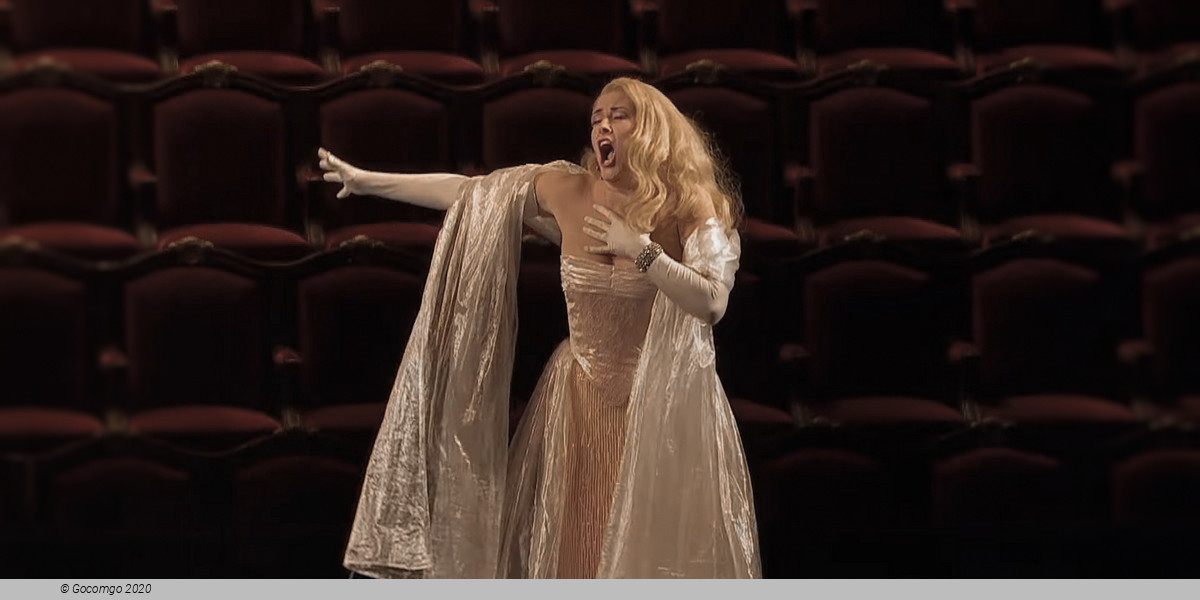
Teatro Colón brings back its celebrated 2019 production of Offenbach’s Les Contes d’Hoffmann, directed by the renowned Argentine artist and Oscar-winning designer Eugenio Zanetti. This revival once again immerses audiences in a world where dreams, memories, and illusions intermingle, echoing the haunting, poetic spirit of E.T.A. Hoffmann’s fantastical tales.

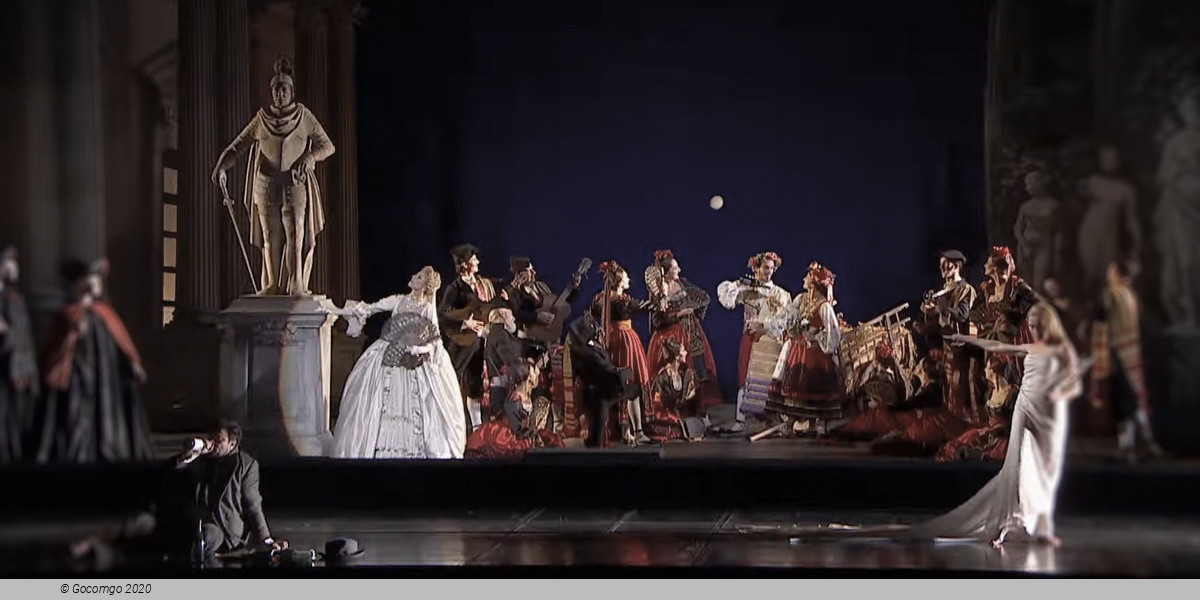
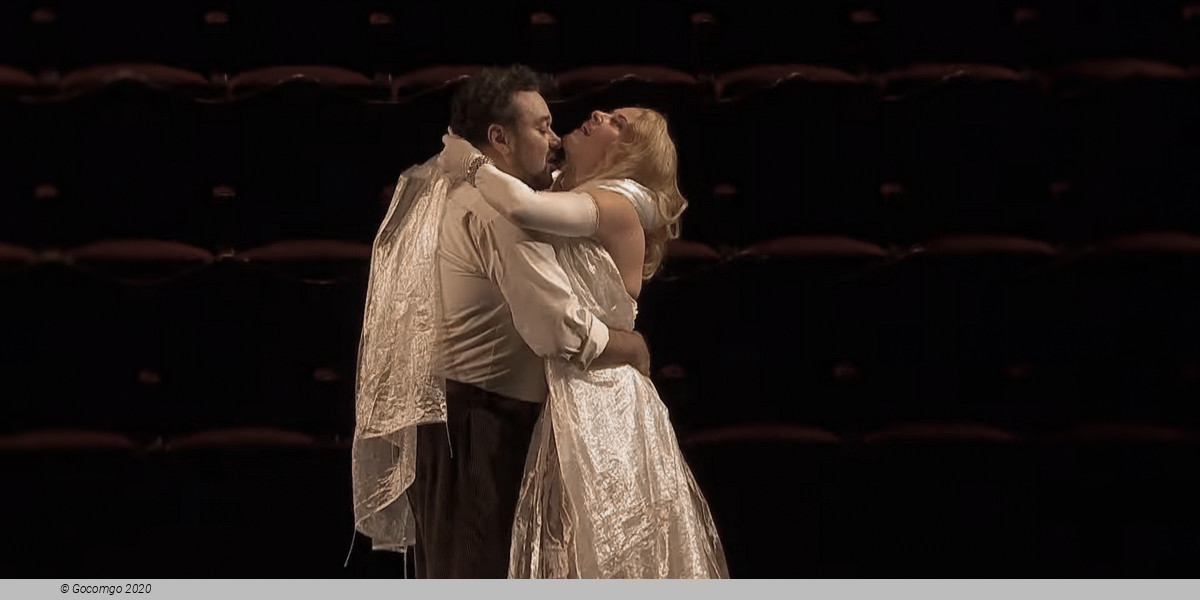
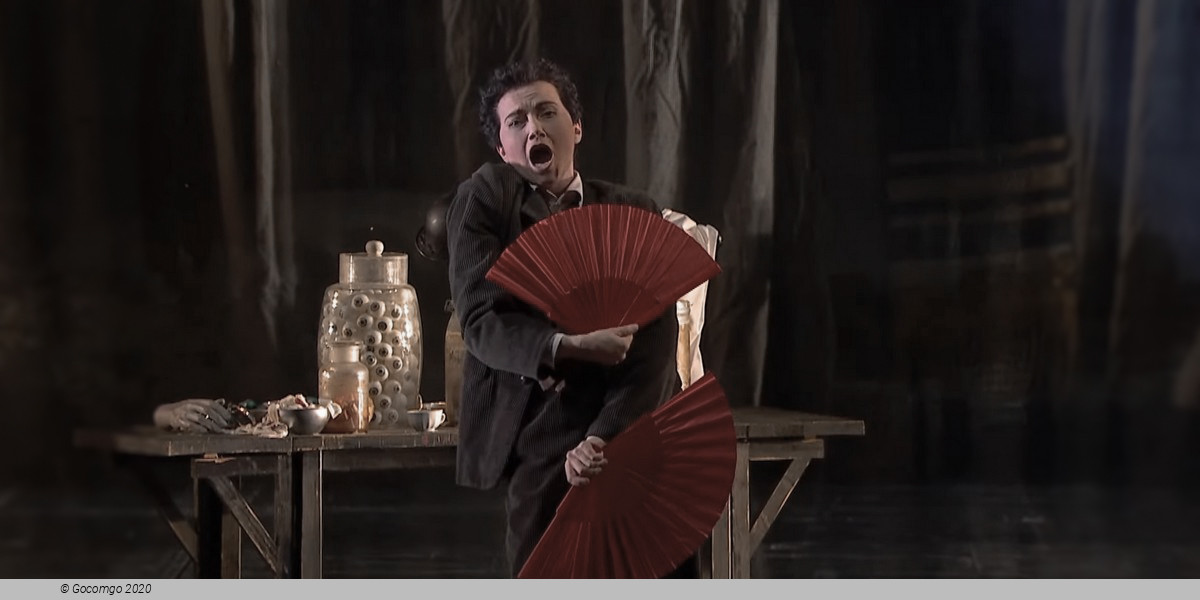
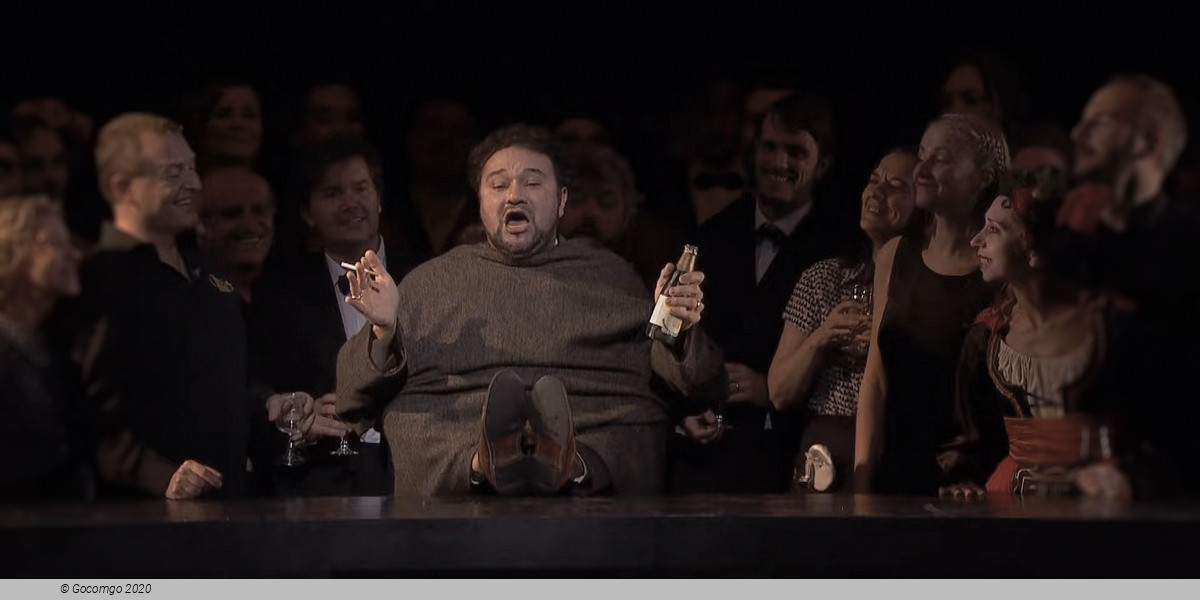
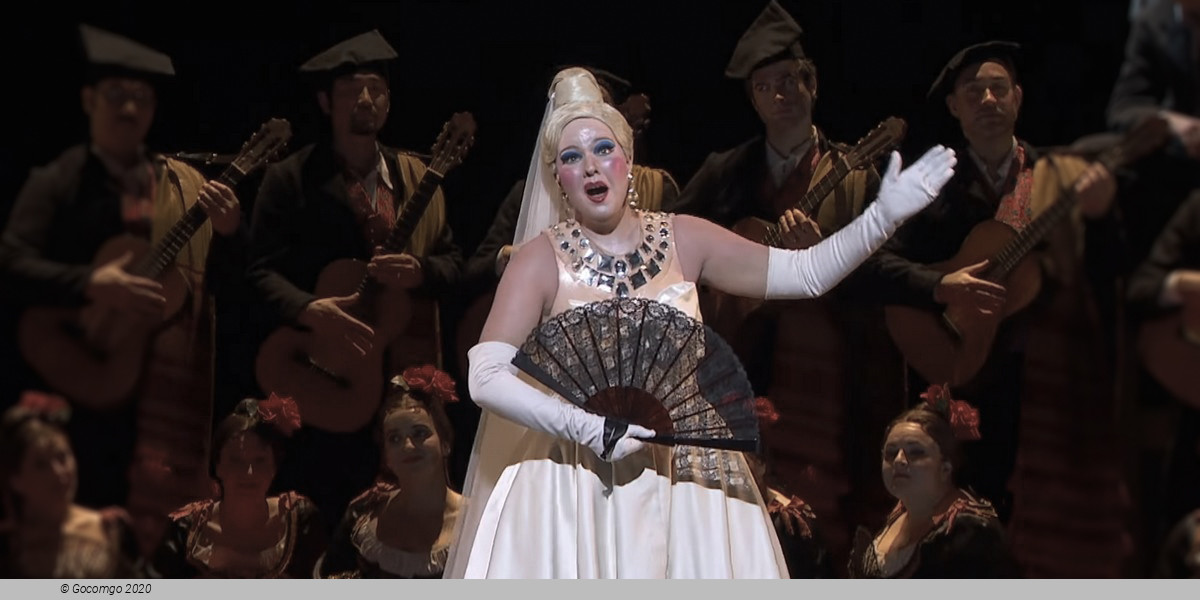
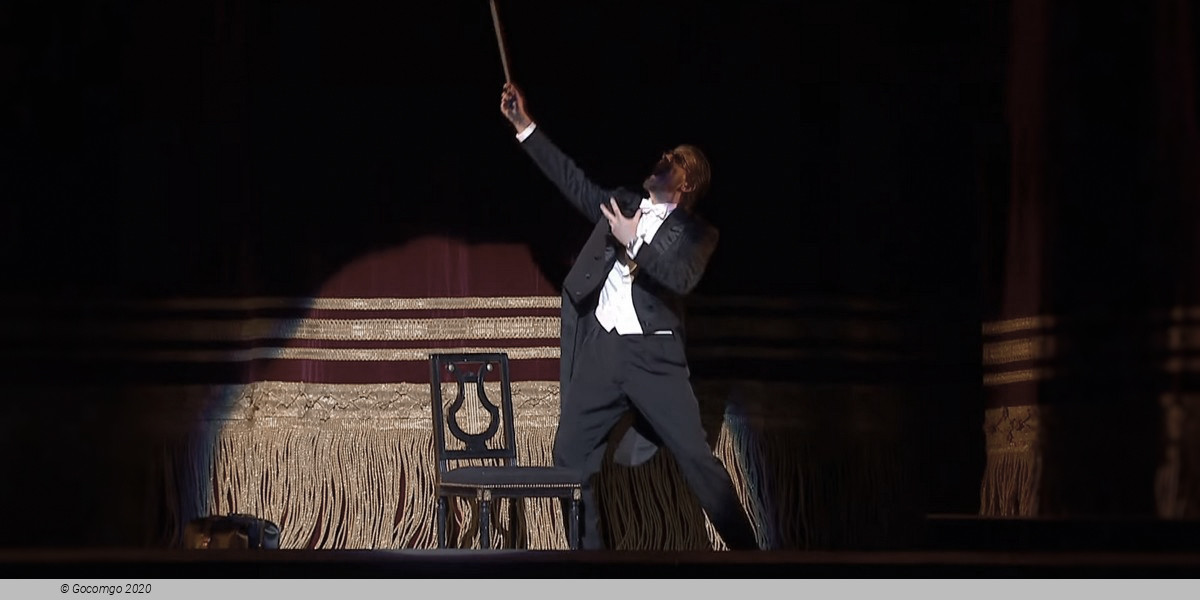
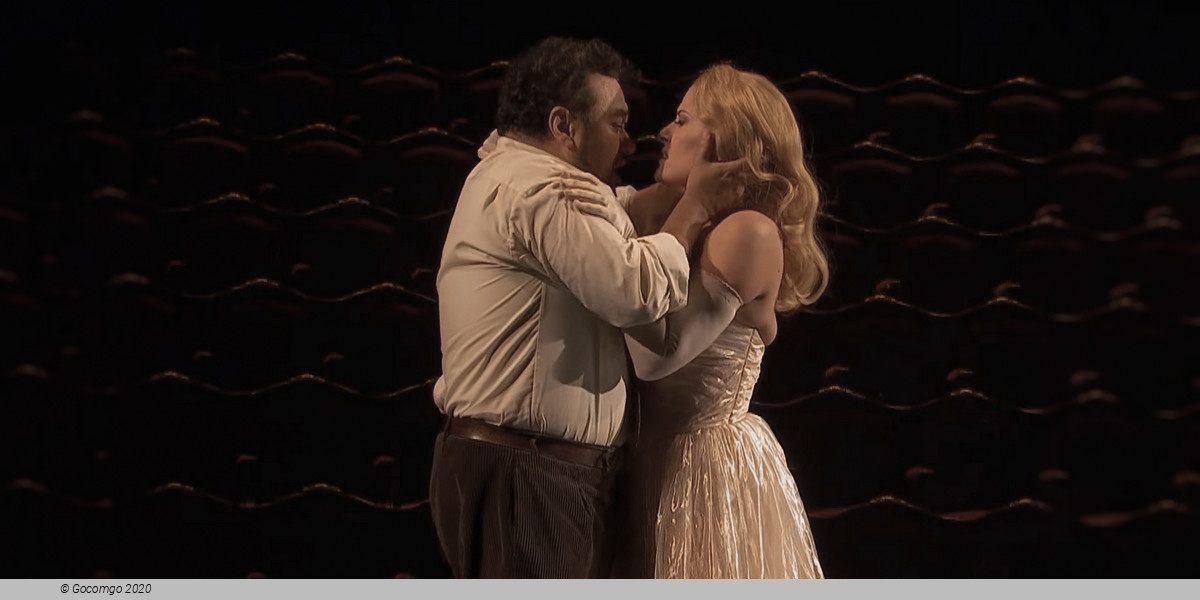
Zanetti’s staging unfolds like a living fever dream: richly textured sets, opulent costumes, and cinematic lighting carve out a universe where each of Hoffmann’s three loves — Olympia, Antonia, and Giulietta — appears as a chapter in a surreal, spiraling descent. The production’s signature blend of grandeur and psychological depth returns intact, offering both visual splendor and emotional resonance.

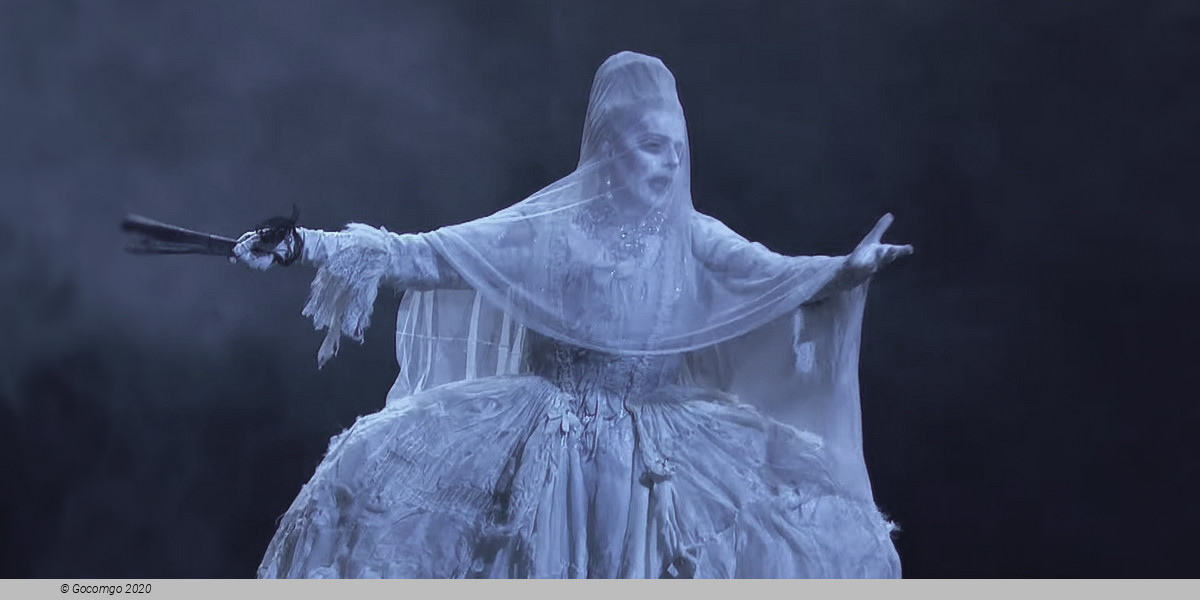
The revival preserves Zanetti’s masterful balance between spectacle and introspection. Mechanical wonders animate Olympia’s world with steampunk elegance; Antonia’s act glows with romantic melancholy and ghostly presence; and Giulietta’s Venetian realm embraces shadow, sensuality, and danger. Throughout, the narrative flows seamlessly, guided by Hoffmann’s struggle between artistic passion and destructive obsession.

Offenbach’s lush score is given full dramatic weight, supporting a cast that brings fresh nuance to characters shaped by memory and illusion. The chorus and orchestra of Teatro Colón add richness and momentum, heightening the production’s theatrical sweep.

Teatro Colón Production
Revival of the 2019 version

History
Premiere of this production: 10 February 1881, Opéra-Comique, Paris

Les Contes d'Hoffmann (The Tales of Hoffmann) is an opéra fantastique by Jacques Offenbach. The French libretto was written by Jules Barbier, based on three short stories by E. T. A. Hoffmann, who is the protagonist of the story. It was Offenbach's final work; he died in October 1880, four months before the premiere.

Synopsis

Prologue

A tavern in Nuremberg: The Muse appears and reveals to the audience her purpose is to draw Hoffmann's attention, and make him abjure all other loves, so he can be devoted to her: poetry. She takes the appearance of Hoffmann's closest friend, Nicklausse. The prima donna Stella, performing Mozart's Don Giovanni, sends a letter to Hoffmann, requesting a meeting in her dressing room after the performance. The letter and the key to the room are intercepted by Councillor Lindorf ("Dans les rôles d'amoureux langoureux" – In the languid lovers' roles), the first of the opera's incarnations of evil, Hoffmann's nemesis. Lindorf intends to replace Hoffmann at the rendezvous. In the tavern, students wait for Hoffmann. He finally arrives, and entertains them with the legend of Kleinzach the dwarf ("Il était une fois à la cour d'Eisenach" – Once upon a time at the court of Eisenach). Lindorf coaxes Hoffmann into telling the audience about his three great loves.

Act 1 (Olympia)

This act is based on a portion of "Der Sandmann" (The Sandman).

Hoffmann's first love is Olympia, an automaton created by the scientist Spalanzani. Hoffmann falls in love with her, not knowing Olympia is a mechanical doll ("Allons! Courage et confiance...Ah! vivre deux!" – Come on! Courage and confidence ... Ah! to live!). To warn Hoffmann, Nicklausse, possessing the truth about Olympia, sings a story of a mechanical doll with the appearance of a human, but Hoffmann ignores him ("Une poupée aux yeux d'émail" – A doll with enamel eyes). Coppélius, Olympia's co-creator and this act's incarnation of Nemesis, sells Hoffmann magic glasses to make Olympia appear as a real woman ("J'ai des yeux" – I have eyes).

Olympia sings one of the opera's most-famous arias, "Les oiseaux dans la charmille" (The birds in the arbor, nicknamed "The Doll Song"), during which she runs-down and needs to be wound-up before she can continue. Hoffmann is tricked into believing his affections are returned, to the bemusement of Nicklausse, subtly attempting to warn his friend ("Voyez-la sous son éventail" – See her under her fan). While dancing with Olympia, Hoffmann falls on the ground and his glasses break. At the same time, Coppélius appears, tearing Olympia apart to retaliate against Spalanzani after cheating him of his fees. With the crowd ridiculing him, Hoffmann realizes he loved an automaton.

Act 2 (Antonia)

This act is based on "Rath Krespel".

After a long search, Hoffmann finds the house where Crespel and his daughter Antonia are hiding. Hoffmann and Antonia loved each other, but were separated after Crespel decided to hide his daughter from Hoffmann. Antonia inherited her mother's talent for singing, but her father forbids her to sing because of her mysterious illness. Antonia wishes her lover would return to her ("Elle a fui, la tourterelle" – "She fled, the dove"). Her father also forbids her to see Hoffmann, encourages Antonia in her musical career, and therefore, endangers her without knowing it. Crespel tells Frantz, his servant, to stay with his daughter, and after Crespel leaves, Frantz sings a comical song about his talents "Jour et nuit je me mets en quatre" – "Day and night, I quarter my mind."

After Crespel leaves his house, Hoffmann takes advantage of the occasion to sneak in, and the lovers are re-united (love duet: "C'est une chanson d'amour" – "It's a love song"). After Crespel returns, he receives a visit from Dr Miracle, the act's Nemesis, forcing Crespel to let him heal her. Eavesdropping, Hoffmann learns Antonia may die if she sings too much. He returns to her boudoir, and makes her promise to give up her artistic-dreams. Antonia reluctantly accepts her lover's will. After she is alone, Dr Miracle enters Antonia's boudoir to persuade her to sing and follow her mother's path to glory, stating Hoffmann is sacrificing her to his brutishness, and loves her only for her beauty. With mystic powers, he raises a vision of Antonia's dead mother and induces Antonia to sing, causing her death. Crespel arrives just in time to witness his daughter's last breath. Hoffmann enters, and Crespel wants to kill him, thinking he is responsible for his daughter's death. Nicklausse saves his friend from the old man's vengeance.

Act 3 (Giulietta)

This act is loosely-based on Die Abenteuer der Silvester-Nacht (A New Year's Eve Adventure).

Venice. The act opens with the barcarolle "Belle nuit, ô nuit d'amour" – "Beautiful night, oh night of love". Hoffmann falls in love with the courtesan Giulietta, and thinks she returns his affections ("Amis, l'amour tendre et rêveur" – "Friends, tender and dreamy love"). Giulietta is not in love with Hoffmann, but seducing him under the orders of Captain Dapertutto, promising to give her a diamond if she steals Hoffmann's reflection from a mirror ("Scintille, diamant" – "Sparkle, diamond"). The jealous Schlemil (cf. Peter Schlemihl for a literary antecedent), a previous victim of Giulietta and Dapertutto (he gave Giulietta his shadow), challenges the poet to a duel, but is killed. Nicklausse wants to take Hoffmann away from Venice, and goes looking for horses. Meanwhile, Hoffmann meets Giulietta, and cannot resist her ("O Dieu! de quelle ivresse" – "O God! of what intoxication"): he gives her his reflection, only to be abandoned by the courtesan, to Dapertutto's great pleasure. Hoffmann tells Dapertutto his friend Nicklausse will come and save him. Dapertutto prepares a poison to get rid of Nicklausse, but Giulietta drinks it by mistake, dropping dead in the poet's arms.

Epilogue

The tavern in Nuremberg: Hoffmann, drunk, swears he will never love again, and explains Olympia, Antonia, and Giulietta are three facets of the same person, Stella. They represent, respectively, the young girl's, the musician's, and the courtesan's side of the prima donna. After Hoffmann says he doesn't want to love any more, Nicklausse reveals she is the Muse and reclaims Hoffmann: "Be reborn a poet! I love you, Hoffmann! Be mine!" – "Renaîtra un poète! Je t'aime, Hoffmann! Sois à moi!" The magic of poetry reaches Hoffmann as he sings "O Dieu! de quelle ivresse – "O God! of what intoxication" once more, ending with "Muse, whom I love, I am yours!" – "Muse que j'aime, je suis à toi!" At this moment, Stella, tired of waiting for Hoffmann to come to her rendezvous, enters the tavern and finds him drunk. The poet tells her to leave ("Farewell, I will not follow you, phantom, spectre of the past" – "Adieu, je ne vais pas vous suivre, fantôme, spectre du passé"), and Lindorf, waiting in the shadows, comes forth. Nicklausse explains to Stella that Hoffmann does not love her anymore, but Councillor Lindorf is waiting for her. Some students enter the room for more drinking, while Stella and Lindorf leave together.

Venue Info

Teatro Colón - Buenos Aires
Location   Cerrito 628

The Teatro Colón (Spanish: Columbus Theatre) is the main opera house in Buenos Aires, Argentina. It is considered one of the ten best opera houses in the world by National Geographic, and is acoustically considered to be amongst the five best concert venues in the world. The present Colón replaced an original theatre which opened in 1857. Towards the end of the century it became clear that a new theatre was needed and, after a 20-year process, the present theatre opened on 25 May 1908, with Giuseppe Verdi's Aïda.

History

The Colón theater operated in two buildings, the first located in the Plaza de Mayo until 1888 and the second located in front of the Plaza Lavalle, which took 20 years to be built until its inauguration in 1908. This land formerly housed the Park Station, the first railway station of the Argentine Republic as head of the Western Railway of Buenos Aires.

Throughout its history the main figures of opera, classical music and world ballet have performed in the Colón theater, such as Arturo Toscanini, Nijinski, Caruso, Regina Pacini, Anna Pavlova, Maya Plisetskaya, Margot Fonteyn, Mikhail Barishnikov, Antonio Gades, Richard Strauss, Igor Stravinsky, Camille Saint-Saens, Manuel de Falla, Aaron Copland, Herbert von Karajan, Leonard Bernstein, Mstislav Rostropovich, Zubin Mehta, Maria Callas, Renata Tebaldi, Yehudi Menuhin, Pau Casals, Rudolf Nureyev, Maurice Béjart, Plácido Domingo, José Carreras, Luciano Pavarotti, Lily Pons, Marina de Gabaráin, Victoria de los Ángeles, Montserrat Caballé, Kiri Te Kanawa, among others, and Argentine artists such as Adelaida Negri, Héctor Panizza, Alberto Ginastera, Jorge Donn, Norma Fontenla, José Neglia, Olga Ferri, Julio Bocca, Maximiliano Guerra, Paloma Herrera, Daniel Barenboim, Martha Argerich, Astor Piazzolla, Aníbal Troilo and Osvaldo Pugliese. In the last decade other popular artists such as Chris Cornell, Katherine Jenkins, Sarah Brightman, Joss Stone, Branford Marsalis, play here.

Among the main events of its history are the creation of stable bodies in the 1920s and its municipalization in 1931. In 1946, Peronism promoted a policy of openness to popular music and greater democratization of the public, which was reverted after its overthrow in 1955 and again resumed when democracy recovered in 1983.

In 2006 a full restoration work was started that would extend until 2010, when it was reopened on May 24 in commemoration of the Bicentennial of Argentina.

The first Teatro Colón

The first Teatro Colón was designed by Charles Pellegrini, and proved to be a successful venue for over 30 years, with 2,500 seats with the inclusion of a separate gallery reserved only for people who were in mourning. The construction started in 1856 and completed in 1857. This was celebrated with an opening on April 27, 1857, with Verdi's La traviata, just four years after its Italian premiere. The production starred Sofia Vera Lorini as Violetta and Enrico Tamberlik as Alfredo.

This theater was closed on September 13, 1888 to step aside for a new improved building, which was opened twenty years later on Libertad street, overlooking Plaza Lavalle. In that period of time, the 1890 crisis and its effects were the cause for the delay in the completion of this second theater.

Before the construction of the current Teatro Colón, opera performances were given in several theatres, of which the first Teatro Colón and the Teatro Opera were the most important. The principal company that performed at the Teatro Opera moved to the Teatro Colón in 1908. However, major companies also performed at the Teatro Politeama and the Teatro Coliseo which opened in 1907.

The present Teatro Colón

The theatre is bounded by the wide 9 de Julio Avenue (technically Cerrito Street), Libertad Street (the main entrance), Arturo Toscanini Street, and Tucumán Street. It is in the heart of the city on a site once occupied by Ferrocarril Oeste's Plaza Parque station.

The auditorium is horseshoe-shaped, has 2,487 seats (slightly more than the Royal Opera House in Covent Garden, London), standing room for 1,000 and a stage which is 20 m wide, 15 m high and 20 m deep. The low-rise building has 6 floors above ground and 3 below ground, 7 elevators with a facade of applied masonry. It has a large central chandelier with 700 light bulbs. The original architect was the Italian Francesco Tamburini; after his death it was completed by the Belgian architect Julio Dormal. The original auditorium "had eight boxes with metal grilles and a separate entrance, so that those in mourning could still attend performances, but remain dignifiedly sequestered from public view".

The Colon's acoustics are considered to be so good as to place it in the top five performance venues in the world. Luciano Pavarotti held a similar opinion.

Opening and subsequent history

The present theatre, the second with that name, opened on 25 May 1908, after twenty years under construction, and was inaugurated with Aida by the Italian company directed by Luigi Mancinelli and tenor Amedeo Bassi, soprano Lucia Crestani (as Aida). The second presentation was Thomas' Hamlet with the baritone Titta Ruffo During the inaugural season seventeen operas were performed with famous stars such as Ruffo, Feodor Chaliapin in Boito's Mefistofele, Antonio Paoli in Verdi's Otello.

The cornerstone of the present Teatro Colón was laid in 1889 under the direction of architect Francesco Tamburini and his pupil, Vittorio Meano, who designed a theatre in the Italian style on a scale and with amenities which matched those in Europe. However, delays followed due to financial difficulties, arguments regarding the location, the death of Tamburini in 1891, the murder of Meano in 1904 and the death of Angelo Ferrari, an Italian businessman who was financing the new theatre. The building was finally completed in 1908 under the direction of the Belgian architect Julio Dormal who made some changes in the structure and left his mark in the French style of the decoration. The bas-reliefs and busts on the facade are the work of sculptor Luigi Trinchero.

The theatre's opening on 25 May, the Día de la Patria in Argentina, featured a performance of Verdi's Aida and it quickly became a world-famous operatic venue rivaling La Scala and the Metropolitan Opera in attracting most of the world's best opera singers and conductors.

The Teatro was bombed by anarchists in 1910; Georges Clemenceau was present in Argentina during the attack. The bomb landed in the middle of the orchestra. Clemenceau describes the attack as follows: "The horror can not be exaggerated. A senior official told me that he had never seen such puddles of blood. The wounded were carried off as best as possible, and the room was emptied by the cries of fury, and the material damage repaired during the day which followed, not a woman of society missed the representation of the morrow. It is a fine trait of character that particularly honors the female element of the Argentine nation. I am not quite sure that in Paris the hall would have been full in such cases."

Ballet stars performed at the Colón alongside Argentine dancers and classical instrumentalists. This included the prima ballerina, Lida Martinoli. When she retired from dancing, Martinoli began to choreograph. She died in Santa Fe. The tragic 1971 aviation death of two of the best known of these, Norma Fontenla and José Neglia, was commemorated with a monument in neighbouring Lavalle Square.

With excellent acoustics and modern stage areas, the theatre's interior design features a rich scarlet and gold decor. The cupola contains canvas painted in 1966 by the 20th-century artist Raúl Soldi during renovation work.

Refurbishment, 2005 – 2010

In recent years, given the political and economic circumstances of Argentina, the Teatro Colón has suffered considerably, but a period of slow recovery began. The theatre underwent massive phased remodelling of both interior and exterior, initially while the house was still open, but production activities ceased at the end of December 2006 to allow full refurbishment.

Initially, "what had been planned as an 18-month, $25-million renovation with 500 workers, scheduled for a May 2008 reopening with Aida, became a three-year $100-million extravaganza with 1,500 workers including 130 professional architects and engineers." In addition, an exterior open-air stage was planned for an opening in 2011. In all, 60,000 square metres (645,835 sq ft) underwent updating, both inside and out.

Some of the last performances immediately before closure of the theatre's building were Swan Lake on 30 September with the Ballet Estable del Teatro Colón and the Buenos Aires Philharmonic (Orquesta Filarmónica de Buenos Aires). and, on 28 October, the opera Boris Godunov was given featuring Orquesta Estable del Teatro Colón and the house chorus.

The theatre's final performance before its closure for refurbishment works in 2005 was a concert on 1 November starring folklore singer Mercedes Sosa in performance with the Argentine National Symphony Orchestra, conducted by Pedro Ignacio Calderón.

While it was originally planned to reopen in time for the centenary on 25 May 2008, delays prevented this, and the house was finally reopened with a gala concert and 3D animations on 24 May 2010, the eve of its own 102nd birthday and the Argentina Bicentennial. Tchaikovsky's Swan Lake and Act 2 of Puccini's La bohème were performed. A private concert to test the acoustics attended by employees, architects, and others involved in the renovation occurred on 6 May 2010.

Important Info
Type: Opera
City: Buenos Aires, Argentina
Starts at: 20:00
Acts: 3
Sung in: French
Top of page