
Stanislavsky Music Theatre: Robinson Crusoé Tickets | Event Dates & Schedule | GoComGo.com

Robinson Crusoé Tickets

Stanislavsky Music Theatre, Moscow, Russia
All photos (3)
1 / 3
Available Dates: 10 - 11 Jan, 2026 (2 events)
Important Info
Type: Opera
City: Moscow, Russia
Duration: 3h with 1 interval
Acts: 2
Intervals: 1
Sung in: Russian

E-tickets: Print at home or at the box office of the event if so specified. You will find more information in your booking confirmation email.

You can only select the category, and not the exact seats.
If you order 2 or 3 tickets: your seats will be next to each other.
If you order 4 or more tickets: your seats will be next to each other, or, if this is not possible, we will provide a combination of groups of seats (at least in pairs, for example 2+2 or 2+3).

Cast
Performers
Choose the date to see the peformers
Creators
Composer: Jacques Offenbach
Librettist: Eugène Cormon
Librettist: Hector-Jonathan Crémieux
Opera Company: Stanislavsky Theatre Opera
Overview

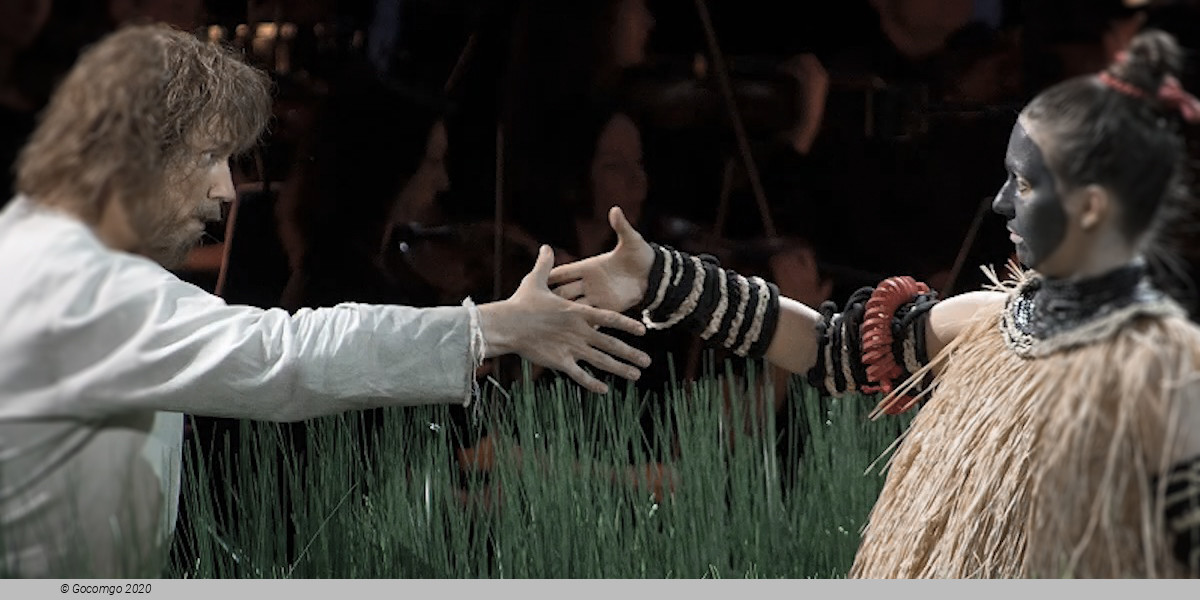
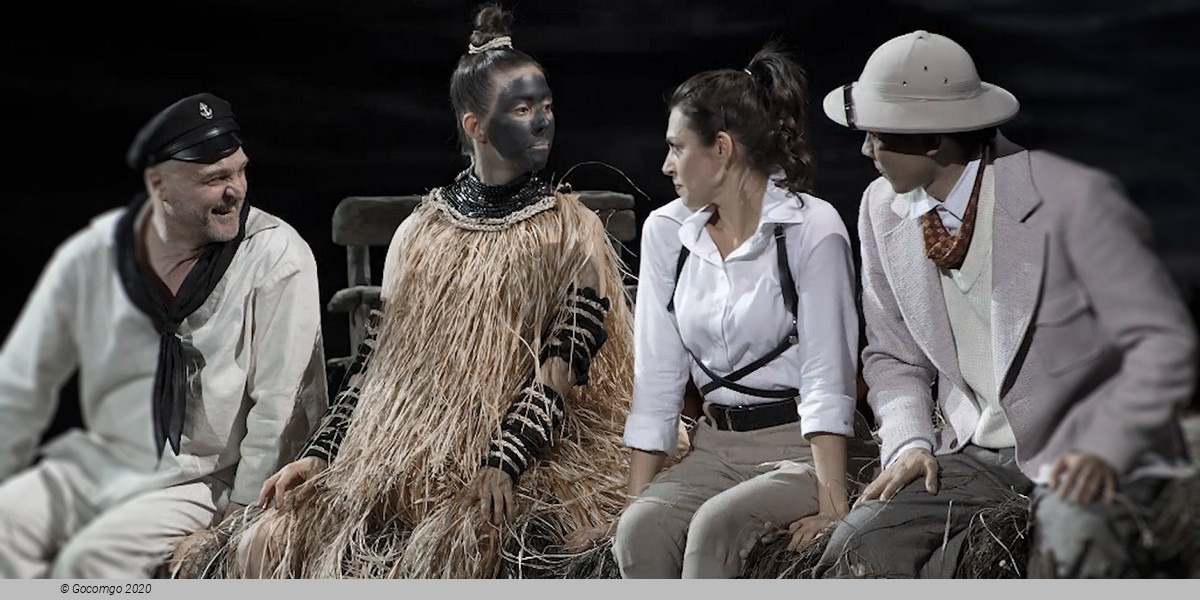
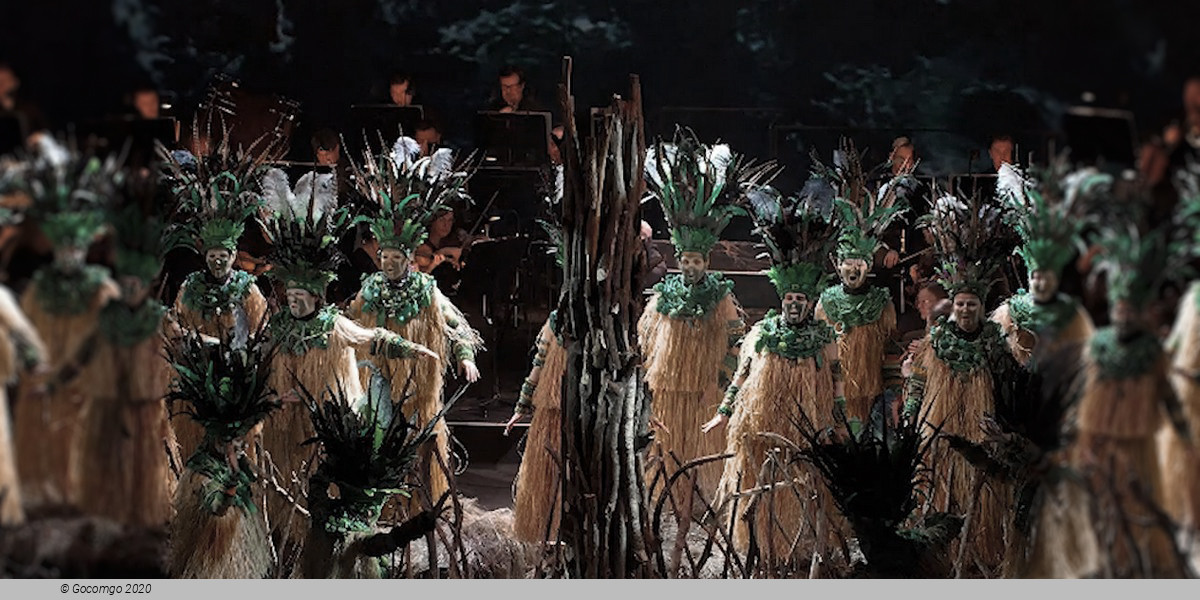
The Stanislavsky and Nemirovich-Danchenko Music Theatre, located just 750 metres from the Bolshoi Theatre, presents the first Russian production of Jacques Offenbach’s comic opera Robinson Crusoe. The production features distinguished performers, including artists who have sung on the stage of the Bolshoi Theatre and who trained within the same renowned vocal and theatrical academies that shape leading Russian opera talent.

This staging brings together director Alexander Titel, conductor Arif Dadashev, and designer Vladimir Arefiev, with a new Russian text for both dialogue and musical numbers commissioned from Alexey Ivashchenko.

Premiered in Paris in 1867, Robinson Crusoe quickly traveled across Europe, with celebrated productions in Vienna and Brussels and, soon after, a transatlantic debut in the United States. The 20th century saw renewed international interest, marked by new stagings in London and Paris and an influential recording released by Opera Rara in 1981.

While inspired by Daniel Defoe’s enduring novel about a sailor stranded on a desert island, Offenbach and his librettists approach the story with comedic freedom. In this lighthearted retelling, Robinson’s fiancée, Yadviga, sets out in search of him, and before long, the supposedly deserted island becomes the unlikely meeting point of a delightfully colorful company of characters.

Director Alexander Titel notes:

“This is a story of ‘prodigal sons,’ endlessly discovering the world both for themselves and for us. They are the ones who venture into space, advance science, create art. Curiosity, risk, a taste for adventure — this is the spark of life. In Offenbach’s luxuriant ensembles there is exploration, romance, and an ocean of sheer joy, which we hope to share with our audience — so much so that we are ready to come closer to them.”

History
Premiere of this production: 23 November 1867, Opéra-Comique (Salle Favart), Paris

Robinson Crusoé is an opéra comique with music by Jacques Offenbach and words by Eugène Cormon and Hector-Jonathan Crémieux. It premiered in Paris on 23 November 1867. The writers took the theme from the 1719 novel Robinson Crusoe by Daniel Defoe, though the work owes more to British pantomime than to the book itself. Crusoé leaves his family in England and runs away to sea. He is marooned on an island with only his friend and helper Vendredi (Man Friday) for company. His fiancée and two family servants come to the island in search of him, and after narrow escapes from cannibals and pirates they seize the pirates' ship and set sail for home.

Synopsis

Act 1
At the Crusoé family home in Bristol, Lady Crusoé, her niece Edwige and Suzanne, the maid, prepare for Sunday tea, while Sir William pointedly reads aloud the parable of the Prodigal Son from his Bible. Robinson finally arrives disgracefully late, but, a cherished only child, he easily persuades his parents to forgive him. Taking Toby aside, he explains that he has booked passages to South America for them both that very night on the schooner in the harbour. Edwige, realising that she is in love with Robinson, begs him to stay. He is tempted to remain, but she realises she will lose him if he forgoes his dream for her sake. Toby withdraws from the venture – at Suzanne's insistence – but Robinson knows he has to go alone to seek his fortune.

Act 2
Six years later, Robinson is on a desert island at the mouth of the Orinoco, having escaped from pirates who attacked his ship. He has only one companion, Vendredi, whom he earlier rescued from being sacrificed to the gods by the cannibal tribe on the island. Robinson dreams of Edwige, and tries to explain his feelings to Vendredi.

In another part of the island, Edwige, Suzanne and Toby have arrived to look for Robinson. They too have been attacked by and escaped from pirates. Toby and Suzanne are captured by the cannibals, and meet their old Bristol neighbour Jim Cocks. He had run away to sea ten years earlier, and, captured by the cannibals, has become their cook. He cheerfully informs Suzanne and Toby that they will be the cannibals' dinner that evening. At sunset, Edwige is brought in by natives, who believe that she is a white goddess. She is to be sacrificed to their god, Saranha. Vendredi spies all this, and is smitten with Edwige. When the fire is lit, he fires Robinson's pistol, the natives flee, and he rescues Edwige, Suzanne, Toby and Jim Cocks.

Act 3
The next day Robinson discovers Edwige sleeping in his hut and they are blissfully reunited. Vendredi explains that the pirates have left their ship, allowing the English group the chance to seize it and to return to England while the pirates feast and dance. Robinson, feigning insanity, fools the pirates with a story of treasure buried in the jungle and they go off to find it, but are caught by the cannibals. Robinson wields the pirates' guns and the pirates plead to be saved. Robinson agrees, and all set sail for Bristol once again, with the pirate chief, as ship's captain, marrying Robinson and Edwige at sea.

Venue Info

Stanislavsky Music Theatre - Moscow
Location   B. Dmitrovka, 17

The Stanislavski and Nemirovich-Danchenko Moscow Academic Music Theatre is a music theatre in Moscow.

The Stanislavsky and Nemirovich-Danchenko Moscow Academic Music Theatre was founded in 1941 when two companies directed by the legendary reformers of twentieth-century theatre — Konstantin Stanislavski and Vladimir Nemirovich-Danchenko — merged: the Stanislavsky Opera Theatre (established at the end of 1918 as an Opera Studio of the Bolshoi Theatre) and the Nemirovich-Danchenko Music Theatre (set up in 1919 as a Studio of the Moscow Art Theatre).

The new theatre followed the artistic principles of its founders, who applied the system of the Moscow Art Theatre to opera and ballet. Both Stanislavsky and Nemirovich-Danchenko rejected the current conception of opera as «costume concert». They wanted to bring it closer to drama and comedy, revealing the main idea of the plot through psychologically motivated action. The ballet company entered the Theatre as a part of Nemirovich-Danchenko's troupe. It was the former company of the Moscow Art Ballet, established in 1929 by Victorina Krieger, the valued ballerina of the Bolshoi Theatre. She was Artistic Director and one of the principal dancers of the Moscow Art Ballet. Soon after Stanislavsky's death, Nemirovich-Danchenko took charge of all the companies (Vsevolod Meyerhold invited by Stanislavsky to work for his theatre, was arrested in 1939, and no other stage director could prove equal to Nemirovich-Danchenko). Then the theatre was given its present name.

Important Info
Type: Opera
City: Moscow, Russia
Duration: 3h with 1 interval
Acts: 2
Intervals: 1
Sung in: Russian

E-tickets: Print at home or at the box office of the event if so specified. You will find more information in your booking confirmation email.

You can only select the category, and not the exact seats.
If you order 2 or 3 tickets: your seats will be next to each other.
If you order 4 or more tickets: your seats will be next to each other, or, if this is not possible, we will provide a combination of groups of seats (at least in pairs, for example 2+2 or 2+3).

From
$ 0
Top of page