Seebühne tickets 9 August 2026 - La traviata | GoComGo.com

La traviata

Seebühne, Bregenz, Austria
All photos (7)
Select date and time
9 PM

E-tickets: Print at home or at the box office of the event if so specified. You will find more information in your booking confirmation email.

You can only select the category, and not the exact seats.
If you order 2 or 3 tickets: your seats will be next to each other.
If you order 4 or more tickets: your seats will be next to each other, or, if this is not possible, we will provide a combination of groups of seats (at least in pairs, for example 2+2 or 2+3).

Important Info
Type: Opera
City: Bregenz, Austria
Starts at: 21:00
Acts: 3
Duration: 2h
Sung in: Italian
Titles in: German,English

E-tickets: Print at home or at the box office of the event if so specified. You will find more information in your booking confirmation email.

You can only select the category, and not the exact seats.
If you order 2 or 3 tickets: your seats will be next to each other.
If you order 4 or more tickets: your seats will be next to each other, or, if this is not possible, we will provide a combination of groups of seats (at least in pairs, for example 2+2 or 2+3).

Cast
Performers
Orchestra: Wiener Symphoniker
Choir: Bregenzer Festspielchor
Choir: Prague Philharmonic Choir
Creators
Composer: Giuseppe Verdi
Author: Alexandre Dumas (fils)
Director: Damiano Michieletto
Librettist: Francesco Maria Piave
Festival

Bregenz Festival 2026

The Bregenz Festival 2026 invites you to experience opera on a scale unlike anywhere else in the world — where music, water, and imagination merge into a breathtaking spectacle on the shores of Lake Constance. From July 22 to August 23, 2026, this iconic Austrian festival celebrates its 80th anniversary, transforming the lake itself into a stage where art becomes truly monumental.

Overview

With its spectacular setting, the Seebühne transforms into a mirror of a world in which a woman is broken by love. Under the musical direction of Kirill Karabits and Pietro Rizzo, both making their debut at the Bregenzer Festspiele, audiences will, for the first time, experience one of the most moving operas in the history of music on the Seebühne.

In a rushing sea of champagne, dance, and elegance, Violetta Valéry revels in the vibrant life of Parisian society. Yet behind the glittering façade lies a woman whose heart longs for more than glamour and pleasure. When the young Alfredo Germont enters her world, a different life seems within reach – one built on love and sincerity. But in a society where money and reputation reign supreme, there is little room for true feelings.

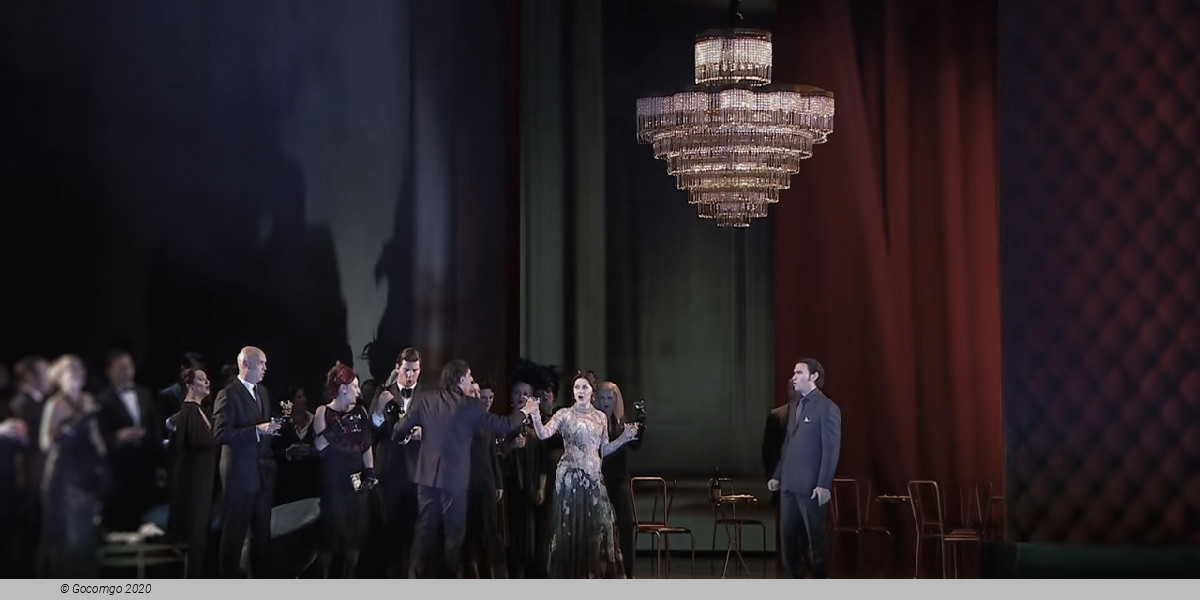
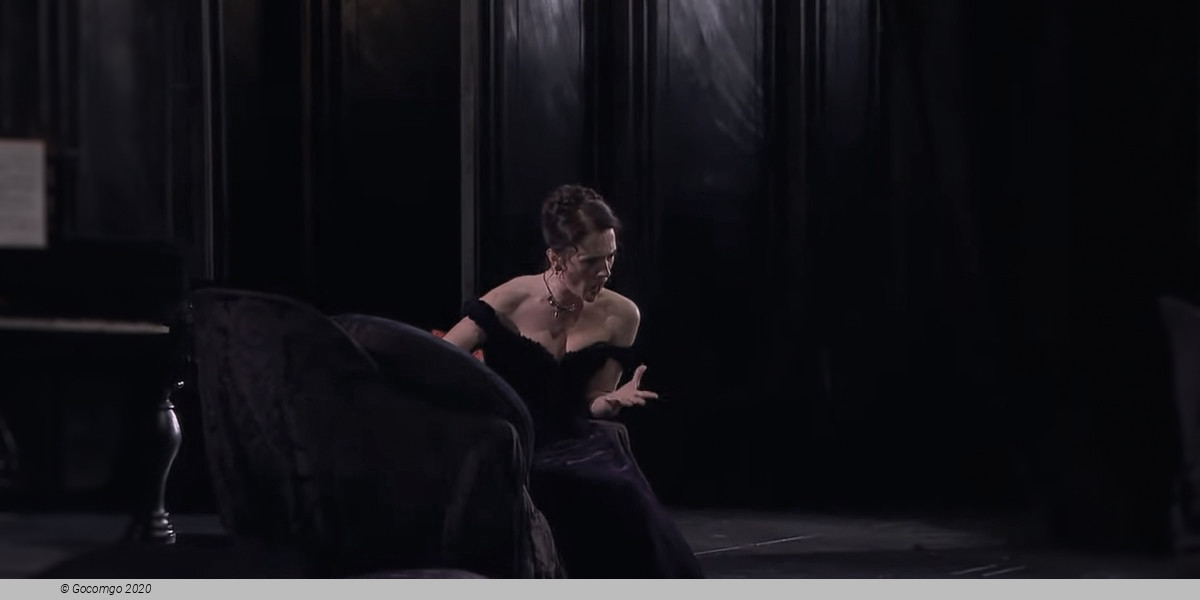
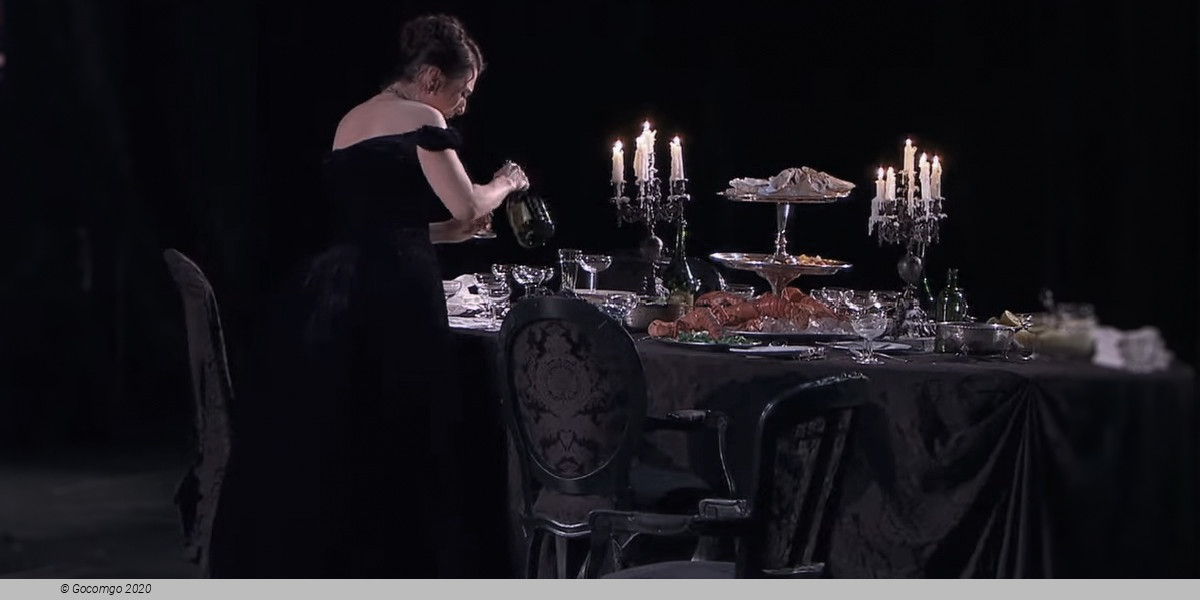
With La traviata, Giuseppe Verdi created an opera of poignant beauty – with moving arias, compelling choral scenes, and an orchestral sound that makes the longing and drama of this tragic love story palpable in every note. For the new production at the Bregenzer Festspiele, the international renowned Italian director Damiano Michieletto sets the story in the dazzling world of the Roaring Twenties. Inspired by the glamorous spirit of the Gatsby era, he places ’the fallen woman’ in a glittering world of limitless desire, where everything is allowed – except true love. Violetta moves between jazz clubs and decadent soirées, between a thirst for life and the fragility of existence, until she is faced with a decision that will forever seal her fate.

Verdi’s audacious work caused a real scandal when it premiered at the Teatro La Fenice in 1853, boldly exposing the societal double standards of its time.

History
Premiere of this production: 06 March 1853, Teatro La Fenice, Venice

La traviata is an opera in three acts by Giuseppe Verdi set to an Italian libretto by Francesco Maria Piave. It is based on La Dame aux camélias (1852), a play adapted from the novel by Alexandre Dumas fils. The opera was originally titled Violetta, after the main character. It was first performed on 6 March 1853 at the La Fenice opera house in Venice.

Synopsis

Set in and around Paris in about 1850.

Act I

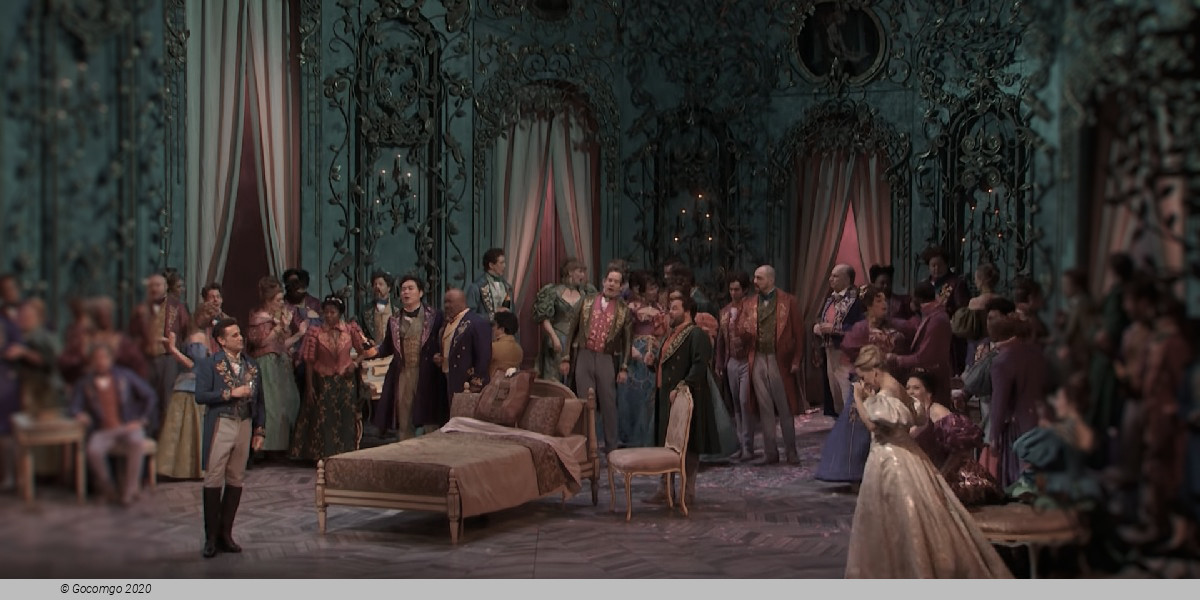
Violetta Valéry, a Parisian courtesan, greets the guests at her salon. Among them are Flora Bervoix, the Marchese D’Obigny, Baron Douphol and Gastone, who introduces Violetta to a new admirer of hers, Alfredo Germont. The young Germont, who has been admiring her from afar, joins her in a drinking song. An orchestra strikes up in an adjacent room, inviting the guests to dance. As the guests make their way to the ballroom, Violetta, who is suffering from consumption, feels faint; she therefore sends the guests on ahead and retires to her boudoir to recover. Alfredo enters and, realising that they are alone, admits his love for her. She replies that love means nothing to her. She
is, however, touched by the young man’s sincerity and promises to meet him the following day.
When the guests have departed, she asks herself whether Alfredo is the man she could love. Despite
the strains of Alfredo’s love song drifting in from outside, she decides she prefers her freedom.

Act II

scene 1
A few months later: Alfredo and Violetta have set up house together in the country, outside Paris. Alfredo says how happy they are, but when Violetta’s maid Annina lets on that Violetta has been selling her belongings to pay for the house, he hastens into town to raise the money himself. Violetta comes in search of him and discovers an invitation from her friend Flora to a soirée that very night. Violetta has no intention of returning to her former life, but she is forced to reconsider
on encountering Alfredo’s father. He is very taken with Violetta and her civilised manners but orders her to renounce Alfredo: his son’s scandalous liaison with Violetta is threatening his daughter’s forthcoming marriage. Violetta considers his demand unreasonable, but before long Germont succeeds in persuading her. Alone and desolate, Violetta sends a reply to Flora accepting her invitation and sits down to write a farewell letter to Alfredo. His return takes her by surprise, and she can barely restrain herself as she passionately reminds him how much she loves him before
rushing out. As the maid brings him Violetta’s farewell letter, Germont returns to console his son and reminds him of life in their family home in Provence. Alfredo spots Flora’s invitation and suspects that Violetta has left him for another man. In a rage, he decides to confront her at the soirée.

scene 2
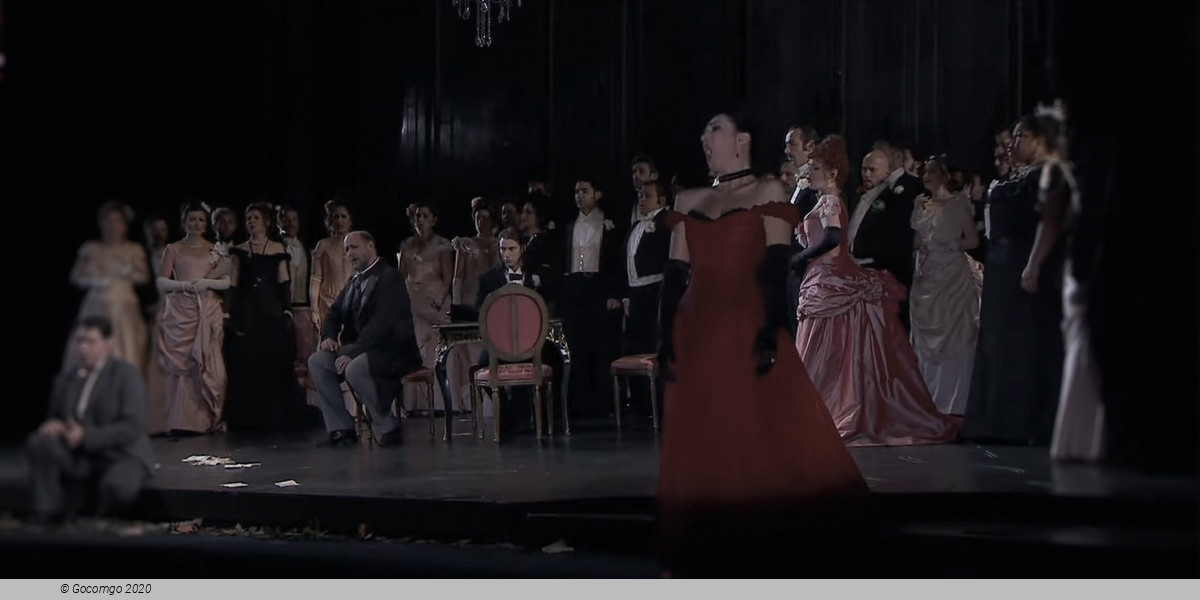
At the soirée, Flora hears from the Marchese that Violetta and Alfredo have parted. Flora asks the guests to make way for a visiting troupe of performing gypsies. They are followed by matadors and a song about Piquillo and his sweetheart. Alfredo rushes in and delivers some bitter comments about love and gambling. Violetta appears on the arm of Baron Douphol, who challenges Alfredo to a game of cards and loses a small fortune to him. As the guests go in to supper, Violetta asks to have a word with Alfredo in private. She is afraid the Baron will be enraged by his loss and urges Alfredo to leave. Alfredo misunderstands her and orders her to admit she loves the Baron. Disappointed by Alfredo’s reaction, Violetta lies and confesses that yes, she does. Alfredo calls the other guests to gather round in order to denounce his former beloved in public and throws the money he has won at her feet. Germont, arriving at that very moment, expresses his disapproval of his son’s behaviour. The guests likewise rebuke Alfredo and Douphol challenges him to a duel.

Act III

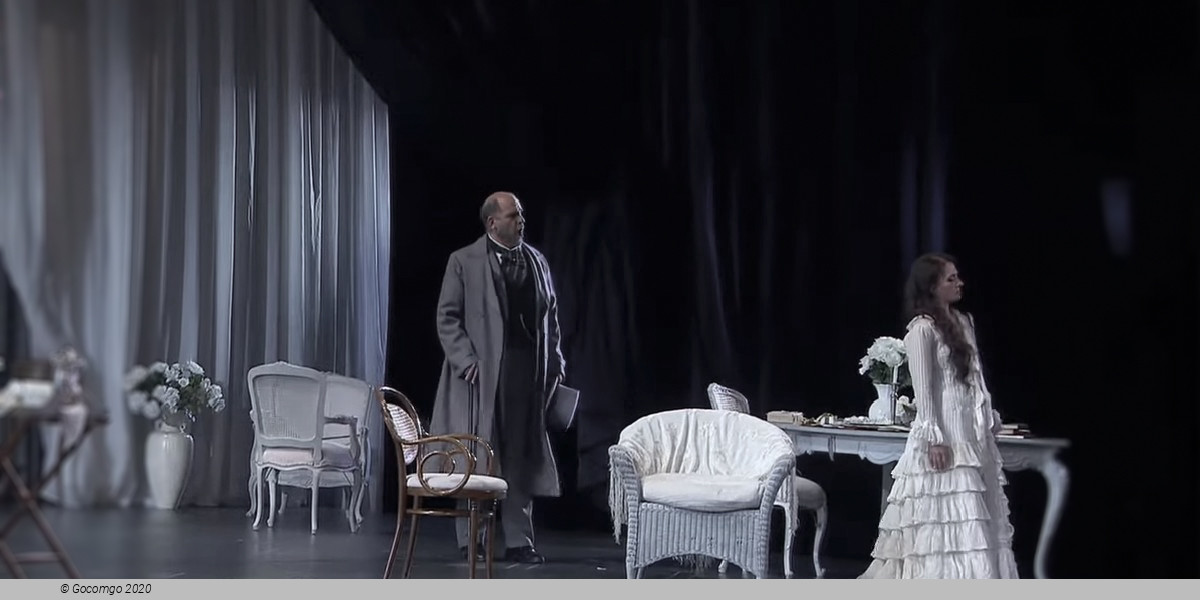
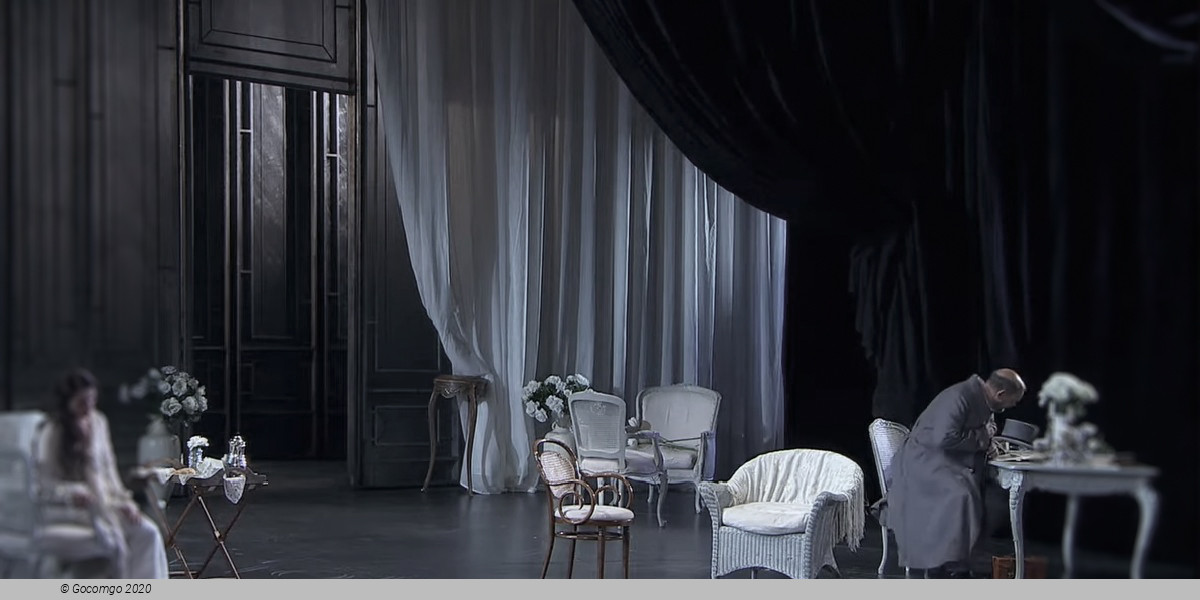
Violetta’s bedroom, six months later. Dr Grenvil tells Annina that her mistress has not long to live –
the consumption has taken its toll. Alone, Violetta rereads a letter from Germont saying that the Baron was only slightly wounded in his duel with Alfredo, that Alfredo has heard the truth and is
coming to beg her pardon. But Violetta realises it is too late. It is carnival time in Paris and, the sounds of the revellers having passed, Annina rushes in to announce Alfredo. The lovers ecstatically plan to leave Paris. Germont enters with the doctor just as Violetta rises from her bed with the last of her strength. Feeling a sudden rush of life, she sways and falls dead at her lover’s feet.


Venue Info

Seebühne - Bregenz
Location   Mehrerauerstraße

Seebühne (or floating stage), with its 7,000 seat open-air amphitheatre, is the location for large-scale opera or musical performances on a stage over water on the shores of Lake Constance. Opera or musical productions on the floating stage generally tend to come from the popular operatic repertoire, but often are extravagantly original and innovative productions/ stagings, frequently using the waters of the lake as an extension of the stage.

Recent productions have included Aida by Giuseppe Verdi in 2009 & 2010; Tosca by Giacomo Puccini in 2007–2008; Il trovatore by Giuseppe Verdi in 2005–2006; West Side Story by Leonard Bernstein in 2003-2004; La bohème by Giacomo Puccini in 2001–2002, and Ein Maskenball (Un ballo in maschera) by Giuseppe Verdi in 1999–2000.

After a donation from Karl Deuring, the festival from 1950 with a 6400 persons fassenden the largest sea stage in the world was available, which was initially reduced to 4,400 seats in 1979 due to modifications, but now holds almost 7000 spectators. As a play on the lake, a large production of the music theatre was staged annually, initially mostly operettas, Singspiele or Spielopern, since the 1970s increasingly operas of the international repertoire and Musicals. Between 1960 and 1977 the Seebühne was also repeatedly used for ballet performances. Since 1985, the productions have been played on the Seebühne for two years each.

In the spring of 2008, a Quantum consolation also took place at the Seebühne in the shooting of the James Bond Film, while the ZDF also hosted the EM Studio for daily coverage at the Seebühne during the 2008 European football championship.

In August 2010, Reinhold Bilgeri premiered the film Der Atem des Himmels at the Seebühne. The performance was sold out with about 7000 spectators weeks before.

Important Info
Type: Opera
City: Bregenz, Austria
Starts at: 21:00
Acts: 3
Duration: 2h
Sung in: Italian
Titles in: German,English
Top of page