



Salle des Combins is the Verbier Festival’s main concert hall. It normally seats 1,419. Each row is on a separate tier, which guarantees an excellent view of the stage. Improvements to the soundproofing and heat insulation make this a very high-quality non-permanent venue. All of the Festival’s symphonic concerts, operas, large world music, jazz, dance events and some recitals are presented here.
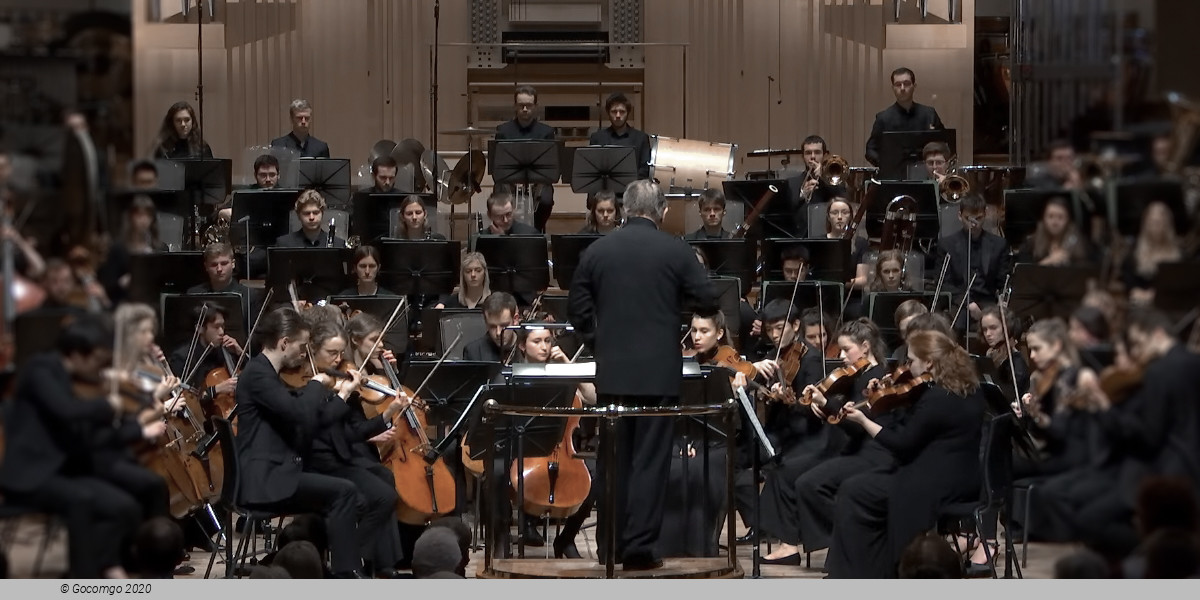
Augustin Hadelich, Verbier Festival Chamber Orchestra and Gábor Takács-Nagy
Salle des Combins,
Verbier, Switzerland
All photos (1)
Select date and time
6 PM
Request for Tickets
Important Info
Festival: Verbier Festival 2021
Type: Classical Concert
City: Verbier, Switzerland
Starts at: 18:00
Duration: 1h 15min
E-tickets: Print at home or at the box office of the event if so specified. You will find more information in your booking confirmation email.
You can only select the category, and not the exact seats.
If you order 2 or 3 tickets: your seats will be next to each other.
If you order 4 or more tickets: your seats will be next to each other, or, if this is not possible, we will provide a combination of groups of seats (at least in pairs, for example 2+2 or 2+3).
Festival
Verbier Festival 2021
The Verbier Festival, now in its 28th year, announces its return for 17 days of concerts, masterclasses, talks and education events in the picturesque setting of the Swiss Alps.
Programme
Felix Mendelssohn Bartholdy: Violin Concerto in E minor, Op.64
Ludwig van Beethoven: Symphony no. 7 in A major, Op.92
Overview
Augustin Hadelich brings his incredible insight and soulful interpretation to Mendelssohn’s Second Violin Concerto in a concert that also includes Beethoven’s dramatic Seventh Symphony.
Written for Leipzig Gewandhaus concertmaster Ferdinand David, Mendelssohn’s Violin Concerto was groundbreakingly original when it premiered in 1845, its innovations including dispensing with the orchestral introduction to have the violin enter almost immediately, and no breaks between its three movements but instead transition sections. Stylistically meanwhile, its beauty comes from its blend of Romantic expression with Classical elements such as the Mozartian detail of the orchestration, not least its woodwind writing. Perhaps the greatest surprise of Beethoven’s Symphony No. 7—penned in 1811 off the back of a restorative spa retreat—is its sombre, magisterial second movement funeral march, because as whole this work is so very vigorously, joyously alive that Wagner described it as “the apotheosis of the dance”.
Venue Info
Salle des Combins - Verbier
 Chemin de Plan Pra
Chemin de Plan Pra
Important Info
Festival: Verbier Festival 2021
Type: Classical Concert
City: Verbier, Switzerland
Starts at: 18:00
Duration: 1h 15min