



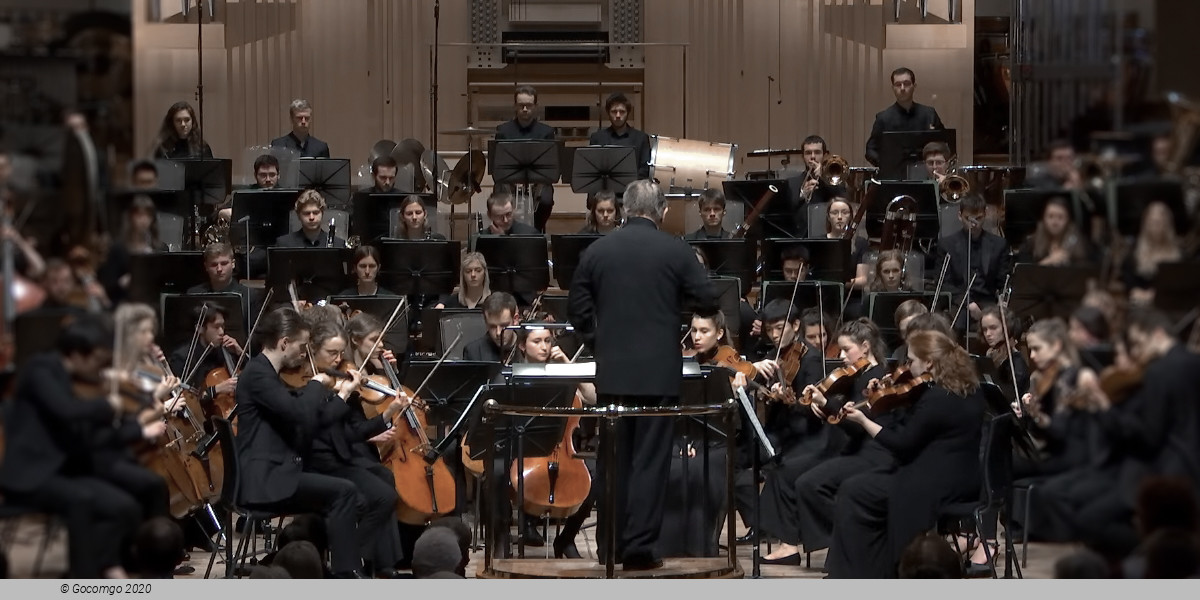
Salle des Combins is the Verbier Festival’s main concert hall. It normally seats 1,419. Each row is on a separate tier, which guarantees an excellent view of the stage. Improvements to the soundproofing and heat insulation make this a very high-quality non-permanent venue. All of the Festival’s symphonic concerts, operas, large world music, jazz, dance events and some recitals are presented here.
Marc Bouchkov, Verbier Festival Chamber Orchestra and Gábor Takács-Nagy
Salle des Combins,
Verbier, Switzerland
All photos (1)
Select date and time
8:15 PM
Request for Tickets
Important Info
Festival: Verbier Festival 2021
Type: Classical Concert
City: Verbier, Switzerland
Starts at: 20:15
Duration: 1h 15min
E-tickets: Print at home or at the box office of the event if so specified. You will find more information in your booking confirmation email.
You can only select the category, and not the exact seats.
If you order 2 or 3 tickets: your seats will be next to each other.
If you order 4 or more tickets: your seats will be next to each other, or, if this is not possible, we will provide a combination of groups of seats (at least in pairs, for example 2+2 or 2+3).
Festival
Verbier Festival 2021
The Verbier Festival, now in its 28th year, announces its return for 17 days of concerts, masterclasses, talks and education events in the picturesque setting of the Swiss Alps.
Programme
Eugène Ysaÿe: Violin Concerto in E minor
Ludwig van Beethoven: Symphony no. 7 in A major, Op.92
Overview
Only its second-ever performance, Marc Bouchkov brings to life the re-creation of an unpublished concerto for violin by Eugène Ysaÿe, with the Verbier Festival Orchestra and its Music Director, Gábor Takács-Nagy.
While Belgian violin virtuoso, pedagogue and conductor Eugene Ysaÿe is best known as a composer for his Six Sonatas for Solo Violin of 1923, he also wrote a number of concertos in his earlier career. The Concerto in E minor is an unpublished single movement dating possibly from the 1880s, and this Verbier performance is with the support of the Queen Elisabeth Music Chapel, whose musicologist Xavier Falques prepared the material from the manuscript in the Royal Library of Belgium. Cast as an Allegro Appassionato, its combination of virtuosity, elegance and lyricism points both to Ysaÿe’s own phenomenal technique, and to his teachers Vieuxtemps and Wieniawski. Beethoven’s Symphony No. 7 meanwhile needs little introduction, with its three brio-filled movements brilliantly offset by a magisterial second movement funeral march.
Venue Info
Salle des Combins - Verbier
 Chemin de Plan Pra
Chemin de Plan Pra
Important Info
Festival: Verbier Festival 2021
Type: Classical Concert
City: Verbier, Switzerland
Starts at: 20:15
Duration: 1h 15min