
Royal Danish Theatre 5 March 2024 - Werther | GoComGo.com

Werther

Royal Danish Theatre, The Old Stage, Copenhagen, Denmark
All photos (5)
Select date and time
7:30 PM

E-tickets: Print at home or at the box office of the event if so specified. You will find more information in your booking confirmation email.

You can only select the category, and not the exact seats.
If you order 2 or 3 tickets: your seats will be next to each other.
If you order 4 or more tickets: your seats will be next to each other, or, if this is not possible, we will provide a combination of groups of seats (at least in pairs, for example 2+2 or 2+3).

Important Info
Type: Opera
City: Copenhagen, Denmark
Starts at: 19:30
Intervals: 1
Duration: 2h 30min
Sung in: French
Titles in: Danish

E-tickets: Print at home or at the box office of the event if so specified. You will find more information in your booking confirmation email.

You can only select the category, and not the exact seats.
If you order 2 or 3 tickets: your seats will be next to each other.
If you order 4 or more tickets: your seats will be next to each other, or, if this is not possible, we will provide a combination of groups of seats (at least in pairs, for example 2+2 or 2+3).

Overview

Massenet’s opera Werther is the world’s leading operatic cause of broken hearts.

Goethe’s epistolary novel The Sorrows of Young Werther is German literature’s first cult novel and in its time caused a so-called “Werther mania” throughout Europe. Young men identified so strongly with Goethe’s protagonist Werther and his unrequited love for Charlotte that several followed in his footsteps and committed suicide.

Charlotte has made a promise on her mother’s deathbed to wed Albert. Despite not being in love with him, Charlotte had come to terms with her fate, until she meets the passionate Werther, who awakens her feelings. But Charlotte chooses duty and her husband, and tragedy is inevitable for Werther. 

French composer Jules Massenet was inspired by the popular novel and created one of the most passionate operas full of elegance and sonority. Werther is conducted by Music Director of the National Danish Opera, Christopher Lichtenstein.

Guest performance by the Danish National Opera/Den Jyske Opera

History
Premiere of this production: 16 February 1892, Hofoper, Vienna (in German)

Werther is an opera (drame lyrique) in four acts by Jules Massenet to a French libretto by Édouard Blau, Paul Milliet and Georges Hartmann (who used the pseudonym Henri Grémont). It is loosely based on the German epistolary novel The Sorrows of Young Werther by Johann Wolfgang von Goethe, which was based both on fact and on Goethe's own early life. Earlier examples of operas using the story were made by Kreutzer (1792) and Pucitta (1802).

Synopsis

Time: Within the period July to December, in an undefined year in the 1780s.
Place: Wetzlar in Germany.

Act 1

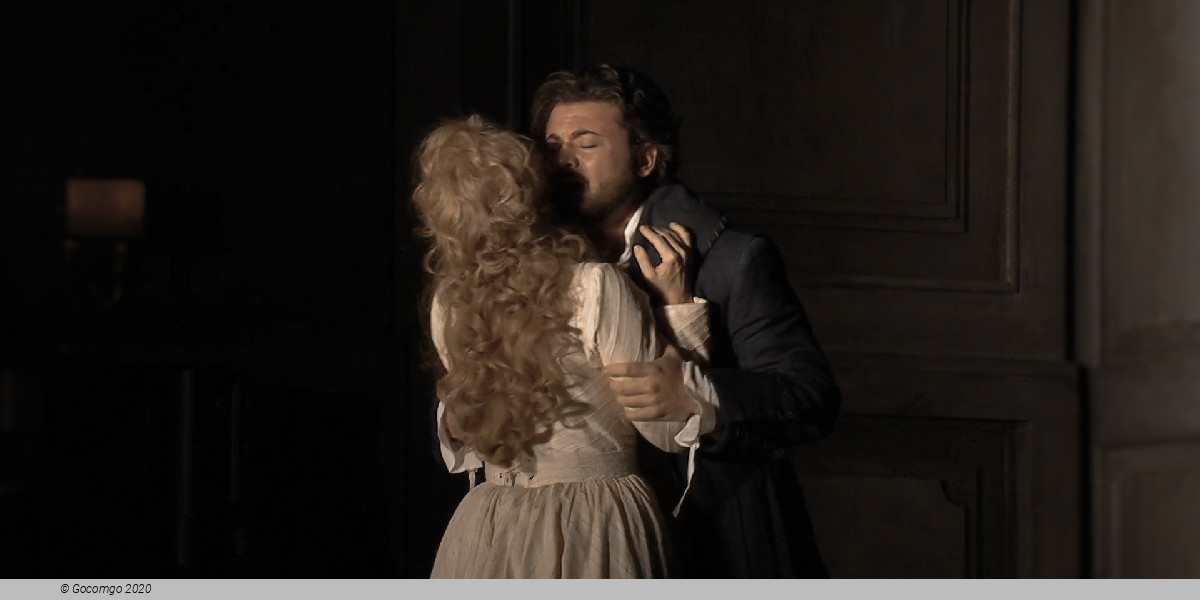
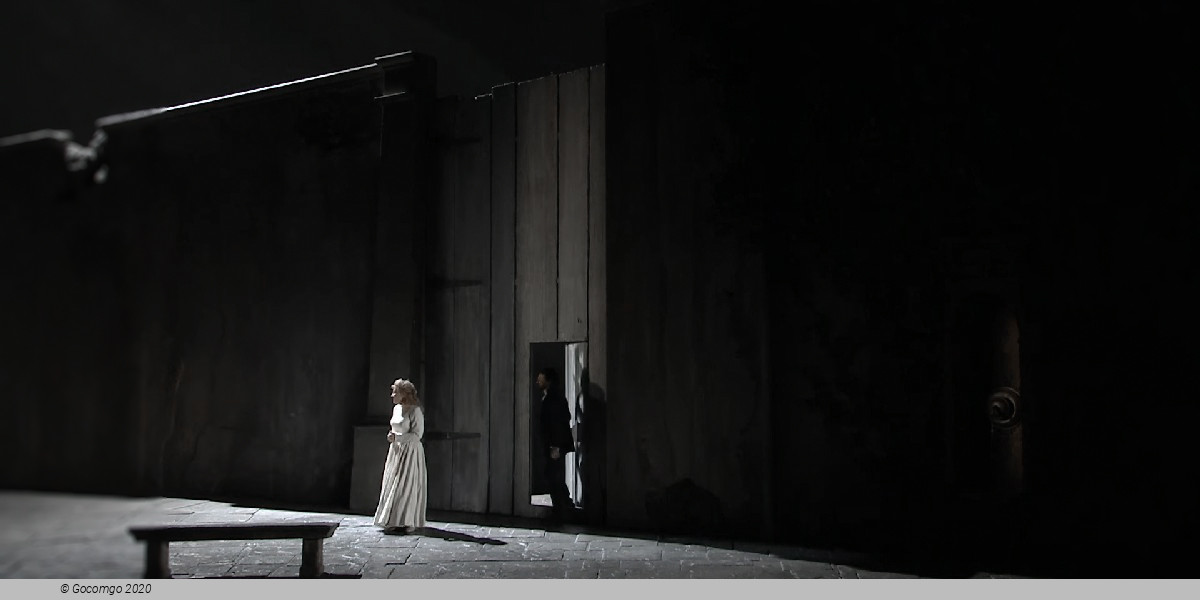
In July, the widowed Bailiff (a Magistrate, rather than one who comes to seize property), is teaching his six youngest children a Christmas carol ("Noël! Jésus vient de naître"). His drinking companions, Johann and Schmidt, arrive as Charlotte, the eldest daughter, dresses for a ball. Since her fiancé Albert is away, she is to be escorted by Werther, whom the Bailiff and his companions find gloomy. Werther arrives ("O Nature, pleine de grâce"), and watches as Charlotte prepares her young siblings' supper, just as her mother had before she died. He greets her and they leave for the ball. Albert returns unexpectedly after a six-month trip. He is unsure of Charlotte's intentions and disappointed not to find her at home, but is reassured and consoled by Charlotte's younger sister Sophie. He leaves after promising to return in the morning. After an orchestral interlude, Werther and Charlotte return very late; he is already enamoured of her. His declaration of love is interrupted by the announcement of Albert's return. Charlotte recalls how she promised her dying mother she would marry Albert. Werther is in despair.

Act 2

It is three months later, and Charlotte and Albert are now married. They walk happily to church to celebrate the minister's 50th wedding anniversary, followed by the disconsolate Werther ("Un autre est son époux!"). First Albert and then Sophie ("Du gai soleil, plein de flamme") try to cheer him up. When Charlotte exits the church, he speaks to her of their first meeting. Charlotte begs Werther to leave her, though she indicates that she would be willing to receive him again on Christmas Day. Werther contemplates suicide ("Lorsque l'enfant revient d'un voyage"). He encounters Sophie but the tearful girl does not understand his distressing behavior. Albert now realizes that Werther loves Charlotte.

Act 3

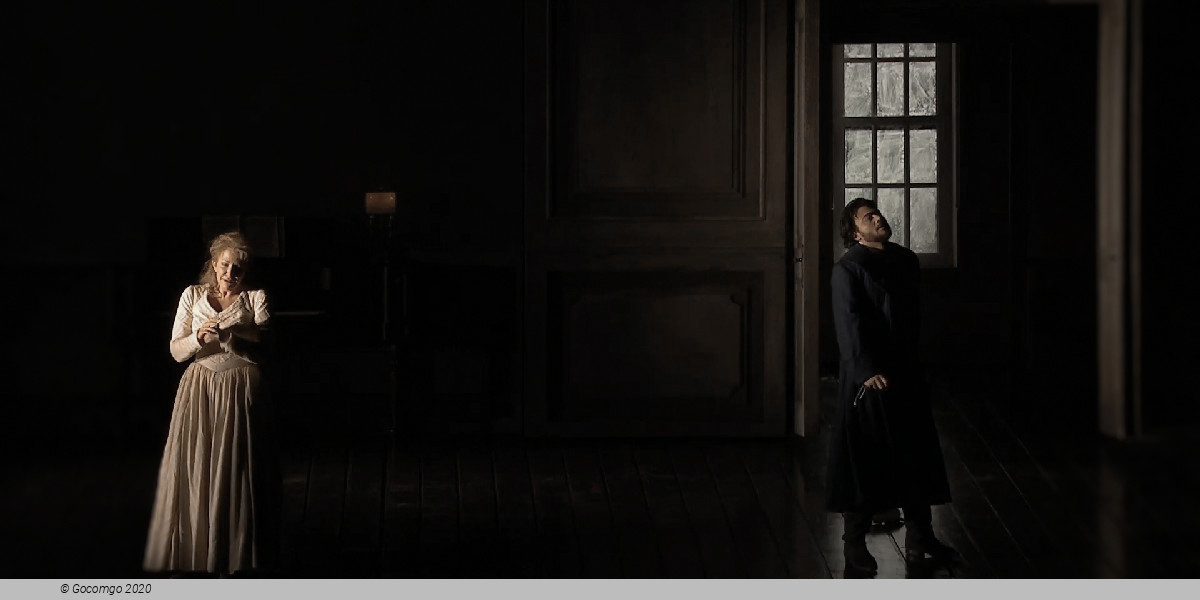
Charlotte is at home alone on Christmas Eve. She spends time rereading the letters that she has received from Werther ("Werther! Qui m'aurait dit ... Ces lettres!"), wondering how the young poet is and how she had the strength to send him away. Sophie comes in and tries to cheer up her older sister ("Ah! le rire est béni"), though Charlotte is not to be consoled ("Va! laisse couler mes larmes"). Suddenly Werther appears, and while he reads to her some poetry of Ossian ("Pourquoi me réveiller?"), he realizes that she does indeed return his love. They embrace for a moment, but she quickly bids him farewell. He leaves with thoughts of suicide. Albert returns home to find his wife distraught. Werther sends a messenger to Albert, requesting to borrow his pistols, explaining he is going on an extended trip. After the servant has taken them, Charlotte has a terrible premonition and hurries to find Werther. An orchestral intermezzo ("La nuit de Noël") leads without a break into the final Act.

Act 4

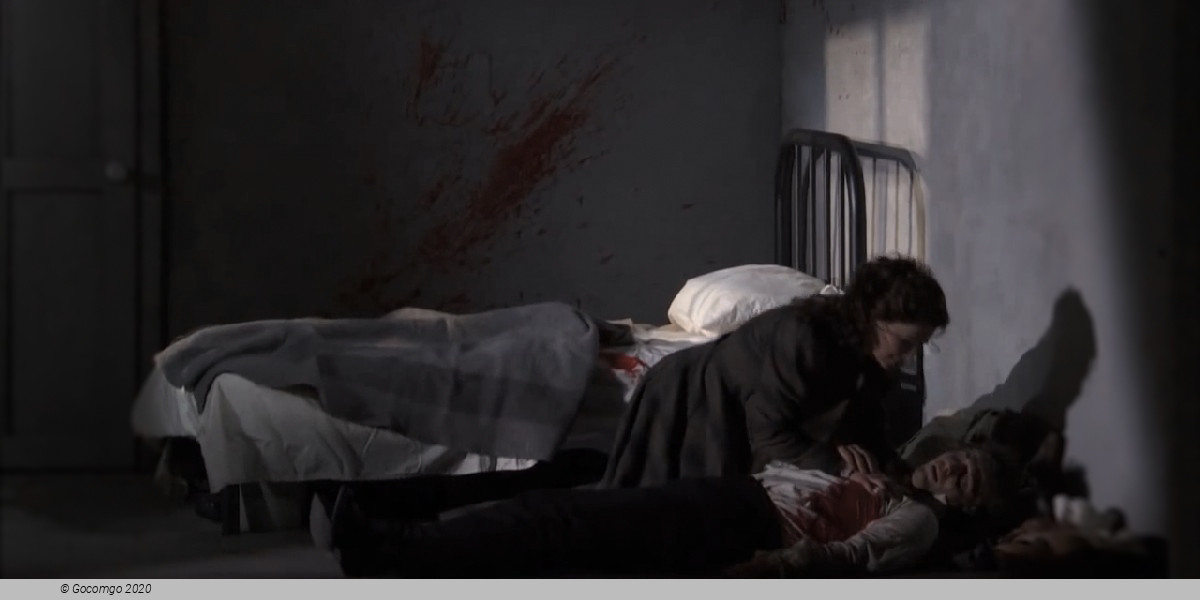
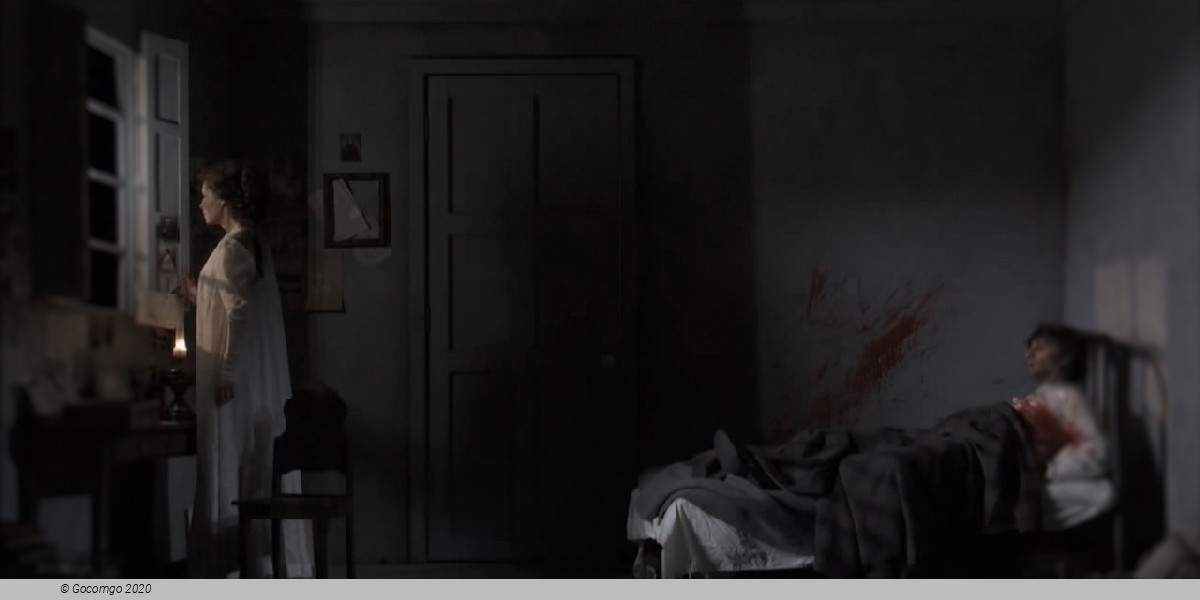
"The death of Werther": At Werther's apartment, Charlotte has arrived too late to stop him from shooting himself; he is dying. She consoles him by declaring her love. He asks for forgiveness. After he dies, Charlotte faints. Outside children are heard singing the Christmas carol.

Venue Info

Royal Danish Theatre - Copenhagen
Location   August Bournonvilles Passage 2-8

The Royal Danish Theatre is the major opera house in Denmark. It has been located at Kongens Nytorv in Copenhagen since 1748, originally designated as the king's theatre but with public access. The theatre presents opera, the Royal Danish Ballet, classical music concerts (by the Royal Danish Orchestra, which dates back to 1448), and drama in several locations.

The Royal Danish Theatre organization is under the control of the Danish Ministry of Culture, and its objectives are to ensure the staging of outstanding performances that do justice to the various stages that it controls.

The first edifice on the site was designed by court architect Nicolai Eigtved, who also masterminded Amalienborg Palace. In 1774, the old theatre seating 800 theatergoers were reconstructed by architect C.F. Harsdorff to accommodate a larger audience.

During the theatre's first seasons the staffing was modest. Originally, the ensemble consisted of eight actors, four actresses, two male dancers, and one female dancer. Gradually over the following decades, the Royal Danish Theatre established itself as the kind of multi-theatre we know today, home to drama, opera, ballet, and concerts – all under the same roof and management.

An important prerequisite for the theatre's artistic development is its schools. The oldest is the ballet school, established at the theatre in 1771. Two years later, a vocal academy was established as a forerunner for the opera academy. A number of initiatives were considered regarding a drama school, which was established much later.

King Frederik VI, who ascended the throne in 1808, is probably the monarch who most actively took part in the management of the Royal Danish Theatre, not as an arbiter of taste but as its supreme executive chef.

The theatre's bookkeeping accounts of these years show numerous endorsements where the king took personal decisions on everything from wage increases and bonuses to the purchase of shoelaces for the ballerinas. Indeed, the Royal Danish Theatre became the preoccupation of an introverted nation, following the English Wars had suffered a state bankruptcy. "In Denmark, there is only one city and one theatre," as philosopher Søren Kierkegaard put it.

This was the theatre to which the 14-year-old fairytale storyteller Hans Christian Andersen devoted his early ambition. This was also the theatre that became the social and artistic focal point of the many brilliant artists of Denmark's Golden Age.

After the abolition of absolute monarchy in 1849, the Royal Danish Theatre's status as "the city's theatre" fell into decline. No longer enjoying a monopoly within the performing arts, the Royal Danish Theatre was now required by its new owner, the state, to serve the entire nation. The dilapidated building at Kongens Nytorv also found it hard to compete with the splendor of the new popular stage that was rapidly emerging across town. The solution was to construct a brand new theatre building. It was designed in the Historicist style of the times by architects William Dahlerup and Ove Pedersen and situated alongside the old theatre, which was subsequently demolished.

The inauguration of what we today call the Old Stage took place on 15 October 1874. Here opera and ballet were given ample scope. But due to the scale of the building, the auditorium was less suited for spoken drama, which is why a new playhouse was required.

The Royal Danish Theatre has over the past decade undergone the most extensive transformation ever in its over 250-year history. The Opera House in Copenhagen was inaugurated in January 2005, donated by the AP Møller and Chastine Mc-Kinney Møller Foundation, and designed by architect Henning Larsen. And the Royal Danish Playhouse was completed in 2008. Located by Nyhavn Canal across from the Opera House, the playhouse is designed by architects Boje Lundgaard and Lene Tranberg.

Today, the Royal Danish Theatre comprises the Old Stage, located by Kongens Nytorv, the Opera House, and the Royal Danish Playhouse. 

Important Info
Type: Opera
City: Copenhagen, Denmark
Starts at: 19:30
Intervals: 1
Duration: 2h 30min
Sung in: French
Titles in: Danish
Top of page