
Royal Danish Theatre tickets 23 January 2027 - Falstaff | GoComGo.com

Falstaff

Royal Danish Theatre, The Opera House - Main Stage, Copenhagen, Denmark
All photos (6)
Select date and time
7:30 PM
From
US$ 117

E-tickets: Print at home or at the box office of the event if so specified. You will find more information in your booking confirmation email.

You can only select the category, and not the exact seats.
If you order 2 or 3 tickets: your seats will be next to each other.
If you order 4 or more tickets: your seats will be next to each other, or, if this is not possible, we will provide a combination of groups of seats (at least in pairs, for example 2+2 or 2+3).

Important Info
Type: Opera
City: Copenhagen, Denmark
Starts at: 19:30
Sung in: Italian
Titles in: Danish,English

E-tickets: Print at home or at the box office of the event if so specified. You will find more information in your booking confirmation email.

You can only select the category, and not the exact seats.
If you order 2 or 3 tickets: your seats will be next to each other.
If you order 4 or more tickets: your seats will be next to each other, or, if this is not possible, we will provide a combination of groups of seats (at least in pairs, for example 2+2 or 2+3).

Cast
Performers
Conductor: Thomas Søndergård
Soprano: Clara Cecilie Thomsen (Nannetta)
Tenor: Fredrik Bjellsäter (Bardolfo)
Baritone: Gihoon Kim (Ford)
Soprano: Gisela Stille (Alice Ford)
Mezzo-Soprano: Hanne Fischer (Mrs Quickly)
Bass-Baritone: Johan Reuter (Sir John Falstaff)
Mezzo-Soprano: Kari Dahl Nielsen (Meg Page)
Bass: Kyungil Ko (Pistola)
Tenor: Niels Jørgen Riis (Dr Caius)
Choir: The Royal Danish Opera Chorus
Creators
Composer: Giuseppe Verdi
Librettist: Arrigo Boito
Set Designer: Ashley Martin-Davis
Lighting Designer: Jesper Kongshaug
Costume designer: Karin Betz
Director: Peter Langdal
Opera Company: The Royal Danish Opera Academy
Author: William Shakespeare
Overview

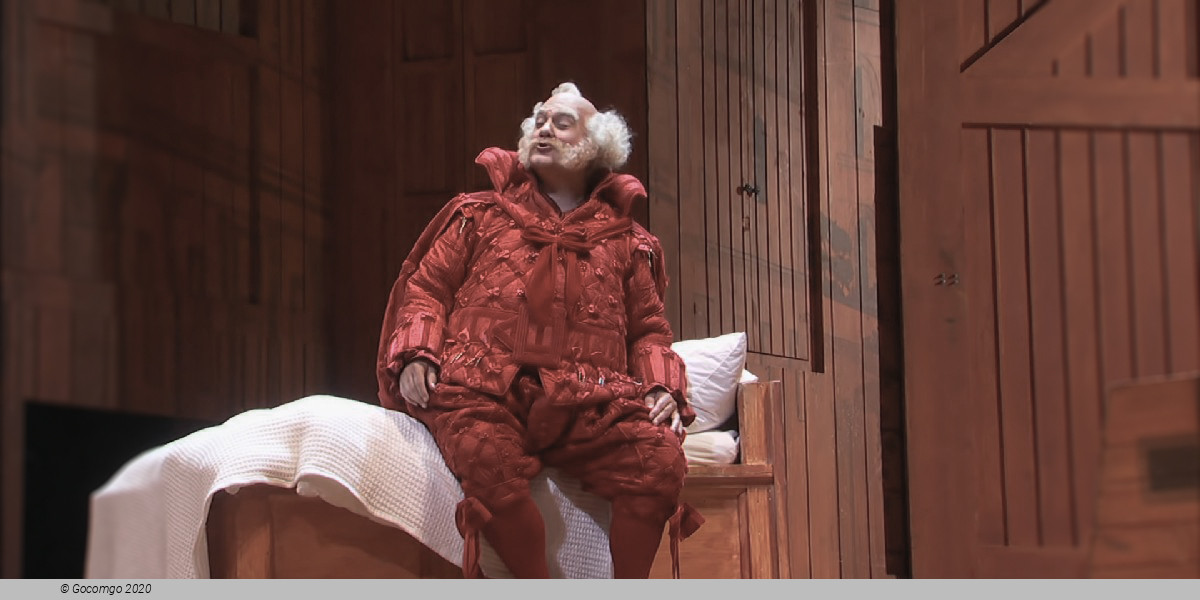
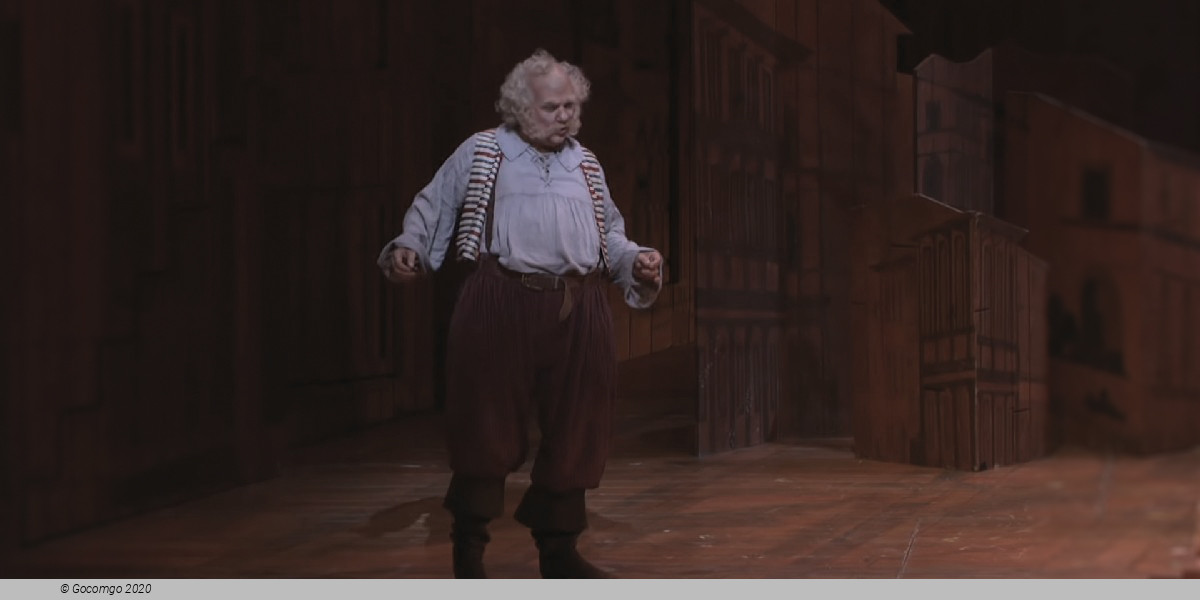
Falstaff by Giuseppe Verdi is a lively and witty comedy inspired by William Shakespeare, presented at the Danish Royal Opera.

Full of humor, charm, and brilliant ensemble writing, the opera follows the mischievous Sir John Falstaff in a whirlwind of schemes, disguises, and playful intrigue.

Falstaff by Giuseppe Verdi comes to life at the Danish Royal Opera in a sparkling production of the composer’s final masterpiece. Inspired by the comic spirit of William Shakespeare, Falstaff is a brilliant ensemble opera that blends wit, warmth, and musical sophistication.

At its centre stands the larger-than-life Sir John Falstaff—boastful, charming, and irrepressibly mischievous—whose attempts to seduce two married women set off a cascade of clever schemes and playful revenge. Verdi’s score is a marvel of invention, full of quicksilver changes, intricate ensembles, and lyrical moments that reveal both humor and humanity.

In this production, the action unfolds with energy and precision, highlighting the opera’s fast-paced comedy while also capturing its deeper reflections on aging, vanity, and the joy of life. With its vibrant characters, brilliant orchestration, and masterful pacing, Falstaff remains a celebration of theatrical brilliance and Verdi’s enduring genius.

History
Premiere of this production: 09 February 1893, La Scala, Milan

Falstaff is a comic opera in three acts by the Italian composer Giuseppe Verdi. The libretto was adapted by Arrigo Boito from Shakespeare's The Merry Wives of Windsor and scenes from Henry IV, parts 1 and 2. The work premiered on 9 February 1893 at La Scala, Milan.

Synopsis

Time: The reign of Henry IV, 1399 to 1413
Place: Windsor, England

Act 1

A room at the Garter Inn

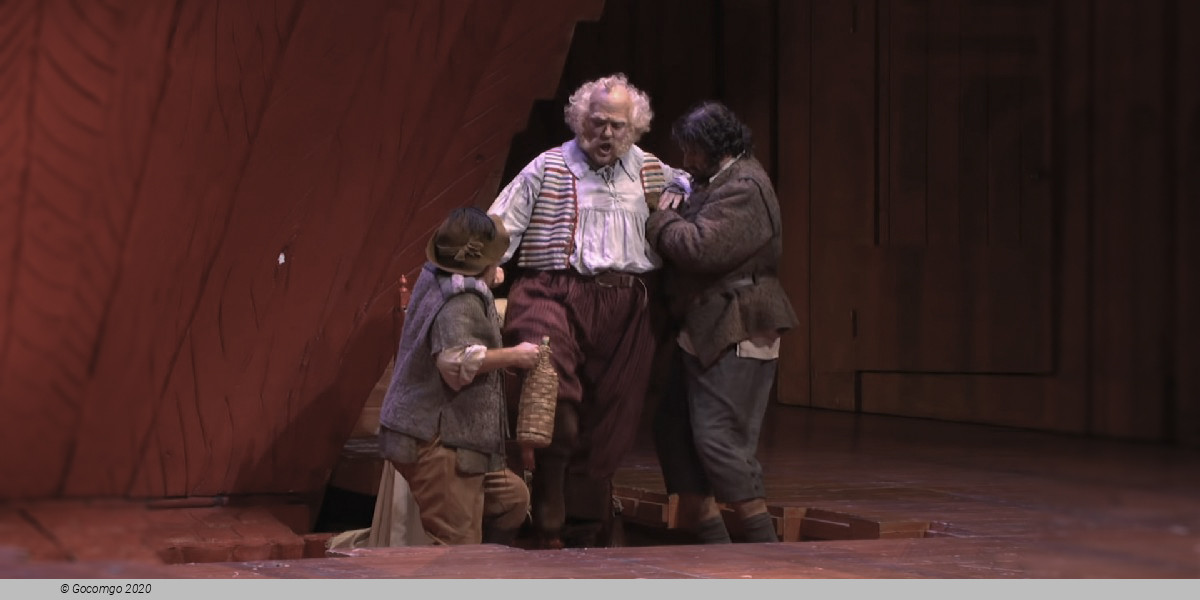
Falstaff and his servants, Bardolfo and Pistola, are drinking at the inn. Dr Caius bursts in and accuses Falstaff of burgling his house and Bardolfo of picking his pocket. Falstaff laughs at him; he leaves, vowing only to go drinking with honest, sober companions in future. When the innkeeper presents a bill for the wine, Falstaff tells Bardolfo and Pistola that he needs more money, and plans to obtain it by seducing the wives of two rich men, one of whom is Ford. Falstaff hands Bardolfo a love-letter to one of the wives (Alice Ford), and hands Pistola an identical letter addressed to the other (Meg). Bardolfo and Pistola refuse to deliver the letters, claiming that honour prevents them from obeying him. Falstaff loses his temper and rants at them, saying that "honour" is nothing but a word, with no meaning (Monologue: L'onore! Ladri ... ! / "Honour! You rogues ... !") Brandishing a broom, he chases them out of his sight.

Ford's garden

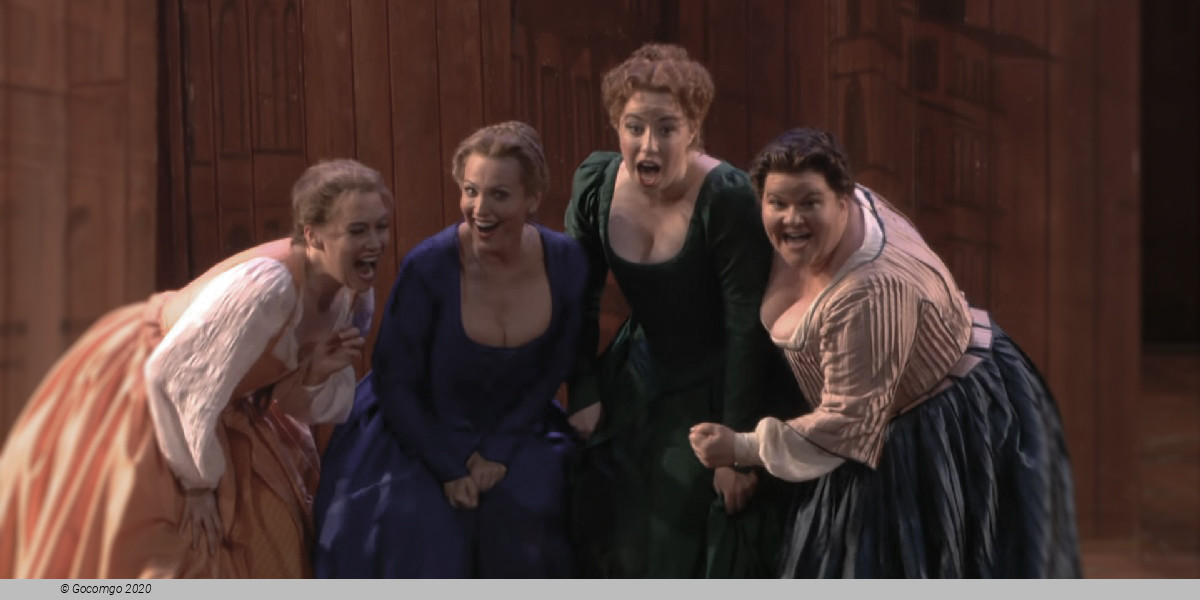
Alice and Meg have received Falstaff's letters. They compare them, see that they are identical and, together with Mistress Quickly and Nannetta Ford, resolve to punish Falstaff. Meanwhile, Bardolfo and Pistola warn Ford of Falstaff's plan. Ford resolves to disguise himself and visit Falstaff and set a trap for him.

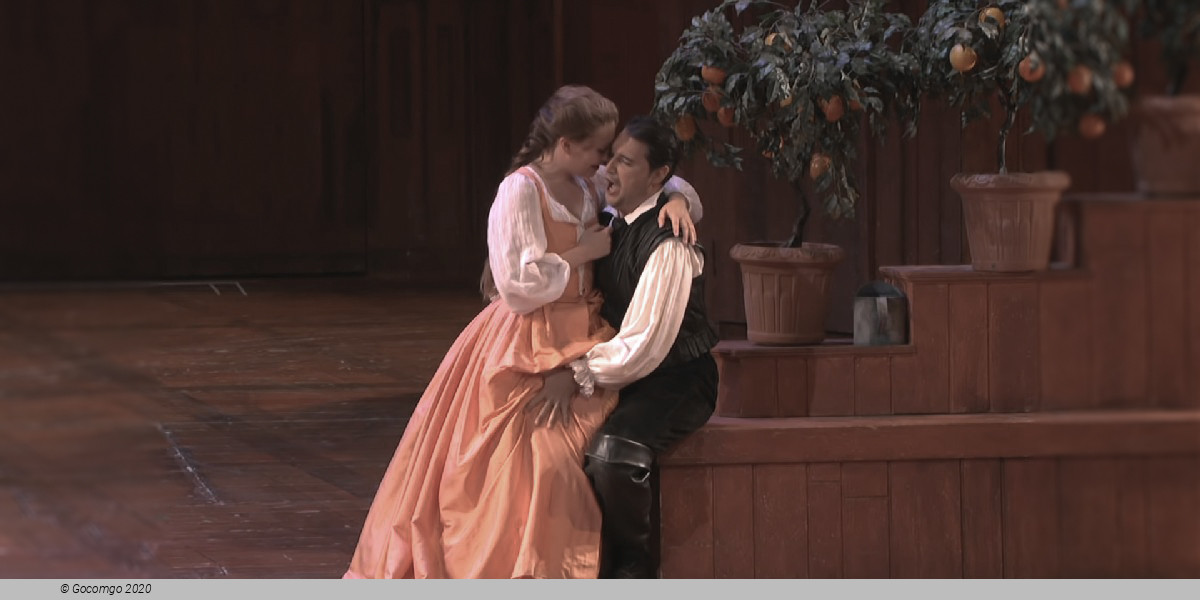
A young, handsome fellow called Fenton is in love with Ford's daughter Nannetta, but Ford wants her to marry Dr. Caius, who is wealthy and respected. Fenton and Nannetta enjoy a moment of privacy, but are interrupted by the return of Alice, Meg and Mistress Quickly. The act ends with an ensemble in which the women and the men separately plan revenge on Falstaff, the women gleefully anticipating an enjoyable prank, while the men angrily mutter dire threats.

Act 2
A room at the Garter Inn

Falstaff is alone at the inn. Bardolfo and Pistola, now in the pay of Ford, enter and beg Falstaff to allow them to re-enter his service, secretly planning to spy on him for Ford. Mistress Quickly enters and tells him that Alice is in love with him and will be alone in Ford's home that afternoon, from two o'clock until three o'clock, just time for an amorous dalliance. Falstaff celebrates his potential success ("Va, vecchio John" / "Go, old Jack, go your own way").

Ford arrives, masquerading as a wealthy stranger, using the false name "Signor Fontana". He tells Falstaff that he is in love with Alice, but she is too virtuous to entertain him. He offers to pay Falstaff to use his impressive title and (alleged) charms to seduce her away from her virtuous convictions, after which he ("Fontana") might have a better chance of seducing her himself. Falstaff, delighted at the prospect of being paid to seduce the wealthy and beautiful woman, agrees, and reveals that he already has a rendezvous arranged with Alice for two o'clock – the hour when Ford is always absent from home. Ford is consumed with jealousy, but conceals his feelings. Falstaff withdraws to a private room to change into his finest clothes, and Ford, left alone, reflects on the evil of an uncertain marriage and vows to have revenge (È sogno o realtà? / "Is it a dream or reality?"). When Falstaff returns in his finery, they leave together with elaborate displays of mutual courtesy.

A room in Ford's house

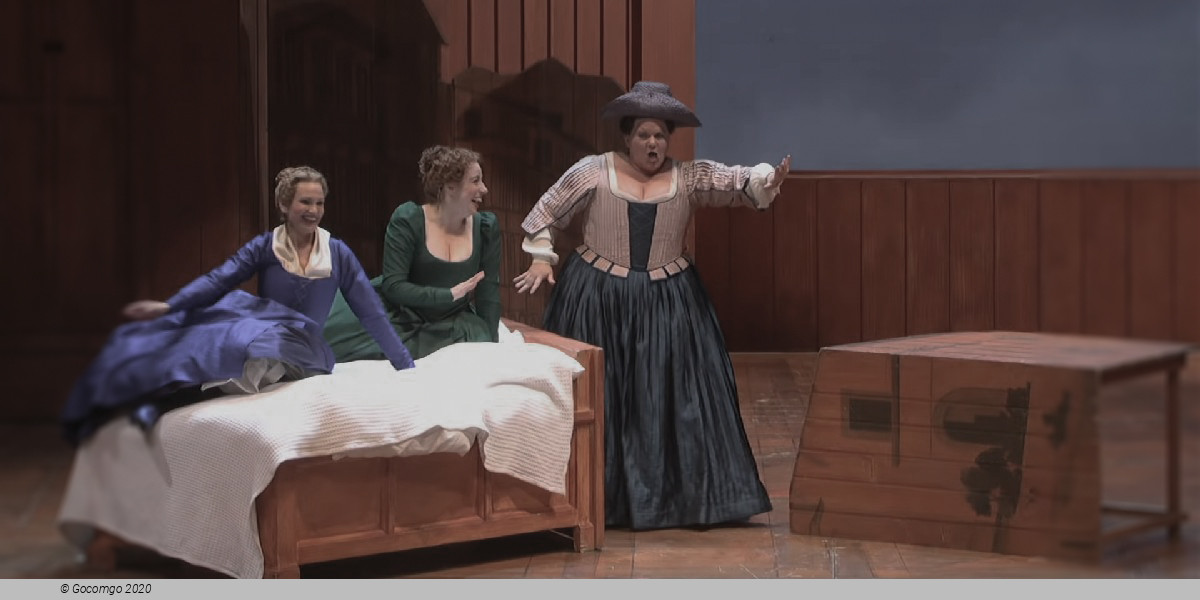
The three women plot their strategy ("Gaie Comari di Windsor" / "Merry wives of Windsor, the time has come!"). Alice notices that Nannetta is too unhappy and anxious to share their gleeful anticipation. This is because Ford plans to marry her to Dr Caius, a man old enough to be her grandfather; the women reassure her that they will prevent it. Mistress Quickly announces Falstaff's arrival, and Mistress Ford has a large laundry basket and a screen placed in readiness. Falstaff attempts to seduce Alice with tales of his past youth and glory ("Quand'ero paggio del Duca di Norfolk" / "When I was page to the Duke of Norfolk I was slender"). Mistress Quickly rushes in, shouting that Ford has returned home unexpectedly with a retinue of henchmen to catch his wife's lover. Falstaff hides first behind the screen, but realizes that Ford will likely look for him there. The women urge him to hide in the laundry basket, which he does. In the meantime Fenton and Nannetta hide behind the screen for another moment of privacy. Ford and his men storm in and search for Falstaff, and hear the sound of Fenton and Nannetta kissing behind the screen. They assume it is Falstaff with Alice, but instead they find the young lovers. Ford orders Fenton to leave. Badly cramped and almost suffocating in the laundry hamper, Falstaff moans with discomfort while the men resume the search of the house. Alice orders her servants to throw the laundry basket through the window into the River Thames, where Falstaff endures the jeers of the crowd. Ford, seeing that Alice had never intended to betray him, smiles happily.

Act 3
Before the inn

Falstaff, cold and discouraged, glumly curses the sorry state of the world. Some mulled wine soon improves his mood. Mistress Quickly arrives and delivers another invitation to meet Alice. Falstaff at first wants nothing to do with it, but she persuades him. He is to meet Alice at midnight at Herne's Oak in Windsor Great Park dressed up as the ghost of Herne the Hunter who, according to local superstition, haunts the area near the tree, and appears there at midnight with a band of supernatural spirits. He and Mistress Quickly go inside the inn. Ford has realized his error in suspecting his wife, and they and their allies have been watching secretly. They now concoct a plan for Falstaff's punishment: dressed as supernatural creatures, they will ambush and torment him at midnight. Ford draws Dr. Caius aside and privately proposes a separate plot to marry him to Nannetta: Nannetta will be disguised as Queen of the Fairies, Caius will wear a monk's costume, and Ford will join the two of them with a nuptial blessing. Mistress Quickly overhears and quietly vows to thwart Ford's scheme.

Herne's Oak in Windsor Park on a moonlit midnight

Fenton arrives at the oak tree and sings of his happiness ("Dal labbro il canto estasiato vola" / "From my lips, a song of ecstasy flies") ending with "Lips that are kissed lose none of their allure." Nannetta enters to finish the line with "Indeed, they renew it, like the moon." The women arrive and disguise Fenton as a monk, telling him that they have arranged to spoil Ford's and Caius's plans. Nannetta, as the Fairy Queen, instructs her helpers ("Sul fil d'un soffio etesio" / "On the breath of a fragrant breeze, fly, nimble spirits") before all the characters arrive on the scene. Falstaff's attempted love scene with Alice is interrupted by the announcement that witches are approaching, and the men, disguised as elves and fairies, soundly thrash Falstaff. In the middle of the beating, he recognizes Bardolfo in disguise. The joke is over, and Falstaff acknowledges that he has received his due. Ford announces that a wedding shall ensue. Caius and the Queen of the Fairies enter. A second couple, also in masquerade, ask Ford to deliver the same blessing for them as well. Ford conducts the double ceremony. Caius finds that instead of Nannetta, his bride is the disguised Bardolfo, and Ford has unwittingly blessed the marriage of Fenton and Nannetta. Ford accepts the fait accompli with good grace. Falstaff, pleased to find himself not the only dupe, proclaims that all the world is folly, and all are figures of fun (Tutto nel mondo è burla ... Tutti gabbati!...Ma ride ben chi ride La risata final. / "Everything in the world is a jest ... but he laughs well who laughs the final laugh"). The entire company repeats his proclamation in a bewildering ten-voice fugue.

Venue Info

Royal Danish Theatre - Copenhagen
Location   August Bournonvilles Passage 2-8

The Royal Danish Theatre is the major opera house in Denmark. It has been located at Kongens Nytorv in Copenhagen since 1748, originally designated as the king's theatre but with public access. The theatre presents opera, the Royal Danish Ballet, classical music concerts (by the Royal Danish Orchestra, which dates back to 1448), and drama in several locations.

The Royal Danish Theatre organization is under the control of the Danish Ministry of Culture, and its objectives are to ensure the staging of outstanding performances that do justice to the various stages that it controls.

The first edifice on the site was designed by court architect Nicolai Eigtved, who also masterminded Amalienborg Palace. In 1774, the old theatre seating 800 theatergoers were reconstructed by architect C.F. Harsdorff to accommodate a larger audience.

During the theatre's first seasons the staffing was modest. Originally, the ensemble consisted of eight actors, four actresses, two male dancers, and one female dancer. Gradually over the following decades, the Royal Danish Theatre established itself as the kind of multi-theatre we know today, home to drama, opera, ballet, and concerts – all under the same roof and management.

An important prerequisite for the theatre's artistic development is its schools. The oldest is the ballet school, established at the theatre in 1771. Two years later, a vocal academy was established as a forerunner for the opera academy. A number of initiatives were considered regarding a drama school, which was established much later.

King Frederik VI, who ascended the throne in 1808, is probably the monarch who most actively took part in the management of the Royal Danish Theatre, not as an arbiter of taste but as its supreme executive chef.

The theatre's bookkeeping accounts of these years show numerous endorsements where the king took personal decisions on everything from wage increases and bonuses to the purchase of shoelaces for the ballerinas. Indeed, the Royal Danish Theatre became the preoccupation of an introverted nation, following the English Wars had suffered a state bankruptcy. "In Denmark, there is only one city and one theatre," as philosopher Søren Kierkegaard put it.

This was the theatre to which the 14-year-old fairytale storyteller Hans Christian Andersen devoted his early ambition. This was also the theatre that became the social and artistic focal point of the many brilliant artists of Denmark's Golden Age.

After the abolition of absolute monarchy in 1849, the Royal Danish Theatre's status as "the city's theatre" fell into decline. No longer enjoying a monopoly within the performing arts, the Royal Danish Theatre was now required by its new owner, the state, to serve the entire nation. The dilapidated building at Kongens Nytorv also found it hard to compete with the splendor of the new popular stage that was rapidly emerging across town. The solution was to construct a brand new theatre building. It was designed in the Historicist style of the times by architects William Dahlerup and Ove Pedersen and situated alongside the old theatre, which was subsequently demolished.

The inauguration of what we today call the Old Stage took place on 15 October 1874. Here opera and ballet were given ample scope. But due to the scale of the building, the auditorium was less suited for spoken drama, which is why a new playhouse was required.

The Royal Danish Theatre has over the past decade undergone the most extensive transformation ever in its over 250-year history. The Opera House in Copenhagen was inaugurated in January 2005, donated by the AP Møller and Chastine Mc-Kinney Møller Foundation, and designed by architect Henning Larsen. And the Royal Danish Playhouse was completed in 2008. Located by Nyhavn Canal across from the Opera House, the playhouse is designed by architects Boje Lundgaard and Lene Tranberg.

Today, the Royal Danish Theatre comprises the Old Stage, located by Kongens Nytorv, the Opera House, and the Royal Danish Playhouse. 

Important Info
Type: Opera
City: Copenhagen, Denmark
Starts at: 19:30
Sung in: Italian
Titles in: Danish,English
Top of page