
Royal Danish Theatre tickets 27 April 2027 - Die Fledermaus | GoComGo.com

Die Fledermaus

Royal Danish Theatre, The Opera House - Main Stage, Copenhagen, Denmark
All photos (6)
Select date and time
7:30 PM
From
US$ 117

E-tickets: Print at home or at the box office of the event if so specified. You will find more information in your booking confirmation email.

You can only select the category, and not the exact seats.
If you order 2 or 3 tickets: your seats will be next to each other.
If you order 4 or more tickets: your seats will be next to each other, or, if this is not possible, we will provide a combination of groups of seats (at least in pairs, for example 2+2 or 2+3).

Important Info
Type: Opera
City: Copenhagen, Denmark
Starts at: 19:30
Intervals: 1
Duration: 3h 10min
Sung in: German
Titles in: English,Danish

E-tickets: Print at home or at the box office of the event if so specified. You will find more information in your booking confirmation email.

You can only select the category, and not the exact seats.
If you order 2 or 3 tickets: your seats will be next to each other.
If you order 4 or more tickets: your seats will be next to each other, or, if this is not possible, we will provide a combination of groups of seats (at least in pairs, for example 2+2 or 2+3).

Cast
Performers
Conductor: Keren Kagarlitsky
Tenor: Anders Kampmann (Gabriel von Eisenstein)
Soprano: Gisela Stille (Rosalinde)
Bass-Baritone: Martin Winkler (Frank)
Choir: The Royal Danish Opera Chorus
Creators
Composer: Johann Strauss II
Director: Barrie Kosky
Librettist: Karl Haffner
Librettist: Richard Genée
Opera Company: The Royal Danish Opera Academy
Overview

In collaboration with Bayerische Staatsoper München and De Nationale Opera Amsterdam.

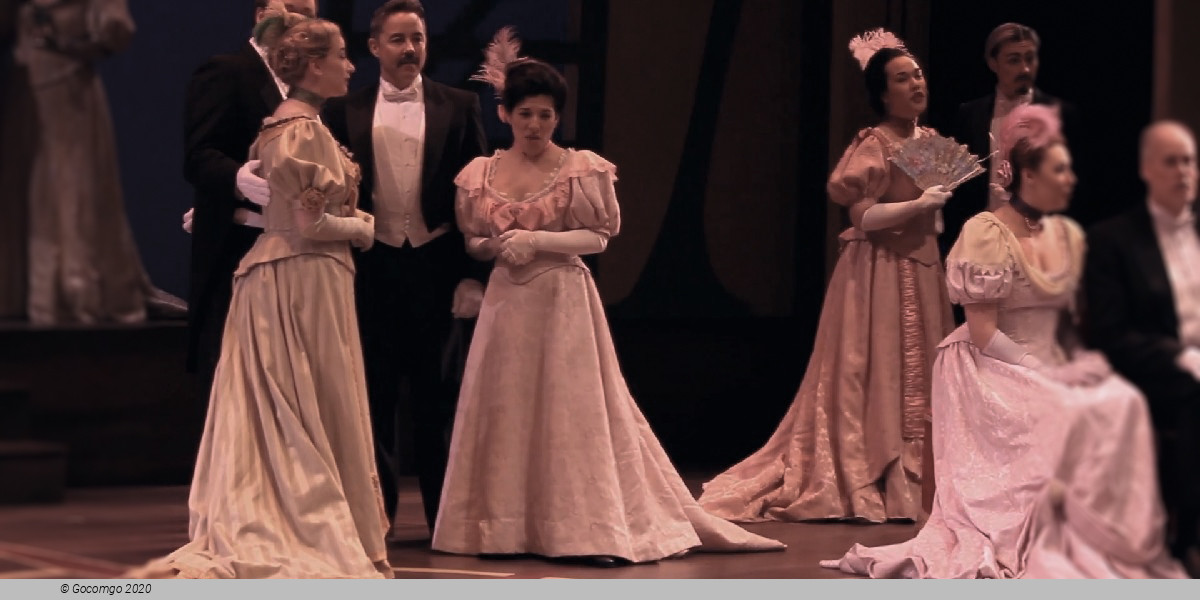
Champagne flows and an entire society waltzes towards the abyss as flirtation, deception and illicit affairs set the masked ball in motion.

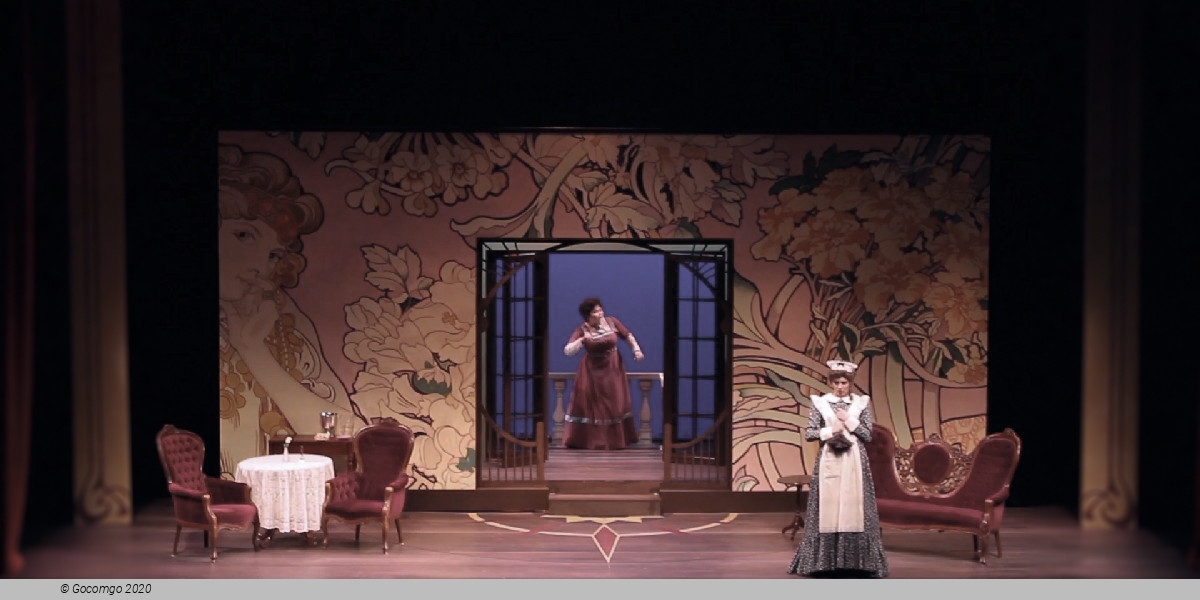
From the sparkling first notes of the overture, the festivities are underway in Johann Strauss’ celebrated operetta. The plot is deliciously convoluted – so sharpen your ears, for events unfold at dazzling speed: One night, Eisenstein left his friend Dr Falke asleep in the street, inebriated and dressed in a bat costume. Now Falke seeks revenge. He invites Eisenstein to a masked ball – and secretly extends the invitation to Eisenstein’s wife, Rosalinde. Disguised as a Hungarian countess, she captivates her own husband, who eagerly attempts to seduce her. The couple’s maid, Adele, is also in attendance, as is the prison governor Frank – who, incidentally, was meant to arrest Eisenstein.

Confused? There is no need to be. In Strauss’ immortal operetta, nothing is meant to be taken too seriously. The Austrian master underscores the frivolity with a cascade of irresistible melodies and effervescent waltzes. Look forward to star director Barrie Kosky’s exuberant staging, in which bat costumes play no small part, and where singers, dancers and more than thirty supernumeraries transform The Opera House’s main stage into the setting for a party you will not soon forget. Kosky is also the creative force behind several recent successes at the Royal Danish Opera, including Bizet’s Carmen, Handel’s Saul, Mozart’s Die Zauberflöte and Poulenc’s Dialogues des Carmélites.

History
Premiere of this production: 05 April 1874, Theater an der Wien in Vienna

Die Fledermaus is an operetta composed by Johann Strauss II to a German libretto by Karl Haffner and Richard Genée.

Synopsis

Act 1

Eisenstein's apartment

Gabriel von Eisenstein, a Viennese man-about-town, has been sentenced to eight days in prison for insulting an official, partially due to the incompetence of his attorney, Dr. Blind. Adele, Eisenstein's maid, receives a forged letter, allegedly from her sister who is in the company of the ballet, but actually written by Falke, inviting her to Prince Orlofsky's ball. She pretends the letter says that her aunt is very sick, and asks her mistress Rosalinde (Eisenstein's wife) for an evening off ("Da schreibt meine Schwester Ida"/"My sister Ida writes to me"). Falke, Eisenstein's friend, arrives to invite him to the ball (Duet: "Komm mit mir zum Souper"/"Come with me to the souper"). Together, they recall a practical joke which Eisenstein played on Falke a few years ago, for which Falke is secretly planning a light-hearted revenge in kind. Eisenstein bids farewell to Adele and his wife Rosalinde, pretending he is going to prison (Trio: "O Gott, wie rührt mich dies!"/"Oh dear, oh dear, how sorry I am") but really intending to postpone jail for one day and have fun at the ball.

After Eisenstein leaves, Rosalinde is visited by her former lover, the singing teacher Alfred, who serenades her ("Täubchen, das entflattert ist"/"Dove that has escaped"). Frank, the governor of the prison, arrives to take Eisenstein to jail, and finds Alfred instead. In order not to compromise Rosalinde, Alfred agrees to pretend to be Eisenstein and to accompany Frank. (Finale, drinking song: "Glücklich ist, wer vergisst"/"Happy is he who forgets" followed by Rosalinde's defence when Frank arrives: "Mit mir so spät im tête-à-tête"/"In tête-à-tête with me so late," and Frank's invitation: "Mein schönes, großes Vogelhaus"/"My beautiful, large bird-cage.")

Act 2

A summer house in the Villa Orlofsky

It transpires that Falke, with Prince Orlofsky's permission, is using the ball as a way of getting revenge on Eisenstein. Some time before, after a costume-party, Eisenstein had abandoned Falke, very drunk and dressed in a bat-costume, in the center of town, exposing him to ridicule the next day. As part of his scheme, Falke has invited Frank, Adele, and Rosalinde to come the ball, all concealing their identities as well. Rosalinde pretends to be a masked Hungarian countess, Eisenstein goes by the name "Marquis Renard," Frank is "Chevalier Chagrin," and Adele, who has borrowed one of Rosalinde's dresses without permission, pretends she is an actress.

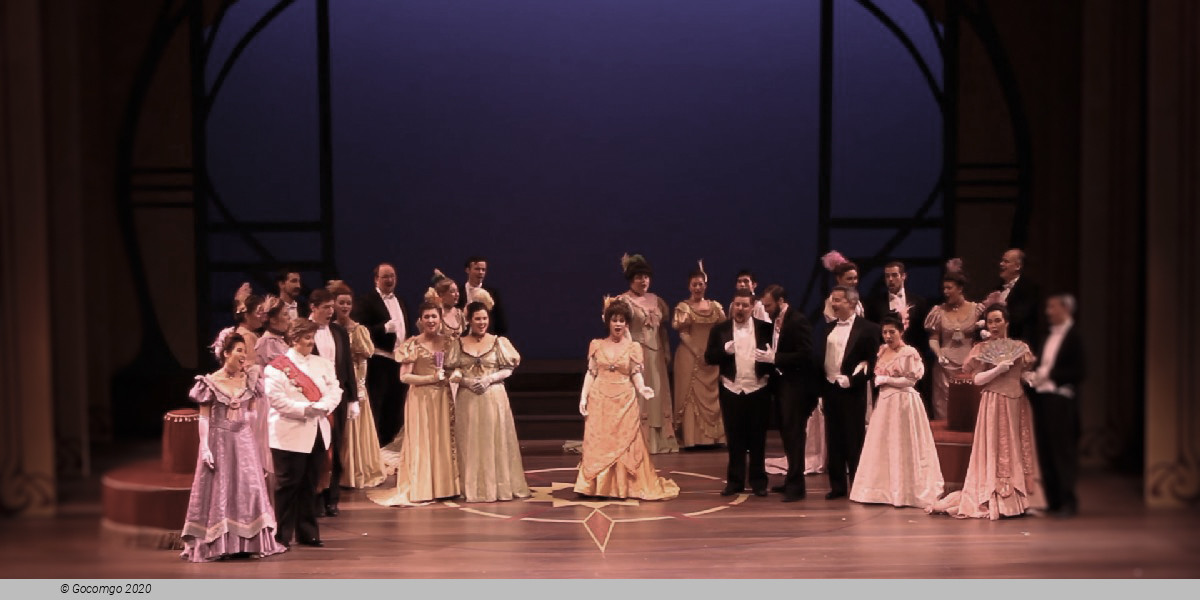
The ball is in progress (Chorus: "Ein Souper heut' uns winkt"/"A souper is before us") and the Prince welcomes his guests ("Ich lade gern mir Gäste ein"/"I love to invite my friends"). Eisenstein is introduced to Adele, but is confused as to who she really is because of her striking resemblance to his maid. ("Mein Herr Marquis"/"My lord marquis," sometimes referred to as "Adele's Laughing Song"). Frank arrives. He and Eisenstein, who are both posing as Frenchmen, attempt to conceal their identities by repeating common French phrases to each other, to Orlofsky's great amusement. Since neither actually knows French, both are fooled. As the party progresses, they both experience alcohol-induced good-feeling and manly camaraderie for each other.

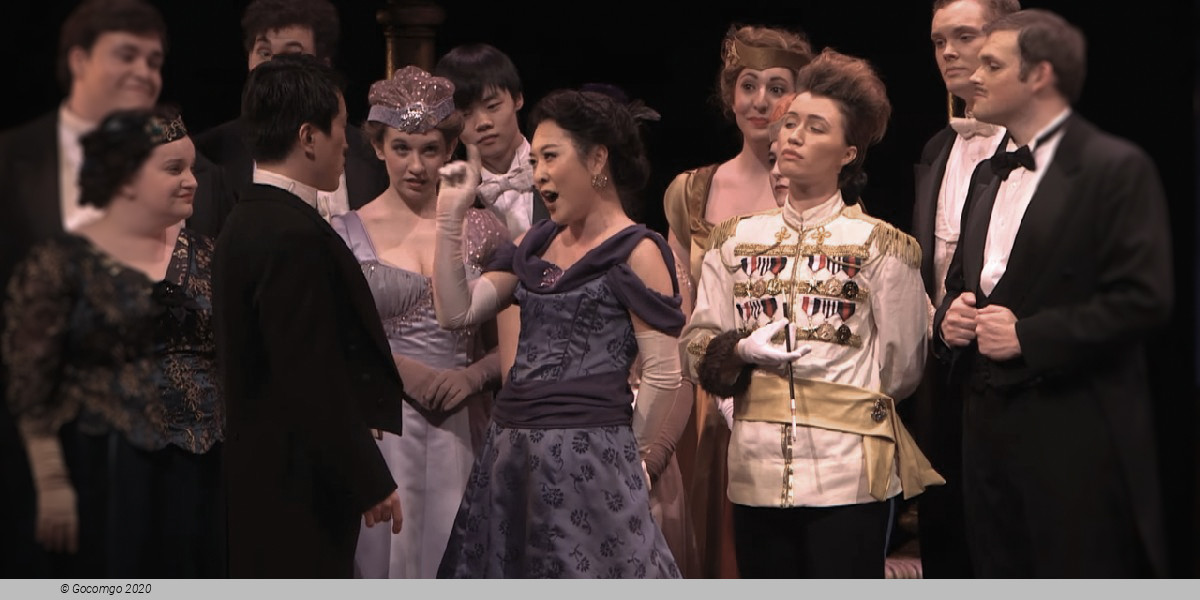
Then Falke introduces the masked Rosalinde to the company. She convinces everyone that she is Hungarian by singing the "Czardas", a sentimental dancing-song ("Klänge der Heimat"/"Sounds from home"). During an amorous tête-à-tête, Eisenstein tries unsuccessfully to persuade the mystery-woman to unmask. She succeeds in extracting a valuable watch from her husband's pocket, something which she can use in the future as evidence of his impropriety. (Watch duet: "Dieser Anstand, so manierlich"/"Her bearing, so well-mannered"). In a rousing finale, Orlofsky makes a toast to champagne, and the company celebrates (The Champagne song: "Im Feuerstrom der Reben"/"In the fire stream of the grape"; followed by the canon: "Brüderlein, Brüderlein und Schwesterlein"/"Brothers, brothers and sisters" and the waltz finale, "Ha, welch ein Fest, welche Nacht voll Freud'!"/"Ha, what joy, what a night of delight.") Eisenstein and Frank dash off as the clock strikes six in the morning.

(Note: The "Champagne song", which is sung by the entire ensemble, should not be confused with the baritone aria "Fin ch' han dal vino" from Don Giovanni, which is often called the "Champagne aria".)

Act 3

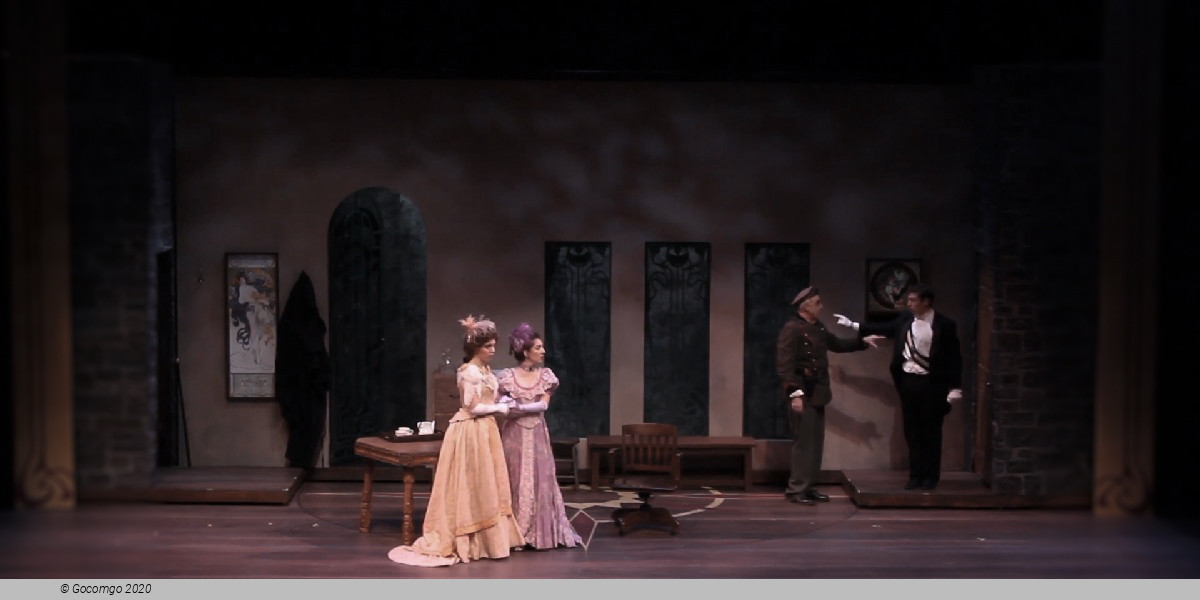
In the prison offices of Warden Frank

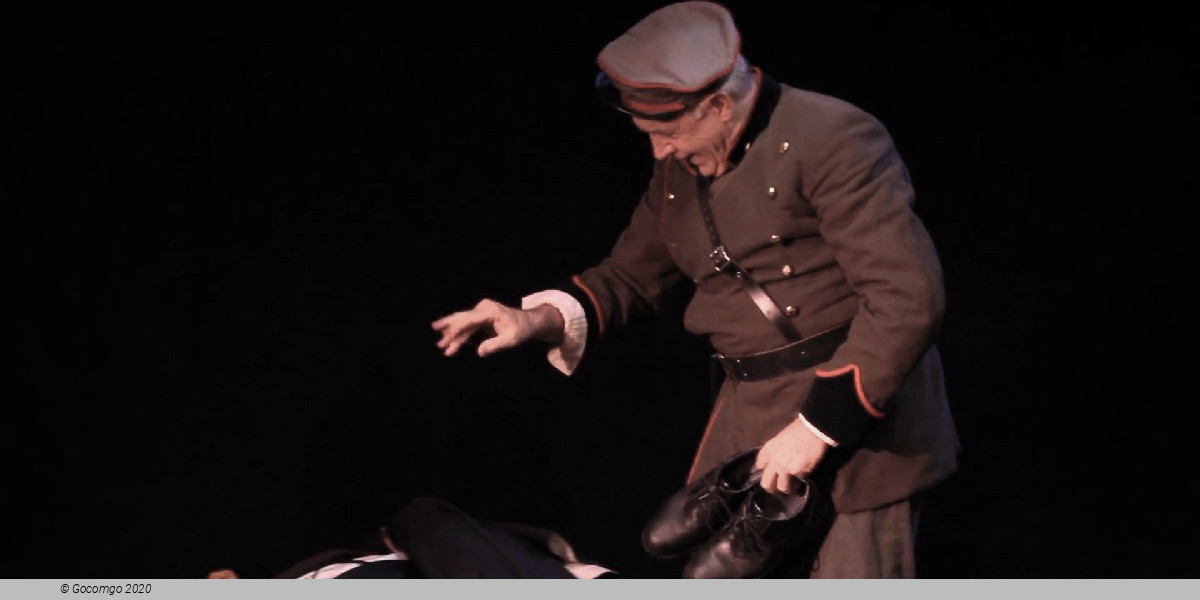
The next morning they all find themselves at the prison where the confusion increases and is compounded by the jailer, Frosch, who has profited by Warden Frank's absence to become gloriously drunk. Alfred, still in jail in Eisenstein's place, irritates the other prisoners by singing operatic arias.

Adele arrives to ask the Chevalier Chagrin (actually Frank) to sponsor her career as an actress, but Frank is not wealthy enough to do this (Melodrama; Couplet of Adele: "Spiel' ich die Unschuld vom Lande"/"If I play the innocent peasant maid"). Meanwhile, Alfred asks Frosch to summon Dr. Blind to help get him released; Frank agrees to allow this and Dr. Blind arrives. Eisenstein enters and says he has come to serve his sentence. He is surprised when Frank tells him that his cell is already occupied by a man who claims to be Eisenstein and whom Frank had arrested in Eisenstein's apartment. Frank further tells Eisenstein that the man he arrested was singing amorous songs to Rosalinde at the time of his arrest, and warmly kissed her goodbye. Enraged, Eisenstein takes Dr. Blind's wig and glasses in order to disguise himself and confront the impersonator Alfred, whom Eisenstein now believes has cuckolded him. Rosalinde enters. Eisenstein takes off his disguise and accuses her of being unfaithful to him with Alfred. Eisenstein, Rosalinde, and Alfred sing a trio in which Eisenstein angrily claims the right of vengeance (Trio: "Ja, ich bin's, den ihr betrogen...Ra-ra-ra-ra-Rache will ich!"/"I'm the one who was mistreated....Ve-ve-ve-ve-vengeance is mine!"). However, Rosalinde produces his watch, and he realizes that the Hungarian mystery-woman he tried to seduce at Orlofsky's party was actually Rosalinde in disguise and that he, not she, is at fault.

Falke enters with all the guests from the party and explains that the whole thing was payback for Eisenstein's practical joke on him three years before. Eisenstein is delighted by the prank, and he begs Rosalinde to forgive him for his attempted infidelity. Rosalinde refuses at first, and threatens to divorce him, but Eisenstein tells her that his misbehavior was caused by the champagne. She accepts this explanation and immediately forgives him unconditionally. Orlofsky promises to finance Adele's acting career, and the company joyfully reprises the "Champagne song" from Act 2.

Venue Info

Royal Danish Theatre - Copenhagen
Location   August Bournonvilles Passage 2-8

The Royal Danish Theatre is the major opera house in Denmark. It has been located at Kongens Nytorv in Copenhagen since 1748, originally designated as the king's theatre but with public access. The theatre presents opera, the Royal Danish Ballet, classical music concerts (by the Royal Danish Orchestra, which dates back to 1448), and drama in several locations.

The Royal Danish Theatre organization is under the control of the Danish Ministry of Culture, and its objectives are to ensure the staging of outstanding performances that do justice to the various stages that it controls.

The first edifice on the site was designed by court architect Nicolai Eigtved, who also masterminded Amalienborg Palace. In 1774, the old theatre seating 800 theatergoers were reconstructed by architect C.F. Harsdorff to accommodate a larger audience.

During the theatre's first seasons the staffing was modest. Originally, the ensemble consisted of eight actors, four actresses, two male dancers, and one female dancer. Gradually over the following decades, the Royal Danish Theatre established itself as the kind of multi-theatre we know today, home to drama, opera, ballet, and concerts – all under the same roof and management.

An important prerequisite for the theatre's artistic development is its schools. The oldest is the ballet school, established at the theatre in 1771. Two years later, a vocal academy was established as a forerunner for the opera academy. A number of initiatives were considered regarding a drama school, which was established much later.

King Frederik VI, who ascended the throne in 1808, is probably the monarch who most actively took part in the management of the Royal Danish Theatre, not as an arbiter of taste but as its supreme executive chef.

The theatre's bookkeeping accounts of these years show numerous endorsements where the king took personal decisions on everything from wage increases and bonuses to the purchase of shoelaces for the ballerinas. Indeed, the Royal Danish Theatre became the preoccupation of an introverted nation, following the English Wars had suffered a state bankruptcy. "In Denmark, there is only one city and one theatre," as philosopher Søren Kierkegaard put it.

This was the theatre to which the 14-year-old fairytale storyteller Hans Christian Andersen devoted his early ambition. This was also the theatre that became the social and artistic focal point of the many brilliant artists of Denmark's Golden Age.

After the abolition of absolute monarchy in 1849, the Royal Danish Theatre's status as "the city's theatre" fell into decline. No longer enjoying a monopoly within the performing arts, the Royal Danish Theatre was now required by its new owner, the state, to serve the entire nation. The dilapidated building at Kongens Nytorv also found it hard to compete with the splendor of the new popular stage that was rapidly emerging across town. The solution was to construct a brand new theatre building. It was designed in the Historicist style of the times by architects William Dahlerup and Ove Pedersen and situated alongside the old theatre, which was subsequently demolished.

The inauguration of what we today call the Old Stage took place on 15 October 1874. Here opera and ballet were given ample scope. But due to the scale of the building, the auditorium was less suited for spoken drama, which is why a new playhouse was required.

The Royal Danish Theatre has over the past decade undergone the most extensive transformation ever in its over 250-year history. The Opera House in Copenhagen was inaugurated in January 2005, donated by the AP Møller and Chastine Mc-Kinney Møller Foundation, and designed by architect Henning Larsen. And the Royal Danish Playhouse was completed in 2008. Located by Nyhavn Canal across from the Opera House, the playhouse is designed by architects Boje Lundgaard and Lene Tranberg.

Today, the Royal Danish Theatre comprises the Old Stage, located by Kongens Nytorv, the Opera House, and the Royal Danish Playhouse. 

Important Info
Type: Opera
City: Copenhagen, Denmark
Starts at: 19:30
Intervals: 1
Duration: 3h 10min
Sung in: German
Titles in: English,Danish
Top of page