
Prague National Theatre 9 January 2022 - Forsythe / Clug / McGregor | GoComGo.com

Forsythe / Clug / McGregor

Prague National Theatre, The State Opera, Prague, Czech Republic
All photos (4)
Select date and time
7 PM

E-tickets: Print at home or at the box office of the event if so specified. You will find more information in your booking confirmation email.

You can only select the category, and not the exact seats.
If you order 2 or 3 tickets: your seats will be next to each other.
If you order 4 or more tickets: your seats will be next to each other, or, if this is not possible, we will provide a combination of groups of seats (at least in pairs, for example 2+2 or 2+3).

Important Info
Type: Modern Ballet
City: Prague, Czech Republic
Starts at: 19:00
Acts: 3
Intervals: 2
Duration: 1h 50min

E-tickets: Print at home or at the box office of the event if so specified. You will find more information in your booking confirmation email.

You can only select the category, and not the exact seats.
If you order 2 or 3 tickets: your seats will be next to each other.
If you order 4 or more tickets: your seats will be next to each other, or, if this is not possible, we will provide a combination of groups of seats (at least in pairs, for example 2+2 or 2+3).

Overview

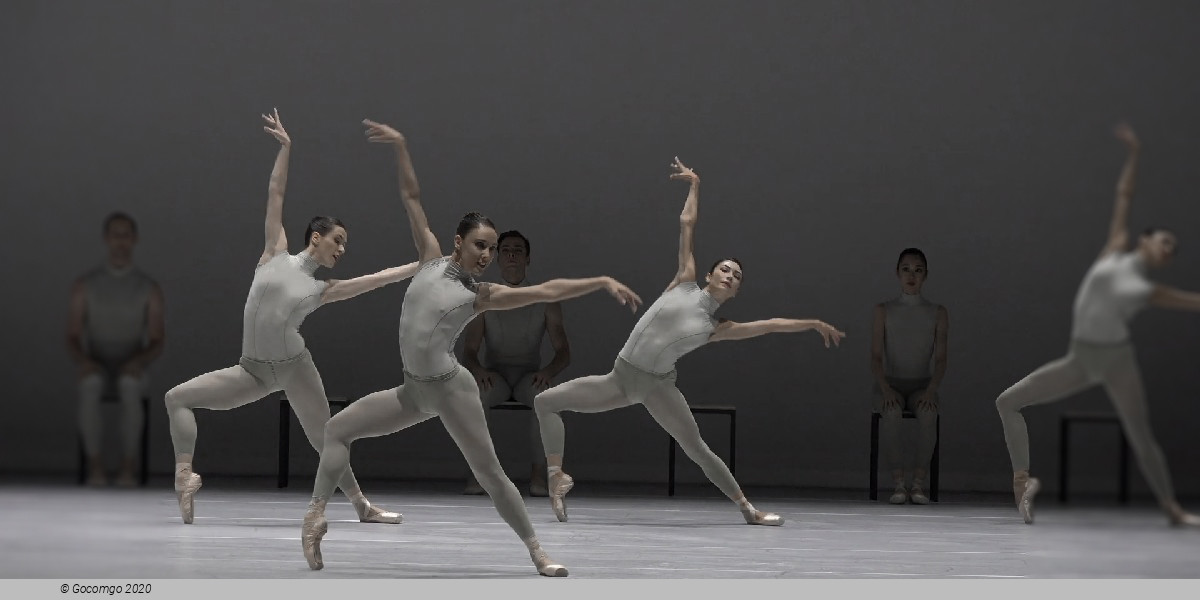
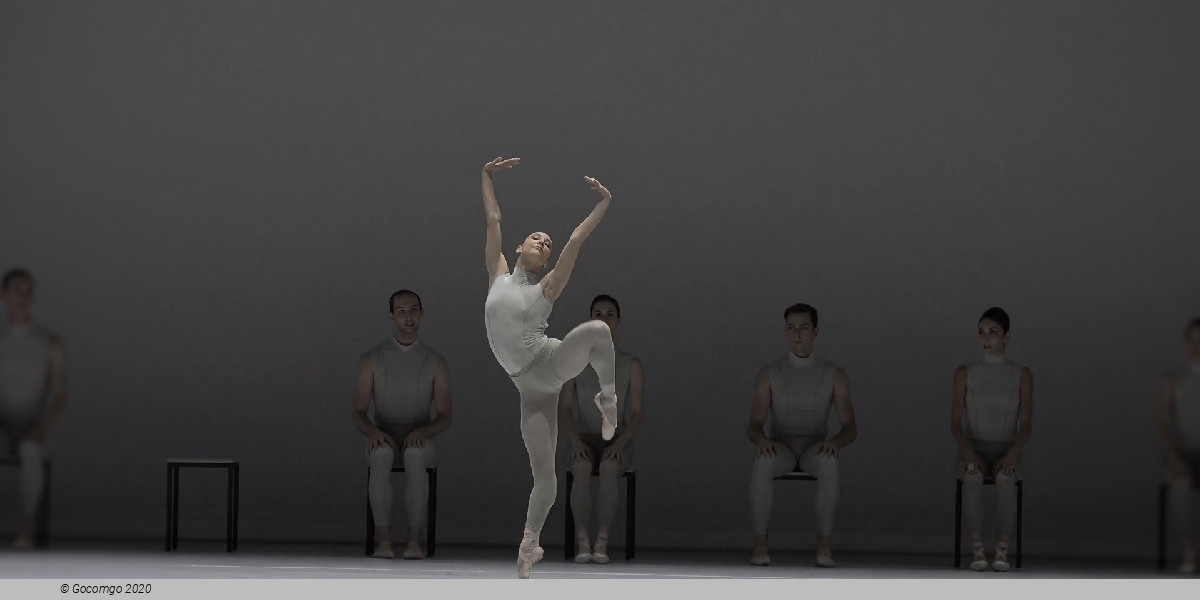
The mixed bill comprises works of three contemporary dance innovators, ranking among the most globally renowned, extremely gifted choreographers of the present time, all of them inventors of new, singular movement idioms.

William Forsythe is a towering figure of contemporary global dance. Blending ballet and visual arts, and displaying both abstraction and forceful theatricality, his vision of choreography as an organisational practice has inspired him to produce numerous installations, films, as well as computer-based creations, incorporating the spoken word and experimental music. 
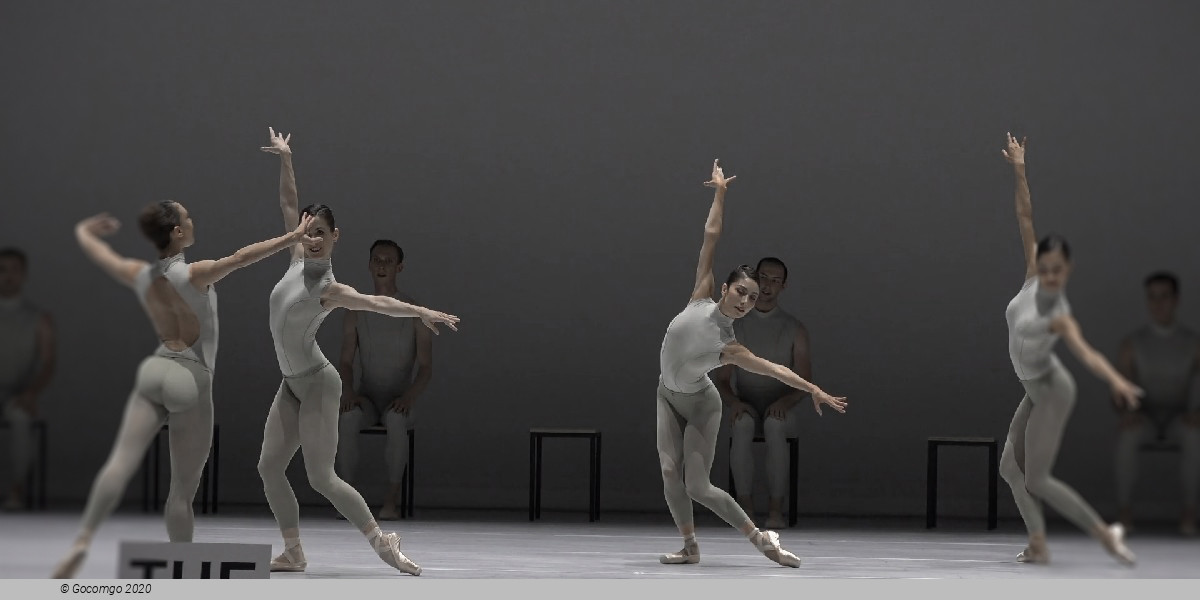
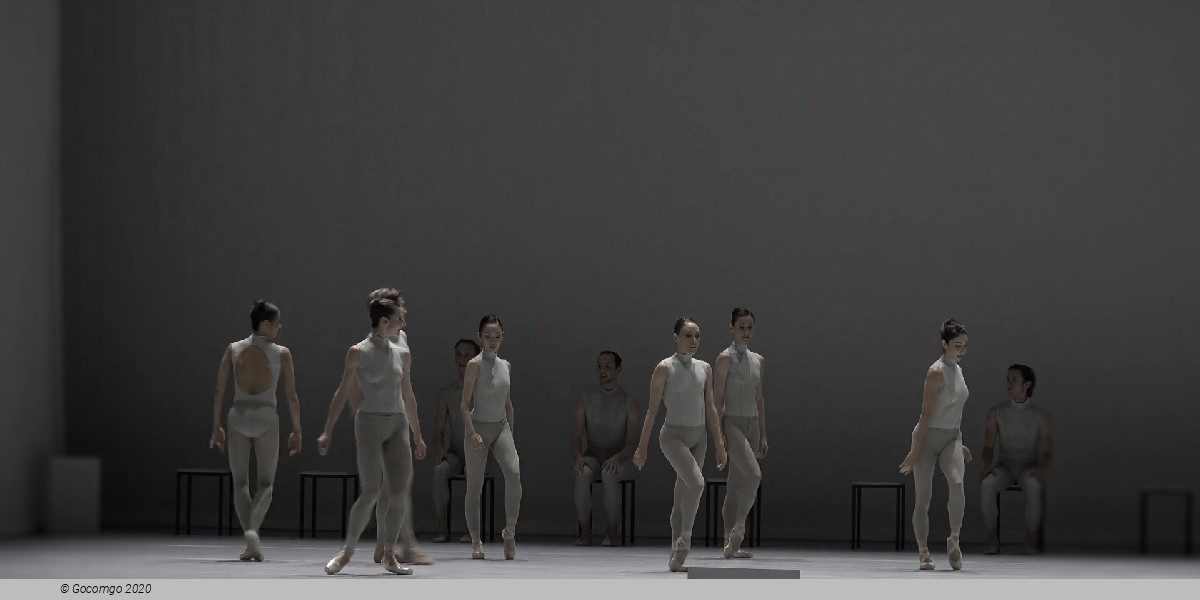
The Second Detail is simultaneously playful and rigorous, set to an aggressively percussive score by Forsythe’s frequent collaborator, the Dutch composer Thom Willems. Created for the National Ballet of Canada in 1991, the choreography, characterised by the neo-classical symmetry of ensemble formations, is unceasingly challenging. Forsythe plays with tempo, group dynamics and off-axis lines executed at speed.

Innocently exaggerating, then wittily shuffling academic pas, Forsyth pokes fun at the manners of classical artists. Above their habit, carefully settle in fifth position before starting the movement; above the business walk - from the heel, which they proudly removed from the center of the class scene after the successful execution of a particularly sophisticated combination; purely industrial relations between partners; over the ability to subordinate himself to the corps de ballet flock and at the same time the desire to stand out from the masses. Each of the 14 participants is allowed to stand out: in a series of lightning fast solos and duets flashing among the measured accompaniment of disciplined luminaries, considerable risks are inherent - a sudden and sharp deflection during large tours; a zigzag of the case, which exorbitantly complicates the rotation; throwing legs along a lawless trajectory and other voluntaristic escapades.

In 2016 Clug created for Nederlands Dans Theater 2 (NDT 2) the choreography Handman, for which in 2017 he receiveda nomination for the coveted Benois de la danse prize. 

Edward Clug, currently serving as the artistic director of the Slovene National Theatre in Maribor, gained international acclaim as a choreographer with Radio and Juliet in 2005. A sought-after artist, he has created works for the Nederlands Dans Theater, Ballett Zürich, Royal Ballet of Flanders, Stuttgarter Ballett, Latvian Ballet, Les Grand Ballet Canadiens, Wiener Staatsoper, West Australian Ballet, Companhia Nacional de Bailado in Lisbon, Aalto Ballet Essen, Ballett Augsburg, among others.

The award-winning British choreographer and stage director Wayne McGregor is internationally renowned for trailblazing innovations in performance, integrating dance, film, visual arts, digital technologies and natural sciences. In Eden|Eden, he focuses on the impact of technology on the aesthetics of the environment and the human body alike. ‘Dolly’, is from the three-act digital video opera Three Tales by Steve Reich and Beryl Korot, where the video component is by Ms. Korot.  Additionally, this work was released by Nonesuch Records in a two-disc DVD/CD package.  It is to be noted that the video component included in this ballet by Wayne McGregor is not from Three Tales. 

Venue Info

Prague National Theatre - Prague
Location   Národní 2

The National Theatre is the prime stage of the Czech Republic. It is also one of the symbols of national identity and a part of the European cultural space, with a tradition spanning more than 130 years. It is the bearer of the national cultural heritage, as well as a space for free artistic creation.

The National Theatre (Czech: Národní divadlo) in Prague is known as the alma mater of Czech opera, and as the national monument of Czech history and art.

The National Theatre belongs to the most important Czech cultural institutions, with a rich artistic tradition, which helped to preserve and develop the most important features of the nation–the Czech language and a sense for a Czech musical and dramatic way of thinking.

Today, the National Theatre is made up of four artistic companies – the Opera, Drama, Ballet and Laterna magika. It artistically manages four stages – the three historical buildings: the National Theatre (1883), the State Opera (1888), and the Estates Theatre (1783), and the more recently opened New Stage (1983). The Opera, Drama and Ballet companies perform not only titles from the ample classical legacy, in addition to Czech works, they also focus on contemporary international creation.

Grand opening

The National Theatre was opened for the first time on 11 June 1881, to honour the visit of Crown Prince Rudolf of Austria. Bedřich Smetana's opera Libuše was given its world premiere, conducted by Adolf Čech. Another 11 performances were presented after that. Then the theatre was closed down to enable the completion of the finishing touches. While this work was under way a fire broke out on 12 August 1881, which destroyed the copper dome, the auditorium, and the stage of the theatre.

The fire was seen as a national catastrophe and was met with a mighty wave of determination to take up a new collection: Within 47 days a million guldens were collected. This national enthusiasm, however, did not correspond to the behind-the-scenes battles that flared up following the catastrophe. Architect Josef Zítek was no longer in the running, and his pupil architect Josef Schulz was summoned to work on the reconstruction. He was the one to assert the expansion of the edifice to include the block of flats belonging to Dr. Polák that was situated behind the building of the Provisional Theatre. He made this building a part of the National Theatre and simultaneously changed somewhat the area of the auditorium to improve visibility. He did, however, take into account with utmost sensitivity the style of Zítek's design, and so he managed to merge three buildings by various architects to form an absolute unity of style.

Important Info
Type: Modern Ballet
City: Prague, Czech Republic
Starts at: 19:00
Acts: 3
Intervals: 2
Duration: 1h 50min
Top of page