Prague National Theatre tickets 9 February 2027 - The Rake’s Progress | GoComGo.com

The Rake’s Progress

Prague National Theatre, The Estates Theatre, Prague, Czech Republic
Select date and time
7 PM
From
US$ 85

E-tickets: Print at home or at the box office of the event if so specified. You will find more information in your booking confirmation email.

You can only select the category, and not the exact seats.
If you order 2 or 3 tickets: your seats will be next to each other.
If you order 4 or more tickets: your seats will be next to each other, or, if this is not possible, we will provide a combination of groups of seats (at least in pairs, for example 2+2 or 2+3).

Important Info
Type: Opera
City: Prague, Czech Republic
Starts at: 19:00
Sung in: English
Titles in: Czech,English

E-tickets: Print at home or at the box office of the event if so specified. You will find more information in your booking confirmation email.

You can only select the category, and not the exact seats.
If you order 2 or 3 tickets: your seats will be next to each other.
If you order 4 or more tickets: your seats will be next to each other, or, if this is not possible, we will provide a combination of groups of seats (at least in pairs, for example 2+2 or 2+3).

Cast
Performers
Choir: The National Theatre Chorus
Orchestra: The National Theatre Orchestra
Creators
Composer: Igor Stravinsky
Librettist: Chester Kallman
Director: Mélanie Huber
Librettist: Wystan Hugh Auden
Overview

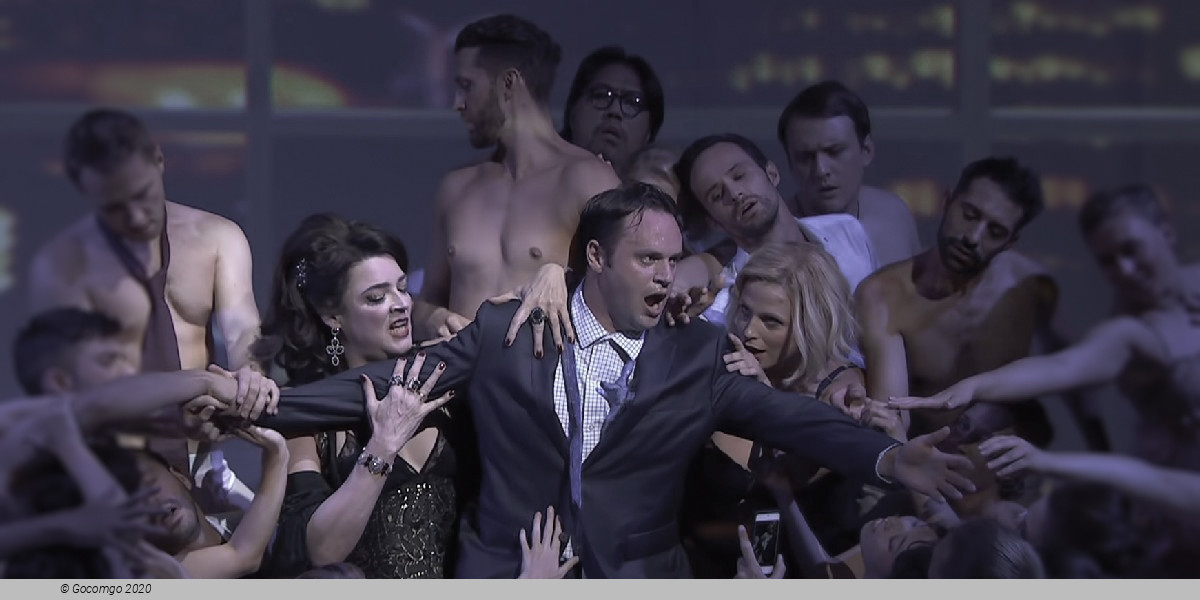
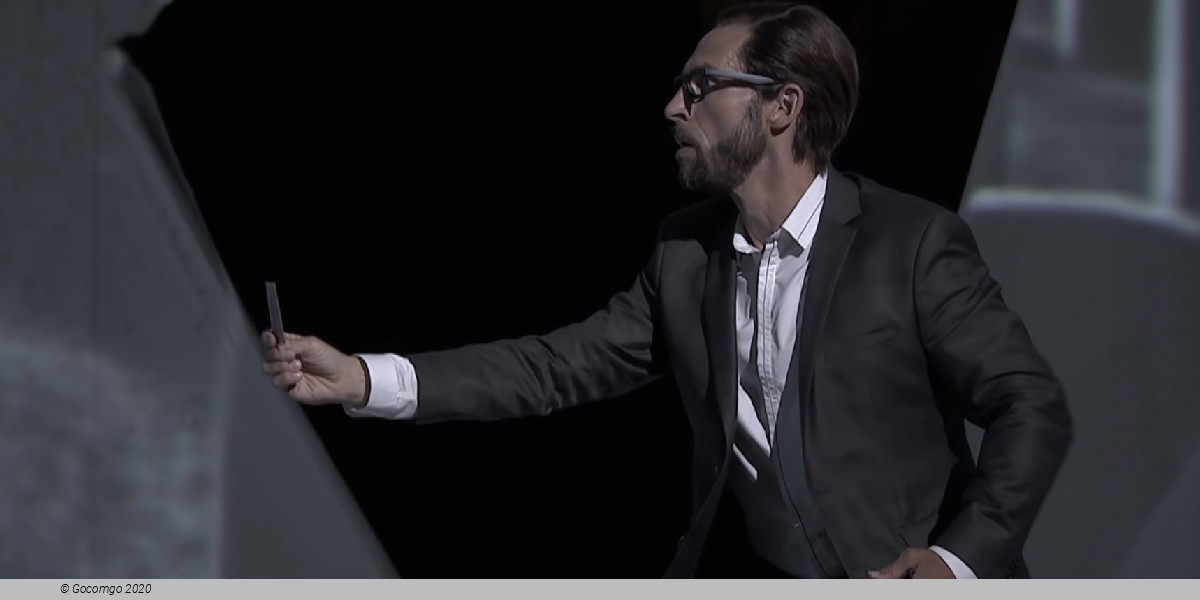
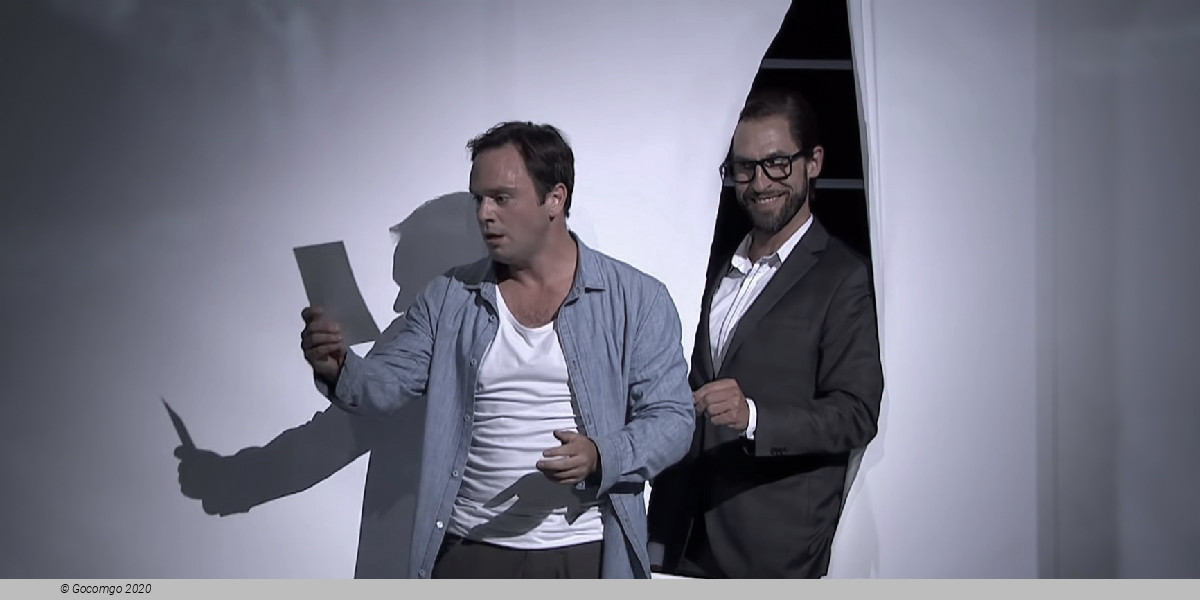
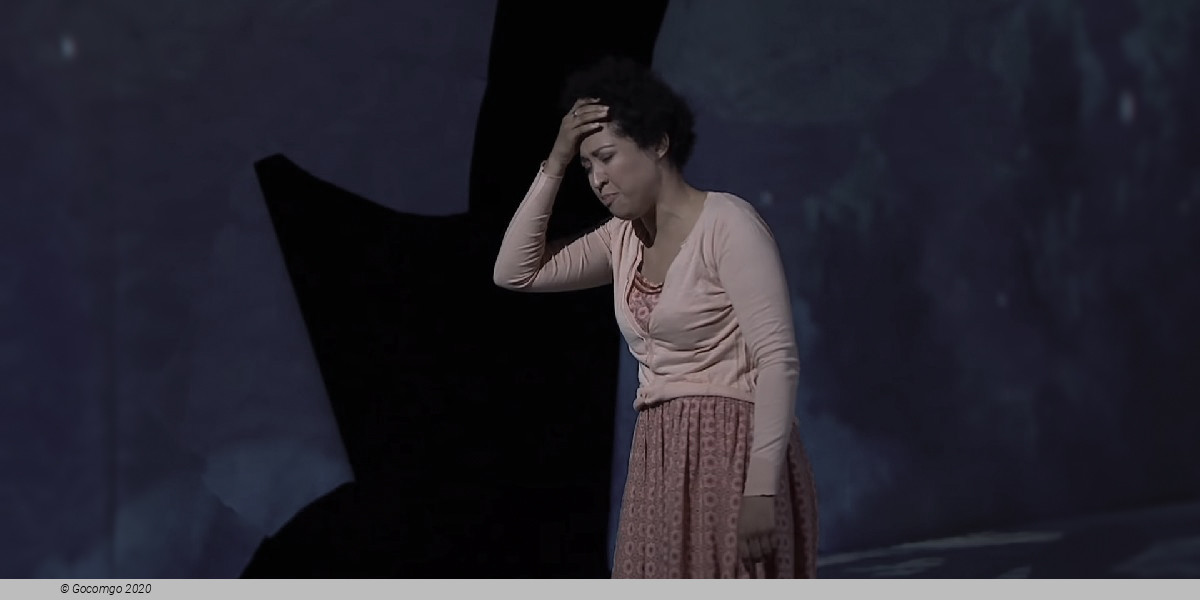
Igor Stravinsky’s neoclassical opera inspired by William Hogarth’s famous cycle of engravings. A modern variation on the Don Juan and Faust myths.

Almost three centuries have passed since the English painter, satirist and “forefather of the cartoon” William Hogarth created a series of eight paintings (and later on engravings), tellingly titled A Rake’s Progress – the path, development, simply the life of a libertine. They capture the story of a young man who inherits an immense fortune and proceeds to squander it on luxurious living, gambling and prostitutes. It is not a trait exclusive to the 18th century that people indulging in such a lifestyle end up at a psychiatric hospital, called during Hogarth’s time (and until recently) an “asylum”.

When, in 1947, Igor Stravinsky attended an exhibition in Chicago of Hogarth’s engravings, they struck him as an ideal subject for an opera. The composer duly turned to the poet W. H. Auden, with whom, and later on with the poet Chester Kallmann, he would create the libretto. They did not adapt Hogarth’s pictures literally, yet elaborated them in a form abounding in parody and references to 18th-century opera. Stravinsky’s Neoclassical piece, premiered in 1951 in Venice, can be construed as a modern variation on the Don Juan and, to a certain degree, Faust myths. Similarly to Mozart’s Don Giovanni, Stravinsky’s Tom Rakewell raises the question of the limits and controllability of human freedom, which upon reaching a certain point transforms into its very opposite – dependence, slavery, perdition, insanity …

One would be hard pressed indeed to think of a venue more fitting for hosting The Rake’s Progress than Prague’s Estates Theatre – owing to its Classicist atmosphere providing a balance to Stravinsky’s Neoclassicism, as well as its being for ever synonymous with Mozart’s famous rake.

History
Premiere of this production: 11 September 1951, Teatro La Fenice, Venice

The Rake's Progress is an English-language opera in three acts and an epilogue by Igor Stravinsky. The story concerns the decline and fall of one Tom Rakewell, who deserts Anne Trulove for the delights of London in the company of Nick Shadow, who turns out to be the Devil. After several misadventures, all initiated by the devious Shadow, Tom ends up in Bedlam, a hospital for the 'insane' at that time situated in the City of London. The moral of the tale is: "For idle hearts and hands and minds the Devil finds work to do."

Synopsis

Act 1

Tom Rakewell is courting Anne Trulove outside her father's house in the country. Trulove has doubts about his daughter's proposed marriage and tries to arrange a regular job for Tom; but Tom resists the idea and, left on his own, declares his intention to "live by my wits and trust to my luck." When Tom expresses his wish for money, Nick Shadow appears and tells him that an unknown uncle has left him a substantial fortune. He then invites Tom to employ him as a servant and accompany Tom to London to sort out the inheritance. The second scene, set in Mother Goose's brothel, shows Shadow introducing his new master to the sleazy aspects of London life. But Tom is uneasy and laments his betrayal of love, yet accepts Mother Goose's invitation to spend the night with her. Meanwhile, back in the country, Anne wonders why she has not heard from Tom. She knows somehow that he is in danger, and sets out for London to aid him.

Act 2

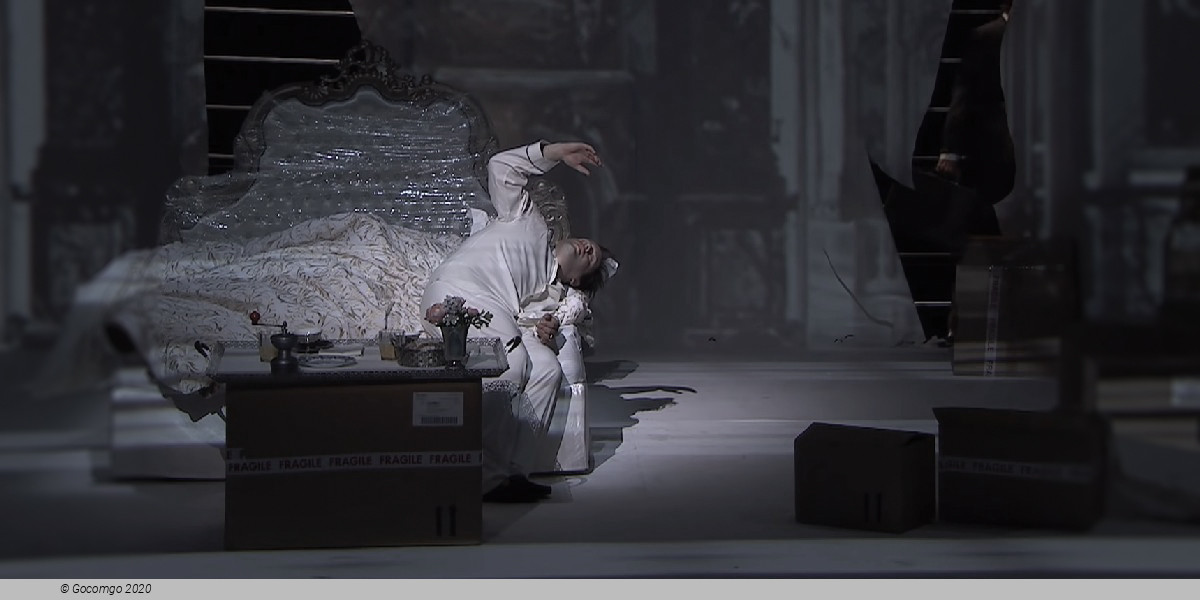
Tom is bored with his dissolute life. He utters his second crucial wish, for happiness, whereupon Nick makes the odd suggestion that he demonstrate his freedom by marrying Baba the Turk, the famous bearded lady. Soon afterwards Anne finds Tom's London house, only to see him emerge from a sedan chair which also contains Baba, whom he has just married. Tom tells Anne to leave, yet genuinely regrets what has happened. In the next scene Tom is clearly finding his eccentric marriage intolerable, as Baba is a chatterbox with a fiery temper. He silences her by throwing his wig over her face, then falls asleep. Nick enters with a "fantastic Baroque Machine" and demonstrates how, through the use of a hidden compartment in the machine, it appears to turn stones into bread. Tom cries out in his sleep that he wishes it were true, and waking, finds the machine he has dreamt of. Nick hints that if such machines were mass-produced Tom could become a saviour of mankind and Tom sets out to market the machine, not knowing it is a sham.

Act 3

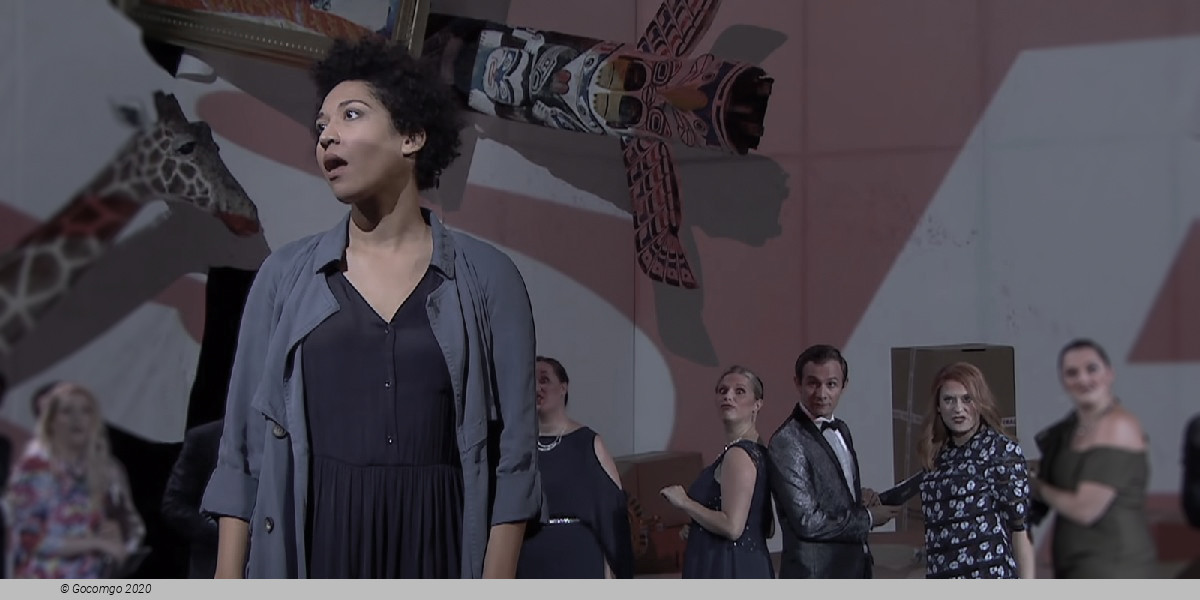
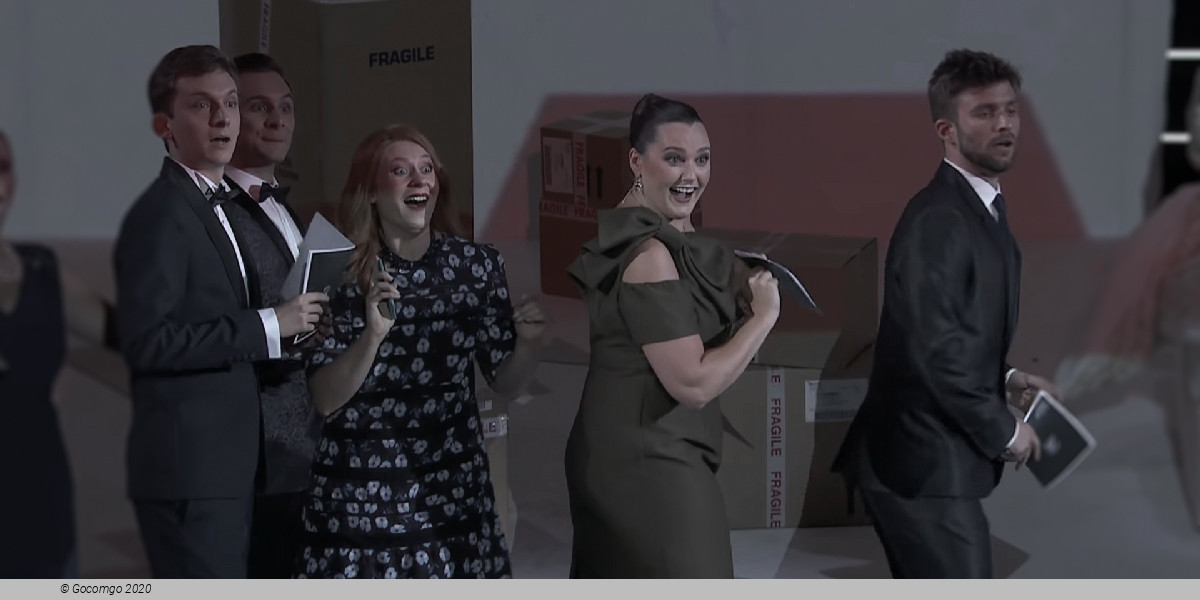
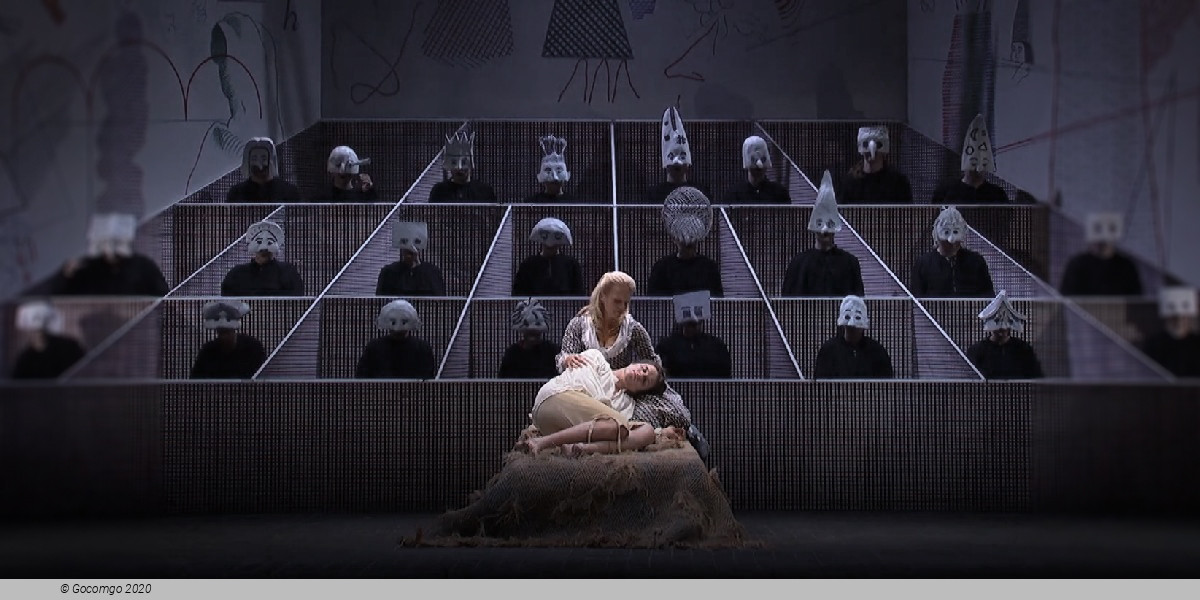
The plan has failed – the act starts with the auction of the ruined Tom's property by the maniac auctioneer Sellem. The objects for sale include Baba, who has remained immobile since being silenced by the wig. When unwrapped, she resumes her tantrum, now directed at the auction-goers for disturbing her belongings, but calms down when Anne enters. Baba advises her to find Tom and "set him right", and warns her against Nick Shadow. She announces her intent to return to her life on the stage. In a graveyard, Nick reveals his identity and demands payment from Tom, in the form of his soul; but as midnight strikes, Nick offers him an escape in the form of a game of cards, which Tom wins, thanks to the benign influence of Anne. Defeated, Nick sinks into the ground, condemning Tom to insanity as he goes. Consigned to Bedlam, Tom believes he is Adonis. Anne ("Venus") visits him, sings him to sleep, then quietly leaves him. When he realises she has gone, he dies.

In an epilogue, each of the principal characters gives a moral drawn from their scenes in the opera, and then come together to ascribe a final joint moral, "for idle hands, and hearts and minds, the Devil finds a work to do."

Venue Info

Prague National Theatre - Prague
Location   Národní 2

The National Theatre is the prime stage of the Czech Republic. It is also one of the symbols of national identity and a part of the European cultural space, with a tradition spanning more than 130 years. It is the bearer of the national cultural heritage, as well as a space for free artistic creation.

The National Theatre (Czech: Národní divadlo) in Prague is known as the alma mater of Czech opera, and as the national monument of Czech history and art.

The National Theatre belongs to the most important Czech cultural institutions, with a rich artistic tradition, which helped to preserve and develop the most important features of the nation–the Czech language and a sense for a Czech musical and dramatic way of thinking.

Today, the National Theatre is made up of four artistic companies – the Opera, Drama, Ballet and Laterna magika. It artistically manages four stages – the three historical buildings: the National Theatre (1883), the State Opera (1888), and the Estates Theatre (1783), and the more recently opened New Stage (1983). The Opera, Drama and Ballet companies perform not only titles from the ample classical legacy, in addition to Czech works, they also focus on contemporary international creation.

Grand opening

The National Theatre was opened for the first time on 11 June 1881, to honour the visit of Crown Prince Rudolf of Austria. Bedřich Smetana's opera Libuše was given its world premiere, conducted by Adolf Čech. Another 11 performances were presented after that. Then the theatre was closed down to enable the completion of the finishing touches. While this work was under way a fire broke out on 12 August 1881, which destroyed the copper dome, the auditorium, and the stage of the theatre.

The fire was seen as a national catastrophe and was met with a mighty wave of determination to take up a new collection: Within 47 days a million guldens were collected. This national enthusiasm, however, did not correspond to the behind-the-scenes battles that flared up following the catastrophe. Architect Josef Zítek was no longer in the running, and his pupil architect Josef Schulz was summoned to work on the reconstruction. He was the one to assert the expansion of the edifice to include the block of flats belonging to Dr. Polák that was situated behind the building of the Provisional Theatre. He made this building a part of the National Theatre and simultaneously changed somewhat the area of the auditorium to improve visibility. He did, however, take into account with utmost sensitivity the style of Zítek's design, and so he managed to merge three buildings by various architects to form an absolute unity of style.

Important Info
Type: Opera
City: Prague, Czech Republic
Starts at: 19:00
Sung in: English
Titles in: Czech,English
Top of page