
Prague National Theatre 21 May 2023 - Poe | GoComGo.com

Poe

Prague National Theatre, The New Stage, Prague, Czech Republic
All photos (2)
Select date and time
5 PM
Request for Tickets
Important Info
Type: Show
City: Prague, Czech Republic
Starts at: 17:00
Acts: 1
Duration: 1h 30min
Sung in: Czech
Titles in: English

E-tickets: Print at home or at the box office of the event if so specified. You will find more information in your booking confirmation email.

You can only select the category, and not the exact seats.
If you order 2 or 3 tickets: your seats will be next to each other.
If you order 4 or more tickets: your seats will be next to each other, or, if this is not possible, we will provide a combination of groups of seats (at least in pairs, for example 2+2 or 2+3).

Overview

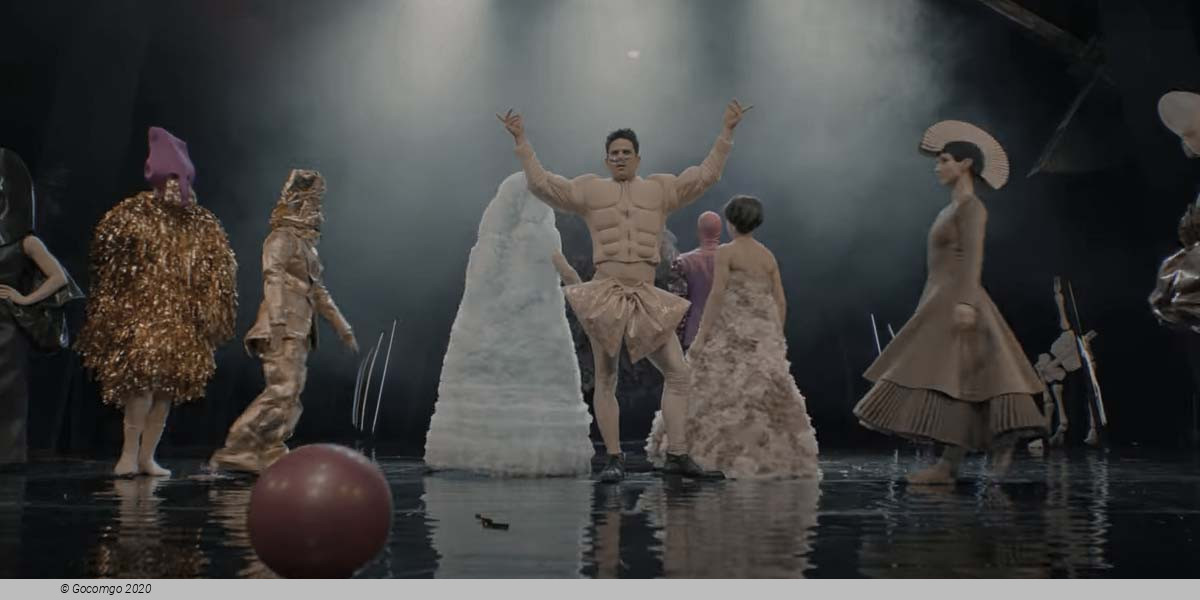
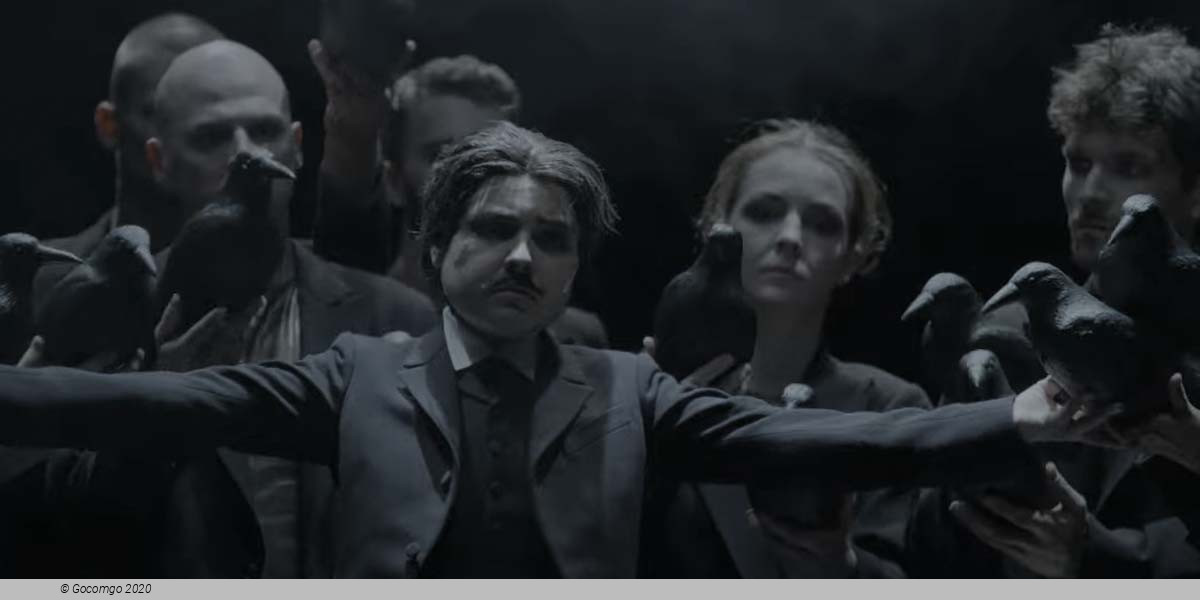
A horror-like performance inspired by the life and work of Edgar Allan Poe. Edgar Allan Poe and the characters of his fantastic universe are brought to life in the performance prepared by Laterna magika, combining dance, singing, original music score, instrumental music, vivid stage design and striking costumes, objects, and marionettes.

“He who has never swooned, is not he who finds strange palaces and wildly familiar faces in coals that glow; is not he who beholds floating in mid-air the sad visions that the many may not view; is not he who ponders over the perfume of some novel flower—is not he whose brain grows bewildered with the meaning of some musical cadence which has never before arrested his attention.” (Edgar Allan Poe: The Pit and the Pendulum) 

The performance is inspired by selected short stories – The Pit and the Pendulum, Hop-Frog and The Masque of the Red Death, which form the basic dramaturgic structure and are interconnected with a series of atmospheres and messages as varied as Poe’s work. Edgar Allan Poe and the characters of his fantastic universe are brought to life in the performance prepared by Laterna magika, combining dance, singing, original music score, instrumental music, vivid stage design and striking costumes, objects, and marionettes. The performance is inspired by selected short stories, which form the basic dramaturgic structure and are interconnected with a series of atmospheres and messages as varied as Poe’s work. The creators open the dark corners of his soul while also revealing his brilliant sense of humour and exquisite poetry. Poe was a master of mocking as well as honouring the whole range of human characters, demonising evil and sense of power, poetising purity and beauty, and reflecting the intrinsic attributes in the character’s physiognomy. The eye-catching costumes, lyrical and hyperbolic, are funny and scary at the same time. Endless labyrinths of dark rooms and corners and omnipresent supernatural creatures – fairies, phantoms, demons, beats – accentuate the murky atmosphere. The intangible figures materialise thanks to the Peppper’s Ghost effect, which was known in Poe’s times and was first presented to the public in 1860.

Edgar Allan Poe (1809 – 1849) is considered the founder of the detective story genre and the source of inspiration for other well-known authors, such as Arthur Conan Doyle and his Sherlock Holmes, Agatha Christie and her Hercules Poirot, or J. K. Rowling and Alfred Hitchcock. Poe also introduced the quintessential – and often ludicrous – duo of a detective and his assistant.  

Poe had the rare talent of revealing the suspected. He had a gift of materialising incredible and fantastic worlds, as well as of finding magical and universal messages in common situations which are still relevant today. His work was strongly influenced by the dark age of England of his times. He wrote about irrationality, violence, madness, fears, poverty, but also the beauty and sense of life. He was charmed by natural sciences and mysticism; he wrote a wonderful essay on the circle of life and death, philosophy, the God … His poetry shows innovative approaches and the search for perfection, which was possible in literature if not in the miserable reality. This was completely true for him. Poe greatly suffered from the lack of his parents’ affection. Loss and fear were common themes of his work, yet he also wrote poetic and symbolic personal confessions as an expression of his sensible soul. Death is an inseparable companion of love and beauty, just like darkness is of light. Poe’s work is full of humour and irony, showing many parallels to our current existence and the humankind as such. His life was no short of his literary universe. Poe, the son of a good actress and a poor actor who was an alcoholic, was born with the sense of drama in his genes. As a little boy, he swam 6 miles against the current in the James River in Richmond, and then swam against the current for the rest of his short life, during which he lost all his close relatives. Despite being one of the best known and appraised authors worldwide, Poe always doubted the meaningfulness of his work. Only four people came to his funeral, and his gravestone had accidentally broken before it was even placed on his grave.

Venue Info

Prague National Theatre - Prague
Location   Národní 2

The National Theatre is the prime stage of the Czech Republic. It is also one of the symbols of national identity and a part of the European cultural space, with a tradition spanning more than 130 years. It is the bearer of the national cultural heritage, as well as a space for free artistic creation.

The National Theatre (Czech: Národní divadlo) in Prague is known as the alma mater of Czech opera, and as the national monument of Czech history and art.

The National Theatre belongs to the most important Czech cultural institutions, with a rich artistic tradition, which helped to preserve and develop the most important features of the nation–the Czech language and a sense for a Czech musical and dramatic way of thinking.

Today, the National Theatre is made up of four artistic companies – the Opera, Drama, Ballet and Laterna magika. It artistically manages four stages – the three historical buildings: the National Theatre (1883), the State Opera (1888), and the Estates Theatre (1783), and the more recently opened New Stage (1983). The Opera, Drama and Ballet companies perform not only titles from the ample classical legacy, in addition to Czech works, they also focus on contemporary international creation.

Grand opening

The National Theatre was opened for the first time on 11 June 1881, to honour the visit of Crown Prince Rudolf of Austria. Bedřich Smetana's opera Libuše was given its world premiere, conducted by Adolf Čech. Another 11 performances were presented after that. Then the theatre was closed down to enable the completion of the finishing touches. While this work was under way a fire broke out on 12 August 1881, which destroyed the copper dome, the auditorium, and the stage of the theatre.

The fire was seen as a national catastrophe and was met with a mighty wave of determination to take up a new collection: Within 47 days a million guldens were collected. This national enthusiasm, however, did not correspond to the behind-the-scenes battles that flared up following the catastrophe. Architect Josef Zítek was no longer in the running, and his pupil architect Josef Schulz was summoned to work on the reconstruction. He was the one to assert the expansion of the edifice to include the block of flats belonging to Dr. Polák that was situated behind the building of the Provisional Theatre. He made this building a part of the National Theatre and simultaneously changed somewhat the area of the auditorium to improve visibility. He did, however, take into account with utmost sensitivity the style of Zítek's design, and so he managed to merge three buildings by various architects to form an absolute unity of style.

Important Info
Type: Show
City: Prague, Czech Republic
Starts at: 17:00
Acts: 1
Duration: 1h 30min
Sung in: Czech
Titles in: English
Top of page