Metropolitan Opera tickets 22 September 2026 - Macbeth | GoComGo.com

Macbeth

Metropolitan Opera, Metropolitan Opera, New York, USA
All photos (7)
Select date and time
6:30 PM
From
US$ 101

E-tickets: Print at home or at the box office of the event if so specified. You will find more information in your booking confirmation email.

You can only select the category, and not the exact seats.
If you order 2 or 3 tickets: your seats will be next to each other.
If you order 4 or more tickets: your seats will be next to each other, or, if this is not possible, we will provide a combination of groups of seats (at least in pairs, for example 2+2 or 2+3).

Important Info
Type: Opera
City: New York, USA
Starts at: 18:30

E-tickets: Print at home or at the box office of the event if so specified. You will find more information in your booking confirmation email.

You can only select the category, and not the exact seats.
If you order 2 or 3 tickets: your seats will be next to each other.
If you order 4 or more tickets: your seats will be next to each other, or, if this is not possible, we will provide a combination of groups of seats (at least in pairs, for example 2+2 or 2+3).

Cast
Performers
Soprano: Anna Netrebko (Lady Macbeth)
Bass: Ildar Abdrazakov (Banquo)
Conductor: Marco Armiliato
Tenor: Matthew Polenzani (Macduff)
Baritone: Željko Lučić (Macbeth)
Creators
Composer: Giuseppe Verdi
Choreographer: Sue Lefton
Producer: Adrian Noble
Librettist: Andrea Maffei
Librettist: Francesco Maria Piave
Light: Jean Kalman
Sets & costumes designer: Mark Thompson
Author: William Shakespeare
Overview

The season opens with hair-raising drama and spectacular singing as two of opera’s most extraordinary artists star in Macbeth, Verdi’s thrilling take on the immortal Shakespearean tale of the scheming couple determined to seize power at any cost. Following past triumphs in many of Verdi’s signature baritone roles, Quinn Kelsey is the Scottish king haunted by the ghosts of his murderous ascent to the throne, opposite Lise Davidsen— the world’s reigning dramatic soprano—as the power-mad Lady Macbeth, whose ruinous ambition damns them both. Met Music Director Yannick Nézet-Séguin takes the podium for a penetrating production by Louisa Proske, a brilliant young director making waves around the world. Rounding out the all-star cast are tenor Freddie De Tommaso as the heroic Macduff and bass-baritone Ryan Speedo Green as Macbeth’s friend-turned-victim Banquo.

The season opens with hair-raising drama and spectacular singing as two of opera’s most extraordinary artists star in Macbeth, Verdi’s thrilling take on the immortal Shakespearean tale of the scheming couple determined to seize power at any cost. Following past triumphs in many of Verdi’s signature baritone roles, Quinn Kelsey is the Scottish king haunted by the ghosts of his murderous ascent to the throne, opposite Lise Davidsen— the world’s reigning dramatic soprano—as the power-mad Lady Macbeth, whose ruinous ambition damns them both. Met Music Director Yannick Nézet-Séguin takes the podium for a penetrating production by Louisa Proske, a brilliant young director making waves around the world. Rounding out the all-star cast are tenor Freddie De Tommaso as the heroic Macduff and bass-baritone Ryan Speedo Green as Macbeth’s friend-turned-victim Banquo.


Production a gift of The Joseph and Robert Cornell Memorial Foundation

Production supported by Rolex

History
Premiere of this production: 18 March 1847, Teatro della Pergola, Florence

Macbeth is an opera in four acts by Giuseppe Verdi, with an Italian libretto by Francesco Maria Piave and additions by Andrea Maffei, based on William Shakespeare's play of the same name. Written for the Teatro della Pergola in Florence, it was Verdi's tenth opera and premiered on 14 March 1847. Macbeth was the first Shakespeare play that Verdi adapted for the operatic stage. Almost twenty years later, Macbeth was revised and expanded in a French version and given in Paris on 19 April 1865.

Synopsis

Place: Scotland
Time: 11th century

Act 1

Scene 1: A heath

Groups of witches gather in a wood beside a battlefield, exchanging stories of the "evils" they have done. The victorious generals Macbeth and Banco enter. The witches hail Macbeth as Thane of Glamis (a title he already holds by inheritance), Thane of Cawdor, and king "hereafter." Banco is greeted as "lesser than Macbeth, but greater", never a king himself, but the progenitor of a line of future kings. The witches vanish, and messengers from the king appear naming Macbeth Thane of Cawdor. Macbeth protests that the holder of that title is still alive, but the messengers reply that the former Thane has been executed as a traitor. Banco, mistrusting the witches, is horrified to find that they have spoken the truth. In a duet, Macbeth and Banco muse that the first of the witches' prophecies has been fulfilled. Macbeth ponders how close he is to the throne, and whether fate will crown him without his taking action, yet dreams of blood and treachery: while Banco ponders on whether the minions of Hell will sometimes reveal an honest truth in order to lead one to future damnation.

Scene 2: Macbeth's castle

Lady Macbeth reads a letter from her husband telling of the encounter with the witches. She is determined to propel Macbeth to the throne - by fair means or foul.

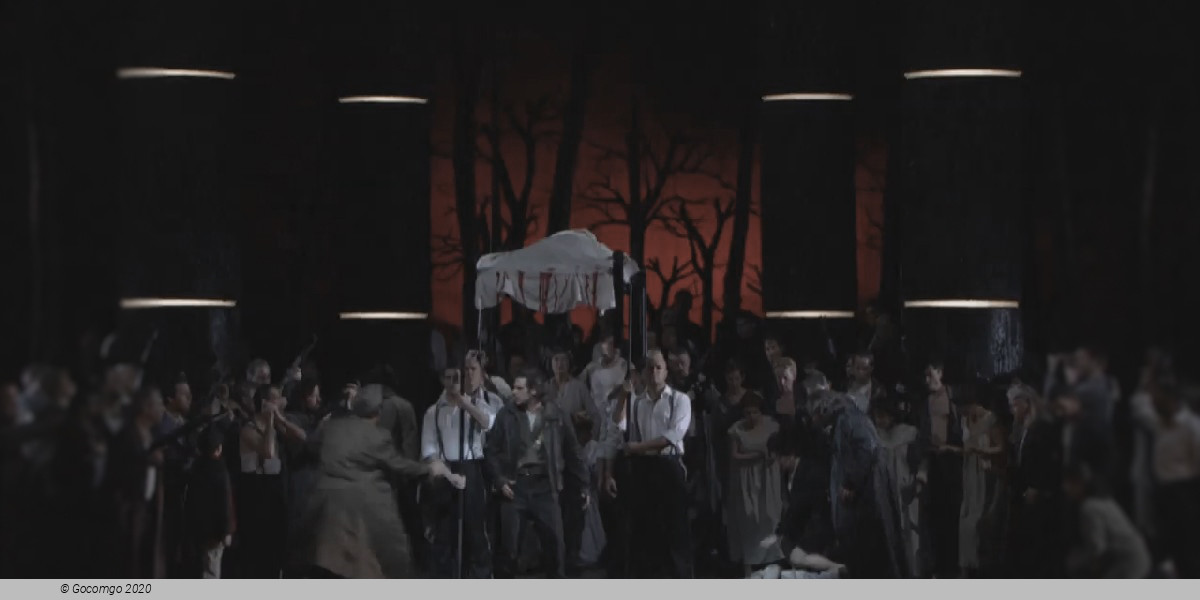
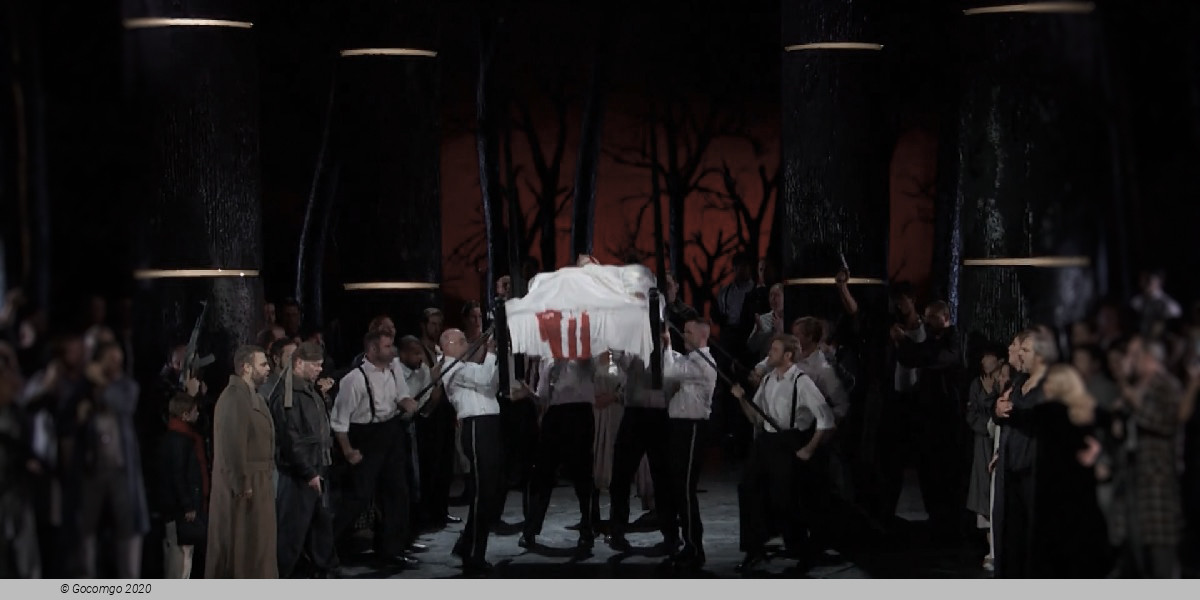
Lady Macbeth is advised that King Duncan will stay in the castle that night; she is determined to see him killed (Or tutti, sorgete / "Arise now, all you ministers of hell"). When Macbeth returns she urges him to take the opportunity to kill the King. The King and the nobles arrive and Macbeth is emboldened to carry out the murder (Mi si affaccia un pugnal? / "Is this a dagger which I see before me?"), but afterwards is filled with horror. Disgusted at his cowardice, Lady Macbeth completes the crime, incriminating the sleeping guards by smearing them with Duncan's blood and planting on them Macbeth's dagger. Macduff arrives for an appointment with the King, while Banco stands guard, only for Macduff instead to discover the murder. He rouses the castle while Banco also bears witness to the fact of Duncan's murder. The chorus calls on God to avenge the killing (Schiudi, inferno, . . / "Open wide thy gaping maw, O Hell").

Act 2

Scene 1: A room in the castle

Macbeth is now king: Duncan's son Malcolm has fled the country, suspicion having conveniently fallen on him for his father's murder: but Macbeth is still disturbed by the prophecy that Banco, not he, will found a great royal line. To prevent this he tells his wife that he will have both Banco and his son murdered as they come to a banquet.

Scene 2: Outside the castle

A gang of murderers lie in wait. Banco, sensing danger shares his misgivings with his son. (Come dal ciel precipita / "O, how the darkness falls from heaven"). The murderers attack and stab him to death, but his son escapes.

Scene 3: A dining hall in the castle

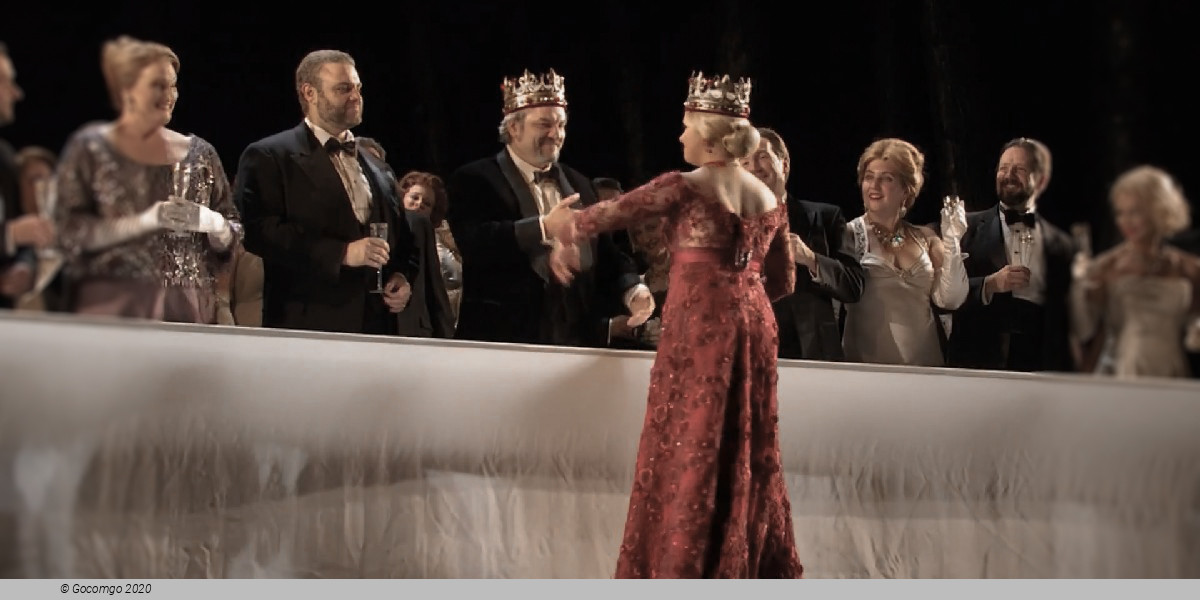
Macbeth receives the guests and Lady Macbeth sings a brindisi (Si colmi il calice / "Fill up the cup"). The assassination is reported to Macbeth, but when he returns to the table the ghost of Banco is sitting in his place. Macbeth raves at the ghost and the horrified guests believe he has gone mad. Lady Macbeth manages to calm the situation once - and even mocks it by calling for a toast to the absent Banco (whose death is not yet public knowledge), only for the ghost to appear a second time and terrify Macbeth into insanity again. Macduff resolves to leave the country, saying it is ruled by a cursed hand and only the wicked may remain: the other guests are terrified by Macbeth's talk of ghosts, phantoms and witches. The banquet ends abruptly with their hurried, frightened departure.

Act 3

The witches' cave

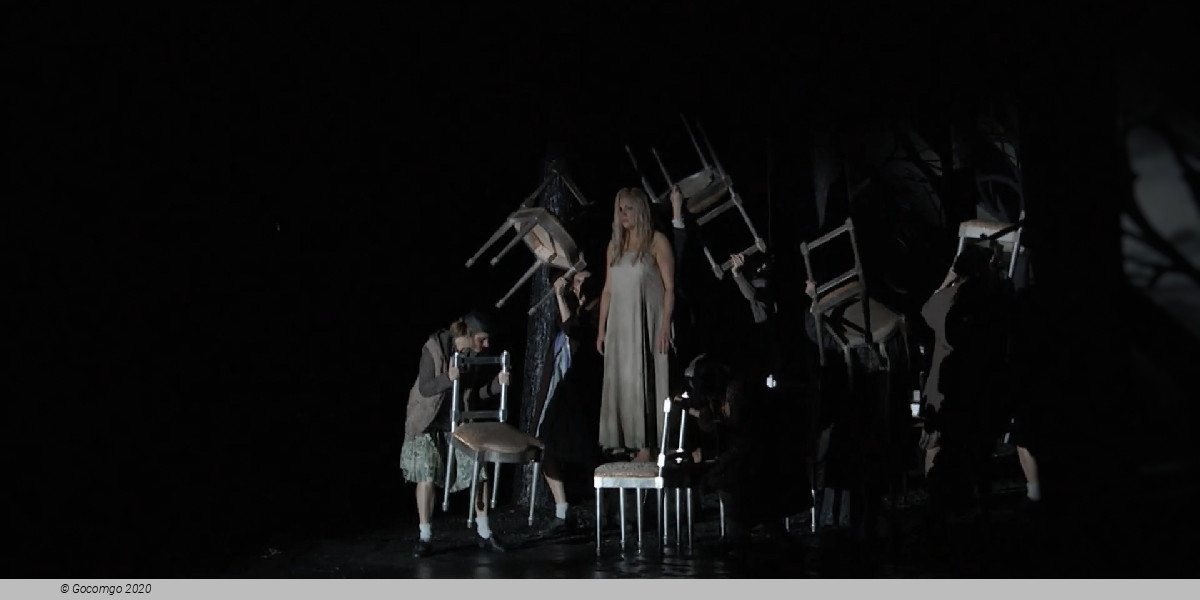
The witches gather around a cauldron in a dark cave. Macbeth enters and they conjure up three apparitions for him. The first advises him to beware of Macduff. The second tells him that he cannot be harmed by a man 'born of woman'. The third that he cannot be conquered till Birnam Wood marches against him. (Macbeth: O lieto augurio / "O, happy augury! No wood has ever moved by magic power")

Macbeth is then shown the ghost of Banco and his descendants, eight future Kings of Scotland, verifying the original prophecy. (Macbeth: Fuggi regal fantasima / "Begone, royal phantom that reminds me of Banco"). He collapses, but regains consciousness in the castle.

The act ends with Macbeth recovering and resolving to assert his authority: Vada in fiamme, e in polve cada / "Macduff's lofty stronghold shall / Be set fire....".

Act 4

Scene 1: Near the border between England and Scotland

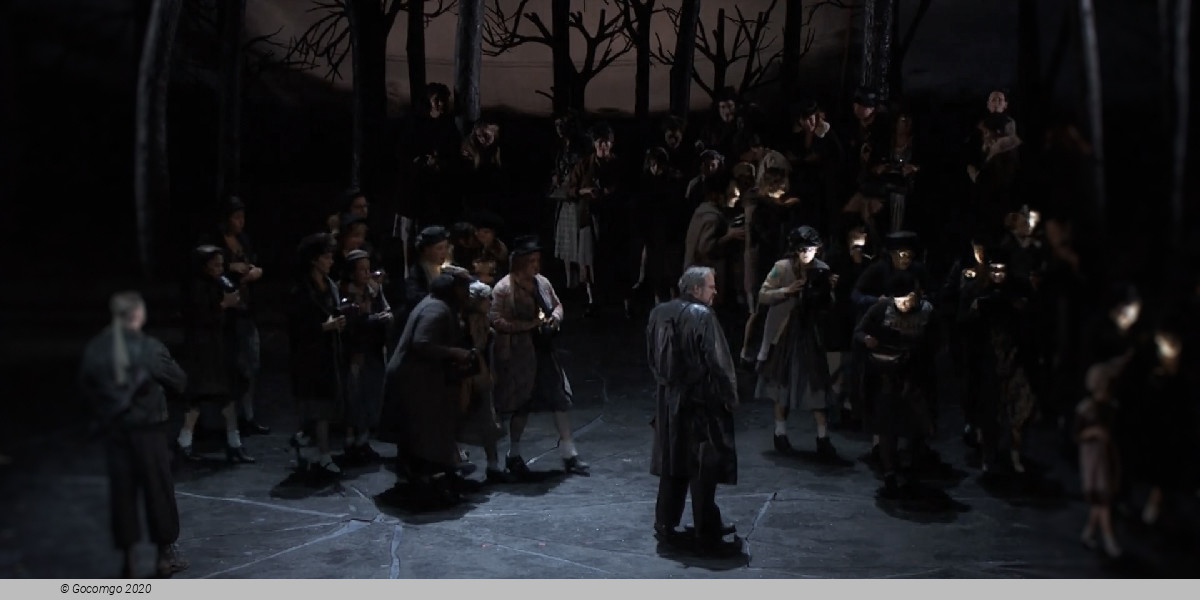
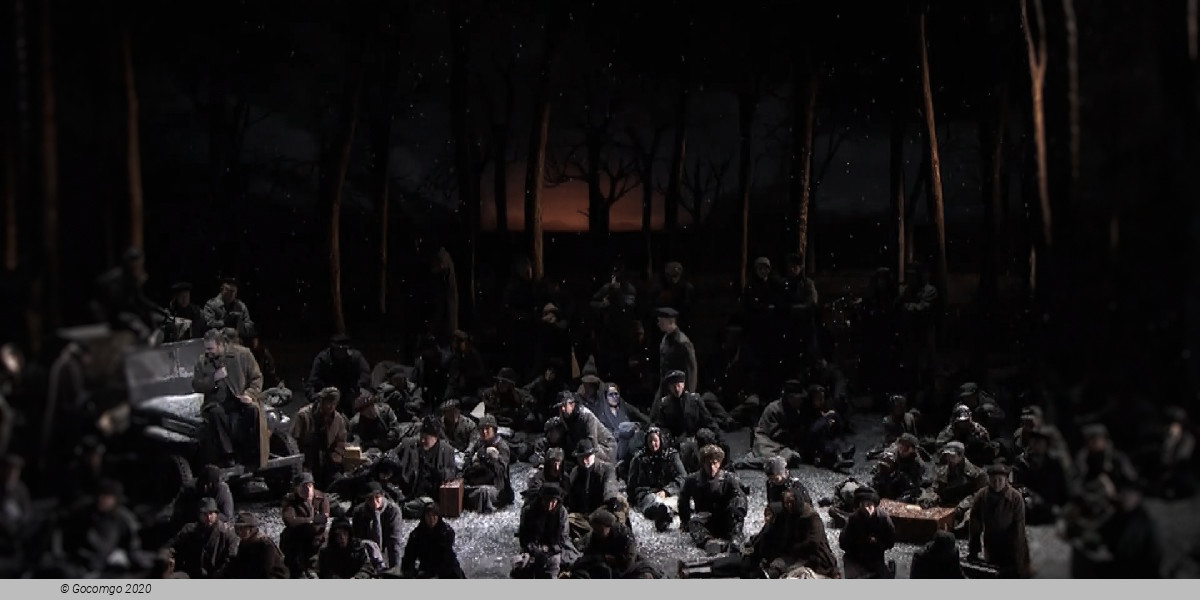
Scottish refugees stand near the English border (Chorus: Patria oppressa / "Down-trodden country"):
While each version uses the same libretto, the music of this chorus is different. It begins with a less ominous, much shorter orchestral introduction and is sung straight through by the entire chorus.

In the distance lies Birnam Wood. Macduff is determined to avenge the deaths of his wife and children at the hands of the tyrant (Ah, la paterna mano / "Ah, the paternal hand"). He is joined by Malcolm, the son of King Duncan, and the English army. Malcolm orders each soldier to cut a branch from a tree in Birnam Wood and carry it as they attack Macbeth's army. They are determined to liberate Scotland from tyranny (Chorus: La patria tradita / "Our country betrayed").

Scene 2: Macbeth's castle

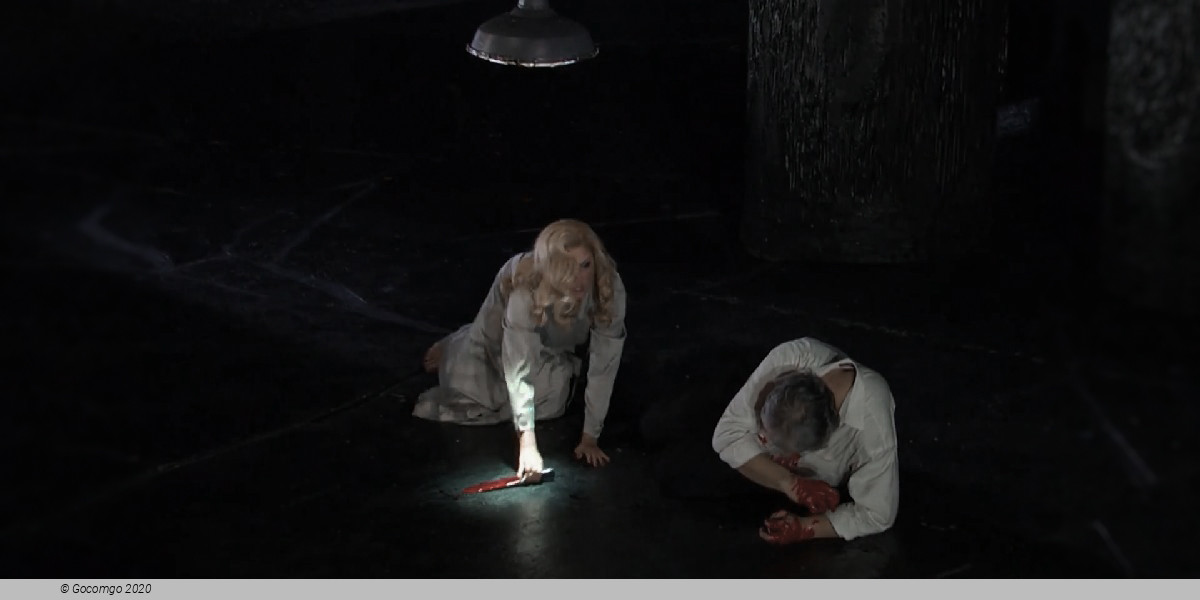
A doctor and a servant observe the Queen as she walks in her sleep, wringing her hands and attempting to clean them of blood (Una macchia è qui tuttora! / "Yet here's a spot"). She raves about the deaths of both Duncan and Banco, and even about the deaths of Macduff's family, and that all the perfumes of Arabia would not clean the blood off her hands: all are things that the horrified witnesses would never dare to repeat to any living man.

Scene 3: The battlefield

Macbeth has learned that an army of Scottish rebels backed by England is advancing against him, but is reassured by remembering the words of the apparitions, that no man born of woman can harm him. However, in an aria (Pietà, rispetto, amore / "Compassion, honour, love") he contemplates the fact that he is already hated and feared: there will be no compassion, honour and love for him in his old age even if he wins this battle, nor kind words on a royal tomb, only curses and hatred. He receives the news of the Queen's death with indifference. Rallying his troops he learns that Birnam Wood has indeed come to his castle. Battle is joined.

Macduff pursues and fights Macbeth who falls. He tells Macbeth that he was not "born of woman" but "ripped" from his mother's womb. Fighting continues. Mortally wounded, Macbeth, in a final aria - Mal per me che m'affidai / "Trusting in the prophecies of Hell" - proclaims that trusting in these prophecies has caused his downfall. He dies on stage, while Macduff's men proclaim Malcolm to be the new King.


Venue Info

Metropolitan Opera - New York
Location   30 Lincoln Center

The Metropolitan Opera is an opera company based in New York City, resident at the Metropolitan Opera House at the Lincoln Center for the Performing Arts. The Metropolitan Opera is the largest classical music theatre in North America. It presents about 27 different operas each year from late September through May. As of 2018, the company's current music director is Yannick Nézet-Séguin.

The Metropolitan Opera Company was founded in 1883 as an alternative to New York's old established Academy of Music opera house. The subscribers to the Academy's limited number of private boxes represented the highest stratum in New York society. By 1880, these "old money" families were loath to admit New York's newly wealthy industrialists into their long-established social circle. Frustrated with being excluded, the Metropolitan Opera's founding subscribers determined to build a new opera house that would outshine the old Academy in every way. A group of 22 men assembled at Delmonico's restaurant on April 28, 1880. They elected officers and established subscriptions for ownership in the new company. The new theater, built at 39th and Broadway, would include three tiers of private boxes in which the scions of New York's powerful new industrial families could display their wealth and establish their social prominence. The first Met subscribers included members of the Morgan, Roosevelt, and Vanderbilt families, all of whom had been excluded from the Academy. The new Metropolitan Opera House opened on October 22, 1883, and was an immediate success, both socially and artistically. The Academy of Music's opera season folded just three years after the Met opened.

The operas are presented in a rotating repertory schedule, with up to seven performances of four different works staged each week. Performances are given in the evening Monday through Saturday with a matinée on Saturday. Several operas are presented in new productions each season. Sometimes these are borrowed from or shared with other opera companies. The rest of the year's operas are given in revivals of productions from previous seasons. The 2015–16 season comprised 227 performances of 25 operas.

The operas in the Met's repertoire consist of a wide range of works, from 18th-century Baroque and 19th-century Bel canto to the Minimalism of the late 20th century. These operas are presented in staged productions that range in style from those with elaborate traditional decors to others that feature modern conceptual designs.

The Met's performing company consists of a large symphony-sized orchestra, a chorus, a children's choir, and many supporting and leading solo singers. The company also employs numerous free-lance dancers, actors, musicians, and other performers throughout the season. The Met's roster of singers includes both international and American artists, some of whose careers have been developed through the Met's young artists programs. While many singers appear periodically as guests with the company, others, such as Renée Fleming and Plácido Domingo, long maintained a close association with the Met, appearing many times each season until they retired.

Important Info
Type: Opera
City: New York, USA
Starts at: 18:30
Top of page