
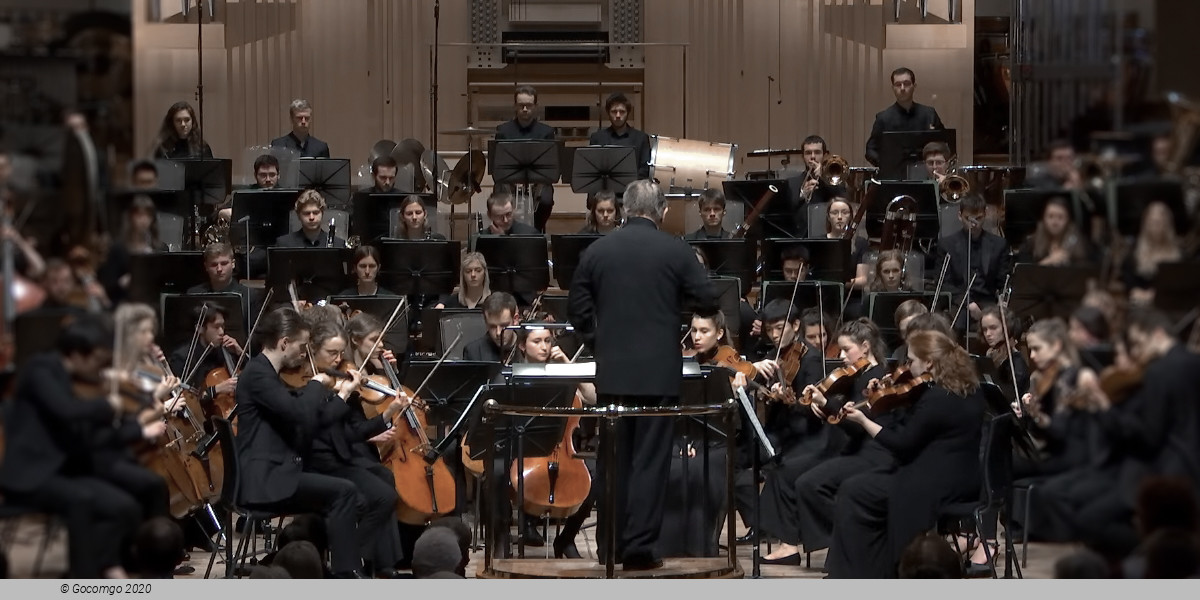
Kongress and TheaterHaus Bad Ischl: Septet Tickets | Event Dates & Schedule | GoComGo.com

Septet Tickets

Kongress and TheaterHaus Bad Ischl, Bad Ischl, Austria
Important Info
Type: Classical Concert
City: Bad Ischl, Austria

E-tickets: Print at home or at the box office of the event if so specified. You will find more information in your booking confirmation email.

You can only select the category, and not the exact seats.
If you order 2 or 3 tickets: your seats will be next to each other.
If you order 4 or more tickets: your seats will be next to each other, or, if this is not possible, we will provide a combination of groups of seats (at least in pairs, for example 2+2 or 2+3).

Cast
Performers
Choose the date to see the peformers
Overview

The Septet in E-flat major, Opus 20, by Ludwig van Beethoven, was sketched out in 1799, completed, and first performed in 1800 and published in 1802. The score contains the notation: "Der Kaiserin Maria Theresia gewidmet", or translated, "Dedicated to the Empress Maria Theresa."

Instrumentation
It is scored for clarinet, horn, bassoon, violin, viola, cello, and double bass.

Structure and analysis
The composition is in six movements and runs approximately 40 minutes in performance:

  • Adagio – Allegro con brio (in E-flat major) (approx. 10 min.)
  • Adagio cantabile (in A-flat major) (approx. 9 min.)
  • Tempo di menuetto (in E-flat major) (approx. 3 min.)
  • Tema con variazioni: Andante (in B-flat major) (approx. 7 min.)
  • Scherzo: Allegro molto e vivace (in E-flat major) (approx. 3 min.)
  • Andante con moto alla marcia (in E-flat minor) – Presto (in E-flat major) (approx. 7 min.)

Analysis
The overall layout resembles a serenade and is in fact more or less the same as that of Mozart's string trio, K. 563 in the same key, but Beethoven expands the form by the addition of substantial introductions to the first and last movements and by changing the second minuet to a scherzo. The main theme of the third movement had already been used in Beethoven's Piano Sonata No. 20 (Op. 49 No. 2), which was an earlier work despite its higher opus number. The finale features a violin cadenza.

The scoring of the Septet for a single clarinet, horn and bassoon (rather than for pairs of these wind instruments) was innovative. So was the unusually prominent role of the clarinet, as important as the violin, quite innovative.

The Septet was one of Beethoven's most successful and popular works and circulated in many editions and arrangements for different forces. In about 1803 Beethoven himself arranged the work as a Trio for clarinet (or violin), cello and piano, and this version was published as his Op. 38 in 1805.

Conductor Arturo Toscanini rearranged the string section of the Septet so that it could be played by the full string section of the orchestra, but he did not change the rest of the scoring. He recorded the Septet for RCA Victor with the NBC Symphony Orchestra on November 26, 1951, in Carnegie Hall.

Influence
Peter Schickele parodied the Septet with P.D.Q. Bach's Schleptet in E-flat Major, S.0, but replaces the clarinet and double bass with flute and oboe.

Franz Schubert composed his Octet (in F major, D. 803) for the clarinetist Ferdinand Troyer who had requested a piece similar to Beethoven's Septet, and the works accordingly resemble each other in many ways.

British composer Peter Fribbins composed a septet (subtitled "The Zong Affair") for the same instrumentation as Beethoven's, but took his influence more from a painting by J.M.W. Turner called "The Slave Ship".[2]

Venue Info

Kongress and TheaterHaus Bad Ischl - Bad Ischl
Location   Kurhausstraße 8

Located in the heart of the imperial spa town of Bad Ischl, the Kongress & TheaterHaus Bad Ischl is a historic cultural venue where elegant architecture, theatrical tradition, and musical heritage come together. Surrounded by the beautiful Kurpark and the atmosphere of the Salzkammergut region, it has long been one of the most important stages for performing arts in Austria.

The history of the building dates back to the 19th century, when Bad Ischl developed into a famous imperial summer resort and a meeting place for artists, composers, and aristocracy. Originally created as a Kurhaus, the venue became a centre for concerts, social events, and cultural gatherings before evolving into today’s modern theatre and congress complex.

With its historic façade and contemporary interior facilities, the Kongress & TheaterHaus combines the charm of the past with the technical possibilities of a modern performance venue. Its theatre hall, equipped for large-scale productions, provides an ideal environment for opera, operetta, concerts, and theatrical performances.

The venue holds a special place in the cultural life of Bad Ischl as one of the main stages of the renowned Lehár Festival Bad Ischl. Dedicated to the tradition of Viennese operetta and the legacy of Franz Lehár, the festival continues the musical spirit that has surrounded the town for more than a century.

Performances at the Kongress & TheaterHaus offer audiences a unique experience: the refinement of a historic spa town, the intimacy of a traditional European theatre, and the artistic energy of contemporary productions. The combination of architecture, music, and the Alpine landscape of the Salzkammergut creates an atmosphere that is both elegant and unforgettable.

Important Info
Type: Classical Concert
City: Bad Ischl, Austria

E-tickets: Print at home or at the box office of the event if so specified. You will find more information in your booking confirmation email.

You can only select the category, and not the exact seats.
If you order 2 or 3 tickets: your seats will be next to each other.
If you order 4 or more tickets: your seats will be next to each other, or, if this is not possible, we will provide a combination of groups of seats (at least in pairs, for example 2+2 or 2+3).

Top of page