Hungarian State Opera House 6 October 2023 - Don Quixote | GoComGo.com

Don Quixote

Hungarian State Opera House, Opera House, Budapest, Hungary
All photos (8)
Select date and time
7 PM

E-tickets: Print at home or at the box office of the event if so specified. You will find more information in your booking confirmation email.

You can only select the category, and not the exact seats.
If you order 2 or 3 tickets: your seats will be next to each other.
If you order 4 or more tickets: your seats will be next to each other, or, if this is not possible, we will provide a combination of groups of seats (at least in pairs, for example 2+2 or 2+3).

Important Info
Type: Ballet
City: Budapest, Hungary
Starts at: 19:00
Acts: 3
Duration: 3h

E-tickets: Print at home or at the box office of the event if so specified. You will find more information in your booking confirmation email.

You can only select the category, and not the exact seats.
If you order 2 or 3 tickets: your seats will be next to each other.
If you order 4 or more tickets: your seats will be next to each other, or, if this is not possible, we will provide a combination of groups of seats (at least in pairs, for example 2+2 or 2+3).

Overview

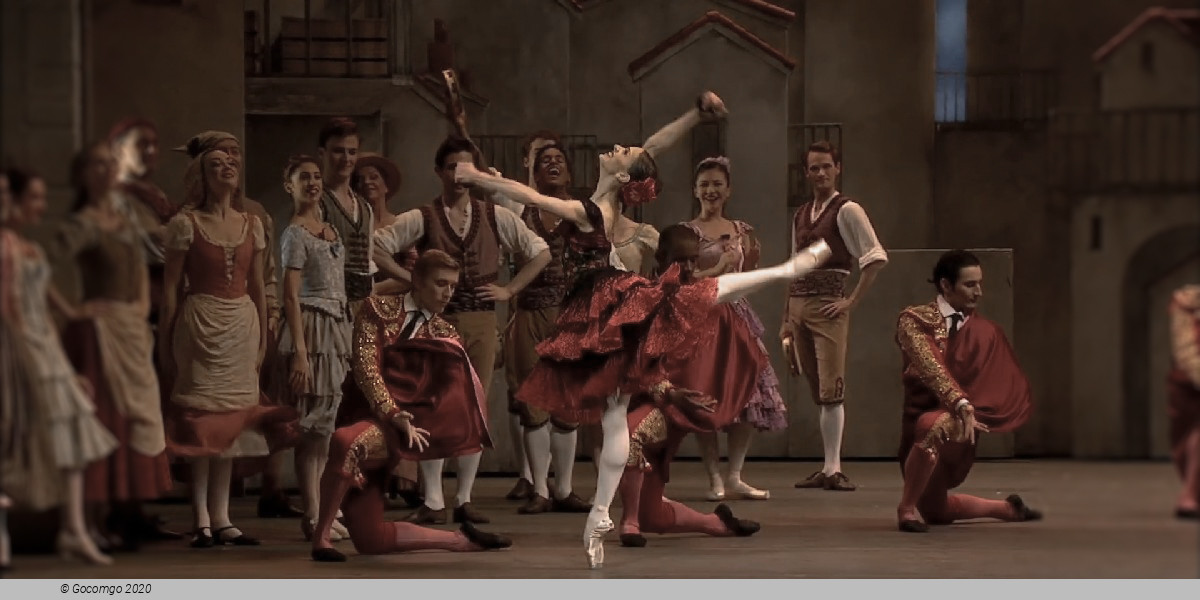
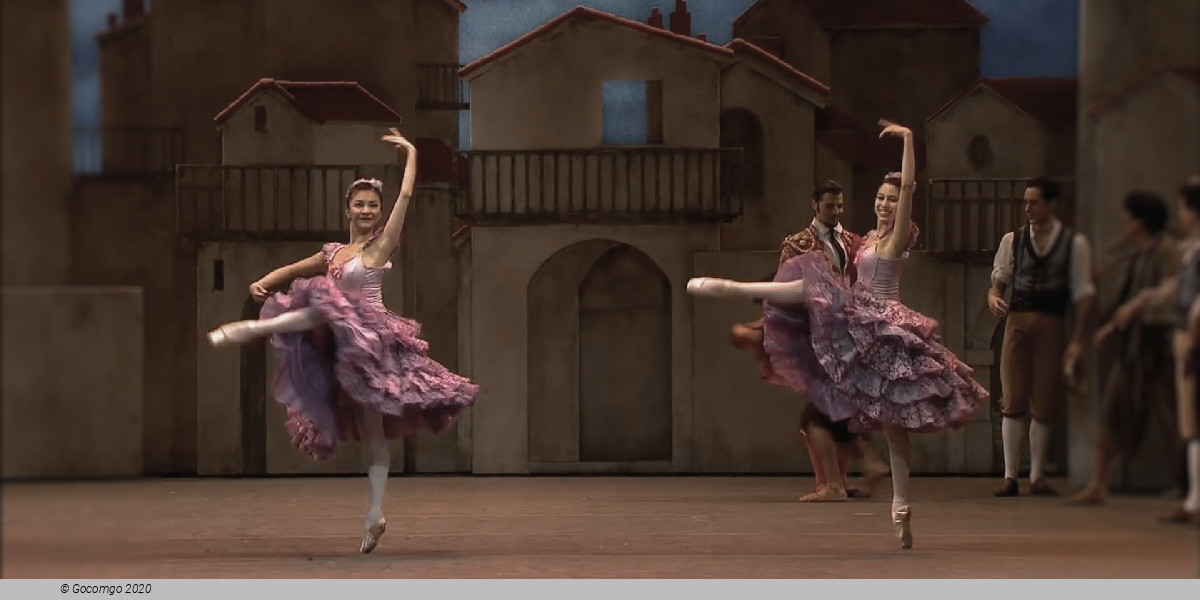
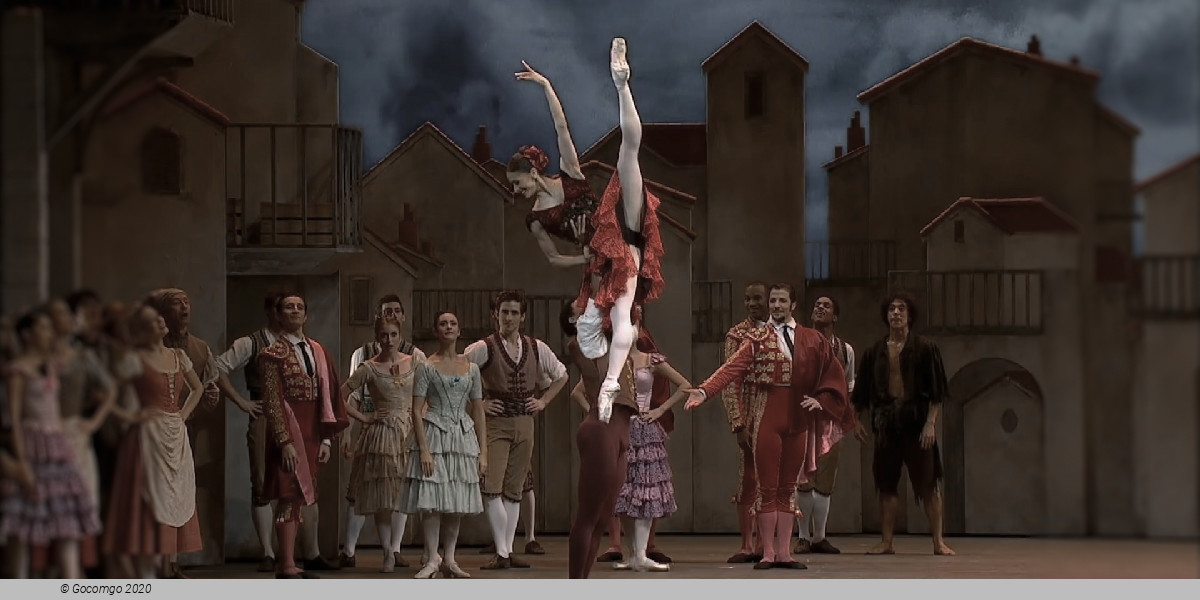
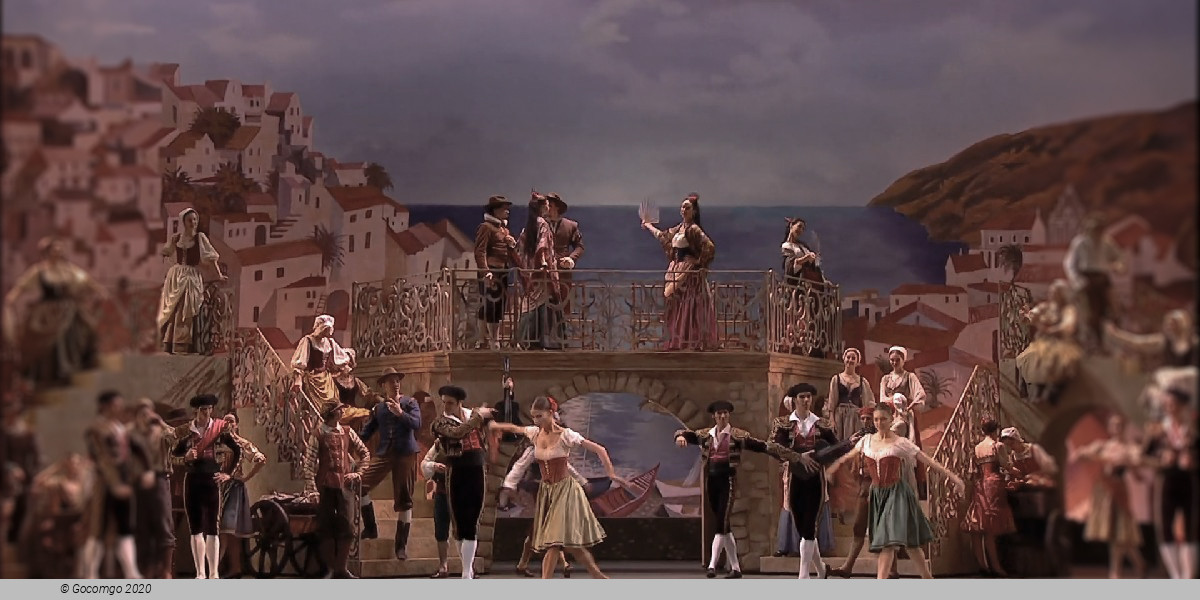
Along with Swan Lake, the Hungarian National Ballet has chosen another full-length classical ballet: the story of Don Quixote de la Mancha, the knight of the sorrowful figure. This legendary 1940s Moscow production compiled from the choreographies of Kasyan Goleizovsky, Marius Petipa and Alexander Gorsky was reconceived for Hungary's national ballet ensemble by the world-renowned Russian ballet teacher Michael Messerer in collaboration with Hungarian visual designers.

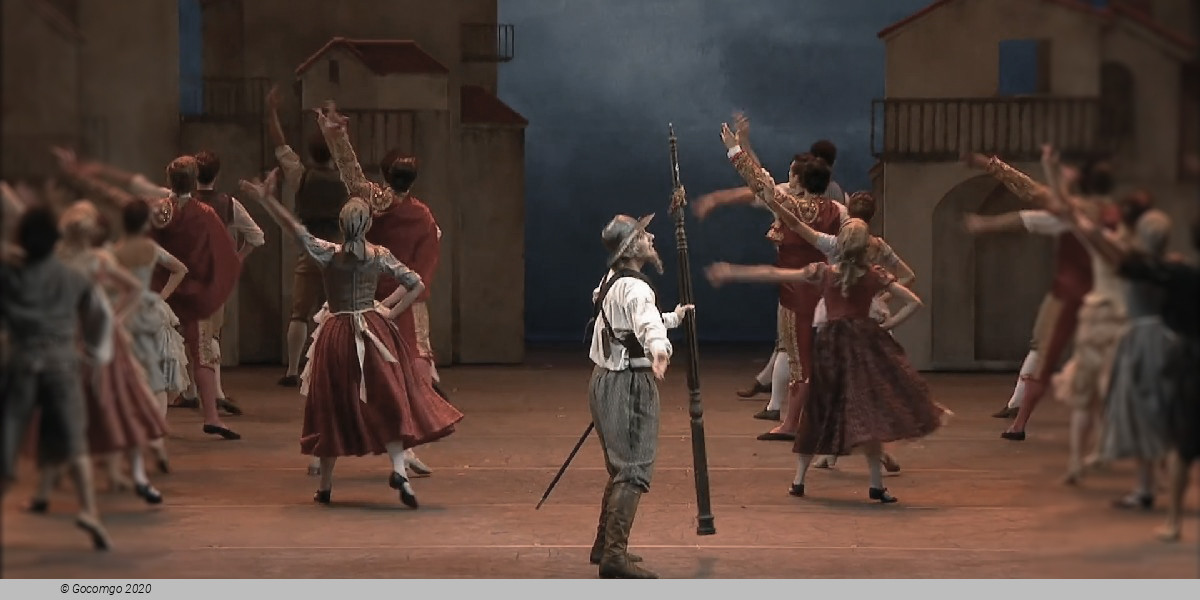
An avid and passionate reader of chivalric romances, Don Quixote decides that for the sake of his own glory and the common good, he must set out in search of adventures as a knight-errant. He sets for himself an objective no lower than to redress grievances, right wrongs and repair injustices. The popular story of the Knight of the Woeful Countenance was presented in a new production at the OPERA in 2016. The legendary 1940 Moscow performance featuring choreographies by Petipa, Goleizovsky and Gorsky was tailored-made for the Hungarian National Ballet by internationally renowned Russian master Michael Messerer assisted by Hungarian set and costume designers.

Featuring the students of the Hunagian National Ballet Institute

The festive, hot-tempered and virtuoso ballet was staged in 1900 (and transferred from the Bolshoi Theatre in Moscow to the Mariinsky Theatre in 1902) by Alexander Gorsky after the eponymous ballet of Marius Petipa, which had graced the St Petersburg stage from 1871.

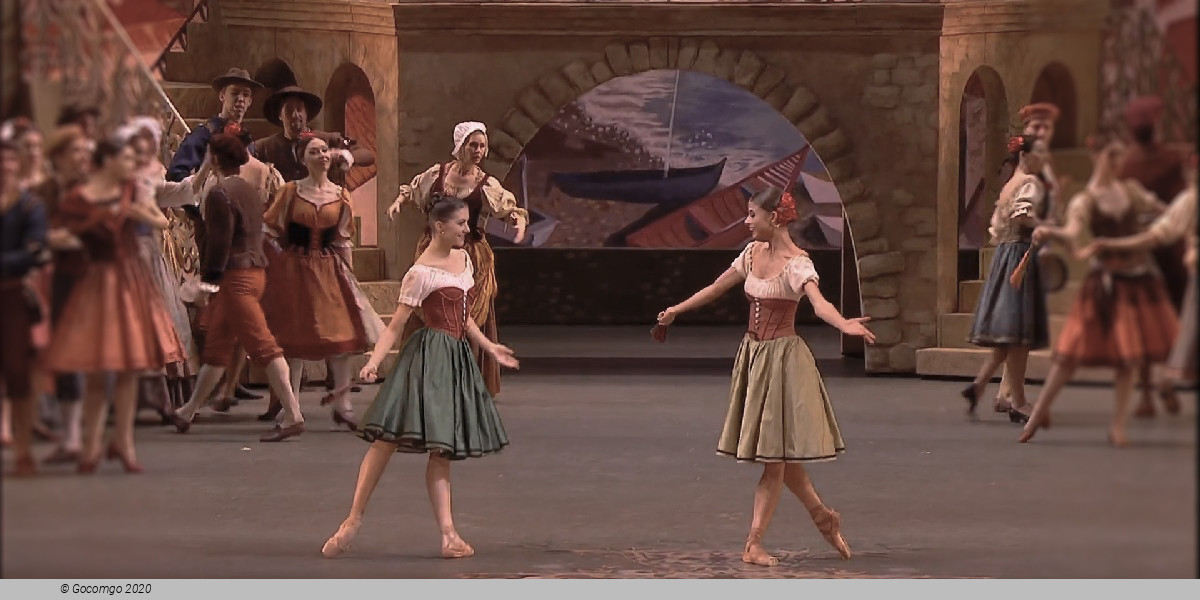
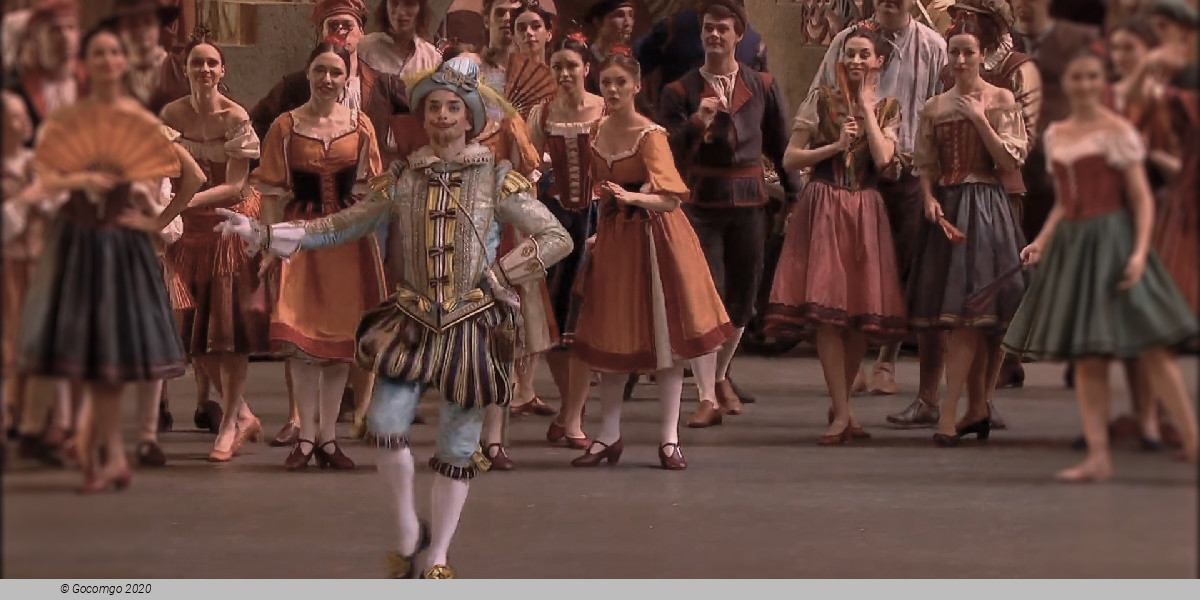
The young and passionate choreographer Gorsky was heavily influenced by Stanislavski (who had just opened the Moscow Art Theatre) at the beginning of the 20th century. To make the ballet more ‘lifelike and truthful’ he turned the symmetrical corps de ballets, so common in his renowned colleague Petipa’s works, into a playful, lively, and cheerful crowd. The first spectators recalled, "the lively and passionate crowd in the square makes you believe up to a point of delusion in the sun, which makes you fall in love so keenly, tease each other, chase after the running beauty, who hides behind her fan..."

History
Premiere of this production: 26 December 1869, Ballet of the Imperial Bolshoi Theatre of Moscow, Russia

Don Quixote is a ballet in four acts and eight scenes, based on episodes taken from the famous novel Don Quixote de la Mancha by Miguel de Cervantes. It was originally choreographed by Marius Petipa to the music of Ludwig Minkus and first presented by the Ballet of the Imperial Bolshoi Theatre of Moscow, Russia on 26 December [O.S. 14 December] 1869. Petipa and Minkus revised the ballet into a far more expanded and elaborated edition in five acts and eleven scenes for the Imperial Ballet, first presented on 21 November 1871 at the Imperial Bolshoi Kamenny Theatre of St. Petersburg.

Synopsis

Don Quixote's Study

Bachelor Sanson Carrasco is seen covering a bookcase with wallpaper, while Antonina is putting some rusty old armour and a helmet made of pasteboard into a cupboard. Don Quixote de la Mancha enters, reading a book. He goes to the bookcase and, not finding it, believes it has been stolen by evil magicians. Then he settles into an armchair and continues reading. He delights in stories of brave knights, fabulous giants and other fantastical creatures, but most of all Don Quixote dreams of his beloved Dulcinea, a woman that he believes to be so lovely and noble that she must be divinity. Gradually he nods and falls asleep to dream of their romantic adventures. Darkness falls.

Suddenly his servant, Sancho Panza, climbs hurriedly through the window. In pursuit are several angry women from the market from whom he has stolen bread and a chicken. Awakened by the commotion, Don Quixote sends the women away. Don Quixote tells Sancho that he is determined to seek adventures as a knight-errant, all the while searching for his beloved Dulcinea. He shows him the pasteboard helmet, which, with one sweep from his sword, becomes a shapeless mass on the floor. Antonina suggests that he should use a shaving basin instead, which would make a splendid helmet. Don Quixote enthusiastically agrees and, placing it on his head, orders Sancho to bring him his armour, sword and spear, and to make ready his horse, Rocinante.

Act I

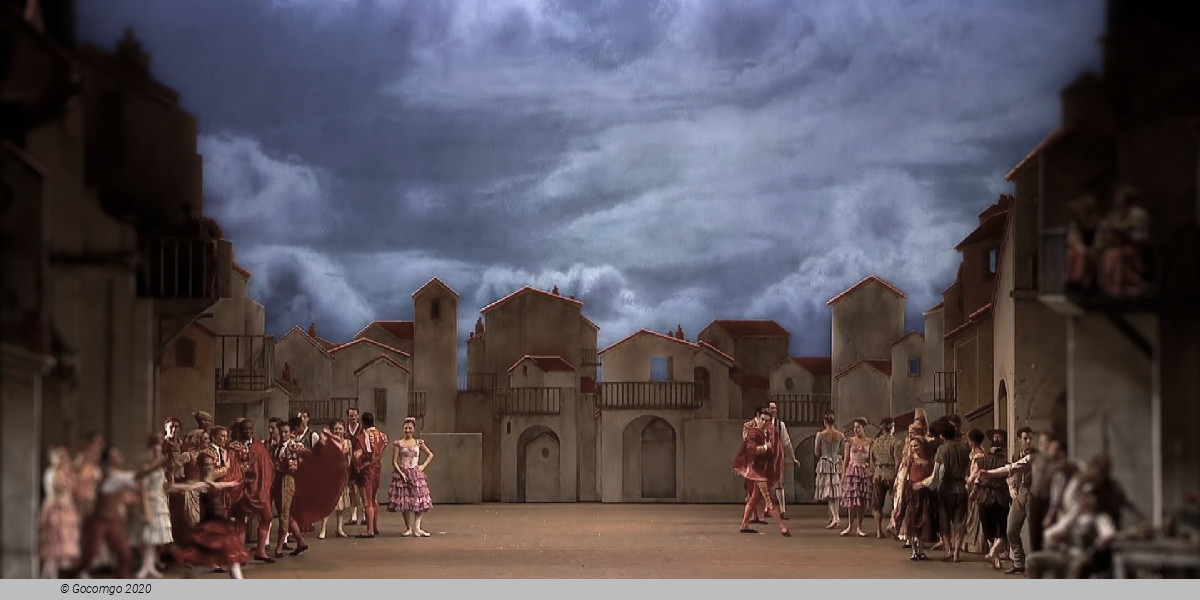
A market-place in Barcelona

Kitri, an inn-keeper's daughter, steals out of her house to meet her beloved, the barber Basilio. Her father, Lorenzo, sees the lovers and sends Basilio away, bringing Kitri to tears. Now comes the rich nobleman Gamache, who, likewise in love with Kitri, goes to Lorenzo and asks for his daughter's hand. The innkeeper accepts with delight but Kitri, appalled at the thought of wedding the foppish nobleman, runs away.

Dancing begins in the square and some toreadors try to kidnap the girls they fancy, but their relatives and lovers hasten to their aid. At this moment Don Quixote arrives mounted on Rocinante, followed by Sancho, who is riding a donkey. At his master's command Sancho sounds his rusted horn, causing the townspeople to cover their ears. Lorenzo runs out of his inn, and Don Quixote, taking him for the lord of a famous castle, dismounts Rocinante and, falling to his knees, begs to be allowed to serve him. Charmed, Lorenzo invites the knight to sit on his balcony. Sancho remains in the square where he is surrounded by girls who induce him to take part in a game of blind man's bluff. Then some boys bring in a blanket on which they place Sancho and proceed to toss him into the air. Don Quixote hurries to his assistance and sets him free.

Peasants gather in the square and dancing resumes. Kitri returns and, noticing her, Don Quixote acclaims her as his Dulcinea, whom evil magicians have reduced to human form. Becoming jealous of her affection for Basilio, Don Quixote attempts to woo her by partnering her in a minuet. Lorenzo berates Kitri for carrying on with Basilio. Kitri and Basilio then run away, and Lorenzo and Gamache follow them. Don Quixote orders Sancho to bring Rocinante, so that he may also set out in pursuit.

Act II

Scene 1 – A camp of gypsies among the windmills outside the village

Kitri, disguised as a boy is seen walking with Harlequin from a troupe of travelling actors. They guess she is a girl and ask her to stay with them.

Scene 2 - The Puppet Theatre

A clown is seen walking with Graziosa, the gypsy chief's daughter. A gypsy tells the chief of the approach of Don Quixote. The chief plans a trick for his benefit and, putting on a mantle crown, sits down as though he were a king on a throne. Don Quixote is deceived and kneels to the chief in homage. The chief bids that he sit beside him and orders a festival to be given in his honor. This begins with Gypsy dances and is followed by a performance of the marionette theatre. Don Quixote is delighted with the entertainment but, mistaking the heroine for his Dulcinea and the marionettes for soldiers attacking her, he rises to assault them. The gypsies are terrified. At this moment the clown and Graziosa run away.

Scene 3 - The Windmills

Flushed with victory, the knight kneels and renders thanks to heaven. Seeing the moon, he takes it for his Dulcinea and tries to get to her. As he approaches the windmills he can see the moon no longer and thinks that evil magicians have hidden his beloved mistress. So, spear in hand, he tilts at the wings of the windmill, which he mistakes for a giant. Alas, the knight is caught by one of the wings and flung into the air. He falls unconscious at Sancho's feet.

Scene 4 – A forest

Through the trees appears Sancho leading Rocinante, upon which sits the wounded Don Quixote. The servant lifts his master down and places him on the grass, so that he may rest. Then, tying up the horse, he goes to sleep. Don Quixote also tries to sleep, but is troubled by fantastic dreams.

Scene 5 – The enchanted Garden of Dulcinea

Fairies appear surrounded by gnomes and Don Quixote finds himself dressed in shining armor. Then comes a succession of fearsome monsters, the last being a gigantic spider, who spins a web. The knight attacks the spider, which he slashes in half with his sword. At that same moment the spider's web vanishes to reveal a beautiful garden, filled with dryads and beautiful women, presided over by the Queen of the Dryads and Amor. Among them is Dulcinea and Don Quixote kneels before his beloved. At this moment everything vanishes.

Act III

The Square

Back at the square, Kitri and Basilio join those who are dancing. At the height of the merriment, Lorenzo and Gamache arrive, followed by Don Quixote and Sancho. Seeing his daughter, Lorenzo decides to give his blessing to her union with the nobleman Gamache. Basilio becomes annoyed and, reproaching Kitri for her unfaithfulness, draws a sword and stabs himself. As he lies dying he begs Lorenzo to unite him with Kitri, but Lorenzo and Gamache refuse. Don Quixote approaches Gamache and challenges him to a duel for having refused a dying man's wish. Gamache declines to fight and the merrymakers drive him out of the inn. Taking pity, Lorenzo agrees to unite Basilio and Kitri. At this moment, Basilio pulls out the sword and tells everyone it was a joke.

Act IV

The Tavern

A magnificent feast is held in honour of Don Quixote. Suddenly the Knight of the Silver Moon challenges him to a duel, which results in the latter being vanquished. The victorious knight proves to be none other than Bachelor Sanson Carrasco, who forces Don Quixote to vow that he will not unsheathe his sword for a whole year. The sorrowful knight, true to his vow, takes up his warlike gear and, followed by Sancho, sets out for home.


Venue Info

Hungarian State Opera House - Budapest
Location   Andrássy út 22

The Hungarian State Opera House (Hungarian: Magyar Állami Operaház) is a neo-Renaissance opera house located in central Budapest, on Andrássy út. The Hungarian State Opera House is the main opera house of the country and the second largest opera house in Budapest and in Hungary. Today, the opera house is home to the Budapest Opera Ball, a society event dating back to 1886. The Theatre was designed by Miklós Ybl, a major figure of 19th-century Hungarian architecture.

Construction began in 1875, funded by the city of Budapest and by Emperor Franz Joseph I of Austria-Hungary, and the new house opened to the public on the 27 September 1884. Before the closure of the "Népszínház" in Budapest, it was the third largest opera building in the city; today it is the second largest opera house in Budapest and in Hungary.

Touring groups had performed operas in the city from the early 19th century, but as Legány notes, "a new epoch began after 1835 when part of the Kasa National Opera and Theatrical Troupe arrived in Buda". They took over the Castle Theatre and, in 1835, were joined by another part of the troupe, after which performances of operas were given under conductor Ferenc Erkel. By 1837 they had established themselves at the Magyar Színház (Hungarian Theatre) and by 1840, it had become the "Nemzeti Színház" (National Theatre). Upon its completion, the opera section moved into the Hungarian Royal Opera House, with performances quickly gaining a reputation for excellence in a repertory of about 45 to 50 operas and about 130 annual performances. 

Many important artists were guests here including the composer Gustav Mahler, who was director in Budapest from 1888 to 1891 and Otto Klemperer, who was music director for three years from 1947 to 1950.

It is a richly decorated building and is considered one of the architect's masterpieces. It was built in neo-Renaissance style, with elements of Baroque. Ornamentation includes paintings and sculptures by leading figures of Hungarian art including Bertalan Székely, Mór Than, and Károly Lotz. Although in size and capacity it is not among the greatest, in beauty and the quality of acoustics the Budapest Opera House is considered to be amongst the finest opera houses in the world.

The auditorium holds 1,261 people. It is horseshoe-shaped and – according to measurements done in the 1970s by a group of international engineers – has the third best acoustics in Europe after La Scala in Milan and the Palais Garnier in Paris. Although many opera houses have been built since the Budapest Opera House is still among the best in terms of acoustics.

In front of the building are statues of Ferenc Erkel and Franz Liszt. Liszt is the best-known Hungarian composer. Erkel composed the Hungarian national anthem, and was the first music director of the Opera House; he was also the founder of the Budapest Philharmonic Orchestra.

Each year the season lasts from September to the end of June and, in addition to opera performances, the House is home to the Hungarian National Ballet.

There are guided tours of the building in six languages (English, German, Spanish, French, Italian, and Hungarian) almost every day.

Important Info
Type: Ballet
City: Budapest, Hungary
Starts at: 19:00
Acts: 3
Duration: 3h
Top of page