
Glyndebourne tickets 1 July 2027 - La traviata | GoComGo.com

La traviata

Glyndebourne, Lewes, Great Britain
All photos (7)
Select date and time
7 PM
From
US$ 157

E-tickets: Print at home or at the box office of the event if so specified. You will find more information in your booking confirmation email.

You can only select the category, and not the exact seats.
If you order 2 or 3 tickets: your seats will be next to each other.
If you order 4 or more tickets: your seats will be next to each other, or, if this is not possible, we will provide a combination of groups of seats (at least in pairs, for example 2+2 or 2+3).

Important Info
Type: Opera
City: Lewes, Great Britain
Starts at: 19:00

E-tickets: Print at home or at the box office of the event if so specified. You will find more information in your booking confirmation email.

You can only select the category, and not the exact seats.
If you order 2 or 3 tickets: your seats will be next to each other.
If you order 4 or more tickets: your seats will be next to each other, or, if this is not possible, we will provide a combination of groups of seats (at least in pairs, for example 2+2 or 2+3).

Cast
Performers
Conductor: Riccardo Frizza
Tenor: Amitai Pati (Alfredo Germont)
Orchestra: London Philharmonic Orchestra
Soprano: Louise Alder (Violetta Valéry)
Baritone: Ricardo José Rivera (Giorgio Germont)
Creators
Composer: Giuseppe Verdi
Author: Alexandre Dumas (fils)
Librettist: Francesco Maria Piave
Director: Tom Cairn
Festival

Glyndebourne Festival Opera 2027

The Glyndebourne Festival Opera 2027 returns from 20 May to 29 August, bringing five operatic works to the celebrated Sussex countryside. Known for its exceptional productions and distinctive blend of opera, gardens and leisurely summer picnics, Glyndebourne offers an experience that feels as carefully considered outside the auditorium as it is on stage.

Overview

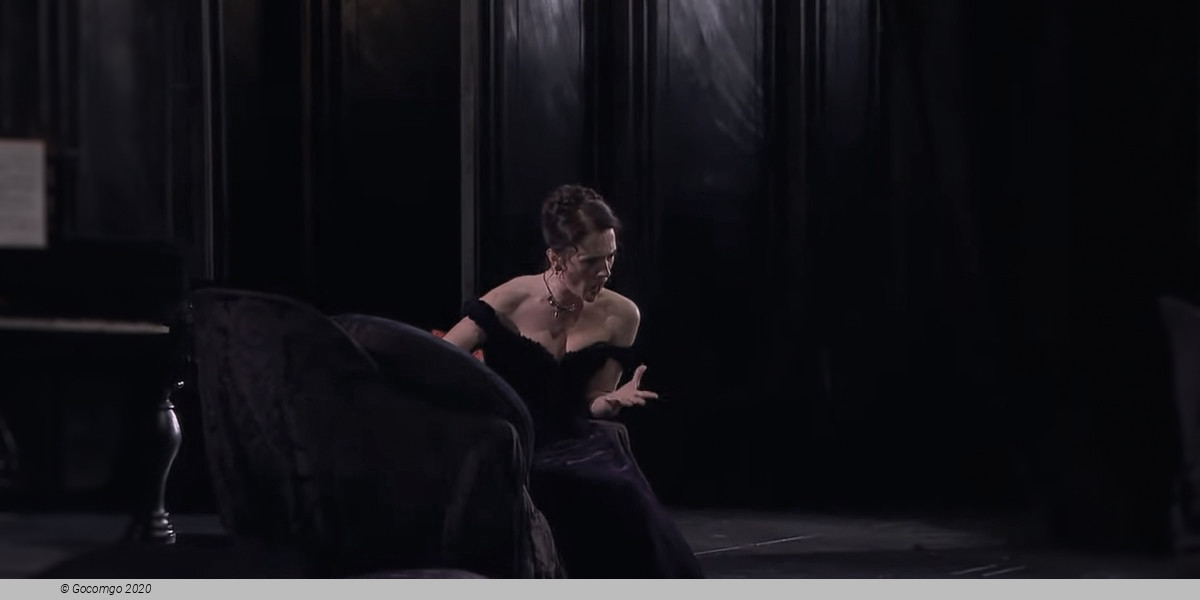
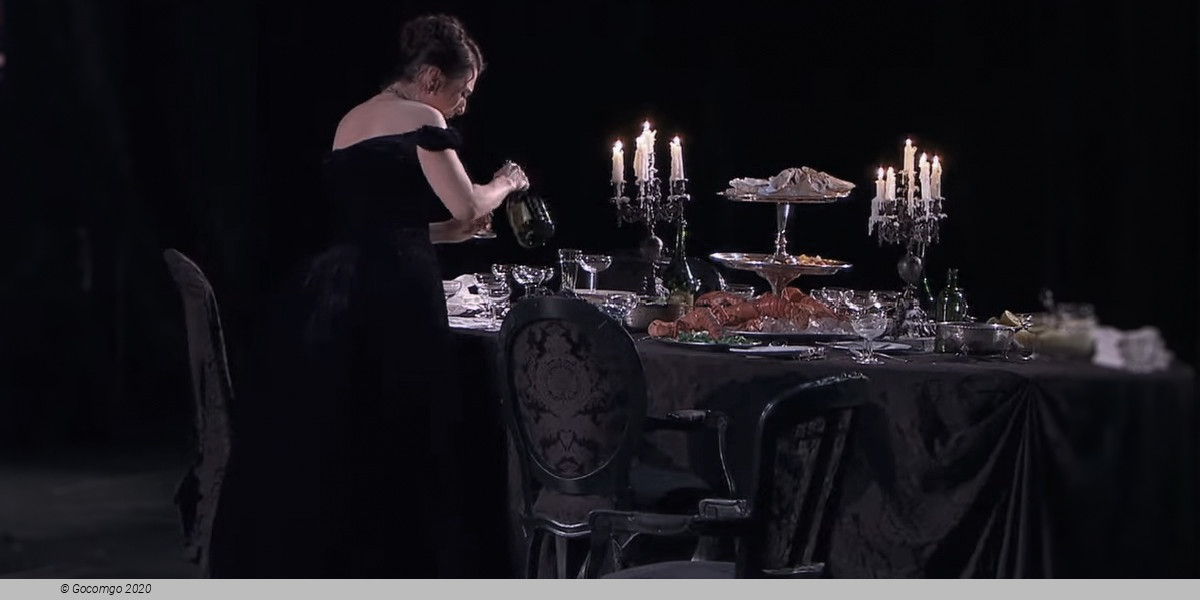
Giuseppe Verdi’s La traviata returns to Glyndebourne in 2027 in a revival of Tom Cairns’ stylish and sophisticated production, originally created for the Festival in 2012. Verdi’s deeply moving drama unfolds with its familiar themes of love, sacrifice and the constraints imposed by society, following Violetta Valéry as she gives up her happiness for the sake of the man she loves.

A revival of the Festival 2012 production

Cairns’ production brings an intimate theatrical focus to the story, allowing the emotional relationships at its centre to remain in sharp relief. Verdi’s score moves effortlessly between sparkling social scenes, moments of tenderness and some of opera’s most poignant music, culminating in Violetta’s tragic final act.

A cornerstone of the operatic repertoire, La traviata offers an ideal Glyndebourne experience: superb singing, Verdi’s unforgettable melodies and a compelling production in the intimate atmosphere of one of Britain’s most celebrated opera festivals.

History
Premiere of this production: 06 March 1853, Teatro La Fenice, Venice

La traviata is an opera in three acts by Giuseppe Verdi set to an Italian libretto by Francesco Maria Piave. It is based on La Dame aux camélias (1852), a play adapted from the novel by Alexandre Dumas fils. The opera was originally titled Violetta, after the main character. It was first performed on 6 March 1853 at the La Fenice opera house in Venice.

Synopsis

Set in and around Paris in about 1850.

Act I

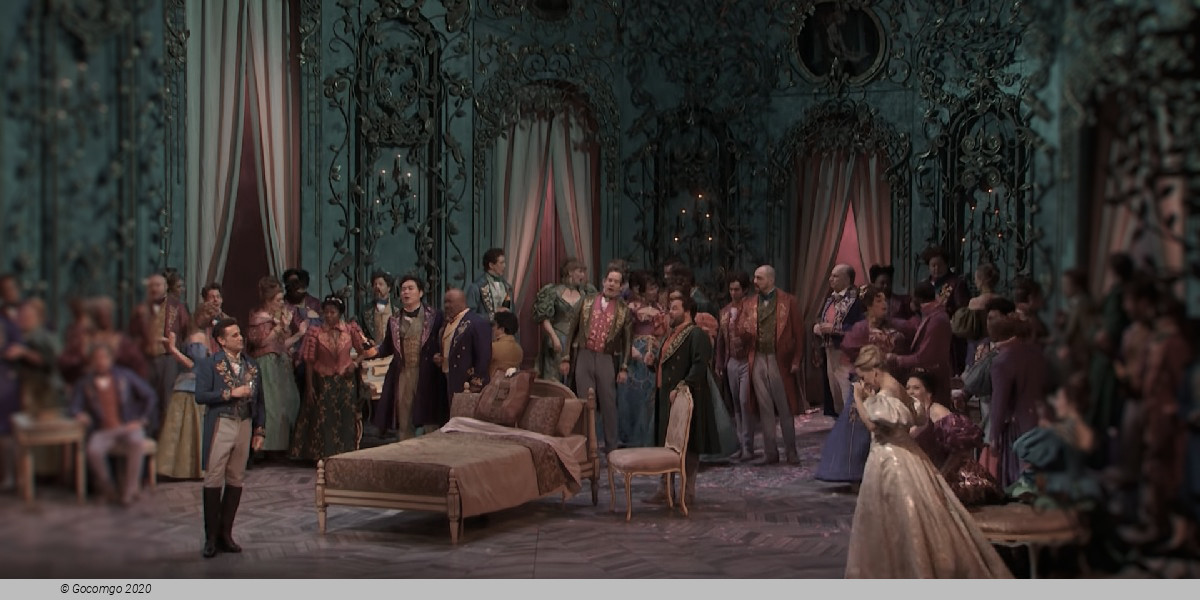
Violetta Valéry, a Parisian courtesan, greets the guests at her salon. Among them are Flora Bervoix, the Marchese D’Obigny, Baron Douphol and Gastone, who introduces Violetta to a new admirer of hers, Alfredo Germont. The young Germont, who has been admiring her from afar, joins her in a drinking song. An orchestra strikes up in an adjacent room, inviting the guests to dance. As the guests make their way to the ballroom, Violetta, who is suffering from consumption, feels faint; she therefore sends the guests on ahead and retires to her boudoir to recover. Alfredo enters and, realising that they are alone, admits his love for her. She replies that love means nothing to her. She
is, however, touched by the young man’s sincerity and promises to meet him the following day.
When the guests have departed, she asks herself whether Alfredo is the man she could love. Despite
the strains of Alfredo’s love song drifting in from outside, she decides she prefers her freedom.

Act II

scene 1
A few months later: Alfredo and Violetta have set up house together in the country, outside Paris. Alfredo says how happy they are, but when Violetta’s maid Annina lets on that Violetta has been selling her belongings to pay for the house, he hastens into town to raise the money himself. Violetta comes in search of him and discovers an invitation from her friend Flora to a soirée that very night. Violetta has no intention of returning to her former life, but she is forced to reconsider
on encountering Alfredo’s father. He is very taken with Violetta and her civilised manners but orders her to renounce Alfredo: his son’s scandalous liaison with Violetta is threatening his daughter’s forthcoming marriage. Violetta considers his demand unreasonable, but before long Germont succeeds in persuading her. Alone and desolate, Violetta sends a reply to Flora accepting her invitation and sits down to write a farewell letter to Alfredo. His return takes her by surprise, and she can barely restrain herself as she passionately reminds him how much she loves him before
rushing out. As the maid brings him Violetta’s farewell letter, Germont returns to console his son and reminds him of life in their family home in Provence. Alfredo spots Flora’s invitation and suspects that Violetta has left him for another man. In a rage, he decides to confront her at the soirée.

scene 2
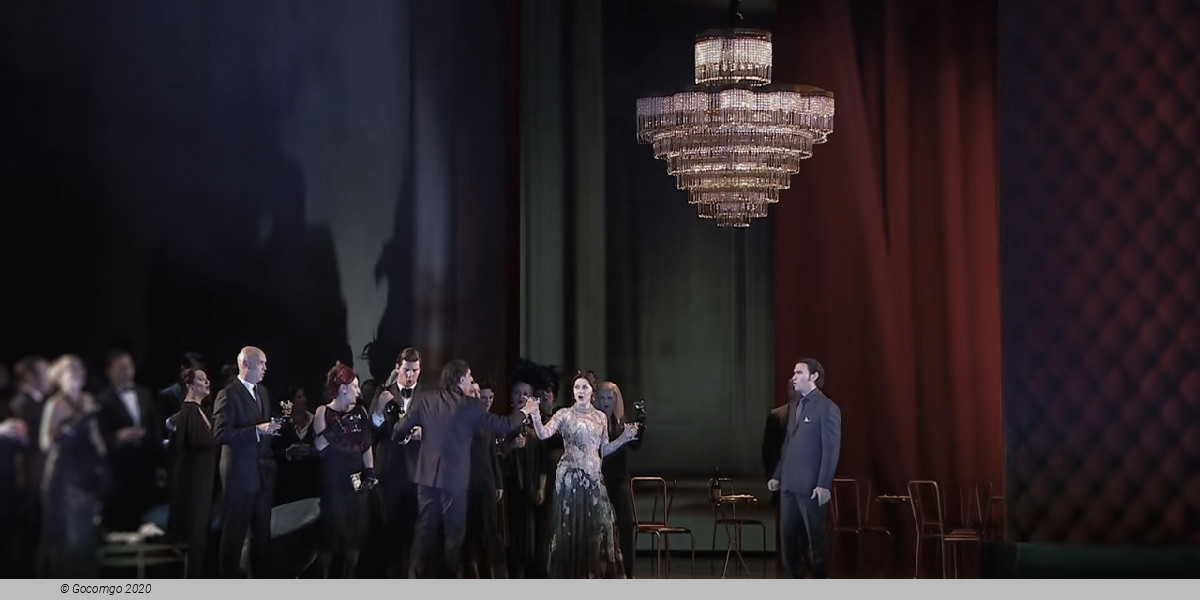
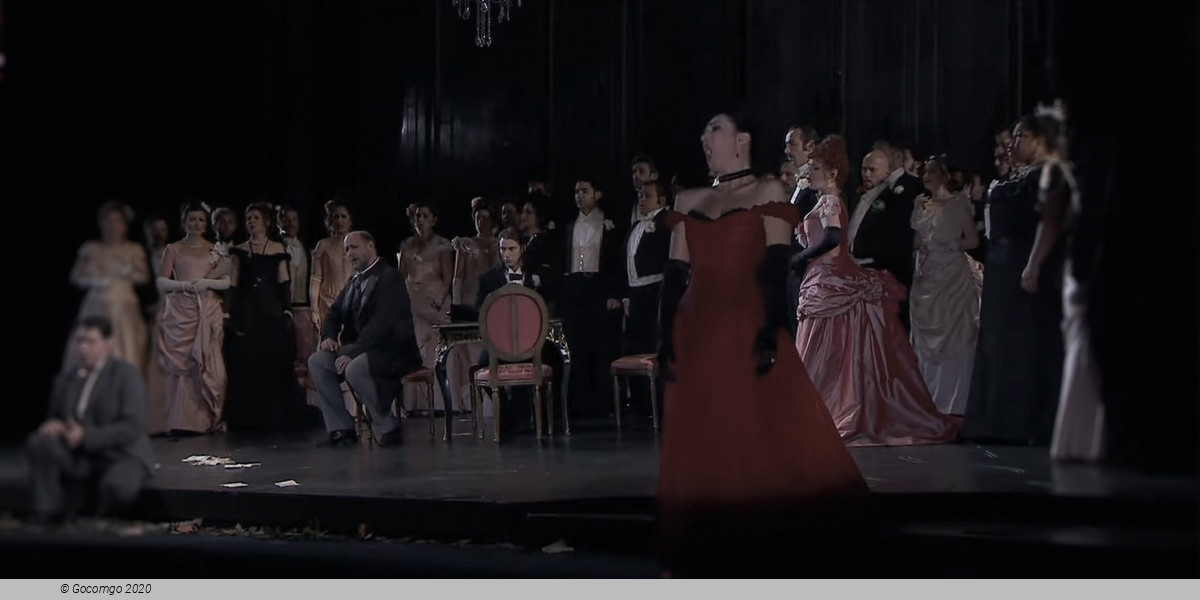
At the soirée, Flora hears from the Marchese that Violetta and Alfredo have parted. Flora asks the guests to make way for a visiting troupe of performing gypsies. They are followed by matadors and a song about Piquillo and his sweetheart. Alfredo rushes in and delivers some bitter comments about love and gambling. Violetta appears on the arm of Baron Douphol, who challenges Alfredo to a game of cards and loses a small fortune to him. As the guests go in to supper, Violetta asks to have a word with Alfredo in private. She is afraid the Baron will be enraged by his loss and urges Alfredo to leave. Alfredo misunderstands her and orders her to admit she loves the Baron. Disappointed by Alfredo’s reaction, Violetta lies and confesses that yes, she does. Alfredo calls the other guests to gather round in order to denounce his former beloved in public and throws the money he has won at her feet. Germont, arriving at that very moment, expresses his disapproval of his son’s behaviour. The guests likewise rebuke Alfredo and Douphol challenges him to a duel.

Act III

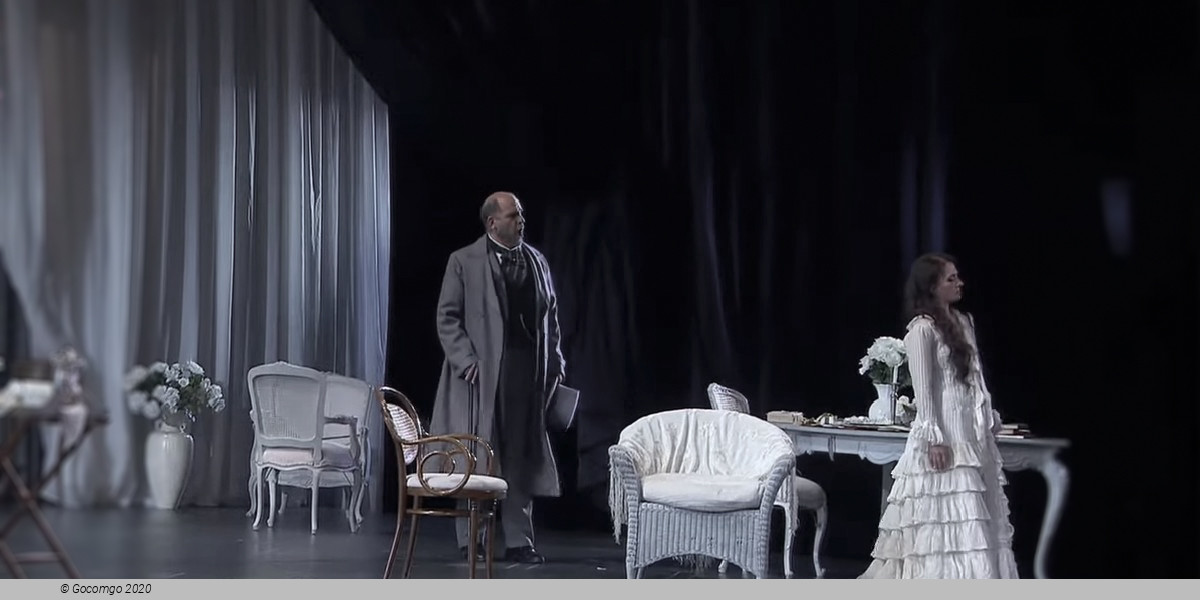
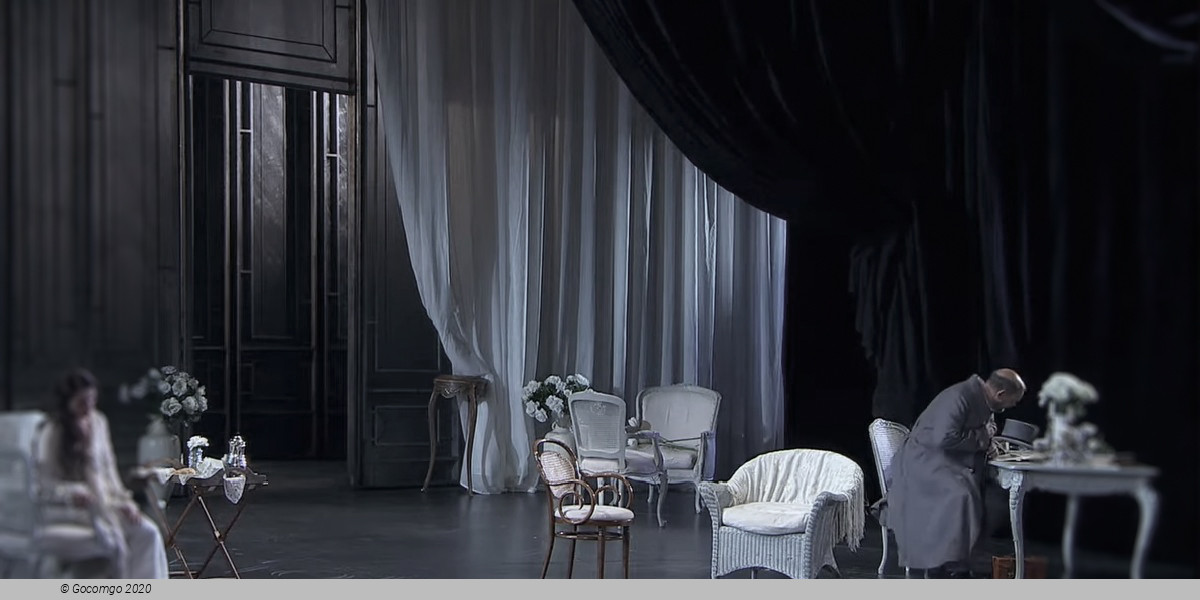
Violetta’s bedroom, six months later. Dr Grenvil tells Annina that her mistress has not long to live –
the consumption has taken its toll. Alone, Violetta rereads a letter from Germont saying that the Baron was only slightly wounded in his duel with Alfredo, that Alfredo has heard the truth and is
coming to beg her pardon. But Violetta realises it is too late. It is carnival time in Paris and, the sounds of the revellers having passed, Annina rushes in to announce Alfredo. The lovers ecstatically plan to leave Paris. Germont enters with the doctor just as Violetta rises from her bed with the last of her strength. Feeling a sudden rush of life, she sways and falls dead at her lover’s feet.

Venue Info

Glyndebourne - Lewes
Location   New Road, BN8 5UU

Glyndebourne is an English country house, the site of an opera house that, since 1934, has been the venue for the annual Glyndebourne Festival Opera. Initially, operas were presented within the house but there is now a free-standing opera house in its grounds. The house itself, located near Lewes in East Sussex, England, is thought to be about six hundred years old and listed at grade II.

Origins of the opera house

John Christie obtained the use of the house in 1913 after the death of William Langham Christie, his grandfather. He came into full legal possession of the estate in 1920. Among other renovations, he added to the house an organ room, 80 feet (24 m) long, in the process almost doubling the length of the south facade of the house. This room contained one of the largest organs outside of a cathedral in the country. It was built by the firm of Hill, Norman & Beard Ltd (bought by Christie in 1923). After the Second World War, John Christie made a gift of sections of the soundboards, pipes and structural parts to the rebuilt Guards Chapel, Wellington Barracks (which had been destroyed in the Blitz); the case and console remain at Glyndebourne.

John Christie's fondness for music led him to hold regular amateur opera evenings in this room. At one of these evenings in 1931, he met his future wife, the Sussex-born Canadian soprano Audrey Mildmay, a singer with the Carl Rosa Opera company who had been engaged to add a touch of professionalism to the proceedings. They were married on 4 June 1931. During their honeymoon, they attended the Salzburg and Bayreuth festivals, which gave them the idea of bringing professional opera to Glyndebourne, although Christie's original concept was for it to be similar to the Bayreuth Festival. As their ideas evolved, the concept changed to focus on smaller-scale productions of operas by Mozart more suited to the intimate scale of the planned theatre.

The first theatre

As an annex to the organ room, the Christies built a fully equipped and up-to-date theatre with a 300-seat auditorium and an orchestra pit capable of holding a symphony orchestra. Christie engaged conductor Fritz Busch as the first music director, Carl Ebert, the Intendant of Berlin's Städtische Oper as artistic director, and Rudolf Bing became general manager until 1949. All three men were exiles from Nazi Germany.

After extensive rehearsals, the first six-week season opened on 28 May 1934 with a performance of Le nozze di Figaro followed by Così fan tutte. Boyd Neel had conducted the first music heard in the renovated Glyndebourne opera house in 1934, in private performances, at John Christie.
John Christie's original theatre was soon enlarged and improved many times after its initial construction. As early as 1936 its capacity was increased to 433; by 1952 it held nearly 600, and finally, in 1977, it held 850 people. In addition, a rehearsal hall was constructed.

Productions were interrupted by the Second World War, during which time the house became an evacuation centre for children from London. After 1945 the Festival slowly began again. Until 1951, the entire burden of financing the opera festival was undertaken by John Christie himself, but, in 1952, the Glyndebourne Festival Society was formed to take over the financial management. Christie's death in 1962 resulted in his son George (later Sir George) taking over, and additional changes and improvements to the theatre continued.

Hill, Norman and Beard built the pipe organ in 1924, and it gradually expanded over the years. John Christie owned a considerable share in the company. Currently, the organ is a gutted shell, the pipes having been donated to various churches for the construction of new organs after World War II. The organ originally contained 4 manuals and 46 stops, but this was eventually expanded to 106 stops, unusual for an English-built organ in having multiple diapason chorus ranks of pipes.

A short semi-documentary film was made in 1955 entitled On Such a Night, featuring excerpts from that year's production of Le nozze di Figaro and with glimpses of John Christie, Vittorio Gui and Carl Ebert, interwoven with fictional story about an American going there for the first time.

The present theatre

By the late 1980s the theatre's expansion, which had proceeded in a somewhat piecemeal fashion, included an agglomeration of outbuildings which housed restaurants, dressing rooms, storage and other facilities. It became clear to George Christie that a completely new theatre - and not just an enlargement of the old one - was necessary. Having chosen the architects Michael and Patty Hopkins of Hopkins Architects in a design competition, Christie announced in 1990 that a new theatre, capable of seating 1,200 people, would be constructed in 1992.

The old theatre hosted its last festival in 1992, and construction of a brand-new theatre was under way. It was completed at a cost of £34 million, 90 per cent of which was raised through donations, which gave the donors control of 28% of the seats. The inaugural performance in the new theatre on 28 May 1994, given sixty years to the day after the old theatre's first performance, was Le nozze di Figaro.

The design of the theatre, a large brick oval building, has resulted in a four-level, horseshoe-shaped auditorium with main level seating, two balconies, and a gallery topped with a circular roof. The over sixty-foot-high stage building is semi-circular in shape and allows for the efficient flying and storage of scenery. The acoustics, by Derek Sugden and Rob Harris of Arup Acoustics, have received praise.

Important Info
Type: Opera
City: Lewes, Great Britain
Starts at: 19:00
Top of page