
Glyndebourne tickets 14 July 2027 - Idomeneo | GoComGo.com

Idomeneo

Glyndebourne, Lewes, Great Britain
All photos (6)
Select date and time
7 PM
From
US$ 157

E-tickets: Print at home or at the box office of the event if so specified. You will find more information in your booking confirmation email.

You can only select the category, and not the exact seats.
If you order 2 or 3 tickets: your seats will be next to each other.
If you order 4 or more tickets: your seats will be next to each other, or, if this is not possible, we will provide a combination of groups of seats (at least in pairs, for example 2+2 or 2+3).

Important Info
Type: Opera
City: Lewes, Great Britain
Starts at: 19:00

E-tickets: Print at home or at the box office of the event if so specified. You will find more information in your booking confirmation email.

You can only select the category, and not the exact seats.
If you order 2 or 3 tickets: your seats will be next to each other.
If you order 4 or more tickets: your seats will be next to each other, or, if this is not possible, we will provide a combination of groups of seats (at least in pairs, for example 2+2 or 2+3).

Cast
Performers
Conductor: Robin Ticciati
Soprano: Golda Schultz (Elettra (Electra))
Mezzo-Soprano: Deepa Johnny (Idamante (Idamantes))
Tenor: Ian Koziara (Idomeneo (Idomeneus))
Soprano: Katharina Konradi (Ilia)
Orchestra: Orchestra of the Age of Enlightenment
Creators
Composer: Wolfgang Amadeus Mozart
Librettist: Giambattista Varesco
Director: Stephen Langridge
Festival

Glyndebourne Festival Opera 2027

The Glyndebourne Festival Opera 2027 returns from 20 May to 29 August, bringing five operatic works to the celebrated Sussex countryside. Known for its exceptional productions and distinctive blend of opera, gardens and leisurely summer picnics, Glyndebourne offers an experience that feels as carefully considered outside the auditorium as it is on stage.

Overview

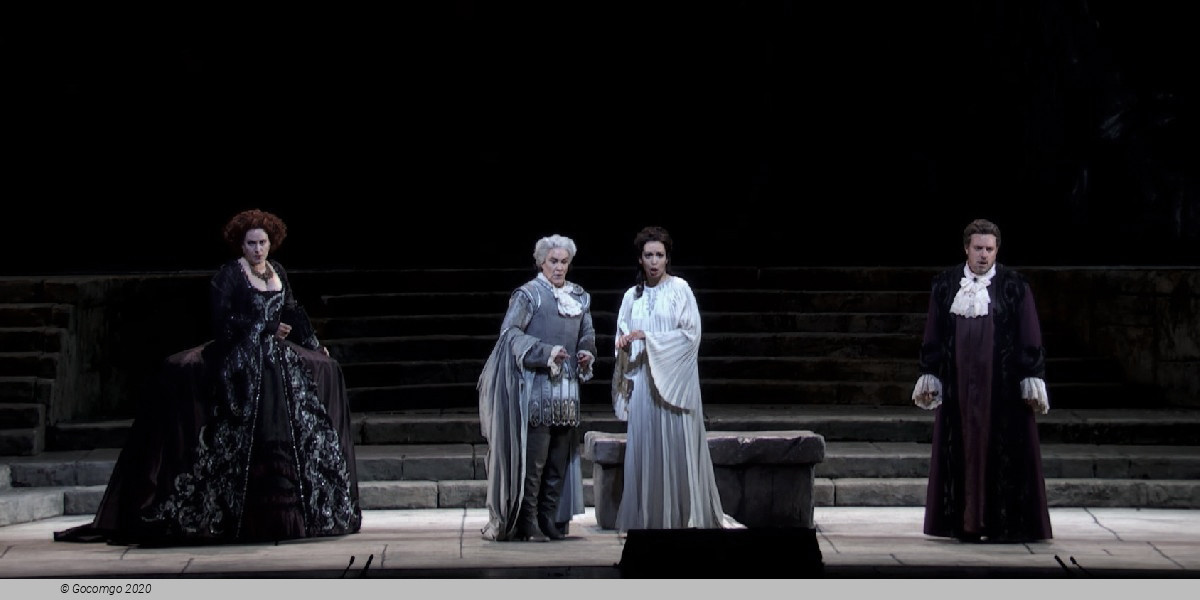
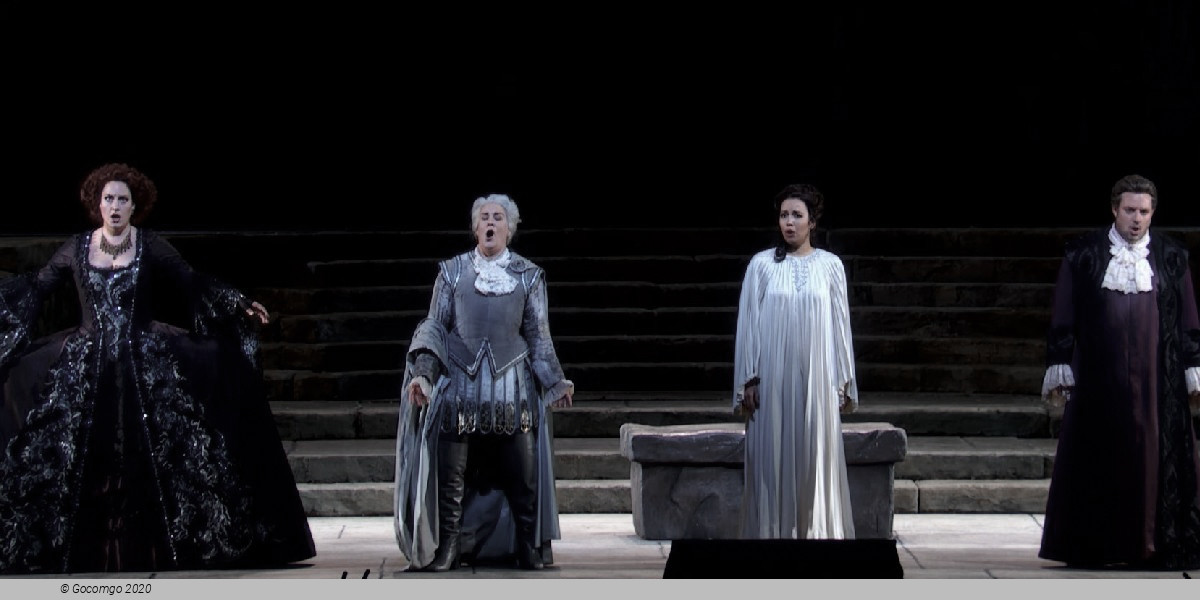
The 2027 Glyndebourne Festival opens with a new production of Wolfgang Amadeus Mozart’s Idomeneo, directed by Stephen Langridge and conducted by Glyndebourne Music Director Robin Ticciati. Running from 20 May to 14 July, the production brings together the Orchestra of the Age of Enlightenment, the Glyndebourne Chorus, and a distinguished international cast for Mozart’s powerful opera seria.

New Production

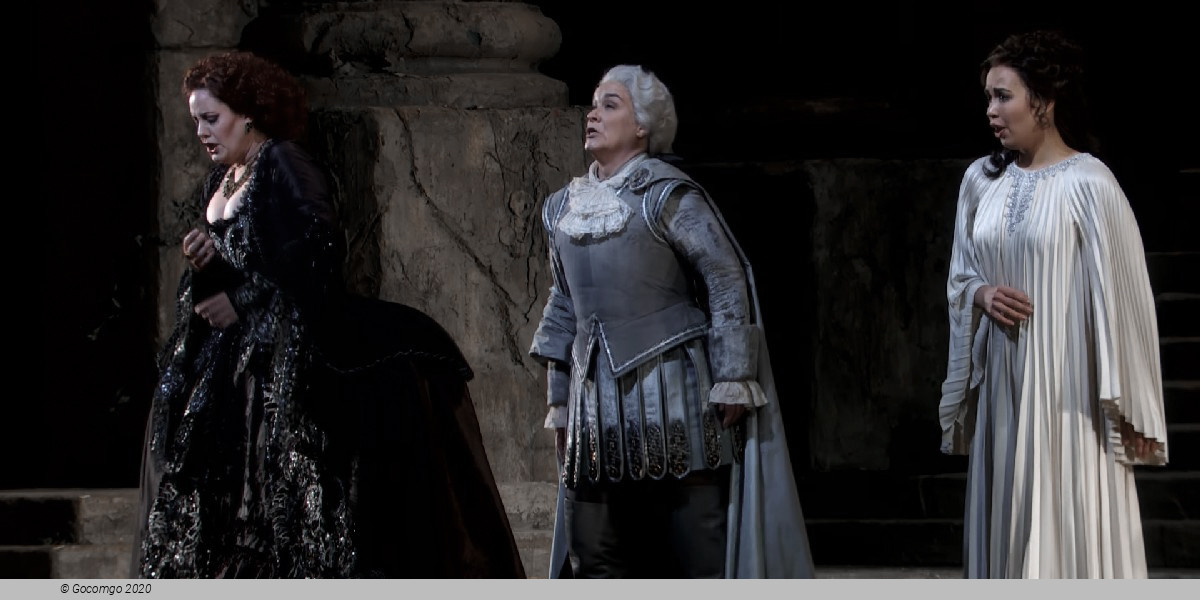
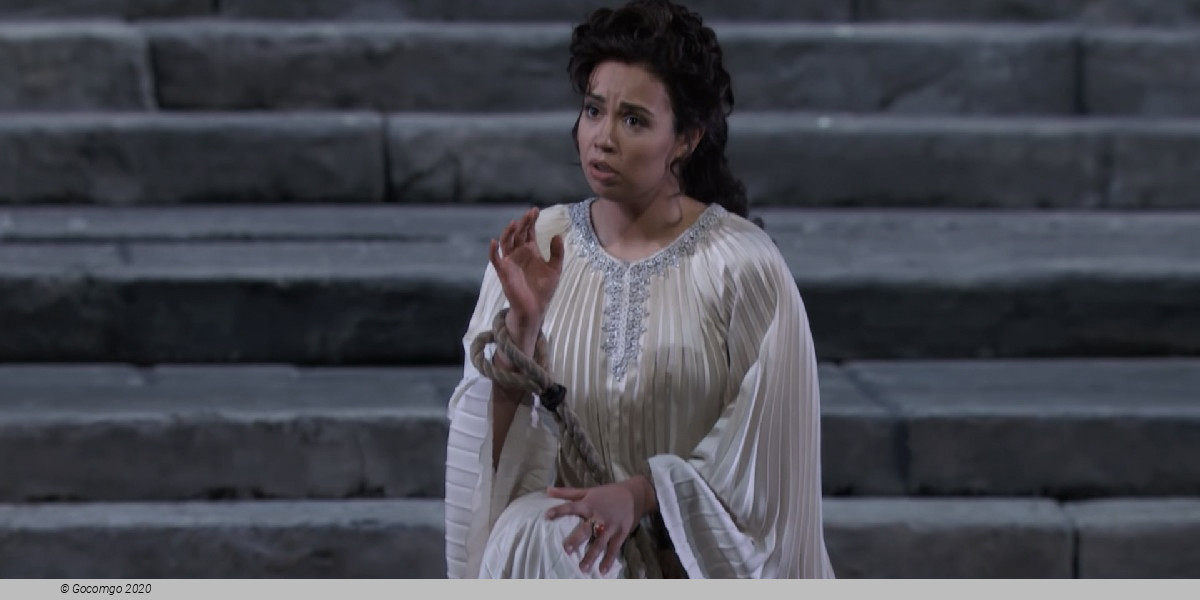
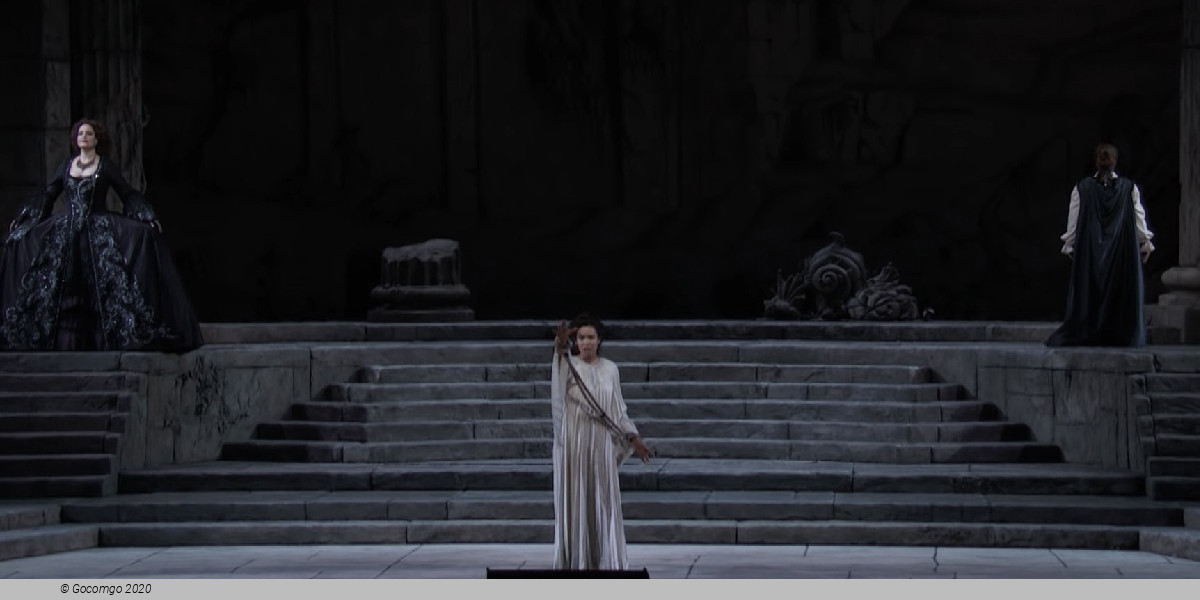
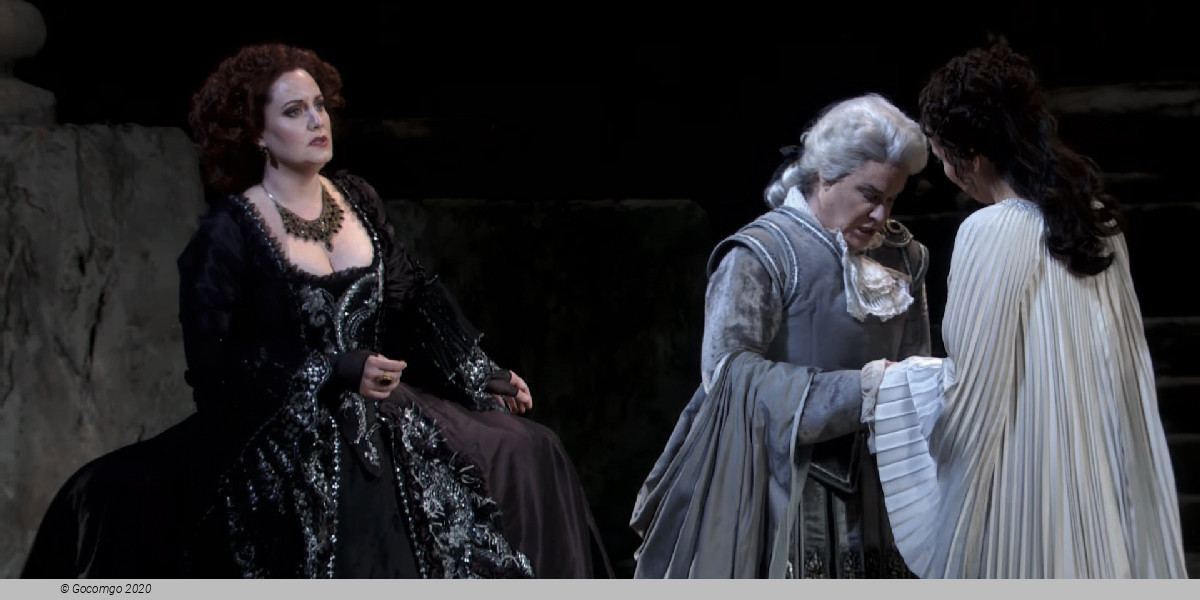
Set in the aftermath of a devastating storm, Idomeneo follows the King of Crete as he struggles to fulfil a terrible vow made to Neptune in exchange for his survival at sea. The price of that promise is his son, Idamante, whose love for the Trojan princess Ilia becomes entangled with the jealousy of Elettra. Duty, love, political responsibility, and divine intervention collide as the characters are forced to confront the consequences of choices made in moments of desperation.

With its celebrated performers, period-instrument orchestra, and the distinctive atmosphere of Glyndebourne, this new Idomeneo offers an excellent opportunity to experience Mozart’s music in a production created especially for the 2027 Festival.

History
Premiere of this production: 29 January 1781, Cuvilliés Theatre, Munich

Idomeneo, re di Creta ossia Ilia e Idamante (Idomeneus, King of Crete) is an Italian language opera seria by Wolfgang Amadeus Mozart. The libretto was adapted by Giambattista Varesco from a French text by Antoine Danchet, which had been set to music by André Campra as Idoménée in 1712. Mozart and Varesco were commissioned in 1780 by Karl Theodor, Elector of Bavaria for a court carnival. He probably chose the subject, though it might have been Mozart. The work premiered on 29 January 1781 at the Cuvilliés Theatre in Munich, Germany.

Synopsis

The overture, in D major and common time, is in a modified sonata form in which the development is but a very short transition section connecting the exposition with the recapitulation. Other conventional hallmarks of the sonata form are apparent: the exposition modulates from the tonic (D major) to the dominant (A major), while the recapitulation is centred on the tonic. The overture concludes with a coda ending in D major chords. These chords, soft and tentative, turn out not to be a resolution of the overture in the tonic but chords in the dominant of G minor, which is the home key of the scene that immediately follows.

Act 1

Island of Crete, shortly after the Trojan War. Ilia, daughter of the defeated Trojan King Priam, has been taken to Crete after the war. She loves Prince Idamante, son of the Cretan King Idomeneo, but hesitates to acknowledge her love. Idamante frees the Trojan prisoners in a gesture of good will. He tells Ilia, who is rejecting his love, that it is not his fault that their fathers were enemies. Trojans and Cretans together welcome the return of peace, but Electra, daughter of the Greek King Agamemnon, is jealous of Ilia and does not approve of Idamante's clemency toward the enemy prisoners. Arbace, the king's confidant, brings news that Idomeneo has been lost at sea while returning to Crete from Troy. Electra, fearing that Ilia, a Trojan, will soon become Queen of Crete, feels the furies of the underworld rise up in her heart (aria: "Tutte nel cor vi sento, furie del crudo averno" – "I feel you all in my heart, furies of the cruel underworld").

Idomeneo is saved by Neptune (god of the sea) and is washed up on a Cretan beach. There he recalls the vow he made to Neptune: to sacrifice, if he should arrive safely on land, the first living creature he should meet. Idamante approaches him, but because the two have not seen each other for a long time, recognition is difficult. When Idomeneo finally realizes the youth that he must sacrifice for the sake of his vow is his own child, he orders Idamante never to seek him out again. Grief-stricken by his father's rejection, Idamante runs off. Cretan troops disembarking from Idomeneo's ship are met by their wives, and all praise Neptune.

Act 2

At the king's palace, Idomeneo seeks counsel from Arbace, who says another victim could be sacrificed if Idamante were sent into exile. Idomeneo orders his son to escort Electra to her home, Argos. Idomeneo's kind words to Ilia move her to declare that since she has lost everything, he will be her father and Crete her country. As she leaves, Idomeneo realizes that sending Idamante into exile has cost Ilia her happiness as well as his own. Electra welcomes the idea of going to Argos with Idamante.

Overture

At the port of Sidon (a fictional city of Crete), Idomeneo bids his son farewell and urges him to learn the art of ruling while he is away. Before the ship can sail, however, a storm breaks out, and a sea serpent appears. Recognizing it as a messenger from Neptune, the king offers himself as atonement for having violated his vow to the god.

Act 3

In the royal garden, Ilia asks the breezes to carry her love to Idamante, who appears, explaining that he must go to fight the serpent. When he says he would rather die than suffer the torments of his rejected love, Ilia confesses her love. They are surprised by Electra and Idomeneo. When Idamante asks his father why he sends him away, Idomeneo can only reply that the youth must leave. Ilia asks for consolation from Electra, who is preoccupied with revenge. Arbace comes with news that the people, led by the High Priest of Neptune, are clamoring for Idomeneo. The High Priest tells the king of the destruction caused by Neptune's monster, urging Idomeneo to reveal the name of the person whose sacrifice is demanded by the god. When the king confesses that his own son is the victim, the populace is horrified.

Outside the temple, the king and High Priest join Neptune's priests in prayer that the god may be appeased. Arbace brings news that Idamante has killed the monster. As Idomeneo fears new reprisals from Neptune, Idamante enters in sacrificial robes, saying he understands his father's torment and is ready to die. After an agonizing farewell, Idomeneo is about to sacrifice his son when Ilia intervenes, offering her own life instead. The Voice of Neptune is heard. Idomeneo must yield the throne to Ilia and Idamante. Everyone is relieved except Electra, who longs for her own death. Idomeneo presents Idamante and his bride as the new rulers. The people call upon the god of love and marriage to bless the royal pair and bring peace.

Venue Info

Glyndebourne - Lewes
Location   New Road, BN8 5UU

Glyndebourne is an English country house, the site of an opera house that, since 1934, has been the venue for the annual Glyndebourne Festival Opera. Initially, operas were presented within the house but there is now a free-standing opera house in its grounds. The house itself, located near Lewes in East Sussex, England, is thought to be about six hundred years old and listed at grade II.

Origins of the opera house

John Christie obtained the use of the house in 1913 after the death of William Langham Christie, his grandfather. He came into full legal possession of the estate in 1920. Among other renovations, he added to the house an organ room, 80 feet (24 m) long, in the process almost doubling the length of the south facade of the house. This room contained one of the largest organs outside of a cathedral in the country. It was built by the firm of Hill, Norman & Beard Ltd (bought by Christie in 1923). After the Second World War, John Christie made a gift of sections of the soundboards, pipes and structural parts to the rebuilt Guards Chapel, Wellington Barracks (which had been destroyed in the Blitz); the case and console remain at Glyndebourne.

John Christie's fondness for music led him to hold regular amateur opera evenings in this room. At one of these evenings in 1931, he met his future wife, the Sussex-born Canadian soprano Audrey Mildmay, a singer with the Carl Rosa Opera company who had been engaged to add a touch of professionalism to the proceedings. They were married on 4 June 1931. During their honeymoon, they attended the Salzburg and Bayreuth festivals, which gave them the idea of bringing professional opera to Glyndebourne, although Christie's original concept was for it to be similar to the Bayreuth Festival. As their ideas evolved, the concept changed to focus on smaller-scale productions of operas by Mozart more suited to the intimate scale of the planned theatre.

The first theatre

As an annex to the organ room, the Christies built a fully equipped and up-to-date theatre with a 300-seat auditorium and an orchestra pit capable of holding a symphony orchestra. Christie engaged conductor Fritz Busch as the first music director, Carl Ebert, the Intendant of Berlin's Städtische Oper as artistic director, and Rudolf Bing became general manager until 1949. All three men were exiles from Nazi Germany.

After extensive rehearsals, the first six-week season opened on 28 May 1934 with a performance of Le nozze di Figaro followed by Così fan tutte. Boyd Neel had conducted the first music heard in the renovated Glyndebourne opera house in 1934, in private performances, at John Christie.
John Christie's original theatre was soon enlarged and improved many times after its initial construction. As early as 1936 its capacity was increased to 433; by 1952 it held nearly 600, and finally, in 1977, it held 850 people. In addition, a rehearsal hall was constructed.

Productions were interrupted by the Second World War, during which time the house became an evacuation centre for children from London. After 1945 the Festival slowly began again. Until 1951, the entire burden of financing the opera festival was undertaken by John Christie himself, but, in 1952, the Glyndebourne Festival Society was formed to take over the financial management. Christie's death in 1962 resulted in his son George (later Sir George) taking over, and additional changes and improvements to the theatre continued.

Hill, Norman and Beard built the pipe organ in 1924, and it gradually expanded over the years. John Christie owned a considerable share in the company. Currently, the organ is a gutted shell, the pipes having been donated to various churches for the construction of new organs after World War II. The organ originally contained 4 manuals and 46 stops, but this was eventually expanded to 106 stops, unusual for an English-built organ in having multiple diapason chorus ranks of pipes.

A short semi-documentary film was made in 1955 entitled On Such a Night, featuring excerpts from that year's production of Le nozze di Figaro and with glimpses of John Christie, Vittorio Gui and Carl Ebert, interwoven with fictional story about an American going there for the first time.

The present theatre

By the late 1980s the theatre's expansion, which had proceeded in a somewhat piecemeal fashion, included an agglomeration of outbuildings which housed restaurants, dressing rooms, storage and other facilities. It became clear to George Christie that a completely new theatre - and not just an enlargement of the old one - was necessary. Having chosen the architects Michael and Patty Hopkins of Hopkins Architects in a design competition, Christie announced in 1990 that a new theatre, capable of seating 1,200 people, would be constructed in 1992.

The old theatre hosted its last festival in 1992, and construction of a brand-new theatre was under way. It was completed at a cost of £34 million, 90 per cent of which was raised through donations, which gave the donors control of 28% of the seats. The inaugural performance in the new theatre on 28 May 1994, given sixty years to the day after the old theatre's first performance, was Le nozze di Figaro.

The design of the theatre, a large brick oval building, has resulted in a four-level, horseshoe-shaped auditorium with main level seating, two balconies, and a gallery topped with a circular roof. The over sixty-foot-high stage building is semi-circular in shape and allows for the efficient flying and storage of scenery. The acoustics, by Derek Sugden and Rob Harris of Arup Acoustics, have received praise.

Important Info
Type: Opera
City: Lewes, Great Britain
Starts at: 19:00
Top of page