
Glyndebourne tickets 14 August 2027 - Carmen | GoComGo.com

Carmen

Glyndebourne, Lewes, Great Britain
All photos (17)
Select date and time
7 PM
From
US$ 157

E-tickets: Print at home or at the box office of the event if so specified. You will find more information in your booking confirmation email.

You can only select the category, and not the exact seats.
If you order 2 or 3 tickets: your seats will be next to each other.
If you order 4 or more tickets: your seats will be next to each other, or, if this is not possible, we will provide a combination of groups of seats (at least in pairs, for example 2+2 or 2+3).

Important Info
Type: Opera
City: Lewes, Great Britain
Starts at: 19:00

E-tickets: Print at home or at the box office of the event if so specified. You will find more information in your booking confirmation email.

You can only select the category, and not the exact seats.
If you order 2 or 3 tickets: your seats will be next to each other.
If you order 4 or more tickets: your seats will be next to each other, or, if this is not possible, we will provide a combination of groups of seats (at least in pairs, for example 2+2 or 2+3).

Cast
Performers
Tenor: Atalla Ayan (Don José)
Conductor: Ben Glassberg
Orchestra: London Philharmonic Orchestra
Mezzo-Soprano: Rihab Chaieb (Carmen)
Creators
Composer: Georges Bizet
Director: Diane Paulus
Librettist: Henri Meilhac
Librettist: Ludovic Halévy
Author: Prosper Mérimée
Festival

Glyndebourne Festival Opera 2027

The Glyndebourne Festival Opera 2027 returns from 20 May to 29 August, bringing five operatic works to the celebrated Sussex countryside. Known for its exceptional productions and distinctive blend of opera, gardens and leisurely summer picnics, Glyndebourne offers an experience that feels as carefully considered outside the auditorium as it is on stage.

Overview

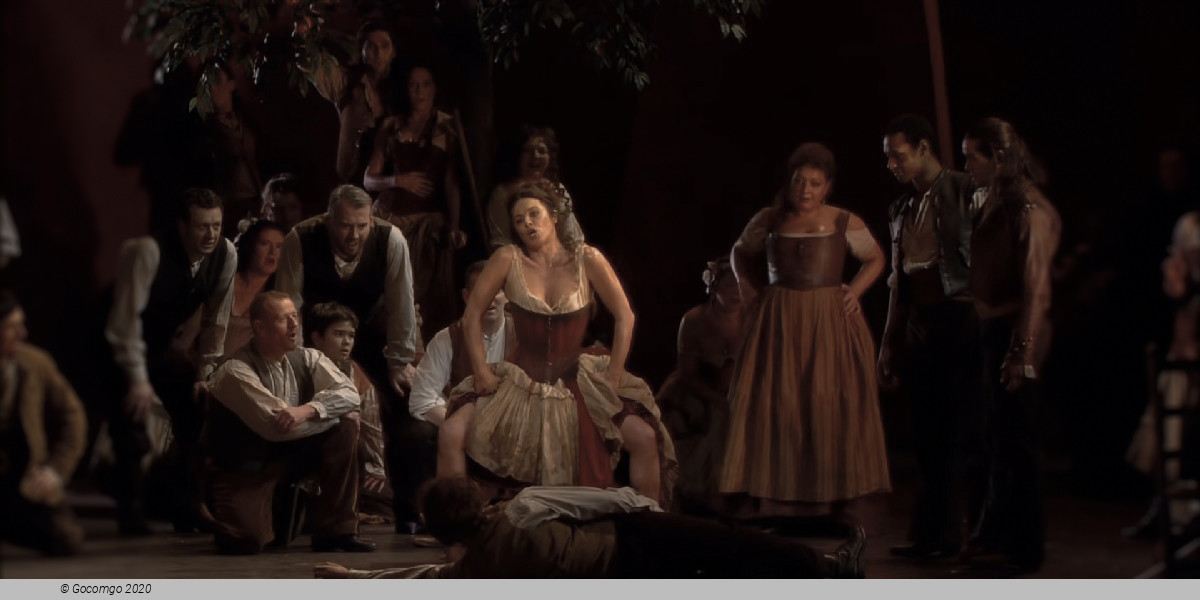
Few operas combine drama, sensuality and unforgettable melody as vividly as Georges Bizet’s Carmen. In Festival 2027, Glyndebourne brings back Diane Paulus’s acclaimed production, first presented at the festival in 2024.

A revival of the Festival 2024 production

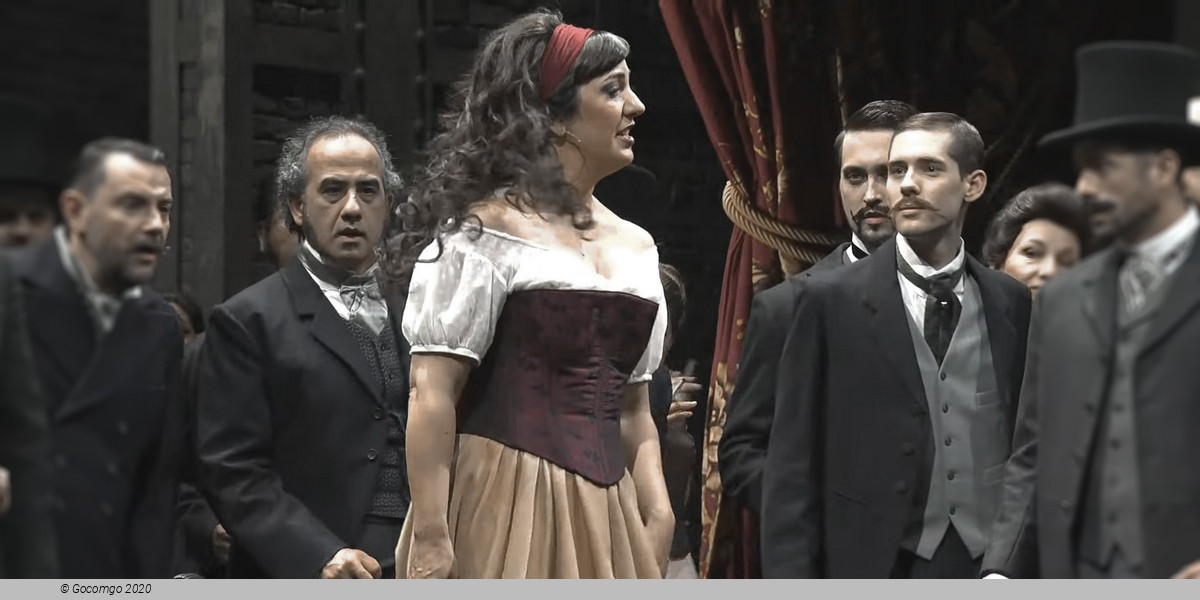
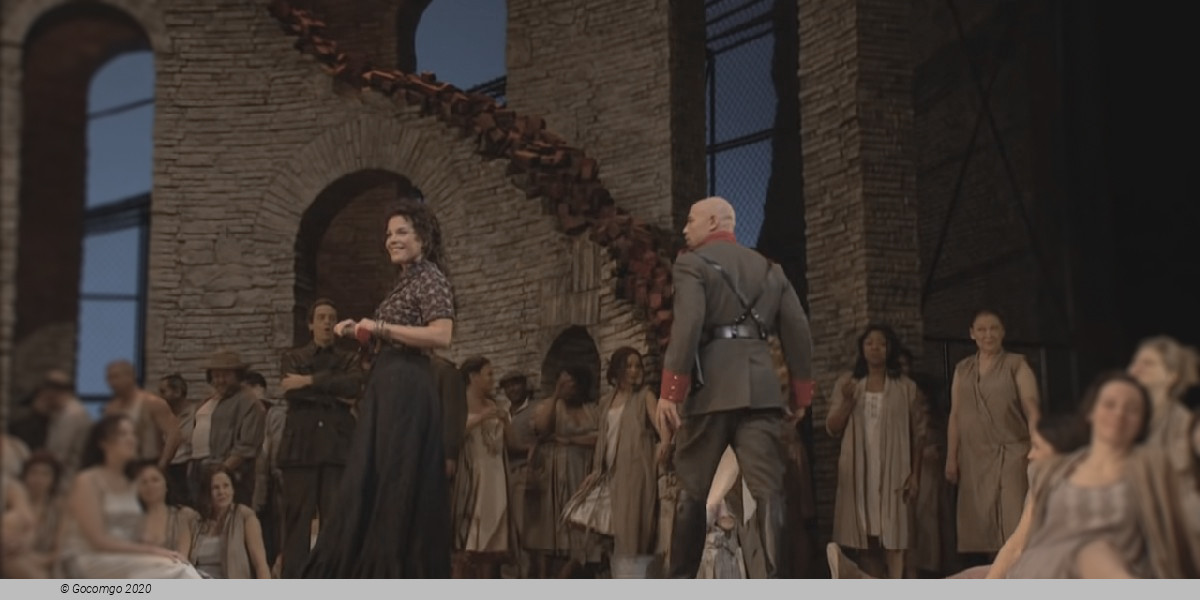
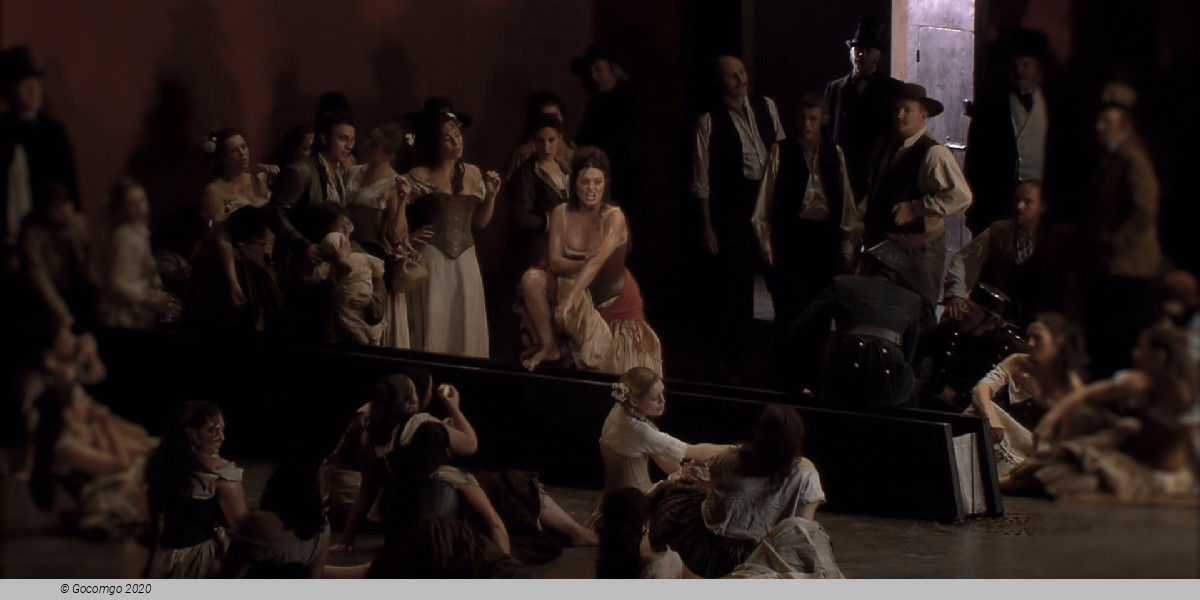
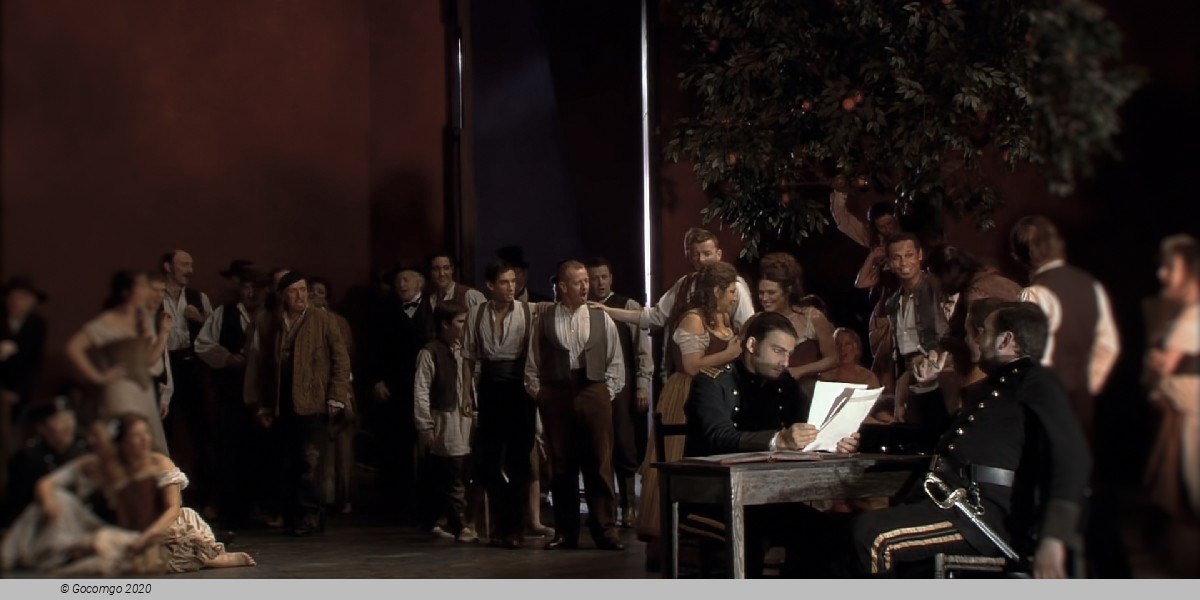
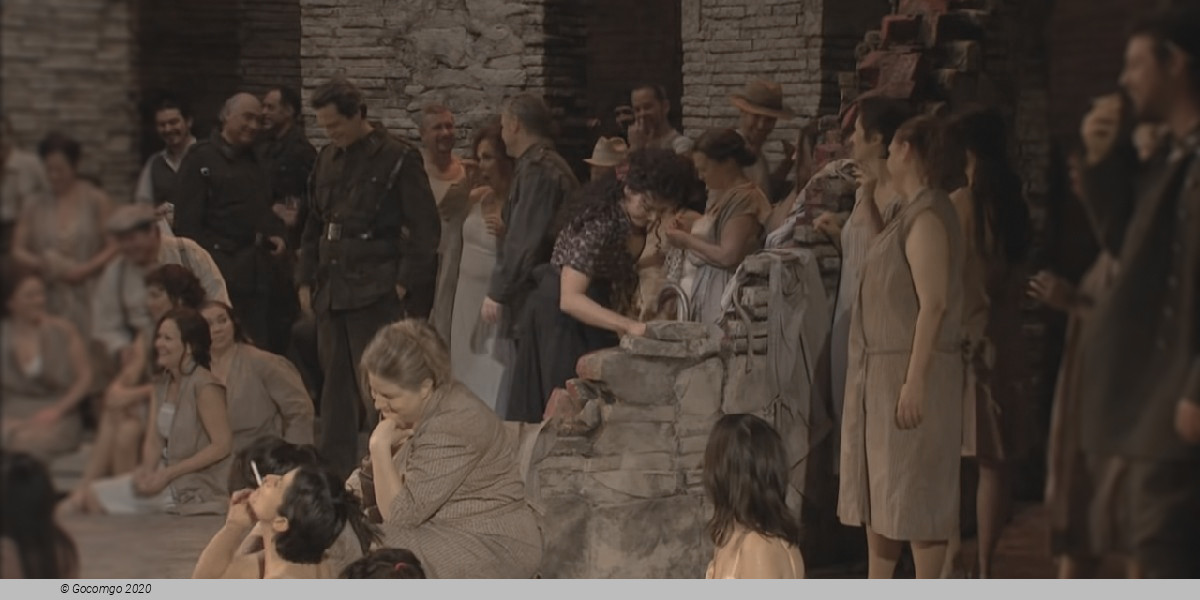
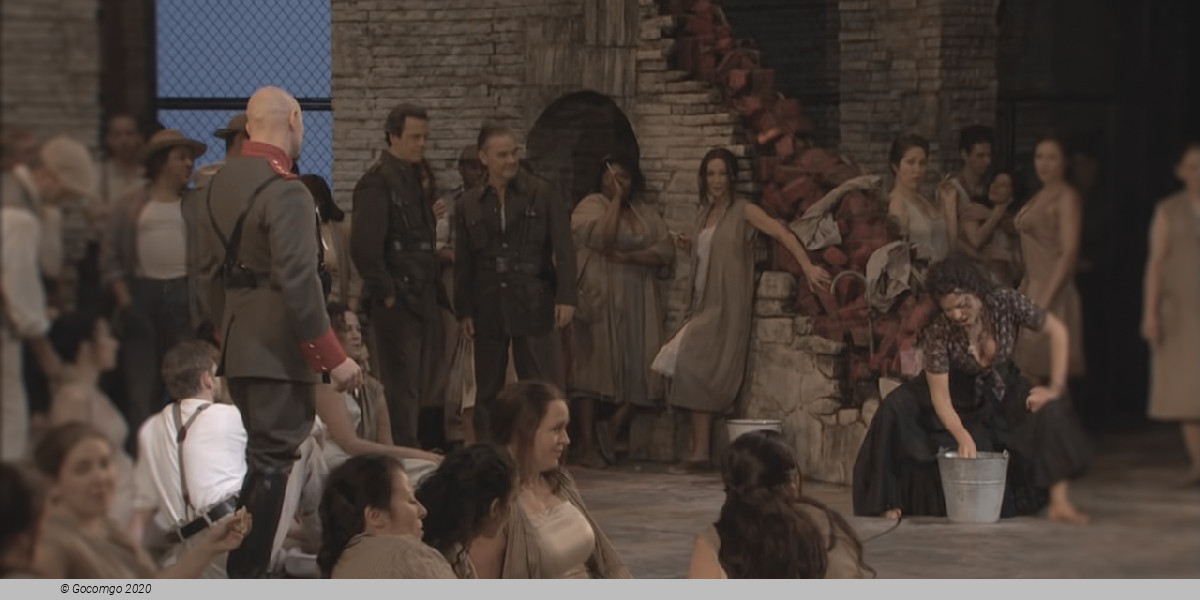
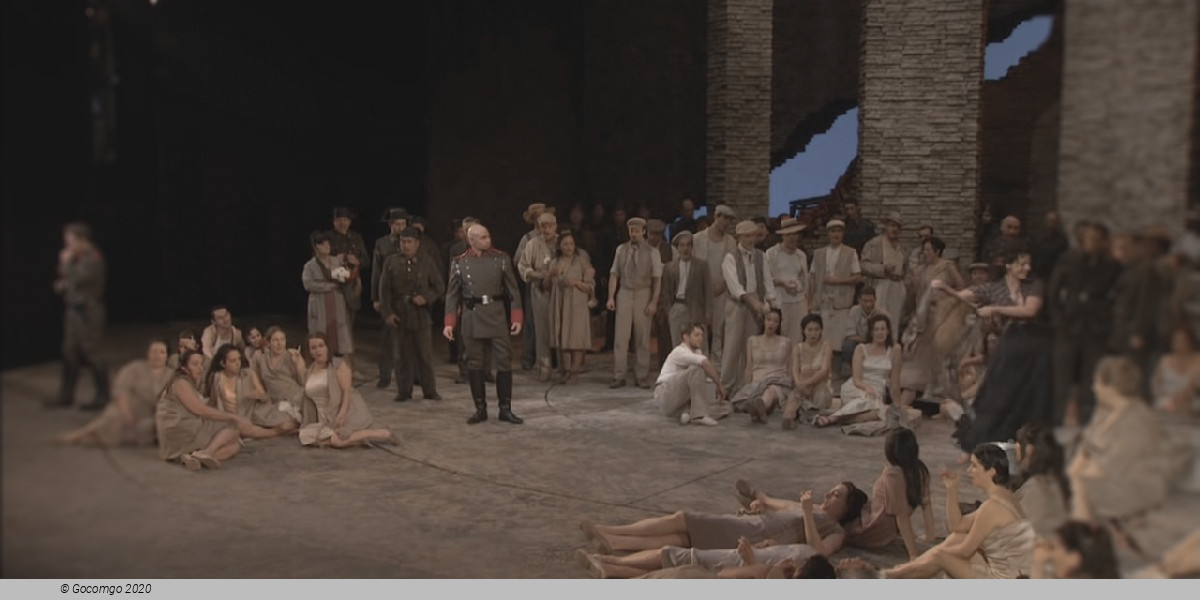
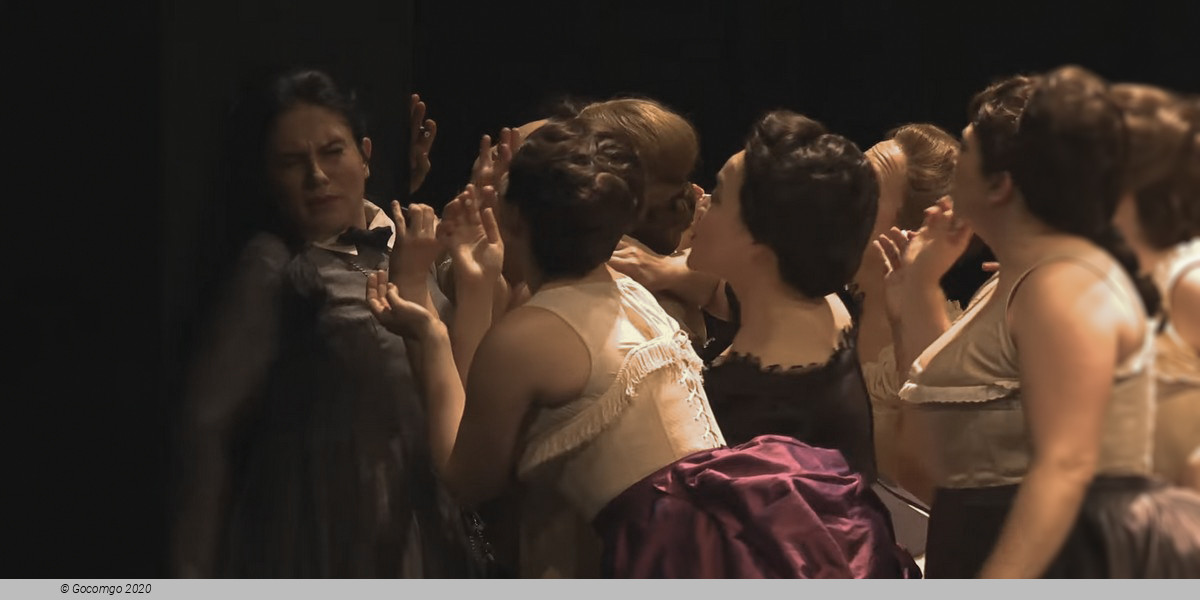
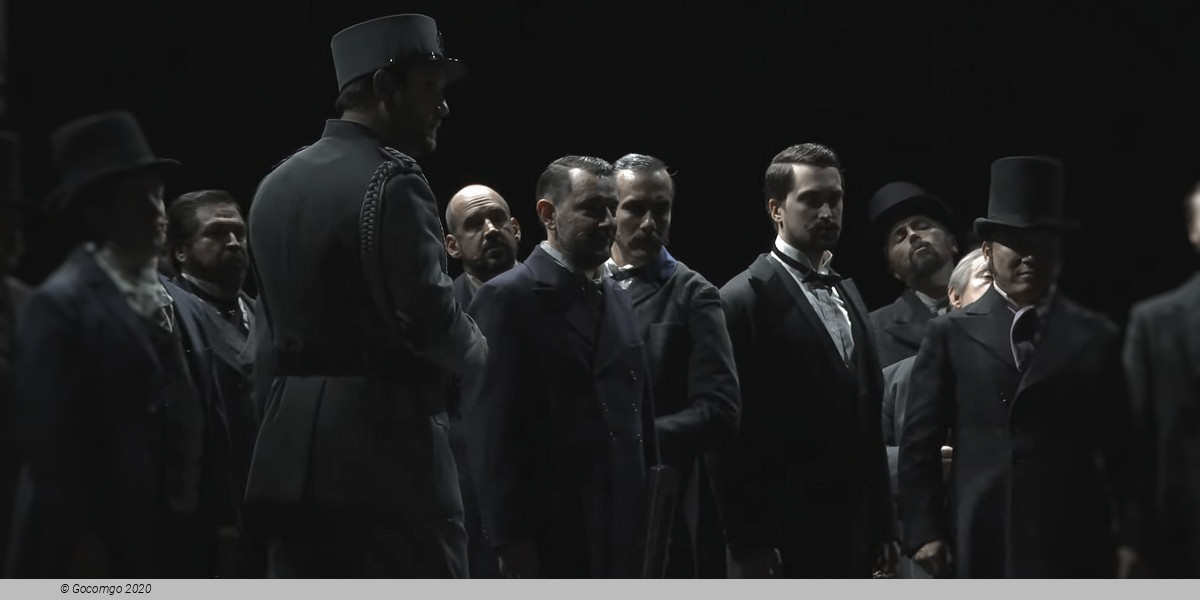
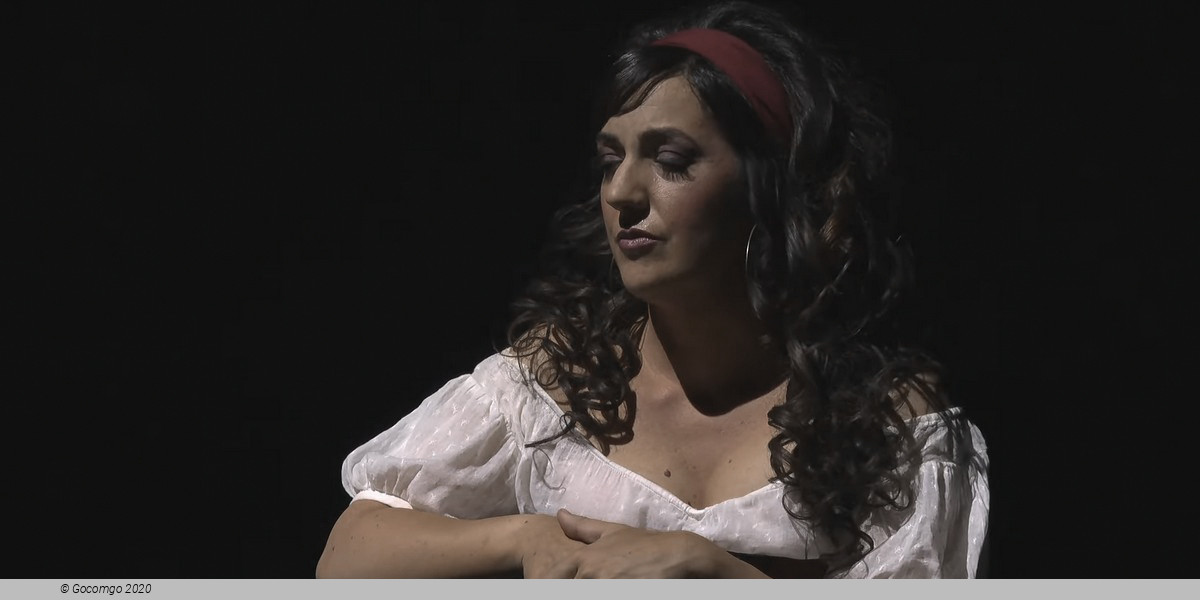
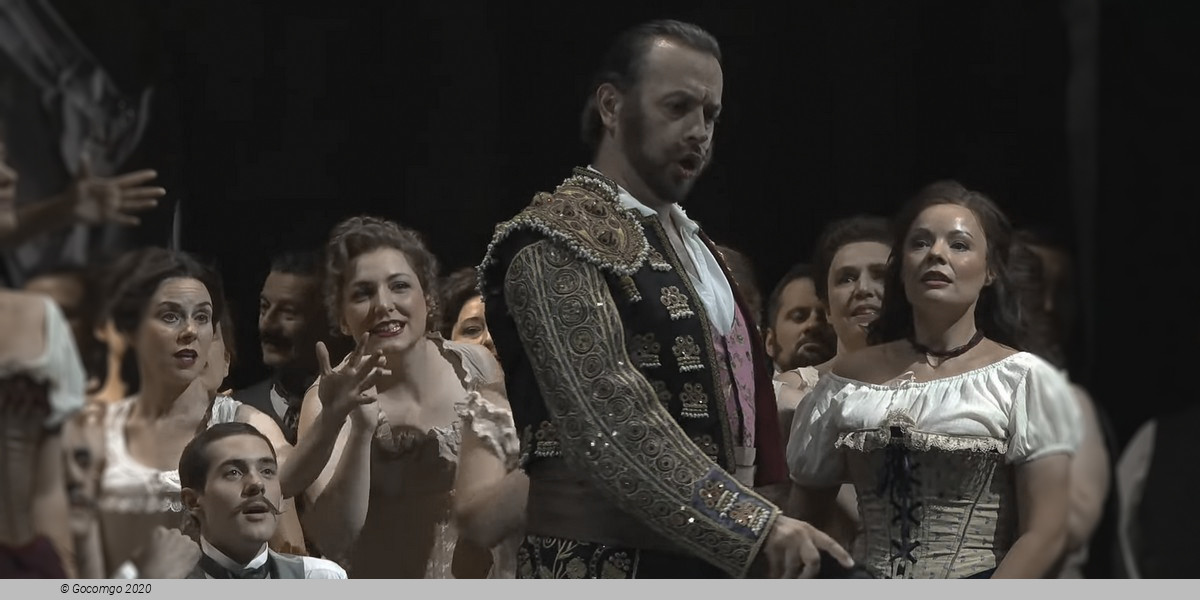
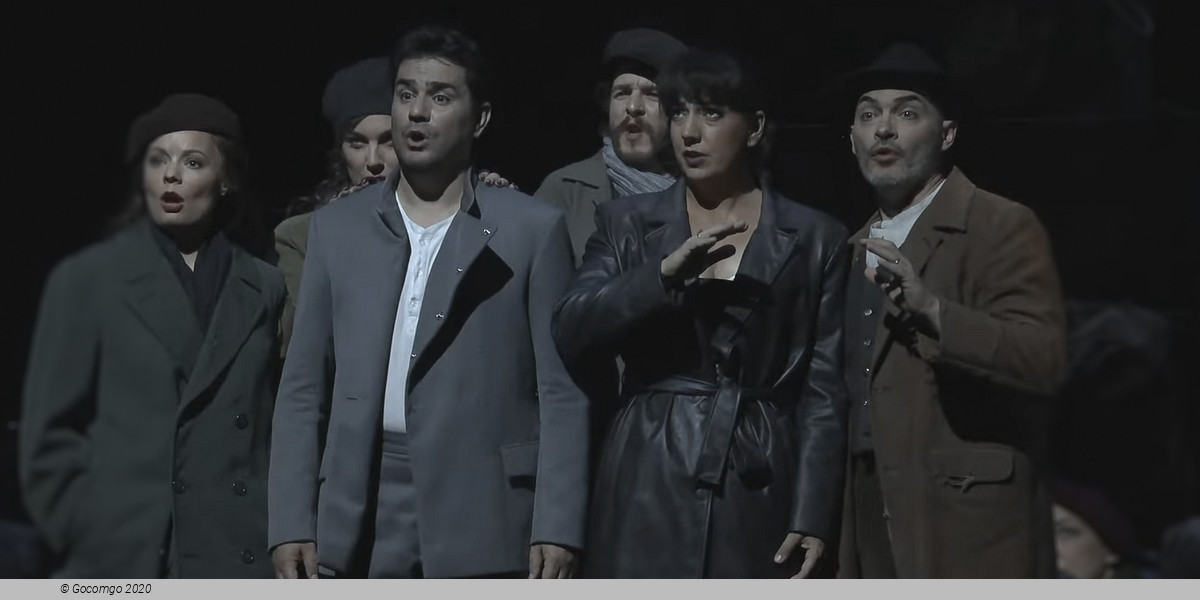
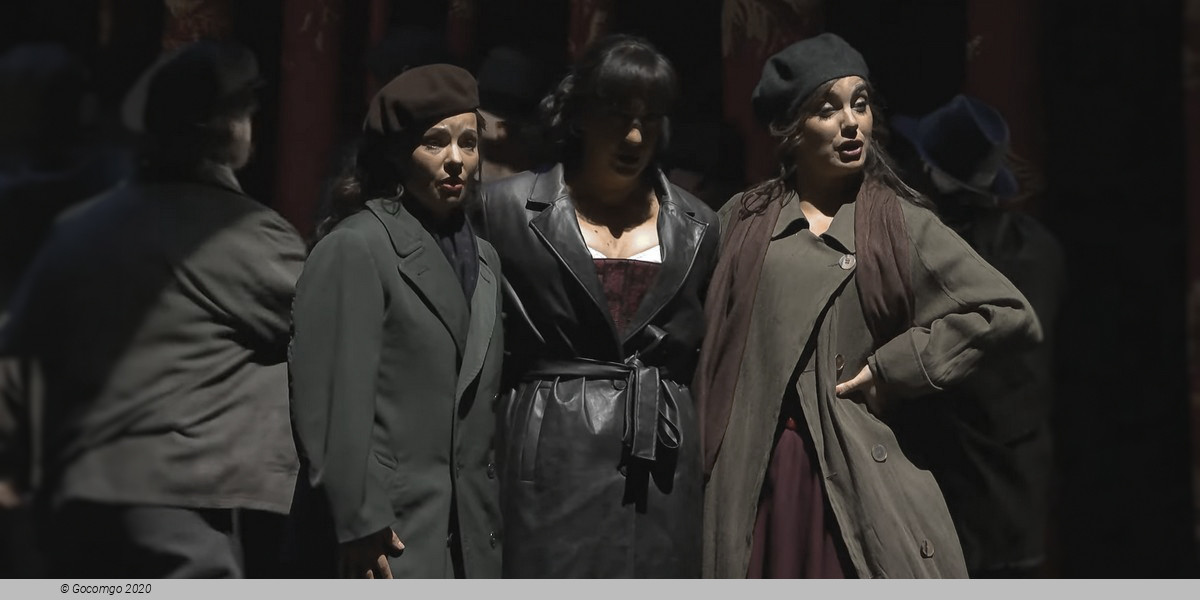
Paulus’s staging offers a visceral, contemporary perspective on Bizet’s heroine, exploring Carmen’s fierce independence and her struggle for freedom against a harsh and dangerous world. The production places the characters within the atmosphere of borderland communities, combining striking design, physical theatre and choreography to give this familiar tragedy an immediate dramatic intensity.

With its instantly recognisable arias, vivid orchestration and emotionally charged story, Carmen remains one of opera’s most compelling theatrical experiences—and at Glyndebourne, it is presented with the distinctive intimacy and dramatic focus for which the festival is renowned.

History
Premiere of this production: 03 March 1875, Opéra-Comique, Paris

Carmen is an opera in four acts by French composer Georges Bizet. The libretto was written by Henri Meilhac and Ludovic Halévy, based on a novella of the same title by Prosper Mérimée. The opera was first performed by the Opéra-Comique in Paris on 3 March 1875, where its breaking of conventions shocked and scandalized its first audiences.

Synopsis

Place: Seville, Spain, and surrounding hills
Time: Around 1820

Act 1

A square, in Seville. On the right, a door to the tobacco factory. At the back, a bridge. On the left, a guardhouse.

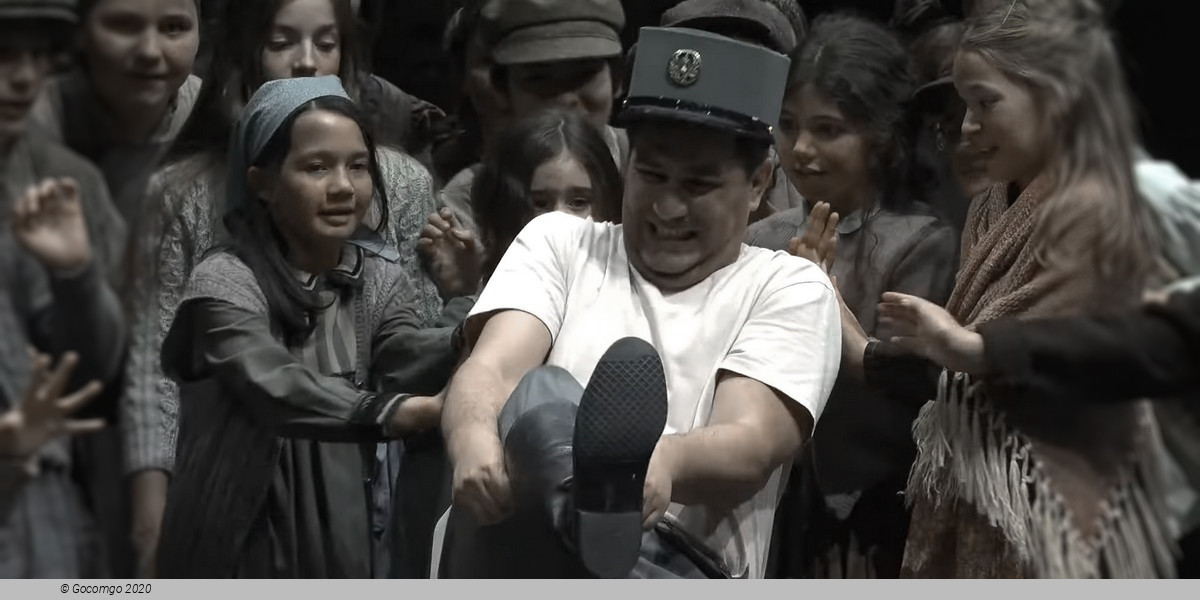
A group of soldiers relaxes in the square, waiting for the changing of the guard and commenting on the passers-by ("Sur la place, chacun passe"). Micaëla appears, seeking José. Moralès tells her that "José is not yet on duty" and invites her to wait with them. She declines, saying she will return later. José arrives with the new guard, who is greeted and imitated by a crowd of urchins ("Avec la garde montante").

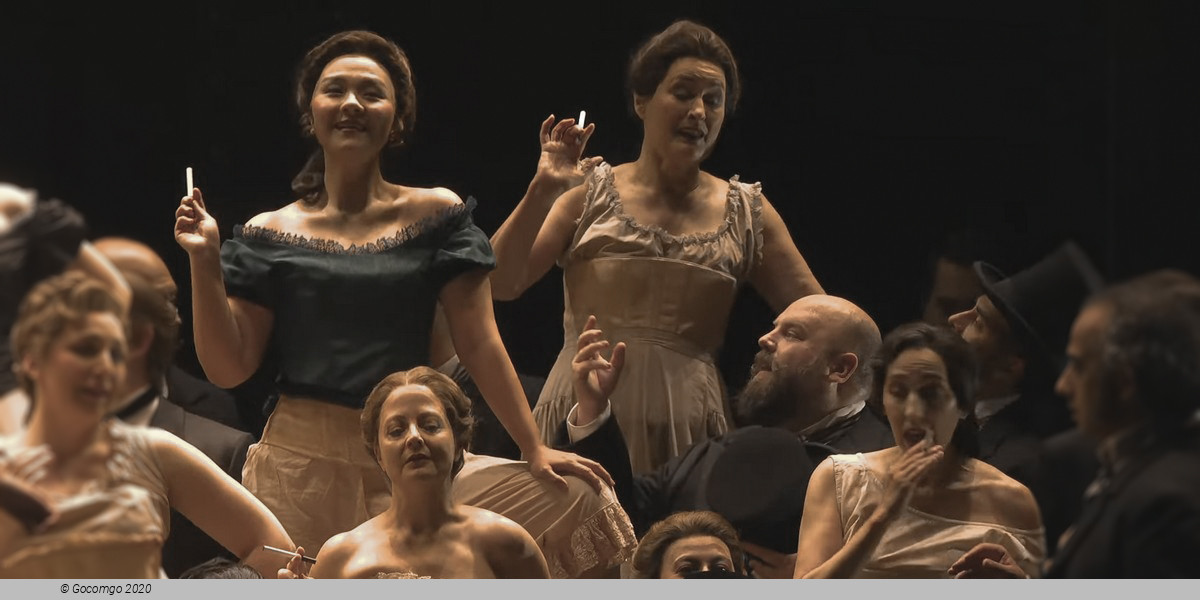
As the factory bell rings, the cigarette girls emerge and exchange banter with young men in the crowd ("La cloche a sonné"). Carmen enters and sings her provocative habanera on the untameable nature of love ("L'amour est un oiseau rebelle"). The men plead with her to choose a lover, and after some teasing she throws a flower to Don José, who thus far has been ignoring her but is now annoyed by her insolence.

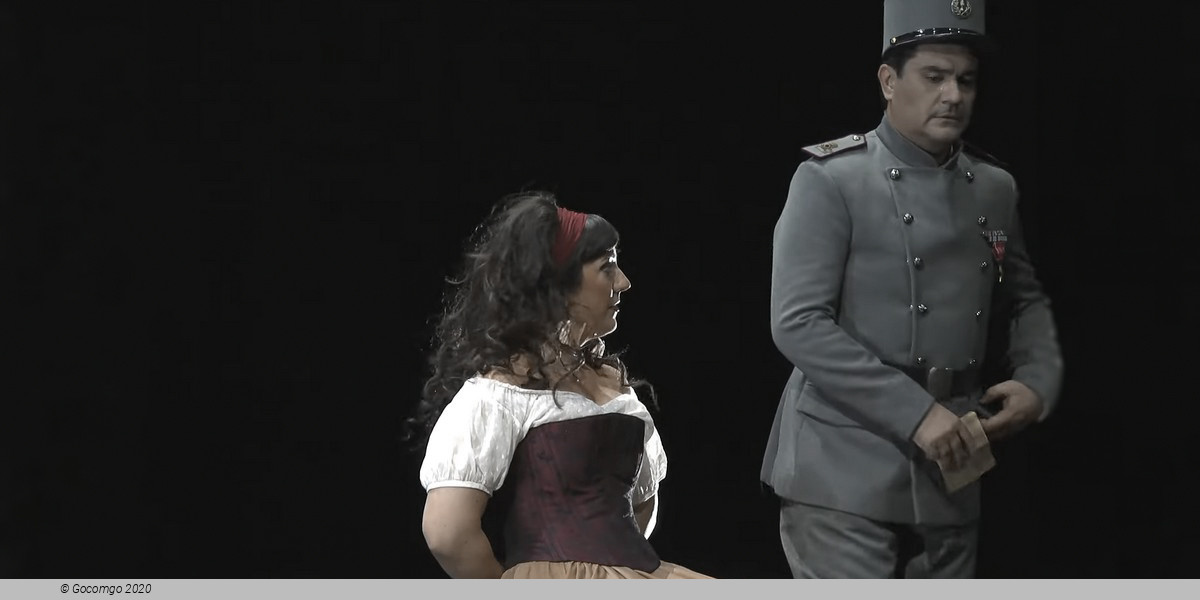
As the women go back to the factory, Micaëla returns and gives José a letter and a kiss from his mother ("Parle-moi de ma mère!"). He reads that his mother wants him to return home and marry Micaëla, who retreats in shy embarrassment on learning this. Just as José declares that he is ready to heed his mother's wishes, the women stream from the factory in great agitation. Zuniga, the officer of the guard, learns that Carmen has attacked a woman with a knife. When challenged, Carmen answers with mocking defiance ("Tra la la... Coupe-moi, brûle-moi"); Zuniga orders José to tie her hands while he prepares the prison warrant. Left alone with José, Carmen beguiles him with a seguidilla, in which she sings of a night of dancing and passion with her lover—whoever that may be—in Lillas Pastia's tavern. Confused yet mesmerised, José agrees to free her hands; as she is led away she pushes her escort to the ground and runs off laughing. José is arrested for dereliction of duty.

Act 2

Lillas Pastia's Inn

Two months have passed. Carmen and her friends Frasquita and Mercédès are entertaining Zuniga and other officers ("Les tringles des sistres tintaient") in Pastia's inn. Carmen is delighted to learn of José's release from two months' detention. Outside, a chorus and procession announces the arrival of the toreador Escamillo ("Vivat, vivat le Toréro"). Invited inside, he introduces himself with the "Toreador Song" ("Votre toast, je peux vous le rendre") and sets his sights on Carmen, who brushes him aside. Lillas Pastia hustles the crowds and the soldiers away.

When only Carmen, Frasquita and Mercédès remain, smugglers Dancaïre and Remendado arrive and reveal their plans to dispose of some recently acquired contraband ("Nous avons en tête une affaire"). Frasquita and Mercédès are keen to help them, but Carmen refuses, since she wishes to wait for José. After the smugglers leave, José arrives. Carmen treats him to a private exotic dance ("Je vais danser en votre honneur ... La la la"), but her song is joined by a distant bugle call from the barracks. When José says he must return to duty, she mocks him, and he answers by showing her the flower that she threw to him in the square ("La fleur que tu m'avais jetée"). Unconvinced, Carmen demands he show his love by leaving with her. José refuses to desert, but as he prepares to depart, Zuniga enters looking for Carmen. He and José fight, and are separated by the returning smugglers, who restrain Zuniga. Having attacked a superior officer, José now has no choice but to join Carmen and the smugglers ("Suis-nous à travers la campagne").

Act 3

A wild spot in the mountains

Carmen and José enter with the smugglers and their booty ("Écoute, écoute, compagnons"); Carmen has now become bored with José and tells him scornfully that he should go back to his mother. Frasquita and Mercédès amuse themselves by reading their fortunes from the cards; Carmen joins them and finds that the cards are foretelling her death, and José's. The women depart to suborn the customs officers who are watching the locality. José is placed on guard duty.

Micaëla enters with a guide, seeking José and determined to rescue him from Carmen ("Je dis que rien ne m'épouvante"). On hearing a gunshot she hides in fear; it is José, who has fired at an intruder who proves to be Escamillo. José's pleasure at meeting the bullfighter turns to anger when Escamillo declares his infatuation with Carmen. The pair fight ("Je suis Escamillo, toréro de Grenade"), but are interrupted by the returning smugglers and girls ("Holà, holà José"). As Escamillo leaves he invites everyone to his next bullfight in Seville. Micaëla is discovered; at first, José will not leave with her despite Carmen's mockery, but he agrees to go when told that his mother is dying. As he departs, vowing he will return, Escamillo is heard in the distance, singing the toreador's song.

Act 4

A square in Seville. At the back, the walls of an ancient amphitheatre

Zuniga, Frasquita and Mercédès are among the crowd awaiting the arrival of the bullfighters ("Les voici ! Voici la quadrille!"). Escamillo enters with Carmen, and they express their mutual love ("Si tu m'aimes, Carmen"). As Escamillo goes into the arena, Frasquita and Mercedes warn Carmen that José is nearby, but Carmen is unafraid and willing to speak to him. Alone, she is confronted by the desperate José ("C'est toi ! C'est moi !"). While he pleads vainly for her to return to him, cheers are heard from the arena. As José makes his last entreaty, Carmen contemptuously throws down the ring he gave her and attempts to enter the arena. He then stabs her, and as Escamillo is acclaimed by the crowds, Carmen dies. José kneels and sings "Ah! Carmen! ma Carmen adorée!"; as the crowd exits the arena, José confesses to killing the woman he loved.

Venue Info

Glyndebourne - Lewes
Location   New Road, BN8 5UU

Glyndebourne is an English country house, the site of an opera house that, since 1934, has been the venue for the annual Glyndebourne Festival Opera. Initially, operas were presented within the house but there is now a free-standing opera house in its grounds. The house itself, located near Lewes in East Sussex, England, is thought to be about six hundred years old and listed at grade II.

Origins of the opera house

John Christie obtained the use of the house in 1913 after the death of William Langham Christie, his grandfather. He came into full legal possession of the estate in 1920. Among other renovations, he added to the house an organ room, 80 feet (24 m) long, in the process almost doubling the length of the south facade of the house. This room contained one of the largest organs outside of a cathedral in the country. It was built by the firm of Hill, Norman & Beard Ltd (bought by Christie in 1923). After the Second World War, John Christie made a gift of sections of the soundboards, pipes and structural parts to the rebuilt Guards Chapel, Wellington Barracks (which had been destroyed in the Blitz); the case and console remain at Glyndebourne.

John Christie's fondness for music led him to hold regular amateur opera evenings in this room. At one of these evenings in 1931, he met his future wife, the Sussex-born Canadian soprano Audrey Mildmay, a singer with the Carl Rosa Opera company who had been engaged to add a touch of professionalism to the proceedings. They were married on 4 June 1931. During their honeymoon, they attended the Salzburg and Bayreuth festivals, which gave them the idea of bringing professional opera to Glyndebourne, although Christie's original concept was for it to be similar to the Bayreuth Festival. As their ideas evolved, the concept changed to focus on smaller-scale productions of operas by Mozart more suited to the intimate scale of the planned theatre.

The first theatre

As an annex to the organ room, the Christies built a fully equipped and up-to-date theatre with a 300-seat auditorium and an orchestra pit capable of holding a symphony orchestra. Christie engaged conductor Fritz Busch as the first music director, Carl Ebert, the Intendant of Berlin's Städtische Oper as artistic director, and Rudolf Bing became general manager until 1949. All three men were exiles from Nazi Germany.

After extensive rehearsals, the first six-week season opened on 28 May 1934 with a performance of Le nozze di Figaro followed by Così fan tutte. Boyd Neel had conducted the first music heard in the renovated Glyndebourne opera house in 1934, in private performances, at John Christie.
John Christie's original theatre was soon enlarged and improved many times after its initial construction. As early as 1936 its capacity was increased to 433; by 1952 it held nearly 600, and finally, in 1977, it held 850 people. In addition, a rehearsal hall was constructed.

Productions were interrupted by the Second World War, during which time the house became an evacuation centre for children from London. After 1945 the Festival slowly began again. Until 1951, the entire burden of financing the opera festival was undertaken by John Christie himself, but, in 1952, the Glyndebourne Festival Society was formed to take over the financial management. Christie's death in 1962 resulted in his son George (later Sir George) taking over, and additional changes and improvements to the theatre continued.

Hill, Norman and Beard built the pipe organ in 1924, and it gradually expanded over the years. John Christie owned a considerable share in the company. Currently, the organ is a gutted shell, the pipes having been donated to various churches for the construction of new organs after World War II. The organ originally contained 4 manuals and 46 stops, but this was eventually expanded to 106 stops, unusual for an English-built organ in having multiple diapason chorus ranks of pipes.

A short semi-documentary film was made in 1955 entitled On Such a Night, featuring excerpts from that year's production of Le nozze di Figaro and with glimpses of John Christie, Vittorio Gui and Carl Ebert, interwoven with fictional story about an American going there for the first time.

The present theatre

By the late 1980s the theatre's expansion, which had proceeded in a somewhat piecemeal fashion, included an agglomeration of outbuildings which housed restaurants, dressing rooms, storage and other facilities. It became clear to George Christie that a completely new theatre - and not just an enlargement of the old one - was necessary. Having chosen the architects Michael and Patty Hopkins of Hopkins Architects in a design competition, Christie announced in 1990 that a new theatre, capable of seating 1,200 people, would be constructed in 1992.

The old theatre hosted its last festival in 1992, and construction of a brand-new theatre was under way. It was completed at a cost of £34 million, 90 per cent of which was raised through donations, which gave the donors control of 28% of the seats. The inaugural performance in the new theatre on 28 May 1994, given sixty years to the day after the old theatre's first performance, was Le nozze di Figaro.

The design of the theatre, a large brick oval building, has resulted in a four-level, horseshoe-shaped auditorium with main level seating, two balconies, and a gallery topped with a circular roof. The over sixty-foot-high stage building is semi-circular in shape and allows for the efficient flying and storage of scenery. The acoustics, by Derek Sugden and Rob Harris of Arup Acoustics, have received praise.

Important Info
Type: Opera
City: Lewes, Great Britain
Starts at: 19:00
Top of page