
Georgian National Opera and Ballet Theater of Tbilisi tickets 2 October 2026 - Don Quixote | GoComGo.com

Don Quixote

Georgian National Opera and Ballet Theater of Tbilisi, Tbilisi, Georgia
All photos (8)
Select date and time
7 PM
From
US$ 52

E-tickets: Print at home or at the box office of the event if so specified. You will find more information in your booking confirmation email.

You can only select the category, and not the exact seats.
If you order 2 or 3 tickets: your seats will be next to each other.
If you order 4 or more tickets: your seats will be next to each other, or, if this is not possible, we will provide a combination of groups of seats (at least in pairs, for example 2+2 or 2+3).

Important Info
Type: Ballet
City: Tbilisi, Georgia
Starts at: 19:00

E-tickets: Print at home or at the box office of the event if so specified. You will find more information in your booking confirmation email.

You can only select the category, and not the exact seats.
If you order 2 or 3 tickets: your seats will be next to each other.
If you order 4 or more tickets: your seats will be next to each other, or, if this is not possible, we will provide a combination of groups of seats (at least in pairs, for example 2+2 or 2+3).

Cast
Performers
Conductor: Levan Jagaev
Dancer: Daler Zaparov (Basilio)
Ballet company: Georgian National Ballet Sukhishvili
Principal Dancer: Nino Samadashvili (Kitri)
Orchestra: Tbilisi Symphony Orchestra
Creators
Composer: Ludwig Minkus
Choreographer: Marius Petipa
Choreography: Alexander Gorsky
Librettist: Marius Petipa
Dramaturge: Miguel de Cervantes
Overview

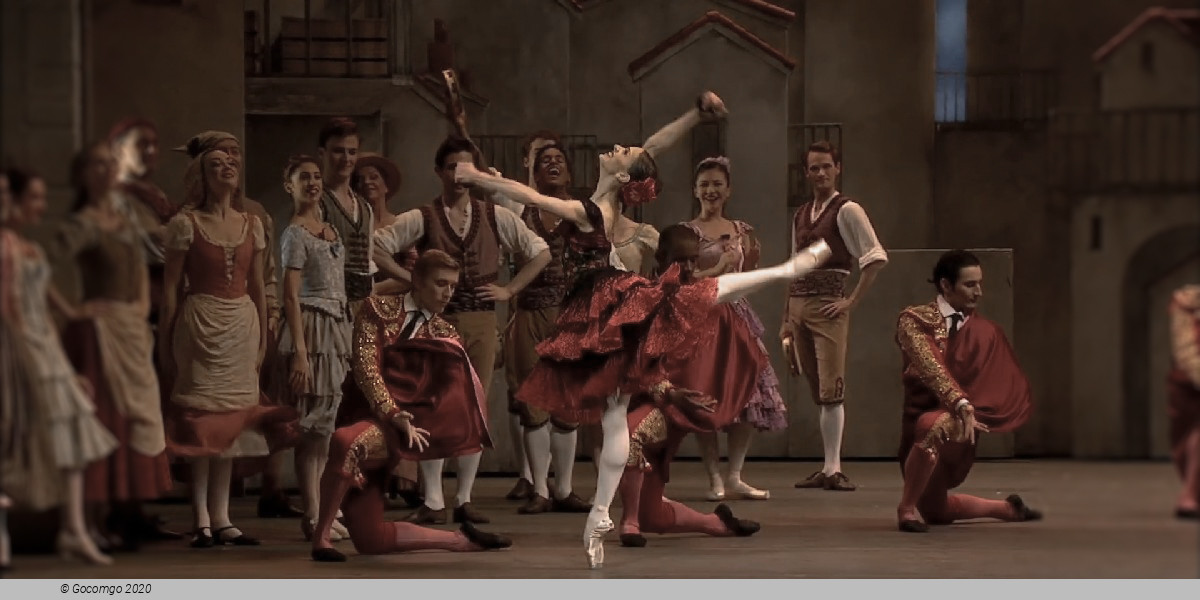
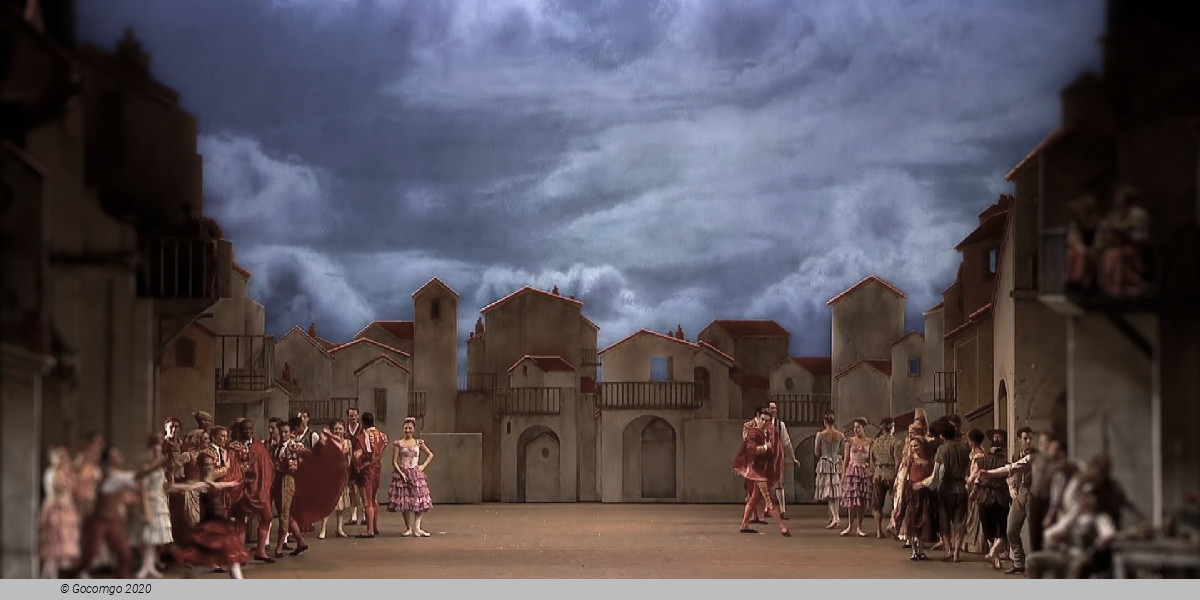
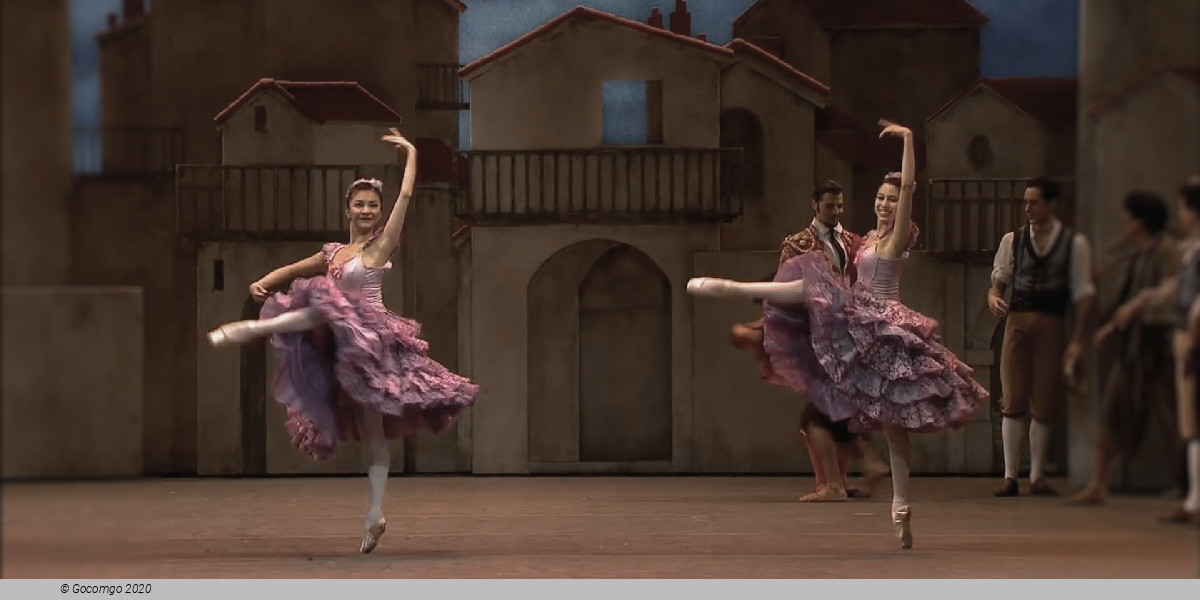
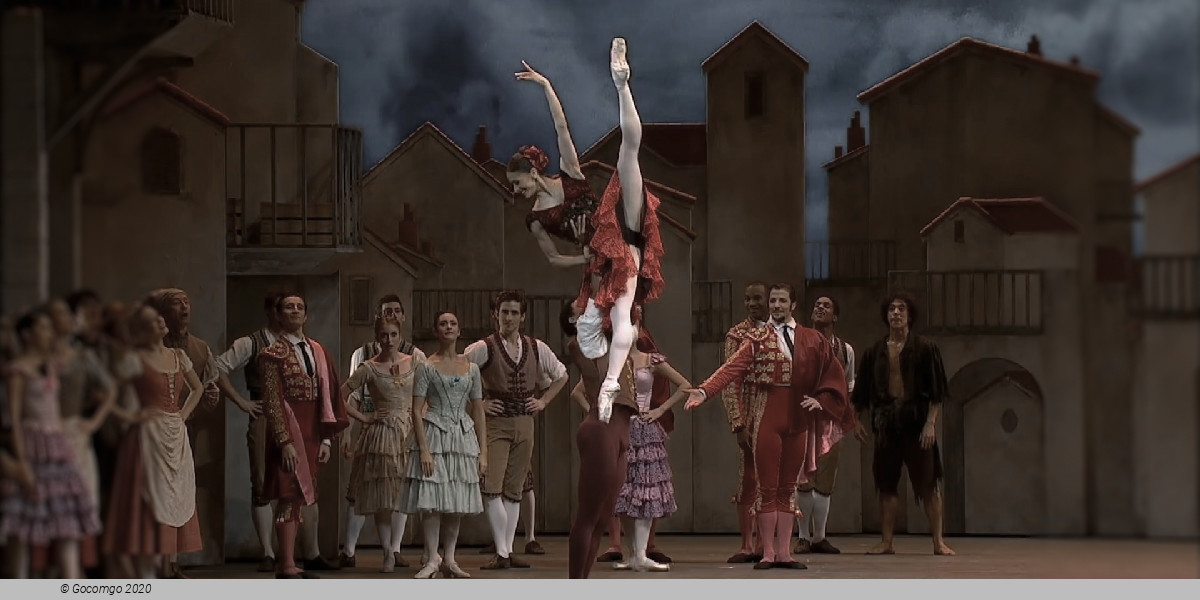
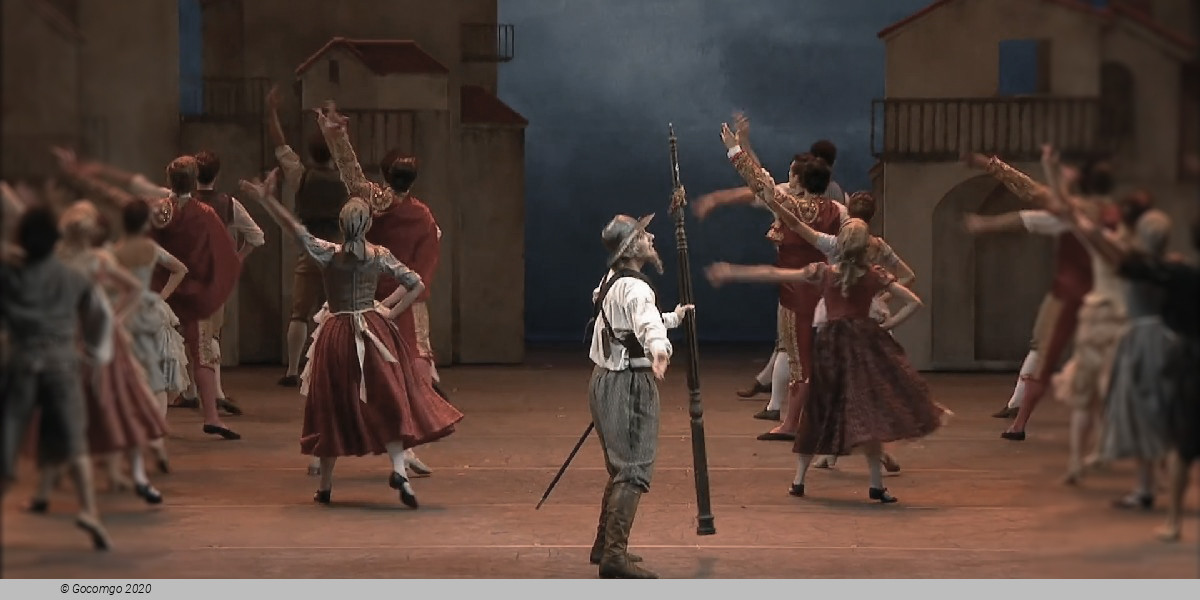
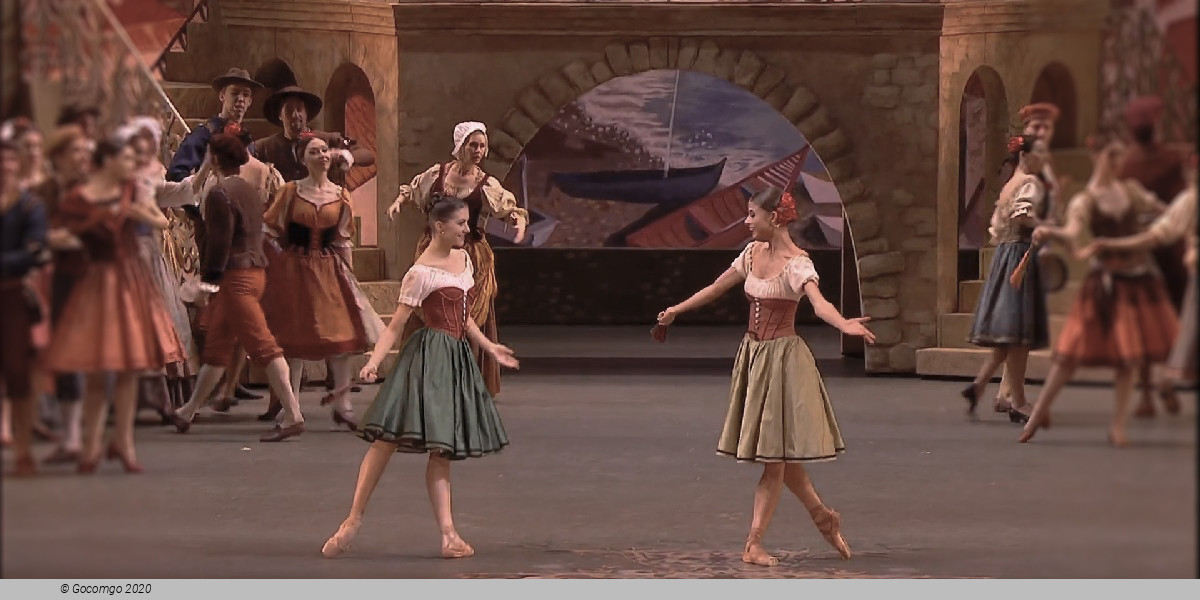
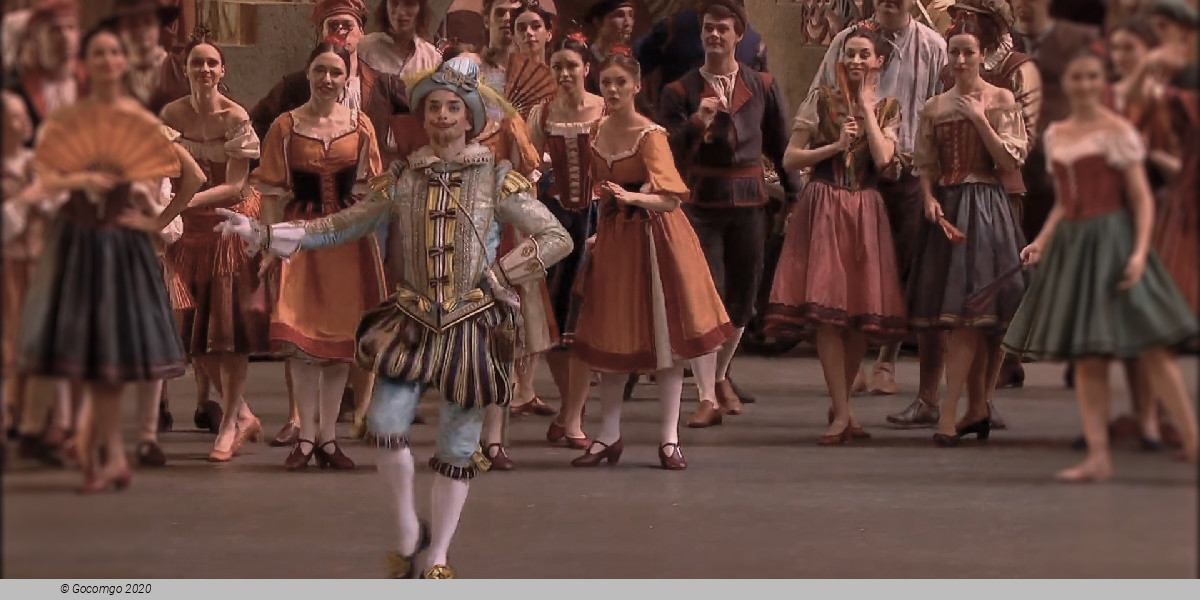
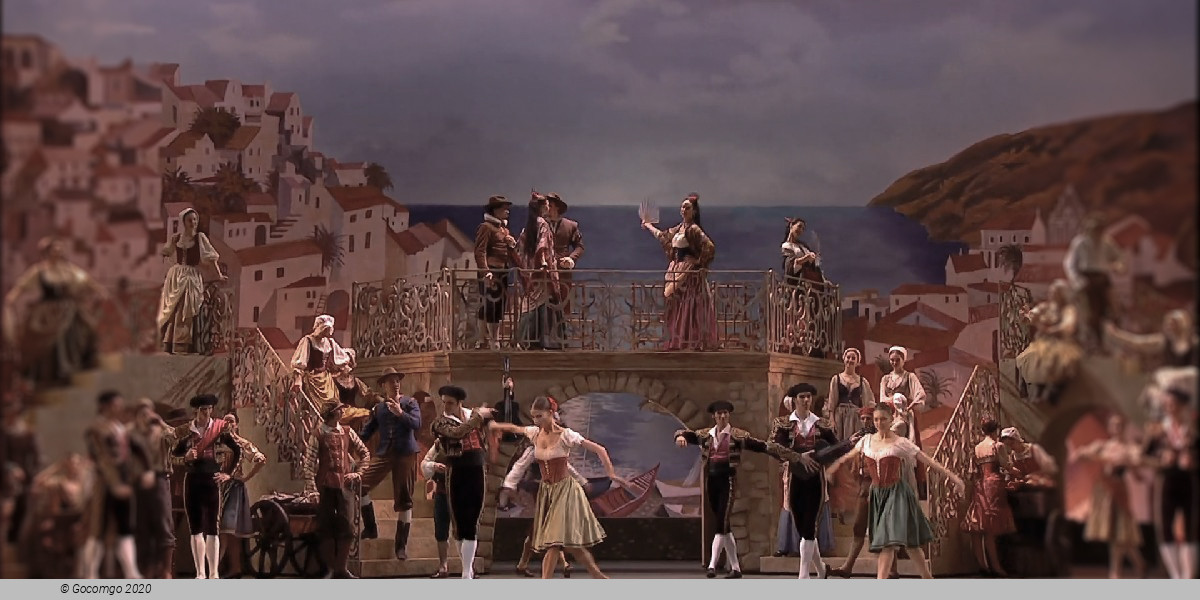
The Tbilisi Opera and Ballet State Theatre presents Ludwig Minkus’s Don Quixote, a vibrant ballet in three acts featuring the comic adventures of Don Quixote and the romance of Kitri and Basil. The production combines the choreography of Marius Petipa, Alexander Gorsky and Vakhtang Chabukiani with Alexei Fadeyev and Nina Ananiashvili’s staging, performed with the theatre’s orchestra under conductor Levan Jagaev.

The festive, hot-tempered and virtuoso ballet was staged in 1900 (and transferred from the Bolshoi Theatre in Moscow to the Mariinsky Theatre in 1902) by Alexander Gorsky after the eponymous ballet of Marius Petipa, which had graced the St Petersburg stage from 1871.

The young and passionate choreographer Gorsky was heavily influenced by Stanislavski (who had just opened the Moscow Art Theatre) at the beginning of the 20th century. To make the ballet more ‘lifelike and truthful’ he turned the symmetrical corps de ballets, so common in his renowned colleague Petipa’s works, into a playful, lively, and cheerful crowd. The first spectators recalled, "the lively and passionate crowd in the square makes you believe up to a point of delusion in the sun, which makes you fall in love so keenly, tease each other, chase after the running beauty, who hides behind her fan..."

History
Premiere of this production: 26 December 1869, Ballet of the Imperial Bolshoi Theatre of Moscow, Russia

Don Quixote is a ballet in four acts and eight scenes, based on episodes taken from the famous novel Don Quixote de la Mancha by Miguel de Cervantes. It was originally choreographed by Marius Petipa to the music of Ludwig Minkus and first presented by the Ballet of the Imperial Bolshoi Theatre of Moscow, Russia on 26 December [O.S. 14 December] 1869. Petipa and Minkus revised the ballet into a far more expanded and elaborated edition in five acts and eleven scenes for the Imperial Ballet, first presented on 21 November 1871 at the Imperial Bolshoi Kamenny Theatre of St. Petersburg.

Synopsis

Don Quixote's Study

Bachelor Sanson Carrasco is seen covering a bookcase with wallpaper, while Antonina is putting some rusty old armour and a helmet made of pasteboard into a cupboard. Don Quixote de la Mancha enters, reading a book. He goes to the bookcase and, not finding it, believes it has been stolen by evil magicians. Then he settles into an armchair and continues reading. He delights in stories of brave knights, fabulous giants and other fantastical creatures, but most of all Don Quixote dreams of his beloved Dulcinea, a woman that he believes to be so lovely and noble that she must be divinity. Gradually he nods and falls asleep to dream of their romantic adventures. Darkness falls.

Suddenly his servant, Sancho Panza, climbs hurriedly through the window. In pursuit are several angry women from the market from whom he has stolen bread and a chicken. Awakened by the commotion, Don Quixote sends the women away. Don Quixote tells Sancho that he is determined to seek adventures as a knight-errant, all the while searching for his beloved Dulcinea. He shows him the pasteboard helmet, which, with one sweep from his sword, becomes a shapeless mass on the floor. Antonina suggests that he should use a shaving basin instead, which would make a splendid helmet. Don Quixote enthusiastically agrees and, placing it on his head, orders Sancho to bring him his armour, sword and spear, and to make ready his horse, Rocinante.

Act I

A market-place in Barcelona

Kitri, an inn-keeper's daughter, steals out of her house to meet her beloved, the barber Basilio. Her father, Lorenzo, sees the lovers and sends Basilio away, bringing Kitri to tears. Now comes the rich nobleman Gamache, who, likewise in love with Kitri, goes to Lorenzo and asks for his daughter's hand. The innkeeper accepts with delight but Kitri, appalled at the thought of wedding the foppish nobleman, runs away.

Dancing begins in the square and some toreadors try to kidnap the girls they fancy, but their relatives and lovers hasten to their aid. At this moment Don Quixote arrives mounted on Rocinante, followed by Sancho, who is riding a donkey. At his master's command Sancho sounds his rusted horn, causing the townspeople to cover their ears. Lorenzo runs out of his inn, and Don Quixote, taking him for the lord of a famous castle, dismounts Rocinante and, falling to his knees, begs to be allowed to serve him. Charmed, Lorenzo invites the knight to sit on his balcony. Sancho remains in the square where he is surrounded by girls who induce him to take part in a game of blind man's bluff. Then some boys bring in a blanket on which they place Sancho and proceed to toss him into the air. Don Quixote hurries to his assistance and sets him free.

Peasants gather in the square and dancing resumes. Kitri returns and, noticing her, Don Quixote acclaims her as his Dulcinea, whom evil magicians have reduced to human form. Becoming jealous of her affection for Basilio, Don Quixote attempts to woo her by partnering her in a minuet. Lorenzo berates Kitri for carrying on with Basilio. Kitri and Basilio then run away, and Lorenzo and Gamache follow them. Don Quixote orders Sancho to bring Rocinante, so that he may also set out in pursuit.

Act II

Scene 1 – A camp of gypsies among the windmills outside the village

Kitri, disguised as a boy is seen walking with Harlequin from a troupe of travelling actors. They guess she is a girl and ask her to stay with them.

Scene 2 - The Puppet Theatre

A clown is seen walking with Graziosa, the gypsy chief's daughter. A gypsy tells the chief of the approach of Don Quixote. The chief plans a trick for his benefit and, putting on a mantle crown, sits down as though he were a king on a throne. Don Quixote is deceived and kneels to the chief in homage. The chief bids that he sit beside him and orders a festival to be given in his honor. This begins with Gypsy dances and is followed by a performance of the marionette theatre. Don Quixote is delighted with the entertainment but, mistaking the heroine for his Dulcinea and the marionettes for soldiers attacking her, he rises to assault them. The gypsies are terrified. At this moment the clown and Graziosa run away.

Scene 3 - The Windmills

Flushed with victory, the knight kneels and renders thanks to heaven. Seeing the moon, he takes it for his Dulcinea and tries to get to her. As he approaches the windmills he can see the moon no longer and thinks that evil magicians have hidden his beloved mistress. So, spear in hand, he tilts at the wings of the windmill, which he mistakes for a giant. Alas, the knight is caught by one of the wings and flung into the air. He falls unconscious at Sancho's feet.

Scene 4 – A forest

Through the trees appears Sancho leading Rocinante, upon which sits the wounded Don Quixote. The servant lifts his master down and places him on the grass, so that he may rest. Then, tying up the horse, he goes to sleep. Don Quixote also tries to sleep, but is troubled by fantastic dreams.

Scene 5 – The enchanted Garden of Dulcinea

Fairies appear surrounded by gnomes and Don Quixote finds himself dressed in shining armor. Then comes a succession of fearsome monsters, the last being a gigantic spider, who spins a web. The knight attacks the spider, which he slashes in half with his sword. At that same moment the spider's web vanishes to reveal a beautiful garden, filled with dryads and beautiful women, presided over by the Queen of the Dryads and Amor. Among them is Dulcinea and Don Quixote kneels before his beloved. At this moment everything vanishes.

Act III

The Square

Back at the square, Kitri and Basilio join those who are dancing. At the height of the merriment, Lorenzo and Gamache arrive, followed by Don Quixote and Sancho. Seeing his daughter, Lorenzo decides to give his blessing to her union with the nobleman Gamache. Basilio becomes annoyed and, reproaching Kitri for her unfaithfulness, draws a sword and stabs himself. As he lies dying he begs Lorenzo to unite him with Kitri, but Lorenzo and Gamache refuse. Don Quixote approaches Gamache and challenges him to a duel for having refused a dying man's wish. Gamache declines to fight and the merrymakers drive him out of the inn. Taking pity, Lorenzo agrees to unite Basilio and Kitri. At this moment, Basilio pulls out the sword and tells everyone it was a joke.

Act IV

The Tavern

A magnificent feast is held in honour of Don Quixote. Suddenly the Knight of the Silver Moon challenges him to a duel, which results in the latter being vanquished. The victorious knight proves to be none other than Bachelor Sanson Carrasco, who forces Don Quixote to vow that he will not unsheathe his sword for a whole year. The sorrowful knight, true to his vow, takes up his warlike gear and, followed by Sancho, sets out for home.

Venue Info

Georgian National Opera and Ballet Theater of Tbilisi - Tbilisi
Location   Shota Rustaveli Ave, 25

The Georgian National Opera and Ballet Theater of Tbilisi, formerly known as the Tiflis Imperial Theater, is an opera house situated on Rustaveli Avenue in Tbilisi, Georgia. Founded in 1851, Tbilisi Opera is the main opera house of Georgia and one of the oldest such establishments in eastern Europe. Since 1896, the theatre has resided in an exotic neo-Moorish edifice originally constructed by Victor Johann Gottlieb Schröter, a prominent architect of Baltic German origin. Although definitively Oriental in its decorations and style, the building's layout, foyers and main hall are that of a typical European opera house.

The foundation of the Tiflis Imperial Opera was closely intertwined with the turbulent political processes in Georgia following the country's annexation by the Russian Empire in 1801. In the first half of the 19th century, Georgia remained a restless and poorly integrated part of the empire. Unhappy with Russian policies, in 1832 Georgian aristocracy hatched a plot against the local Russian authorities, which was discovered and resulted in multiple arrests and repressions in the subsequent years. Anxious to reconcile the Georgian opinion in view of these lingering difficulties, the new Viceroy of the Caucasus, Count Mikhail Vorontsov, implemented a number of cultural initiatives, one of which was the foundation of the opera. The declared purpose of its establishment was to benefit the "public well-being" but it also served an important political goal of fully integrating the local Georgian aristocracy into the Imperial social life, thereby distracting them from any further anti-Russian conspiracies.

To satisfy Georgians, Vorontsov went on to patronize Georgian-language theatre performances and did everything Saint Petersburg would permit to win over locals. These type of efforts were particularly relevant in light of the ongoing Shamil's rebellion in the North Caucasus, which prompted some Russians to see Georgian aristocrats as the only bulwark protecting Russia's southern imperial borders. Vorontsov's conciliatory efforts were not without controversy, as not all Russians were enthusiastic about non-Russian contributions to the city's cultural development; some objected to Georgian-language productions and had them moved to different days, rather than precede regular opera performances as it was done up to that point.

At Vorontsov's initiative, the original theatre site was chosen on Rustaveli Avenue in Erivansky Square, an area the administration correctly envisioned would be the centre of the expanding city. The land was given free of charge from the governor of the Tiflis Governorate, provided the theatre would belong to the city.

The foundations of The Tiflis Imperial Theater were laid down on 15 April 1847. Italian architect Giovanni Scudieri, who had come to Tiflis from Odessa, was hired to oversee the project. The construction was completed in 1851. The interior of the theatre was decorated by a Parisian designer, using coloured velvet, gold and silver details, and expensive silks. A massive chandelier weighing 1,218 kilograms (2,685 lb), unassembled in 12 large boxes, was shipped by a steamer from Marseille to Kulevi on the Black Sea coast. Buffalo pulled the chandelier more than 300 kilometres (190 mi) to Tiflis. Russian painter Grigory Gagarin created the artwork for the theatre and its first stage curtain. The second curtain was designed by Sergo Kobuladze in the 1950s. Vorontsov appointed writer Vladimir Sollogub as the theatre's first director.

Opening and the first performances

On 12 April 1851, the theatre held its grand opening, attended by the high society of Tiflis. As the theatre stage was not yet complete, the theatre instead held a masked ball and charity fundraiser for the Saint Nino Women's College.

Several months later the popular Parisian newspaper L'Illustration (issue 25 October 1851) printed a large article by Edmond de Bares with two pictures of the interior of the theatre. The author wrote, "This is the only theatre in the city, the interior of which is totally Moorish in style, and is doubtless one of the most elegant, beautiful and fascinating theatrical constructions, conceived by man."

In the spring of 1851, the theatre director invited an Italian opera troupe, which had been touring the Russian Empire under the conductorship of Francisco Asenjo Barbieri, to perform in Tiflis. The Italians travelled by carriage from Novocherkassk but became ill and exhausted as they made their way into the Caucasus Mountains. By the time they reached Stavropol in southern Russia, they had lost all patience and refused to continue to Tiflis. Finally, they resumed, pausing often to rest as they travelled via the Georgian Military Highway, before arriving in Tiflis on 9 October 1851.

One month later, the first theatrical season officially opened in Tiflis with Lucia di Lammermoor by Gaetano Donizetti. After the spectacle, which had great success, the hosts led Barbieri and the company to the left bank of the Kura River for a public feast, where people celebrated on boats for the whole night.

The Italians performed 12 different opera performances over the course of three months. As a consequence, the orchestra was enriched with new instruments and musical scores. Foreign orchestra performers came to Tiflis and some settled there.

Fire and reconstruction

On 11 October 1874, a fire began before a performance of Vincenzo Bellini's Norma. Though the fire brigade was across the street, the firefighters did not respond at first and did not bring ladders when they did, leading to outrage and accusations of the fire being intentional. The theatre was completely destroyed, including the rich musical library, costumes, scenery, props and all of Gagarin's paintings.

Plans were made to rebuild the opera house. The theatre decided to continue its season from the "Summer Theater", and returned on 27 December with its production of Norma.

The city held a contest for a new architectural design. Viktor Schröter, an architect of German origin from Saint Petersburg, submitted the winning design. Construction of the new theatre took years to get underway. There were repeated delays throughout the project, with the design not officially approved by Governor Grand Duke Michael Nikolaevich until 1880. Even after the construction began, it would sometimes come to a complete halt.

The theatre finally reopened in 1896.

20th century

In 1937, the theatre was renamed in honour of Zacharia Paliashvili, one of Georgia's national composers. Unrest and destabilization in Georgia in the 1990s affected the Tbilisi opera theatre, as it did many others in the country. The government could not provide sufficient resources for theatre to function: this prevented the creation of new scenery or costumes, the recruitment of artists, and maintenance of the already vulnerable building. Following the Rose Revolution, however, the newly elected government improved the situation in opera as part of its cultural reforms.

Important Info
Type: Ballet
City: Tbilisi, Georgia
Starts at: 19:00
Top of page