
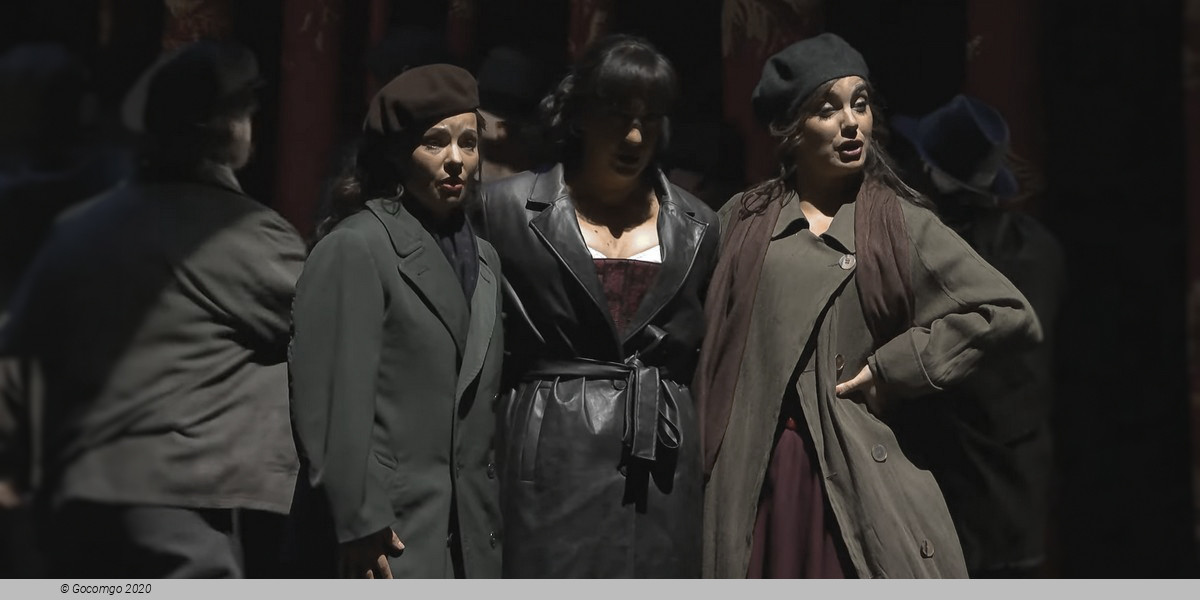
Georgian National Opera and Ballet Theater of Tbilisi: Carmen Tickets | Event Dates & Schedule | GoComGo.com

Carmen Tickets

Georgian National Opera and Ballet Theater of Tbilisi, Tbilisi, Georgia
All photos (17)
1 / 17
Available Dates: 13 - 14 Jun, 2026 (2 events)
Important Info
Type: Opera
City: Tbilisi, Georgia

E-tickets: Print at home or at the box office of the event if so specified. You will find more information in your booking confirmation email.

You can only select the category, and not the exact seats.
If you order 2 or 3 tickets: your seats will be next to each other.
If you order 4 or more tickets: your seats will be next to each other, or, if this is not possible, we will provide a combination of groups of seats (at least in pairs, for example 2+2 or 2+3).

Cast
Performers
Choose the date to see the peformers
Creators
Composer: Georges Bizet
Principal Chorus Master: Avtandil Chkhenkeli
Librettist: Henri Meilhac
Set Designer: Irakli Avaliani
Director: Levan Tsuladze
Librettist: Ludovic Halévy
Staging: Marina Burchuladze
Costume designer: Polina Rudchik
Author: Prosper Mérimée
Musical Direction: Zaza Azmaiparashvili
History
Premiere of this production: 03 March 1875, Opéra-Comique, Paris

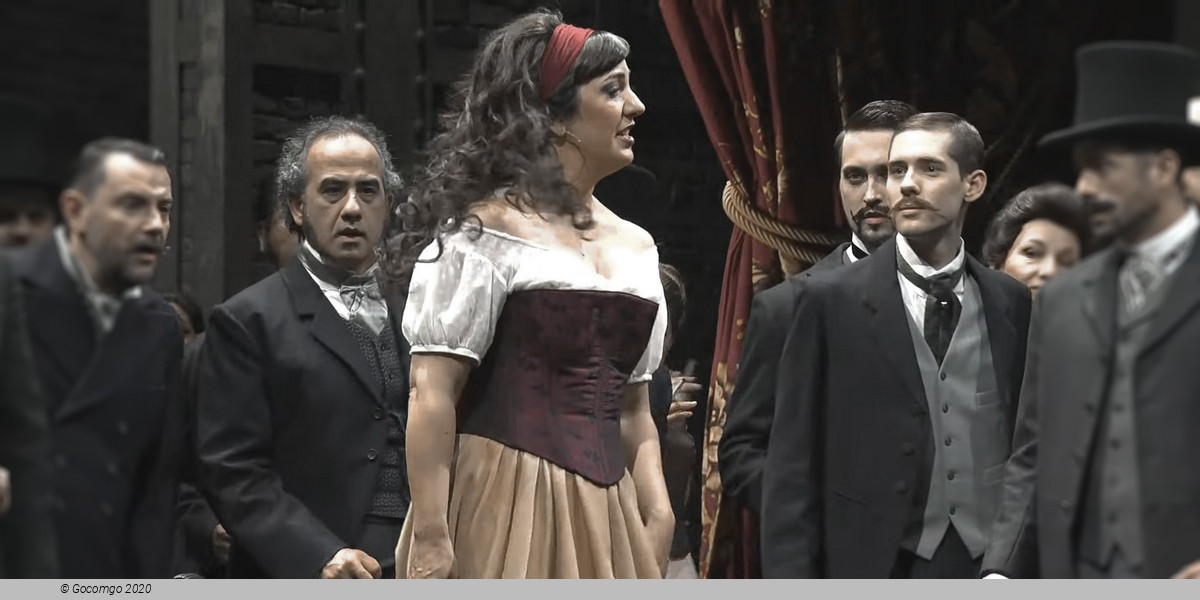
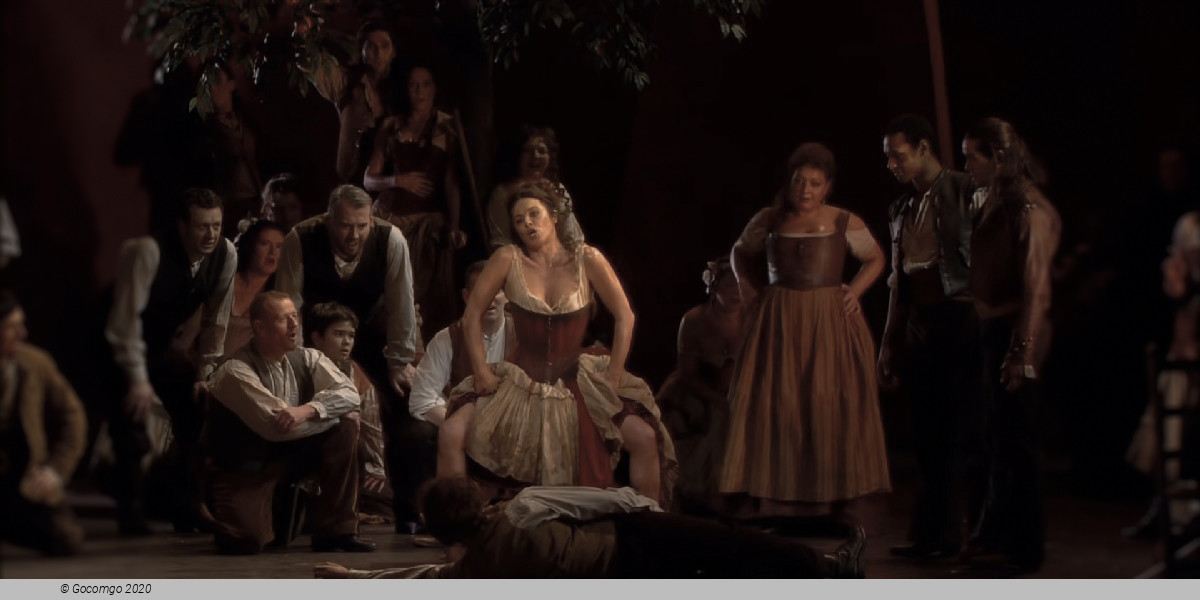
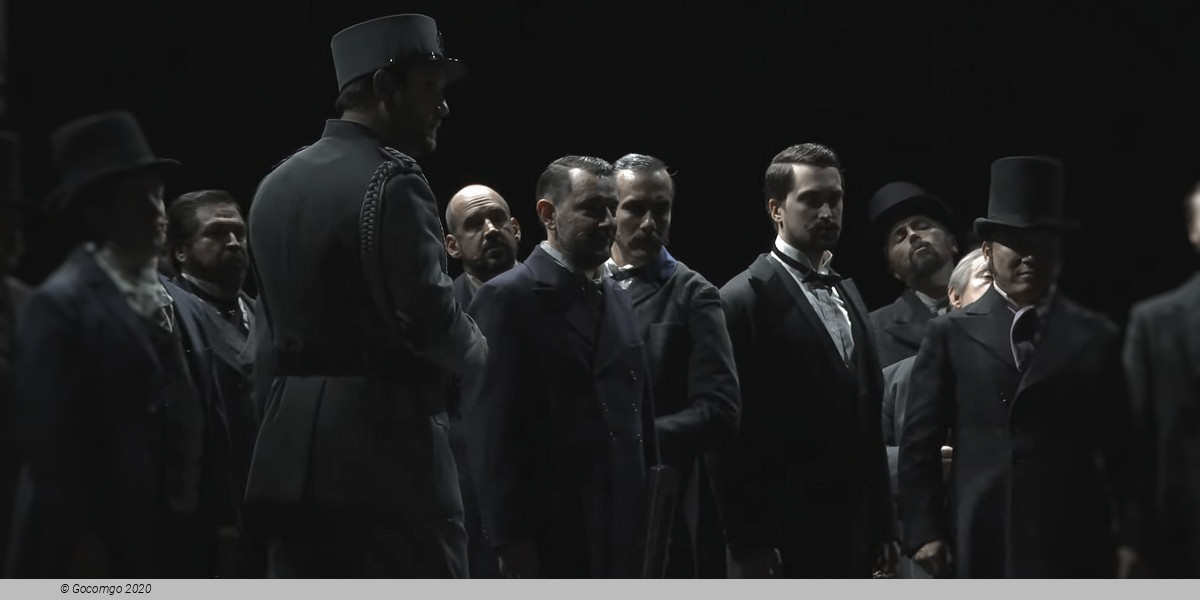
Carmen is an opera in four acts by French composer Georges Bizet. The libretto was written by Henri Meilhac and Ludovic Halévy, based on a novella of the same title by Prosper Mérimée. The opera was first performed by the Opéra-Comique in Paris on 3 March 1875, where its breaking of conventions shocked and scandalized its first audiences.

Synopsis

Place: Seville, Spain, and surrounding hills
Time: Around 1820

Act 1

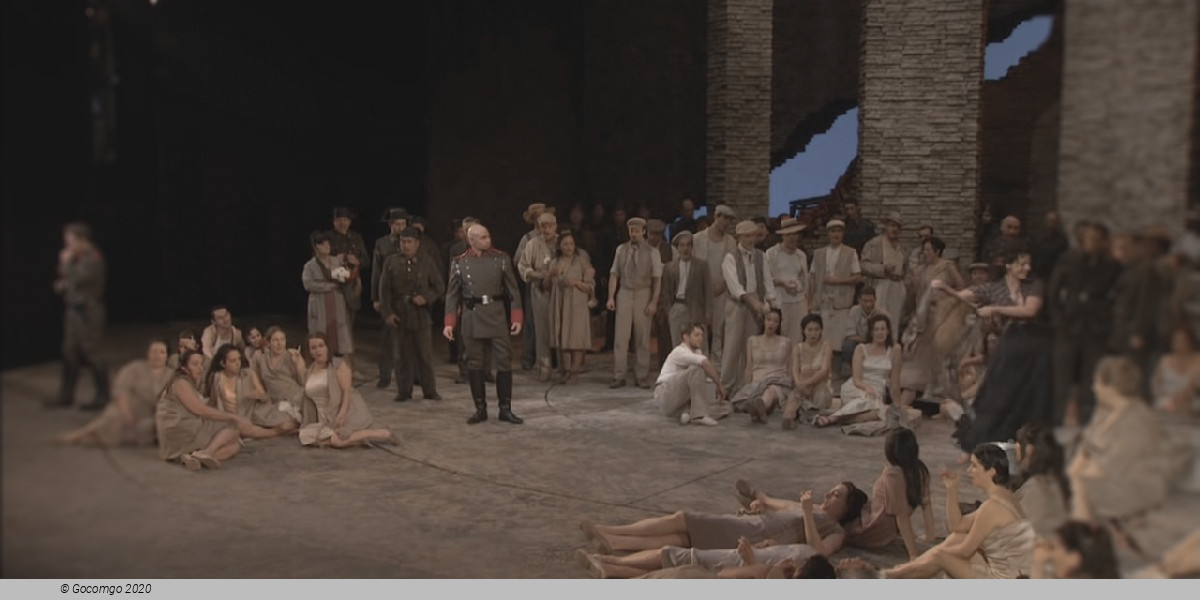
A square, in Seville. On the right, a door to the tobacco factory. At the back, a bridge. On the left, a guardhouse.

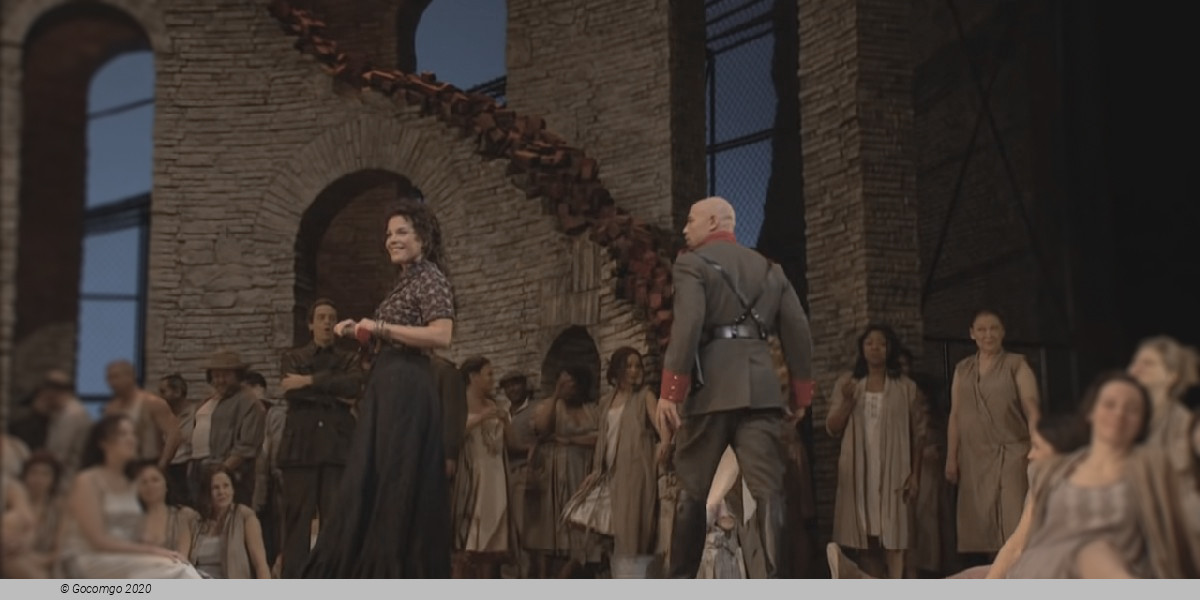
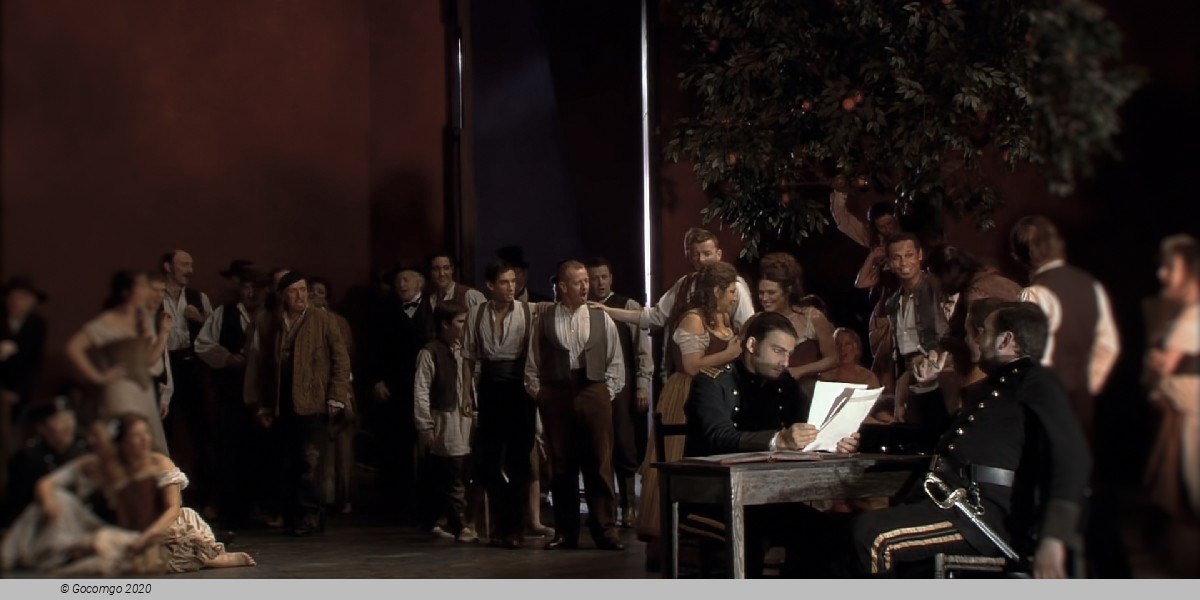
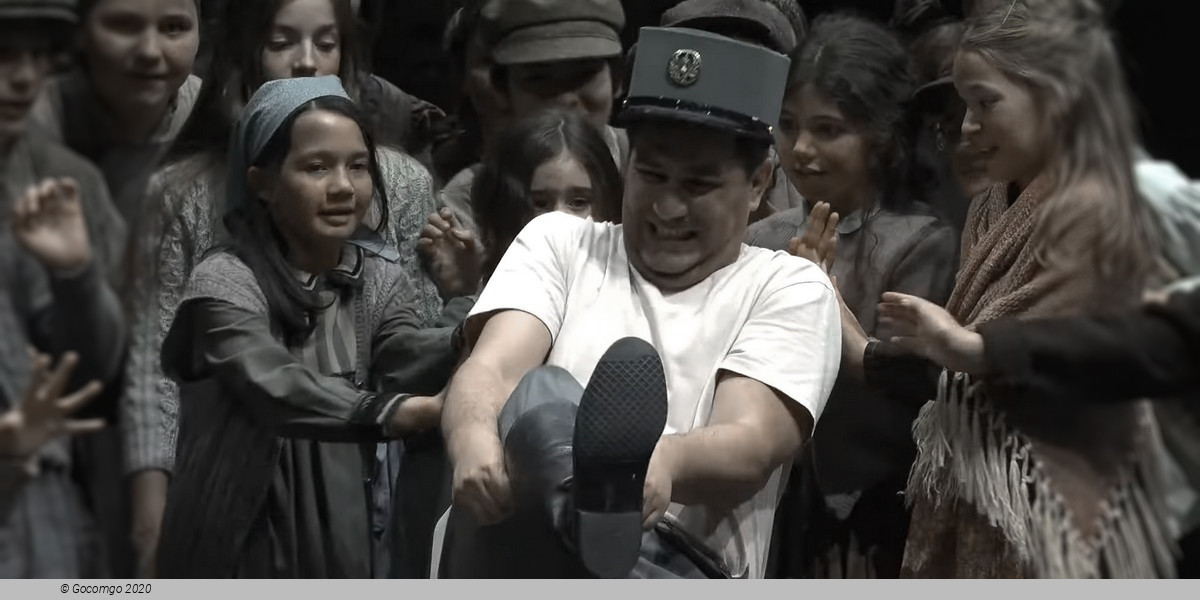
A group of soldiers relaxes in the square, waiting for the changing of the guard and commenting on the passers-by ("Sur la place, chacun passe"). Micaëla appears, seeking José. Moralès tells her that "José is not yet on duty" and invites her to wait with them. She declines, saying she will return later. José arrives with the new guard, who is greeted and imitated by a crowd of urchins ("Avec la garde montante").

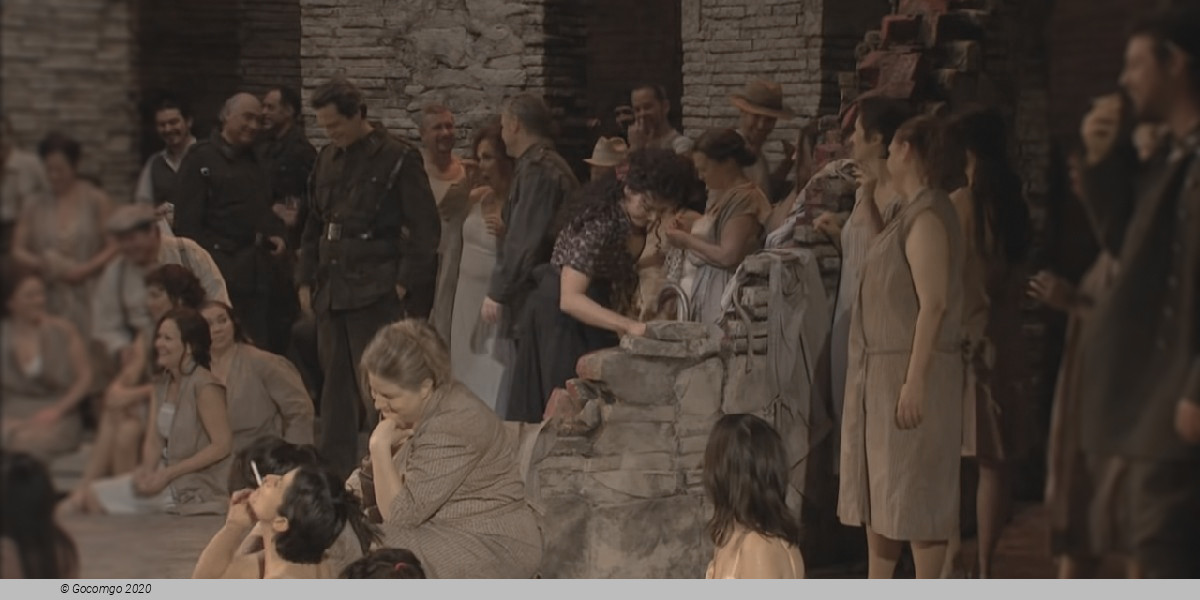
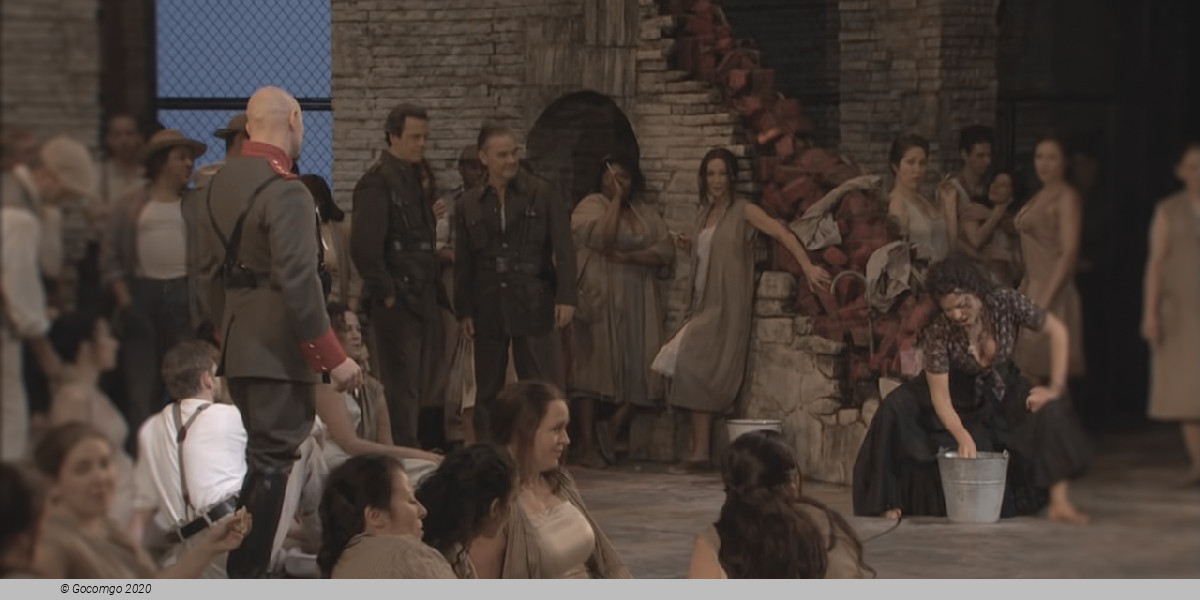
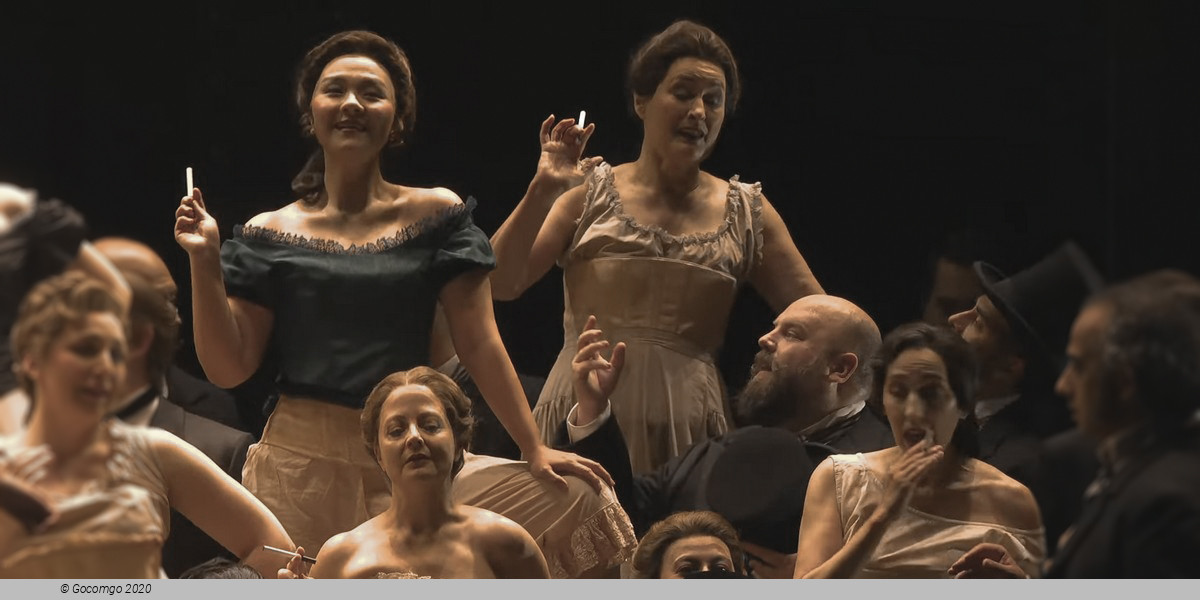
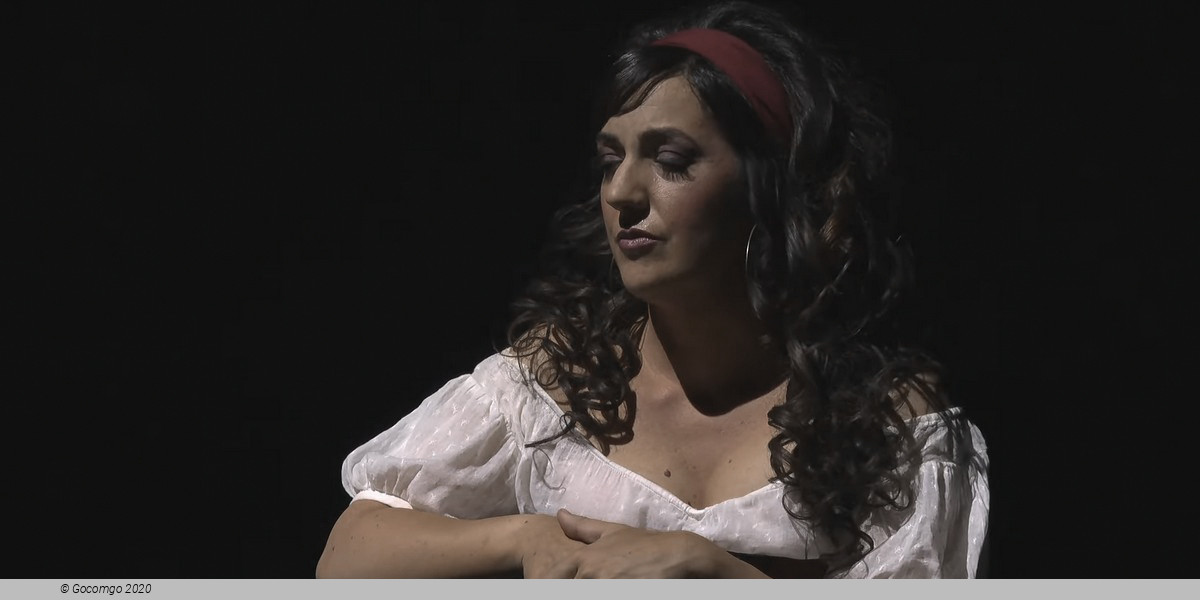
As the factory bell rings, the cigarette girls emerge and exchange banter with young men in the crowd ("La cloche a sonné"). Carmen enters and sings her provocative habanera on the untameable nature of love ("L'amour est un oiseau rebelle"). The men plead with her to choose a lover, and after some teasing she throws a flower to Don José, who thus far has been ignoring her but is now annoyed by her insolence.

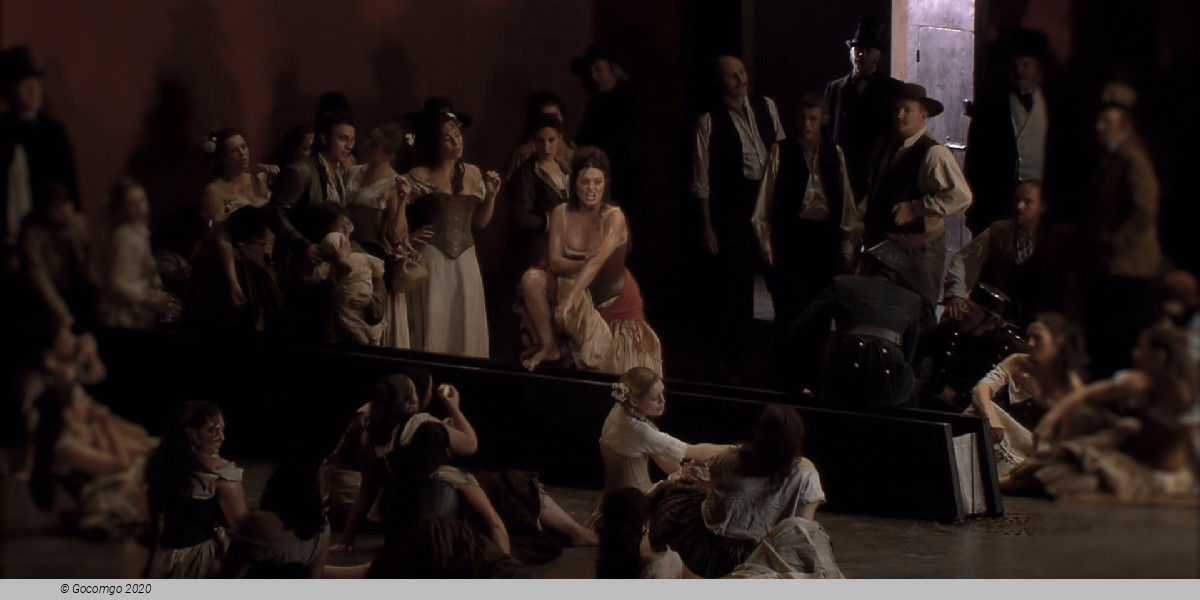
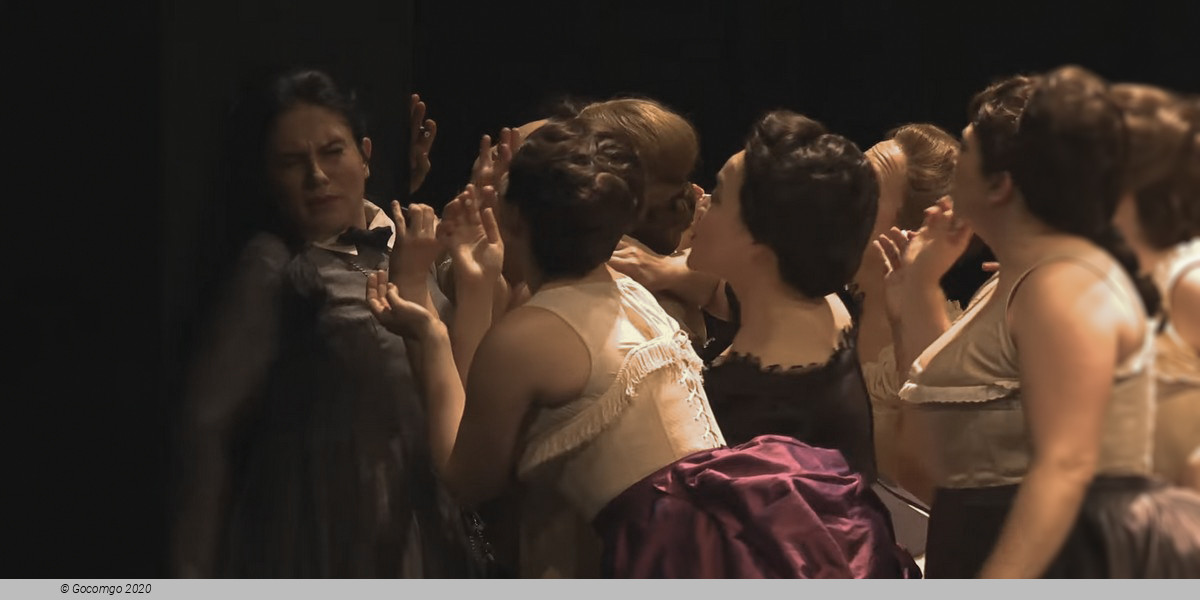
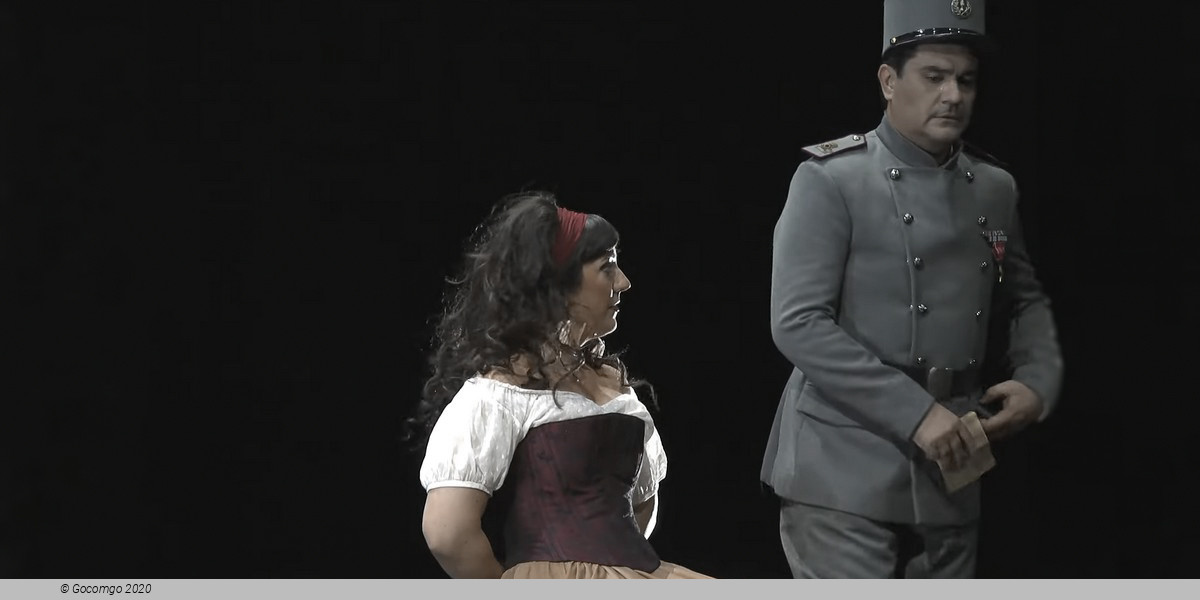
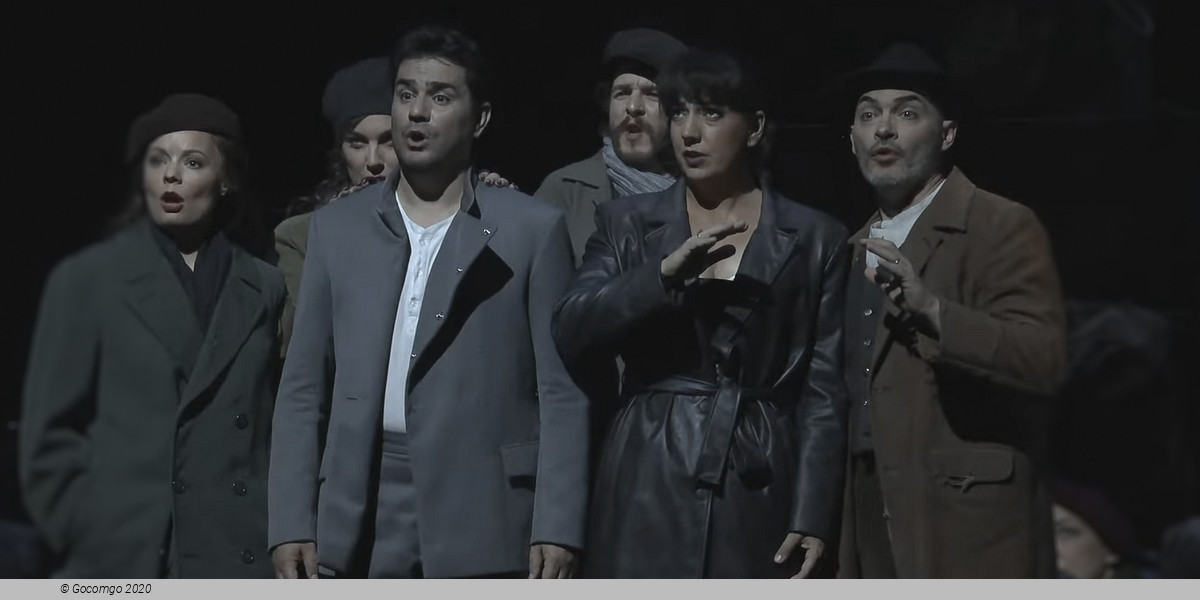
As the women go back to the factory, Micaëla returns and gives José a letter and a kiss from his mother ("Parle-moi de ma mère!"). He reads that his mother wants him to return home and marry Micaëla, who retreats in shy embarrassment on learning this. Just as José declares that he is ready to heed his mother's wishes, the women stream from the factory in great agitation. Zuniga, the officer of the guard, learns that Carmen has attacked a woman with a knife. When challenged, Carmen answers with mocking defiance ("Tra la la... Coupe-moi, brûle-moi"); Zuniga orders José to tie her hands while he prepares the prison warrant. Left alone with José, Carmen beguiles him with a seguidilla, in which she sings of a night of dancing and passion with her lover—whoever that may be—in Lillas Pastia's tavern. Confused yet mesmerised, José agrees to free her hands; as she is led away she pushes her escort to the ground and runs off laughing. José is arrested for dereliction of duty.

Act 2

Lillas Pastia's Inn

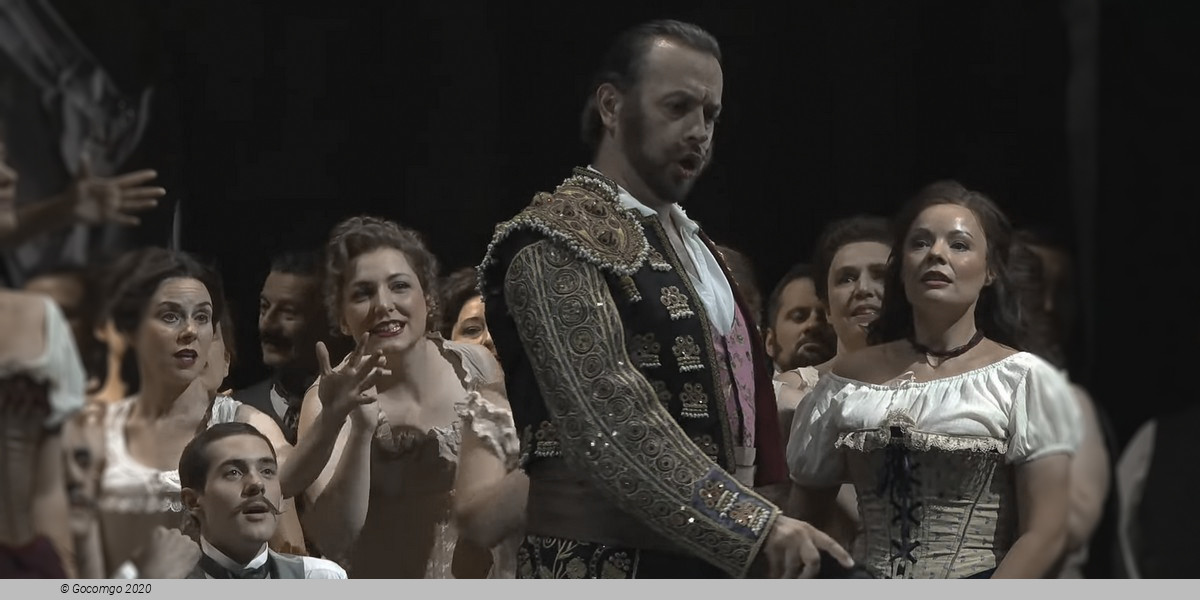
Two months have passed. Carmen and her friends Frasquita and Mercédès are entertaining Zuniga and other officers ("Les tringles des sistres tintaient") in Pastia's inn. Carmen is delighted to learn of José's release from two months' detention. Outside, a chorus and procession announces the arrival of the toreador Escamillo ("Vivat, vivat le Toréro"). Invited inside, he introduces himself with the "Toreador Song" ("Votre toast, je peux vous le rendre") and sets his sights on Carmen, who brushes him aside. Lillas Pastia hustles the crowds and the soldiers away.

When only Carmen, Frasquita and Mercédès remain, smugglers Dancaïre and Remendado arrive and reveal their plans to dispose of some recently acquired contraband ("Nous avons en tête une affaire"). Frasquita and Mercédès are keen to help them, but Carmen refuses, since she wishes to wait for José. After the smugglers leave, José arrives. Carmen treats him to a private exotic dance ("Je vais danser en votre honneur ... La la la"), but her song is joined by a distant bugle call from the barracks. When José says he must return to duty, she mocks him, and he answers by showing her the flower that she threw to him in the square ("La fleur que tu m'avais jetée"). Unconvinced, Carmen demands he show his love by leaving with her. José refuses to desert, but as he prepares to depart, Zuniga enters looking for Carmen. He and José fight, and are separated by the returning smugglers, who restrain Zuniga. Having attacked a superior officer, José now has no choice but to join Carmen and the smugglers ("Suis-nous à travers la campagne").

Act 3

A wild spot in the mountains

Carmen and José enter with the smugglers and their booty ("Écoute, écoute, compagnons"); Carmen has now become bored with José and tells him scornfully that he should go back to his mother. Frasquita and Mercédès amuse themselves by reading their fortunes from the cards; Carmen joins them and finds that the cards are foretelling her death, and José's. The women depart to suborn the customs officers who are watching the locality. José is placed on guard duty.

Micaëla enters with a guide, seeking José and determined to rescue him from Carmen ("Je dis que rien ne m'épouvante"). On hearing a gunshot she hides in fear; it is José, who has fired at an intruder who proves to be Escamillo. José's pleasure at meeting the bullfighter turns to anger when Escamillo declares his infatuation with Carmen. The pair fight ("Je suis Escamillo, toréro de Grenade"), but are interrupted by the returning smugglers and girls ("Holà, holà José"). As Escamillo leaves he invites everyone to his next bullfight in Seville. Micaëla is discovered; at first, José will not leave with her despite Carmen's mockery, but he agrees to go when told that his mother is dying. As he departs, vowing he will return, Escamillo is heard in the distance, singing the toreador's song.

Act 4

A square in Seville. At the back, the walls of an ancient amphitheatre

Zuniga, Frasquita and Mercédès are among the crowd awaiting the arrival of the bullfighters ("Les voici ! Voici la quadrille!"). Escamillo enters with Carmen, and they express their mutual love ("Si tu m'aimes, Carmen"). As Escamillo goes into the arena, Frasquita and Mercedes warn Carmen that José is nearby, but Carmen is unafraid and willing to speak to him. Alone, she is confronted by the desperate José ("C'est toi ! C'est moi !"). While he pleads vainly for her to return to him, cheers are heard from the arena. As José makes his last entreaty, Carmen contemptuously throws down the ring he gave her and attempts to enter the arena. He then stabs her, and as Escamillo is acclaimed by the crowds, Carmen dies. José kneels and sings "Ah! Carmen! ma Carmen adorée!"; as the crowd exits the arena, José confesses to killing the woman he loved.

Venue Info

Georgian National Opera and Ballet Theater of Tbilisi - Tbilisi
Location   Shota Rustaveli Ave, 25

The Georgian National Opera and Ballet Theater of Tbilisi, formerly known as the Tiflis Imperial Theater, is an opera house situated on Rustaveli Avenue in Tbilisi, Georgia. Founded in 1851, Tbilisi Opera is the main opera house of Georgia and one of the oldest such establishments in eastern Europe. Since 1896, the theatre has resided in an exotic neo-Moorish edifice originally constructed by Victor Johann Gottlieb Schröter, a prominent architect of Baltic German origin. Although definitively Oriental in its decorations and style, the building's layout, foyers and main hall are that of a typical European opera house.

The foundation of the Tiflis Imperial Opera was closely intertwined with the turbulent political processes in Georgia following the country's annexation by the Russian Empire in 1801. In the first half of the 19th century, Georgia remained a restless and poorly integrated part of the empire. Unhappy with Russian policies, in 1832 Georgian aristocracy hatched a plot against the local Russian authorities, which was discovered and resulted in multiple arrests and repressions in the subsequent years. Anxious to reconcile the Georgian opinion in view of these lingering difficulties, the new Viceroy of the Caucasus, Count Mikhail Vorontsov, implemented a number of cultural initiatives, one of which was the foundation of the opera. The declared purpose of its establishment was to benefit the "public well-being" but it also served an important political goal of fully integrating the local Georgian aristocracy into the Imperial social life, thereby distracting them from any further anti-Russian conspiracies.

To satisfy Georgians, Vorontsov went on to patronize Georgian-language theatre performances and did everything Saint Petersburg would permit to win over locals. These type of efforts were particularly relevant in light of the ongoing Shamil's rebellion in the North Caucasus, which prompted some Russians to see Georgian aristocrats as the only bulwark protecting Russia's southern imperial borders. Vorontsov's conciliatory efforts were not without controversy, as not all Russians were enthusiastic about non-Russian contributions to the city's cultural development; some objected to Georgian-language productions and had them moved to different days, rather than precede regular opera performances as it was done up to that point.

At Vorontsov's initiative, the original theatre site was chosen on Rustaveli Avenue in Erivansky Square, an area the administration correctly envisioned would be the centre of the expanding city. The land was given free of charge from the governor of the Tiflis Governorate, provided the theatre would belong to the city.

The foundations of The Tiflis Imperial Theater were laid down on 15 April 1847. Italian architect Giovanni Scudieri, who had come to Tiflis from Odessa, was hired to oversee the project. The construction was completed in 1851. The interior of the theatre was decorated by a Parisian designer, using coloured velvet, gold and silver details, and expensive silks. A massive chandelier weighing 1,218 kilograms (2,685 lb), unassembled in 12 large boxes, was shipped by a steamer from Marseille to Kulevi on the Black Sea coast. Buffalo pulled the chandelier more than 300 kilometres (190 mi) to Tiflis. Russian painter Grigory Gagarin created the artwork for the theatre and its first stage curtain. The second curtain was designed by Sergo Kobuladze in the 1950s. Vorontsov appointed writer Vladimir Sollogub as the theatre's first director.

Opening and the first performances

On 12 April 1851, the theatre held its grand opening, attended by the high society of Tiflis. As the theatre stage was not yet complete, the theatre instead held a masked ball and charity fundraiser for the Saint Nino Women's College.

Several months later the popular Parisian newspaper L'Illustration (issue 25 October 1851) printed a large article by Edmond de Bares with two pictures of the interior of the theatre. The author wrote, "This is the only theatre in the city, the interior of which is totally Moorish in style, and is doubtless one of the most elegant, beautiful and fascinating theatrical constructions, conceived by man."

In the spring of 1851, the theatre director invited an Italian opera troupe, which had been touring the Russian Empire under the conductorship of Francisco Asenjo Barbieri, to perform in Tiflis. The Italians travelled by carriage from Novocherkassk but became ill and exhausted as they made their way into the Caucasus Mountains. By the time they reached Stavropol in southern Russia, they had lost all patience and refused to continue to Tiflis. Finally, they resumed, pausing often to rest as they travelled via the Georgian Military Highway, before arriving in Tiflis on 9 October 1851.

One month later, the first theatrical season officially opened in Tiflis with Lucia di Lammermoor by Gaetano Donizetti. After the spectacle, which had great success, the hosts led Barbieri and the company to the left bank of the Kura River for a public feast, where people celebrated on boats for the whole night.

The Italians performed 12 different opera performances over the course of three months. As a consequence, the orchestra was enriched with new instruments and musical scores. Foreign orchestra performers came to Tiflis and some settled there.

Fire and reconstruction

On 11 October 1874, a fire began before a performance of Vincenzo Bellini's Norma. Though the fire brigade was across the street, the firefighters did not respond at first and did not bring ladders when they did, leading to outrage and accusations of the fire being intentional. The theatre was completely destroyed, including the rich musical library, costumes, scenery, props and all of Gagarin's paintings.

Plans were made to rebuild the opera house. The theatre decided to continue its season from the "Summer Theater", and returned on 27 December with its production of Norma.

The city held a contest for a new architectural design. Viktor Schröter, an architect of German origin from Saint Petersburg, submitted the winning design. Construction of the new theatre took years to get underway. There were repeated delays throughout the project, with the design not officially approved by Governor Grand Duke Michael Nikolaevich until 1880. Even after the construction began, it would sometimes come to a complete halt.

The theatre finally reopened in 1896.

20th century

In 1937, the theatre was renamed in honour of Zacharia Paliashvili, one of Georgia's national composers. Unrest and destabilization in Georgia in the 1990s affected the Tbilisi opera theatre, as it did many others in the country. The government could not provide sufficient resources for theatre to function: this prevented the creation of new scenery or costumes, the recruitment of artists, and maintenance of the already vulnerable building. Following the Rose Revolution, however, the newly elected government improved the situation in opera as part of its cultural reforms.

Important Info
Type: Opera
City: Tbilisi, Georgia

E-tickets: Print at home or at the box office of the event if so specified. You will find more information in your booking confirmation email.

You can only select the category, and not the exact seats.
If you order 2 or 3 tickets: your seats will be next to each other.
If you order 4 or more tickets: your seats will be next to each other, or, if this is not possible, we will provide a combination of groups of seats (at least in pairs, for example 2+2 or 2+3).

From
$ 56
Top of page