ACT I
Scene 1: Garden Estate
Young Cinderella is playing outside with her mother and father when suddenly her mother becomes ill. In terrifying rapidity, her mother is taken from her and Four Fates are left to watch over Cinderella, who weeps over her mother’s grave. A tree sprouts from her tears.
Scene 2: Royal Palace
The young Prince Guillaume and his friend Benjamin (the valet’s son) are pursued by Madame Mansard (the prince’s dancing mistress). They dash through the hallways of the palace, causing havoc. Suddenly King Albert and Queen Charlotte appear, stiff and formal. The king is appalled at Guillaume’s lack of discipline, but the queen is more forgiving. The boys dash off again into the garden.
Scene 3: The Grave
Cinderella, now older, brings flowers to her mother’s grave. Two girls, Clementine and Edwina, appear, followed by their mother Hortensia, on the arm of Cinderella’s father. Cinderella realizes that this is to be her new family. Hortensia hands Clementine a bouquet to present to Cinderella who, horrified on behalf of her dead mother, discards it. Her father insists that she take the flowers, but Cinderella hurls them at Hortensia’s feet. Cinderella’s father will not tolerate this behavior. Fueled by pride, Cinderella assumes a subservient attitude towards the women, thus sealing her own fate.
Scene 4: Royal Palace Gallery
King Albert attempts to explain to his grown son the political connections to be gained by marrying a titled princess. Queen Charlotte writes invitations to an upcoming ball, where the prince will meet these prospective brides. Guillaume is distracted by Benjamin, who imitates the many foreign princesses in the portraits hanging on the walls. King Albert becomes enraged at his son’s lack of responsibility to his future kingdom, but Guillaume can’t believe his parents would force him into a loveless marriage. Albert insists the invitations be delivered in person by the prince himself. Guillaume and Benjamin hatch a plan to trade places, pretending to be one another.
Scene 5: Cinderella’s Kitchen
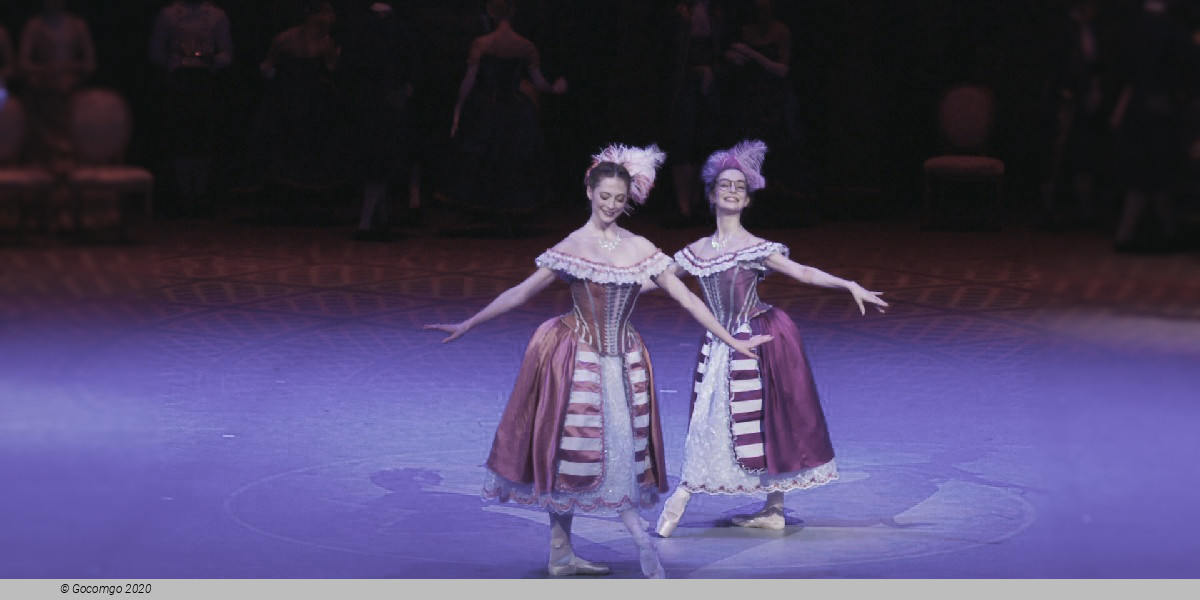
Cinderella stoically serves her family breakfast. The briefest sign of tenderness towards Cinderella from her father is frowned upon by Hortensia. Edwina follows closely in her mother’s footsteps, gaining favors from her. Clementine, the sweeter stepsister, is bullied into following suit. A poor beggar arrives at the door seeking food and warmth. Taking pity, Cinderella brings him into the kitchen, but Hortensia, horrified, casts him out again. “The Prince” (Benjamin) appears at the door. He has discovered the poor beggar outside and insists that Hortensia provide him with food and warmth. Hortensia feigns concern and orders Cinderella to help the beggar. “The Prince” has come to deliver invitations to a ball where he shall choose his bride. Left alone with Cinderella, the beggar (Prince Guillaume in disguise) sees true kindness in this girl. The two pretend to be at the ball, laughing and dancing.
Scene 6: The Night of the Ball
Cinderella is cleaning the kitchen when the rest of her family appears, dressed for the ball. There was an invitation for Cinderella, but Hortensia throws it into the fire, and her family departs for the palace without Cinderella. The Fates, who have continued to watch over Cinderella, present her with her invitation and lead her to her mother’s grave.
Scene 7: The Grave
From the tree, spirits of Lightness, Fluidity, Generosity, and Mystery appear to teach Cinderella the steps she will need for the ball. Embraced by the branches, Cinderella is transformed and the Fates send her on her way to the ball – cryptically warning her to keep an eye on the time.
Interval
ACT II
Scene 1: The Palace Ballroom
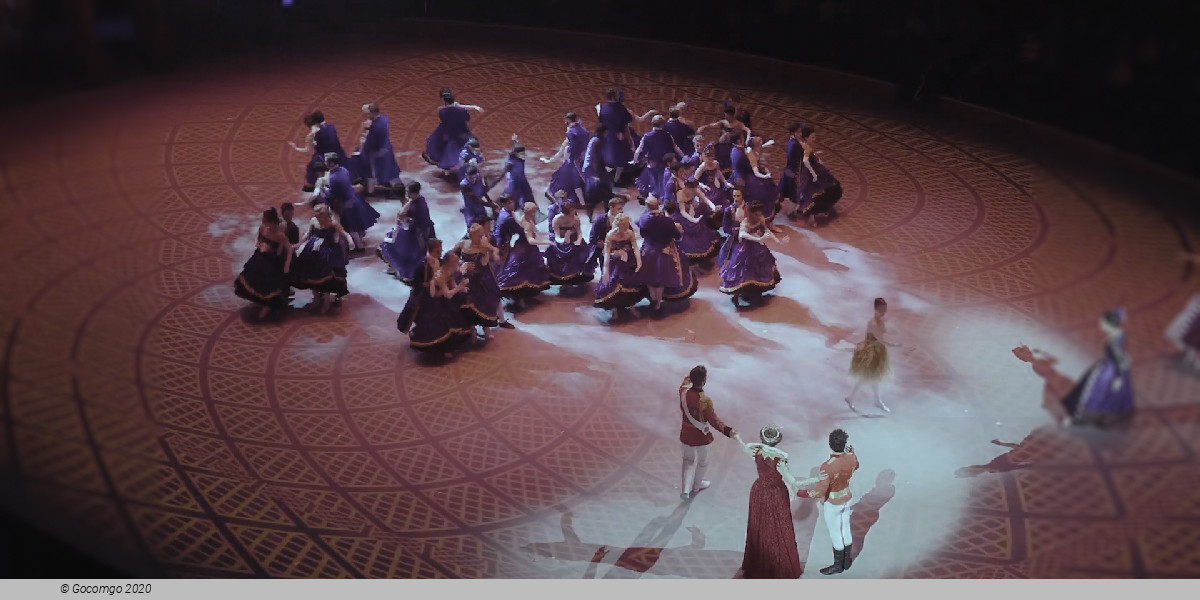
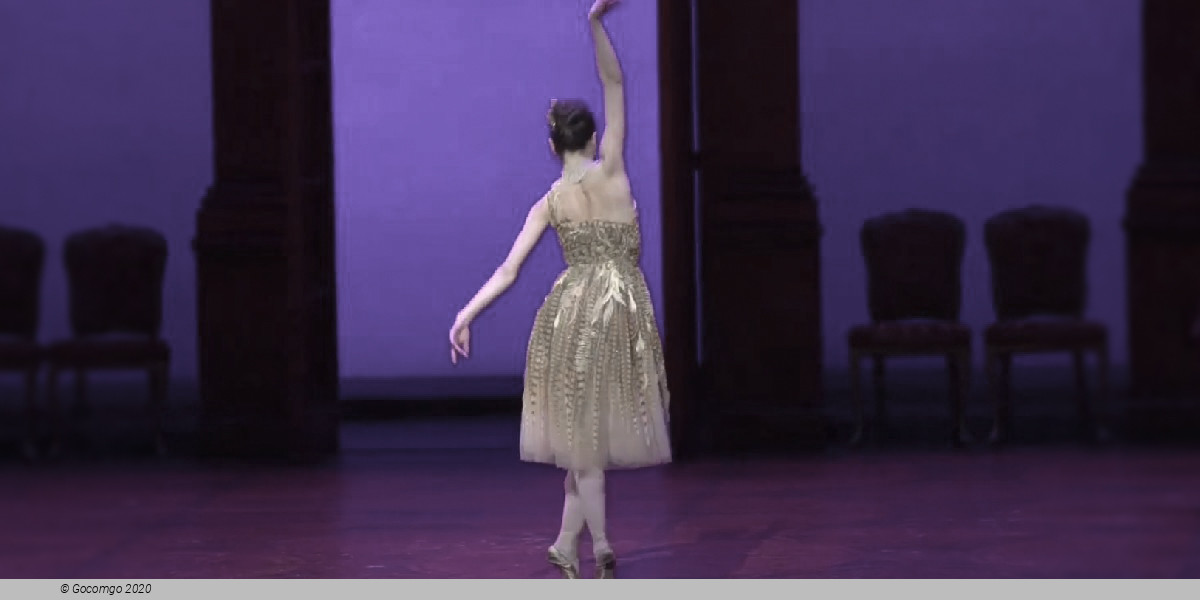
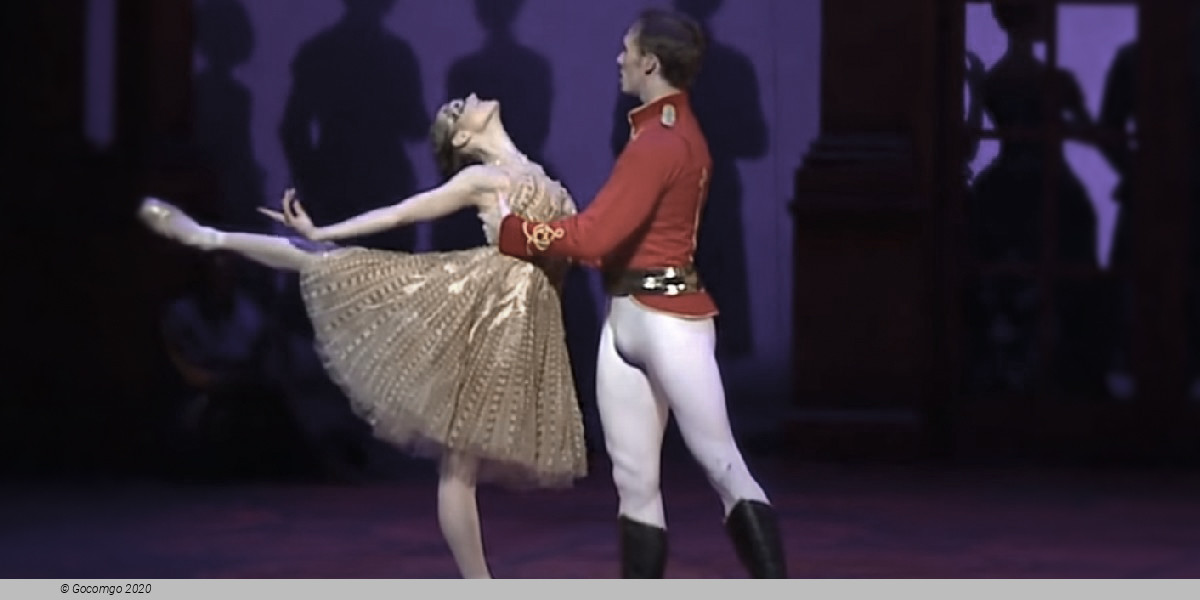
The ball is underway when Cinderella’s family arrives. The king and queen witness the rather tipsy arrival of Prince Guillaume and Benjamin, neither in correct attire for such a formal occasion. Cinderella’s stepsisters still believe Benjamin to be the prince, giving the two young men another chance for deception. Guillaume finds he is uninterested in any of the eligible ladies, stepsisters included. A magical atmosphere fills the ballroom as a mysterious masked girl arrives. Guillaume is immediately drawn to her. Cinderella, recognizing Guillaume as the urchin, turns to flee, but is gently guided back to him by the Fates. The couple waltz together. Seeing the interest the prince shows in this mysterious beauty, Hortensia takes to the bottle, humiliating herself. Benjamin dances with Clementine, whom he likes. Guillaume and Cinderella dance, falling deeper in love. When Hortensia rips off Cinderella’s mask, it is time for her to flee. In the chaos caused by her sudden departure, she leaves behind one golden shoe. Guillaume vows to marry her.
Interval
ACT III
Scene 1: In The Kingdom
Benjamin and Guillaume search for Cinderella, trying the shoe on every female foot they can find.
Scene 2: Cinderella’s Kitchen
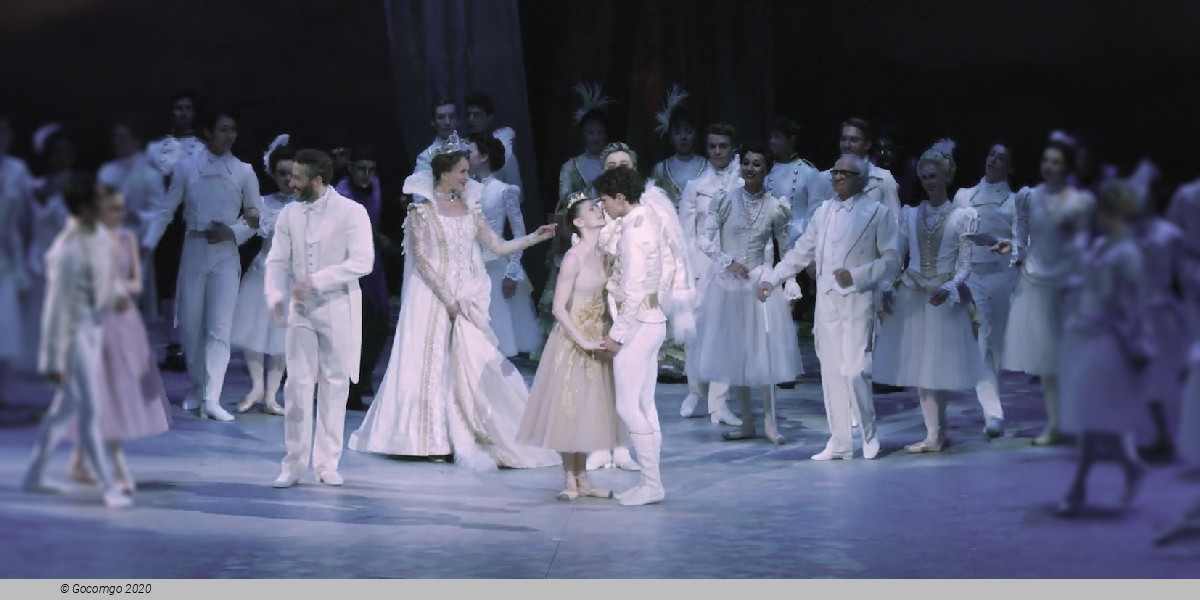
Cinderella awakens, and with the help of the Fates, remembers her astonishing night at the palace. Hiding the other golden shoe on the mantelpiece, she resigns herself to her daily chores. Clementine tells Cinderella of the boy she met, and then Edwina turns suspicious when she spies Cinderella dancing steps from the ball. Hortensia viciously attacks Cinderella, and her father must step in. Unannounced, Benjamin and Guillaume arrive, exhausted from trying the shoe on so many feet. When the shoe does not fit either of the stepsisters, Hortensia throws it into the fire. Cinderella comes forward with the matching shoe: Prince Guillaume has found his princess. Cinderella and her prince leave the family behind. All is not lost for Clementine, however, as Benjamin returns to take her with him. And a royal wedding is held.
Act I
Cinderella, a young woman whose domineering step-mother forces her to act as a servant in her own home, helps her step-mother and two step-sisters to prepare for the Spring Ball, at which it is rumoured that the Prince will choose his bride-to-be. As the two step-sisters work together to produce a new shawl, they get into an argument over who will wear it, and end up tearing it in two through their bickering. The pair storm off, while the step-mother orders Cinderella to clear up the remnants and finish her chores, as her father returns home from business. Since her father's remarriage, Cinderella has had to sleep by the kitchen fireplace, leaving her nothing to wear but rags covered in ashes. Her father has never moved past the grief of his first wife's death, and though he is concerned for his daughter, he is just as much under the step-mother's control as Cinderella herself is. Their brief peace is interrupted, however, as the mother and sisters reenter and begin ordering them about. During supper, a beggar woman turns up, asking for shelter. The sisters and mother try to chase her off, but Cinderella offers her a place by the kitchen fire and an old pair of slippers. The beggar thanks her for her kindness and departs, leaving the preparations for the ball to resume. After choosing dresses and a quick dancing lesson, the family finally sets off for the night with the father reluctantly in tow, leaving Cinderella behind.
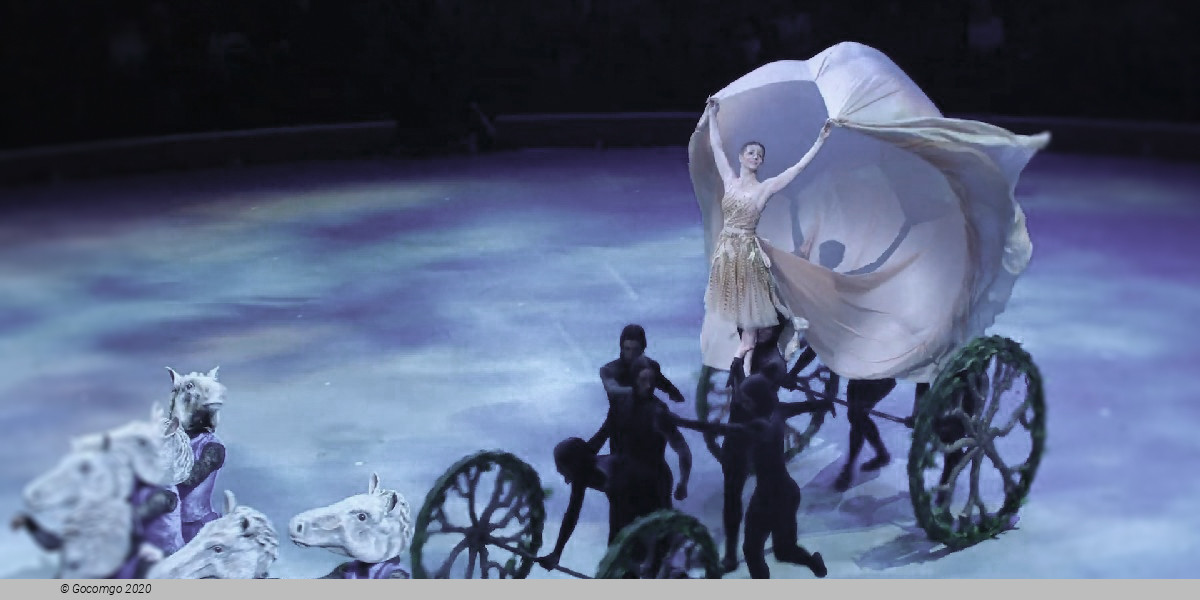
Although lonely at first, she cheers herself up by dancing with her broom, imagining the Prince himself has asked her for a dance. She is surprised, however, when the beggar woman appears out of nowhere, wishing to return the slippers with her thanks. To Cinderella's amazement, the shoes have been transformed into dancing slippers of glass. The beggar woman throws off her disguise and reveals herself as Cinderella's fairy godmother, come to grant her wish of going to the ball. Summoning the fairies of Spring, Summer, Autumn and Winter for assistance, she turns Cinderella's rags into a beautiful dress, a pumpkin and mice into a carriage and horses, and grasshoppers and dragonflies into a retinue of footmen. As she is about to leave, however, the fairy godmother warns her that the magic will only last until midnight, at which time the spell will break, and everything will revert to its original form. Only the glass slippers will remain as a gift for her kindness. She then summons twelve dwarfs, who will appear to repeat her message if she has not left by midnight. With this warning in mind, Cinderella departs for the ball.
Act II
The Spring Ball is in full swing, with guests arriving from all over the kingdom and beyond to dance and pay respect to the Prince. The two step-sisters attempt to win favour with the royal court by showing off their dancing skills, but have less than successful results, much to their mother's dismay. The Prince then joins the celebrations, but finding state events such as the Spring Ball dull, and being reluctant to enter a marriage without love, he declines any offers for a dance, particularly in the case of the obnoxious step-sisters.
At this point, Cinderella arrives at the palace, transformed beyond recognition into a beautifully dressed princess. The Prince, along with everyone else, is entranced by her beauty and charm, and for the first time, he asks for a dance. As the evening passes, the two become inseparable; Cinderella quickly becomes beloved by the entire court for her graciousness and charm, while the Prince is unusually enthusiastic and cheery in her company. When refreshments are served, he gives her the honour of taking one of three oranges, a delicacy imported to the kingdom from a far-off land. Cinderella offers the other two oranges to her step-sisters, who are so flattered by the attention that they do not recognize the beautiful stranger as their sister. The Prince takes Cinderella out to the royal gardens for an evening walk, where they dance and proclaim the love blossoming between them.
As they return to the ballroom for the next waltz, Cinderella has completely forgotten about the time in her happiness. However, at the first stroke of midnight, the twelve dwarfs spring from the great palace clock and remind Cinderella of her godmother's warning. Terrified of being unmasked as a lowly servant in rags, she flees from the ballroom to the astonishment of the other guests. Though the Prince pursues her, she vanishes into the night moments before the spell breaks, losing one of her glass slippers in her haste and panic. The Prince is heartbroken at the thought of losing his love so soon after discovering her, but upon finding the lost slipper, he vows not to rest until he is once again reunited with her.
Act III
The morning after the ball, the Prince summons every shoemaker in the kingdom, in order to find out who the slipper was made for. However, none of them claim to have crafted the shoe, or sold it to anybody recently, and he concludes that the princess must be from a foreign land. His desperate search brings him first to the Mediterranean, then to the Orient, and lands further beyond. After travelling across the world and meeting various beautiful princesses with no success, the Prince begins to search his own kingdom, trying the slipper on every maiden who attended the ball.
Back at Cinderella's home, love has allowed the Prince to defy the laws of time and space; though she is only awakening the morning after the ball, he has already traveled the world and back again in search of his lost love. Upon waking, Cinderella initially believes that the events of the previous night were only a dream. As she relives some of the dances of the ball, she discovers the remaining glass slipper and realizes that it was all true. At breakfast, the step-sisters reminisce about the ball, and argue about who made the greater impression on the Prince at the ball. Their fighting is interrupted when the father and step-mother hurry in with the news that the Prince is on his way to their house, desperately trying a glass slipper on every girl he encounters. Upon his arrival, he tries the slipper on the two step-sisters, to no avail. The step-mother, however, demands to be given a chance and tries to force her foot into the shoe, ordering Cinderella to help her. As she bends down to assist, the remaining slipper falls from her pocket and the Prince finally recognizes Cinderella for who she is. As Cinderella successfully tries on both glass slippers, her step-family beg for her forgiveness, which she happily bestows upon them. Overjoyed to have rediscovered each other, Cinderella and the Prince are then transported away to a secret garden by the fairy godmother, where they confess their love for one another and are happily married.





 Beim Alten Bahnhof 2