
Chengdu City Concert Hall: Russian National Ballet Theatre's "The Nutcracker" Tickets | Event Dates & Schedule | GoComGo.com

Russian National Ballet Theatre's "The Nutcracker" Tickets

Chengdu City Concert Hall, Chengdu, China
All photos (14)
1 / 14
Available Dates: 19 Sep, 2026 (1 events)
Important Info
Type: Ballet
City: Chengdu, China

E-tickets: Print at home or at the box office of the event if so specified. You will find more information in your booking confirmation email.

You can only select the category, and not the exact seats.
If you order 2 or 3 tickets: your seats will be next to each other.
If you order 4 or more tickets: your seats will be next to each other, or, if this is not possible, we will provide a combination of groups of seats (at least in pairs, for example 2+2 or 2+3).

Cast
Performers
Choose the date to see the peformers
Creators
Composer: Pyotr Tchaikovsky
Author: Ernst Theodor Amadeus Hoffmann
Librettist: Marius Petipa
Choreography: Vasily Vainonen
Overview

"The Nutcracker" is one of the most famous classical ballets in the world, presented by the Russian National Ballet Theatre. Set to music by Pyotr Ilyich Tchaikovsky, the production tells the magical story of the girl Clara, the Nutcracker Prince, and their journey into a fairytale world. The production preserves the traditions of Russian classical ballet with exquisite choreography, colorful sets, and a festive atmosphere.

The Nutcracker is the legendary ballet by Pyotr Ilyich Tchaikovsky and one of the most popular productions in the history of world ballet. Based on E. T. A. Hoffmann's fairy tale "The Nutcracker and the Mouse King," this ballet has become a symbol of Christmas and New Year's holidays around the world.

The story follows little Clara, who receives a toy Nutcracker as a gift on Christmas Eve. That night, the toy comes to life, transforms into a prince, and the heroine embarks on a magical journey through a battle with the Mouse King, a snowy kingdom, and the fairytale Land of Sweets.

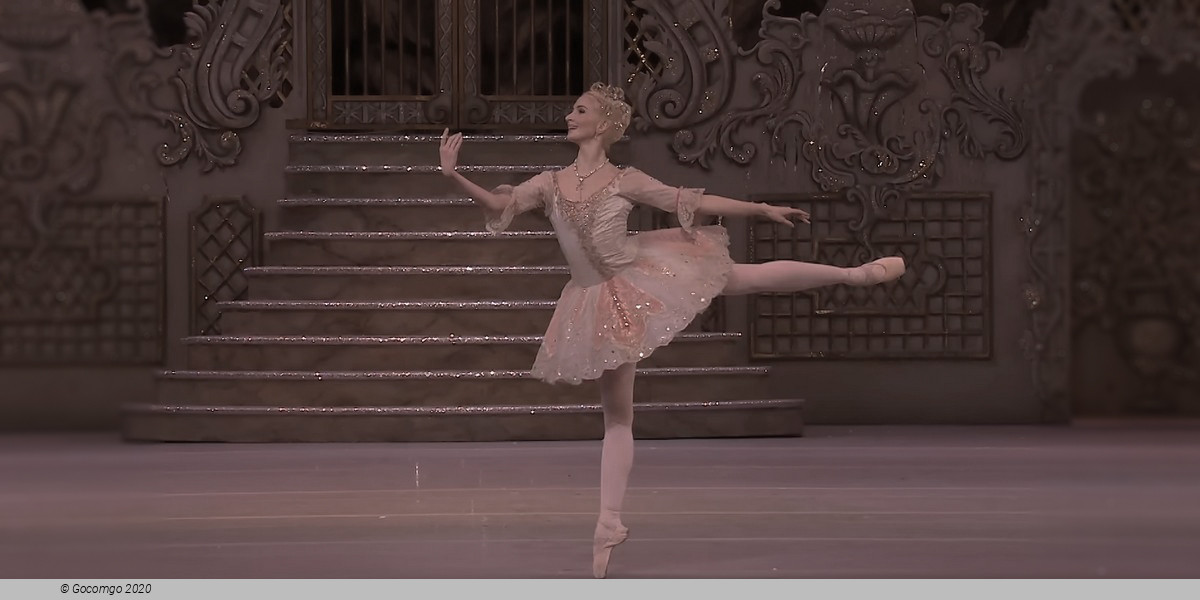
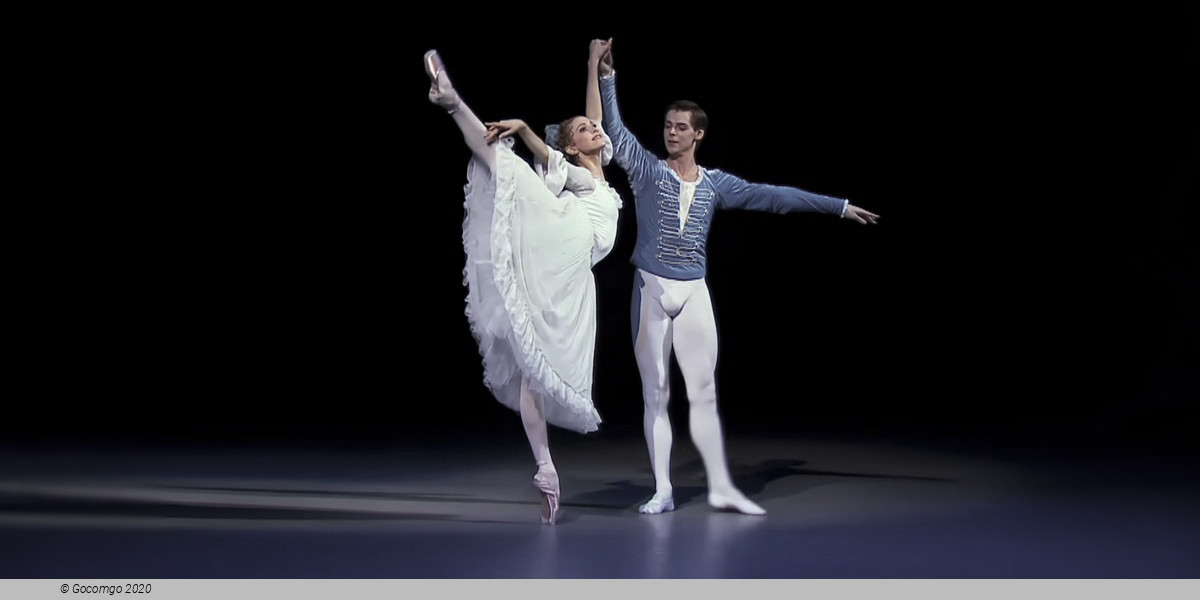
This production by the Russian National Ballet Theatre is based on the traditions of the great Russian ballet school. The performance features famous scenes: "Dance of the Snowflakes," "Waltz of the Flowers," "Dance of the Sugar Plum Fairy," and other choreographic masterpieces set to Tchaikovsky's immortal music.

The production combines virtuoso technique, classical choreography, sumptuous costumes, expansive sets, and a magical stage atmosphere. "The Nutcracker" remains one of the most iconic works of classical ballet and is suitable for audiences of all ages.

History
Premiere of this production: 06 December 1892, Imperial Mariinsky Theatre, Saint Petersburg

The Nutcracker (Balet-feyeriya) is a two-act ballet, originally choreographed by Marius Petipa and Lev Ivanov with a score by Pyotr Ilyich Tchaikovsky (Op. 71). The libretto is adapted from E. T. A. Hoffmann's story "The Nutcracker and the Mouse King".

Synopsis

Plot 

Below is a synopsis based on the original 1892 libretto by Marius Petipa. The story varies from production to production, though most follow the basic outline. The names of the characters also vary. In the original E. T. A. Hoffmann story, the young heroine is called Marie Stahlbaum and Clara (Klärchen) is her doll's name. In the adaptation by Dumas on which Petipa based his libretto, her name is Marie Silberhaus. In still other productions, such as Baryshnikov's, Clara is Clara Stahlbaum rather than Clara Silberhaus.

Act I

Scene 1: The Stahlbaum Home

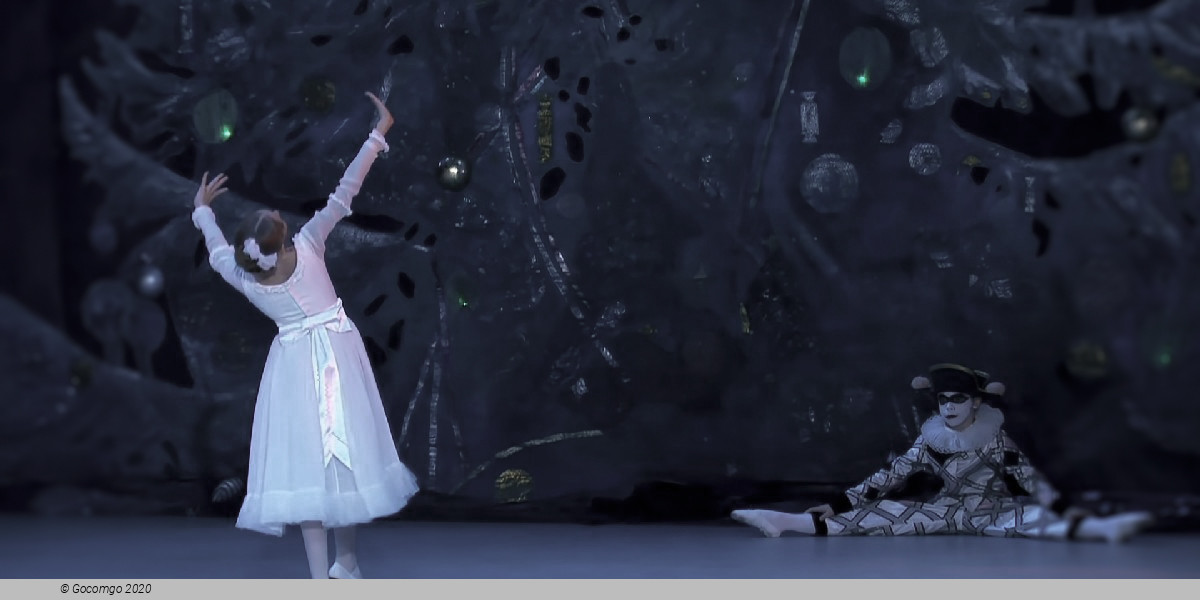
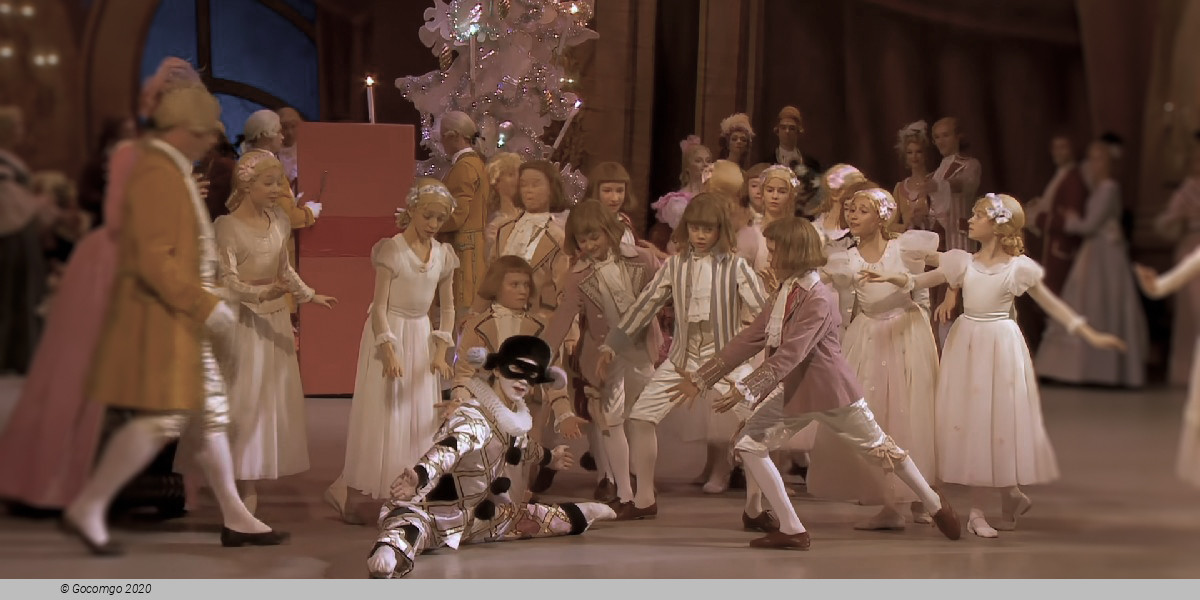
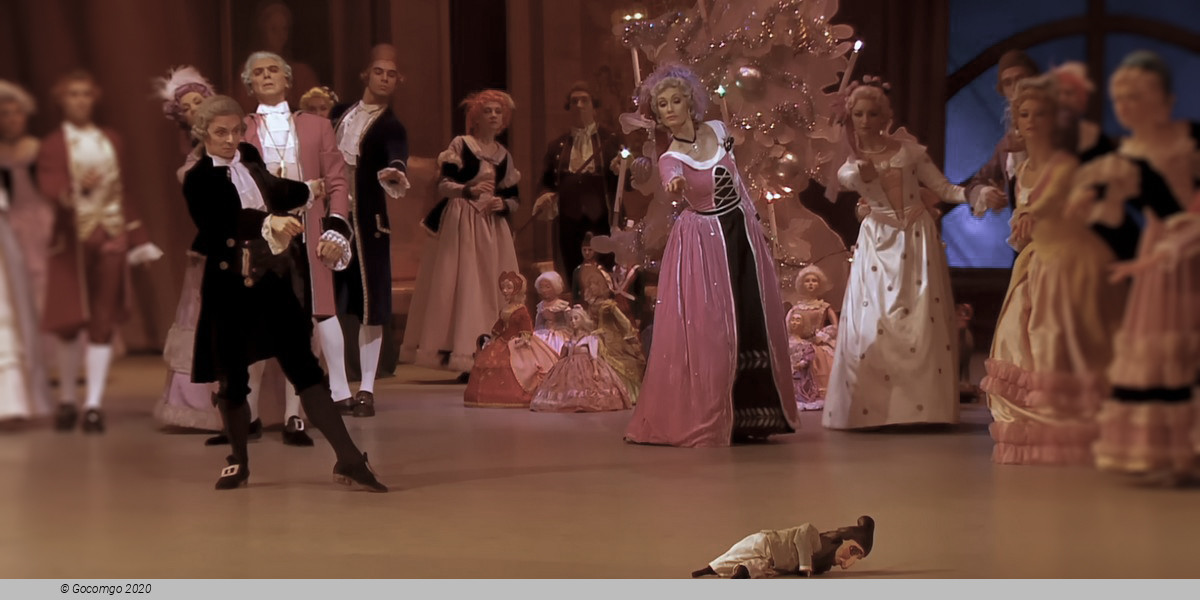
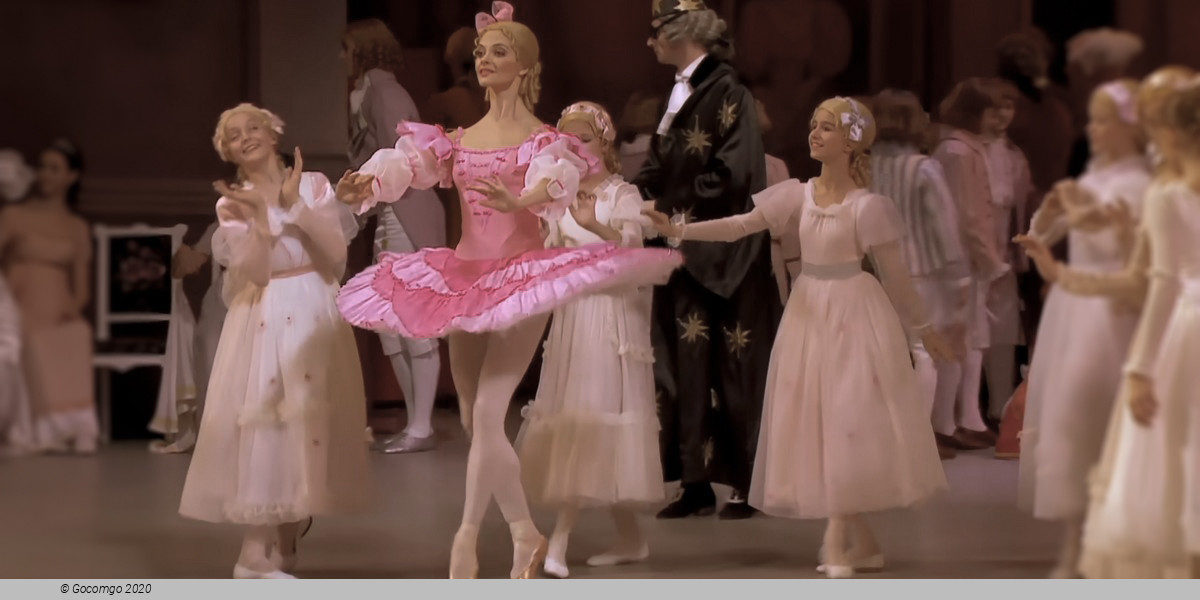
It is Christmas Eve. Family and friends have gathered in the parlor to decorate the beautiful Christmas tree in preparation for the party. Once the tree is finished, the children are sent for. They stand in awe of the tree sparkling with candles and decorations.

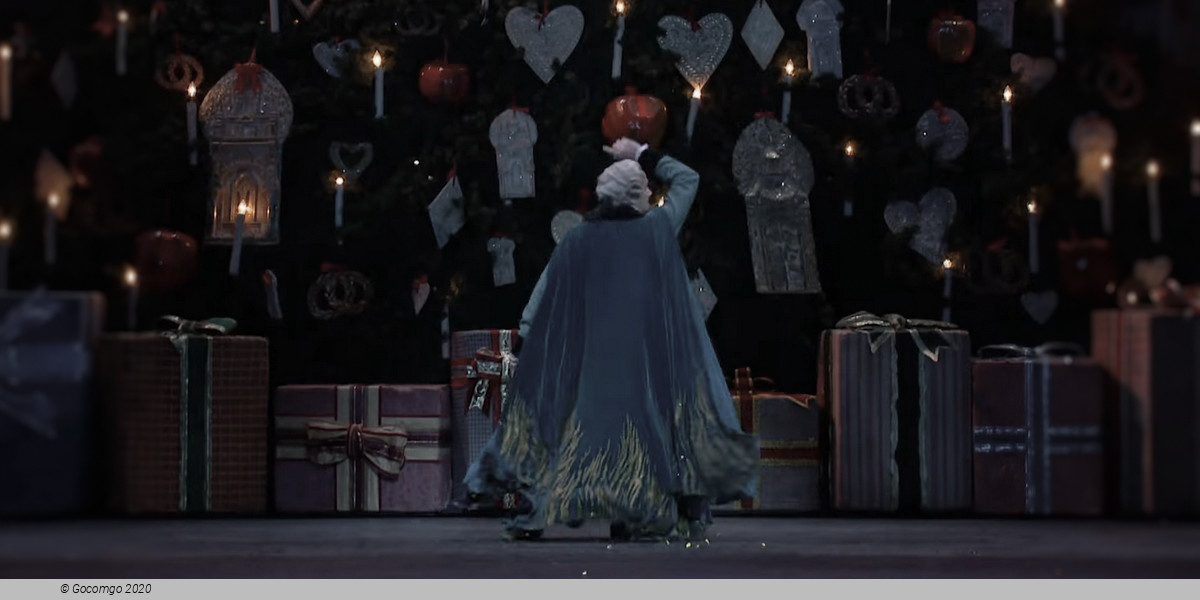
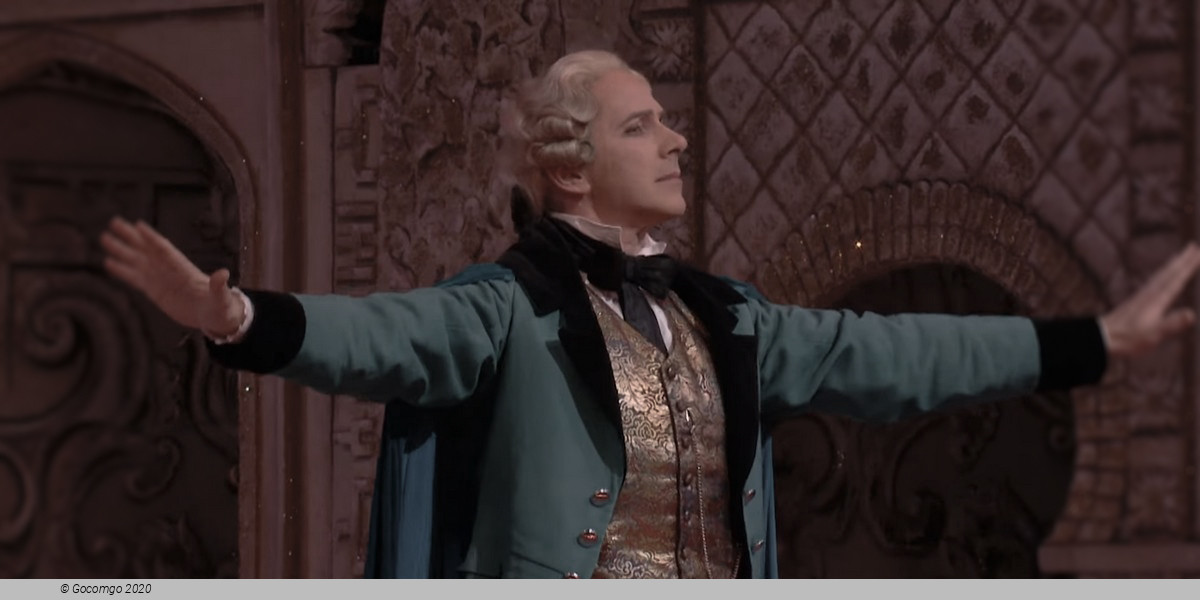
The party begins. A march is played. Presents are given out to the children. Suddenly, as the owl-topped grandmother clock strikes eight, a mysterious figure enters the room. It is Drosselmeyer, a local councilman, magician, and Clara's godfather. He is also a talented toymaker who has brought with him gifts for the children, including four lifelike dolls who dance to the delight of all. He then has them put away for safekeeping.

Clara and Fritz are sad to see the dolls being taken away, but Drosselmeyer has yet another toy for them: a wooden nutcracker carved in the shape of a little man. The other children ignore it, but Clara immediately takes a liking to it. Fritz, however, breaks it, and Clara is heartbroken.

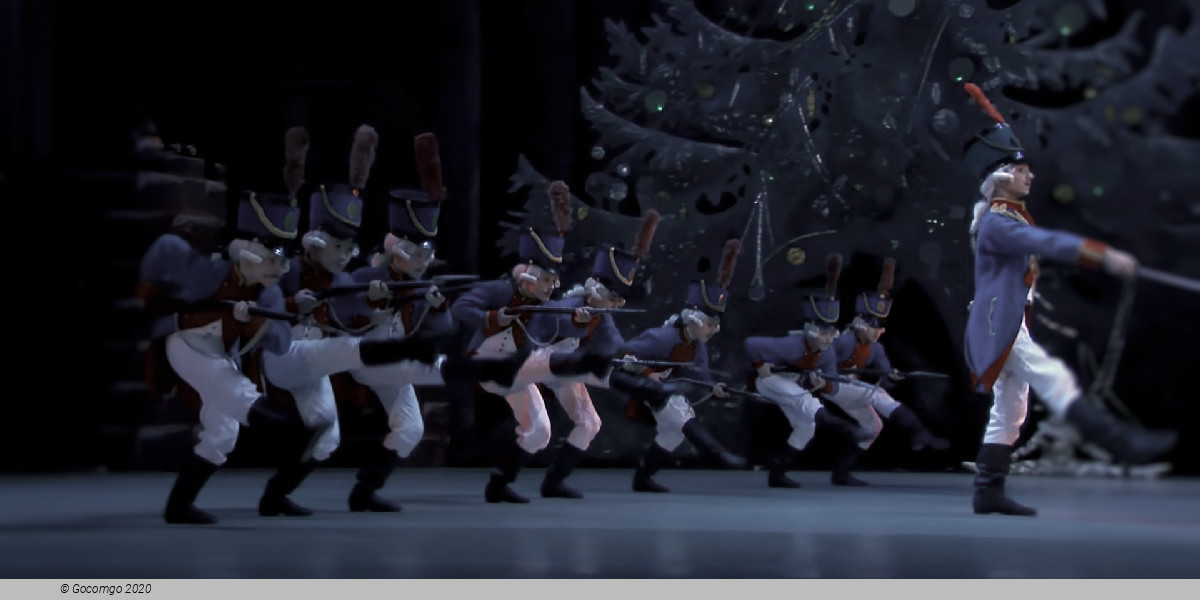
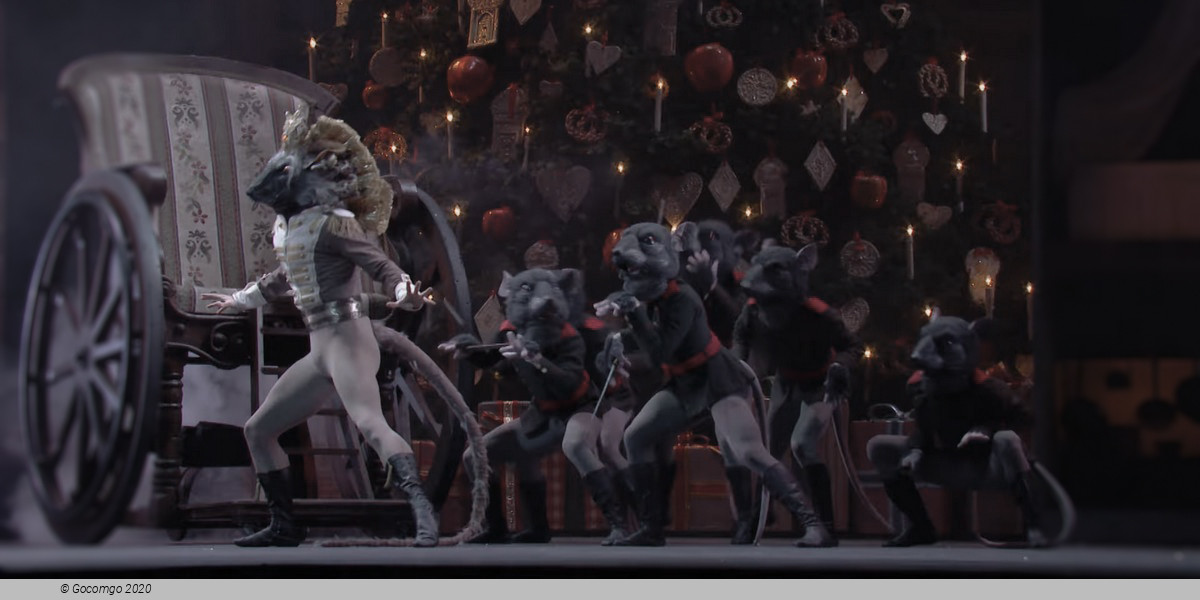
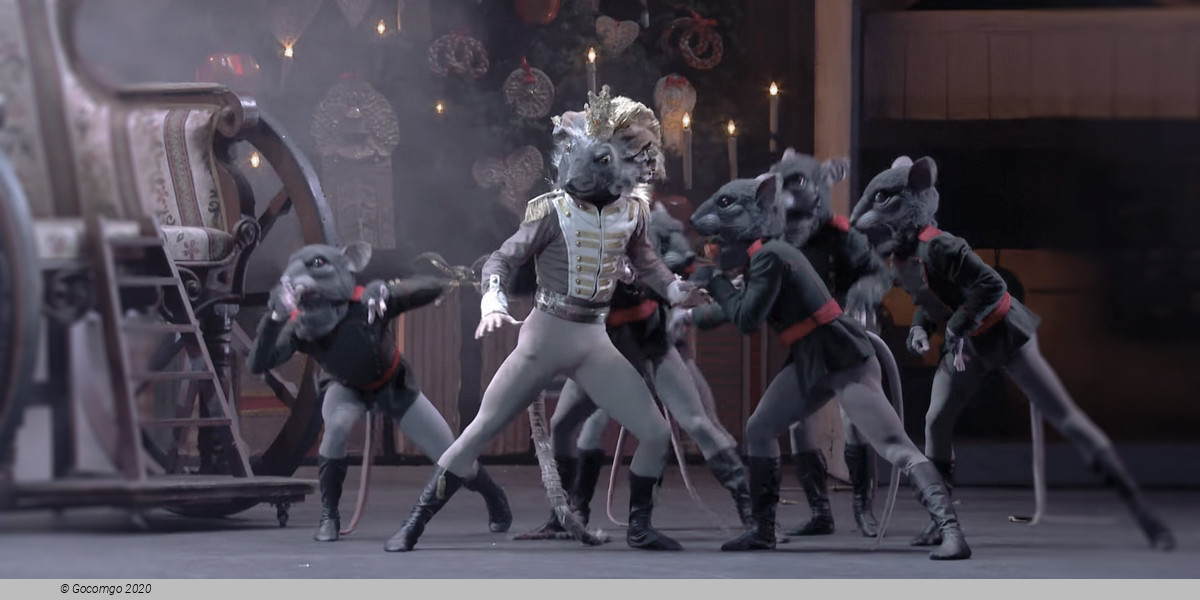
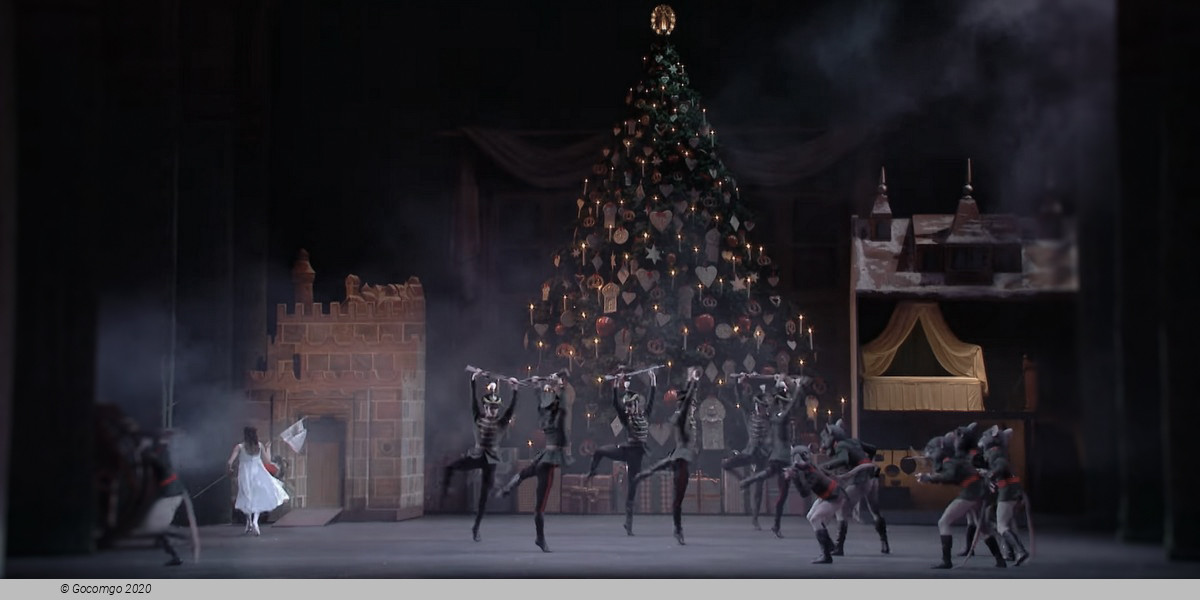
During the night, after everyone else has gone to bed, Clara returns to the parlor to check on her beloved nutcracker. As she reaches the little bed, the clock strikes midnight and she looks up to see Drosselmeyer perched atop it. Suddenly, mice begin to fill the room and the Christmas tree begins to grow to dizzying heights. The nutcracker also grows to life size. Clara finds herself in the midst of a battle between an army of gingerbread soldiers and the mice, led by their king. They begin to eat the soldiers.

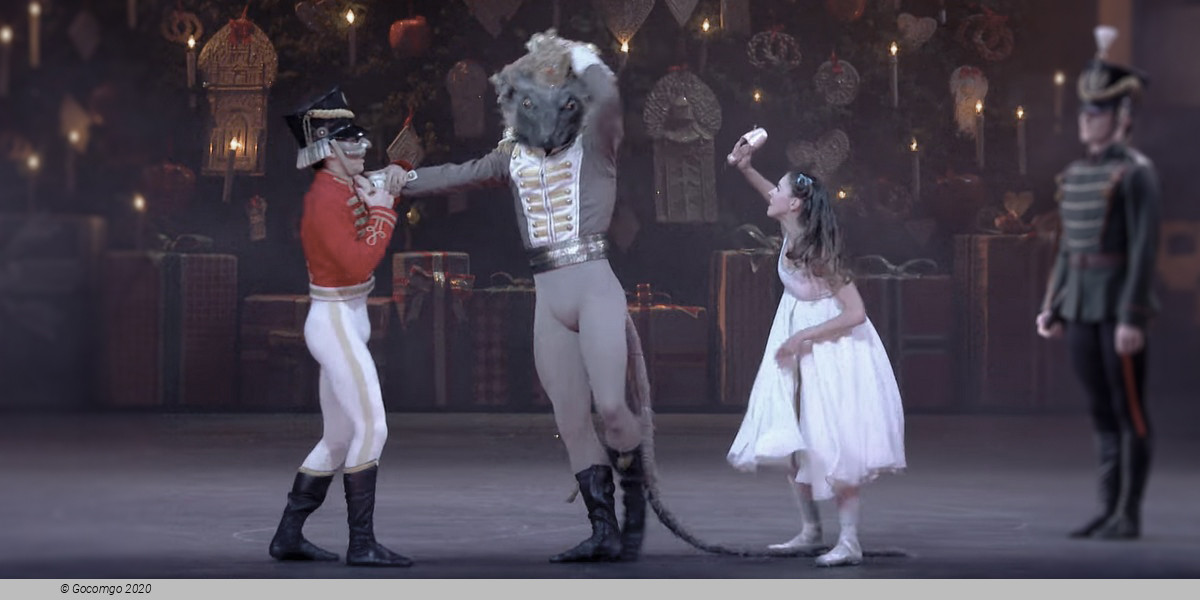
The nutcracker appears to lead the soldiers, who are joined by tin soldiers, and by dolls who serve as doctors to carry away the wounded. As the Mouse King advances on the still-wounded nutcracker, Clara throws her slipper at him, distracting him long enough for the nutcracker to stab him.

Scene 2: A Pine Forest

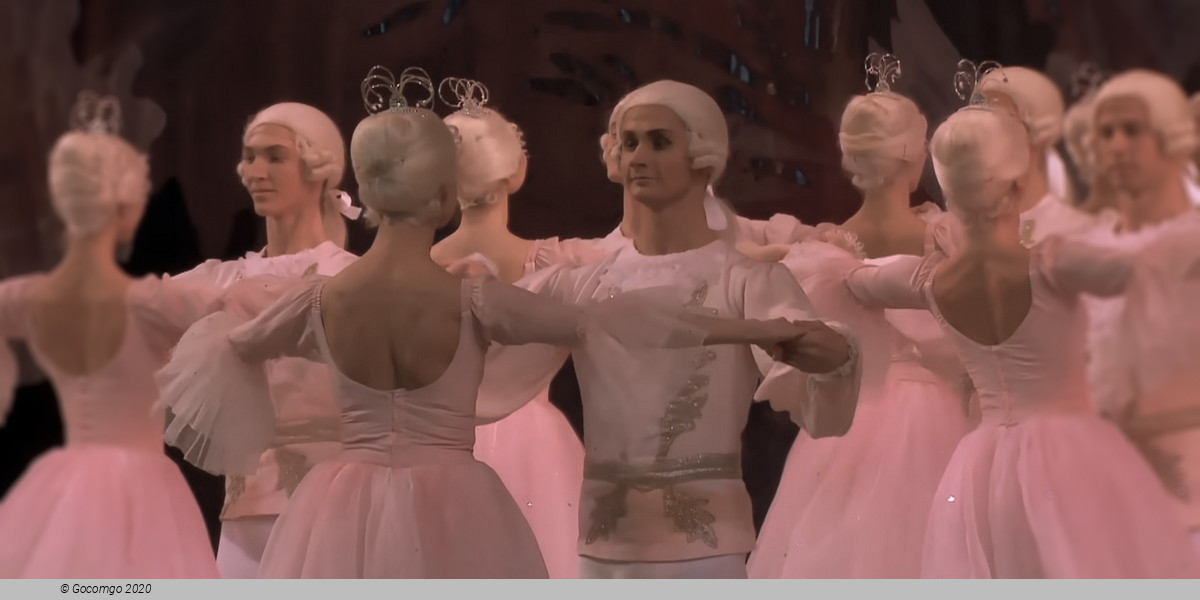
The mice retreat and the nutcracker is transformed into a handsome Prince. He leads Clara through the moonlit night to a pine forest in which the snowflakes dance around them, beckoning them on to his kingdom as the first act ends.

Act II

Scene 1: The Land of Sweets

Clara and the Prince travel to the beautiful Land of Sweets, ruled by the Sugar Plum Fairy in the Prince's place until his return. He recounts for her how he had been saved from the Mouse King by Clara and transformed back into himself. In honor of the young heroine, a celebration of sweets from around the world is produced: chocolate from Spain, coffee from Arabia, tea from China, and candy canes from Russia all dance for their amusement; Danish shepherdesses perform on their flutes; Mother Ginger has her children, the Polichinelles, emerge from under her enormous hoop skirt to dance; a string of beautiful flowers perform a waltz. To conclude the night, the Sugar Plum Fairy and her Cavalier perform a dance.

A final waltz is performed by all the sweets, after which the Sugar Plum Fairy ushers Clara and the Prince down from their throne. He bows to her, she kisses Clara goodbye, and leads them to a reindeer drawn sleigh. It takes off as they wave goodbye to all the subjects who wave back.

In the original libretto, the ballet's apotheosis "represents a large beehive with flying bees, closely guarding their riches". Just like Swan Lake, there have been various alternative endings created in productions subsequent to the original.

Venue Info

Chengdu City Concert Hall - Chengdu
Location   China, CN 6 Sichuan Conservatory of Music Jinjiang Campus (South Campus), Wuhou District, Chengdu, Sichuan Province, China Postcode: 610047

Chengdu City Concert Hall is the premier performing arts venue in Chengdu and one of the largest and most advanced cultural complexes in western China. Opened in 2018, it hosts opera, ballet, symphony concerts, musicals, dance productions, traditional Chinese theatre, and international touring performances in a state-of-the-art venue designed to international acoustic and technical standards.

Chengdu City Concert Hall is a world-class performing arts complex located in the heart of Chengdu, China. Opened in 2018 as a major cultural landmark, it was created to promote international artistic exchange while serving as the city's leading destination for music and performing arts. Today, it is recognized as one of the most important cultural venues in western China, welcoming internationally acclaimed orchestras, opera companies, ballet ensembles, touring musicals, dance companies, and leading Chinese performing arts organizations.

The complex covers more than 100,000 square metres and features four professional performance venues: a 1,401-seat Opera Hall, a 1,328-seat Concert Hall, a 343-seat Drama Theatre, and a 300-seat Chamber Hall. In addition, it includes rehearsal studios, recording facilities, a press conference hall, and public cultural spaces designed to support a wide range of artistic activities.

Designed with the concept of blending classical elegance with Chengdu's cultural heritage, the building incorporates architectural elements inspired by traditional Sichuan craftsmanship and local symbols while providing cutting-edge stage technology, excellent acoustics, and versatile performance facilities. The Opera Hall features advanced stage machinery capable of lifting, rotating, and transforming stage sets, making it suitable for large-scale opera, ballet, musicals, and theatrical productions.

Throughout the year, Chengdu City Concert Hall presents an extensive program of opera, ballet, symphonic concerts, chamber music, musicals, drama, dance performances, family productions, film music concerts, and international touring events. It also serves as the home venue of the Chengdu Symphony Orchestra and plays a central role in Chengdu's growing reputation as one of China's leading cultural capitals.

Important Info
Type: Ballet
City: Chengdu, China

E-tickets: Print at home or at the box office of the event if so specified. You will find more information in your booking confirmation email.

You can only select the category, and not the exact seats.
If you order 2 or 3 tickets: your seats will be next to each other.
If you order 4 or more tickets: your seats will be next to each other, or, if this is not possible, we will provide a combination of groups of seats (at least in pairs, for example 2+2 or 2+3).

From
$ 134
Top of page