The action unfolds in Genoa and its surroundings in the 14th century.
Twenty-five years pass between the prologue and Act I.
Prologue
A square in Genoa.
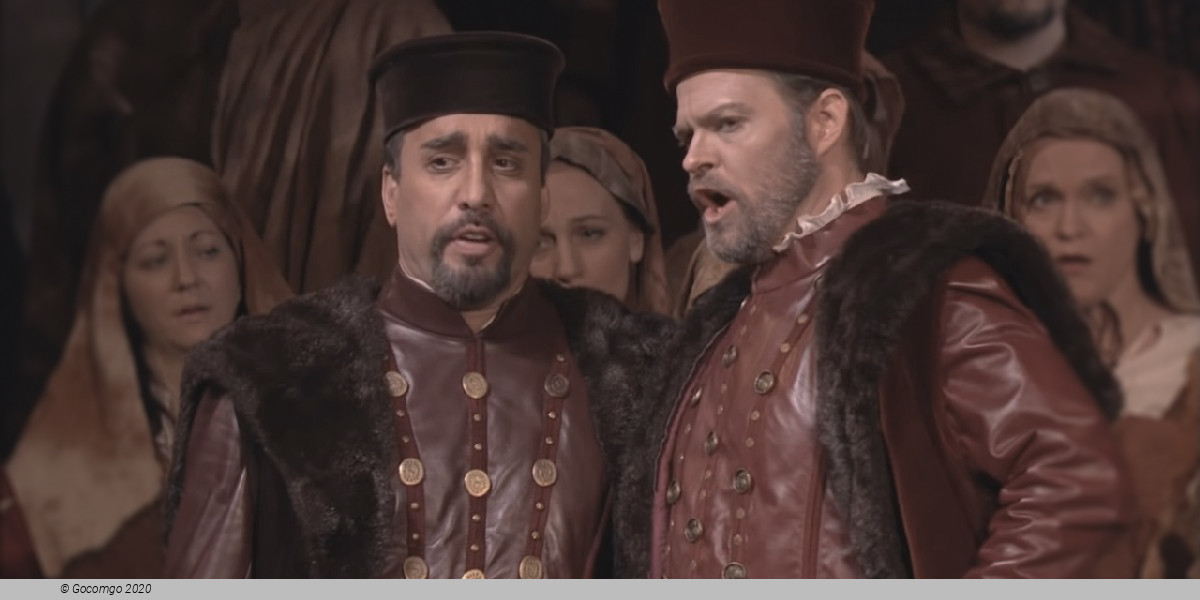
Paolo and Pietro discuss who should be the first Doge of Genoa. Paolo wants it to be Simon Boccanegra, the corsair who has freed Genoa’s sea territory from African pirates.
Boccanegra is a plebeian, and his election should put an end to the power of the patricians.
Simon appears. He agrees to Paolo’s entreaties to become the Doge with reluctance: he has no need of authority, but he hopes that in becoming the Doge he can marry his beloved Maria. Her father, the patrician Jacopo Fiesco, does not approve of her marriage to a corsair and keeps his daughter under lock and key.
Paolo and Pietro convince the assembled crowd to elect Simon Boccanegra as the Doge.
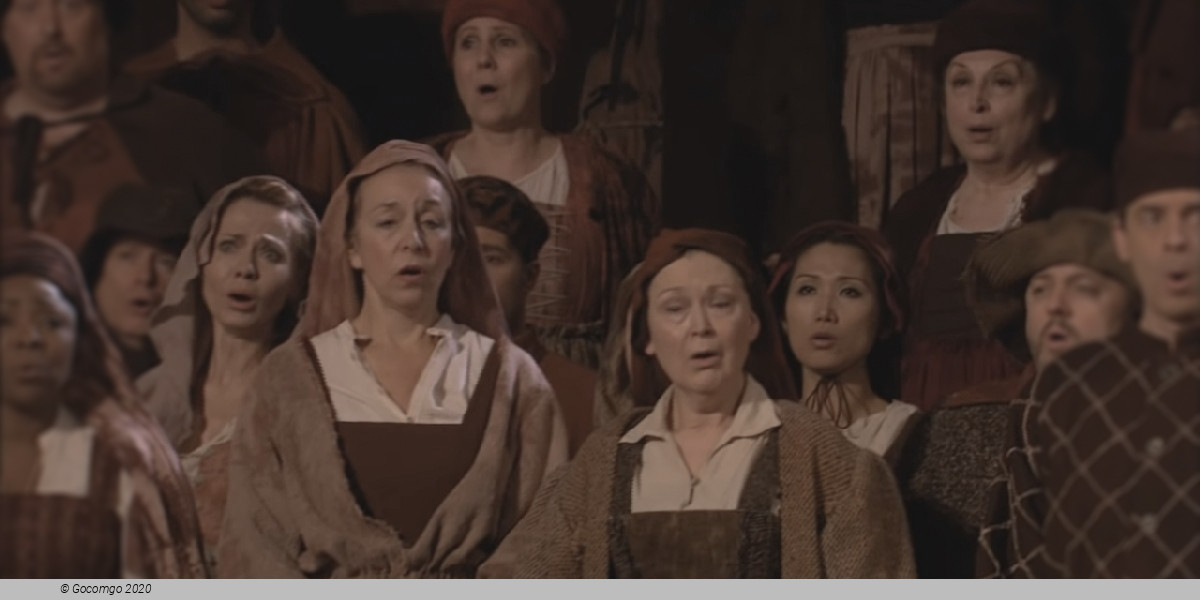
Maria has died. Jacopo Fiesco accuses Simon, the father of her child, of his own daughter’s death. Off-stage the chorus laments Maria.
Boccanegra asks Fiesco for a reconciliation. Fiesco is ready to forgive Simon if the latter will surrender Fiesco’s granddaughter to him. But this is impossible: the girl disappeared recently.
Simon enters Fiesco’s palace and sees Maria dead. At the moment the crowd greets the new Doge of Genoa – Simon Boccanegra.
Act I
Under Simon Boccanegra’s rule the aristocratic Fiesco and Grimaldi families are exiled. Jacopo Fiesco has taken refuge on the Grimaldi estate under the name of Andrea. Boccanegra’s daughter Maria is also there under the name of Amelia Grimaldi; no-one knows of her true birth.
Amelia awaits her beloved, Gabriele Adorno. Amelia knows that Gabriele and Andrea are preparing a revolt against the Doge and asks Gabriele to abandon this dangerous plan. The Doge arrives at the estate; he plans to ask for Amelia’s hand on behalf of one of his retainers – Paolo. Andrea blesses the marriage of Gabriele and Amelia and tells Gabriele that Amelia Grimaldi is an orphan.
The Doge pardons the Grimaldi family and permits Amelia’s brothers to return to Genoa. In response Amelia tells the Doge about herself and admits that she has a beloved.
Boccanegra recognises her as his daughter Maria. Amelia is delighted – at last she has found her father.
Boccanegra tells Paolo that his marriage to Amelia is impossible. Paolo is unwilling to accept the Doge’s will and plans to abduct Amelia.
Scene 2
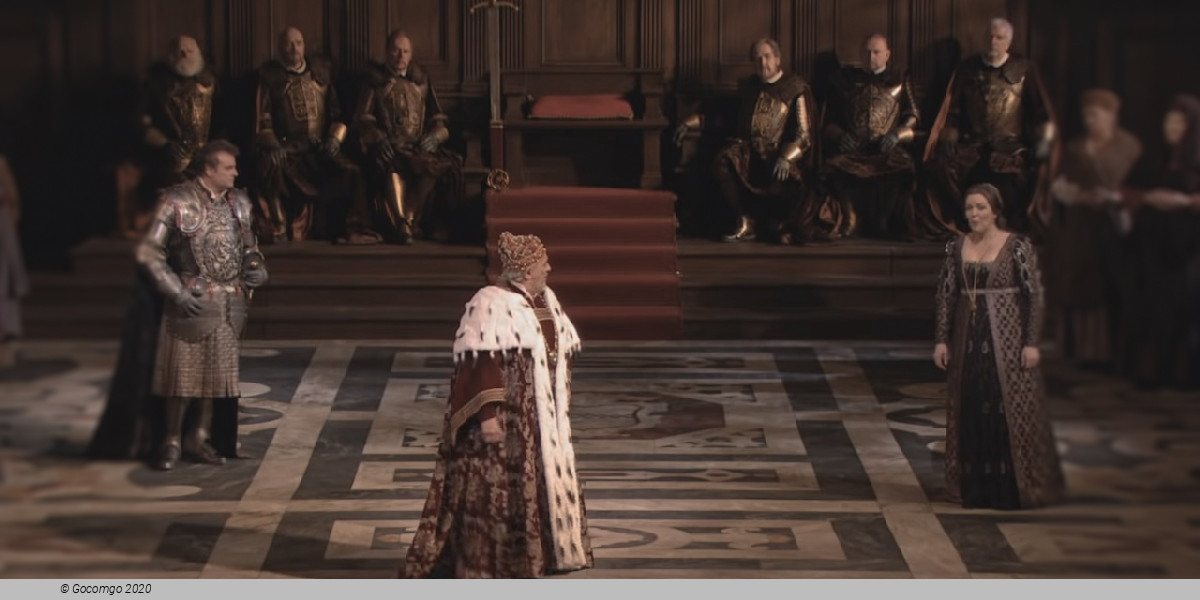
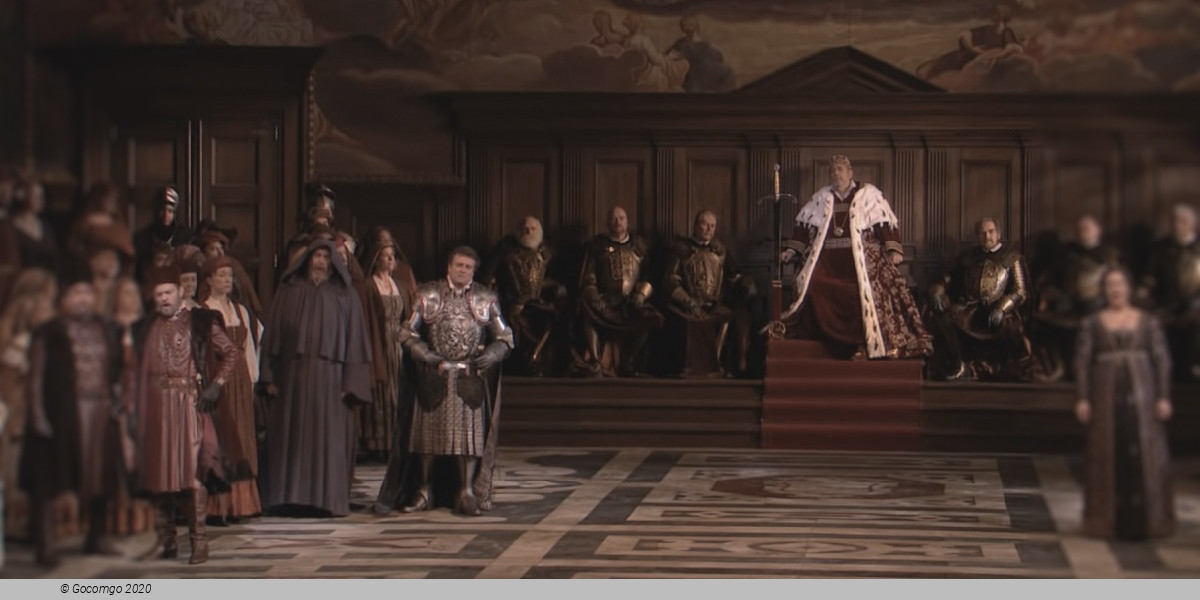
The Council Chamber in the Doge’s palace. The Doge and the council discuss affairs of State. The Tatar khan is defeated and the ships of Genoa are free to sail the Black Sea; Francesco Petrarca seeks peace in the name of Venice, but the Genoese councillors call for war.
Cries can be heard from the square – the crowd demands the Doge’s death. Boccanegra decrees that the rebels led by Gabriele Adorno be allowed into the palace.
Amelia has been abducted and Gabriele is convinced that the Doge is responsible. Amelia appears; she has escaped from her captors and confirms that the true criminal is among those present.
Boccanegra asks for Paolo’s help in finding the abductor and makes him curse the evil-doer.
Paolo is horrified – he has cursed his own self.
Act II
A room in the Doge’s palace.
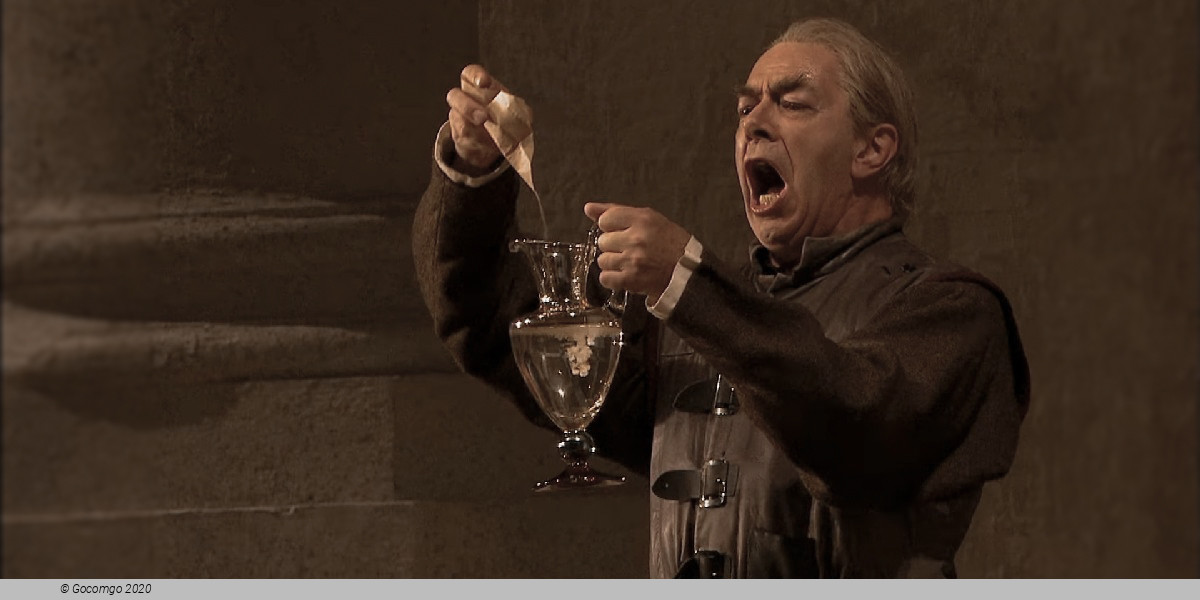
Paolo is obsessed with a desire for revenge: he adds poison to a decanter lying on the Doge’s table. Pietro brings in Gabriele and Fiesco.
Paolo suggests that Fiesco kills the sleeping Doge, but he refuses to be part of such a dirty piece of work.
Paolo convinces Gabriele that Amelia has become the Doge’s lover, gives him a dagger and slips away.
Amelia appears. She tries to explain that his jealousy is misplaced, but Gabriele does not believe her. The Doge enters and Amelia hides Gabriele on the balcony Amelia tells her father that her beloved in Gabriele Adorno, the leader of the resistance. Boccanegra promises to pardon Gabriele if the latter repents. He drinks the poisoned water and falls asleep.
Gabriele wants to kill the Doge though Amelia tries to prevent him.
The Doge awakes. Realising that Amelia is Boccanegra’s daughter, Gabriele repents and switches sides in support of the Doge.
The revolt again approaches the palace. Gabriele sets out to meet them with an offer of peace.
Act III
A room in the Doge’s palace.
The rebellion is crushed. Paolo, who took part in the revolt, is led off to be executed. Before he dies he sees Fiesco and informs him that he organised Amelia’s abduction and poisoned Boccanegra.
A wedding chorus can be heard: Gabriele and Amelia are getting married.
Boccanegra is alone. He senses that soon he will die and with nostalgia recalls the freedom of the sea. Fiesco enters: he wishes to take revenge on Boccanegra and predicts his impending death.
But Simon is pleased to see Fiesco: his daughter has been found and a reconciliation is at last possible. Fiesco forgives his old enemy.
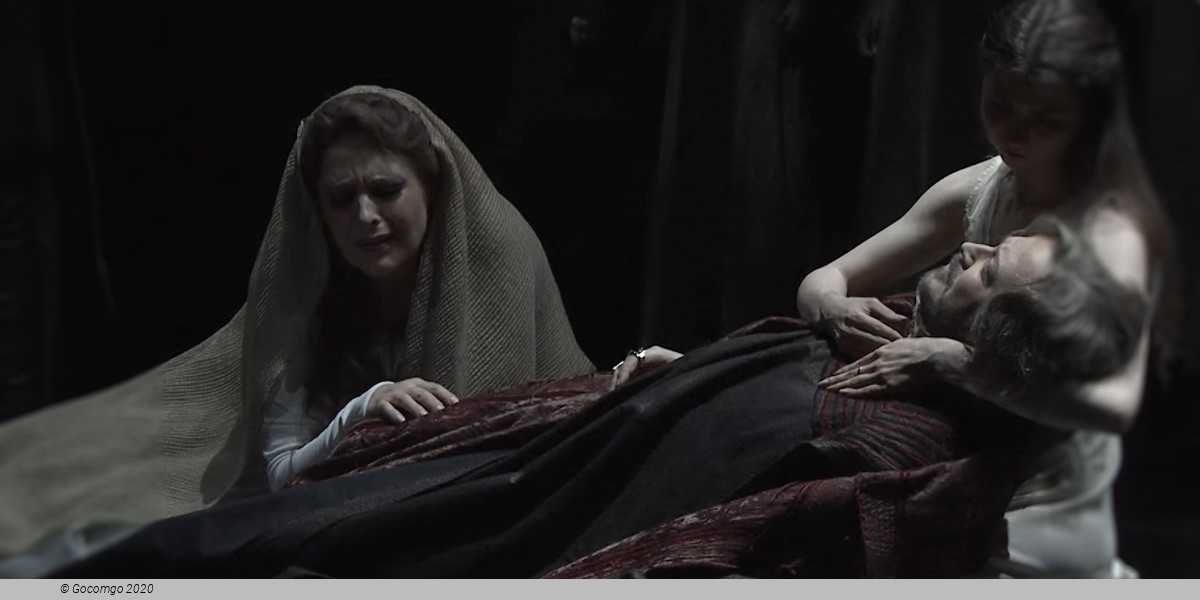
Boccanegra dies in the arms of his daughter, naming Gabriele his successor.
Fiesco hails the new Doge.
Time: The middle of the 14th century.
Place: In and around Genoa.
Prologue
(Act 1 in the 1857 original)
A piazza in front of the Fieschi palace
Paolo Albiani, a plebeian, tells his ally Pietro that in the forthcoming election of the Doge, his choice for the plebeian candidate is Simon Boccanegra. Boccanegra arrives and is persuaded to stand when Paolo hints that if Boccanegra becomes Doge, the aristocratic Jacopo Fiesco will surely allow him to wed his daughter Maria. When Boccanegra has gone, Paolo gossips about Boccanegra's love affair with Maria Fiesco – Boccanegra and Maria have had a child, and the furious Fiesco has locked his daughter away in his palace. Pietro rallies a crowd of citizens to support Boccanegra. After the crowd has dispersed, Fiesco comes out of his palace, stricken with grief; Maria has just died (Il lacerato spirito – "The tortured soul of a sad father"). He swears vengeance on Boccanegra for destroying his family. When he meets Boccanegra he does not inform him of Maria's death. Boccanegra offers reconciliation and Fiesco promises clemency only if Boccanegra lets him have his granddaughter. Boccanegra explains he cannot because the child, put in the care of a nurse, has vanished. He enters the palace and finds the body of his beloved just before crowds pour in, hailing him as the new Doge.
Act 1
(Act 2 in the 1857 original)
File:Figlia a tal nome io palpito - Simon Boccanegra.webm
Twenty-five years have passed. Historically the action has moved from 1339, the year of Simon's election in the prologue, forward to 1363, the year of the historical Simone Boccanegra's death – for acts 1, 2 and 3.
The Doge has exiled many of his political opponents and confiscated their property. Among them is Jacopo Fiesco, who has been living in the Grimaldi palace, using the name Andrea Grimaldi to avoid discovery and plotting with Boccanegra's enemies to overthrow the Doge. The Grimaldis have adopted an orphaned child of unknown parentage after discovering her in a convent (she is in fact Boccanegra's child, Maria – known as Amelia – named after her mother, and she is Fiesco's granddaughter). They called her Amelia, hoping that she would be the heir to their family's fortune, their sons having been exiled and their own baby daughter having died. Amelia is now a young woman.
Scene 1: A garden in the Grimaldi palace, before sunrise
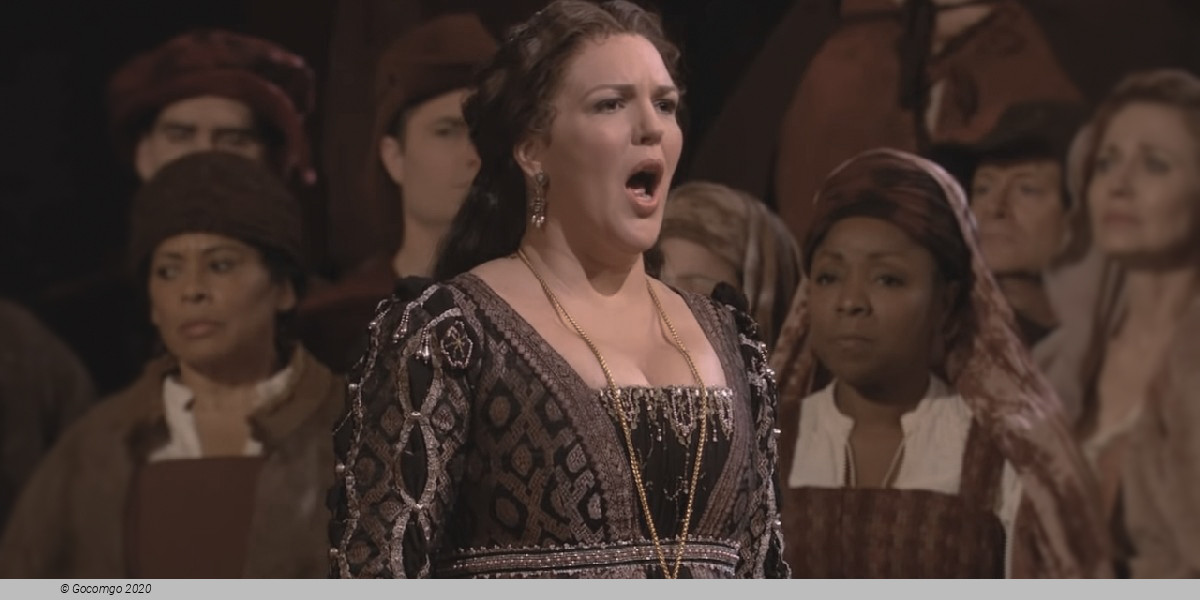
Amelia is awaiting her lover, Gabriele Adorno (Aria:Come in quest'ora bruna – "How in the morning light / The sea and stars shine brightly"). She suspects him of plotting against the Doge and when he arrives she warns him of the dangers of political conspiracy. Word arrives that the Doge is coming. Amelia, fearing that the Doge will force her to marry Paolo, now his councilor, urges Adorno to ask her guardian Andrea (in reality, Fiesco) for permission for them to marry: Sì, sì dell'ara il giubilo / contrasti il fato avverso – "Yes, let the joy of marriage be set against unkind fate".
1857 original version: the duet ended with a cabaletta (set to the same words as the 1881 text) then "a coda and a battery of chords followed by applause."
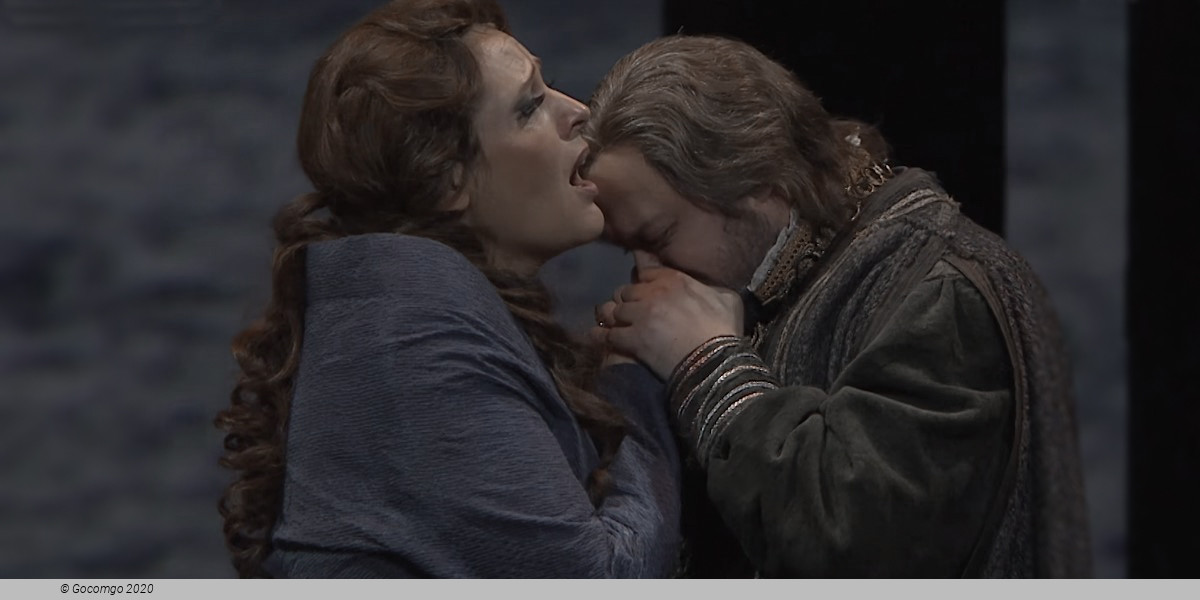
Fiesco reveals to Adorno that Amelia is not a Grimaldi, but a foundling adopted by the family. When Adorno says that he does not care, Fiesco blesses the marriage. Boccanegra enters and tells Amelia that he has pardoned her exiled brothers. She tells him that she is in love, but not with Paolo, whom she refuses to marry. Boccanegra has no desire to force Amelia into a marriage against her will. She tells him that she was adopted and that she has one souvenir of her mother, a picture in a locket. The two compare Amelia's picture with Boccanegra's, and Boccanegra realizes that she is his long-lost daughter. Finally reunited, they are overcome with joy. Amelia goes into the palace. Soon after, Paolo arrives to find out if Amelia has accepted him. Boccanegra tells him that the marriage will not take place. Furious, Paolo arranges for Amelia to be kidnapped.
Scene 2: The council chamber
1881 revision: This entire scene was added by Verdi and Boito in place of the 1857 scene, which took place in a large square in Genoa.
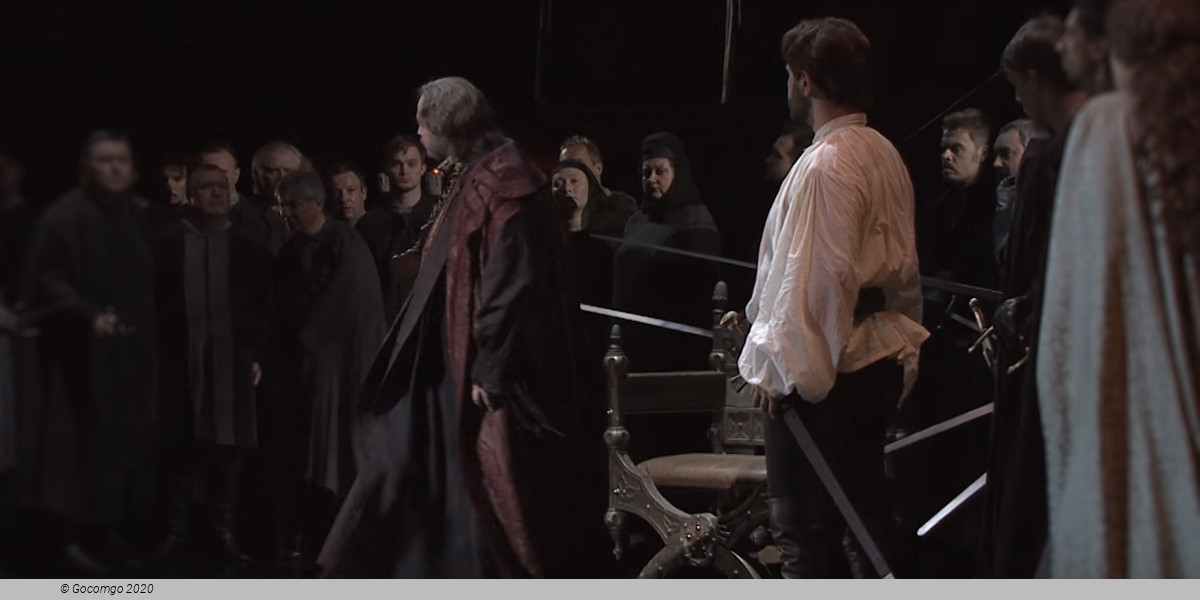
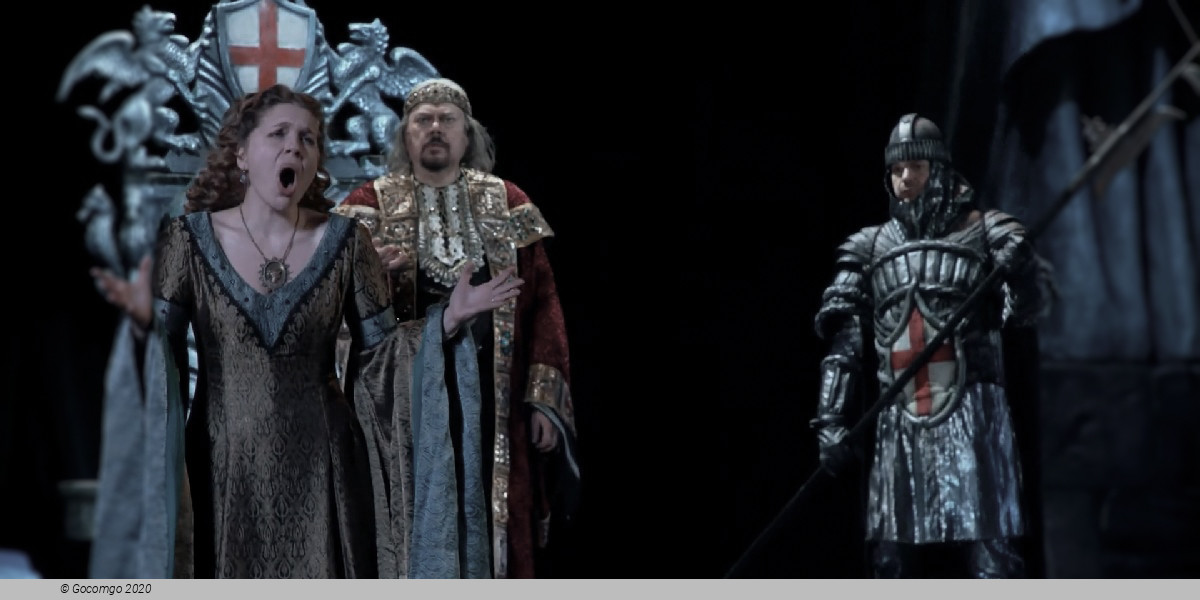
The Doge encourages his councillors to make peace with Venice. He is interrupted by the sounds of a mob calling for blood. Paolo suspects that his kidnapping plot has failed. The Doge prevents anyone leaving the council chamber and orders the doors to be thrown open. A crowd bursts in, chasing Adorno. Adorno confesses to killing Lorenzino, a plebeian, who had kidnapped Amelia, claiming to have done so at the order of a high-ranking official. Adorno incorrectly guesses the official was Boccanegra and is about to attack him when Amelia rushes in and stops him (Aria: Nell'ora soave – "At that sweet hour which invites ecstasy / I was walking alone by the sea"). She describes her abduction and escape. Before she is able to identify her kidnapper, fighting breaks out once more. Boccanegra establishes order and has Adorno arrested for the night (Aria: Plebe! Patrizi! Popolo! – "Plebeians! Patricians! Inheritors / Of a fierce history"). He orders the crowd to make peace and they praise his mercy. Realizing that Paolo is responsible for the kidnapping, Boccanegra places him in charge of finding the culprit. He then makes everyone, including Paolo, utter a curse on the kidnapper.
Act 2
(Act 3 in the 1857 original)
The Doge's apartments
1881 revised version: There are some small adjustments in this act which include expanding Paolo's opening aria, thus giving him greater stature in the work: Me stesso ho maledetto! / "I have cursed myself", the wording of which was originally: O doge ingrato ... ch'io rinunci Amelia e i suoi tesori? / "O ungrateful Doge! ... Must I give up Amelia and her charms".
Paolo has imprisoned Fiesco. Determined to kill Boccanegra, Paolo pours a slow-acting poison into the Doge's water, and then tries to convince Fiesco to murder Boccanegra in return for his freedom. Fiesco refuses. Paolo next suggests to Adorno that Amelia is the Doge's mistress, hoping Adorno will murder Boccanegra in a jealous rage. Adorno is furious (Aria: Sento avvampar nell'anima – "I feel a furious jealousy / Setting my soul on fire"). Amelia enters the Doge's apartments, seeming to confirm Adorno's suspicions, and he angrily accuses her of infidelity. She claims only to love him, but cannot reveal her secret – that Boccanegra is her father – because Adorno's family were killed by the Doge. Adorno hides as Boccanegra is heard approaching. Amelia confesses to Boccanegra that she is in love with his enemy Adorno. Boccanegra is angry, but tells his daughter that if the young nobleman changes his ways, he may pardon him. He asks Amelia to leave, and then takes a drink of the poisoned water, which Paolo has placed on the table. He falls asleep. Adorno emerges and is about to kill Boccanegra, when Amelia returns in time to stop him. Boccanegra wakes and reveals to Adorno that Amelia is his daughter. Adorno begs for Amelia's forgiveness (Trio: Perdon, Amelia ... Indomito – "Forgive me, Amelia ... A wild, / Jealous love was mine"). Noises of fighting are heard – Paolo has stirred up a revolution against the Doge. Adorno promises to fight for Boccanegra, who vows that Adorno shall marry Amelia if he can crush the rebels.
Act 3
(Act 4 in the 1857 original)
1857 original version: Act 4 opened with a double male voice chorus, and a confused dialogue involving references to details in the original play.
Inside the Doge's palace
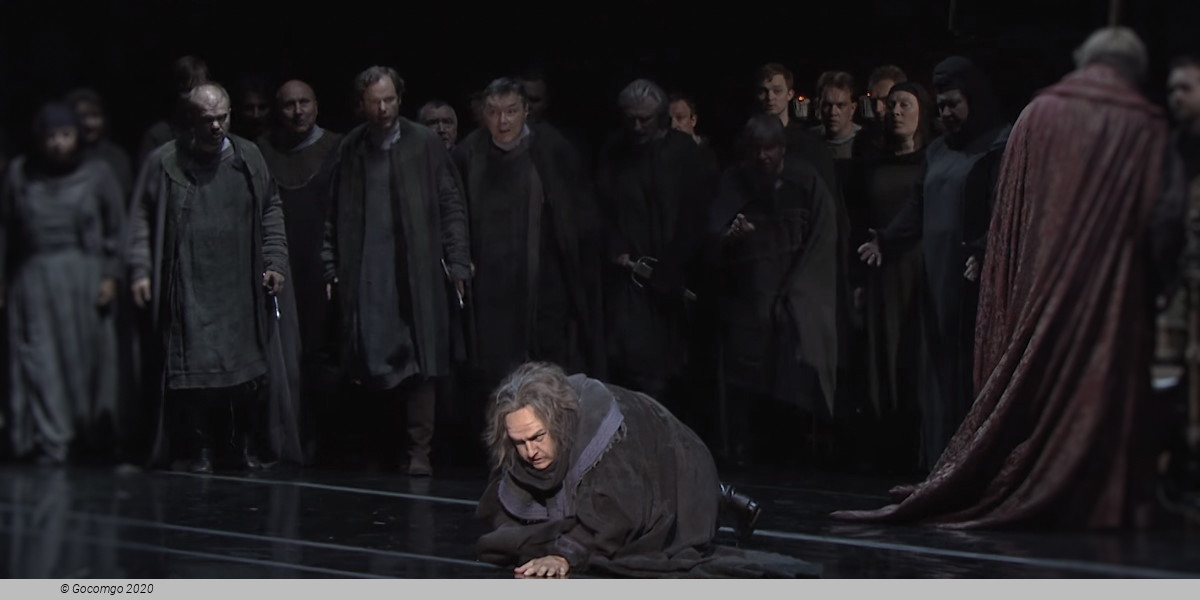
The uprising against the Doge has been put down. Paolo has been condemned to death for fighting with the rebels against the Doge. Fiesco is released from prison by the Doge's men. On his way to the scaffold, Paolo boasts to Fiesco that he has poisoned Boccanegra. Fiesco is deeply shocked. He confronts Boccanegra, who is now dying from Paolo's poison. Boccanegra recognizes his old enemy and tells Fiesco that Amelia is his granddaughter. Fiesco feels great remorse and tells Boccanegra about the poison. Adorno and Amelia, newly married, arrive to find the two men reconciled. Boccanegra tells Amelia that Fiesco is her grandfather and, before he dies, names Adorno his successor. The crowd mourns the death of the Doge.




 Teatralnaya Square 1