Bolshoi Theatre tickets 31 October 2026 - Pagliacci | GoComGo.com

Pagliacci

Bolshoi Theatre, New Stage, Moscow, Russia
All photos (7)
Select date and time
7 PM
Request for Tickets
Important Info
Type: Opera
City: Moscow, Russia
Starts at: 19:00
Acts: 2
Duration: 1h 40min
Sung in: Italian

E-tickets: Print at home or at the box office of the event if so specified. You will find more information in your booking confirmation email.

You can only select the category, and not the exact seats.
If you order 2 or 3 tickets: your seats will be next to each other.
If you order 4 or more tickets: your seats will be next to each other, or, if this is not possible, we will provide a combination of groups of seats (at least in pairs, for example 2+2 or 2+3).

Cast
Performers
Choir: Bolshoi Theatre Chorus
Orchestra: Bolshoi Theatre Orchestra
Creators
Composer: Ruggero Leoncavallo
Stage Director: Hans-Joachim Frey
Librettist: Ruggero Leoncavallo
Overview

Leoncavallo went down in music history as one of the leading representatives of verismo, a movement in Italian literature and art that flourished from the final quarter of the 19th century through the first quarter of the 20th century. Inspired by the tremendous success of Pietro Mascagni’s Cavalleria rusticana, which premiered in 1890 at the Teatro Costanzi, now the Teatro dell’Opera di Roma, the composer began work on an opera similar in spirit and subject: Pagliacci.

The opera was completed in 1892 and premiered in May of the same year at Milan’s Teatro Dal Verme. Arturo Toscanini himself conducted the premiere. Still very young but already renowned, the future star was joined by some of the outstanding singers of the day, representing both the Italian and French schools: Adelina Stehle (Nedda), Fiorello Giraud (Canio), Francesco Daddi (Peppe), Mario Ancona (Silvio) and Victor Maurel (Tonio). It was the latter who gave the opera the title under which it is still known today. The work was originally called Pagliaccio (“The Clown”), but after Maurel objected that his character had effectively been left “out of the picture”, Leoncavallo changed the title to the plural Pagliacci (“The Clowns”).

In the Russian Empire, the opera was initially performed in Russian. The Russian-language version, translated by Nikolai Spassky, was first heard in Moscow in January 1893. The production featured artists of the first Russian opera company founded by singer and teacher Ippolit Pryanishnikov, who himself sang Tonio at the Russian premiere. He was joined by Bolshoi Theatre soloists Pavel Koshits (Canio), Alma Fostrom (Nedda) and Georgy Verge (Silvio). The conductor was Joseph Pribik. The opera was first performed in its original language in Moscow a year later, in January 1894, by the company of theatrical impresario Ivan Zazulin.

Pagliacci has a distinguished history at the Bolshoi Theatre, with five productions and more than one hundred performances. Its first performance took place in November 1893, in Spassky’s Russian translation. The production team consisted entirely of legendary figures: conductor and stage director Ippolit Altani, director Anton Bartzal and set designer Karl Waltz.

Subsequent productions were staged during the Soviet era. In November 1923, the production was created by Mieczysław Domashchevich (conductor and stage director), Vladimir Knipper-Nardov (director) and Mikhail Sapegin (set designer). In March 1957, the production team included Vasily Nebolsin, Yuri Petrov and Yuri Pimenov. In April 1982, the opera was presented in concert performance in Italian under the direction of Algis Zhuraitis. In July 1985, the theatre presented its own Russian-language version of Pagliacci, based on translations by Pryanishnikov and Yuri Dimitrin, with Algis Zhuraitis as conductor and stage director, Semyon Stein as director and William Klementiev as set designer.

In 2024, after a break of more than forty years, this “manifesto of verismo” returned to the Bolshoi Theatre. Having survived countless successful productions around the world, Pagliacci has become a truly timeless opera whose plot and musical language continue to appeal to contemporary audiences. Leoncavallo wrote the libretto himself, basing it on a real-life story that was well known to his family. According to the composer’s recollections, his father, a judge, had presided over a similar case.

The realistic depiction of everyday life, heightened by the vivid emotions of people pushed to the limit – whether tears of joy or sorrow, nervous hysterical laughter or carefree happiness – together with the accessibility and universality of the musical language, though by no means its simplicity, became defining features of verismo opera. These qualities helped ensure its enduring appeal to opera houses in Russia and around the world.

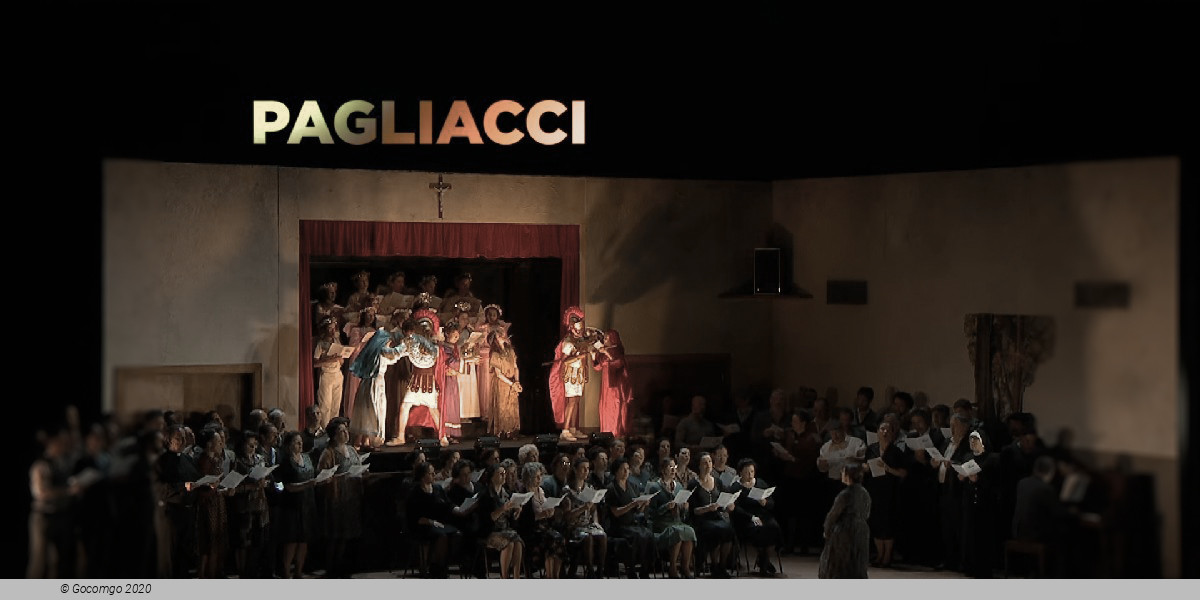
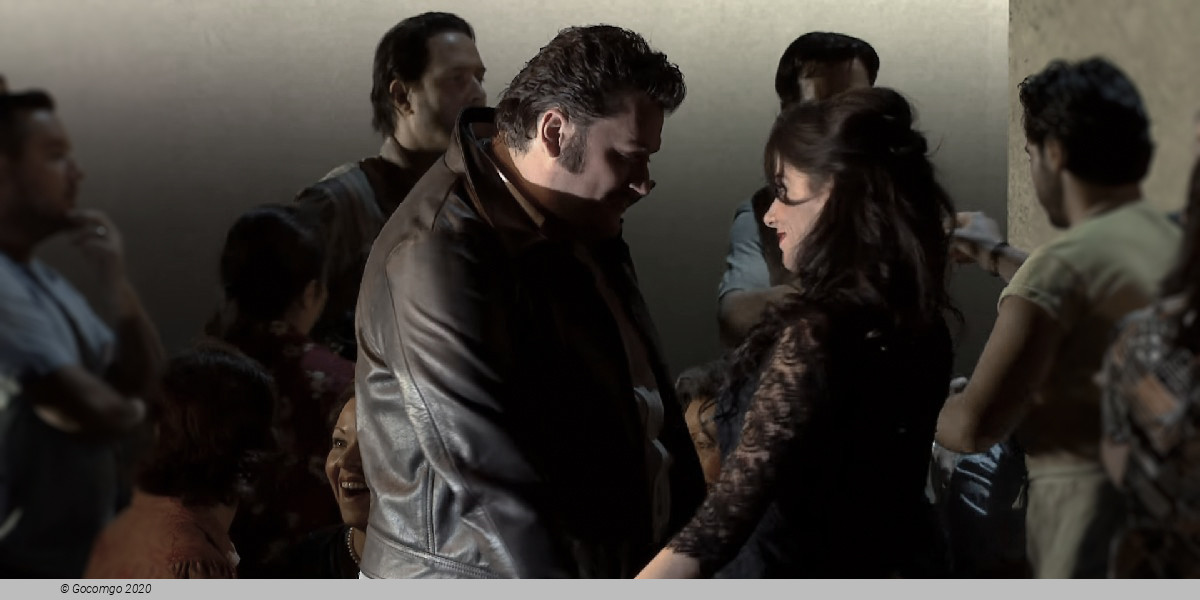
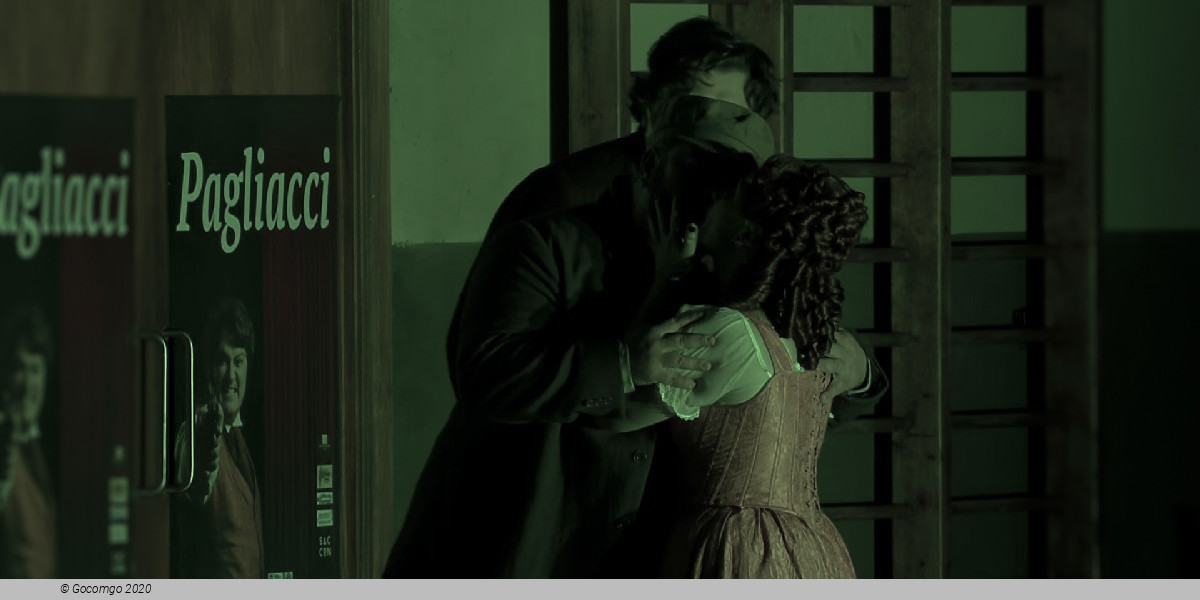
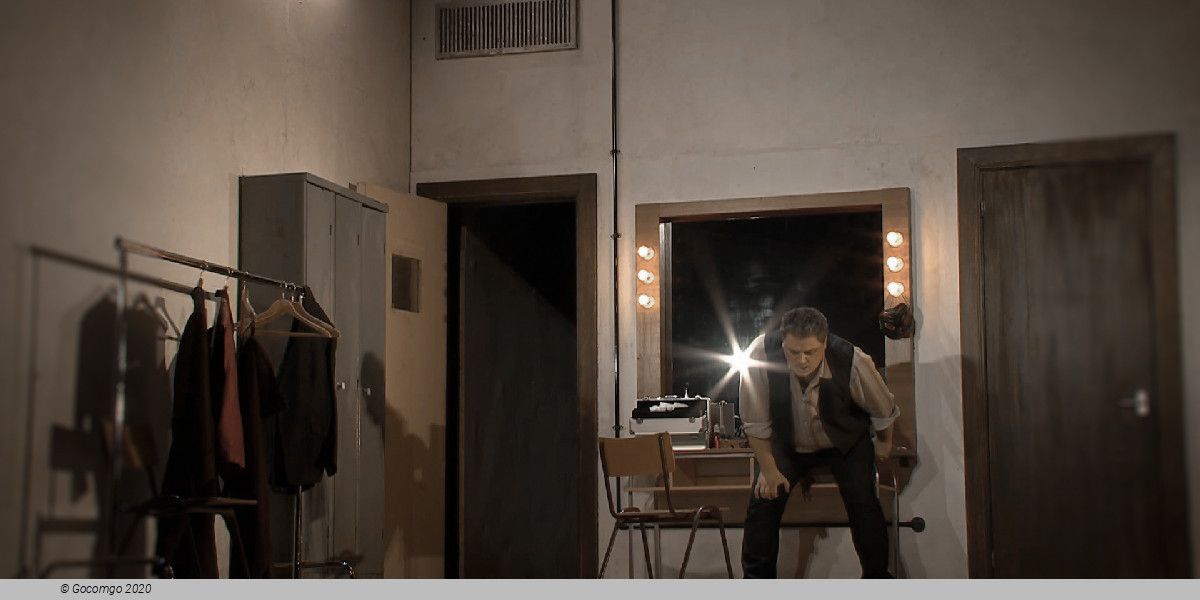
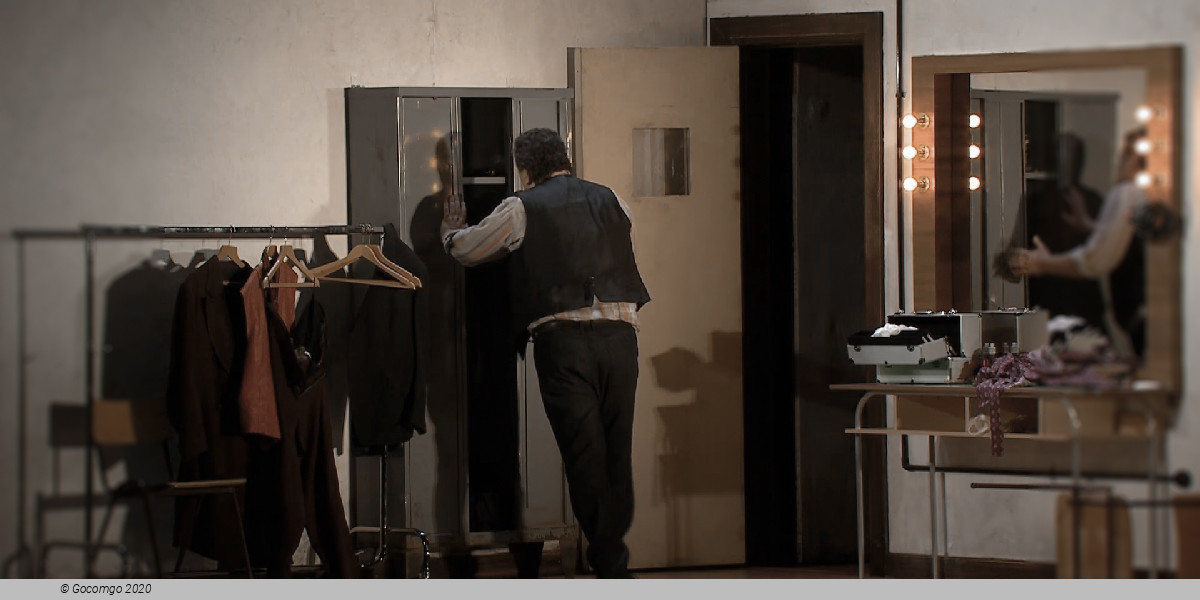
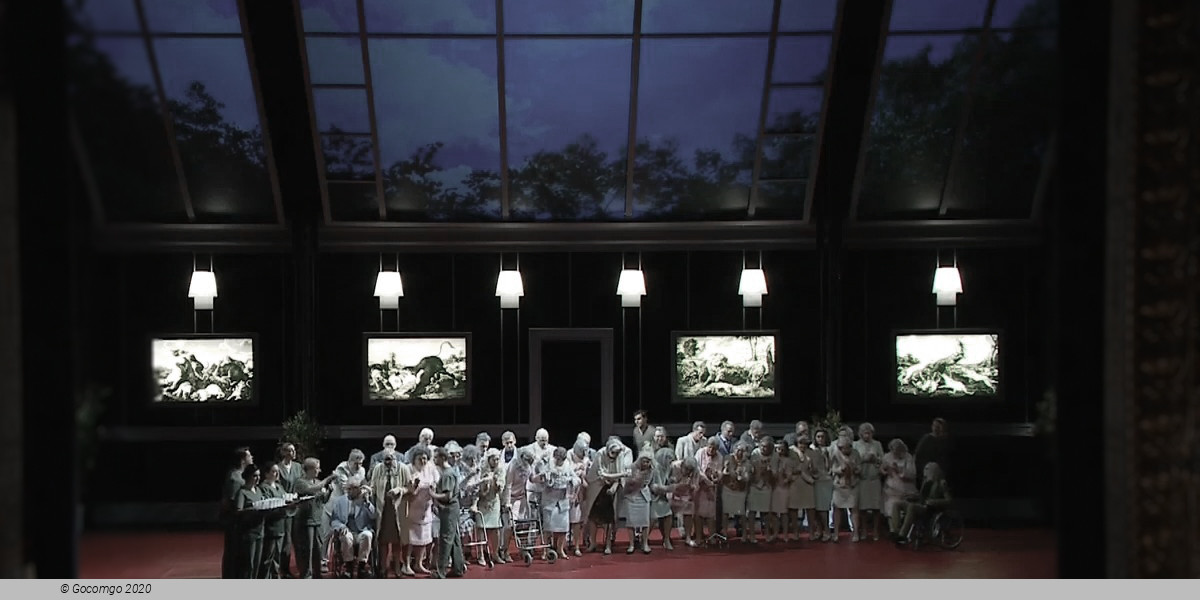
Hans-Joachim Frey, the renowned theatre director and director of the current production at the Bolshoi Theatre’s Chamber Stage, has moved the action of Pagliacci to the era of silent cinema.

“When the period of musical verismo began, the technological development of cinema began at the same time,” he explains. “It was an extraordinary and fascinating era. Soon the first comedy films appeared, featuring such stars as Buster Keaton, Stan Laurel, Oliver Hardy and Charlie Chaplin. Presenting the opera in the style of silent cinema gives it a special resonance, because even today we continue to watch films made a hundred years ago and still laugh and enjoy them. So, if you have an opera about the most famous clown, Pagliaccio, placing it in the era of Charlie Chaplin and his contemporaries demonstrates that a century-old film and a century-old opera can both remain relevant. That is because the essential things – comedy, tragedy and reality – are closely connected, indeed almost inseparable. That is what we wanted to convey and show on stage.”

History
Premiere of this production: 21 May 1892, Teatro Dal Verme, Milan

Pagliacci is an Italian opera in a prologue and two acts, with music and libretto by Ruggero Leoncavallo. It is the only Leoncavallo opera that is still widely performed. Opera companies have frequently staged Pagliacci with Cavalleria rusticana by Mascagni, a double bill known colloquially as 'Cav and Pag'.

Synopsis

Place: Calabria, near Montalto, on the Feast of the Assumption
Time: between 1865 and 1870

Prologue

During the overture, the curtain rises. From behind a second curtain, Tonio, dressed as his commedia character Taddeo, addresses the audience (Si può?... Si può?... Signore! Signori! ... Un nido di memorie). He reminds the audience that actors have feelings too, and that the show is about real people.

Act 1

At three o'clock in the afternoon, the commedia troupe enters the village to the cheering of the villagers. Canio describes the night's performance: the troubles of Pagliaccio. He says the play will begin at "ventitré ore", an agricultural method of time-keeping that means the play will begin an hour before sunset. As Nedda steps down from the cart, Tonio offers his hand, but Canio pushes him aside and helps her down himself.

The villagers suggest drinking at the tavern. Canio and Beppe accept, but Tonio stays behind. The villagers tease Canio that Tonio is planning an affair with Nedda. Canio warns everyone that while he may act the foolish husband in the play, in real life he will not tolerate other men making advances to Nedda. Shocked, a villager asks if Canio really suspects her. He says no, and sweetly kisses her on the forehead. As the church bells ring vespers, he and Beppe leave for the tavern, leaving Nedda alone.

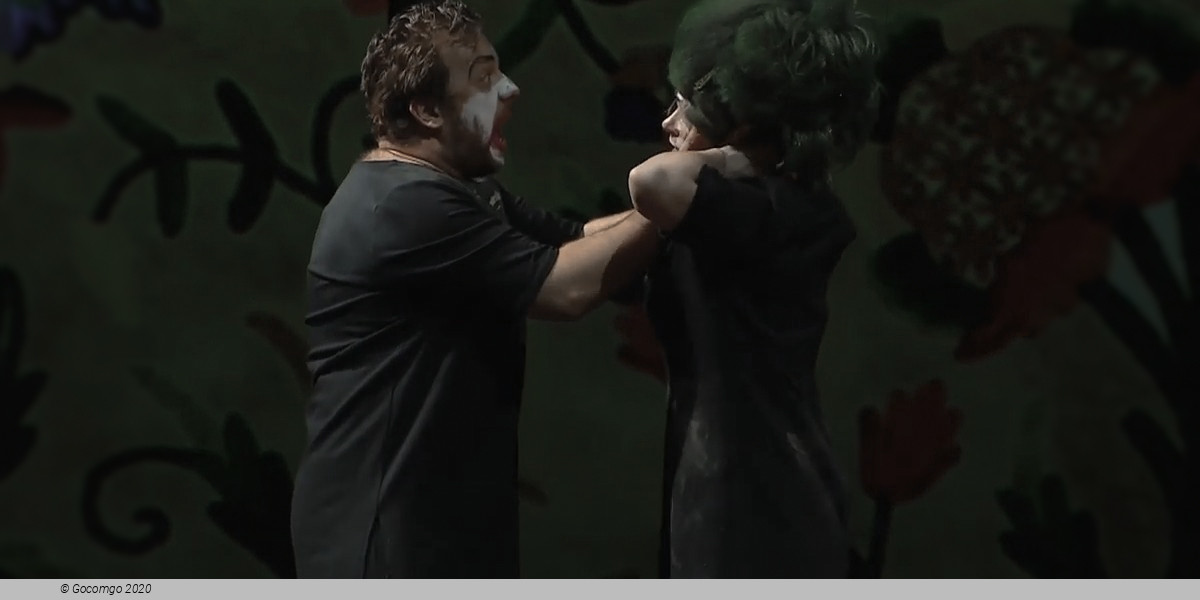
Nedda is frightened by Canio's vehemence (Qual fiamma avea nel guardo), but the birdsong comforts her (Stridono lassù). Tonio returns and confesses his love for her, but she laughs. Enraged, Tonio grabs Nedda, but she takes a whip, strikes him and drives him off. Silvio, who is Nedda's lover, comes from the tavern, where he has left Canio and Beppe drinking. He asks Nedda to elope with him after the performance and, though she is afraid, she agrees. Tonio, who has been eavesdropping, leaves to inform Canio so that he might catch Silvio and Nedda together. Canio and Tonio return and, as Silvio escapes, Nedda calls after him, "I will always be yours!"

Canio chases Silvio, but does not catch him and does not see his face. He demands that Nedda tell him the name of her lover, but she refuses. He threatens her with a knife, but Beppe disarms him. Beppe insists that they prepare for the performance. Tonio tells Canio that her lover will give himself away at the play. Canio is left alone to put on his costume and prepares to laugh (Vesti la giubba – "Put on the costume").

Act 2

As the crowd arrives, Nedda, costumed as Colombina, collects their money. She whispers a warning to Silvio, and the crowd cheers as the play begins.

Colombina's husband Pagliaccio has gone away until morning, and Taddeo is at the market. She anxiously awaits her lover Arlecchino, who comes to serenade her (O Colombina) from beneath her window. Taddeo returns and confesses his love, but she mocks him. She lets Arlecchino in through the window. He boxes Taddeo's ears and kicks him out of the room, and the audience laughs.

Arlecchino and Colombina dine, and he gives her a sleeping potion to use later. When Pagliaccio returns, Colombina will drug him and elope with Arlecchino. Taddeo bursts in, warning that Pagliaccio is suspicious of his wife and is about to return. As Arlecchino escapes through the window, Colombina tells him, "I will always be yours!"

As Canio (as Pagliaccio) enters, he hears Nedda (as Colombina) and exclaims "Name of God! Those same words!" He tries to continue the play, but loses control and demands to know her lover's name. Nedda, hoping to keep to the performance, calls Canio by his stage name "Pagliaccio," to remind him of the audience's presence. He answers with his arietta: No! Pagliaccio non son! He sings that if his face is pale, it is not from the stage makeup but from the shame she has brought him. The crowd, impressed by his emotional performance, which they do not realize is real, cheers him.

Nedda, trying to continue the play, admits that she has been visited by the innocent Arlecchino. Canio, furious and forgetting the play, demands the name of her lover. Nedda swears she will never tell him, and it becomes apparent that they are not acting. Beppe asks Tonio to intervene, but Tonio refrains and prevents Beppe from halting the action. Silvio begins to fight his way toward the stage. Canio, grabbing a knife from the table, stabs Nedda. As she dies, she calls: "Help! Silvio!" Silvio attacks Canio, but Canio kills Silvio also. The horrified audience then hears the celebrated final line:

La commedia è finita! – "The comedy is finished!"

Venue Info

Bolshoi Theatre - Moscow
Location   Teatralnaya Square 1

The Bolshoi Theatre is one of the world’s most iconic cultural landmarks, renowned for its grandeur, history, and artistic excellence. Located in the heart of Moscow, this legendary theatre has been home to unforgettable performances of opera and ballet for over two centuries. Its majestic architecture, world-class acoustics, and rich tradition make every event at the Bolshoi a truly unforgettable experience.

On 28 March (17 according to the old style) 1776, Catherine II granted the prosecutor, Prince Pyotr Urusov, the "privilege" of "maintaining" theatre performances of all kinds, including masquerades, balls and other forms of entertainment, for a period of ten years. And it is from this date that Moscow’s Bolshoi Theatre traces its history.

The Bolshoi building, which for many years now has been regarded as one of Moscow’s main sights, was opened on 20 October 1856, on Tsar Alexander II’s coronation day.

On 29 October 2002 the Bolshoi was given a New Stage and it was here it presented its performances during the years the Main Stage was undergoing massive reconstruction and refurbishment.

The reconstruction project lasted from l July 2005 to 28 October 2011. As a result of this reconstruction, many lost features of the historic building were reinstated and, at the same time, it has joined the ranks of most technically equipped theatre buildings in the world.

The Bolshoi Theatre is a symbol of Russia for all time. It was awarded this honor due to the major contribution it made to the history of the Russian performing arts. This history is on-going and today Bolshoi Theatre artists continue to contribute to it many bright pages.

The Bolshoi Ballet and Bolshoi Opera are among the oldest and best known ballet and opera companies in the world. It is by far the world's biggest ballet company, with more than 200 dancers.

Important Info
Type: Opera
City: Moscow, Russia
Starts at: 19:00
Acts: 2
Duration: 1h 40min
Sung in: Italian
Top of page