Bolshoi Theatre tickets 27 June 2026 - Betrothal in a Monastery. Mariinsky Theatre presents | GoComGo.com

Betrothal in a Monastery. Mariinsky Theatre presents

Bolshoi Theatre, Historic Stage, Moscow, Russia
All photos (3)
Select date and time
7 PM
Request for Tickets
Important Info
Type: Opera
City: Moscow, Russia
Starts at: 19:00
Acts: 4
Intervals: 2
Duration: 3h 35min
Sung in: Russian
Titles in: English,Russian

E-tickets: Print at home or at the box office of the event if so specified. You will find more information in your booking confirmation email.

You can only select the category, and not the exact seats.
If you order 2 or 3 tickets: your seats will be next to each other.
If you order 4 or more tickets: your seats will be next to each other, or, if this is not possible, we will provide a combination of groups of seats (at least in pairs, for example 2+2 or 2+3).

Cast
Performers
Orchestra: Mariinsky Orchestra
Chorus: Mariinsky Chorus
Creators
Composer: Sergei Prokofiev
Choreographer: Nikolai Androsov
Music Director: Valery Gergiev
Set Designer: Alla Kozhenkova
Lighting Designer: Anatoly Kuznetsov
Musical Preparation: Marina Mishuk
Librettist: Mira Mendelson-Prokofieva
Stage Director: Vladislav Pazi
Overview

Betrothal in a Monastery is an opera that, since its world premiere at the Kirov Theater in November 1946, has only briefly left his repertoire once.

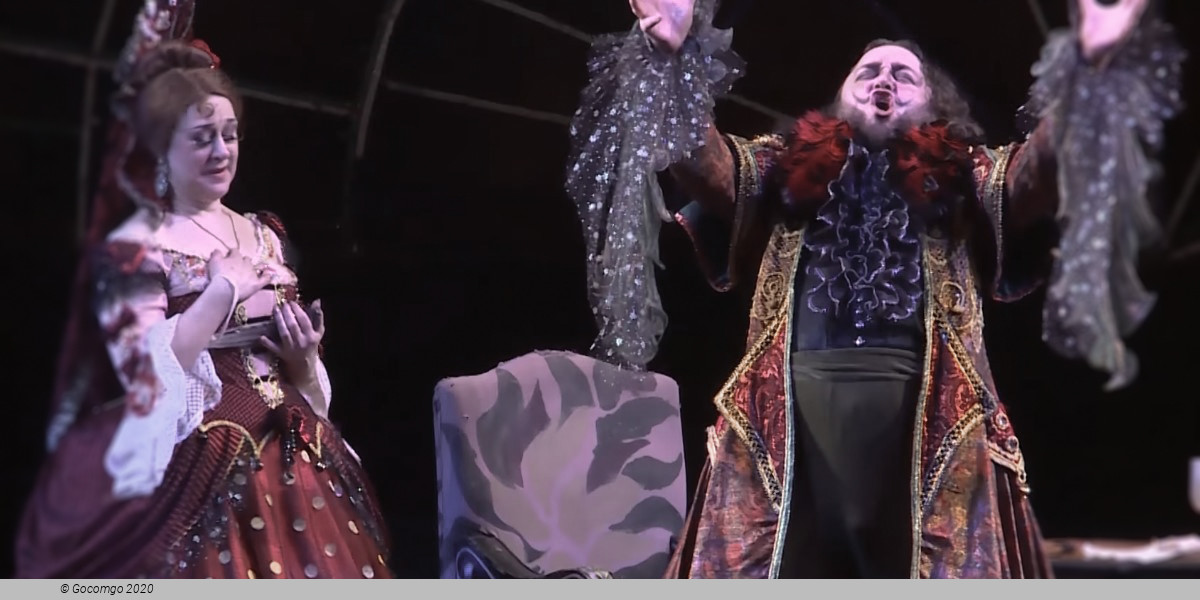
Written by Prokofiev in 1940 and originally intended for the Moscow Theater. Stanislavsky, she saw the light of the ramp in Leningrad and went under the name "Duenna" (Prokofiev himself in drafts designated her "Mendoza"). The witty performance by Ilya Shlepyanov, set by Tatyana Bruni, whose musical director was Boris Khaikin, received an enthusiastic review from the author, but did not please the audience for long: in 1948, after the party decree "On the opera "Great Friendship" by V. Muradeli" and the persecution of Prokofiev, his removed from the repertoire. A new production was carried out in 1961 by Alexei Kireev. The light and transparent “Betrothal in a Monastery” with sets and costumes by Theodora Schorr and Irina Kustova is warmly remembered by several generations of Leningrad viewers. The current "Betrothal" (1996) is the third on the Mariinsky stage. The only operatic work of director Vladislav Pazi and artist Alla Kozhenkova represents their recognizable style: lush carnival, excessive decorativeness, which are so suitable for Prokofiev's bright, cheerful music.

The Duenna was created by Prokofiev swiftly and easily. The composer wrote the libretto himself, translating from English and adapting a play by Richard Brinsley Sheridan (1775), which in turn was also written as a libretto for a comic opera (perhaps hence its archaically clear numbered structure). Prokofiev saturated the text with jokes, comedy scenes, parodic quotes (“Your lawful wife, I will be faithful to you forever,” Duenna declares in the finale to the fooled Mendoza). But at the same time, he also strengthened the lyrical line, writing luxurious ensembles, captivating serenades, gentle ariosos, ariettas and romances for all lovers. As befits a comic opera, the action in it is colored with genre numbers: mask dances at the night carnival, a comic home concert at Don Jerome's, and even a musical eccentricity in the finale - a number with accompaniment on glasses. Authentic props from 1946 - glasses approved by Prokofiev himself - are used in the performance to this day.
Anna Petrova

History
Premiere of this production: 03 November 1946, Kirov Theatre, Saint Petersburg

Betrothal in a Monastery, Op. 86 is an opera by Sergei Prokofiev, his sixth with an opus number. The libretto, in Russian, was by the composer and Mira Mendelson (his companion in later life), after Richard Brinsley Sheridan's ballad opera libretto for Thomas Linley the younger's The Duenna.

Synopsis

Act I
In 18th-century Seville Don Jerome arranges to marry his daughter Louisa to Mendoza, an ugly but very rich old fish merchant who has not seen the girl but is enthusiastic. He hears the penniless Antonio serenading Louisa and vows that the wedding must take place soon.

Act II
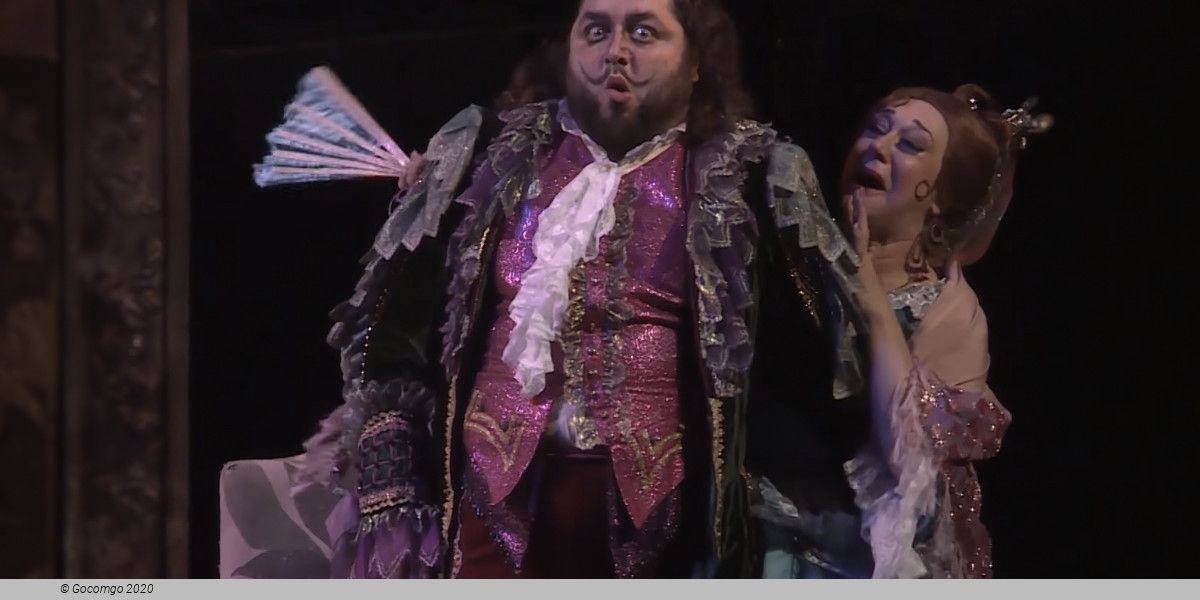
Louise’s duenna hatches a plan that will allow Louisa to marry Antonio and herself to snare Mendoza and his money: Don Jerome must believe that the duenna is acting as a go-between for the lovers; he will then dismiss her but Louisa will put on the duenna’s clothes, escape and elope with Antonio. The duenna, disguised as Louisa, will marry Mendoza instead. Having escaped, Louisa comes across her friend Clara who, feigning distress at her lover’s over-ardent behavior (her lover is Louisa’s brother Ferdinand), has decided to take refuge in a monastery. Disguised, this time as Clara, Louisa enlists Mendoza’s help in finding Antonio – the merchant is only too pleased to divert his rival’s attentions away from Louisa (as he thinks). At Don Jerome’s house Mendoza meets ‘Louisa’ (the duenna); he is won over by her flattery and the couple plan to elope.

Act III
Antonio meets the real Louisa and Mendoza, still ignorant of her identity, smiles on young love. Don Jerome, interrupted in his amateur music making, unwittingly blesses the separate marriages of Louisa and Mendoza. At the concert Clara pines for Ferdinand.

Act IV
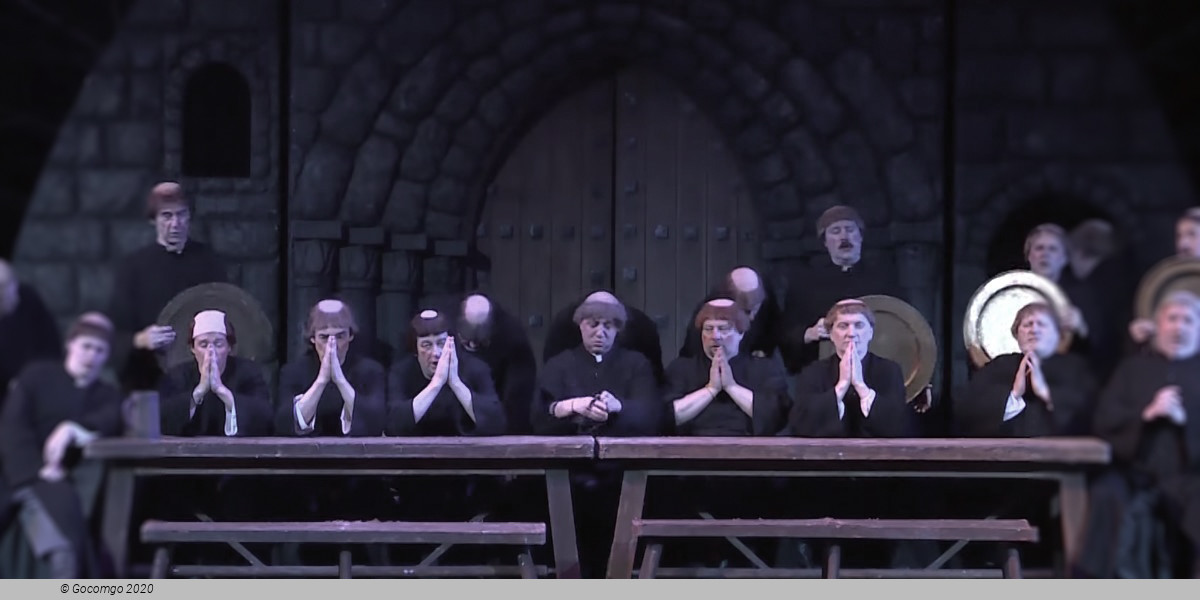
A visit from Mendoza and Antonio interrupts the joyous feasting of the monks at the monastery. Ferdinand also arrives and, believing that Antonio is about to marry Clara, stars a fight. Confusions are resolved and the monks bless all three marriages. At the wedding ball planned for Louisa, Don Jerome learns of the turn of events and is eventually reconciled to them; his daughter has married a pauper, but Ferdinand has married an heiress.

Act 1

Don Jerome intends his daughter Louisa to marry the vain, wealthy and ugly fish merchant Mendoza. However, she loves instead Antonio, who is poor, though noble in spirit. Furthermore, Don Ferdinand, son of Don Jerome and prone to fits of jealousy, wants to marry Clara d'Almanza, who is a virtual prisoner of her stepmother.

Act 2

Don Jerome locks up Louisa in her room to force her to marry Mendoza. Louisa's nurse (the Duenna) provokes the fury of Don Jerome by pretending to be a messenger between Antonio and Louisa. Jerome dismisses her - but the Duenna exchanges clothes with Louisa who makes her escape in this disguise.

By the quayside - where fisherwomen are praising the quality of the fish caught in Mendoza's boats - Louisa encounters her friend Clara, who has also run away from home and intends to seek sanctuary at the nunnery. Louisa asks to borrow Clara's name for a day - Clara assents. Enter Mendoza and his courtly friend Don Carlos. Mendoza is recognized by Louisa but he has never seen her. She therefore approaches Mendoza claiming to be Clara and asks him to take her under his protection and find Antonio with whom she is in love. Mendoza is attracted by this idea as a means to rid himself of his rival Antonio by marrying him off to 'Clara'. Don Carlos escorts 'Clara' to Mendoza's house.

Mendoza visits the house of Don Jerome to meet 'Louisa' (the Duenna in disguise); whilst 'Louisa' is not as young and beautiful as Mendoza had been led to believe, her dowry is sufficient attraction. they agree to elope that evening.

Act 3

The mystified Antonio arrives at Mendoza's house; while he is offstage meeting 'Clara', Mendoza and don Carlos congratulate themselves on their cunning. Still unwitting, they agree to help the pair get married.

Don Jerome is rehearsing some amateur musicians (A trio of trumpet, clarinet and bass drum). He receives two messages- one from Mendoza saying he has eloped with Louisa, which delights him, and another from the real Louisa who asks for his blessing on her marriage, which he neglects to read carefully. He sends back his consent with both messengers and arranges for a great feast later that evening to celebrate.

At the monastery, Clara meets with Antonio and Luisa and laments her apparent loss of Ferdinand. Enter Ferdinand, who mistaking Clara for a nun exclaims that he is chasing his false friend Antonio who has run off with his beloved Clara. Clara is secretly overjoyed at this demonstration of Ferdinand's passion.

Act 4

The act opens with a drinking song for the monks in the monastery where the marriages are to be performed. The monks then switch to a hymn that extols fasting and abstinence, to a tune that is a slower variant of the earlier drinking song. Enter Mendoza and Antonio who by lavish bribery gain the monks consent to marry them to their loves. Enter Ferdinand who challenges Antonio to a duel, but the genuine Clara arrives and Ferdinand now understands the true situation. The three marriages are agreed.

At Don Jerome's feast, the host is increasingly amazed, exasperated and infuriated as the successive arrival of the newly-weds makes it clear that his plans have gone completely awry. He is slightly compensated by the likely size of Clara's dowry. He sings a drinking song, accompanying himself on a set of tuned glasses.


Venue Info

Bolshoi Theatre - Moscow
Location   Teatralnaya Square 1

The Bolshoi Theatre is one of the world’s most iconic cultural landmarks, renowned for its grandeur, history, and artistic excellence. Located in the heart of Moscow, this legendary theatre has been home to unforgettable performances of opera and ballet for over two centuries. Its majestic architecture, world-class acoustics, and rich tradition make every event at the Bolshoi a truly unforgettable experience.

On 28 March (17 according to the old style) 1776, Catherine II granted the prosecutor, Prince Pyotr Urusov, the "privilege" of "maintaining" theatre performances of all kinds, including masquerades, balls and other forms of entertainment, for a period of ten years. And it is from this date that Moscow’s Bolshoi Theatre traces its history.

The Bolshoi building, which for many years now has been regarded as one of Moscow’s main sights, was opened on 20 October 1856, on Tsar Alexander II’s coronation day.

On 29 October 2002 the Bolshoi was given a New Stage and it was here it presented its performances during the years the Main Stage was undergoing massive reconstruction and refurbishment.

The reconstruction project lasted from l July 2005 to 28 October 2011. As a result of this reconstruction, many lost features of the historic building were reinstated and, at the same time, it has joined the ranks of most technically equipped theatre buildings in the world.

The Bolshoi Theatre is a symbol of Russia for all time. It was awarded this honor due to the major contribution it made to the history of the Russian performing arts. This history is on-going and today Bolshoi Theatre artists continue to contribute to it many bright pages.

The Bolshoi Ballet and Bolshoi Opera are among the oldest and best known ballet and opera companies in the world. It is by far the world's biggest ballet company, with more than 200 dancers.

Important Info
Type: Opera
City: Moscow, Russia
Starts at: 19:00
Acts: 4
Intervals: 2
Duration: 3h 35min
Sung in: Russian
Titles in: English,Russian
Top of page