Act I
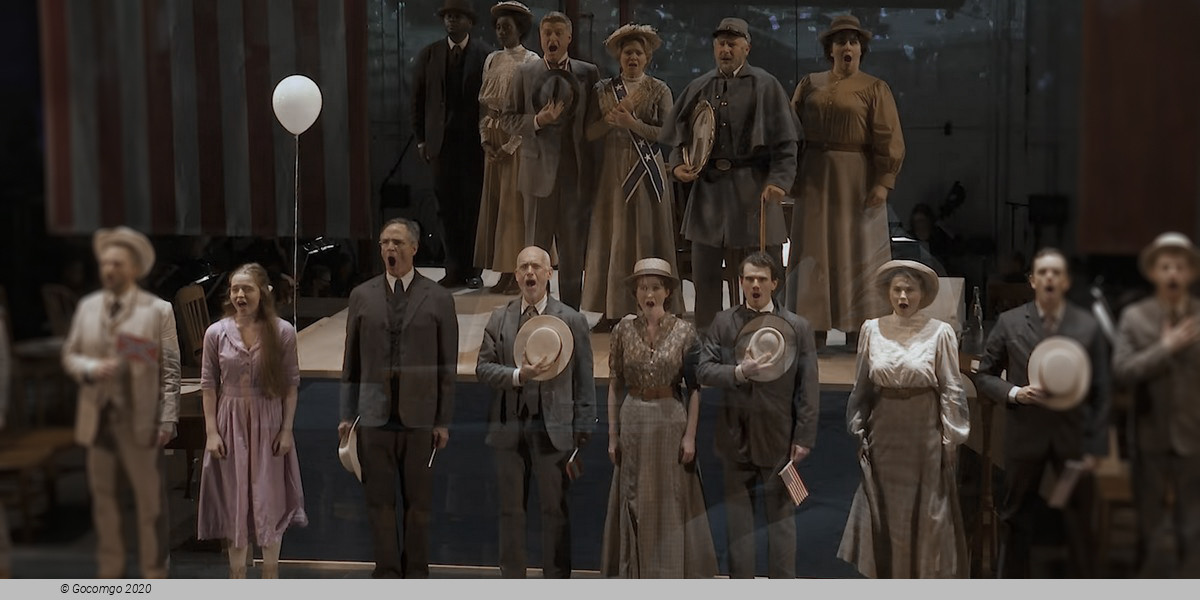
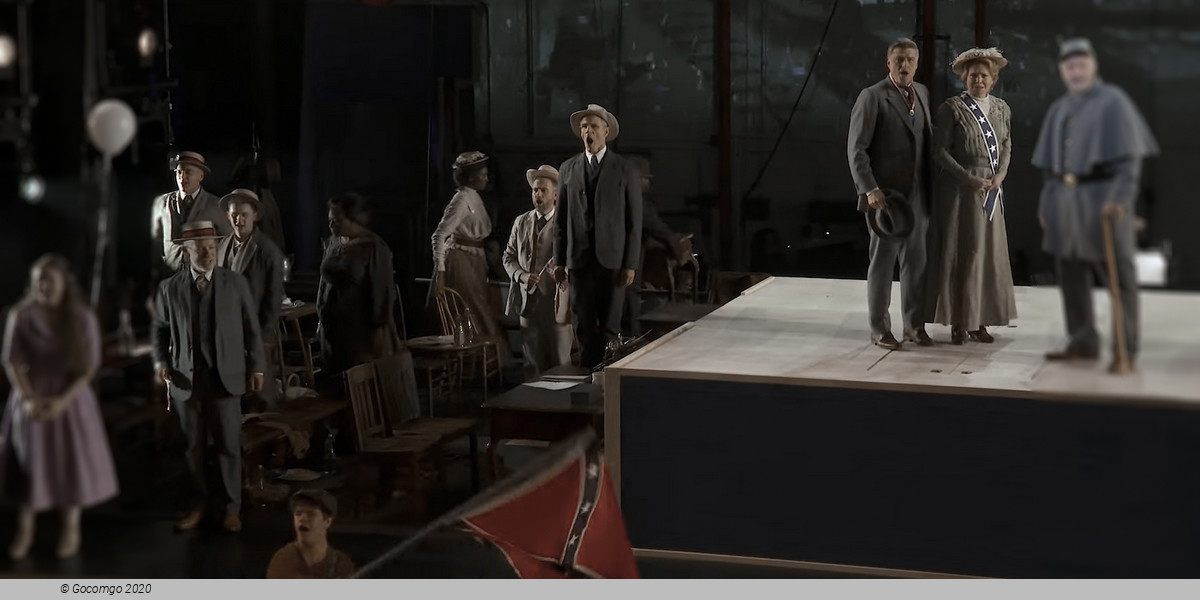
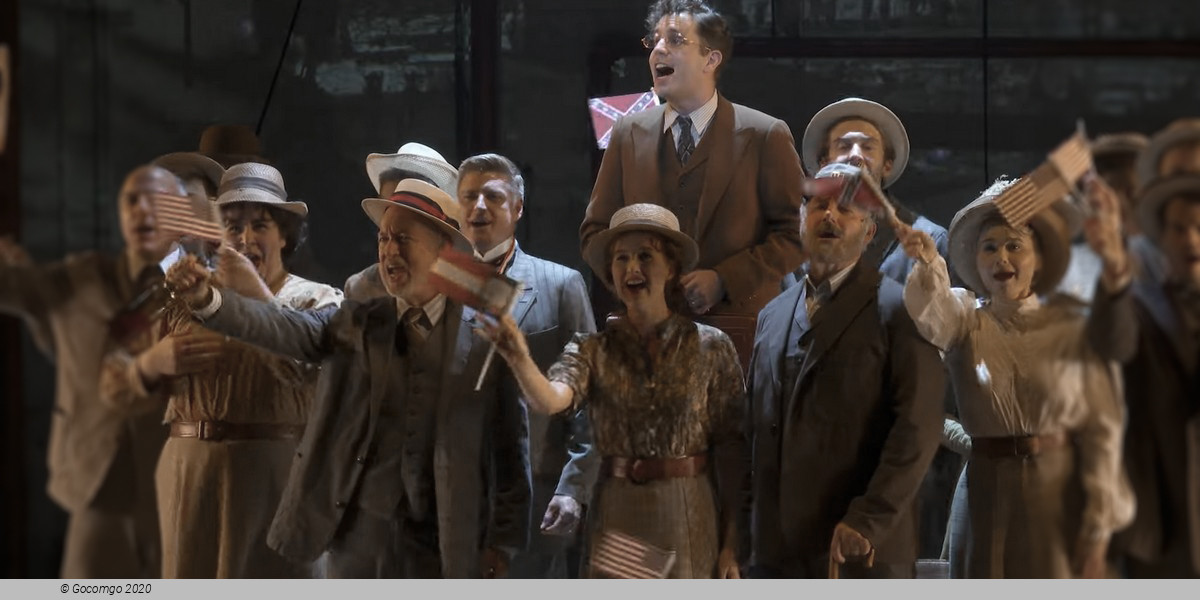
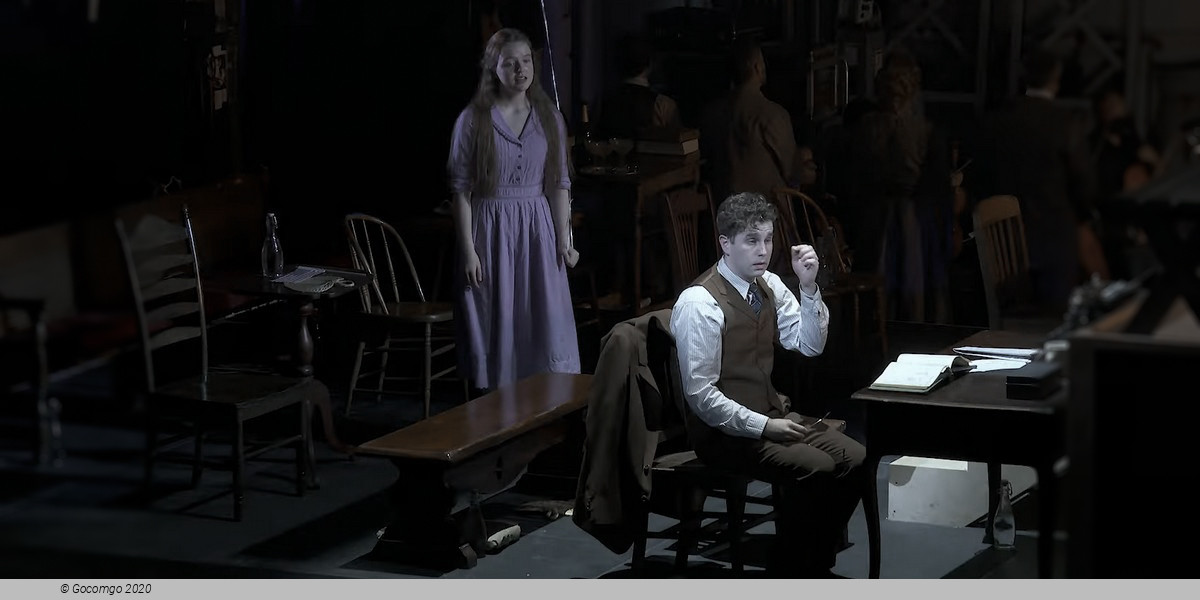
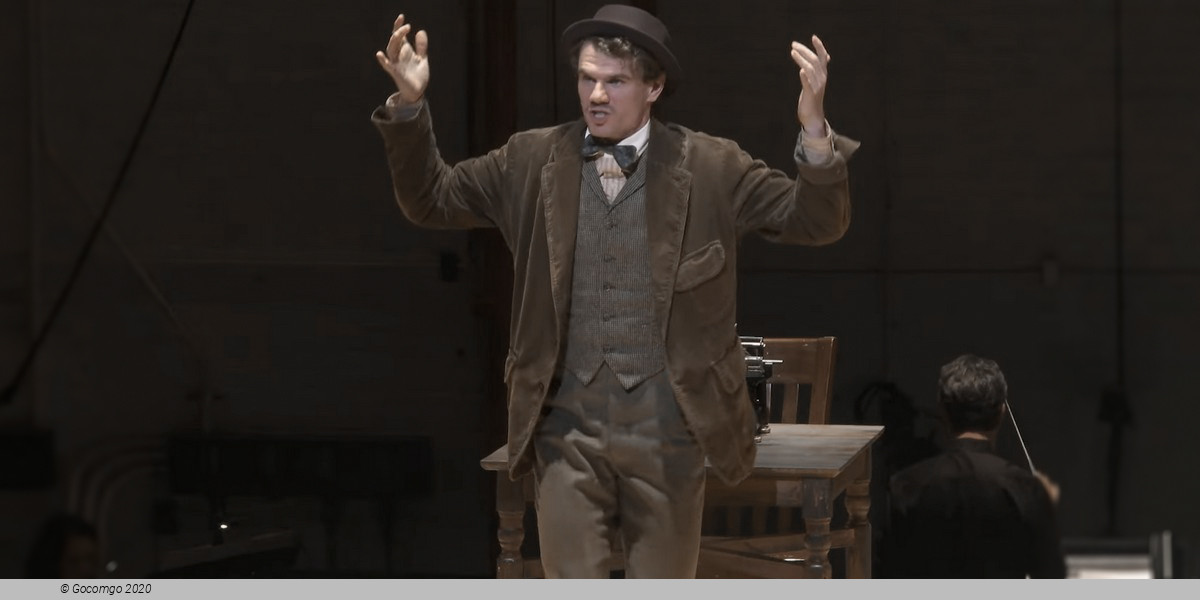
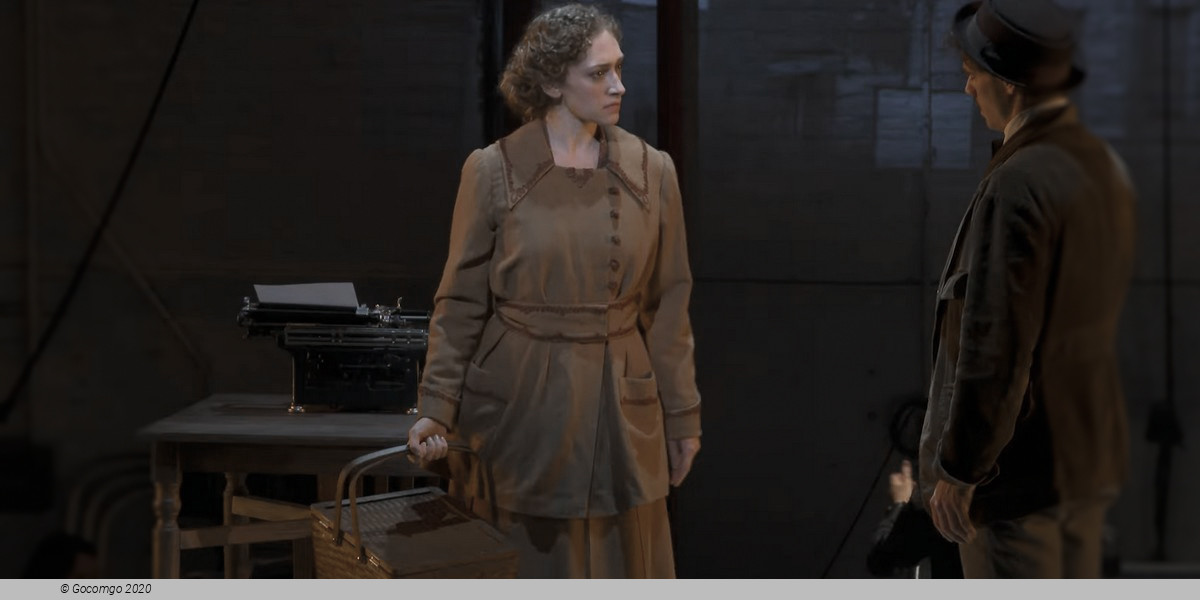
The musical opens in Marietta, Georgia, in the time of the American Civil War. The sounds of drums herald the appearance of a young Confederate soldier, bidding farewell to his sweetheart as he goes to fight for his homeland. The years pass and suddenly it is 1913. The young soldier has become an old one-legged veteran who is preparing to march in the annual Confederate Memorial Day parade ("The Old Red Hills of Home"). As the Parade begins ("The Dream of Atlanta"), Leo Frank, a Yankee Jew from Brooklyn, NYC, is deeply uncomfortable in the town in which he works and lives, feeling out of place due to his Judaism and his college education ("How Can I Call This Home?"). His discomfort is present even in his relationship with his wife, Lucille, who has planned an outdoor meal spoiled by Leo's decision to go into work on a holiday. Meanwhile, two local teens, Frankie Epps and Mary Phagan, ride a trolley car and flirt. Frankie wants Mary to go to the picture show with him, but Mary playfully resists, insisting her mother will not let her ("The Picture Show"). Mary leaves to collect her pay from the pencil factory managed by Leo.
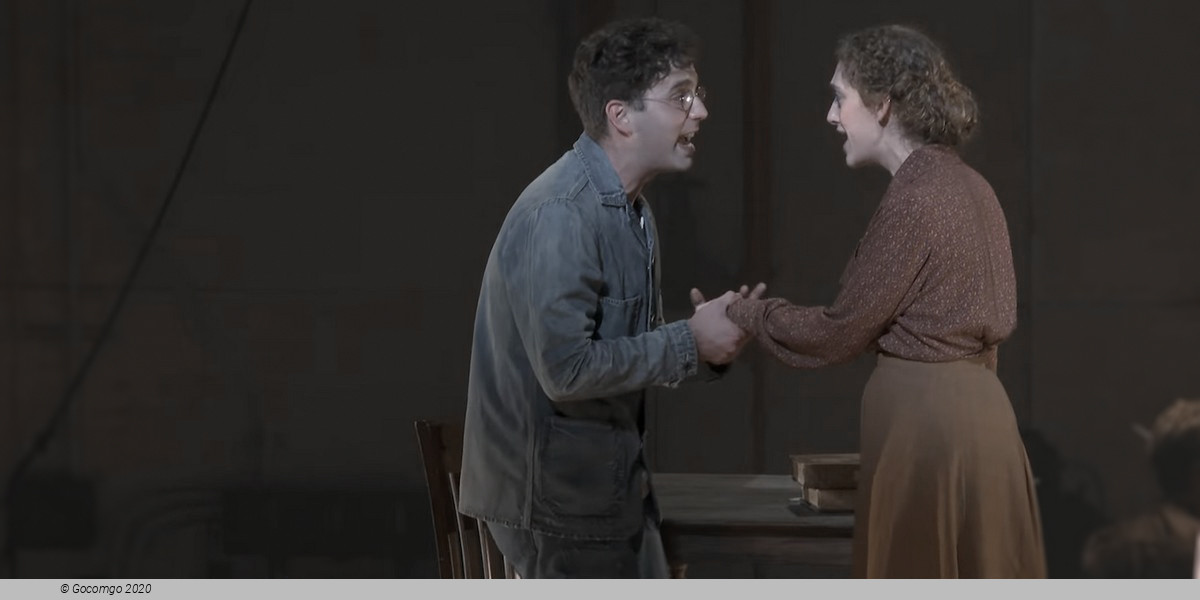
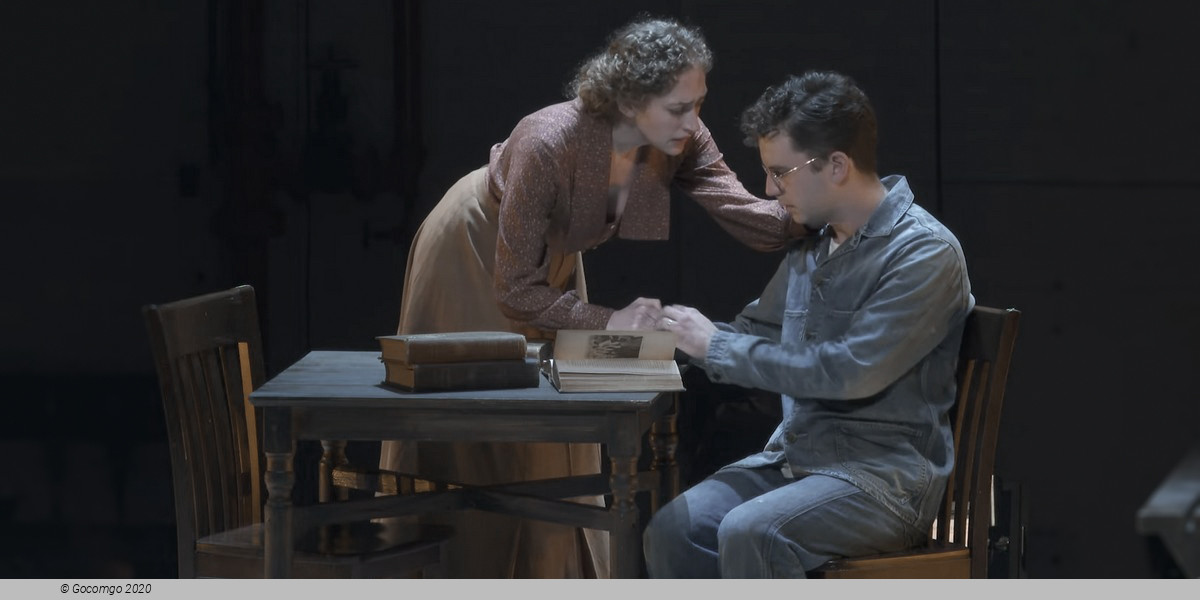
While Leo is at work, Lucille bemoans the state of their marriage, believing herself unappreciated by a man so wrapped up in himself. She reflects on her unfulfilled life and wonders whether or not Leo was the right match for her ("Leo at Work" / "What Am I Waiting For?"). Mary Phagan arrives in Leo's office to collect her paycheck. That night, police Detective Starnes and Officer Ivey rouse Leo from his sleep, and without telling him why, demand he accompany them to the factory, where Mary's body has been found raped and murdered in the basement. The Police immediately suspect Newt Lee, the African-American night watchman who discovered the body ("Interrogation"). Throughout his interrogation, he maintains his innocence, but inadvertently directs Starnes' suspicion upon Leo, who did not answer his telephone when Lee called him to report the incident. Leo is arrested, but not charged, and Mrs. Phagan, Mary's mother, becomes aware of Mary's death.
Across town, a reporter named Britt Craig is informed about Mary's murder and sees the possibility of a career-making story ("Big News"). Craig attends Mary's funeral, where the townspeople of Marietta are angry, mournful, and baffled by the tragedy that has so unexpectedly shattered the community. ("There is a Fountain" / "It Don't Make Sense"). Frankie Epps swears revenge on Mary's killer, as does Tom Watson, a writer for The Jeffersonian, an extremist right-wing newspaper ("Tom Watson's Lullaby") who has taken a special interest in the case. In the meantime, Governor John Slaton pressures the local prosecutor Hugh Dorsey to get to the bottom of the whole affair. Dorsey, an ambitious politician with a "lousy conviction record", resolves to find the murderer. Dorsey, along with Starnes and Ivey interrogate Newt Lee, but they get no information. Dorsey releases Newt, reasoning that "hanging another Nigra ain't enough this time. We gotta do better." He then attaches the blame to Leo Frank and sends Starnes and a reluctant Ivey out to find eyewitnesses ("Something Ain't Right"). Craig exalts in his opportunity to cover a "real" story and begins an effective campaign vilifying Leo. ("Real Big News").
Leo meets with his lawyer, Luther Z. Rosser, who vows to "win this case, and send him home". Meanwhile, Dorsey makes a deal with factory janitor and ex-convict Jim Conley to testify against Leo in exchange for immunity for a previous escape from prison. Lucille, hounded by reporters, collapses from the strain and privately rebukes Craig when he attempts to get an interview ("You Don't Know This Man"). She tells her husband that she cannot bear to see his trial, but he begs her to stay in the courtroom, as her not appearing would make him look guilty.
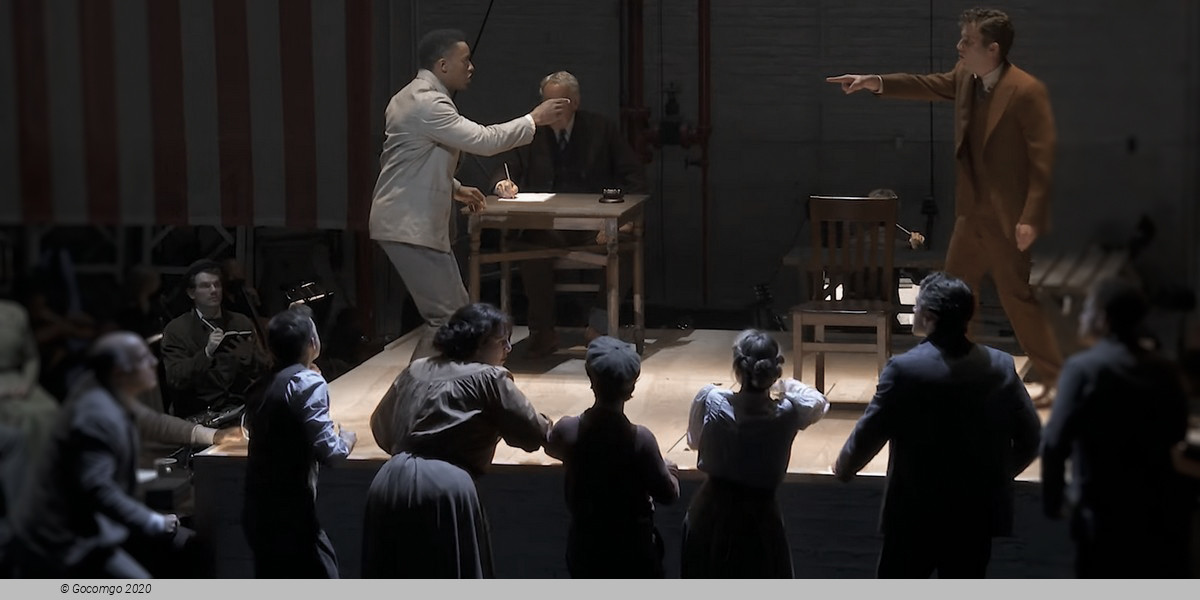
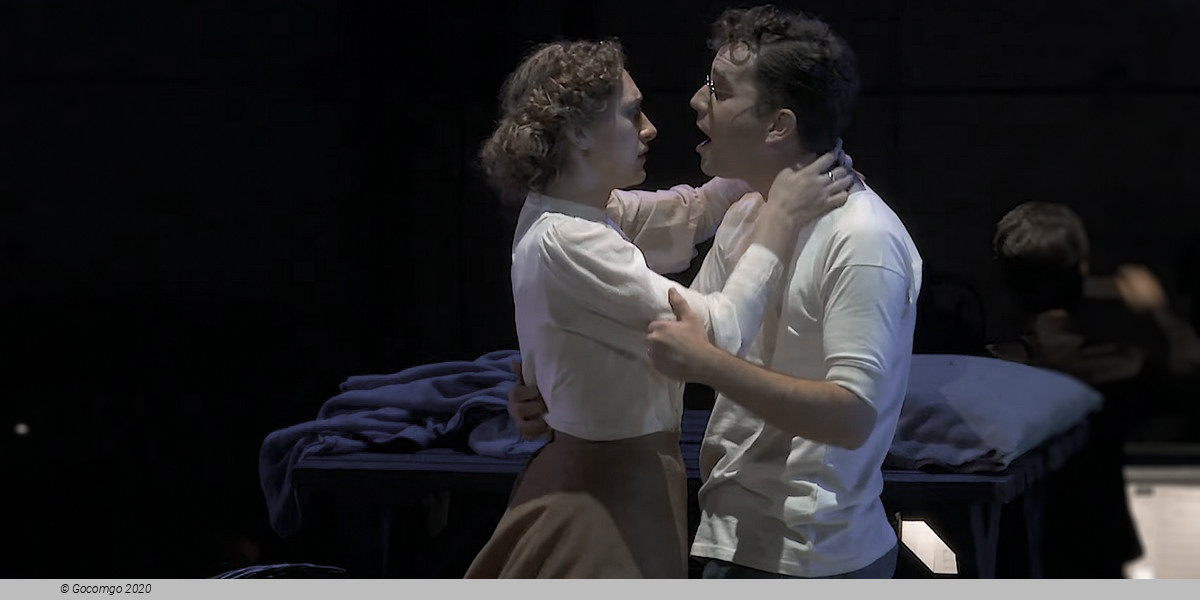
The trial of Leo Frank begins, presided over by Judge Roan. A hysterical crowd gathers outside the courtroom, as Tom Watson spews invective ("Hammer of Justice") and Hugh Dorsey begins the case for the prosecution ("Twenty Miles from Marietta"). The prosecution produces a series of witnesses, most of whom give trumped evidence which was clearly fed to them by Dorsey. Frankie Epps testifies, falsely, that Mary mentioned that Leo "looks at her funny" when they last spoke, a sentiment echoed verbatim by three of Mary's teenage co-workers, Lola, Essie, and Monteen ("The Factory Girls"). In a fantasy sequence, Leo becomes the lecherous seducer of their testimony ("Come Up to My Office"). Testimony is heard from Mary's mother ("My Child Will Forgive Me") and Minnie McKnight before the prosecution's star witness, Jim Conley, takes the stand, claiming that he witnessed the murder and helped Leo cover up the crime ("That's What He Said"). Leo is desperate. As prosecutor Hugh Dorsey whips the observers and jurors at the trial into a frenzy, Leo is given the opportunity to deliver a statement. Leo offers a heartfelt speech, pleading to be believed ("It's Hard to Speak My Heart"), but it is not enough. He is found guilty and sentenced to hang. The crowd breaks out into a jubilant cakewalk as Lucille and Leo embrace, terrified ("Summation and Cakewalk").
Act II
It's now 1914 and Leo has begun his process of appeal. The trial has been noted by the press in the north, and the reaction is strongly disapproving of the way in which it was conducted, but the African-American domestics wonder if the reaction would have been as strong if the victim had been black ("A Rumblin' and a Rollin'"). Lucille tries to help Leo with his appeal, but reveals crucial information to Craig, provoking an argument between Leo and Lucille ("Do it Alone"). Lucille then finds Governor Slaton at a party ("Pretty Music") and attempts to advocate for Leo. She accuses him of either being a fool or a coward if he accepts the outcome of the trial as is. Meanwhile, Tom Watson approaches Hugh Dorsey and tells him that he will support his bid for governor should he choose to make it. Dorsey and Judge Roan go on a fishing trip, where they discuss the political climate and the upcoming election ("The Glory").
The governor agrees to re-open the case, and Leo and Lucille rejoice ("This Is Not Over Yet"). Slaton visits the factory girls, who admit to their exaggeration (“Factory Girls (Reprise)”), and Minnie, who claims that Dorsey intimidated her and made her sign a statement (“Minnie McKnight's Reprise”). Slaton also visits Jim Conley, who is back in jail as an accessory to the murder, who refuses to change his story despite the noticeable inconsistencies with the evidence, and along with his Chain Gang, does not give any information, much to the chagrin of Slaton ("Blues: Feel the Rain Fall"). A year later, after much consideration, he agrees to commute Leo's sentence to life in prison in Milledgeville, Georgia, a move that effectively ends his political career. The citizens of Marietta, led by Dorsey and Watson, are enraged and riot ("Where Will You Stand When the Flood Comes?").
Leo has been transferred to a prison work-farm. Lucille visits, and he realizes his deep love for his wife and how much he has underestimated her ("All the Wasted Time"). After Lucille departs from the prison, a party of masked men (including Starnes, Ivey, Frankie Epps, the Fulton Tower guard and the Old Confederate Soldier) arrives and kidnaps Leo. They take him to Marietta and demand he confess to the murder on pain of death. Leo refuses, and although Ivey is convinced of his innocence, the rest of group is determined to kill him. As his last request, Leo has a sack tied around his waist, since he is wearing only his nightshirt, and gives his wedding ring to Ivey to be given to Lucille. The group hangs him from an oak tree ("Sh'ma"). In 1916, a remorseful Britt Craig gives Leo's ring, which has been delivered to him anonymously, to Lucille. He is surprised to discover that she has no plans to leave Georgia, which is now governed by Dorsey, but she refuses to let Leo's ordeal be for nothing. Alone, she gives in to her grief, but she takes comfort in believing that Leo is with God and free from his ordeal. The Confederate Memorial Day Parade begins again ("Finale").






 242 West 45th Street