Act I
In 1815 in France, a group of prisoners work at hard labor ("Prologue: Work Song"). After 19 years in prison (five for stealing bread for his sister's starving son and her family, and the rest for trying to escape), Jean Valjean, "prisoner 24601,” is released on parole by the prison guard Javert. By law, Valjean must display a yellow ticket of leave, which identifies him as an ex-convict ("On Parole"). As a convict, Valjean is shunned wherever he goes and cannot find regular work with decent wages or lodging, but the Bishop of Digne offers him food and shelter. Desperate and embittered, Valjean steals the Bishop's silver, angering a farmer and other merchants as he flees. He is captured by the police, but rather than turn him in, the Bishop lies and tells the police that the silver was a gift, giving Valjean a pair of silver candlesticks in addition. The Bishop tells Valjean that he must use the silver "to become an honest man" and that he has "bought (Valjean's) soul for God" ("Valjean Arrested, Valjean Forgiven"). Humbled by the Bishop's kindness, Valjean resolves to redeem his sins ("Valjean's Soliloquy/What Have I Done?") and tears up his yellow ticket, breaking his parole but giving himself a chance to start a new life free from the stigma of his criminal past.
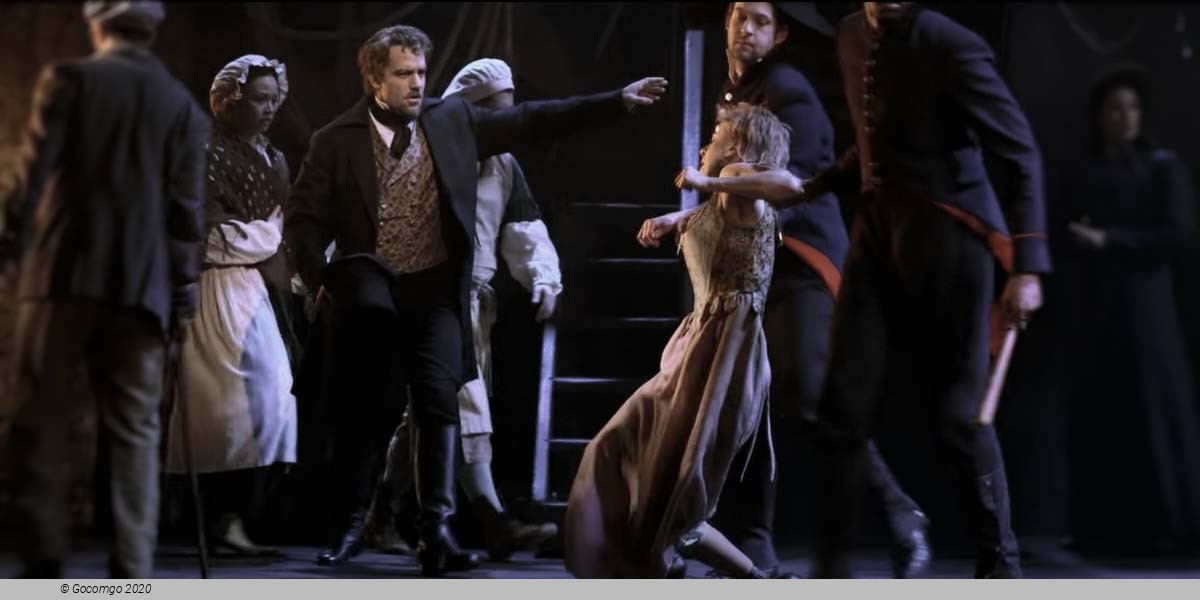
Eight years later, in 1823, Valjean has assumed a new identity as Monsieur Madeleine, a wealthy factory owner and mayor of Montreuil-sur-Mer. Fantine is a single mother working in his factory, trying to support her daughter Cosette, who is being raised by an innkeeper and his wife while Fantine labours in the city. Unbeknownst to Valjean, the factory foreman lusts after Fantine, and when she rejects his advances, he takes it out on the other workers, who resent her for it. One day, a coworker steals a letter about Cosette from Fantine, revealing to the other workers that Fantine has a child. A fight breaks out, and the foreman and other workers use the incident as a pretence to fire Fantine ("At the End of the Day"). Fantine reflects on her broken dreams and about Cosette's father, who abandoned them both ("I Dreamed a Dream"). Desperate for money, she sells her locket and hair, finally becoming a prostitute ("Lovely Ladies"), and attracts local sailors. When she fights back against an abusive customer, Bamatabois, Javert, now a police inspector stationed in Montreuil-sur-Mer, arrives to arrest her. Valjean, passing by the scene, pities Fantine, and when he realises she once worked for him and that she blames him for her misfortune, he is guilt-stricken. He orders Javert to release her and takes her to a hospital ("Fantine's Arrest").
Soon afterwards, Valjean rescues a man, Fauchelevent, who is pinned by a runaway cart ("The Runaway Cart"). Javert, who has up until now not recognised Valjean, though he has pursued him as a fugitive all these years, witnesses the incident and becomes suspicious, remembering the incredible strength Valjean displayed in the work camp. However, it turns out a man who looks like Valjean has been arrested, and is about to go to trial for breaking parole. The real Valjean realises that this case of mistaken identity could free him forever, but he is not willing to see an innocent man go to prison in his place. He confesses his identity to the court ("Who Am I? (The Trial)"). At the hospital, a delirious Fantine dreams of Cosette. Valjean promises to find Cosette and protect her ("Come to Me (Fantine's Death)"). Relieved, Fantine succumbs to her illness and dies. Javert arrives to take Valjean back into custody, but Valjean asks Javert for time to fetch Cosette. Javert refuses, insisting that a criminal like Valjean can never change for the better. They struggle, but Valjean overpowers Javert and escapes ("The Confrontation").
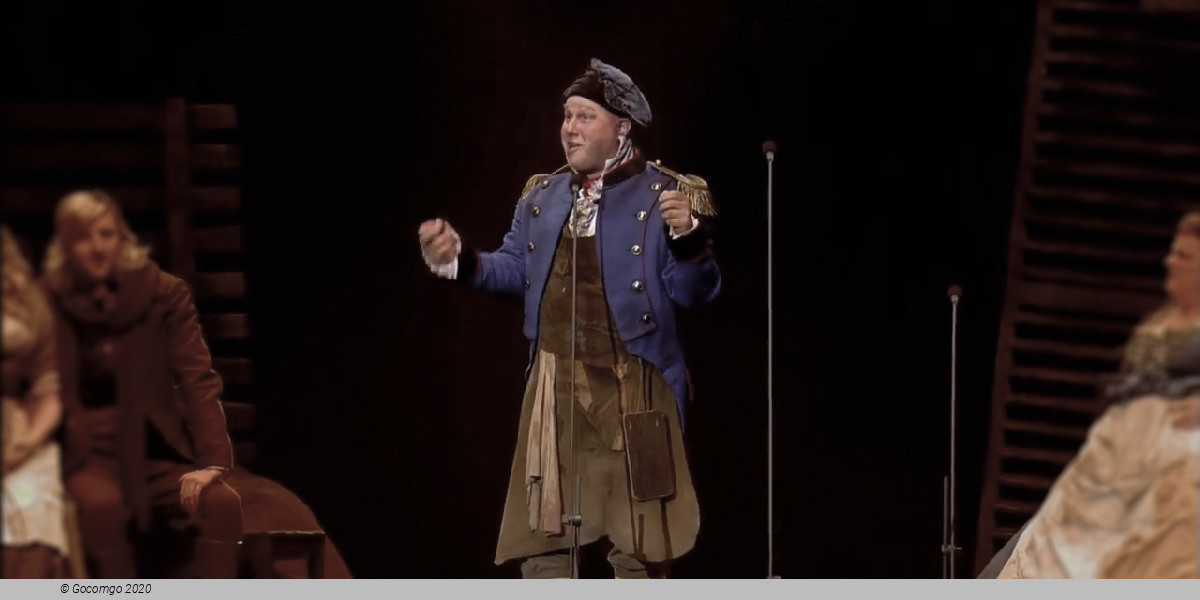
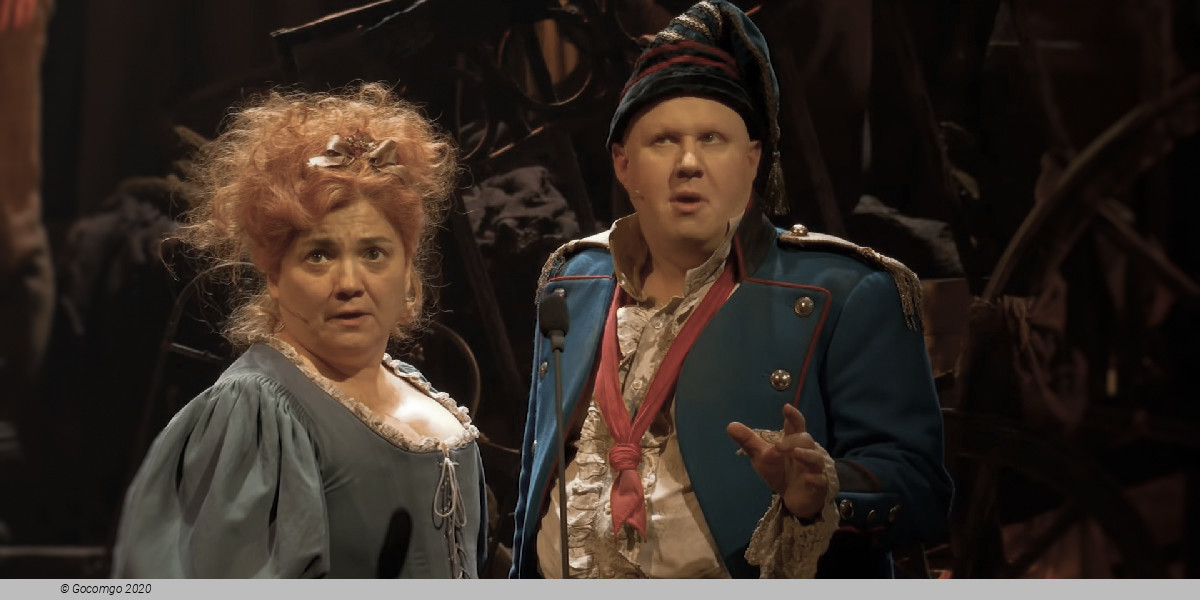
In Montfermeil, the duplicitous innkeepers, the Thénardiers, use Cosette as a servant and treat her cruelly while extorting money from Fantine by claiming that Cosette is regularly and seriously ill, as well as demanding money to feed and clothe Cosette, all the while indulging their own daughter, Éponine. Cosette dreams of a life with a mother where she is not forced to work and is treated lovingly ("Castle on a Cloud"). The Thénardiers cheat their customers, stealing their possessions and setting high prices for low-quality service, and live a life of criminal depravity ("Master of the House"). Valjean meets Cosette while she's on an errand drawing water and offers the Thénardiers payment to adopt her ("The Bargain"). The Thénardiers feign concern for Cosette, claiming that they love her like a daughter and that she is in fragile health, and bargain with Valjean, who pays them 1,500 francs in the end. Valjean and Cosette leave for Paris ("The Waltz of Treachery").
Nine years later, in 1832, Paris is in upheaval because of the impending death of General Lamarque, the only man in the government who shows mercy to the poor. Among those mingling in the streets are the student revolutionaries Marius Pontmercy and Enjolras, who contemplate the effect Lamarque's death will have on the poor and desperate in Paris; the Thénardiers, who have since lost their inn and now run a street gang which consists of thugs Brujon, Babet, Claquesous, and Montparnasse; the Thénardiers’ daughter Éponine, who is now grown and has fallen in love with Marius (who is oblivious to her affections); and the streetwise young urchin Gavroche, who knows everything that happens in the slums ("Look Down"). The Thénardiers prepare to con some charitable visitors, who turn out to be Valjean and Cosette, who has grown into a beautiful young woman. While the gang bamboozles her father, Cosette runs into Marius, and the pair fall in love at first sight. Thénardier suddenly recognises Valjean, but before they can finish the robbery, Javert, now an inspector stationed in Paris, comes to the rescue ("The Robbery"). Valjean and Cosette escape, and only later (when Thénardier tips him off) does Javert suspect who they were. Javert makes a vow to the stars – which represent his belief in a just and ordered universe where suffering is a punishment for sin – that he will find Valjean and recapture him ("Stars"). Meanwhile, Marius persuades Éponine to help him find Cosette ("Éponine's Errand").
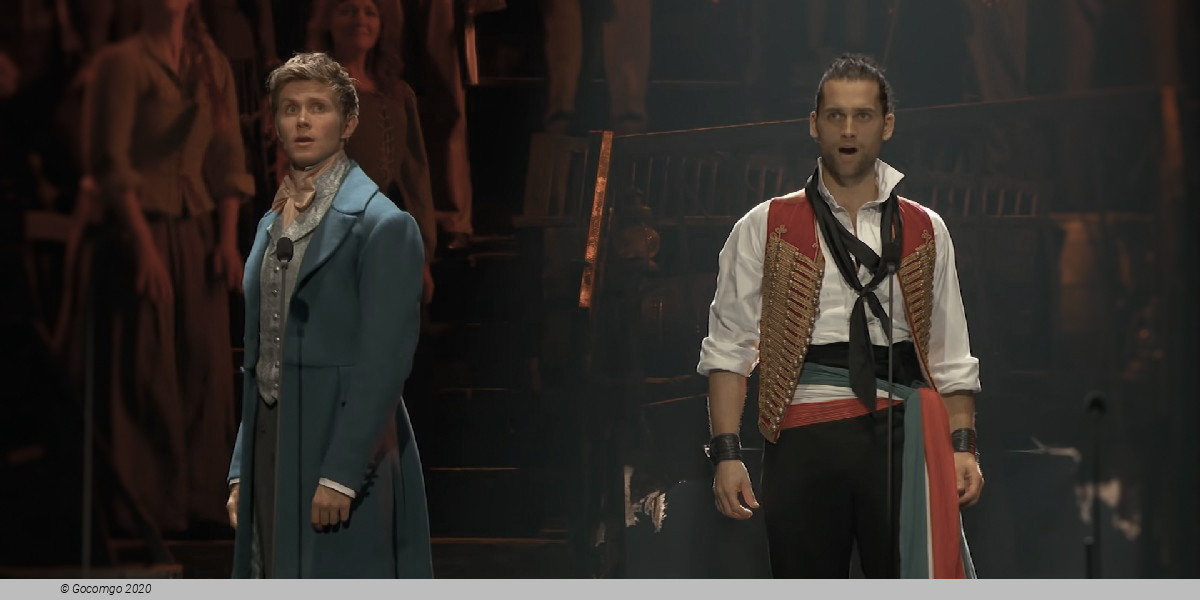
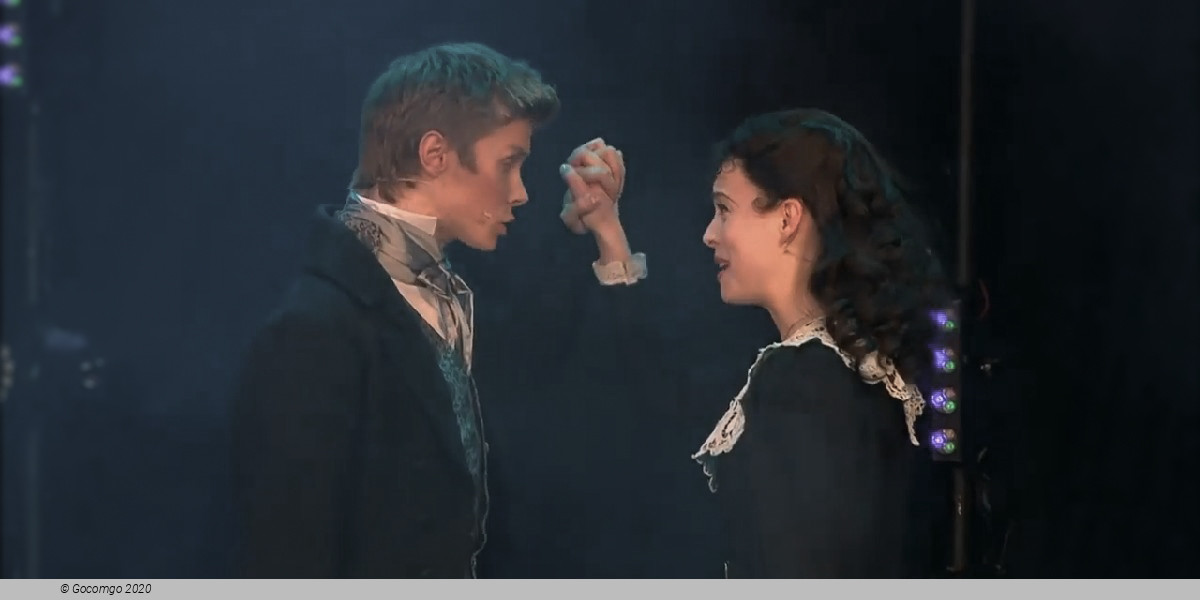
At a small café, Enjolras exhorts a group of idealistic students to prepare for revolution. Marius interrupts the serious atmosphere by fantasising about his new-found love, much to the amusement of his compatriots, particularly the wine-loving Grantaire ("The ABC Café/Red and Black"). When Gavroche brings the news of General Lamarque's death, the students realise that they can use the public's dismay to incite their revolution, and that their time has come ("Do You Hear the People Sing?"). At Valjean's house, Cosette thinks about her chance meeting with Marius. She confronts Valjean about the secrets he keeps about his and her own past ("Rue Plumet/In My Life"). Éponine leads Marius to Cosette's garden. He and Cosette meet again and confess their mutual love, while a heartbroken Éponine watches them through the garden gate and laments that Marius has fallen in love with another ("A Heart Full of Love"). Thénardier and his gang arrive, intending to rob Valjean's house, but Éponine stops them by screaming a warning ("The Attack on Rue Plumet"). The scream alerts Valjean, who believes that the intruder was Javert. He tells Cosette that it's time once again for them to go on the run, and starts planning for them to flee France altogether.
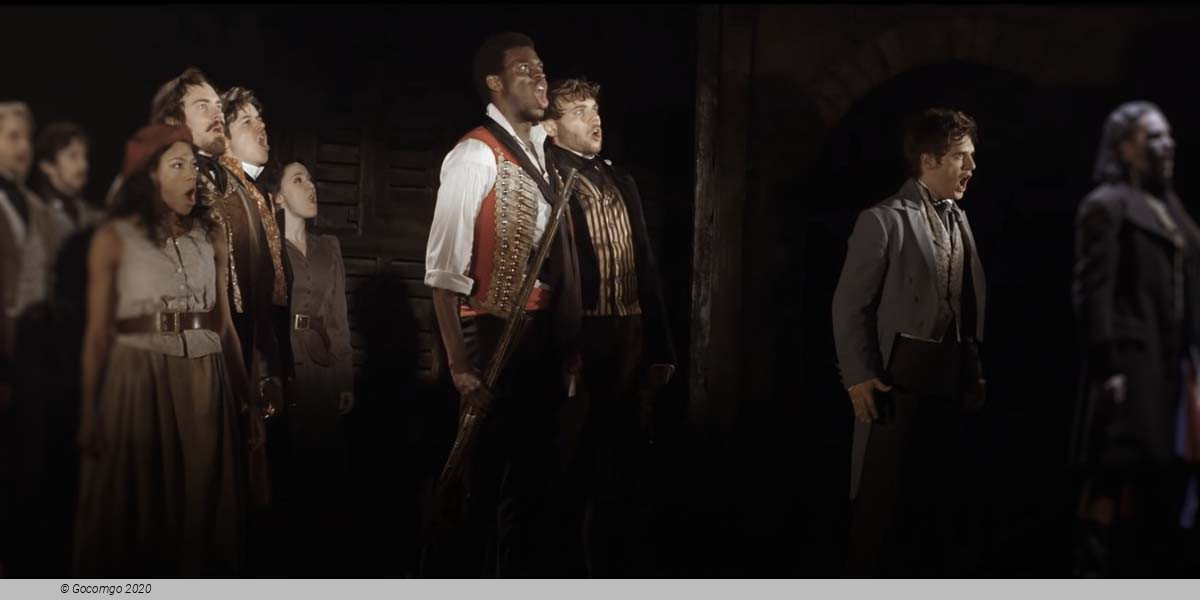
On the eve of the 1832 Paris Uprising, Valjean prepares to go into exile; Cosette and Marius part in despair; Enjolras encourages all of Paris to join the revolution; the other students prepare for battle; Éponine acknowledges despairingly that Marius will never love her; Marius is conflicted whether to follow Cosette or join the uprising; Javert reveals his plans to spy on the students; and the Thénardiers scheme to profit off the coming violence. Marius decides to stand with his friends, and all anticipate what the dawn will bring ("One Day More").
Act II
As the students build a barricade to serve as their rally point, Javert, disguised as a rebel, volunteers to "spy" on the government troops. Marius discovers that Éponine has disguised herself as a boy to join the rebels and, wanting to keep his best friend away from the impending violence, he sends her to deliver a farewell letter to Cosette. ("Building the Barricade (Upon These Stones)") Valjean intercepts the letter and learns about Marius and Cosette's romance. Éponine walks the streets of Paris alone, imagining that Marius is there with her, but laments that her love for Marius will never be reciprocated ("On My Own").
The French army arrives at the barricade and demands that the students surrender ("At the Barricade"). Though Javert tells the students that the government will not attack that night ("Javert's Arrival"), Gavroche recognises him and quickly exposes him as a spy, and the students detain him ("Little People"). Their plan is to spark a general uprising with their act of defiance, hoping that all the people of Paris will side with them and overwhelm the army. Éponine returns to find Marius but is shot by the soldiers crossing the barricade. As Marius holds her, she assures him that she feels no pain and reveals her love for him before dying in his arms ("A Little Fall of Rain"). The students mourn this first loss of life at the barricades and resolve to fight in her name. Enjolras attempts to comfort Marius, who is devastated and heartbroken over the death of his best friend. Valjean arrives at the barricade, crossing the government lines, disguised as a soldier ("Night of Anguish"), hoping that he might somehow protect Marius in the coming battle for Cosette's sake. The rebels are suspicious of him at first, but when the army attacks, Valjean saves Enjolras by shooting at a sniper and scaring him off, and they accept him as one of them. In return, he asks Enjolras to allow him to be the one to execute the imprisoned Javert, which Enjolras grants. But as soon as Valjean and Javert are alone, Valjean frees Javert. Javert warns Valjean that he will not give up his pursuit and rejects what he perceives as a bargain for Valjean's freedom. Valjean says there are no conditions to his release, and holds no grudges toward Javert for doing his duty ("The First Attack").
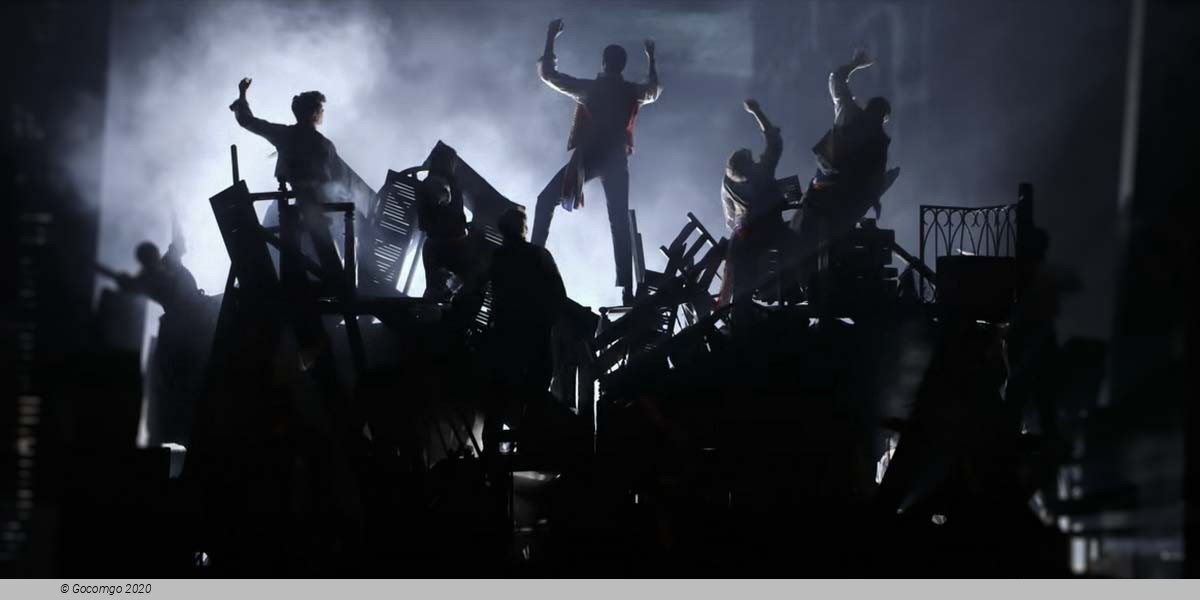
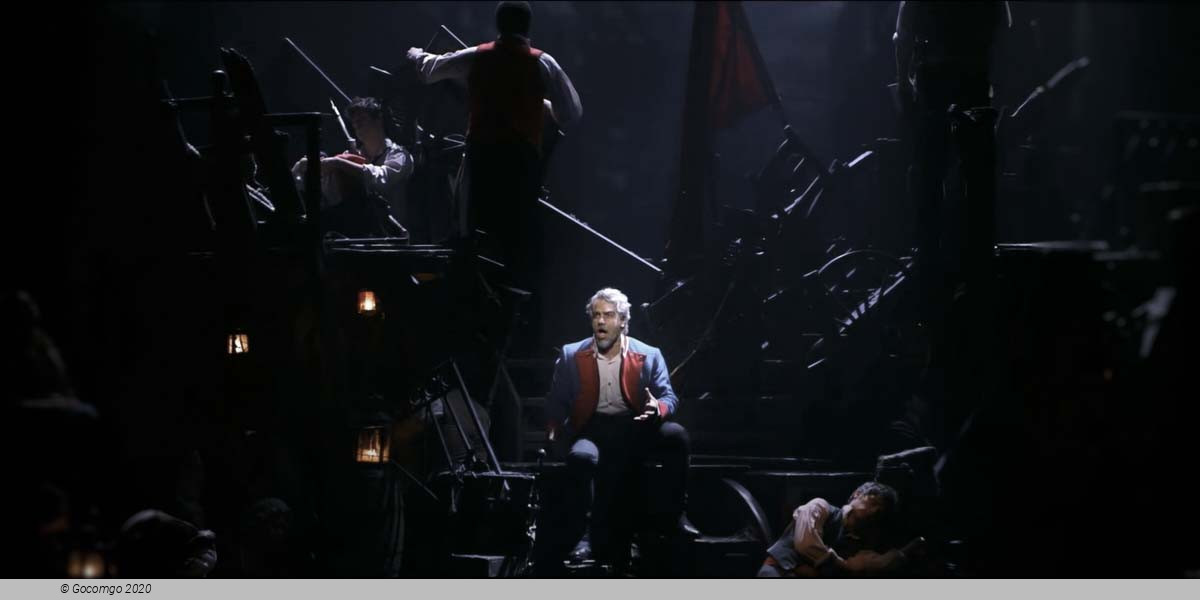
The students settle down for the night and reminisce about the past while also expressing anxiety about the battle to come. Enjolras tells the other students to stay awake in case the enemy strikes unexpectedly in the night, but he tells Marius to get some sleep, knowing Marius is still much too devastated over losing Éponine to stay awake. Grantaire gets angry and asks the students if they fear to die. Marius wonders if Cosette will remember him if he does ("Drink with Me"). As Marius sleeps, Valjean prays to God to protect Marius, even if the cost for Marius' safety is his own life ("Bring Him Home"). As dawn approaches, Enjolras realises that the people of Paris have not risen up with them, but resolves to fight on in spite of the impossible odds ("Dawn of Anguish"). Their resolve is fired even further when the army kills Gavroche, who snuck out to collect ammunition from bodies on the other side of the barricade ("The Second Attack (Death of Gavroche)"). The army gives a final warning, but the rebels fight to the last man with Enjolras exhorting "Let others rise to take our place, until the Earth is free!". Everyone at the barricade is killed except Valjean and a gravely wounded Marius, who escape into the sewers ("The Final Battle"). Javert returns to the barricade, searching for Valjean amongst the bodies, and finds the open sewer grating.
Valjean carries Marius through the sewers but collapses in exhaustion. While he is unconscious, Thénardier, who has been looting bodies, comes upon them and takes a ring from the unconscious Marius, but flees when Valjean (whom he again recognises) regains consciousness ("Dog Eats Dog"). When Valjean carries Marius to the sewer's exit, he finds Javert waiting for him. Valjean begs Javert for one hour to bring Marius to a doctor, and Javert reluctantly agrees. Javert finds himself unable to reconcile Valjean's merciful acts with his conception of Valjean as an irredeemable criminal. Refusing to compromise his principles but no longer able to hold them sacred, he finds himself torn between his beliefs about God and his desire to adhere to the law. He is unable to reconcile and commits suicide by throwing himself into the Seine ("Javert's Suicide").
In the wake of the failed revolution, women mourn the deaths of the students ("Turning"). Marius, wounded but alive, despairs at the death of his friends and sees that their sacrifice was for nothing ("Empty Chairs at Empty Tables"). As he wonders who saved his own life, Cosette comforts him, and they reaffirm their blossoming romance. Valjean realises that Cosette will not need him as a caretaker once she's married and gives them his blessing ("Every Day"). Valjean confesses to Marius that he is an escaped convict and must go away because his presence endangers Cosette ("Valjean's Confession"), making Marius promise never to tell Cosette. A few months later, Marius and Cosette marry ("Wedding Chorale"). The Thénardiers crash the reception disguised as nobility and attempt to blackmail Marius, telling him that Valjean is a murderer and that Thénardier saw him carrying a corpse in the sewers after the barricades fell. When Thénardier shows him the ring he stole as proof, Marius realises that it was Valjean who saved his life. The newlyweds leave to find Valjean (in some productions, Marius pauses to give Thénardier a punch in the face). The Thénardiers are not discouraged, instead gloating that their craven practicality has saved their lives time and time again ("Beggars at the Feast").
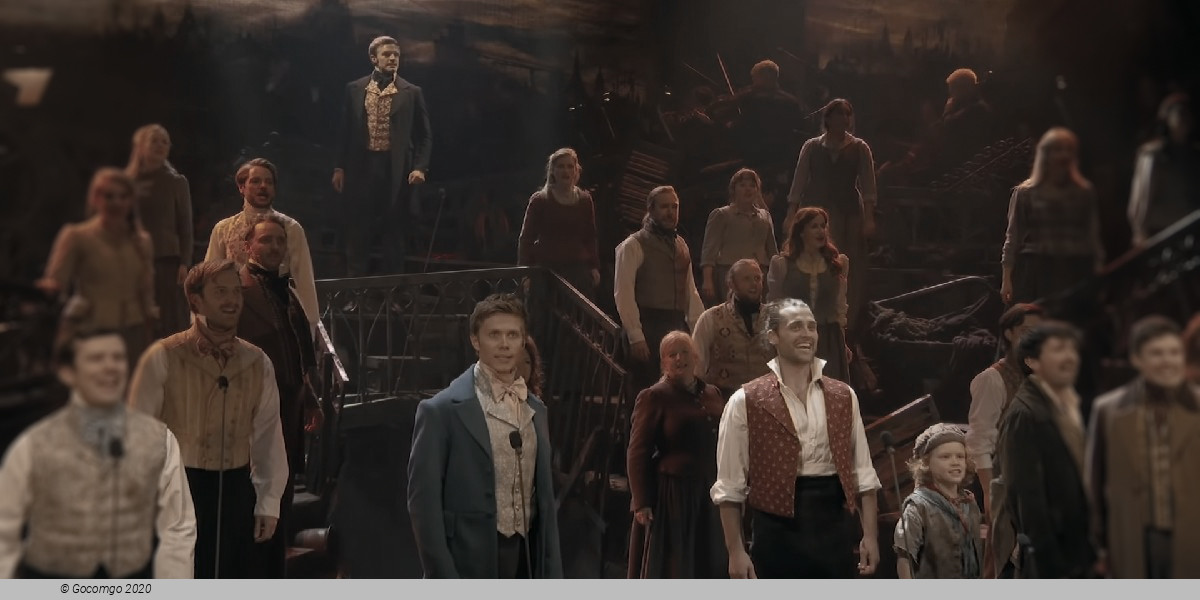
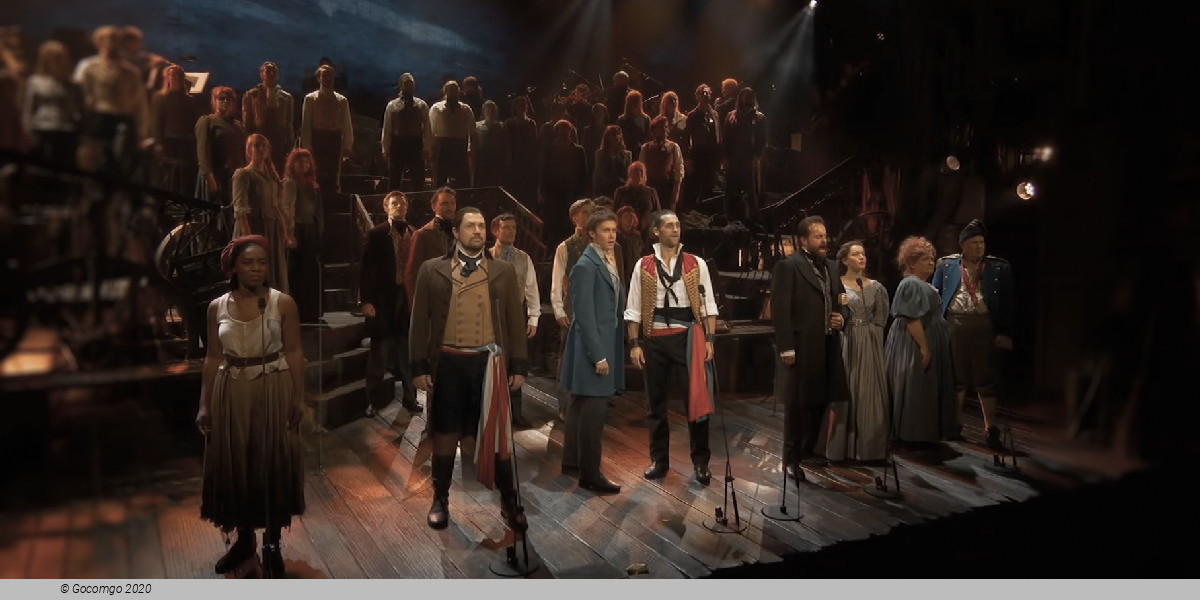
At a convent, Valjean awaits his death, having nothing left to live for. The spirit of Fantine appears to him and tells him that he has been forgiven and will soon be with God. Cosette and Marius arrive to find Valjean near death. Valjean thanks God for letting him live long enough to see Cosette again, and Marius thanks him for saving his life ("Valjean's Death"). Valjean gives Cosette a letter confessing his troubled past and the truth about her mother. As he dies, the spirits of Fantine and Éponine guide him to Heaven reminding him that "to love another person is to see the face of God". They are joined by the spirits of those who died at the barricades, who sing that in the next world, God lays low all tyranny and frees all oppressed people from their shackles ("Do You Hear The People Sing? (Reprise/Finale)").




 1308 5th Ave